


Features
Previews of this year’s Fringe Festival shows that have some sort of Jewish connection (no matter how tenuous)
By BERNIE BELLAN (originally posted July 12, amended July 14 & 15) As has been our custom for many years now we try to find shows that have either Jewish performers, themes that would have particular appeal for Jewish audiences…or simply shows where someone contacted me and asked for a plug!
This year’s Fringe Festival runs from July 15-26. For show dates and venues go to winnipegfringe.com.
In no particular order here are blurbs about the shows we’ve found that fit our somewhat arbitrary criteria. (By they way, if we’ve omitted a show that should be included in our list there’s plenty of time to get added to this post. Just drop me a line at jewishp@mymts.net.)
One of the Fringe’s perennial favourites, Alli Perlov is back yet again making great fun of a very popular movie – in this case it’s “Toy Story.”
Here’s what the blurb in the progam says about her show:

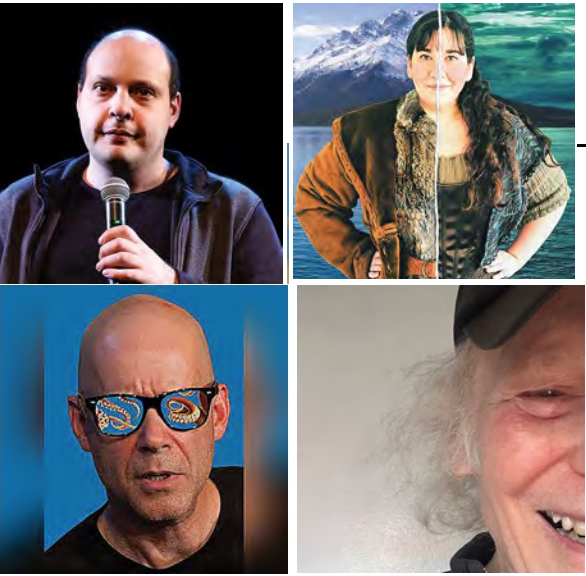
Adam Schwartz first appeared at the Winnipeg Fringe Festival in 2013 – in a one-man show. Since then, Adam has gone on to appear in – and produce shows featuring other neurodiverse artists in succeeding years. Adam wrote us: “This summer I am shooting my comedy special. This is a project I’ve been working on for 16 years and I believe is the first Canadian autistic comedy special exploring life. It explores issues like early and late diagnosis, support workers as well as accommodation I have received.”
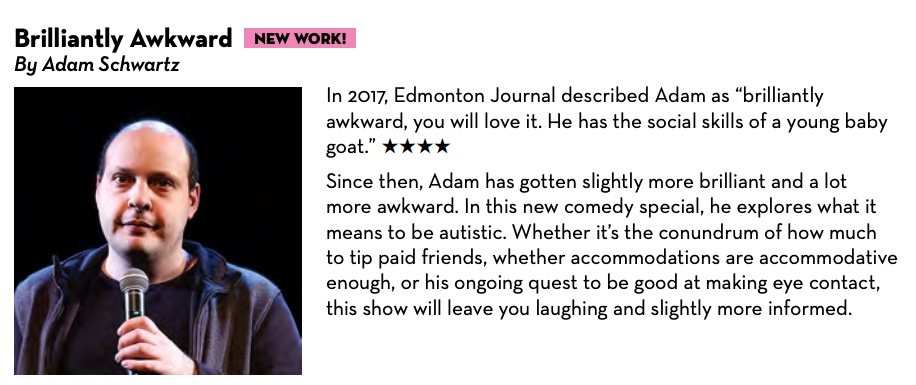
Another veteran performer on the Fringe circuit, Melanie Gall is returning for her 13th season at the Winnipeg Fringe Festival.
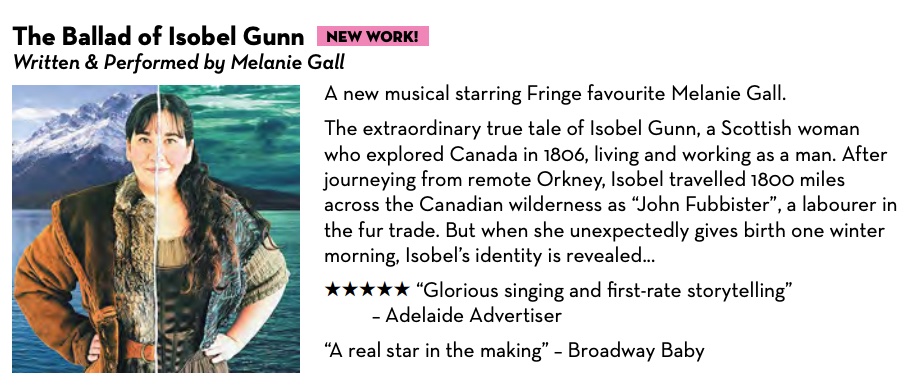
Randy Ross is also back this year. Here’s what Randy wrote us: “I’ll be back at the Winnipeg fringe in July with a new show, ‘How Much Can You Change for Someone You Love?’
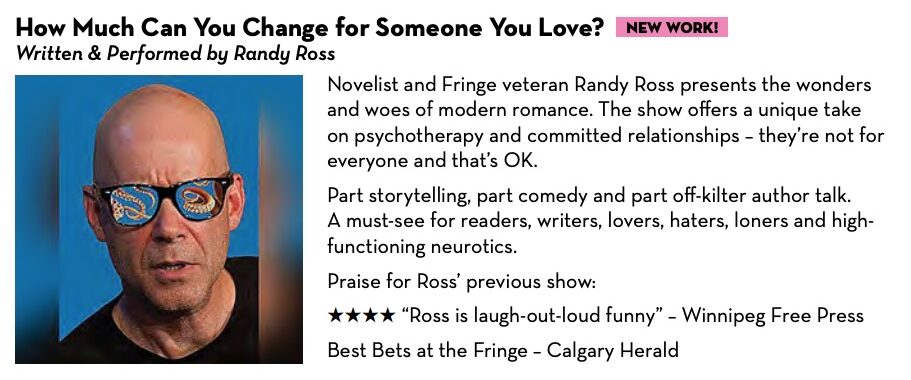
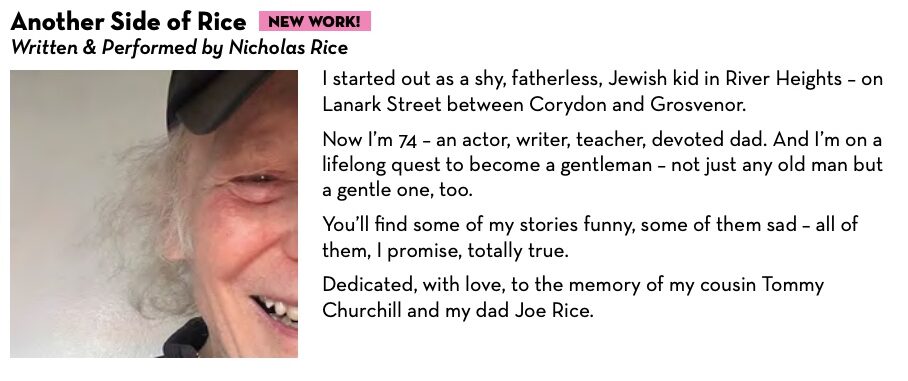
Winnipegger Nicholas Rice is a veteran of the Winnipeg theatre scene. He has appeared in five Winnipeg Jewish Theatre productions over the years. This year will mark Nicholas’s second time appearing in a Winnipeg Fringe Festival show. His first appearance, two years ago, was in a show also called “A Side of Rice” but, in chatting with Nicholas he told me this new show,”Another Side of Rice,” will be completely different from that first show.
During the show, Nicholas said, he “will tell three different stories” from different parts of his life. The first story will relate an experience he had at Sir John Franklin School (which no longer exits). The second story will be about an experience Nicholas had while teaching in Toronto where, he says, one of his students, upon finding out Nicholas was Jewish, told him that he “would burn in hell.”
The third story will also be set in Toronto. The show will last 70 minutes, Nicholas added.
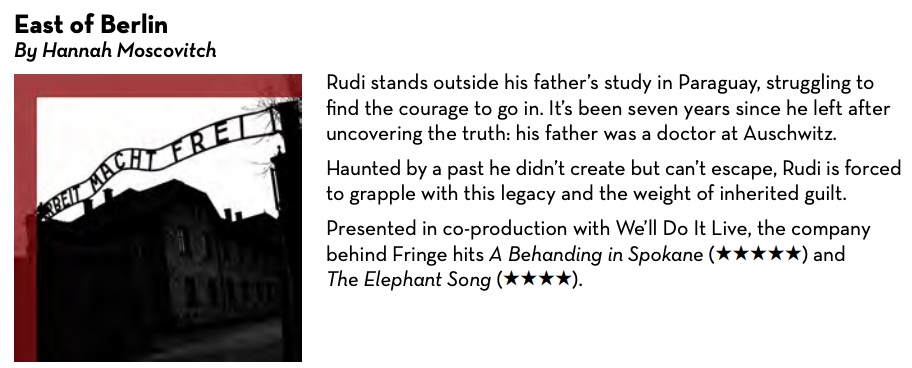
Rudi stands outside his father’s study in Paraguay, struggling to find the courage to go in. It’s been seven years since he left after uncovering the truth: that his father was a doctor at Auschwitz.
Haunted by a past he didn’t create but can’t escape, Rudi is forced to grapple with the legacy of his father’s crimes and search for a way to live with the weight of inherited guilt. Another tour-de-force script from acclaimed Canadian playwright Hannah Moscovitch, whose powerful and provocative work continues to captivate audiences worldwide.
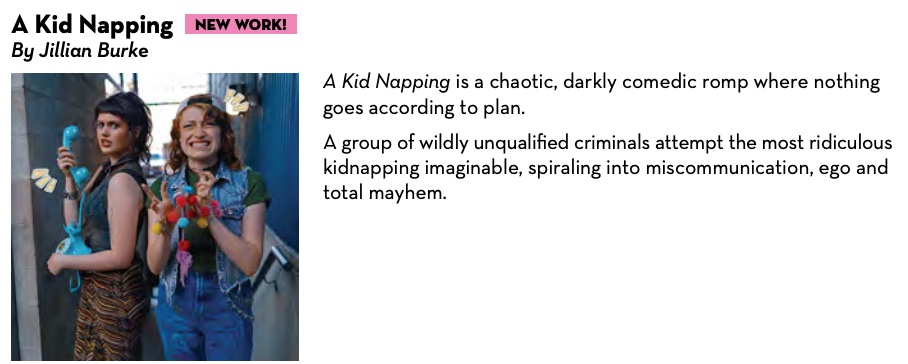
On July 15 we received an email from someone by the name of Jillian Birdie Burke. Here’s part of what Burdie wrote: “My name is Birdie Burke, I am a Jewish artist and I’m one of the producers and performers of A Kid Napping, a new comedy is coming to the Winnipeg, Saskatoon, and Victoria Fringe Festivals this summer – from the same duo who brought you last year’s award-winning BRAIN.
“ Kid Napping follows two well-meaning but wildly incompetent ex-convicts whose kidnapping plan goes spectacularly wrong when they accidentally find themselves caring for a room full of kindergarteners.
“As part of the production, we’re also donating proceeds from our sales to local children’s organizations in each city we visit.
“For Winnipeg we’ll be focusing on Rossbrook Kids and the Rainbow Resources team.”
Okay – now here is where we start to get away from previewing Jewish performers, but I’ll explain in each case why I’ve included a particular show.
Safe Sex is a collection of three one-act plays written by Harvey Fierstein who is Jewish, but had said that “although he does not believe in God, he prays three or four times each day.”
“As one of the first openly gay celebrities in the United States, Fierstein helped turn gay and lesbian life into a viable subject for contemporary drama.”
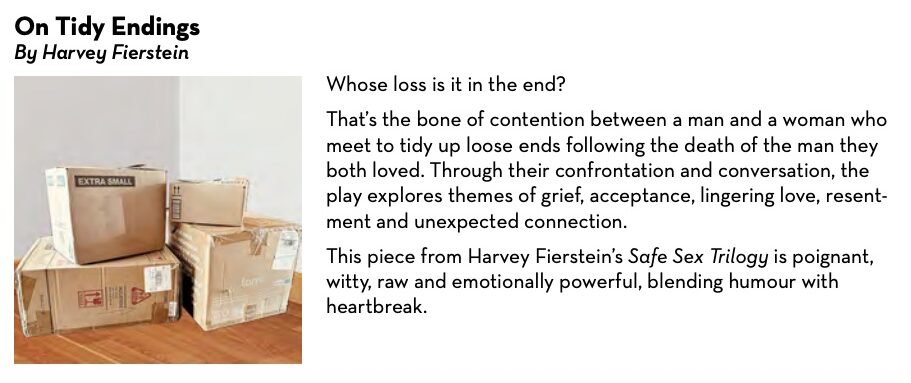
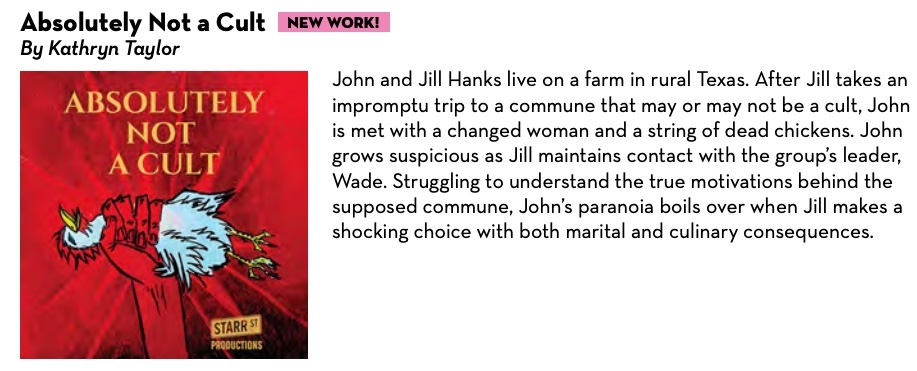
Now, since Harvey Fierstein grew up in New York – a very Jewish city, when we were contacted by someone by the name of Charlie Hume who said he was an actor and producer with a company called Starr Street Productions – based in New York City, we had to ask him whether there was any Jewish connection?
Charlie replied: “Perhaps unfortunately, the show is written and performed by Catholics. I would say that our company’s greatest connection to Judaism is that we all studied together at The Lee Strasberg Theater and Film Institute. Lee Strasberg- if you’re not familiar- was a legendary Jewish acting coach who was instrumental in revolutionizing theater and the performing arts in New York City and beyond. We walk in the footsteps of Lee and many other Jewish cultural leaders, who have long been among the most steadfast supporters of the arts in America.”
Well, that’s good enough for me. Here’s a description of their play:
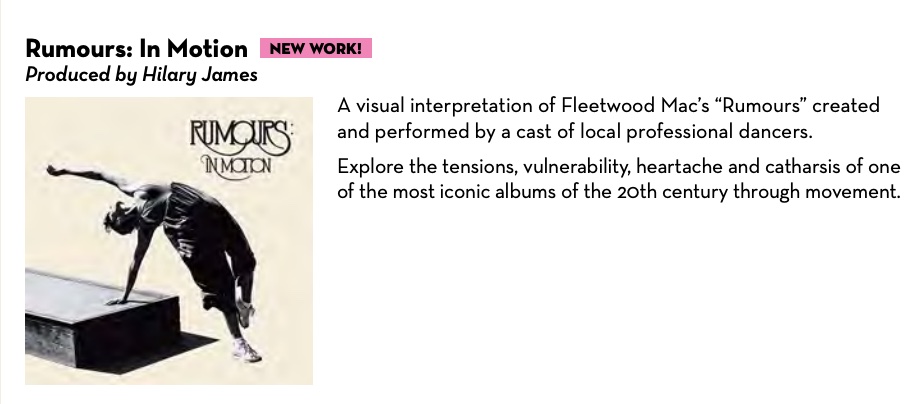
Finally – and this one really is a stretch – three days ago we were speaking to Reverend Don James, who is the National Development Director at Bridges for Peace (an organization that has close ties to our Jewish community) when Don happened to mention that his daughter, Hilary, is producing a Fringe show that has something to do with a Fleetwood Mac record album. (Apparently Don had never heard of “Rumors” because he didn’t know what the name of the album was. Oy!)
So I said to Don: “Have your daugher contact me and I’ll give her a blurb.” Well, she hasn’t contacted me yet, but I’m giving her a blurb – whether she wants one or not!
Features
Do we treat our Arabs better or worse than the Tsars treated us?
By MARTY GREEN I know many Jews will be outraged at the very notion of comparing the two. “The pogroms!”, I hear you cry. “The Naqba!”, the Arabs might just as well respond. We all have our own simplified narratives regarding the rights and wrongs of the past; but just as the true story of Arab life in Israel is much more complicated than the Naqba, so the story of Jewish life is Russia was, for better and for worse, much more nuanced than the mere fact of the pogroms.
There are some obvious parallels between our respective stories. We came to be the authority over several million Arabs as an unwelcome by-product of our great victory in 1967. Similarly, Russia inherited some half million Jewish subjects over the course of the three partitions of Poland (1772-1795). We were hardly more welcome to the Tsars than the Arabs were to us. We sometimes mock the “genocide” allegations by pointing out how 1.2 million Palestinian Arabs in 1945 now claim to number over 14 million. But we were no pikers by comparison: in the course of the 19th century, our numbers in Russia grew anywhere from ten- to twenty-fold.
We remember how the Russian government quickly instituted the Pale of Settlement, restricting our mobility. Can the Arabs under Israeli rule not complain of similar or worse restrictions? It is true that we have obvious security concerns regarding the mobility of a hostile population. The checkpoint system has almost certainly saved lives. But by the same token, can we be sure that the Russians had no valid reason to worry about the loyalty of their Jewish subjects?
There can be little doubt that in the First World War, many Jews hoped that the German invaders would liberate them from their Russian oppressors. And even before the German invasion, as a large minority group speaking their own language and having close connections with their co-religionists in foreign not-always-friendly countries, surely the Russians had as good reason to be concerned with our loyalty as we have with regard to our Arabs?
(Incidentally, it is said that the Jews of 1812 might have whole-heartedly thrown in their lot with the invading Grand Armee, if not for the unlucky resemblance of the French Emperor’s name with the Yiddish word mapole (meaning “defeat”). But that is a tale for an alternate version of history.)
Finally, we remember well how Jews in Russia were not allowed to own land; the truth is, we mis-remember that “fact” because we did indeed own land, and when challenged our title was upheld in the Russian courts. Similarly, in the Occupied Territories the validity of Arab land titles under Ottoman Law are rigorously protected by the Israeli courts. Nevertheless, some residents of the Jordan Valley may argue that it is less than “rigorously” enforced on the actual ground.
Which brings us to the subject at hand. Because back in Old Russia, in der alter heim, disputes between us and our Gentile neighbors over land ownership and usage were an ongoing feature of life for centuries. For a somewhat poetic description of the nature of these conflicts, I turn to the words of memoirist Falek Zolf (1898-1962), who recalls this about his youth in the shtetl of Zastavia, a village of several hundred on the outskirts of Kamenetz-Litovsk. To preserve a bit of the flavor of the original, I have transcribed Zolf’s narrative here in a mix of English and Yiddish.
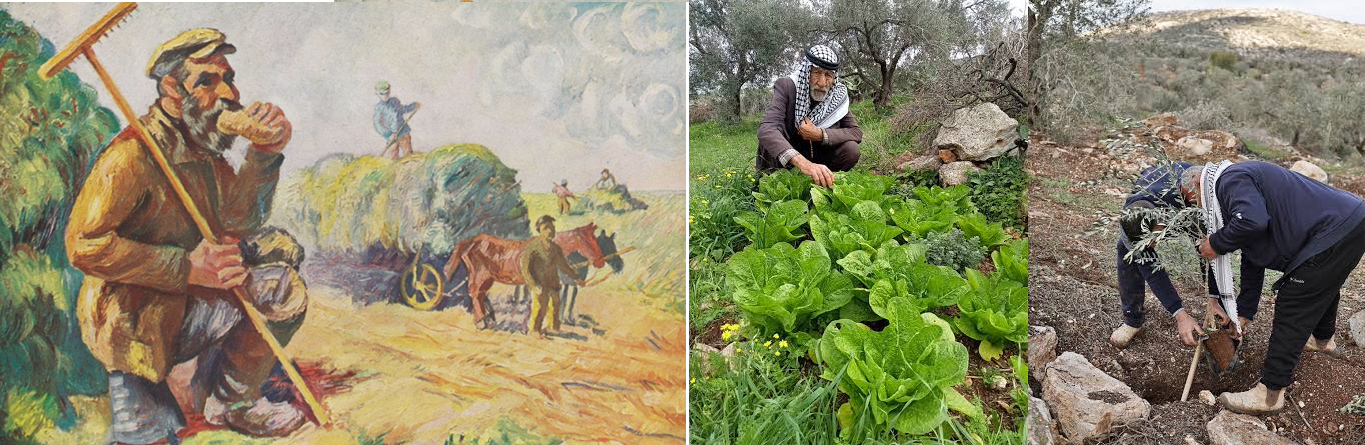
“The village led a poor, quiet life. We lived from what God gave us; this one from a manual trade, this one from farming, another from buying and selling, and so forth. A few dozen families pulled in a meager livelihood from working in Asher Guterman’s brewery, which was known throughout the region for its beer. Outside of that, almost everyone had his own garden and his own cow – most likely one which he had raised himself from a calf. You could always rent a small patch from one of the landowners who lived in the Gentile quarter; the vegetables and produce could be sold in the neighboring towns and villages: in Brisk, Kobrin, Orleh, Bialovezh, etc.
“Quiet and peaceful was the flow of life in the stäedtele. It was truly mit’n schwéiss vun sein ponim (by the sweat of his brow) that each one earned his own piece of bread, along with the vegetables which the good Mother Earth provided to everyone in full measure.”
Of course we all know that Jewish life in Russia was not quite so idyllic as Zolf makes it out to be in the preceding passage. Let us see what comes next:
“The stäedtele of Zastavia was at one time, according to the stories of the old men, entirely a Jewish peasant-village. The whole surrounding area with its fields, gardens, and hills had once belonged to Jews, who were originally men of the soil. But little by little, for a number of reasons, the Yiddische erd had passed over into Gentile hands. If a Jewish peasant needed to make a shidukh for his daughter, he might be driven to sell a strip of farmland to a Gentile; and with the money, he could put on a proper khasseneh with all the sheva brokhos. If his son didn’t want to go serve the Russian Tsar and had to run off azh ken Amerikeh, the Jew would once again cut off a piece of land and sell it to a neighboring Goy (to pay the 300-rouble penalty). If his grown children went off to seek happiness somewhere in the far-away, and the elderly parents simply didn’t have the koyakhto go out and push the plow, then the last stückel feld would be sold to the local meshtchan, and with the money they could enjoy the few years remaining to them. And so with time, the Yiddische erdfell largely into Goyische händt.
“In the end, all that remained to us was a large vihon, a communal grazing-field, which according to legend had once belonged to a rich Jewish landowner, who had donated it to the stäedtel. In the end, the Yiddische beheymos had actually been forced to share this pasture with Goyische khazerim. It was painful for us to have to watch those khazerim turning our Jewish vihon into a pigsty, but there was little choice; one was, after all, living in golus.”
Perhaps we should pause here to consider that while the Jews seem to have sold much of their land to the Russians due to economic pressure, there are nowadays, for obvious reasons, only the rarest cases of Arabs selling their lands to Jews. Furthermore, I am not aware of any situations where the Bedouins of the Jordan Valley willingly share their grazing land with the Jews of the hilltop outposts. Whether these differences are to our credit or theirs is not for me to say here.
In any case, we will see further that it was not only economic or social pressures which came into play:
“Unfortunately, the more the Goyischer Gass (the Gentile Quarter) grew at the expense of the Yiddischer Gass, the more brash and the more khutzpah-digker they became. They started to look for any pretext or opportunity to snatch away this last remaining piece of Jewish grazing land, so that not a single Yiddische beheymah should have a place to roam. They would sometimes show up armed with sticks, hoes, and pitchforks, ready to start a milkhomah….”
Sound familiar?
“….but on such occasions, the ZastavierYidden, who were in those days no pushovers, would quickly arm themselves with the implements of ha-yadayim y’dei Eysav and go forth to meet the Gentile foe. Blood would flow from both sides. For the Jews, it was a matter of kidush ha-shem, a case of milkheymes mitzvah, to uphold their Yiddischen koved and also to save and protect the Yiddische beheymah-lach from Goyische händt…”
And of course, in such situations, the Russians would call in local gendarmeria or even the dreaded Cossacks, and the Jews would be quickly dispersed, arrested, or even beaten.
Or were they….?
Perhaps not. Let us see how Zolf describes it:
“Fortunately, these little milkhomos would not last for long. The storm would quickly die down, and the stäedtel would soon go back to its normal, peaceful life, as though nothing had happened.”
And with those words does Zolf conclude his fond reminiscences of his childhood years. But of course that is not the end of the story.
We all know the devastation brought by the Second World War. But in the wake of the Holocaust, we are liable to forget the enormous impact of the First World War on the Jewish world. The collapse of empires was followed by the emergence of new, ideologically-driven regimes which. It is hard to say whether Communist Russia or nationalist Poland was more hostile to the Jews. In any case, Zolf’s village found itself on the Polish side of the border. And the Jewish way of life quickly became economically untenable.
Among the first the measures adopted under the Polish national slogan of “swój do swego“…that the Gentile should only patronize “his own people”….was the establishment of Christian cooperatives, so that the Polish peasants would not see their hard-earned money fall into the hands of Jewish intermediaries. Then there was the nationalization of entire industries like wine, alcohol and tobacco…again, with the purpose not so much of the betterment of the working class as the impoverishment of the Jewish merchant class. Then the strict enforcement of the Sunday laws, so that the observant Jewish shop-keeper would have to close down for two days of the week. Finally, the imposition of a host of new taxes, of which Zolf reels off the names: gruntovi, dokhodovi, handelyovi, obratov… (ed. Note: would be nice to get the correct Polish spellins of these)
The bailiff’s wagon, which quickly made it’s appearance in one Jewish community after another to haul away confiscated goods in lieu of unpaid taxes, was given the nickname “Grabsky’s Aguleh (hearse)”, after the infamous finance minister Grabsky, a notorious anti-semite. And in Warsaw, it was said to have been followed all to often by another kind of aguleh, this one from the khesed shel emes, to collect the bodies of bankrupt Jewish merchants who had thrown themselves from a fifth-story window.
The precarious condition of the Jewish staedtel could hardly go un-noticed by the local peasantry, and before long they had renewed their ambition to take over the last remaining grazing-field, the communal vihon, and make it once and for all Juden-rein. In Old Russia, the Jews had been ready to defend themselves with clubs and pitchforks; and interestingly enough, Zolf records that they had even sought and obtained recourse from the Russian courts:
“Back then the städtel had engaged the services of berühmte advokaten (famous lawyers) who fought the case azh in der gubernieh un in Petersburg. The protzess dragged on for years, until the Jews were able to secure once and for all séier recht zu mägen paschen séiere beheymos auf’n kehill’schen vihon, inéinem mit die Goyische khazerim.
Yes, there was now and then justice available to the Jews from the Russian courts. We sometimes forget that Mendel Beyliss was aquitted by an all-Christian jury. In this regard, it is noteworthy that the Arab villagers in the Jordan Valley have also been able to obtain favorable judgments from the Israeli courts on occasion.
But in post-war Poland, things were not the same. The villagers knew that in the course of the war and the fires that had destroyed Zolf’s shtetl, the Jews had lost the papers which gave them the right to to an equal share of the communal lands. In addition, the shtetl had been seriously weakened by the war, the Spanish Flu, and emigration to America. The end was in sight to one and all.
And so one bright summer morning, the Catholic and Orthodox peasants (who otherwise had little affection for one another) herded their flocks into the communal vihon. Zolf describes what happened next. One doesn’t need to understand word for word to get the general picture. Sadly, the same story seems to be repeating itself today in the Jordan Valley: only the roles have been changed:
“Their field-hands let loose the dogs auf die Yiddische beheymos, and drove them weit in a sumpign winkel. The Jewish cattle had to spend the rest of that day versunken in der tiefer blotte, searching in vain for a green stalk mit wâs zu stillen séier hunger, un nischt gekönnt gefinnen. Late that afternoon, they were led home, tired, hungry, and covered with mud. Locked away in their barns, they gnawed at the walls. Séiere hungerige geschreien hâben sich weit getrâgen über’n stäedtel.
“And in the pitiful cries of their hungry animals, hâben die Yidden gehört a min trauerign shoyphar-blâsen, which announced the end, not only for their teuere, liebe beheymellach, from whom they had derived at least a stückel khayunah…but also the end vun séier alt-eingesessene Yiddischen stäedtel.”
Falik Zolf left Poland in 1926 and became a Yiddish teacher in Winnipeg’s I.L. Peretz Folks-Schule. He published his memoir in 1948 under the title “Auf Fremder Erd” (On Foreign Soil).
Features
Embracing your femininity in Cheshvan
By ELENA KNIGHT Rosh Chodesh Sameach! Though last month’s article (Embracing your femininity in Tishrei) had far more holidays, thus more material, the month of Cheshvan is not as empty as it appears. It may contain no holidays or mitzvot specific to the month, but I take issue with the idea that Cheshvan is “bitter”.
Some people refer to this month as MarCheshvan, Mar meaning bitter, but Mar can also refer to a drop of water; this month is the beginning of Israel’s rainy season! We began praying for rain with Shemini Atzeret last month, so by this time, G-d has usually heard Am Yisrael and started sending rain to the Holy Land. To connect this to womanhood, let’s revisit last month’s article, where I explained the connection of water to femininity.
In Tishrei, I spoke of the divine feminine, and how rain is associated with the womb of creation, fertility, and gentle, life-renewing power. In Cheshvan, however, I’d like to focus more on feminist reclamation of water metaphors; in Margaret Atwood’s The Penelopiad , for example, when trying to protect herself from unwanted suitors, Penelope recalls her mother’s advice: “Behave like water… Don’t try to oppose them. When they try to grasp you, slip through their fingers. Flow around them.” We can take this literary advice and put it into practice in our lives this month. When in a position where we feel powerless, and in spaces where female assertion is unwelcome, we could do well to be like water. Nobody can hold water in the palms of their hands without losing control of it. Water is not easy to contain. Nor are we women.
Taking Mar of MarCheshvan to mean a drop of water, rather than bitterness, can be interpreted now as a call to action. This month can be the time when we refuse to be controlled, much like the prophetess Miriam. In Torah, Miriam’s connection with water is clear; in Exodus 15, she takes the Israelite women out from the community to sing a song of deliverance through the Red Sea. She is with her brother, our teacher, Moses, when he is sent down the Nile in a reed basket, and she is the one who ensures he is cared for at the Pharaoh’s palace in Exodus 4. In many Pesach seders, a cup of water is set out for Miriam, like the wine for Elijah, because she ensured that the Israelites had water while travelling through the wilderness during the Exodus journey.
Miriam is, clearly, a passionate leader, creating a specific space for Israelite women when they are so often overlooked in Torah stories. By establishing her place as a role model for the Israelites leading up to their freedom from Egypt, the Torah makes it clear that G-d accepts female leadership. This month, let us take a page from Miriam’s book, and lead when we are called to do so. Like I suggested in my last article, mentoring a young girl in your community may be the perfect way to lead.
Cheshvan is also said to be reserved for the time of Moshiach. To prepare for the Moshiach’s arrival, we can act in ways that will bring about Israel’s reformation, both in the land itself and in the diaspora. By supporting charities both in our home communities and in Israel, by acting with chesed, loving-kindness, even when we don’t really feel like it, and by studying–whether that be studying Torah, feminist theory, or any other subject that will improve the world–with fervent passion. By working on tikkun olam, repairing the world, as we have it now, we can bring about a better world for future generations. What better way to remove the bitter reputation of Cheshvan?
Features
CFTC Crypto Regulation Plans Put XRP and Solana in Focus as CLARITY Act Stalls

US crypto regulation is back in focus after the Commodity Futures Trading Commission opened a public consultation on October 5 on a potential framework for certain retail crypto transactions. With the CLARITY Act stalled in the Senate, the initiative raises questions about what the agency can achieve under existing law and why its plans matter for XRP and Solana.
For XRP and Solana, the development is particularly notable because US regulators have already identified both assets as examples of digital commodities. The emerging question is therefore not simply what happens to the CLARITY Act, but how far the CFTC can reshape the regulatory environment while the legislation remains stalled.
XRP and Solana price movements in focus
The XRP price and Solana price provide useful context for assessing market movements; comparing both assets over the same period helps distinguish their individual performance from broader changes across crypto markets.
XRP price movements and Solana price movements need to be assessed over a clearly defined period. An intraday range describes the distance between the session’s highest and lowest recorded prices; it does not establish which direction an asset will move next. A daily percentage change provides a different measure, comparing the latest price with a reference point.
Crypto market volatility can reflect changes in liquidity, interest rate expectations, network developments and broader risk appetite. The CFTC consultation adds regulatory context, but the announcement alone does not establish the cause of a particular price movement.
Why crypto regulation is shifting towards the CFTC
The Senate did not reach the 60-vote threshold required to advance the CLARITY Act in September. The result prevented the broader market-structure bill from moving ahead at that stage, but it did not end the push for clearer federal crypto rules.
The CFTC has now begun exploring another route. In its notice covering Regulation Crypto Asset Transactions and Regulation Crypto Asset Markets, the agency is seeking public input on a framework for certain retail crypto transactions and the platforms offering them.
The distinction matters. The CLARITY Act would have established a statutory framework passed by Congress. The CFTC initiative instead relies on powers the agency says it already has under the Commodity Exchange Act.
That means agency action can proceed while the legislation remains unresolved, although it cannot replicate every part of the congressional proposal.
What the proposed CFTC crypto rules could cover
The process centres on two concepts known as Regulation CTX and Regulation CAM. Regulation CTX concerns retail commodity transactions involving crypto assets, including transactions financed through margin, leverage or other forms of credit.
Regulation CAM would examine a specialised category of CFTC-registered market designed for those transactions. The aim is to create a federal regulatory option with requirements more closely tailored to crypto markets.
The framework could address areas such as market manipulation, customer assets, conflicts of interest and market conduct. The agency is also considering what information platforms should provide and how existing market safeguards can be adapted to crypto.
There is an important limit. The CFTC cannot require all spot crypto exchanges to enter that federal regime without action from Congress. Its chairman has described the proposal as an option for firms rather than a nationwide mandate.
That difference helps explain why the CLARITY Act still matters even as regulators move independently.
Why XRP and Solana matter in the regulatory debate
The CFTC consultation brings renewed attention to how the existing federal crypto asset taxonomy relates to XRP and Solana.
In his October 5 remarks, CFTC Chairman Michael Selig pointed to the joint federal crypto asset taxonomy, which identifies Bitcoin, Ether, Solana, Stellar, Tezos and XRP among examples of digital commodities.
For XRP and Solana, that classification helps explain why a CFTC-led framework deserves attention. Both assets operate on widely used blockchain networks and have a presence across global crypto markets, so changes affecting how US platforms can offer crypto products could influence market access, liquidity and institutional participation.
It does not mean the new rules would determine their prices. Interest rates, network activity, broader risk appetite and asset-specific developments remain important. Regulation is one part of the market environment, not a standalone price signal.
How crypto wagers relate to market movements
Crypto wagers based on market movements involve a bet on a specified outcome over a defined period. The relevant details include the asset, the condition that must be met, the closing time and the price source used to determine the result. Those terms matter because an asset can move in different directions within the same day.
Short-term price direction is also the basis for crypto wagers on Moon, a crypto betting platform where outcomes are tied to market movements.
For crypto betting, the significance of volatility depends on the wager’s conditions, including whether settlement uses a closing price or an event occurring during the specified period. A rise earlier in the day does not establish the outcome of a later wager, and a regulatory announcement does not guarantee a winning bet. An unsuccessful wager can result in the loss of the amount staked.
The connection between crypto wagers and market news therefore depends on the specific outcome and timeframe. News about XRP or Solana can provide context, while the terms of each wager determine how its result is settled.

How agency action differs from the CLARITY Act
The distinction between legislation and regulation is central to what happens next.
Congress can create new statutory powers and requirements that regulators cannot establish on their own. The CLARITY Act sought to define a broader market structure, including the responsibilities of federal agencies and obligations for intermediaries operating in digital asset markets.
The CFTC is working within authority it says already exists. That allows it to address some transaction structures and market protections but leaves wider questions for lawmakers.
The agency itself has acknowledged that regulatory action cannot indefinitely replace legislation. For markets, that creates a two-track process: regulators can develop rules under current law while Congress decides whether to revisit a broader statutory framework.
That makes the latest CFTC action more than a reaction to the failed Senate vote. It is also an indication of how US crypto policy could develop if Congress remains unable to reach agreement.
What US crypto regulation could mean for Canadian markets
The proposed CFTC framework would apply in the United States, not Canada. Its potential relevance for Canadian markets comes through cross-border capital flows, global liquidity and the role US platforms and institutions play in price discovery.
Canada also has established investment products linked directly to both assets. The Toronto Stock Exchange listed several Solana ETFs in April 2025, including the 3iQ Solana Staking ETF, giving Canadian investors regulated market exposure to SOL.
XRP followed with Canadian-listed products in June 2025, including the 3iQ XRP ETF.
That means regulatory developments affecting XRP and Solana in the United States can have relevance even when Canadian rules themselves do not change. Shifts in institutional participation, exchange access or global liquidity can still be reflected in assets and funds available in Canada.
Currency remains another consideration. Crypto assets are commonly quoted globally in US dollars, while Canadian investors may measure performance in Canadian dollars. Exchange-rate movements can therefore strengthen or reduce the local effect of a move in the underlying asset.
What comes next for the CFTC consultation and CLARITY Act
The CFTC consultation is now underway. The agency is seeking written comments on the Regulation CTX and Regulation CAM framework before deciding how subsequent rulemaking should proceed.
Congress could also return to the CLARITY Act or another version of market-structure legislation. The Senate result stopped the bill from advancing at that point, rather than resolving the broader regulatory debate.
For XRP and Solana, the most important signal is therefore no longer a single Senate vote. Attention has moved to whether the CFTC can turn its proposals into workable federal rules, how crypto platforms respond and whether lawmakers eventually establish a broader framework.
