


Features
Some Canadian universities have not stood up to antisemitism

By HENRY SREBRNIK (Posted Nov. 12) The war between Israel and Hamas has exposed for all to see just how nasty some of our institutions of higher learning have become.
Today the “woke” left, which seems to have attained ideological hegemony on many campuses, provides a model of the world in which many conflicts are viewed as a struggle pitting settler-colonist-Europeans against indigenous/BIPOC people. It follows from their critique that the legitimacy of a tactic can only be assessed with reference to whether it is being used by the oppressor or the oppressed.
It casts Israelis as “white” or “white-adjacent” and Palestinians as “people of colour.” It describes Israel as an “imperialist-colonialist” force, Israelis as “settler-colonialists,” and contends that Palestinians have a right to eliminate their oppressors.
So “freeing Palestine” is a resistance against foreign settler colonialists, a revolution in which violence against civilians is defended as a legitimate means of achieving racial justice.
Some of this stems from the writings of anti-colonial psychiatrist Frantz Fanon, among many others. In Les Damnes de la terre (The Wretched of the Earth), Fanon maintained that the violence of colonialism can only be met by the violence of the colonised.
But this decolonization logic ignores the fact that more than half of Israel’s Jewish population does not have European, but North African and Middle Eastern, origins and came to Israel after themselves suffering ethnic cleansing.
Yet since Oct. 7, the day Hamas massacred some 1,400 Israelis, marches and demonstrations have continued across Canada, many openly supporting their murders.
There were gatherings to celebrate the attacks as an act of “resistance,” to cheer on the “martyrs” who perpetrated them. They usually featured some iteration of the slogan “From the river to the sea, Palestine will be free,” a call to continue until the State of Israel is eradicated by force.
A group called Solidarity for Palestinian Human Rights McGill immediately described the attack in Israel as “heroic” in posts on social media. Along with three other pro-Palestinian groups, they called the Israeli regime “fully responsible” for the ongoing violence, describing it as “a consequence of decades of oppression” of the Palestinian people.
Answering their call, hundreds of people marched through the streets of Montreal Oct. 8 to “celebrate the resistance’s success.” At another pro-Palestine rally, held off-campus five days later, it was estimated that at least 2,000 people attended, greatly outnumbering the overall Jewish student body at the university. A further rally was held Oct. 20.
That same group issued a joint statement with Palestinian student groups at Concordia University and two Montreal-area CEGEPS stating that Hamas had “no option but to resist.”
“A Statement of Solidarity with Palestine” was released Oct. 12 by the York University Graduate Students’ Association, the York Federation of Students, and the Glendon College Student Unions from York’s Glendon Campus.
The groups reaffirmed “our solidarity with the Palestinian people” against “settler-colonialism, apartheid, and genocide.” It also accused “so-called Canada” of complicity with “so-called Israel.” York and its Federation of Students are now facing a $15-million class-action lawsuit related to decades of alleged antisemitic incidents.
University of Toronto’s downtown campus saw pro-Israel and pro-Palestine students facing off on Oct. 17. Posters of missing Israelis kidnapped by Hamas were torn down and a Palestinian flag was painted on the steps of the building where the rally took place. At McMaster and Western — where a demonstration took place Oct. 29 — students were seen ripping down posters of Israeli hostages.
At Toronto Metropolitan University’s law school, some students wrote a letter Oct. 20 arguing that Israel “is not a country,” and called for “an end to the entire system of settler colonialism that has strangled Palestine for the last century.”
Student newspapers followed suit. In the Varsity, the student newspaper at the University of Toronto, one writer referred to Israel as “an apartheid state that is breaking international law to wipe out an indigenous population.”
The Link at Concordia University published articles replete with anti-Israel content accusing Israel of committing ethnic cleansing. A piece in the student newspaper at Queen’s University, the Queen’s Journal, claimed Israel’s response was aimed purely at “collective punishment” and “achieving the mission of ethnically cleansing historic Palestine of its Indigenous Arab population.” A column in the Manitoban, the University of Manitoba paper, asserted that Hamas’ attack on October 7 was a “response” to “Israeli settler colonialism.”
On October 20, a group of anti-Israel demonstrators protested on the Edmonton campus of the University of Alberta. The next day, the Gateway, a student newspaper, quoted one student asserting that people in Gaza “are resisting over 75 years of oppression, systematic genocide, ethnic cleansing, and apartheid.”
So here we are. “We need to challenge our policy at universities and the governments that fund them,” maintained former Alberta premier Jason Kenney, speaking at a conference on anti-Semitism in Ottawa Oct. 16-17. Thousands, he said, were “celebrating the largest massacre of Jews since the Holocaust.”
Henry Srebrnik is a professor of political science at the University of Prince Edward Island in Charlottetown. He holds BA, MA, and PhD degrees from McGill, Brandeis and Birmingham universities.

Features
The moral degradation of Israel’s far-right is even worse than you think
By Dan Perry (Posted March 27, 2026)
This story was originally published in the Forward. Click here to get the Forward’s free email newsletters delivered to your inbox.
This week, an Israeli Knesset member said something that should have been shocking, horrifying and unanimously condemned.
“I stand behind IDF soldiers in every situation,” said Yitzhak Kroizer, a member of the ultranationalist Otzmah Yehudit Party. Even if the “collateral damage is children or women — it does not matter to me.”
“In Jenin, there are no innocent civilians,” he added. “In Jenin, there are no innocent children.”
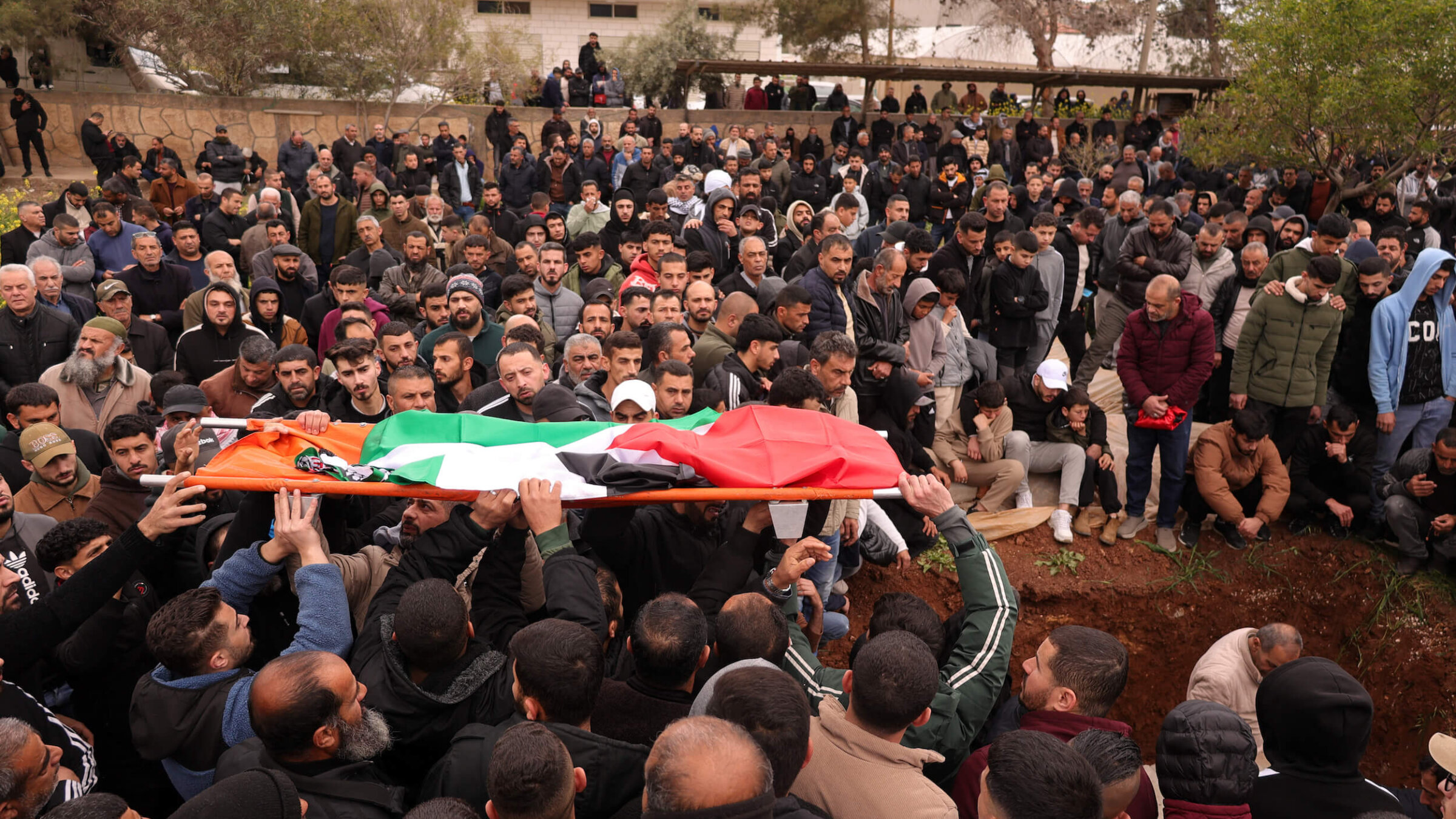
Kroizer was referring to a genuine tragedy: The killing of almost an entire Palestinian family by Israel undercover forces on March 15, near the village of Tammun. The forces opened fire on the family’s car as they returned from a shopping trip. Waed Bani Ohde, her husband Ali, and two of their young children Othman, 7, and Mohammed, 5, were killed. Two sons survived. The army says the car accelerated toward the forces; Palestinian witnesses say the IDF gave no warning before attacking.
It is tempting to dismiss statements like Kroizer’s as the rhetoric of the extreme. Indeed, I often find myself making that point when talking to people inclined to think the worst of Israel: They do not represent the majority, and not even the immoral government of Prime Minister Benjamin Netanyahu.
But that, while true, is becoming a little too pat.
For it is also true that as time goes, as the wars continue and hearts harden, what Kroizer articulated is a moral framework that is steadily taking hold in the Israeli right.
That’s why the statements were not condemned by anyone associated with the government. And, indeed, Israeli far-right activists responded to the deaths with social media posts rejoicing in the death of the unarmed “terrorists.”
No senior Israeli official apologized for the shooting. No one said publicly that even if the soldiers believed they were acting under threat, the killing of two children demands something more than a routine internal review.
No official has even conceded that this type of event might contribute to agitation and instability in the West Bank, and perhaps spark another uprising. Set empathy aside; even enlightened self-interest is beyond the current Israeli government.
Yes, an investigation has been opened. But military investigations almost never lead to concrete action against the troops. A Guardian report this week revealed that no Israeli citizen has been prosecuted for a killing in the West Bank since 2020, despite a radical uptick in violence; settlers and police have already killed 10 Palestinian civilians this month alone.
The undercover soldiers, especially, are something like the real life version of the international hit Fauda, widely admired for their counter-terrorism activity. There is little appetite for throwing the book at them.
So while it’s tempting to chalk this up as just another tragedy in a long list of tragedies on both sides, it is actually much more: a devastating manifestation of something fundamental — not just a personal tragedy but a national one.
That’s a tragedy I’ve seen unfolding slowly, since even before the Hamas attack of Oct. 7, 2023.
I’ve seen it in the rhetoric of far-right leaders like cabinet ministers Itamar Ben-Gvir and Bezalel Smotrich. But I’ve also seen it firsthand, as when I found myself on wartime television panels where I was besieged by right-wingers enraged at my assertion that innocents have been killed during the war in Gaza. I challenged one of them about whether this idea would include a two-week old baby.
“OK, maybe not the baby!” he conceded, unhappily.
The descent of part of Israeli society into this unforgivable lack of compassion is, some have argued, an inevitable outcome of indefinite control over the Palestinian territories. For years, warnings that rule over millions of disenfranchised Arabs would mutate Israel’s character were treated as excessive, even hysterical.
Israel was not a colonial power in the classic sense, its defenders argued; it was a democracy under siege, navigating impossible dilemmas. The West Bank may be “occupied” but that was justifiable because of the threat its near proximity posed. Israel’s actions might be harsh, but they were necessary, the argument went. It was said that the country’s moral core, despite pressures, would remain intact.
The initial signs after this latest tragedy are not exactly reassuring. Far from condemning Kroizer, as they rightly should have, the cabinet convened this week to offer his party a great gift: the legalization of 30 illegal settlement outposts, including some in “Area A,” which is supposed to be under full Palestinian control.
Israel did not begin this way. Its founding story was deeply bound up with an acute awareness of the need to maintain morality. The early Zionists envisioned a country that would be a “light unto the nations.”
As occupation has become an entrenched reality, most Israelis have wanted to look away; the problem is too complicated. This position may not be possible for much longer. The moral rot is too extreme. But the good news is that it has not infected everything and everyone. Israel’s public broadcaster devoted a segment to the Palestinian family’s tragedy, characterizing Kroizer’s statements as a disgrace.
The humanistic ideas through which Israel once judged itself have eroded. We must now hope that they won’t entirely vanish.
Dan Perry is the former chief editor of The Associated Press in Europe, Africa and the Middle East, the former chairman of the Foreign Press Association in Jerusalem, and the author of two books about Israel. Follow his newsletter “Ask Questions Later” at danperry.substack.com.
The views and opinions expressed in this article are the author’s own and do not necessarily reflect those of the Forward. Discover more perspectives in Opinion. To contact Opinion authors, email opinion@forward.com.
This story was originally published on the Forward.
Features
The Entebbe Alliance Reborn: Why Uganda Is Ready to Fight Iran Alongside Israel
Fifty years ago, Israeli commandos stormed the terminal at Entebbe Airport under the cover of darkness. They engaged in a deadly firefight with Ugandan troops and Palestinian hijackers to rescue over 100 Jewish and Israeli hostages. The daring 1976 raid astonished the world and reshaped modern counterterrorism, but it cost the life of the assault unit’s commander, Lieutenant Colonel Yonatan “Yoni” Netanyahu.
Fast forward to March 2026, and the geopolitical script between Jerusalem and Kampala has flipped entirely. The very soil where Ugandan and Israeli forces once exchanged fire is now the foundation of an emerging alliance aimed squarely at countering the Islamic Republic of Iran.
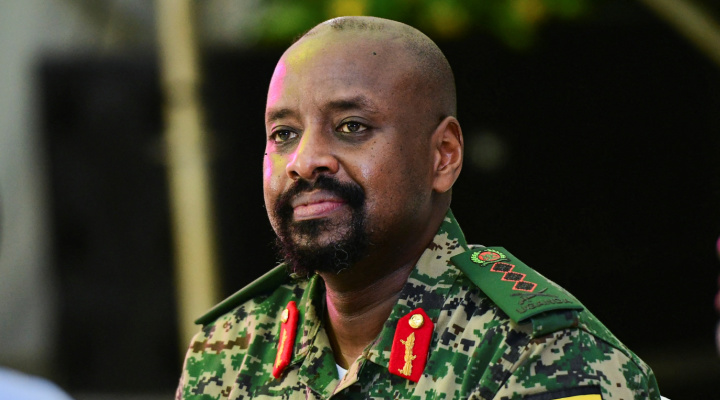
General Muhoozi Kainerugaba, the chief of Uganda’s armed forces and the son of President Yoweri Museveni, recently shocked the international community with a blunt declaration.
As regional tensions with Iran boiled over into direct military confrontations, Kainerugaba took to social media to draw a definitive line in the sand. He stated that while the world wanted the war in the Middle East to end, any talk of destroying or defeating Israel would bring Uganda into the war on the side of Israel. To physically cement this dramatic pivot, he previously announced that Uganda would erect a statue of Yoni Netanyahu at the exact spot where he fell at Entebbe Airport, framing the monument as a profound gesture designed to strengthen blood relations with Israel.
While some policymakers in Washington and European capitals are quick to dismiss Kainerugaba’s rhetoric as mere social media bluster, doing so overlooks a profound geostrategic realignment occurring in the Global South. This is not just historical poetry or diplomatic hyperbole. It is the public crystallization of Israel’s new “Circle of Partners” framework, a vital evolution of Jerusalem’s traditional defense strategy tailored for an era of multi-front warfare.
For decades, the Israeli defense and intelligence establishments relied heavily on the “Periphery Doctrine.” This strategy involved cultivating quiet but robust ties with non-Arab states to counterbalance a hostile Arab core.
Today, the threat matrix has completely inverted. The Arab core is increasingly allied with Israel, while the primary existential threat is the Iranian regime. Containing and defeating Tehran’s regional ambitions requires strategic depth far beyond the Levant, necessitating a modernized Periphery Doctrine that extends deep into the African continent. Israel recognizes that securing a “Circle of Partners” is no longer optional; it is a tactical imperative.
By cementing ties with Uganda — a Christian-majority, military heavyweight in East Africa — Israel is effectively anchoring a new southern flank. The strategic utility of this partnership becomes undeniable when looking at a map of Iran’s maritime ambitions. Tehran has spent years attempting to weaponize the Red Sea and the Bab el-Mandeb strait, primarily through its funding of Houthi proxies in Yemen, while simultaneously seeking naval footholds in the Horn of Africa. East Africa serves as the geopolitical backdoor to this critical maritime corridor.
Furthermore, as the conflict with Iran expands across multiple domains, an allied Uganda offers Israel unparalleled intelligence-sharing nodes in Sub-Saharan Africa. The Uganda People’s Defense Force possesses deep institutional knowledge of local terror networks and illicit smuggling routes that Iranian proxies frequently exploit. Uganda also provides potential logistical staging grounds that sit safely outside the immediate range of Iran’s conventional ballistic missile umbrella, offering Israel a secure rear base for long-term strategic planning and operational depth.
Equally important is the diplomatic and ideological blow this alliance deals to Tehran. The Iranian regime relies heavily on a manufactured narrative that pits the Global South against a supposedly isolated Israel. At a time when international forums are routinely weaponized to turn Israel into a pariah state, unconditional support from a prominent African Union member shatters Iran’s diplomatic framing. When a leading African military commander publicly volunteers his own forces to defend the Jewish state and honors a fallen Israeli hero on African soil, it signals a shared recognition of the threat posed by radicalism that transcends geography.
In 1976, the raid on Entebbe proved to the world that Israel possessed the operational reach to strike its enemies and defend its citizens anywhere on the globe. In 2026, the emerging Entebbe alliance proves that Israel possesses the diplomatic foresight to build a continental strategic firewall against Iranian hegemony.
Uganda’s willingness to stand shoulder-to-shoulder with Israel is a testament to the shifting tides of global alliances. If Tehran continues to escalate its multi-front war, the ayatollahs will rapidly discover that Israel is not fighting alone, and its “Circle of Partners” reaches much further than the Islamic Republic ever anticipated.
Amine Ayoub, a fellow at the Middle East Forum, is a policy analyst and writer based in Morocco. Follow him on X: @amineayoubx.
Features
Iran Lowers Minimum Age for War Roles to 12, Sparking Outcry Over Child Soldier Use
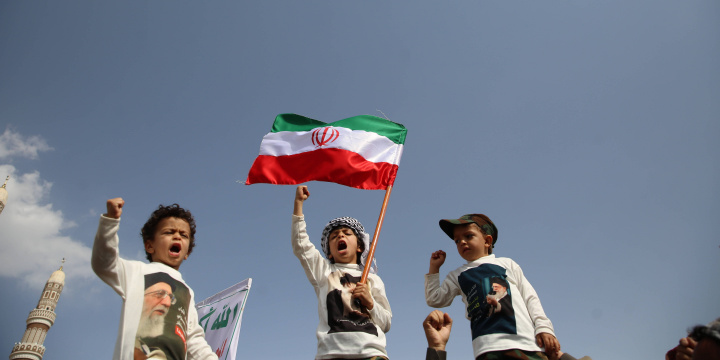
The Iranian regime has lowered the minimum age for participation in war-related activities to just 12 years old, a move that will likely fuel the concerns of human rights groups, which have condemned Iran’s treatment of children.
In a televised interview with state media, Rahim Nadali, a cultural with Iran’s Islamic Revolutionary Guard Corps (IRGC) in Tehran, announced that the new initiative “For Iran” is recruiting participants to assist with patrols, checkpoints, and logistics.
“Since children are increasingly volunteering to take part, we have lowered the minimum age to 12,” Nadali said, urging young children to join the war effort if they wish.
Rahim Nadali, Cultural Deputy of the IRGC’s Tehran branch (Mar 26, 2026):
“12 and 13-year-old children wanted to participate in Basij checkpoints across the cities. We have lowered the age limit to 12 and above.” pic.twitter.com/lLZy9pU5xm— حافظه تاریخی (@hafezeh_tarikhi) March 26, 2026
Iran International first reported Nadali’s statement, which has since circulated on social media.
As part of the regime’s state media coverage of the US-Israeli war against Iran, this latest announcement has ignited mounting backlash over the use of minors in security‑related roles — a practice that is not new in Iran.
“Recruiting children into military activity is a violation of international laws and the international community must not stay silent,” Iranian-American activist Masih Alinejad posted on social media, along with video of Nadali’s comments. “This is the same regime that lectures the world about morality. But when it comes to survival? They’re willing to send children into danger.”
In the past, widely circulated social media images and videos have repeatedly shown children and teenagers in military-style uniforms cracking down on protests, including during the 2022 Woman, Life, Freedom uprising, which erupted nationwide after Mahsa Amini, a young Kurdish woman, died in a Tehran police station following her arrest for allegedly violating hijab rules.
Under international law, Iran’s move flagrantly violates the Convention on the Rights of the Child, which explicitly prohibits the use of children in military activities, marking a dramatic breach of its global obligations.
Human rights groups have also repeatedly accused Iranian security forces of killing child protesters during past crackdowns.
According to the Center for Human Rights in Iran, more than 200 children were killed during the nationwide anti‑government protests earlier this year, which security forces violently crushed, leaving thousands of demonstrators tortured or killed.
Amnesty International and Human Rights Watch have also documented cases of children being shot, detained, and abused during these latest demonstrations, noting that government forces have repeatedly targeted minors in ways that breach international law.
Iran has a long track record of widespread human rights abuses, including crackdowns on protesters, harassment of activists, threats to minorities, executions of children, violations of women’s rights, and dire prison conditions.
During the January uprising, at least 6,724 protesters, including 236 children, were killed, with another 11,744 cases still under verification, according to the Human Rights Activists News Agency (HRANA). Multiple other reports have estimated that the overall death toll may exceed 30,000.
As in past years, executions remain one of the starkest manifestations of human rights abuses in Iran, with at least 2,488 people executed last year, including 63 women and two children, 13 of them carried out publicly.
Tehran’s latest controversial move comes as Iran has reportedly slammed a US proposal to end the war as “one‑sided and unfair,” a rebuff that has cast doubt on the prospects for a negotiated ceasefire.
US President Donald Trump has warned the Islamist regime it must reach a deal or face a continued onslaught.
“They now have the chance, that is Iran, to permanently abandon their nuclear ambitions and to join a new path forward,” Trump said during a Cabinet meeting at the White House.
“We’ll see if they want to do it. If they don’t, we’re their worst nightmare. In the meantime, we’ll just keep blowing them away.”