


Features
“Two Weeks in Toronto” is a sweet romantic novel, but with some major shortcomings
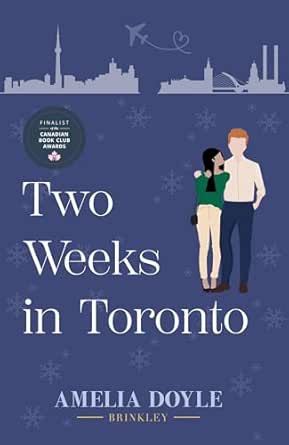
Review by BERNIE BELLAN As the former publisher of The Jewish Post & News, but still publisher of a popular website – jewishpostandnews.ca, I’ve long been inundated with requests to review books.
I tend to ignore almost all those requests – simply because I don’t have other reviewers available who are willing to review books – unlike years past when there were a few different individuals who would be willing to review books for the paper, so it falls on me to do all the reviewing.
Something else that’s happened more and more often in recent years is that authors become their own publicists and can be quite good at drawing attention to their books.
So it was that when I was contacted a month ago by a writer by the name of Amelia Doyle, who asked me whether I’d be interested in reading a book she’d written titled “Two Weeks in Toronto,” the name of that book was familiar to me as Amelia had contacted me last year to ask me whether I’d like to review her book back then.
I did take her up on her offer at that time – and began to read “Two Weeks in Toronto” but, if truth, be told, I lost interest in it. The book had some major flaws – and as romantic fiction I thought it lacked any real spark.
But, when Amelia contacted me again, this time her email noted that the book was a finalist in something called the Canadian Book Club Awards.
Really? I thought. Maybe I was too quick to put that book down – or to turn off my Kindle – as the case may be.
So, I began to read “Two Weeks in Toronto” all over again – with a promise to myself to finish it this time.
I should also add that of the many emails I’ve been receiving in recent years, many have been either from publicists for books or from the authors themselves, and many of the books I’ve been asked to review have been self-published.
It’s not all that difficult to publish a book nowadays and, in fact, many self-published books that I have read have been quite good.
In the case of “Two Weeks in Toronto,” after opening the book again many months after I had first taken a look at it though, I saw that it was published by something called “BRINKLEY Verlag.” I did some research on BRINKLEY Verlag and saw that it’s an Austrian publishing house, but with no information on its website whether it simply publishes books for a fee or whether it actually accepts manuscripts and publishes them without charging the author.
Also, on the title page of “Two Weeks in Toronto,” it says that the book was edited by someone by the name of Kelly McErlean.
Okay – the book had been published by some sort of publishing house and apparently, it had also been edited. I regarded both those things as pluses.
One more thing: I did do some research on Amelia Doyle and saw that she has authored at least a couple of other books: “A Dublin Love Story” and “The Rabbi’s Wife,” so she must have had at least some practice writing novels, I thought. By the way, if you Google Amelia Doyle and see what books she’s written, you can see they’re all described as “sweet romance.”
What does this have to do with my reviewing the book? you must be wondering.
Well, I’ve been in correspondence with Amelia Doyle and she seems such a nice person that I told myself I have to find something good to say about “Two Weeks in Toronto.”
But honestly, I tend to look at the novels my wife likes to read for guidance as to what women like when it comes to romance and many of the titles I see have a mystery element to them – or some rip roaring sex!
Here’s what AI says when you ask it what kind of romance novels women like to read: “Most women enjoy diverse romance novels, from steamy contemporary/spicy reads and funny rom-coms (like Emily Henry) to emotional historical sagas (like Outlander) or ‘romantasy,’ but popular choices often feature strong emotional connection, relatable characters, satisfying happily ever afters’ (HEA), and tropes like enemies-to-lovers or billionaire romance, with recent trends favoring diverse voices and escapism.”
So where does “Two Weeks in Toronto” fit into any of those descriptions, if any?
Well, it does have a romance at the centre of it, but the romance is so predictable that it hardly whets the appetite.
What it does have though, and which might make it of particular interest to Jewish readers, is a female Jewish protagonist by the name of Ciara Walsh. (Ciara, I had to look up, is an Irish name, and is pronounced Kee-ara. What a nice name!)
The person with whom you just know from the outset Ciara is going to fall in love is her dreamy Irish dentist, Ethan O’Leary, tall and blue-eyed – and strange as it may seem: unattached.
At a certain point we find out that Ciara is Jewish – when Ethan comments on the mezuzah on her door, but as to how Jewish she is – well, that was something I began to wonder about as the book went on.
Now, it’s important to note that the book is set right around Christmas – and Chanukah, and the juxtaposition of those two holidays enters into the plot time and time again. There seemed to be so little distinction between the atmosphere pervading both holidays – wintertime, gift giving, family get-togethers, that I wondered whether Amelia Doyle might not be Jewish, but was trying to attract a Jewish audience by injecting some Jewish notes into her book – so I asked her this question: “Are you Jewish in any way, e.g., have some Jewish family?”
Amelia answered: I’m halachically Jewish. “Both my parents come from observant Jewish families and I grew up in a Conservative home.
“Generally speaking, you can find anything from ultra-orthodox to atheist Jews in my family. As you can imagine, living in Europe is not easy as a Jewish person. (I should note that, after further researching Amelia, I discovered that she lives in Dublin.)
“The characters in ‘Two Weeks in Toronto’ were written on purpose in a matter that is more on the liberal side as many of my friends are Reform or in interfaith marriages. This is where the inspiration for this specific book came from.”
In the same email in which I asked Amelia whether she was indeed Jewish, I also noted that I thought the way she intermingled Christmas and Chanukah was deliberately intended to “resonate” with non-Jewish readers.
Amelia responded: “I’m Jewish and there are many ways of practicing Judaism. In this book I decided to write about a non-orthodox Jewish family.”
A “non-orthodox Jewish family?” There’s not much Jewish about them, other than the fact that Ciara’s father, Ian, decided to convert to Judaism when he was younger – for reasons that are totally unexplained. Ciara’s mother, Giuliana (which, apparently, is the Italian spelling for Juliana), is definitely not Jewish, although she doesn’t seem to have much religious orientation either way.
But, let’s not get lost in what is, in essence, a discussion totally irrelevant to this book.
My qualms with “Two Weeks in Toronto” have to do with the writing style – which could have used some good editing. I mentioned that in an email to the author when I was just getting into the book. I suggested that the dialogue could have been much improved had the characters used contractions when speaking, so that for instance, instead of a character saying “I am just stepping out” they could have said, “I’m just stepping out” – which sounds so much more authentic.
Another aspect of this book that drove me crazy is there no explanation for the behaviour of Ciara’s mother, Giuliana, or her sister, Gabriella. Cinderella’s stepmother comes across as kindly compared to Giuliana and, as for Gabriella, who is occasionally referred to as “Bridezilla” by others, well – to use the Cinderella comparison again, she is beyond detestable.
But why? What on earth could sweet, loving Ciara ever have done to provoke such unbridled hatred from her mother and sister? I kept waiting to read an answer – you know, like Ciara was so beautiful that her sister despised her or Giuliana was her stepmother – but no, it’s never explained.
And then there’s Ciara’s relationship with Ethan. Yes, it’s cute how they end up going to Toronto together – to attend Gabriella’s wedding, and they end up sleeping in the same bed together – but without having sex!
So, again, I had to ask Amelia why that was? Here’s what she answered: “In my opinion, most romance books these days are far too explicit. ‘Sweet Romances’ (also known as ‘Clean Romance’) are on the rise again at the moment and this is what my publisher asked me to write.
“Personally, I prefer to have the focus on the relationship and not any sexual relations.
“Not sure about how it is in Canada, but many publishers in Europe as well as the US started publishing ‘clean’ versions of steamier books, not to alienate readers who don’t want to read sexually explicit scenes.”
I’m shattered! “Clean romances” are “on the rise again?” (There’s almost a phallic pun in there, but we won’t go there.)
But hey, it’s almost Chanukah – and Christmas. “Two Weeks in Toronto” is set right around this time of year, so maybe this review is timely. As it’s referred to in the book, this is a book that might make a good read for “Chrismuakkah.”
“Two Weeks in Toronto”
By Amelia Doyle
Published by BRINKLY Vertag, 2024
179 pages
Available on Amazon
Features
Mobile Casino Trends in 2026: Usage Statistics – What Casino Online Westace Says
Mobile technologies simplify everyday life. They are used for payments, regular conversations, photos, and even gambling. Sites like casino online Westace leverage modern trends and do everything possible to maximize engagement. Adapting familiar gambling games to smartphones makes them more convenient. Visitors can launch slot machines or other entertainment with just a few taps on the screen. Quick rounds let you instantly see the results and choose a different game type. Interactivity is the main approach to development in 2026.
Usage Statistics in 2026
Online casinos are using mobile development technologies to adapt gambling games to smartphones and tablets. Now, almost every user has the opportunity to launch games to test their features in a convenient format. Sites like casino online Westace are not far behind and adapt to various screen layouts. The latest industry news also indicates significant developments:
More than 75% of players use online casino services via mobile devices. Statistics show significant steady growth compared to the figure of 65% in 2023.
It is predicted that revenue from mobile casinos in 2026 will exceed the mark of $ 60 billion. The figure is two-thirds of the market. Thus, positive trends can be identified among gambling software developers.
The younger demographic aged 18 to 35 years old is the most active user of mobile devices. They have twice the level of involvement compared to other categories.
80% of new casino accounts were registered through mobile apps or mobile-optimized websites. This indicates their convenience and widespread use.
Mobile development is a priority for online casinos. Operators work closely with developers to adapt all games to the relevant requirements.
Features of Mobile Casino Growth
Mobile versions of sites like casino online Westace are dominating in 2026 for a reason. Players can enjoy games with real dealers even from small screens. At the same time, the broadcast quality remains at a high level without delays.
All games are designed for touch use. Players can easily use portrait mode and adaptive layouts to launch a comfortable gameplay format. Biometric login and two-factor authentication are essential tools that protect transactions and accounts from unauthorized access.
Mobile gaming encourages more frequent play in small sessions. For example, a player can play one or two games of baccarat, and then later return to play slot machines. All progress is saved on any device. Yes, a player can start playing on a smartphone, save the results, and return via a browser on a computer.
All Interesting Facts to Know
Recently, sites like casino online Westace have been paying more attention to mobility. For example, seasonal slots are launched first through mobile versions, and then move to desktop. Regulators have also introduced mandatory responsible elements for smartphone users for greater control. Mobile players spend 20% more time playing with real dealers. This emphasizes the close attention to interactive formats and communication.
Ultimately, mobile casino versions occupy their own niche in the industry. Most players use smartphones to play on the go and enjoy fast games. Developers adapt to these requirements and improve services, adding relevant options to games.
Features
Important Keno Rules: Explained by Casino Online Glorion
Keno is a lottery game that originated in China 2,000 years ago. At that time, it was called baige piao, which translates to “white pigeon ticket” in English. Keno rules on sites like Glorion Casino are similar to those of games like lotto. The game involves choosing numbers in the hopes that they will match randomly selected values. In this article, we will discuss the important rules of online keno.
Understanding Keno Rules at Online Casinos
Keno is a game of chance in which players select 1 to 10 numbers from a table of 1 to 80, similar to bingo. After this, the numbers are drawn. The player’s payout depends on how many figures they match.
In classic keno, the drawing is done using a ball machine. The same equipment is used in bingo and lotteries. The host randomly draws 20 numbered balls. Players win if at least one of their chosen numbers matches the dealer’s draw. The more matching numbers, the larger the payout.
Online keno is played using a random number generator (RNG). Keno payouts on sites like Casino Online Glorionare similar to those in the classic game. The differences are due to the drawing procedure and the properties of different versions.
After users select their 20 numbers, the gambling software publishes its 20 figures, which determine the winner. Payout amounts vary across platforms, so users should check them before playing.
Basic Keno Stages in Online Casinos
Users planning to play keno at sites like Casino Online Glorion should be familiar with the gameplay process. Typically, it includes the following stages.
- Select a keno card. The ticket displays numbers from 1 to 80.
- Choose your numbers. In different versions, users select 10, 15, or 20 numbers before each draw. Each number is called a ‘keno spot.’ You can set the same numbers for multiple draws.
- Check the payout table. In the online version of the game, the table appears after selecting the numbers. It displays information about the payout amount if you guess correctly. The more numbers you match, the larger the payout.
- Calculate your bet. Determine how much you want to bet on each draw. Remember that the bet size affects the final payout.
- Start the game. All the drawn numbers will appear somewhere on the screen. Users can also view the “cold” and “hot” keno numbers. Hot numbers have been drawn recently, while cold ones haven’t won for a long time.
- Match the numbers. Experienced players use the term “catching a spot” when their chosen number is drawn. The number of spots you catch affects your payout.
Keno at websites like Casino Online Glorion offers engaging gameplay. Players can get generous prizes. They should learn the rules, odds, and prize structures to make rational decisions and boost their chances of winning. Chase the thrill, but play it smart.
Features
Common Online Casino Mistakes To Avoid

Online casino games can be a brilliant way to bring excitement to life in your spare time. These games have become hugely popular in recent years, but you will find that people often make the same mistakes. These mistakes can lead to financial losses, cybercrime, and an inferior experience, so it is important to be aware of what these mistakes are so that they can be avoided. This post will outline a few of the most common mistakes people make when playing online casino games and explain how to avoid falling into the same trap. Interested? Keep reading to find out more.
Ignoring Terms & Conditions
One of the biggest mistakes players make with online casino games is ignoring the terms and conditions. You should always take the time to read through these, paying close attention to things like the conditions of bonuses and restrictions in withdrawals. This will help you avoid any nasty surprises when playing games.
Not Researching Casinos
Another common mistake people make is not researching casinos. There are endless options for online casinos, but not all are equal, and there are even many that are unlicensed. Therefore, you need to research casinos and find one that is fully licensed and has positive reviews. The best casinos will have a massive selection of games to choose from, including blackjack online. A wide selection of games means it is hard to get bored, and you can always find something to play.
If you’re a high roller you might want to look at Mejores Casinos Online para High Rollers
Chasing Losses
One of the most dangerous mistakes people make is chasing losses. This is where players will attempt to win back the money they have lost, which often means betting larger sums. This is a dangerous tactic and a slippery slope, so it is important to be aware of it and take measures to protect against it. The best way to avoid chasing losses is to set a budget before each session – if you spend that amount, you need to be able to walk away.
Not Understanding Games
It is always important to have a strong understanding of the game that you are playing. This will boost your chances of winning and your gaming experience. Therefore, you should always read the instructions when playing a game for the first time. For strategic games like poker, there is a lot of information online that will help you get to grips with the basics and learn strategies to use.
Weak Passwords
Cybersecurity needs to be a top priority when it comes to online casino games. The top casinos will have strong cybersecurity measures in place, but you also have a role to play. It is important to use strong passwords and multi-factor authentication to prevent hackers. It is also smart to avoid having large sums held in your online account in case someone hacks your account.
These are the most common mistakes that you will want to avoid when it comes to online casino games. By avoiding these mistakes, you can improve your experience and enjoy the excitement that these games can bring.