


Features
Young Winnipegger Noah Lieberman pioneering new approach to self-publishing

By MYRON LOVE Last August, the Jewish Post and News ran a story about budding author Noah Lieberman who had just published his first book – a dive into the social and psychological aspects of fantasy football and what goes on behind the scenes. The book was wildly successful – reaching the top of the charts for new releases on Amazon.
He followed up that first book with a second effort a few months later. “The God Complex”, according to the blurb online, aims to teach readers how to think for yourself. It shows the “pros and cons of God” and empowers you “to make the almighty decision”.
“Every day most people make the mistake of allowing others to control what they believe,” Lieberman noted. “They try to convince you that God will either solve your problems, or cause them. Here’s the big thing no one wants you to know – you can’t let other people sell you on what to believe.”
In this work, Lieberman explores the balance between spirituality and science, the impact of religion on family, community and relationships and the consequences of devoting yourself to god.
Now, with his appetite for writing whetted, the younger son of Jeff and Robyn Lieberman has embarked on what he hopes will be a full time career as an author with a follow-up publication with a twist.
With the recent release of “Backpacking Adventures: Europe Part I”, Lieberman has reinvented himself as a travel writer and he is reinventing the travel-writing business.
The author believes “Backpacking Adventures” and all of his future books should be free for everyone to read. To that end, his new book is available only as an e-book and, to pay for his travel and provide an income, he is following the YouTube model.
YouTube creators find sponsors to underwrite their costs,” he explains. “In return for funding, the content creators include the sponsors’ logos and contact information and promote the sponsor’s services or products.
“I believe that this is the new direction in which book publishing should go. I think this style of publishing is going to catch on quickly.”
Although his family did go on road trips around North America while he was growing up, Lieberman’s first trip overseas was through Gray Academy’s P2K exchange program in 2016 with Danciger High School in the northern Israel community of Kiryat Shemona. The next year, he joined his Gray Academy graduating class in Israel. Instead of coming right home afterward though, he and some of his friends remained abroad for another month with stops on the Greek Islands of Ios and Santorini and a few days in Barcelona.
That is how the teenager was bitten by the travel bug.
Two years later, he and older brother, Josh, spent a month backpacking and staying in youth hostels through Europe, going from London to Dublin, Amsterdam, Paris, Venice, Florence and Barcelona.
Lieberman points out that his first e-book covers the journeys on his second trip because, he says, it was more recent and included more places. One of the experiences you can read about in this edition is his and Josh’s “escape” from an old Irish prison.
“We were visiting the old Kilmainham Gaol,” he recounts. “We saw where the inmates had been kept and where the public beheadings took place. Then we went into a garden that had been planted in what was formerly the inmates’ exercise yard. After about half an hour in the garden, we got lost. Everywhere we turned, we kept running t into high walls. We decided that the only way out was to climb the wall. So I got up on Josh’ shoulder and pulled myself up to the top of the wall. Then I pulled Josh up. Now we are looking down at a ten-foot drop to the ground on the other side. Josh carefully dropped down first. I followed with some trepidation. Fortunately, we both landed without injury.”
Before venturing into publishing his first e-book,Lieberman sought out a sponsor. “I was looking to partner with a good company, with good values and one that had been around for a long time,” he says. “I spoke with a few companies.”
He settled on Canada One Travel, a travel agency that has been in business for almost 40 years. His first book features the Canada One logo prominently and includes information about the company.
Lieberman’s second e-book – covering his travels in Europe in 2017 – will becoming out soon.
The author reports that his most recent travels started with two months in Australia and new Zealand and then on to Bali, Singapore, Thailand, Vietnam, the Philippines, South Korea and Japan.
And, he will shortly be off again chaperoning a group of high school students around London, France, Switzerland and Italy at the behest of an American company that arranges student tours.
“I have been to 20 countries so far – and there is still a lot to see in the world,” he observes. “I would love to go the Africa and South America. There are also a lot of great places to see here in Canada and in the United States.”
What the young author is envisaging – again following the You Tube model – is possibly putting out 10 to 12 e-books a year on a wide variety of subjects – all to be downloaded free of charge and all funded by commercial sponsorships.
“I think that would be an effective way to build my own brand,” he notes. “Maybe I can expand eventually to television.”
“Interested readers can download “Backpacking Adventures: Europe Part I” by typing in this link to the internet: noahlieberman.hopp.to/europebook or by scanning the QR code. You can also check out his website at www.noahlieberman.com.
Features
Coincidence or not: Two books launched the same night – by my brother and by my niece
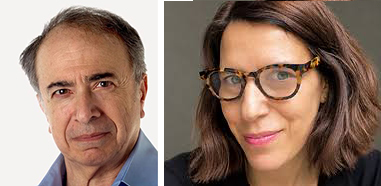
By GERRY POSNER Recently, on October 8, to be exact, an odd timing coincidence occurred in my family that struck me as highly unlikely. Two books were launched on the very same night in Toronto, at two separate locations. What was unusual for me was that one book was by my brother, Michael Posner and the other book was written by my niece, Elana Shira Segal. The topics, unsurprisingly, were not connected to each other. But you could not have planned that timing any worse than it turned out to be.
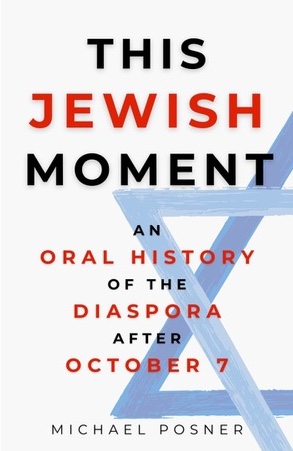
Michael Posner’s book, This Jewish Moment, an oral history of the Diaspora after October 7, 2023 had various people giving their opinions on a set of questions Michael posed to them as he interviewed them following the October 7, 2023 massacre. The interviews were conducted by Zoom. Each person interviewed was aware of the fact that the interview was recorded and that the interview might be used in a book. Each person’s name and age is given along with a brief description of who that person is. Some of the interviews were with people well known in Manitoba circles.The oral history technique is not new to Michael as he used it in the Leonard Cohen trilogies he created not that long ago and before that in his book on Mordecai Richler.
Michael interviewed over one hundred Jews in Canada and the United States. The thrust of the book was to explore how the events of October 7 affected the interviewees, how it changed (or didn’t change) their interpersonal relationships; altered, if at all, their spiritual lives; their trust in Jewish institutions and indeed, their perceptions about their own safety. It includes their thoughts about what lies ahead and even the idea of leaving North America. Without giving too much away, I can say that the opinions canvassed in the book do reflect a definite shift for many of the interviewees from their previous thoughts on these topics. If you read Michael’s book, you will not come away singing cheery songs. For many people, the future is bleak.
At the book launch held at the Beth Tikvah Synagogue in Toronto in front of about sixty people, there were several former Winnipeggers in attendance, including: Paul Shuckett, Bernie and Sheila Rubenstein, Aubrey Caplan and Philipa Glazerman, the former Susan Silverman, Gary Diamond, my son Ari Posner, and even a current resident of Winnipeg, Dolly Cohen, who came to visit her cousin Philipa.
Michael’s book, published by Sutherland Press, is in hardcover and ebook. It can be purchased at Indigo, and through Amazon.

Elana’s book is in an entirely different genre than her Uncle Michael’s book. Even the Darkness Has Stars is the title of her book -also her very first book. It is a work of fiction based on her career as a social worker and therapist for over 30 years in Toronto. The book explores the life of a teenage girl dealing not only with the usual teenage angst, but other issues as well. It is a book that will resonate with teenagers, and indeed parents of teenagers. It is a story of resilience and is an honest reflection of the very real problems facing many teens and ways to address their problems. I would suggest that the themes in the book are very relevant to teenagers today, especially girls. I think it is also fair to say that many parents of teenage children will identify with the difficulties faced by the chief protagonist in the book. Even counsellors and trained therapists will recognize the issues raised in this book. Schools and libraries would benefit from the book.
At her book launch, Elana outdrew her Uncle Michael as she had over one hundred people there. The conflict of the two books presented several of us in the family with an issue as to which event to attend. While my son Ari came to his uncle’s launch, his wife Tamar Kagan went to Ari’s first cousin Elana’s debut book launch. Even my wife and I split our allegiances.
Elana’s book can be ordered through Amazon or Barnes and Noble in the USA.
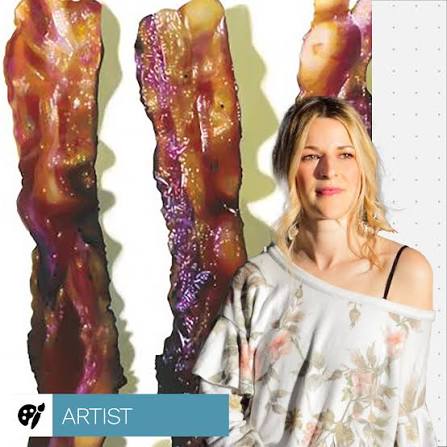
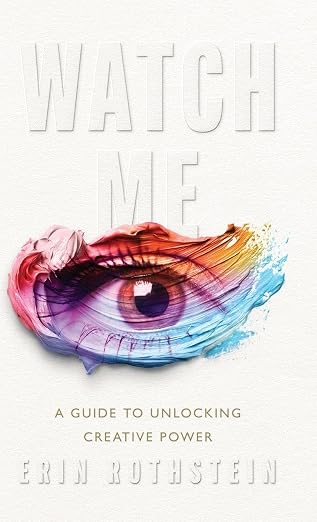
Now, if the oddity of the two books in the family being released at the same time was not enough, in November, another family member has a book coming out. This book is by my nephew Sam Posner’s wife, Erin Rothstein. Her book, called Watch Me is a guide to unlocking creative power. Erin is a visual artist, whose original paintings and limited edition prints have made her a name in the world of art already. She has a large following due to the success of her art. Her book deals with the ways to find your inner creativity and the ideas that spring to life when a person unlocks that creativity and gives him or herself permission to think bigger. If the book lives up to the art Erin creates, she will have a best seller. Erin’s book will be launched in four cities: Toronto, Montreal, New York and Los Angeles. It will be available at Indigo, Barnes and Noble, and through Amazon in hardcover, paperback, e-book and audiobook.
To the readers of this article, get out there and support the Posner family.
Features
The late Dr. Maurice Shnider had a fascinating life – from serving in WWII to meeting famous celebrities who passed through Winnipeg
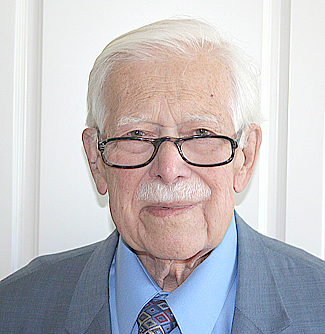
By MARTIN ZEILIG I first visited Dr. Maurice Shnider at his home in Winnipeg’s River Heights neighbourhood to talk about war.
His house reflected the life of a successful physician. It was spacious and comfortable without being ostentatious. Family photographs occupied shelves and tables. Sunlight spilled into the kitchen where we sat drinking coffee.
By then he was an elderly man, friendly, thoughtful, and possessed of that rare quality found in some people who have lived through extraordinary times. He never seemed impressed by his own experiences.
He had been born in Sheho, Saskatchewan, in 1923 and grew up in Inglis, Manitoba.
Then came the war.
As a young man he served with the Royal Canadian Air Force before being seconded to the Royal Air Force. Flying aboard Catalina flying boats in the Bay of Bengal, he participated in missions searching for downed Allied aircrew and earned the Distinguished Flying Cross.
Those were the stories I had come to hear and later wrote about for the Jewish Post & News.
Stories of long flights over open water.
Stories of rescue.
Stories of courage.
Yet as the interview continued, another chapter of his life emerged.
After the war he returned to Canada, attended medical school at the University of Manitoba, and eventually built a successful family practice in Winnipeg. His patients often became his friends. He took pride in caring for generations of families and became known as a gifted and dedicated physician.
For a period of years, he also served as the physician responsible for checking vaccination records and health documentation for international travellers passing through Winnipeg International Airport.
It was then that his eyes brightened.
The war stories were important.
The airport stories were fun.
“You’d be surprised who came through Winnipeg,” he said.
The coffee was fresh. Outside, a warm prairie breeze shifted the trees beyond the kitchen window.
Then he smiled.
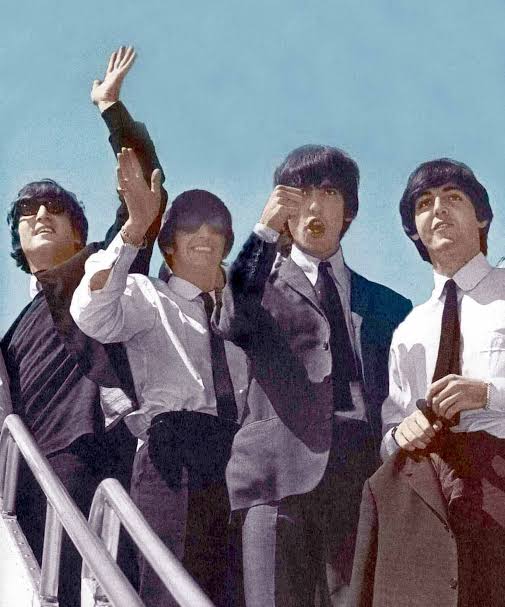
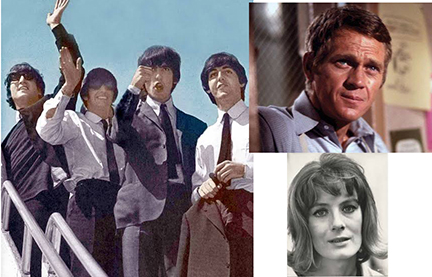
“Even the Beatles.”
The name immediately caught my attention.
“The Beatles?”
He laughed.
“The whole city went crazy.”
It was August 18, 1964.
The Beatles were on their way to begin their first major North American tour and Winnipeg was merely a refuelling stop. They weren’t playing a concert. They weren’t staying overnight.
They were simply passing through.
Yet somehow word spread.
Radio stations reported it. Teenagers rushed to the airport. Parents drove excited daughters across the city. Traffic clogged nearby roads. The terminal filled with screaming fans hoping to catch a glimpse of the four young Englishmen who seemed to have conquered the world overnight.
Maurice happened to be the airport doctor assigned to examine the passengers’ health records.
What should have been a routine day suddenly became anything but.
Almost fifty years later, what remained vivid in his memory was not the famous faces but the sound.
The noise.
The shrieking.
The excitement.
For a brief moment Winnipeg became the centre of the universe for thousands of young Canadians.
Then the aircraft door opened.
John, Paul, George, and Ringo appeared.
They waved.
The crowd erupted.
A few photographs were taken.
A few words were exchanged.
And then, scarcely more than twenty minutes after they had arrived, they were gone.
Winnipeg returned to being Winnipeg.
Maurice chuckled at the memory.
“John Lennon was cheeky.”
I asked what he meant.
He considered the question.
“Always had a smart answer.”
He smiled again.
“Not rude. Just cheeky.”
The passage of decades had done nothing to diminish his amusement.
For a few moments we sat quietly.
Then another memory surfaced.
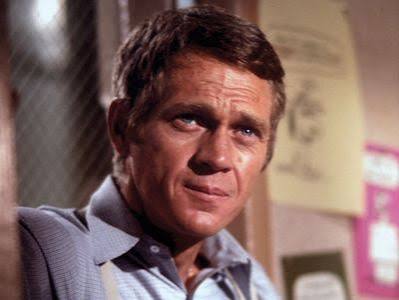
“Steve McQueen was one of the nicest.”
That surprised me.
Maurice encountered the actor in the airport restaurant.
McQueen was seated alone.
No entourage.
No photographers.
No one making a fuss.
Just a man eating lunch between flights.
Maurice rarely approached famous people.
But there was a reason that day.
One of his children was facing serious medical challenges and was a devoted Steve McQueen fan. Movies offered an escape from hospitals, treatments, and uncertainty.
So Maurice walked over to the actor’s table.
He introduced himself and explained the situation.
McQueen listened carefully.
Then he asked for the family’s address.
That was all.
No promises. No performance. No grand gesture.
Simply an address.
Several weeks later a package arrived at the Shnider home.
Inside was an autographed Steve McQueen poster.
Maurice’s expression softened as he recalled it.
The poster itself wasn’t what mattered.
What mattered was seeing the joy it brought.
Even years later, that was the part of the story he remembered most clearly.
“He was a very humble man,” Maurice said.
“Very soft-spoken.”
The kitchen fell silent.
For a moment the famous actor disappeared entirely from the story.
What remained was a father’s gratitude.
Then Maurice laughed again.
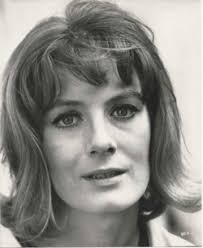
“Vanessa Redgrave.”
Another unexpected visitor.
She was travelling through Winnipeg on her way to Los Angeles when it was discovered that she lacked the proper vaccination documentation required for international travel.
In those days such requirements were taken seriously.
The problem needed solving.
So Maurice solved it.
He drove her downtown to his office.
One of the world’s most celebrated actresses riding through Winnipeg in a doctor’s car.
No limousine.
No security detail.
No red carpet.
Just traffic lights, city streets, and ordinary conversation.
There he administered the required vaccination and drove her back to the airport in time for her flight.
He told the story as though it were perfectly routine.
Perhaps for him it was.
I remember thinking that this was what made his stories so wonderful.
To everyone else they sounded extraordinary.
To Maurice they were simply things that had happened during a long and interesting life.
As our conversation drew to a close, he looked down into his coffee cup and reflected on the famous people who had crossed his path.
The Beatles.
Steve McQueen.
Vanessa Redgrave.
Different personalities.
Different kinds of fame.
Yet in the end they all became the same thing.
Travellers.
People worried about schedules.
People missing paperwork.
People trying to catch flights.
People trying to get somewhere.
The old airport had been a great equalizer. For a few moments, between arrival and departure, fame gave way to ordinary life.
And Maurice Shnider occupied a unique place in that world.
He wasn’t a celebrity.
He wasn’t an observer standing outside the story.
He was part of it.
A prairie boy who became a decorated wartime airman, flew rescue missions over distant seas, returned home to study medicine, built a respected family practice in Winnipeg, and devoted his life to helping others.
Some of the people he met happened to be famous.
Most were not.
To Maurice, it made little difference.
He especially enjoyed the company of pilots, storytellers, musicians, and adventurers. He remained fascinated by the Second World War, by history, and above all by people. Fame interested him far less than character.
He remembered the famous ones not because they were celebrities, but because, for a few brief moments, they revealed themselves to be something far more interesting.
Simply human.
When Dr. Maurice Shnider died in 2013 at the age of ninety, Winnipeg lost not only a distinguished physician and decorated veteran, but also a man who never lost his curiosity about the world or his affection for the people who passed through it.
Some departures are quickly forgotten.
Others leave a lasting mark.
That was how I remember him.
And that is how he deserves to be remembered.
Features
Musings from Dizengoff Street – by Bruce Brown (updated Oct. 26)
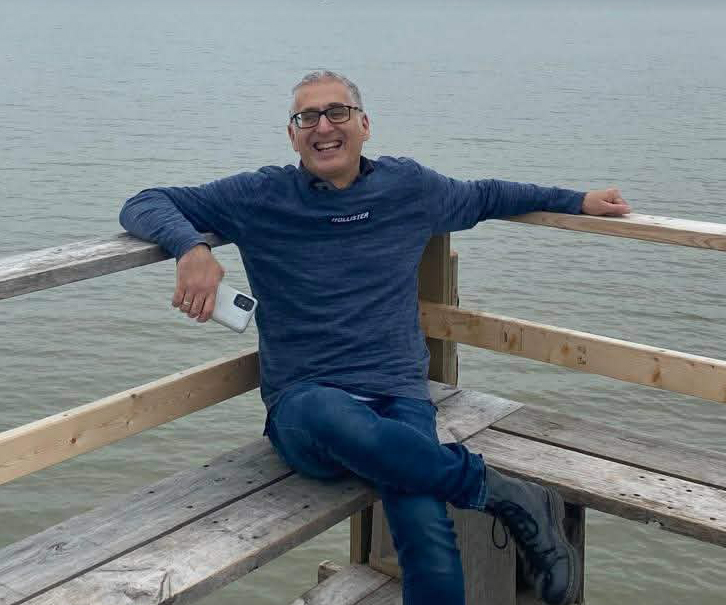

(Posted Oct. 26) Trigger warning. Totally unscientific, totally subjective, highly generalized tour of Israeli electoral patterns musing ahead.
With election day upon us. The wife says if more of the same is voted in… she’s outta’ here. Somewhat extreme but I get her. A pretty common threat in the Shtetl these days. But that’s if you live in North Tel Aviv. While the word from stall owners of Tel Aviv’s HaTikva market and Jerusalem’s Mahaneh Yehuda market is somewhat different. While visiting the latter, the Prime Minister received a rousing chorus of the Israeli English version of Happy Birthday. Celebrating his 77th. I wish him the best… as he hopefully prepares for retirement. Which does not excuse a bottle thrown at his motorcade as he arrived – totally unacceptable! Meanwhile, those in areas like Bnei Brak, Bet Shemesh and Mea Shearim may be looking for something else. Voting for Shas, United Torah Judaism or the ilk to retain their status quo of not educating, not paying taxes and not serving. And those from the Settlements most likely casting their vote for Smotrich or Ben Gvir. Yikes! And double yikes! Our Arab co-citizens from Nazareth, Jaffa, and Umm al-Fahm most likely voting for Ra’am or the Joint List (comprising the three other main Arab parties). Speaking of which, I am pretty impressed with Monsour Abbas’s Ra’am; channeling a message of co-existence, cooperation and loyalty. Although a meaningful partner in the previous Bennett/Lapid government, still too extreme a ballot to cast. For me anyway. And supporters of the middle, -often veering to the right and comprising the current main coalition or opposition blocs- can be found throughout the shtetl. As for me. I still waver between Eisenkot or Bennett. Or perhaps Lieberman…but probably not. Message to myself – time to decide! All while under the threat of another skirmish with Iran. Who is looking to upend our democratic right but what do they know about democracy. My back-of-the-voting-envelope wisdom as we approach October 27. Vote. But vote for the right guy. Hmmm. ‘Guy’? All party leaders are men. Now where’s a good Golda when you need one. Sagacious indeed.
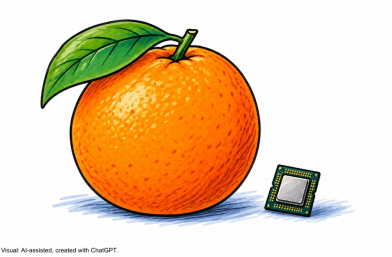
(Posted Oct. 22) Israel. Once famous for its Jaffa oranges. Has since offered the world so much more than just a tasty, vitamin C packed, citrus boost. We’re offering. And most of the globe is accepting. World class hi-tech, med-tech, agri-tech, def-tech (yes defense!) innovations that. Well. Simply make the planet a better place. From Intel Israel’s Pentium 4 and Centrino microchips. Where the ancient city of Jerusalem became the world’s first Wi-Fi-enabled city. How cool is that! To Checkpoint’s worldclass network firewall security systems. From Teva’s generic low-cost medications and schizophrenia and bone health treatments. To Given Imaging’s pain saving Pill Cams. To MeMed’s fifteen-minute blood tests distinguishing between infections. To Rafael and Elbit’s Iron Dome and Iron Beam anti-missile defense systems. To Ormat’s renewable energy solutions. From Netafim’s pioneering drip irrigation technology. To CropX smarter farming with less water. To Watergen and H20LL which. Now get this. Essentially turns air into drinking water. Hmmmm…. To Mobileye technology helping cars see. Yep, those dashboard beeps when approaching another car too fast was developed in our little shtetl. To Waze’s GPS navigation software. Without which we would probably make the wrong turn. And to Wiz’s cloud and AI cybersecurity platforms, sold to Google in 2026 for 32B$. In cash. The largest foreign acquisition of an Israeli company to date – not too bad! And many, many more ‘Froms’ and ‘Tos’. So now. A modest call out to all those BDS (Boycott, Divest and Sanctions) supporters. You probably don’t realize how embedded your daily lives are with Israeli invention. But don’t worry. Israel won’t sanction you. So remember. Buy Israeli!

(Posted Oct. 19) So, two runner up distinctions for my little shtetl. On the bright side. Israel is often considered to have the second highest number of listings on the tech heavy NASDAQ. Often jockeying for second place with China and sometimes Canada. The number one country, of course, is the U.S.. On the not so bright side. According to Microsoft’s 2026 Digital Defense Report, Israel was ranked the second most targeted county in the world for ‘observed state-linked cyber events’, at 210 events. The number one country here is also the U.S. (at 531 such events). Now this is a specific metric limited to particular and observed cyber activity. On a broader note, Israel’s National Cyber Directorate reported about 4,800 hostile cyber incidents in June 2026. Yes, in a single month! Somewhat daunting. And thank goodness for our esteemed IDF 8200 unit. I digress. And back to the NASDAQ listings and the MS Digital Defense Report. Guess we gotta’ take the good with the bad.

(Posted Oct. 15) Congratulations South African jurist Navi Pillay for winning the 2026 Nobel Peace Prize. Not. The Norwegian Nobel Committee announced that she won the prize “for her efforts to promote peace and international law.” Now I admittedly don’t know much about Navi other than what I just googled. Our legal scholar defended anti-apartheid activists in South Africa including Nelson Mandella and was a Prosecutor against crimes committed during the 1994 Rwandan war. But. And here I tend to agree with the shtetl voices accusing Navi of bigotry and injustice. For heading a UN Commission of Inquiry that concluded Israel of committing genocide in Gaza. And for previously serving as a Judge at that bastion of ‘justice for all’, the International Criminal Court which later served arrest warrants for war crimes against Prime Minister Netanyahu and former Minister of Defense Yoav Gallant. Granted, not during her tenure but anyway kinda’ guilty by association – there’s a pun in there somewhere. Seriously. Am just so goldarn frustrated that now another anti-Israel voice will have its day on the international stage. To promote her version of ‘peace and international law’. And the beat goes on….

(Posted Oct. 12) Thirty-eight parties. That’s right. Thirty-eight political parties are running in this year’s national elections. Meshuga! Of course. The list includes those ‘far out’ groups, such as the Garden of Eden party or the Shema party or the Eternal Covenant party. All fringe messianic slates that don’t stand a chance of crossing Israel’s 3.25% electoral threshold. Thankfully. Of this very robust list there are about twelve ‘mainstream’ parties -yes, Israel has a very broad midsection- with a reasonable chance of winning a seat to Israel’s twenty-sixth Knesset. Compare this to Canada’s political map of sixteen national parties. That’s right. Sixteen parties. Meshuga! Of course. Surprising that stable, predictable and moderate Canada has so many political colors. Of this somewhat robust list there is but a handful of mainstream parties – a pretty narrow midsection. Back to thirty-eight and as the saying goes, ‘two Israelis three opinions’. With fifteen days remaining until election day. Let the mudslinging continue.

(Posted Oct. 8): The ‘negotiations’. And I use the term loosely. Between the U.S. and Iran. So goldarn random. I wouldn’t be surprised if they are playing a kind of remote game of rock, paper. Scissors. Just imagine them. President Trump for the U.S. And. Well. Someone for Iran. Hooked up via high security internet link. Throwing out their fists. Rock. Or paper. Or scissors. Lots of confidence, that.
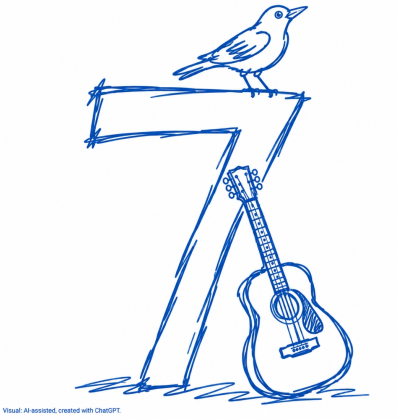
(Posted Oct. 6): Commemorating Oct 7 2023
Shortly after that tragic day. Visiting the haunting display of despair and hope at Dizengoff Square. The wounds still raw. Was mainly despair. With only a glimmer of hope. Overcome by the collection of bloodied and blindfolded stuffed teddy bears strewn against the Agam Fountain.
Driving home afterwards. Two songs played on the radio. One after the other. As if the music score to a very sad movie. Even today, when hearing these songs. They conjure up memories of my mindset three years ago.
George Harrison’s ‘While My Guitar Gently Weeps’. “I look at the world / And I notice, it’s turning / With every mistake / We must surely be learning / Still my guitar gently weeps…”
Paul McCartney’s ‘Blackbird’. “Blackbird singing in the dead of night / Take these broken wings and learn to fly / You were only waiting for this moment to be free / Blackbird fly / Into the light of a dark black night…”
Always remembering. But looking forward.
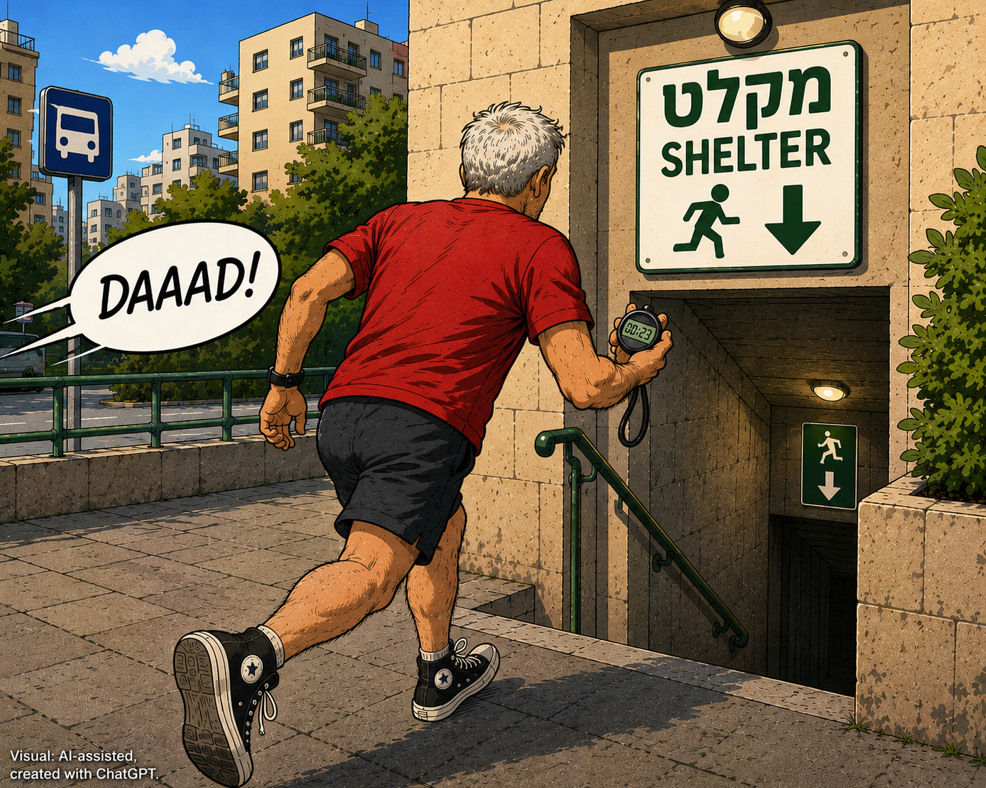
(Posted Oct. 1): So my daughter told me about the new apartment rental she was considering for the upcoming academic year in Jerusalem. “Third floor. Three bedrooms for three roommates. Twenty minutes from the university. Close to the bus stop. Grocery store nearby.” She itemized. Then with her next breath, “Shetler in the next building.” Kinda’ took my breath away. Is that where we live? What we’ve become? What pre-occupies us? Yes. Yes. Yes.
Despite my recurring safe room musings. It still kinda’ shook my core. But once I regained my existential footing. I realized how lucky we are. We have a well-prepared wartime infrastructure. We are conscious of wartime safety and security. It’s become second nature. Even when choosing an apartment. Then I recalled how last year. When my daughter first moved to Jerusalem. I focused on the shelter thing. Even timed a dash to the nearest shelter. She cringed with embarrassment. As she does with much of what I do – dad stuff and I digress. Now here she is. One year later. Itemizing her well thought out considerations. Including the shelter. I guess she listens to me after all. Well…sometimes anyway.
(Posted Sept. 28) Caution. Caution. A very long muse ahead….
So Prime Minister Netanyahu made his fifteenth address at the United Nations General Assembly. I get excited with every speech. Preparing some lightly buttered popcorn and comfortably settling in front of the T.V. for some high-stakes geopolitical posturing. And this one didn’t miss the mark and the high bar Netanyahu sets for himself.
Liked when he referred to our ‘friends’ leaving the hall before he spoke. Asking. And smirking. At the beginning of his speech. If there are any other “moral cowards” who would like to leave. He could have said much worse.
Liked his strong defense against the acrimonious, hostile, and simply incorrect accusation of genocide. Insisting, with examples, of Israel being guilty of the opposite. Supplying a million polio vaccinations. Distributing two million tons of food. Providing warnings of pending attacks -leaflets, cellphone calls, ‘knocks on the roof’ (an IDF tactic of firing non-lethal projectiles towards roof tops as warning to noncombatants to evacuate before a pending airstrike)- in civilian areas where Hamas is inevitably hiding. Netanyahu also referenced Colonel John Spencer, head of Urban Warfare studies at West Point and the preeminent expert on, well, urban warfare. Who clearly defends Israel as having done more to prevent civilian casualties in war than any other military in history. That’s quite a claim! So yes. Israel can actually be guilty of ediconeg – the opposite of genocide.
Didn’t like Netanyahu’s Ben-Gviresque defense of violent West Bank settlers. Or is it Judea & Samaria. I admittedly struggle in geographically defining the area, I digress. And didn’t like him referring to these settlers as “juvenile delinquents”. They are much more than that! If not terrorists, they should at least be called -and treated- as violent criminals. I admittedly struggle with finding the appropriate label, again digressing. Overall, this struck me as pandering to his far-right electorate. Standing before the green marble wall of the UN podium…hmmm, not the most appropriate venue for local electioneering.
Didn’t like his beeper reference. While brilliant, the pager attack in Lebanon happened in Sept 2024. Was so taken aback by this reference that I fact checked the date between mouthfuls of popcorn. And Israel already took credit for this publicly and at several international forums. Just seemed a bit dated, forced and out of place.
Liked the swipe at our ‘friend’ Mamdani. On the podium of the U.N. in N.Y. No less!
Liked his call for Jews around the world to stand tall. “Raise your head high. Be proud. Be confident. Don’t be intimidated.” He admonished. Okay, confession time. I will not speak Hebrew with the wife when travelling overseas. Am a bit scared and maybe need to stand a bit taller. I digress.
Liked Netanyahu’s callout to the Iranian people. Declaring that “The power of the people will overcome the people in power.” Although he didn’t have to provide a public service announcement for Elon Musk’s Starlink, waving a Starlink device at the podium.
Didn’t like, as pointed out by the Jerusalem Post, that there was no complementary vision to his fiery, hardline and somewhat Sparta-like rhetoric. No mention of a more conciliatory, Athenia-like vision for the day after. Emphasizing Israel’s desire for peace and what it can and has offered the world.
Loved the overall theme. That Israel will survive. And thrive. Because, as he exclaimed several times, “We have no other choice!” This was based on a reference in his address to his older brother Yonathan Netanayhu who led the rescue at Entebbe in 1976 and was the only Israeli casualty. Netanyahu even thanked the Uganda government for recently erecting a statue dedicated to his brother. Thought this a nice, personal touch.
Loved Netanyahu’s passion. His fiery indignation echoing throughout his almost forty-minute speech. His fury at the goldarn outrageous, bigoted, noxious branding of Israel as ‘bad’ by much of the world’s useful idiots. Although should have channeled some of that ire to a more conciliatory day after vision.
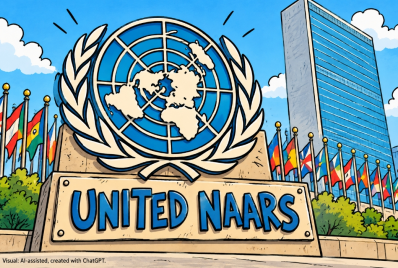
Anyway. As for the United Nations. That bastion of partiality and moral cowardice. Think it should be renamed the United Naars. Again I digress.

(Posted Sept. 25) Looping back to an August 9 muse about my visit to Jerusalem’s Basimta Café and its dispute with the neighborhood ultra-orthodox for opening on Shabbat. Which I felt was a bit of a storm in a teacup as there wasn’t much protest action when I visited. But kerfuffles nonetheless. Unfortunately the café decided against remaining open on Shabbat. According to the café manager “…it will return to what it was intended to be: a calm, pleasant and open place for coffee, culture and dialogue.” As it turns out, the manager is also CEO of Jews for Jesus. Which is fine by me. Live and let live. But just wondering if this was also reason for the café brouhaha. As there are many other Jerusalem cafes open on Shabbat which the ultra-orthodox do not protest against. Not that I want to give anyone ideas. Just sayin’.
(Ed. note: Just to put Bruce’s latest musing in context, here again is what he wrote on August 9): August 8, 2026)
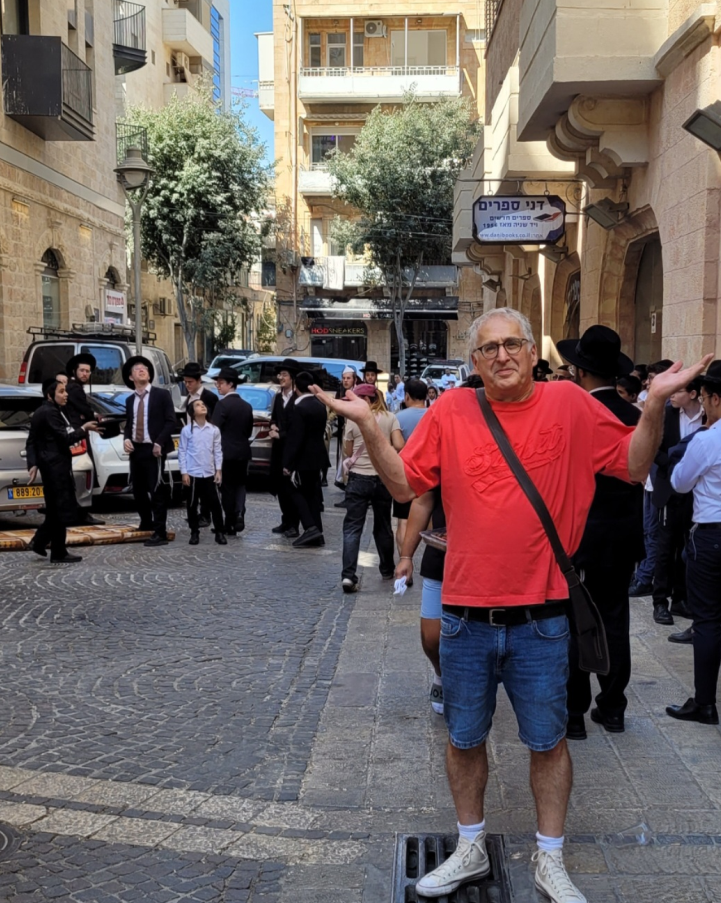
Outside Basimta Café in Central Jerusalem. Love the red shirt against a tiny sea of black. Not sure I am shrugging because of the ultra-orthodox uproar over a Jerusalem café operating on Shabbat or the lack of an ultra-orthodox uproar over a Jerusalem café operating on Shabbat. For the last six weeks Israeli headlines shouted about the cafe chaos. With the ultra-religious blocking entrances and storming the café. While shouting ‘Shabbos! Shabbos!’ Upsetting the secular amongst us just wanting to enjoy our Saturday iced matchas. So the wife and I thought we would check it out. And. Yes. Buy something to support the business. Uproar. Not. Blocked entrances. Not. Storming the café. Not. Albeit there were police barriers separating the devout protesters from the coffee drinkers. The protesters being just a few dozen black clad, pious Jews. Mostly teenagers. And yes. Shouting ‘Shabbos! Shabbos!’ Certainly underwhelming in its reported mayhem. Reminds me of the famous saying misattributed to Mark Twain – “If you don’t read the newspaper, you’re uninformed. If you do, you’re misinformed.” But I did enjoy my iced matcha.

(Posted Sept. 22) Admire him or despise him. Love him or hate him. Commend him or vilify him. Praise him or criticize him. Respect him or disdain him. Believe him or doubt him. Vote for him or not. However you perceive him. And whether you support him. Wishing Prime Minister Netanyahu a successful visit to New York and the U.N. And that we won’t have to send him a cake with a hacksaw baked inside. Mamdani… stand down!

(Posted Sept. 18) Just wonderin’. When a tree falls in a forest and no one’s there to hear it, does it make a sound? And if Iran says it’s not enriching uranium and no one’s there to verify it, do they develop fissile material?
Now Iran just obtained a seat on the General Committee of the International Atomic Energy Agency’s General Conference – how crazy is that. Like letting the cat guard the milk.
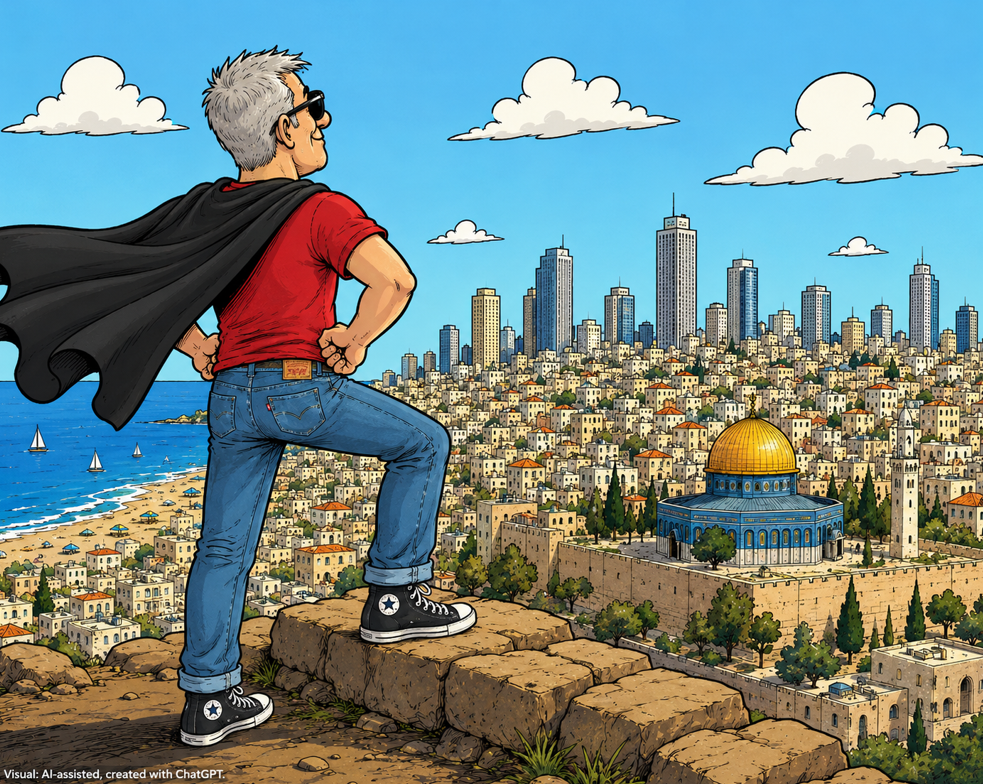
(Posted Sept. 15) Apparently some superheroes are against us. But not really. Whewww!!! Fortunately it’s just the progressive actors who play them in movies. Such as Benedict Cumberbatch (Dr. Strange) and Mark Ruffalo (the Hulk) as well as other minor actors not worth mentioning. What are these misinformed thespians aligning themselves with. Not sure they really know. Well. It’s with The Freedom for Marwan campaign, which pushes for the release of convicted, arch-terrorist mastermind Marwan Barghouti. Convicted in 2004 and sentenced to five life sentences plus 40 years for orchestrating various heinous shooting sprees in Israel during the Second Intifada (2000-2005). Killing and wounding too many innocent Israeli civilians including a Greek Orthodox monk outside Jerusalem. As a comic book fan, and closet Batman and Aquaman (when I swim), it saddens me that these guardians of the universe can be associated with defending evil. But then I remind myself it’s only the actors -what do they know anyway- and not really the superheroes. Unlike our own Gal Gadot (Wonder Woman), Natalie Portman (the Mighty Thor), Shira Haas (Sabra) and Liev Schreiber (Sabretooth). All firmly on the side of good.

(Posted Sept 10) Honey cakes. Honey cakes. Honey cakes. It’s that time of year. Yummy! Here comes Rosh HaShana 5787. And its…. You guessed it. Honey cake season. That light brown loaf our baba used to make. Starting a few weeks before Rosh HaShana and extending through Yom Kippur – a first bite to break the fast and usher in a sweet year- honey cakes are found throughout the country. The familiar sight of the ready-made, pre-packaged, ‘assembly-line’ honey cakes wrapped in cheap cellophane found in Grocery stores. The freshly baked honey cakes adorning window displays at local bakeries. The exorbitantly priced, gourmet honey cake desserts offered at fancy Tel Aviv restaurants. And of course, honey cakes festooning the festive, colorful, Rosh Hashana dinner tables across Israel. I bake my own honey cake which is pretty good. My wife and kids would beg to differ. But these slightly glazed honey cakes -of my own culinary, shtetl inspired creation- are heartedly enjoyed by me as I gain several honey cake induced pounds. Shana tova!

(Posted Sept. 8) Hoarding. A combination of my own little wartime PTSD and some recent headlines about Iran trying to coordinate a multifront attack (is that capability still there?!) and October 7 like rumblings from the West Bank (or Judea & Samaria, depending if you wear a kippa and if its knitted and if it tilts to this side or that side -that’s a shtetl insider joke). I digress and Yikes! And we just had a nation-wide drill of the IDF’s top-level headquarters preparedness for such scenarios. Double Yikes! So ya. I’m always checking and rechecking that we have way more than enough of some things. The thought of entering another prolonged war and some stuff no longer available, even for a short time, scares the bejeebers out of me. Just writing about it triggers the ‘go and buy’ dopamine hit. Medications. Toilet paper. Bottled water. Canned goods. Also worried about the country running out of bullets. But I can’t hoard those.

(Posted Sept. 5) An open letter to the zany and zealous mouthpieces of those delightful, anti-Israel protests held regularly in Toronto. In the heavily Jewish Bathurst & Sheppard area no less. Fear and harassment in the community? Not by the hairs of our chinny chin chins.
Dear Friends.
Are you serious.
Sincerely,
Bruce Brown, a Zionist who does not rape children. Who does not murder children. Who does not eat children. And, get this, who lives in Israel.
(Ed. note: To better understand what Bruce is talking about, go to this story on our website: Police open hate-crime investigation)

(Posted Sept. 1) Can you be more of an international embarrassment and liability? Yes talking about Israeli’s antagonist extraordinaire and National Security Minister Itamar Ben Gvir.
Declaring that Israel should kill ’30-40 Gazans a day’. Seriously?!?! His actual statement may have been more refined and qualified. But it doesn’t really make a difference. That’s the takeaway. Like whose side is he on anyway. Talk about giving our detractors ammunition to delegitimize our little shtetl. Hello?!?!
And a few days later. Showing off in front of a gallows site under construction at a high security prison. Seriously?!?! The death penalty for terrorists. Right or not – I think the former. But like can you give us reason to be compared to an extremist state. That’s the takeaway. Like whose side is he on anyway. Talk about giving our detractors ammunition to delegitimize our little shtetl. Hello?!?!
Serenity now!

(Posted August 28) Kites. Color. Childhood. Hamas and friends should watch Mary Poppins with the final kite flying scene. Remember that song, Let’s Go Fly A Kite. Ya, I know. Somewhat ethnocentric. But still…. I have fond memories of flying kites with my kids. Down the Mediterranean shoreline in Tel Aviv. At the Ness Tziona kite flying festival. Along the green grounds of the Weizmann Institute. Laughing and running. Looking to the sky with awe. Multi-shades and fancy. Kites.
With your fist ‘olding tight
To the string of your kite
…oh, oh, oh!
Lets go fly a kite
Kites. Fun. Laughter. Innocence.
Kites. Not an instrument of war.
(Posted August 25) How principled can you be! Ireland -one of the most anti-Israel and foggiest countries in the EU- insisted that its government’s new, 60$M executive jet NOT be equipped with Elbit’s FalconEye navigation system, which helps pilots navigate in fog -how ironic- and other difficult weather conditions. Without this unique system the plane must be diverted to alternative airports. This a part of the government’s official boycott of Israeli goods. So good luck to Prime Minister Michael Martin in landing his aircraft in Dublin.
And despite some negative sentiment towards everything Israel, Elbit achieved over 32$B in backorders with Europe driving much of its export growth. On a more personal muse. The morning after Iran’s first attack on Israel (April 13 2024), I woke up not with fear and panic. Well. Okay. Some of that. But also great excitement regarding an investment opportunity which developed overnight. Actually it was the wife’s suggestion. After Israel successfully intercepted over three hundred missiles and drones – showcasing the strength of Israel’s defense industry- my wife had a eureka moment. What better public relations for Israel’s defense industry. Let’s buy stock in Elbit, a key player in that ecosystem. We did. And about eighteen months later we cashed in. With about 150% profit. This is not an endorsement to buy… blah, blah, blah….
Again. Good luck to Prime Minister Martin.

(Posted August 21) Sometimes musings are terribly sad. But should be shared.
Happy belated birthday beautiful Ariel. Turned seven on August 5th. Thought about him and his younger brother Kfir and mother Shiri. All murdered by Hamas shortly after their unbelievable and surreal abduction on Oct 7 2023.
As I was driving home today. “I Thank You Child” by Zakk Wylde shuffled onto my Spotify. Always kills me, this song. It was played by Yarden, the father who himself was held hostage, at the funeral of his family. For Ariel and Kfir. The lyrics chilling. The frequent drum rolls haunting.
It was you who made living all worth the while
Oh, I thank you, my child
Comfort in your eyes
For the warmth inside your smile
Faith’s done gone astray
It was you who made living all the while
All my fears repressed
Oh lovin’ you child it’s the best
This song. Written almost thirty years ago. Finds its devastating meaning today. With the Bibas family tragedy.
How.
Listen to the song here:
(Posted August 18, 2026) And the beat goes on in the strait. A bit quieter lately although may be heating up again with the 60day ‘ceasefire’ officially expired. And while Iran occasionally lashed out over the last two months, they did not attack Israel. How do you spell deterrence. According to my Yiddisha mama, its spelled ‘Pftt. Pftt. Pftt‘.
(August 14, 2026) Despite three years of varying degrees of warfare. Moody’s biannual report of the Israeli economy was quite positive. Basically, the report saw no pressures on Israel’s credit rating. While the macro data remains strong, Israel still faces a complex geopolitical situation further complicated by upcoming elections (we pondered about how crazy that is in an earlier muse). And Israeli’s inflation rate for the first half of 2026 fell to a historic five year low of 1.2% (vs Canada’s 2.6%). As for my own pocketbook. Haven’t had an infamous Israeli bank overdraft in years. So all is fine.
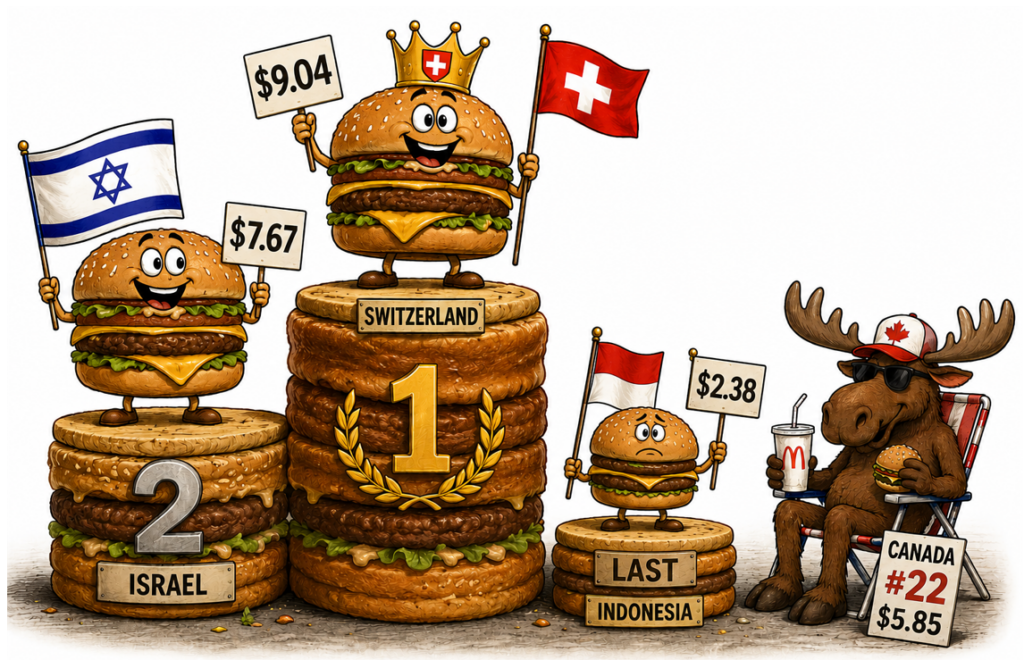
If that’s not enough economic voodoo talk for one musing. According to one famous barometer. Israel moved to second place in the Economist’s Big Mac Index. Introduced in 1986, this tasty indicator compares the purchasing power parity across countries by measuring the price of a McDonald’s Big Mac -which most can relate to- against the benchmark U.S. burger. So while a Big Mac in the U.S. costs $6.22. In Israel it costs $7.67, the second most expensive place to buy the hamburger in the world, Switzerland being the most pricey at a whopping (no reference to Wendy’s) $9.04. While the cheapest Big Mac can be enjoyed in Indonesia at only $2.38. Canada ranked 22nd of the fifty-four countries considered, at $5.85. Parity. Smarity. I’m going for my Big Mac fix. Just after I finish writing this muse….

(August 11, 2026) Bravo Boy George. We certainly will dance again! And what better way than with his new reggae tune. Now Boy George is dealing with a hostile backlash against his just stand for Israel. Having to withdraw from London’s East End production of Jesus Christ Superstar where he was going to play – guess it. King Herod. Never a big Culture Club fan, but I am anyway -as a sign of support- going to download his greatest hits to my Spotify library. And hoping to have a chance to buy a concert ticket should Boy George perform in Israel. Kind of reminds me of Bob Dylan’s 1983 song Neighborhood Bully. Also in defense of Israel. I’m going to download that song as well. Although don’t think he was hounded the way Boy George is now. Sign of the times I guess.
+++++
Coming clean. I sometimes find myself chanting, to no one in particular, that snappy little ditty ‘from the river to the sea, Palestine will be free.’ Now why can’t we come up with something as catchy. With such an impressive gene pool of great Jewish songwriters. George Gershwin. Irving Berlin. Burt Bacharach. Carole King. Neil Diamond. Leanard Choen. Paul Simon. Gene Simmons, Amy Winehouse. Bob Dylan. And yes, even the Buddhist Boy George. And still… gurnish! No wonder we’re losing the global PR battle
(August 8, 2026) Outside Basimta Café in Central Jerusalem. Love the red shirt against a tiny sea of black. Not sure I am shrugging because of the ultra-orthodox uproar over a Jerusalem café operating on Shabbat or the lack of an ultra-orthodox uproar over a Jerusalem café operating on Shabbat. For the last six weeks Israeli headlines shouted about the cafe chaos. With the ultra-religious blocking entrances and storming the café. While shouting ‘Shabbos! Shabbos!’ Upsetting the secular amongst us just wanting to enjoy our Saturday iced matchas. So the wife and I thought we would check it out. And. Yes. Buy something to support the business. Uproar. Not. Blocked entrances. Not. Storming the café. Not. Albeit there were police barriers separating the devout protesters from the coffee drinkers. The protesters being just a few dozen black clad, pious Jews. Mostly teenagers. And yes. Shouting ‘Shabbos! Shabbos!’ Certainly underwhelming in its reported mayhem. Reminds me of the famous saying misattributed to Mark Twain – “If you don’t read the newspaper, you’re uninformed. If you do, you’re misinformed.” But I did enjoy my iced matcha.

(August 6, 2026) Here we go again. Another round of forever negotiations. As someone who negotiates for a living. The way things are going in the straits. If I had to recommend a book on the subject to a new hire. Between The Art of the Deal, A Presidential Edition by Donald J. Trump or The Real Art of the Deal by the Mullahs of Iran with a special forward by the IRGC. Well. I would choose the latter.
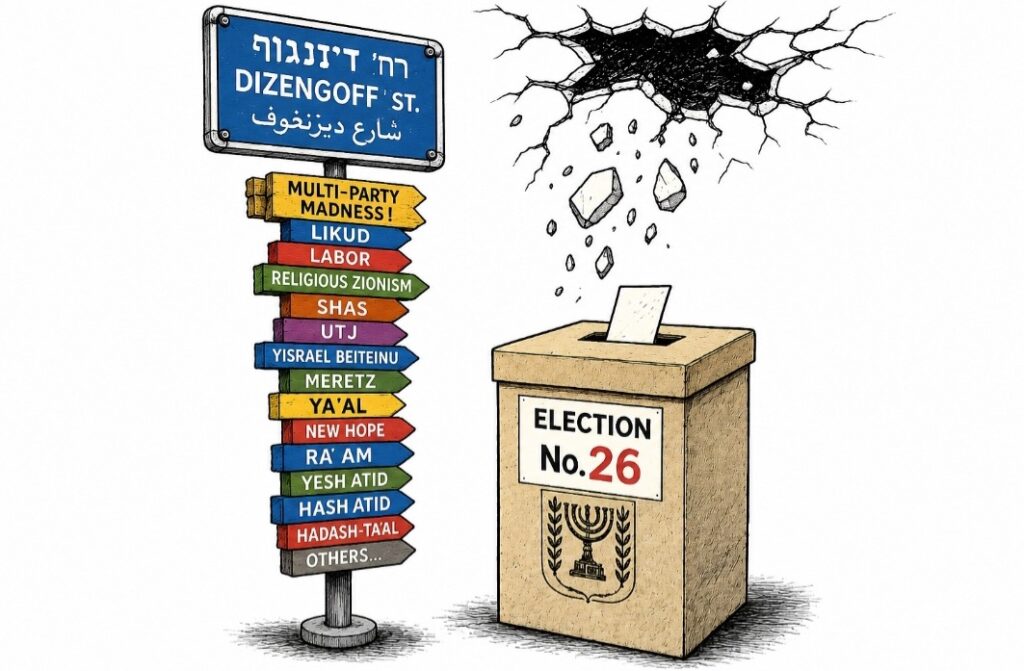
(August 3) Bravo Yoav Segalovitz, Liberal Yesh Atid MK and Monsour Abbas, United Arab Ra’am MK and party head. For breaking a glass ceiling where a Jewish lawmaker joins an Arab political party. No less a political earthquake in my little shtetl. Which can significantly impact coalition block arithmetic and posturing and strategy in the upcoming elections. Now Ra’am can be considered a legitimate ‘Zionist’ partner when forming coalition blocks and potentially pushing the ‘center left/right’ party over the 60 seat majority threshold. In our crazy parliamentary democracy defined by a multi-party (about fourteen!!), proportional representation system. To paraphrase Winston Churchill, Israel’s proportional representation model of governance is the best parliamentary democracy system except for all other forms of working democracies. Stay tuned for more amateurish political musings as we move towards Israel’s 26th national election – five of them held since 2019.

(August 1) Although both sides say they are open to diplomacy. Neither really trusts the other. And American military action, or its threat, continues. I read headlines in the middle of the night -it’s a nervous habit lately– that the Dynamic Duo of Trump and Netanyahu may again strike in unison. Possibly this weekend. Yikes! Prompting me, at 2:30 AM, to dash around the house stocking my safe room. Bottled water. Canned food. Medicines. Documents. The beat goes on….
If it’s crazy here. It’s insane in Italy. With a recent online ‘Jew Hunt’ in the Milan area. Before being removed, the digital forms urged reportings of Israelis and Italian Jews staying in local hotels. The infamous Global Sumud Movement -yes, the one coordinating ‘peace and humanitarian’ flotillas to Gaza- was somehow connected. Although they deny involvement?! This deranged decree was looking to identify Zionist tourism and Zionist neo-colonization in Italy. I’ll stick with stocking the saferoom.
Then there’s New York Mayor Mamdani, a Global Sumud Movement supporter, threatening to arrest Prime Minister Netanyahu if he comes to New York. But since discovered he has no legal right for such a grandstanding, antisemitic, anti-Israel, anti-Western, anti-democratic antic. Maybe Mandami should be arrested! Or at least impeached. For being a grandstanding, antisemitic, anti-Israel, anti-Western, anti-democratic mayor.
Here’s a post Bruce sent us Friday, July 31:
WARTIME MUSINGS
Should credible threats against FLOTUS and ‘FSOTUS’ (first son..) not be justification to attack first.
As for yesterday’s summit. Netanyahu really can’t win. Explainer. If Trump now attacks without victory its ’cause of Netanyahu. If Trump now attacks with victory its ’cause of Trump. And, in Israel, if Trump doesn’t attack -victory or not- Netanyahu failed in his eighth meeting with Trump. And if Trump does attack -victory or not- half the country will vilify Bibi anyway. Missing a permutation?
Ya. I know. Kinda’ need a definition of victory for that musing to work.
And here in my little shtetle. We go to sleep unsure if there will be a code red in the middle of the night. And if not. We wake up thinking it will be tonight. How do you define stress?

Seemed like an appropriate way to end this musing.
Bruce Brown is a former Winnipegger who made aliyah to Israel over 35 years ago. Bruce first began writing for us – in his own inimitable style, in 2012, during what was known as “Operation Pillar of Defense.” His occasional musings on aspects of life in Israel that were far from what you’d typically read in other reports from Israel were hugely popular – both in the print Jewish Post & News and on this website.
We’re now glad to report that Bruce is back writing for us – this time on a regular basis. We will post Bruce’s reports as they arrive – with the date of each post at the beginning of that post.
Here’s some information about Bruce – and awards he’s received for his writing:
Bruce Brown. Canadian born. Now living in Israel (for a long time). Bruce works in Israel’s hi-tech sector by day and, in spurts, is a somewhat inspired writer by night. He received the American Jewish Press Association’s award for writing excellence in 2019 and 2025. And wrote the1998 satire, “An Israeli is….”. Bruce’s visuals are AI-assisted and created with ChatGPT under his inimitable visual concept and creative direction. Bruce’s musings are political, social, economic and personal. With lots of biting, contrarian, sardonic, irreverent and mischievous insights.
