


Uncategorized
On one foot: Five essential things to know about Abraham Joshua Heschel on his 50th yahrzeit
(JTA) — Last week marked the 50th yahrzeit — or Hebrew anniversary — of the death of Rabbi Abraham Joshua Heschel (1907-1972), the theologian, scholar, philosopher, Holocaust survivor and modern-day prophet who was long associated with the Conservative movement’s Jewish Theological Seminary but whose embrace of “radical amazement” wasn’t contained by any movement or denomination. Monday is also Martin Luther King Jr. Day: The rabbi and the minister have often been linked thanks to Heschel’s civil rights activism and iconic photographs of them in the front lines of the march from Selma, Alabama, to Montgomery on March 21, 1965. (See below for events tied to the legacies of both men.)
I confess that Heschel’s lavish, epigrammatic prose and devotion to the living reality of God didn’t speak to a buttoned-down skeptic like me. I might quote his book “The Sabbath,” a lovely articulation of how Shabbat forms an island in time, but I’m more comfortable discussing Heschel’s political views, like his opposition to the Vietnam War, than his ideas on God and humankind.
I suspect others are similarly intimidated by Heschel, and could use a gentle onramp. For help I turned to Rabbi Shai Held, author of “Abraham Joshua Heschel: The Call of Transcendence” (2015) and the president and dean at Hadar, the nondenominational yeshiva. I challenged Held to name five works, articles, films or other media that would help people appreciate who Heschel was and why he remains celebrated.
“I fell in love with Heschel as as a teenager, because I felt he both articulated intuitions about the world that I had but didn’t remotely have language for, and he also was the first person I had heard articulate a vision of what Judaism thought that the good life could look like,” Held told me. “As a day school grad I felt I knew a lot of stuff about Judaism, but if you asked me ‘what is Judaism about and what is it for,’ I would have had no idea what to say. And Heschel gave me that narrative. It was a story that spoke to my mind and my heart at the same time. It was like asking me to become something in the world and that was incredibly moving to me.”
Here are five great ways to access Heschel, with comments by Rabbi Held. I plan to make this an ongoing series of introductions to Jewish thinkers, writers and artists who are making news or are particularly relevant to the current Jewish conversation. If there is someone you’d like to see discussed, drop me a line at asc@jewishweek.org.
(For Rabbi Held’s own introduction to Heschel, see his video, “Why Amazement Matters.”)
“The Sabbath,” (1951)
(In this slim volume, Heschel describes the Sabbath as a “palace in time,” and an opportunity for spiritual communion with the potential to help shape how its observers live the other six days of the week.)
“The number of people I have met in my travels, who tell me about how that book opened them up to spirituality, is staggering. Two things about that book are very moving. One is, at a time when American Judaism was about integration and success, Heschel launched this dramatic insistence that Judaism was about the life of the spirit. I think it landed like a bomb for a lot of American Jews. It was totally revolutionary to them. One of the ways that the book has resonated and continues to resonate is that Heschel is rebelling against a culture of technology, and wants to place a stake in the ground for the value of appreciation and gratitude. One of my favorite sentences in all of Heschel is that ‘Mankind will not perish for want of information; but only for want of appreciation.’ That line is from ‘God in Search of Man,’ but I think ‘The Sabbath’ is about Shabbat as a practice of appreciation.
“I also think that people had internalized the Christian, anti-Jewish idea that Christianity was about inwardness and spirituality and Judaism wasn’t. Heschel responds: We gave the world the gift of Sabbath which is about living in the presence of God.”
“God in Search of Man,” part 1 (1955)
(Held calls Heschel’s companion volume to his earlier work “Man Is Not Alone” a “beautiful evocation of what wonder and gratitude look like.”)
“This is Heschel as a phenomenologist: What is it like to have a sense that our lives are not something that we earned and that part of the religious life is to repay this extraordinary gift? He needs to write in a poetic mode, in part, because he’s trying to evoke in his readers a sense of gratitude, a sense of indebtedness, a sense of obligation. What I tried to do in my book is to [delete] sort of argue that amidst all that poetry, there’s an argument: Wonder is what opens the door to obligation. Wonder is about reawakening a sense that all of us, just by the nature of being human, have an intuition that we’re obligated to something and someone.”
“The Prophets,” 1962
(Heschel provides compact profiles of seven biblical prophets and attempts to understand the phenomenon of prophecy in general. Held recommends starting with the chapter titled, “The Theology of Pathos.”)
“Heschel makes the most eloquent case I think any Jew has ever made since the prophets for a God who cares, a God who is stirred to the core of God’s being by human suffering and especially human suffering that stems from oppression. It’s Heschel’s attempt to reclaim the God of the Bible from what he saw as the ravages of abstract philosophy that reduces God to an idea. God is not an idea. God is someone who cares about us. God has a name. There’s this amazing speech he gives to Jewish educators somewhere where he says, ‘I was invited to a conference to talk about my idea of God and I responded to them and said, ‘I don’t have an idea of God, I have God’ — Hakadosh baruch hu [the Holy one, blessed be God] who makes a claim on my life.”
“Religion and Race,” 1963
(On Jan. 14, 1963, Heschel gave the speech “Religion and Race” at a conference of the same name in Chicago, where he became close to King.)
“First of all, you see how Heschel’s theology and his activism are so entirely interwoven: The God who loves the downtrodden, the God who loves widows and orphans, is the God who requires us to stand up and fight for civil rights. It’s also extraordinarily beautiful, in that it combines really interesting biblical interpretation with [theological depth and profound] moral passion. Part of what Heschel and King meant to each other is that each one of them saw the other as a kind of living proof that God had not abandoned the downtrodden — and King was very important to Heschel in the context of the theology of of the Shoah: Martin Luther King embodies the reality that God has not abandoned the world. He really believed Martin Luther King was channeling God, nothing less than that.”
The NBC Interview (1972)
(Shortly before he died at age 65, Heschel recorded an interview with broadcaster Carl Stern. It aired on Dec. 10, 1972, on NBC-TV as an episode of “The Eternal Light,” the long-running religion and ethics show produced in conjunction with the Jewish Theological Seminary.)
“He makes this incredibly beautiful statement about telling kids to live their life as if it were a work of art. Which is just amazing — so beautiful and so simple. And there’s also this really interesting moment where Carl Stern asks him if he’s a prophet and he says, ‘You know, I cannot accept such a compliment. I am not a prophet. I am a child of prophets. But indeed the Talmud says all Israel are the children of prophets.’ I just love that combination of humility and elevatedness. That interview [offers a powerful glimpse of him as a human being, and not just a bunch of words on a page. You see a real person]. is also what makes him actually a human being and not just a bunch of words on a page. You see a real person.”
On Monday, Jan. 16 at 7 p.m. ET, Shai Held will join Arnold Eisen, chancellor emeritus of the Jewish Theological Seminary, for a Martin Luther King Jr. Day conversation reflecting on Heschel’s life, thought and legacy. (Register here for Zoom link.) That same night, at 8 p.m. ET, Yeshivat Chovevei Torah will commemorate Heschel’s 50th yahrzeit with a discussion with his daughter, Susannah Heschel, the Eli M. Black Distinguished Professor of Jewish Studies at Dartmouth College. (Register here.)
—
The post On one foot: Five essential things to know about Abraham Joshua Heschel on his 50th yahrzeit appeared first on Jewish Telegraphic Agency.
Uncategorized
Why I went to Michigan to talk to Jewish voters about Abdul El-Sayed
I’d just climbed the steps to another home on my canvassing list, a lovely residence in the suburbs of Detroit, and rang the doorbell. I was there last week to talk with Jewish voters about the upcoming Michigan Senate election. The woman who answered asked me to come inside, and I demurred, telling her that my project discourages its volunteers from accepting such invitations, for safety reasons. She was petite and elderly, with a soft, open face. She reminded me of my long deceased mother. We chit-chatted a little, then I got down to brass tacks. “What are your feelings about the race?” I asked. “About Abdul El-Sayed?”
Her face sagged. “You’re too late,” she said. “My husband and I already voted. For Mike Rogers. And I feel terrible!” She looked like she was about to cry. “Please,” she said, “Come inside.” I relented (but didn’t sit down on her sofa).
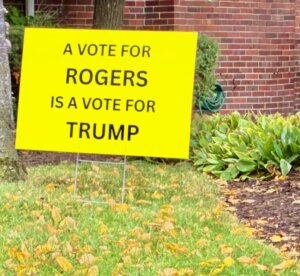
The Michigan race pits El-Sayed, a progressive young Democrat, against Rogers, a Republican former Congress member who is closely allied with Donald Trump. As a New Yorker, I don’t have a vote in the election. But I came to Michigan as a Jew who is increasingly frightened by the threat posed by MAGA and horrified by what Trump-think and Trump power is doing, and not just to immigrants, people of color, sexual and gender minorities, middle-class and working people, students, intellectuals, and those whose jobs and civic activity nurture liberal and progressive causes.
I’m also worried about us Jews.
We are disproportionately members of the communities I just listed. We are also vulnerable to antisemitic acts and policies, which appear to be increasing. (At my shul on Rosh Hashanah I was chilled to find flyers placed by the Siddurs, instructing how to hide or flee if a terrorist were to enter the sanctuary.) And we are vulnerable to the politics of Christian nationalism. I grew up in Texas in the 1950s and 1960s. I vividly recall being made to sing “The Crusaders’ Hymn” in grade school and memorize the words (“Onward Christians soldiers, marching as to war. With the cross of Jesus, going on before!”). Making public school kids do this is now illegal. But for how long?

Mike Rogers’ campaign gets much of its money from a rich Texan named Tim Dunn, a Christian nationalist who wants to abolish public schools. Not long ago, Dunn told a member of the Texas legislature — a Jew — that Jews should not hold major political office.
El-Sayed, on the other hand, is a public health expert with a long history of activism for progressive causes. A native-born American, he went to a suburban Detroit high school where he was on the football team and had many Jewish classmates. He has repeatedly said that the fact that he is Muslim is merely incidental to the fact that he is an American who deeply respects the rights guaranteed to everyone in this country under the U.S. Constitution — including to worship, or not, as one pleases.
Polling shows El-Sayed leading Rogers, but the margin of error puts them very close, and the race is tightening. Pundits say that if El-Sayed loses, the Senate could remain Republican. But if he wins, it would signal to the whole country that the Democratic Party is entering a new phase of progressivism — one prefigured by Zohran Mamdani’s mayoral win in New York City.
Like El-Sayed, Mamdani is a Muslim who sharply criticizes the Israeli government. And though many New York City Jews are wary of him, his main opponent during his campaign, Andrew Cuomo, wasn’t part of MAGA or surrounded by antisemites, as Mike Rogers is. I’d canvassed for Mamdani, and the stakes are much higher in Michigan. So I decided to spend five days in suburban Detroit as part of a joint canvassing effort by Jews in Seed the Vote, Bend the Arc Action, IfNotNow Movement, and Michigan United Action. Our goal was to knock on doors and share our own stories with fellow Jews.
Mine is that my maternal grandparents fled here from the Pale of Settlement, and my mother told me about my grandmother escaping a pogrom after her parents dressed her with a large cross around her neck, and paid a peasant to hide her under hay in a cart. She was fifteen years old when the pogrom happened — prime age for a Jewish girl to be raped.
She and her extended family made it to Pittsburgh. To the United States, the capital of democracy and pluralism. In all of history, Jews have never done so well as we have under democracies like this one. We’ve become so comfortable, as one Detroit-area rabbi remarked in his Kol Nidre sermon this year, that his community’s biggest intramural argument used to be over where to get the best bagels.
Then a Lebanese-American man whose relatives had just been killed by an Israeli air strike on Lebanon drove a truck into Temple Israel, a metro-Detroit synagogue. Dozens of preschoolers were inside. No one was hurt, but the building was damaged. El-Sayed, quickly made a lengthy statement condemning the culprit’s inexcusable antisemitism and vowing to support Jewish safety. But he also tried to explain the man’s terrorism. “Hurt people hurt people,” he said.

He later apologized for introducing political context so soon. But months later, his words still anger some people with whom I spoke. One woman glared, said she had grandchildren at the synagogue preschool, and slammed the door on me. Other canvassers described a man in a car who saw their t-shirts, sporting slogans like “Jews for Shared Safety,” and screamed that if he were to see El-Sayed and his family on fire right now across the street, he would do nothing to help them. He added that he was on the board of a shul.
Rogers’ campaign and its supporters are flooding TV and the social media with material excoriating El-Sayed as a dangerous Islamic fundamentalist and antisemite. AIPAC has also painted him as a threat to Jews, and spent over $30 million attacking him to defeat him in the primary. El-Sayed won anyway, but Michigan’s Jews remain saturated with a miasma of anti-El-Sayed propaganda. The woman who reminded me of my mother said she voted for Rogers because her father was a Holocaust survivor and she had to put Israel first, even though she knew Rogers could “roll back everything, including civil rights and abortion rights, that we Jews have worked so hard for. And even though I’ve never voted Republican in my life!”
I also canvassed Jews who were enthusiastically voting for El-Sayed. Other supporters, though, were terribly conflicted. At one door, a person — I won’t say their gender because they were so anxious about being identified — told me they are high up in local, Jewish-inflected Democratic Party politics. (I looked them up later and verified this.)
They, too, invited me into the sanctum of their home, as though afraid for the neighbors to see them talking with me. “I voted for El-Sayed,” they said. “But it was a horrible decision to have to make!” They strongly agreed with me about the need to vote for him, but they didn’t want their Jewish bigwig colleagues to know. “Half of them would never speak to me again,” they said. “What about your personal friends?” I asked. “Could you talk to them about the need to vote for El-Sayed?” “Yes,” they said. “I can do that.”
“This is what canvassing is about,” I told myself as I left.
Some Jewish bigwigs who openly support El-Sayed have been holding wine-and-cheese house parties for the un-decideds. Michigan Jews for Democracy sponsors these intimate gatherings. I went to one last week, at the house of Elaine Driker, formerly board president of Hillel of Metro Detroit. Former Michigan Congress member and political progressive Andy Levin addressed the group.
The setting was a cozy living room. To ensure that attendees felt comfortable voicing their feelings, journalists were told they could quote the speakers, but questions from the audience were off the record unless the individuals asking them agreed later to be quoted. The attendees were engaged, intent, and split, with some expressing strong support for El-Sayed and others venting reservations.
At the end. Levin summed things up. “We’re here struggling as Jews,” he told the audience. With young progressives entering the Democratic Party, he added, “We are really coming into a new era of politics in the United States, and I’m really hopeful about it.” He talked of the need to elect El-Sayed, then “hold him to be a great senator for the Jewish community.” Yes, he is a Muslim, Levin noted, and that is good. He added that, for Jews as for everyone, pluralism in government “has been great for us.”
This election in Michigan, Levin concluded, is “a time of great wrestling with God. Of wrestling with each other.” Then we all repaired to a room to eat brie and fine bread and wrestle some more.
The post Why I went to Michigan to talk to Jewish voters about Abdul El-Sayed appeared first on The Forward.
Uncategorized
Noah Wyle, TV’s nice Jewish doctor, is People’s Sexiest Man Alive
(JTA) — Noah Wyle, the Jewish actor who both mends and steals hearts as a doctor on the hit HBO Max medical drama “The Pitt,” has been named People magazine’s Sexiest Man Alive.
Tuesday’s announcement described the actor’s “smoldering intensity” and “leading-man looks,” while noting that “he loves to do the dishes.”
Wyle, 55, told People he initially thought the news was “a classic set-up for a prank.” His wife, Sara Wells, helped persuade him to accept the honor, he said, because she believes his qualities as a husband and father are worth celebrating.
The actor, who starred in the ’90s medical drama “ER,” is enjoying a career resurgence as Dr. Michael “Robby” Robinavitch, the brilliant, troubled emergency-room physician at the center of “The Pitt.” The role has earned Wyle two consecutive Emmy Awards for outstanding lead actor in a drama series, along with renewed attention to his own Jewish heritage.
As JTA reported last year, Wyle drew on his father’s Russian-Jewish background in helping create Robby, his first Jewish character. The doctor wears a Star of David necklace and, in a pivotal scene in the show’s first season, clutches it while reciting the Shema, a central Jewish prayer, during an emotional crisis.
Wyle, whose father is Jewish and mother is Episcopalian, did not grow up in a religious household. But in an interview with the Jewish Chronicle this year, he said Judaism had become more relevant to his life through the show and that his daughter, then 10, has expressed the most interest to “pick up the mantle of Judaism.” She helped him with the pronunciation of the Shema, he said, and her bat mitzvah has been scheduled.
Wyle has also brought Jewish history into “The Pitt.” In an episode he wrote for the show’s second season, a patient with ties to the 2018 Tree of Life synagogue shooting in Pittsburgh struggles with post-traumatic stress disorder.
Wyle said portraying a Jewish character offered an opportunity to present a humanist and healer at a time of heightened antisemitism. “I have come to learn that the world’s knowledge of Jews comes through depictions of them in the media,” he told the Jewish Chronicle.
This article originally appeared on JTA.org.
The post Noah Wyle, TV’s nice Jewish doctor, is People’s Sexiest Man Alive appeared first on The Forward.
Uncategorized
New York Gov. Kathy Hochul says defending Israel would be ‘a lot easier’ if Netanyahu loses
New York Gov. Kathy Hochul, an incumbent Democrat running for reelection, said it would be “a lot easier” for her to defend Israel if Prime Minister Benjamin Netanyahu loses Tuesday’s election. New York has the largest concentration of Jews outside of Israel and is home to many ex-pat Israelis.
In an interview with Politico magazine published as Israelis headed to the polls, Hochul suggested that Netanyahu’s “overreach” in the Gaza war has become an obstacle to Israel’s international standing and that his government policies have killed any prospects for the creation of an independent Palestinian state.
“I believe we have to get people of goodwill who can make this happen, and as long as Netanyahu is sitting there, that is not in his interest to do that,” Hochul said. “It’s just not, and it won’t happen.”
Hochul has remained a strong supporter of Israel despite growing criticism of the country within her party. She was the first foreign elected official to visit Israel shortly after Hamas-led attacks on Oct. 7, 2023 and criticized the pro-Palestinian protests on campus.
In 2024, she came under fire for making an analogy to her hometown, Buffalo, in defending Israel’s military campaign against Hamas amid mass Palestinian casualties in Gaza.
“If Canada someday ever attacked Buffalo, I’m sorry my friends, there would be no Canada the next day,” she said in remarks to Jewish leaders, first reported by the Forward. “That’s a natural reaction. You have a right to defend yourself and to make sure it never happens again.” Immediately after it was publicized, Hochul apologized for implying that Israel had a right to destroy Gaza.
Hochul recalled in the interview privately warning Israeli officials during her visit to Israel that the country would lose international support.
“The world is with you when it comes to the brutal assault by a terrorist organization known as Hamas on innocent Israeli people,” Hochul said she told Israeli officials. “An overreach could change that dynamic, and that’s what’s happened.”
The Democratic governor also suggested that if Netanyahu continues as prime minister, it could complicate the prospects of a Jewish Democrat winning the party’s presidential nomination in 2028. The Israeli leader would remain “a lightning rod,” comparing his political survival instincts to those of President Donald Trump. “Who knows what he’s going to do next for self-preservation,” she said.
Closely watching the Israeli election
Hochul’s remarks came as Israelis voted in their first national election since Oct. 7, 2023, with unusually high turnout raising the possibility that participation could exceed 80%, a level not seen since the early 1970s.
Netanyahu, Israel’s longest-serving prime minister, is fighting to remain in power after nearly two decades in office. Many Israelis blame Netanyahu for the security failures that allowed the Oct. 7 attack, while his supporters credit him with confronting Hamas and Iran. Recent polls suggest Netanyahu’s right-wing coalition could fall short of the 61 seats needed to form a government. His main challenger is Gadi Eisenkot, a former military chief whose son and two nephews were killed in the war in Gaza.
Netanyahu’s campaign slogan, “It’s the right or Palestine,” taps into post-Oct. 7 fears about the establishment of a Palestinian state, warning that an Eisenkot-led government dependent on Arab support will lead to Palestinian statehood. But a Netanyahu defeat would not necessarily bring the changes Hochul wants. Eisenkot and other opposition leaders like Naftali Bennett and Avigdor Lieberman also oppose a Palestinian state.
A balancing act
Hochul’s comments also reflect the political challenge she faces at home, where she has maintained strong ties with Jewish leaders while working closely with New York City Mayor Zohran Mamdani, a fierce critic of Israel.
Hochul endorsed Mamdani last year after staying neutral during the Democratic primary. But she has continued to distance herself from the mayor on issues of antisemitism and Israel, which has left many Jewish New Yorkers uneasy. Her most recent state budget included a measure establishing a buffer zone around houses of worship to prevent disruptive protests from blocking access, an issue on which Mamdani had raised objections.
In the Politico interview, Hochul said Mamdani had brought “new energy” to the party, even as she acknowledged their disagreements. “Again, differences on approaches to the Jewish community, Israel and all that — that’s another topic,” she said.
A recent poll found that 65% of Jews in New York City disapproved of the mayor’s handling of antisemitism, while Hochul received 54% approval.
Hochul is seeking reelection against Republican Bruce Blakeman, the Jewish Nassau County executive, who has made support for Israel and opposition to antisemitism central themes of his campaign. But Blakeman has struggled to match the support former Republican gubernatorial candidate Lee Zeldin received from Jewish voters and Hasidic voting blocs four years ago.
The post New York Gov. Kathy Hochul says defending Israel would be ‘a lot easier’ if Netanyahu loses appeared first on The Forward.
