


Uncategorized
18 notable Jews who died in 2025
(JTA) — Jews around the world were already reeling after nearly two years of war and death in Gaza and the grim confirmation that many hostages hadn’t survived the Oct. 7 attacks or two years of captivity. Then came news of the shootings in Sydney, Australia, where 15 people were gunned down at a celebration of Hanukkah.
Despite its grief, the Jewish world also took time to celebrate the lives lived by a constellation of figures who made lasting contributions to film, architecture, politics and Jewish scholarship and letters.
In chronological order, here are obituaries of 18 notable Jews who died in 2025.
Marion Wiesel
Marion Wiesel (born Mary Renate Erster), a Holocaust survivor and humanitarian, married the writer and human rights activist Elie Wiesel in 1969, and was the translator of many of his award winning and influential books on the Holocaust, including the final edition of “Night.” Following Wiesel’s 1986 Nobel Prize win, the couple founded the Beit Tzipora Centers in Israel, an educational program for Ethiopian-Israeli youth, which Marion Wiesel went on to lead for a number of years. “In the alignment of stars that helped make Wiesel the international icon he became, his marriage to Marion was among the most significant,” wrote Joseph Berger in his 2023 biography “Elie Wiesel: Confronting the Silence.” She died on Feb. 2 at 94.
Jacqueline van Maarsen
In 1942, Anne Frank immortalized her friendship with Jacqueline van Maarsen, writing that she “is now my best friend.” While the pair were forced apart during the war, never to be reunited, van Maarsen went on to write multiple books about Frank, including 2008’s “My Name is Anne, She Said, Anne Frank.” In 1986, van Maarsen also began lecturing on the Holocaust and antisemitism at schools. “In her books and during school visits, Jacqueline spoke not only about her friendship with Anne but also about the dangers of anti-Semitism and racism, and where they can lead,” the Anne Frank House said of van Maarsen. She died on Feb. 13 at age 96.
Leonard Lauder
Leonard Lauder built his Jewish family’s business, The Estée Lauder Companies, into a cosmetics empire, serving as its president from 1972 to 1995 and as CEO from 1982 through 1999. But beyond his entrepreneurial prowess, Lauder also was a major patron of the arts, at one point donating a collection of paintings to the Metropolitan Museum of Art in New York valued at more than $1 billion. “The number of lives he touched and positively impacted across all his endeavors is immeasurable,” his younger brother, Ronald, said. “His passion and generosity have inspired us all, and there are no words to express how much he will be missed.” He died on June 14 at 92.
David Schaecter
After losing 105 relatives during the Holocaust, David Schaecter went on to spend his life pushing for restitution, Holocaust education and vigilance against antisemitism. In 1989, Schaecter founded the Holocaust Memorial in Miami Beach and in 2000 created the Holocaust Survivors’ Foundation USA, which often took a more aggressive stance than other Jewish organizations in pursuing restitution of goods looted during the Holocaust. “I am here to remind everyone that there are still thousands of survivors alive today who are in desperate need, and who cannot be forgotten,” Schaecter told the Senate Special Committee on Aging on April 30. He died on Sept. 4 at 96.
Ruth Posner
After Ruth Posner escaped the Warsaw Ghetto along with her aunt as a child, she went on to flee to the United Kingdom at 16 where she began an illustrious career as an actress and dancer. She was a founding member of the London Contemporary Dance Company and worked for the Royal Shakespeare Company, and also starred in films including “Leon the Pig Farmer” and “Love Hurts.” In 2022, she was awarded a British Empire Medal for her commitment to Holocaust education. She died on Sept. 21 at 96.
Aron Bell
Aron Bell was only 11 or 12 when he and his older brothers formed the famed Bielski partisans, a group that saved more than 1,200 Jews from the Nazis during the Holocaust. The brothers’ tale of defiance also inspired several adaptations of their story, including the books “The Bielski Brothers” by Peter Duffy and “Defiance: The Bielski Partisans” by Nechama Tec, which was later made into the 2008 film “Defiance” with actor George MacKay portraying Bell. “If you were in the company of those three brothers, you felt like you had a whole army behind you, you were fearless,” said Bell in his 1996 testimony to the USC Shoah Foundation. He died on Sept. 22 at 98 at his home in Palm Beach, Florida.
Katherine Janus Kahn
Katherine Janus Kahn’s vibrant watercolor illustrations in Jewish children’s books helped shape the imaginations of generations of Jewish children. Beginning with her paper-cut illustrations for “The Family Haggadah,” which became a bestseller when it was published in 1987, Janus Kahn later went on to illustrate more than 50 books for Kar-Ben, a publishing house for Jewish children’s books. Among her work for Kar-Ben was the “Sammy Spider” franchise, which includes more than two dozen books about Jewish holidays, prayers and practices. ““We are profoundly grateful for her legacy, and for the countless stories and memories she leaves behind,” said Kar-Ben. She died on Oct. 6 at age 83.
Rabbi Moshe Hauer
Rabbi Moshe Hauer, the executive vice president of the Orthodox Union since 2020, was widely respected across denominations and was considered an exemplar of Modern Orthodoxy’s historical blend of religious and secular expertise. In 2023, he testified about antisemitism on college campuses at a hearing of the House Committee on Education and the Workforce, which prompted several investigations. “Rabbi Hauer was a true talmid chacham, a master teacher and communicator, the voice of Torah to the Orthodox community and the voice of Orthodoxy to the world,” the Orthodox Union said after his death. He died on Oct. 14 at 60.
Susan Stamberg
When Susan Stamberg first got behind the microphone at the newly minted National Public Radio in 1972, some board members feared she was “too New York” for Midwest audiences. But Stamberg nevertheless became one of the station’s “founding mothers,” helping to craft its intimate, often humorous and consistently eclectic voice. Stamberg was the co-anchor of “All Things Considered” for 14 years, before pivoting to cultural stories. “I think all of that is very Jewish, the telling of stories, but also the seeking of opinions and also being open to the range of opinions that are out there,” Stamberg told the Jewish Women’s Archive in 2011. She died on Oct. 16 at 87.
Tova Ben-Dov
Tova Ben-Dov devoted six decades of her life to the Women’s International Zionist Organization, serving as the president of World WIZO from 2012 to 2016. She also served as the vice president of the World Jewish Congress, a member of the executive committee of the Jewish Agency for Israel and a member of the International Council of Women according to JNS.“For 60 years, Tova devoted her heart and soul to WIZO—a lifetime of love, leadership and giving to women, children and families in Israel,” said World WIZO chairperson Anita Friedman. She died on Oct. 17 at 88 in Tel Aviv.
Arthur Waskow
Rabbi Arthur Waskow first became one of the most notable progressive rabbinic voices in 1969 when he created the “Freedom Seder,” a version of the Passover Haggadah that blended contemporary liberation struggles with the ancient passover story. Throughout his career, Waskow authored more than two dozen books that offered a Jewish perspective on civil rights, economic injustice, nuclear arms control and climate change. He was arrested more than two dozen times at protests. He died on Oct. 20 at 92.
Mark Mellman
At the height of his illustrious career as a pollster and political consultant, Mark Mellman was the go-to pollster for Democrats as well as a wide variety of firms and interests, including the NBA’s Washington Wizards, United Airlines and both Pepsi and Coca-Cola. In 2019, he founded the Democratic Majority for Israel, a group he said was formed to “strengthen the pro-Israel tradition of the Democratic Party, fight for Democratic values and work within the progressive movement to advance policies that ensure a strong U.S.-Israel relationship.” He died on Nov. 21 at 70.
Carrie Soloway
Carrie Soloway, a Jewish psychiatrist in Chicago, came out as a transgender woman at 70-years-old, a milestone that formed the basis for her children’s hit Amazon TV series “Transparent.” After the show’s 2014 premiere, Soloway visited the White House under then-President Barack Obama and became friends with trans elected officials, while “Transparent” blazed a path for modern LGBTQ Jews exploring their identity. “She loved the show and us and the character, but sometimes she wasn’t in the mood to be everyone’s favorite trailblazer,” her son, Joey, said after her death. She died on Nov. 21 at the age of 88.
Tom Stoppard
Tom Stoppard was in his 80s and had already won four Tony Awards during his prolific career as a playwright and screenwriter when he finished “Leopoldstadt,” which portrayed a Jewish family dealing with rising antisemitism in Vienna, and a young writer, much like him, who only earned of his Jewish forebears as an adult. His final work won the Tony for best play after it opened on Broadway in 2022. Stoppard’s other era-defining plays include “Rosencrantz and Guildenstern are Dead” (1968), “Travesties” (1974), “The Real Thing” (1986) and “The Coast of Utopia” (2007). “I just live my life and let the Jewishness take care of itself,” Stoppard told the New York Times Magazine in 2022. He died Nov. 29 at 88.
Frank Gehry
Frank Gehry, born Ephraim Owen Goldberg, was one of the most influential talents in the history of modernist architecture. Among his most acclaimed works, which feature his signature sculptural style, are the Bilbao Guggenheim, the Walt Disney Concert Hall in Los Angeles, the Louis Vuitton Foundation in Paris, DZ Bank Building in Berlin and oversized fish sculptures he said were inspired by the carp his grandmother would turn into gefilte fish. In 1989, Gehry won the prestigious Pritzker Prize, considered one of the top awards in the field of architecture, and in 1999 won the Gold Medal from the American Institute of Architects. While Gehry identified as an atheist throughout his adult life, he told the Jewish Journal that “there’s a curiosity built into the [Jewish] culture” that influenced his career. He died on Dec. 5 at 96.
Rabbi Eliezer Diamond
Rabbi Eliezer Diamond taught at the Jewish Theological Seminary for over three decades, where he also published several texts on the Talmud and left an indelible mark on generations of rabbis and Jewish scholars. In 2003, he published “Holy Men and Hunger Artists: Fasting and Asceticism in Rabbinic Culture.” “Wherever I am, God is there too. I hope that I will return home soon,” wrote Diamond in his last post on Facebook, where he detailed his long struggle with cancer. He died on Dec. 11 at 73.
Rob Reiner
Rob Reiner, a beloved Jewish film director, actor and liberal activist, left his mark on modern American comedy and drama with his generation-defining classics from the 1980s and 1990s, including “When Harry Met Sally…,” “The Princess Bride,” “Stand By Me,” “A Few Good Men” and “This Is Spinal Tap.” The son of legendary Jewish comedian Carl Reiner, he also starred in the ’70s sitcom “All in the Family” and became a prominent Democratic Party activist later in life. Reiner, 78, and his wife, Michele Singer Reiner, 70, were found dead in their California home on Dec. 14. The couple’s son, Nick, has been charged in connection to their killing. Days after his death, Reiner gave a pre-recorded address at a virtual Holocaust survivor event where he told attendees, “If ever we needed to be resilient, it’s now.”
Norman Podhoretz
Norman Podhoretz was 30 when he was appointed to run the American Jewish Committee’s thought journal Commentary. Over his career, he charted a path from Jewish liberal to pro-Israel neoconservative, serving as the godfather to a movement that long dominated late- and post-Cold War conservative politics. He made waves in 2016 for endorsing Donald Trump in his first run for president. “He was a man of great wit and a man of deep wisdom and he lived an astonishing and uniquely American life,” his son, John Podhoretz, wrote in a remembrance for the magazine announcing his father’s death. “And he bound himself fast to his people, his heritage, and his history.” He died on Dec. 16 at 95.
As the year concludes, the New York Jewish Week also remembers 13 Jewish New Yorkers who died in 2025. Among them are people who left an indelible mark on New York City, including rabbis, musicians, writers, activists and a supercentenarian.
Peter Yarrow
As one-third of the American folk band Peter, Paul and Mary, the Jewish musician and progressive activist Peter Yarrow was one of the writers of the group’s hit song “Puff the Magic Dragon” and their Hanukkah hit “Light One Candle,” which Yarrow said he wrote to express his opposition to Israel’s 1982 war in Lebanon. The band performed “Light One Candle” in Jerusalem in 1983 to a positive response.
Rose Girone
A rare supercentenarian, Rose Girone was thought to be the world’s oldest living Holocaust survivor, turning 113 years old in January. As a young mother during the Holocaust, Girone was able to rescue her husband from the Buchenwald concentration camp, and the small family of three sought refuge in Shanghai, where they survived the war and Girone built a business selling her handmade clothing. In New York, she taught knitting and also ran a knitting shop in Forest Hills. She later divorced and remarried. Even after she closed her shop, she continued knitting until the end of her life.
Michelle Trachtenberg
Michelle Trachtenberg was a child and teen star known for her roles in “Harriet the Spy,” “Buffy the Vampire Slayer,” “17 Again,” “Ice Princess,” and “Gossip Girl.” Born in New York City and raised in Brooklyn, Trachtenberg was the daughter of Jewish immigrants: Her mother was from the former Soviet Union, and her father was from Germany. In 2022 and 2023, she reprised her “Gossip Girl” role in the series reboot.
Trachtenberg died Feb. 26 at age 39 from complications related to diabetes.
Max Frankel
The former executive editor of The New York Times fled the Nazis as a child, starting at the paper at just 19 years old as a Columbia University campus correspondent. In his 40-plus-year career at The Times, he wrote the memo that convinced the paper’s lawyers that it should cover the Pentagon Papers — the leaked documents that revealed how the government deceived the public about the scope of the U.S. war in Vietnam. He won the Pulitzer Prize in 1973 for his coverage of President Richard Nixon’s visit to China. In 2001, after his retirement, Frankel published an article in The New York Times acknowledging that before and after World War II, the publication had a policy of “reluctance to highlight the systematic slaughter of Jews.”
Frankel died on March 23 at age 94.
Ted Comet
A Jewish communal leader and longtime Upper West Sider, Comet founded New York’s Celebrate Israel Parade (originally the Salute to Israel Parade). In the 1960s, he helped organize some of the first large demonstrations in support of Soviet Jewry. He was also a founder of the annual Israel Folk Dance Festival. Following his wife Shoshana’s death in 2012, he conducted tours of the tapestries she made telling the story of the trauma she endured as a teenager fleeing Belgium during World War II and in the years beyond.
Comet died at age 100 on March 19.
Helena Weinstock Weinrauch
Helena Weinstock Weinrauch survived a 500-mile death march to Bergen-Belsen and eventually found her way to New York. After her husband of 56 years, Joe Weinrauch, died in 2006, she discovered, at 88, the solace and joy of ballroom dancing. Her story of survival and resilience was the subject of a 2015 documentary, “Fascination: Helena’s Story.”
Weinrauch died at her home on the Upper West Side on May 25, one week shy of her 101st birthday.
Tom Lehrer
The New York-born mathematician and satirist Tom Lehrer enrolled at Harvard University at just 15 years old. Though his post-college music career was relatively brief, he gained a cult following for musical parodies like “Poisoning Pigeons in the Park” and “The Vatican Rag.” Lehrer described his family’s relationship to Judaism as “more to do with the delicatessen than the synagogue.” But his iconic song “(I’m Spending) Hanukkah in Santa Monica” became what he called “a sort of answer to ‘White Christmas.’”
Lehrer died Jul. 25 at the age of 97.
Wesley LePatner
One of the highest-ranking women at Blackstone and a mother of two young children, Wesley LePatner was an alumna of Yale University, a board member for UJA-Federation of New York and an active member of various Jewish communities in New York and Massachusetts. On July 29, a gunman opened fire at her office building, 345 Park Ave., killing three people including LePatner. “She was the most loving wife, mother, daughter, sister and relative, who enriched our lives in every way imaginable,” her family said in a statement.
LePatner died Jul. 29 at the age of 43.
Julia Hyman
Julia Hyman was also a victim of the shooting at 345 Park Ave. A Manhattan native, Cornell graduate and an associate at Rudin Management, Julia Hyman was a fan of the United States women’s soccer team and Jewish singer-songwriter Gracie Abrams, her friends and family recalled at a memorial service in July.
Hyman died July 29 at the age of 27.
Saul Zabar
The son of the immigrant Jewish founders of the iconic Upper West Side grocery store and delicatessen Zabar’s, Saul Zabar served as the president and principal owner of the “food emporium” for more than seven decades. Zabar was known for his hands-on approach, often working behind the fish counter — the gem of his family’s market. Zabar’s is known for serving traditional Ashkenazi foods like bagels, babka, deli meats, fish salads, pickles and rugelach. On an average week, Zabar’s sells 2,000 pounds of smoked fish and 8,000 pounds of coffee each week to about 40,000 customers, according to The New York Times.
Rabbi Alvin Kass
The longest-serving NYPD chaplain, Rabbi Alvin Kass served New York’s police for 60 years. His career included managing the NYPD’s 9/11 response, and in the days following the terror attack, hosting Rosh Hashanah services at LaGuardia Airport for first responders. He attended the funerals of every NYPD officer who was killed on 9/11, including two who were Jewish. Kass was the third Jewish chaplain to work for the NYPD. In 1981, he attempted to disarm a Jewish hostage-taker by bribing him with a pastrami sandwich from Carnegie Deli.
Mayer Moskowitz
The early life of Rabbi Mayer Moskowitz, longtime educator at the Upper East Side’s Ramaz School and Camp Massad in the Poconos, was forever altered by the Holocaust.
Born in Czernowitz in what was then Romania and today Ukraine, Moskowitz watched the Gestapo shoot and kill his father, a 30-year-old Hasidic rabbi, in their synagogue. In the following years, he would be deported to a ghetto, separated from his mother and sister, escape the ghetto, make a life for himself in Israel, and learn his mother and sister had both survived the war, leaving his new life in Israel behind to join his mother in New York City, where he became a prominent teacher of thousands of students, including Israeli president Isaac Herzog. Moskowitz recounted his life story in his autobiography, “A Memoir of Sanctity.”
Moskowitz died Nov. 11 at 98 years old.
Helen Nash
Starting with “Kosher Cuisine” in 1984, philanthropist Helen Nash wrote cookbooks that proved that kosher cooking “could be as varied, elegant and exciting as one wished to make it,” as she put it. A refugee from Poland, she married Jack Nash, a pioneer in hedge funds, and together they supported numerous Jewish organizations in New York City, including UJA-Federation of New York, Mount Sinai Medical Center, the Israel Museum, Shaare Zedek Medical Center and Yeshiva University.
Nash died on Dec. 8 at the age of 89.
The post 18 notable Jews who died in 2025 appeared first on The Forward.
Uncategorized
A poet’s reaction to this summer’s terrorist attack in Berlin
דעם 25סטן יולי איז דער פּאָעט דזשײק שנײַדער געפֿאָרן קײן װײַמאַר כּדי צו מאָדערירן אַ כּמו־טעלעװיזיע־פּראָגראַם אױף ייִדיש מיט דער אַקטריסע עלענאָר ריסאַ, אַן אונטערנעמונג אין משך פֿונעם פֿעסטיװאַל „ייִדיש־זומער װײַמאַר“. אױף מאָרגן איז ער אַהײמגעפֿאָרן קײן בערלין, װוּ ער האָט מאַרשירט אינעם יערלעכן שטאָלץ־פּאַראַד – אײדער אַ טעראָריסט האָט אַטאַקירט דעם פּאַראַד, דערמאָרדעט אײן פֿרױ און פֿאַרװוּנדיקט מער װי 30 מענטשן. אָט דער „פּאָעטישער באַריכט“ דאָקומענטירט כראָנאָלאָגיש זײַנע פֿראַגמענטאַרישע געדאַנקען און אײַנדרוקן פֿון דעם דאָזיקן מעת־לעת.
װאָס איז טײַטש „לײַװ“?
פֿון דזשייק שנײַדער
פֿאַרבײַגעגאַנגענע רעקלאַמעס׃
פֿאַרטאָפּלט אײַער עקראַנצײַט!
װערט אַ זעלנערין פֿאַר דײַטשלאַנד!
אײַער דירה־געלט איז צו טײַער!
איך דאַרף נאָך מסרן מײַן ראָװער־גנבֿ.
כאַפּן די פֿאַרלאָזלעך פֿאַרשפּעטיקטע באַן.
שױן זיצט מײַן סטודיאָ־עולם און װאַרט.
פּונקט אַזױ װי די װערטער פֿון דער װאָך.
אונטערװאַרטן, אָפּװאַרטן, צוּװאַרטן.
פּונקט אַזױ װי יאַנקלס נײַער װערטער־װידעאָ.
עס װאַרט אַ שיסל מיט ברױנע עם־ען־עמס.
איך האָב שױן אײן מאָל פּראָבירט דעם קלאַנג.
אַ שמועס־שעה אױף פֿאַרשטומטן ייִדיש.
אַ טעלעװיזיע־פּראָגראַם אָן טעלעװיזיעס.
אַ לעבעדיקע לאַכטאַשמע, דאַנקען גאָט.
„אונדזער עולם“ איז דאָך דאָ אין װײַמאַר.
איך דאַרף נישט איבערחזרן אױף כינעזיש.
פּאָסטקאַרטלעך פֿון װאַרשע, סאַו־פּאַולו.
אַכט מדינות… אָבער נישט דײַטשלאַנד.
עלענאָר באַװױנט אונדזער נישט־טעלעװיזיע.
ליבע־בריװ פֿונעם אונטערװעש־שופֿלאָד.
דאָס טײַערסטע קלײד פֿון אַ גאַנץ לעבן.
אַז מען דערמאָנט פֿראַנק לאָנדאָנען…
כּדי צו שטראָמען באַדאַרף מען נײַעס.
אַזאַ מין איצט באַדאַרף אַן איצטיקײט.
אַנישט קומט דער נעטפֿליקס־עפֿעקט.
אָן־סופֿיקע אַפֿישן אַדורכצובלעטערן.
בײַ ממשותדיקע נײַעס קומען שטױס־מעלדונגען.
די מאָבילקעס, טאַבלעטן און זײגערלעך װיברירן.
און שױן איז אונדזער שמועס־שעה פֿאַרבײַ.
שױן האָבן מיר געבענטשט עלעקרטישע ליכט.
געריסן די חלות, געגעסן די אוגערקעס.
אֵין כּל, אֵין כּל, אֵין כּל…. „טײַ“.
נישטאָ קײן צײַט פֿאַר אַ חצות בײַם טײַך.
די באַן פֿאָרט אומהײמלעך איצטיקיסטיש.
אינסטאַגראַם האָט פֿאַרגעסן זײַן ייִדיש.
שױן אַהײמגעפֿאָרן מיטן דינג־ראָװער.
שױן געגלעט מײַן הינטלס קאָנוס־קאָפּ.
שױן אָנגעטאָן מײַן בער־קאָסטיום.
שױן געפֿאָרן צום פּרײַד־לחײם.
שױן געקװעטשט אױפֿן נײַנטן קנעפּל.
שױן איבערגעקערט אַ טעלער מיט נאַשן.
שױן געהערט מעשׂיות פֿון נעכטן בײַ נאַכט.
שױן פּאָזירט אינעם יערלעכן באַלקאָנבילד.
אַלע טראָגן װי תּמיד די סאַמע מאָדישע זאָקן.
אַ פֿרײלעכן פּרײַד. פֿרײלעך צו זײַן פֿרײלעך.
אַראָפּ און אַרױס מיט די אַנדערע פֿײגעלעך.
אַן אַנדער שׂימחה־גרופּע װאַרט שױן אין דרױסן.
איך טאָר נישט קװעטשן דאָס פֿרײלעך־קנעפּל.
איך טאָר נישט נאַשן קײן שװאַמעלע־שאָקאָלאַד.
מיר יאָגן זיך נאָך די אַנטלאָפֿענע פּאַראַד־װאָגנס.
הײַיאָר פּראָקלאַמירט מען כּמו־פּאָליטישע לאָזונגען.
דעות זענען רײצנדיק. די „גוטע גבֿירים“ בלײַבן.
מיר מאַרשירן טאַנצעװדיק, טאַנצן מאַרשירעװדיק.
ס׳איז דער הױפּטשטראָם־פּרײַד, דער באַנאַלער.
נישט דער לעסבישער, נישט דער פּאַלעסטינישער.
מיר פֿאַרלירן אַ חבֿר אַלע פֿינף מינוט.
מיר װאַרטן אױפֿן קלאָזעט־הײַזעלע.
מיר האַלטן זיך אָפּ בײַ נאָלנדאָרף־פּלאַץ.
דאָרט אױבן אַרבעט מײַן צײנדאָקטער!
דאָרט װוּ עס הענגען די נחת־פֿענער!
אַ ביר פֿון אָרגאַנישן סופּערמאַרק.
כּדי אַרײַנצוגײן דאַרף מען זיך אָנטאָן.
איך דאַרף נאָך ענדיקן דאָס „לײַװ“-ליד.
איך דאַרף שפּאַצירן מיטן קאָנוס־קעפּל.
איך דאַרף נאָך שרײַבן עטלעכע רשימות.
קודם־כּל, פֿאַר װאָס נישט אַ שניצל?
די קיך פֿאַרמאַכט זיך צען אַ זײגער.
מיר באַשטעלן אין דער לעצטער מינוט.
מיר עסן דאָס אױסגעפּלאַטשיקטן פֿלײש.
מיר שפּאַצירן אַהײם דורך די געסלעך.
צװײ פֿײגעלעך פֿון אַ גאַנץ יאָר מיט אַ הינטל.
שױן קומען די שטױס־מעלדונגען.
שױן שטײען מיר אױף דער שװעל.
איך דאַרף זיך שױן „מעלדן בשלום“.
איך דאַרף נאָך מעלדן מײַן ראָװער.
איך דאַרף נאָך ענטפֿערן אױף די בריװלעך.
צי בין איך בשלום? װער איז בלשום?
די מלחמה קעגן מלחמות איז אױס.
עס בלײַבן אונדז בלױז מײנונגען.
יעדער אײנער האָט זײַן אָפּרוף.
יעדער אײנער האָט זײַנע דעות.
יעדער אײנער האָט קלוגע פּירושים.
װער זשע װיל זײַן אין די נײַעס?
בערלין קײן װײַמאַר קײן בערלין, 26-25 יולי
The post A poet’s reaction to this summer’s terrorist attack in Berlin appeared first on The Forward.
Uncategorized
These Bundist pioneers were heroes in their time. Would they be in ours?
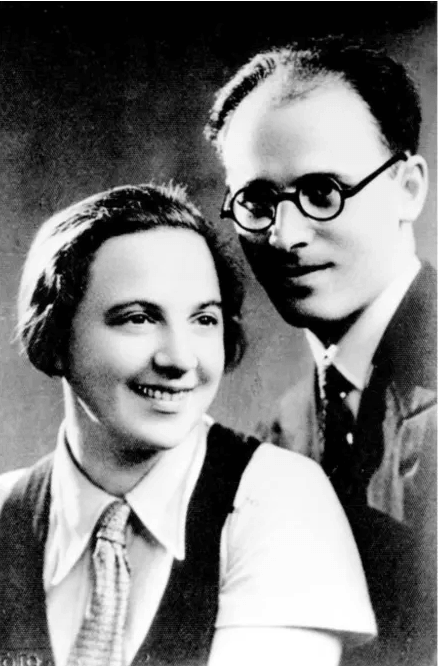
Academic stars in high school, Abrasha Blum and Luba Bielecka shared a slow burn romance and fervor for radical change. That hardly set them apart amid the ferment after the tsarist empire crumbled in 1919. No one would have predicted that Bielecka would go on to be awarded global nursing’s highest honor and Blum Poland’s equivalent of the Congressional Medal of Honor.
But their story poses a provocation in today’s hyper-polarized politics: Blum and Bielecka were devoted Bundists, and as such, they were not only socialists but anti-Zionists.
That combination can get you labeled today as anti-Israel and antisemitic, and even anti-American. Yet at the time they were Jewish heroes.
Bielecka repeatedly risked her life smuggling children out the Warsaw ghetto under Nazi occupation while directing the sole Jewish nursing school, sustaining its rigorous professional standards even as it was squashed into oblivion. Blum, a physically frail man, was dubbed the “ideological father of armed resistance” in the Bund; he led his band of militants into joining forces with the detested Zionists in the historic Warsaw Ghetto Uprising. When the insurgency was crushed — as all the combatants knew it would be — Blum, an engineer by training, led the surviving remnant through the cavernous sewer system to safety. But soon thereafter, in fleeing the police, he plummeted three stories from an apartment building. Badly injured, he was taken to Gestapo headquarters and never seen again.
Blum and Bielecka engaged the world as they found it and fought for justice for Jews and humanity. Blum’s photo is on display at Yad Vashem, Jerusalem’s Holocaust museum.
A lot has changed in 85 years. In 1939, most Americans Jews opposed Zionism and feared it would be misused by antisemites to justify allegations of dual loyalty. At the time, twice as many Jews lived in Warsaw as in all of British Palestine. The Bund swept 17 of 20 Jewish-designated seats on city council (Blum held one of them), far outdistancing all the Zionists parties together. Socialism made sense to Jewish voters, who were overwhelmingly “blue collar.” And so did doikayt (“hereness”), the doctrine that Poland’s three million Jews belonged there, not in a far-off desert, as the Zionists maintained.
The Holocaust radically and irrevocably changed the landscape. Ninety percent of Polish Jewry was exterminated. Even after the Nazis were vanquished, Jews continued to endure pogroms and were largely purged from Poland’s ruling communist party. By then, Israel was the sole destination in the world that welcomed large numbers of Jews.
Blum and Bielecka’s daughter, 17-year-old Aviva (née Victoria), was among the pioneers who migrated to a kibbutz in the new State of Israel. Zionism offered her the promise of milk and honey in a sanctuary free of antisemitism.

For years, her younger brother, Olek, held fast to his parents’ politics. But he too ultimately exited Poland, not for Israel but for the US, saddened that his father’s dream of “a prosperous Jewish minority inside Poland was impossible to realize.”
Like their parents, Aviva and Olek too engaged the post-WWII world as they found it and sought a better world.
Today, socialism and anti-Zionism are each experiencing something of a revival in the U.S. Self-described socialists have won mayoral elections in New York, Seattle and Washington, D.C. DSA-supported candidates won the Senate Democratic primary in Florida and narrowly lost Wisconsin’s gubernatorial primary. A recent CBS News poll found that 58% of Democrats now hold a favorable view of socialism, whereas only 32% view capitalism positively. The gap is even wider among young people. Jews, despite their relative affluence, remain among the most liberal voters in the U.S., although their current views on socialism have not been scientifically surveyed.
Anti-Zionism looks quite different in 2026 than in 1939, at least to Jews. Israel, approaching its 80th anniversary, is far from the desert mirage ridiculed by pre-war Bundists. While only a minority of American Jews self-describe as Zionists, an overwhelming majority support Israel as a Jewish and democratic state. Yet they are deeply troubled by Israel’s direction: Polls show that Zohran Mamdani, a socialist and anti-Zionist, is more popular among American Jews than Israeli Prime Minister Benjamin Netanyahu.
We’re left with this thought experiment: What if Abrasha and Luba resided in America today? What would they view as justice and how would they engage to achieve it? What if they resided in Israel?
And finally, a question about the rest of us: Would we recognize them as heroes?
The post These Bundist pioneers were heroes in their time. Would they be in ours? appeared first on The Forward.
Uncategorized
AIPAC couldn’t stop Michigan’s El-Sayed in the primary. Now it’s trying again.
AIPAC’s super PAC has re-entered Michigan’s closely watched U.S. Senate race less than a month before the general election, spending nearly $100,000 on mailers attacking Abdul El-Sayed, despite earlier concerns by allies of his Republican opponent, Mike Rogers, that it would boost the Democratic nominee.
The spending of $94,620 by United Democracy Project (UDP) on direct mailers was disclosed in a Friday campaign finance filing. It comes after Rogers publicly welcomed AIPAC’s support during a televised debate last week, reversing the position initially taken by people close to his campaign who worried the pro-Israel group’s involvement could hurt his chances.
A spokesperson for the group told Jewish Insider that the mailers target 130,000 identified Jewish voters in the swing state. It focuses on El-Sayed’s response to an attack on Temple Israel in West Bloomfield earlier this year. El-Sayed drew criticism for saying “hurt people hurt people” when discussing the attacker, whose brother was reportedly a Hezbollah commander killed in an airstrike on Lebanon. El-Sayed later apologized, saying he had been trying to provide broader context for the attack.
UDP spent more than $30 million trying to defeat El-Sayed in the Democratic primary this summer and in support of Rep. Haley Stevens, who lost by about one percentage point.
Following the primary, allies of the Republican nominee reportedly asked AIPAC not to run ads to boost him, fearing that the group’s involvement would give El-Sayed the same political foil that helped him overcome its massive spending in the primary. Axios reported that AIPAC officials didn’t take that rejection easily.
But Rogers appeared to change course last Thursday when asked whether he’d welcome AIPAC’s support.
“Anybody that wants to help my campaign stop a guy who can’t condemn terrorism in our own country because he’s so close to the people who are supporting the Muslim Brotherhood, again, I’ll take all of that help,” Rogers said at Thursday’s televised debate. El-Sayed interrupted to say he had condemned terrorism.
A new super PAC, Together for Michigan, aired an ad during the debate featuring Taylor Weintraub, whose child attends the Temple Israel preschool that was attacked in March.
Rogers went further on Friday at a campaign event with Sen. John Kennedy of Louisiana, accusing El-Sayed of being “so anti-Jewish” that a single mailer had upset him. Rogers said he welcomed help from Jewish supporters seeking to defeat his opponent. Kennedy also attacked El-Sayed, saying AIPAC would not be involved in the race if the Democrat did not “sleep in a Bin Laden jersey.”
El-Sayed, an Israel critic who has made opposition to AIPAC a central part of his campaign, responded by accusing Rogers of desperation. “You know Mike Rogers is in trouble when he begs AIPAC to start spending against me,” he wrote on X.
Some Jewish Democrats are publicly supporting Rogers, saying El-Sayed has failed to assuage concerns in his outreach to Jewish voters and in campaign appearances in recent months. If elected, El-Sayed would become the first Muslim member of the U.S. Senate.
Recent polls show El-Sayed with a narrow lead in the race to replace retiring Democratic Sen. Gary Peters. Recent elections in Michigan have been decided by narrow margins. Trump won the swing state in 2024 by about 80,000 votes, while Democratic incumbent Elissa Slotkin defeated Rogers in the Senate race that year by fewer than 20,000 votes. Four years earlier, Joe Biden won Michigan by about 2.8 percentage points.
The post AIPAC couldn’t stop Michigan’s El-Sayed in the primary. Now it’s trying again. appeared first on The Forward.
