


Uncategorized
2025’s Jewish highlights — from ‘Marty Supreme’ to Max Fried’s menschy move
Jews have been in the spotlight in the past years for all kinds of reasons, many of them less-than-fun: Gaza, war, hostages, protests. But looking back, we wanted to boil it down into highlights. Or at least things that were just really, really Jewish. Basically, everything we thought was worth making note of in the last year, whether for its merits, its lack thereof, or just for its pure oddity.
You may notice reading that there seem to be a few doubles in these categories. But, you see, the “best Jewish movie” is not necessarily the “most Jewish movie.” That’s because there has been a glut of loudly Jewish content that’s awfully hard to ignore, screaming for our attention. That doesn’t mean it’s good, but it’s notable.
So read on for the Jewish things you should remember — whether you want to or not — from 2025.
Best Jewish movie
It’s apparently a Safdie family tradition to induce anxiety in movie-going Jews on Christmas. (Uncut Gems arrived Dec. 25, 2019.) Josh Safdie’s film, about salesman-hustler-table-tennis dynamo Marty Mauser, accumulates Yiddishkeit as it goes, including a brief cameo by a Forward delivery truck. Timothée Chalamet dons thick-rim glasses and hangs a Magen David over his chest as he jousts with a Holocaust survivor opponent (there were a few ping-pong champs who did, in fact, survive Auschwitz). A character in the tradition of Sammy Glick and Duddy Kravitz, Marty is as magnetic as he is entitled. While the film’s concerns are universal, it is perhaps primarily a portrait of the New Jew, not of the Nordau school, but the American one, who regarded success as something he’s owed.
Most Jewish movie
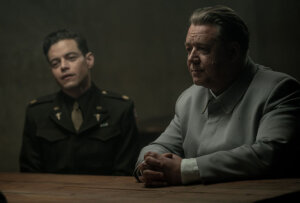
These days, there is such a glut of Holocaust content that each new book, movie or show has to find a unique niche. Nuremberg did so by focusing on the relationship between Hermann Goering, Hitler’s right-hand man, and the psychiatrist assigned to analyze him before the eponymous trials, a man who hoped to find some genetic or mental component for evil that he can diagnose.
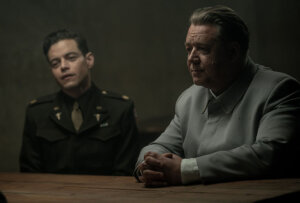
But the movie is so intent on being informative that it neglects to actually develop its characters and give real insight into Goering’s mind and motivations, or anyone else’s. Though it purports to be a movie about the banality of evil, it was actually just banal. It culminates in the shocking realization that evil has no genetic component, and most of its reveals carry just as little weight. Its most impactful moment is actually a piece of another film: the archival footage shown during the actual trial, which the movie excerpts.
Most Jewish movie that isn’t actually Jewish
Sentimental Value
In Joachim Trier’s film, which won the Grand Prix prize at Cannes, aging filmmaker Gustav Borg pursues reconciliation with his daughters by trying to cast them in his next film, which is a dramatization of his life. He wants the younger sister Nora, a theater actress who battles crippling anxiety, to play his mother who died by suicide; he’s cast the preteen son of Agnes, the elder sister, as a younger version of himself.
The Norwegian family depicted in this film isn’t Jewish. But Trier introduces all the classic beats of Jewish cultural concern: inherited trauma, the artist’s struggle, and the allure/disappointment of goyish blondes (this one played distractingly by Elle Fanning).
(Bonus points for Jewish musical-comedy darling Catherine Cohen’s bit part as Fanning’s phone-addicted manager.)
Most Jewish TV
The second season of Netflix’s Hot Rabbi hit rom-com, once again dominated Jewish conversations — and the streamer’s most-watched list. But much like its huge first season, the second left something to be desired in terms of its representation of Jews, who once again seemed to be incredibly limited by their religious identity and beliefs, and yet simultaneously eager to cast them off given the right opportunity. Stereotypes — like Jews being bad at sports or good at complaining — do a lot of the work of making the show Jewish. The effect is that Nobody Wants This doesn’t feel Jewish so much as it screams at the audience “this is a Jewish show!”
The show’s approach to Jewishness is perhaps best captured by the fact that menorahs, inexplicably, constantly appear in the background, even though it’s not Hanukkah at any point in either season. But without a hanukkiah on display — and, sometimes, lit — how would we know it’s Jewish?
Best Jewish TV
Long Story Short
The animated show from the creator of the surrealist show Bojack Horseman, Raphael Bob-Waksberg, managed to avoid the pitfalls that so often plague very Jewish media — namely heavy-handedness around Israel, or antisemitism, or leaning on clumsy exposition to define Jewish practices for a gentile audience. Instead, the show just lets its Jewish family be, while also showcasing a wide range of Jewish diversity; the family includes a Black Jewish convert, both a ba’al teshuva son and another son who struggles to connect with his Jewishness, and a queer couple. Each character feels deeply familiar to anyone who spends time in Jewish community, but the show doesn’t try to make the jokes easy to read to non-Jews. Maybe that means some of them fly over the heads of anyone not in the tribe, but that means it’s pitch-perfect for those of us looking for a deeper, subtler representation of Jewish life.

Most Jewish play
The latest play from writer and actress Liba Vaynberg, imagines how six of the Biblical matriarchs — Miriam, Sara, Rebecca, Rachel, Leah and Tziporrah — would have lived today. Set over the course of decades, the girls start the play as 13-year olds and end it in the late stages of adulthood. Each girl’s path is a smart imitation of their matriarch’s actual story, transposed into the modern day. Sara struggles with infertility. Miriam becomes a rabbi, believing that studying Torah will help her lead a good life and avoid misfortune. Leah’s mandrake root is substituted by weed edibles. With humor and an impressive amount of Jewish references that only those steeped in biblical expertise might catch, the play asks: Why is life full of sacrifices, especially ones that seem unjustified? Vaynberg is not interested in giving a solid answer, but still provides a satisfying ending, assuring that life, no matter what it brings, is meant to be lived in full.
Best Jewish play
Slam Frank
Ragebait maestro Andrew Fox’s opus, which reimagines Anne Frank as Anna Franco, a pansexual Latinx immigrant from the “barrios of Frankfurt,” is a piece with many moving parts: a social media campaign that shames the Auschwitz-Birkenau Museum for not including chanclas in their mountains of shoes and, yes, also a “real musical,” despite the doubts of many online who assumed it was pure trolling. In fact, it’s a lucid commentary on the state of woke, where identity boxes serve as proxies for character development, and stops just short of being a full referendum on inclusion.
The piece, riffing on nearly every virtue-signalled mega-musical of the last two decades, is at its most knotty when it takes on Jewishness; Fox knows being Jewish doesn’t map neatly to the fashionable formulas of white privilege and oppressor-oppressed. In the end, it is the reimagined attic residents’ existence as Jews that unravels the simple binaries of progressive politics.

Most Jewish book
Sam Sussman’s novel takes the author’s own nebulous biography as its subject — and the suspicion that Bob Dylan may be his father. If this wasn’t Jewish enough, the initial meeting of his mother and the future-Nobel Laureate took place in the studio of painter Norman Raeben, whose father was Solomon Naumovich Rabinovich (aka Sholem Aleichem). The book generated a lot of interest as a work of a promising debut from a young novelist.
Another extremely Jewish book
Kaplan’s Plot
A rollicking story that toggles between a Ukrainian mobster scraping by and a modern-day tech worker digging through family history, essayist and memoirist Jason Diamond’s first novel digs into Jewish Chicago. Really, as any good Jewish story spanning generations, the book is an examination of the impact of inherited trauma, but it’s not too heavy; it crackles with fast-paced Yiddishisms and the propulsive plot of a thriller. Jewishness isn’t the book’s subject as much as it is its entire ethos.
Funniest Jewish newsletter
One of the brightest and least-talked-about trends in the Jewish world right now is the second wave of Substack newsletters introducing new perspectives on Jewish life. (Read about the first wave here.) Bagel Emoji, a semiregular dispatch from a semi-anonymous, gay semi-Orthodox Jew who lives in Los Angeles, delivers feverish, meandering riffs on niche trends like AI content in Jewish print publications and the notorious odor of a particular kosher grocer to say something deeper about frum life. Bagel’s general sass — thinly masking affection, I think — makes each entry essential reading.
Spiciest Jewish newsletter
Picture a newsletter about Israel discourse so hot it must be handled with gloves. That’s NonZionism, a regular rant from an Israel-based writer who goes by the pen-name Mascil Bina. Skewering the excesses and hollowness of both pro-Israel and anti-Israel ideology, the author’s perspective offers a third position: That Israel is “something that wasn’t inevitable, but cannot now be undone.” His takes are unsparing, and unexpected — one week, it’s the case for Bibi Netanyahu; the next, it’s a withering critique of hasbara titled “Zionism turns your brain to mush.” Just recommending it feels risky.
Best Jewish music moment
Streisand and Dylan duet
Streisand announced an album of duets, The Secret Of Life: Partners, Volume Two, with the likes of Hozier, Paul McCartney, Mariah Carey, Ariana Grande and — finally — Bob Dylan, resolving decades of a great musical will-they-won’t-they.
“The track opens with the sound of harmonica, a sound often associated with Dylan,” wrote the Forward’s Seth Rogovoy. “But this harmonica sounds nothing like Dylan’s style, and it is definitely not Dylan playing.” He is singing though, and Barb comes in by the fourth line. Unfortunately, they have yet to duet on “Lay Lady Lay,” a song Dylan purportedly wrote with Barb in mind.
Best “Good for the Jews” moment
Britney Spears admiring the beards of Chabadniks playing chess
The Instagram post was rizz recognizing rizz.
Best Jewish Food Moment
Manischewitz launches food truck

Since 1888, the Manischewitz Company has been a Jewish household staple. But now, it’s taking its signature products on the road. The Manischewitz Deli on Wheels, an orange truck that serves rugelach, hot dogs, vegetarian egg rolls, and matzo ball soup, launched this March as part of the brand’s plan to market to younger audiences. Last year, the company launched a frozen food line that emphasized convenience, a quality they are also trying to capture in their truck. Manischewitz has a city-wide license and plans to take the truck all over New York and New Jersey. Its creative branding and warm servings of classic Jewish comfort food are a welcome addition to the already bustling food-truck scene.
Most Jewish Food Moment
New York City sets a new record for the world’s biggest Shabbat dinner
On Nov. 20, more than 2,500 Jews — 2,761 to be exact — sat down at the Javits Convention Center in Manhattan and broke the record for the world’s biggest Shabbat dinner. The previous record had been set by Berlin in 2015 with a dinner of 2,322 people. The Forward’s Hannah Feuer was in attendance to get all the details — and do her best to eat all the food served over the multi-course meal. The event included 811 pounds of kugel, 402 challahs, and 22,500 hors d’oeuvres and, in an AI generated video, Albert Einstein, Ruth Bader Ginsburg, Golda Meir and the Hebrew patriarch Abraham offered commentary on the dinner. For entertainment, a woman in a leotard, suspended by wires from the ceiling, played “If I Were a Rich Man” on the violin and the Jewish a capella group Six13 sang “We Are the Champions” to celebrate the victorious occasion.
Biggest Jewish sports disaster
A bicycle blowup
Canadian-Israeli billionaire Sylvan Adams had a hobby — competitive cycling — and a dream: using the sport to bolster Israel’s image abroad. That dream crashed hard into reality this summer at the Spanish Vuelta, where Adams’ team — called Israel-Premier Tech, and featuring zero Israeli or Jewish riders — turned out thousands of anti-Israel protesters.
Several of the race’s stages were altered or cancelled, including the final, which was halted several miles short of the finish line. By the Vuelta’s conclusion, some of the other riders were openly campaigning for Israel-Premier Tech’s exclusion and the team had removed “Israel” from its jerseys. The team’s demise became official this month when it was announced that retired Spanish footballer Andres Iniesta had bought IPT and, er, rechristened it.
Best Jewish sports performance
Avdija delivers
Deni Avdija was not supposed to be this good. Yet in his sixth season, the Portland Trail Blazers’ forward has been producing like an All-Star — he’s averaging 26 points, 7 rebounds, 6 assists per game as of this writing, with borderline elite efficiency — and with any justice, he’ll soon become one.
Most heartwarming Jewish sports moment
A very Jewish draft
It’s gotta be the back-to-back selections of Jewish Brooklyn Nets rookies Ben Saraf and Danny Wolf at June’s NBA Draft. Some draft prognosticators were expecting Wolf, a dynamic seven-footer who led Michigan to the Sweet 16, to be picked early in the first round — before Saraf, a spindly Israeli point guard. Instead, when Nets took Saraf with the 26th pick, the Wolf ganze mishpoche was still twiddling their thumbs. Moments later, though, Commissioner Adam Silver called Wolf’s name, sending older brother Jake Wolf into full-blown sobs — and into the unofficial sports meme hall of fame.
Menschiest Jewish athlete
Max Fried
The Yankees ace called reigning Cy Young winner Tarik Skubal to tell him he deserved to start the All-Star game in his stead. “It’s a very professional thing to do, and you got a ton of respect for guys that do stuff like that,” Skubal later told reporters. What we were thinking: This kid must have great parents!
The post 2025’s Jewish highlights — from ‘Marty Supreme’ to Max Fried’s menschy move appeared first on The Forward.
Uncategorized
Yiddish Modernism and the political tumult in the 1930s
אין די 1920ער און 1930ער יאָרן האָט דער זשורנאַל „אין זיך“ געדינט װי אַ טריבונע פֿאַר מאָדערניסטישע עקספּערימענטן אין דער אַמעריקאַנער ייִדיש־ליטעראַטור. צו די „אינזיכיסטן“ האָבן געהערט יעקבֿ גלאַטשטײן, אַהרן גלאַנץ־לעיעלעס, ה. לײװיק, שלמה שװאַרץ, יהודה לײב טעלער און אַנדערע.
װי מען קען טרעפֿן פֿונעם זשורנאַלס נאָמען, זײַנען די דאָזיקע ליטעראַטן געװען פֿאַרטאָן אין שעפֿערישע חקירות אַרום דעם אײגענעם „זיך“. און טאַקע, אין די 1920 יאָרן האָט „אין זיך“ ניט געהאַט קײן אינטערעס צו די פּאָליטישע דאגות־היום.
אָבער דאָס האָט זיך געביטן נאָך 1934, װען גלאַטשטײן איז געװאָרן דער רעדאַקטאָר פֿונעם זשורנאַל. דער דאָזיקער תּקופֿה איז געװידמעט דאָס נײַע בוך פֿון איתי זוטרא (אוניװערסיטעט פֿון מאַניטאָבאַ, קאַנאַדע) „אינזיכיזם: ייִדיש־דיכטונג און די ייִדישע אידענטיטעט אין אַמעריקע אין די 1930ער יאָרן“.
גלאַטשטײן האָט פֿאַרטײדיקט די שעפֿערישע אױטאָנאָמיע פֿונעם דיכטער קעגן די אַנגאַזשירטע קאָמוניסטישע קריטיקער װי אַלכּסנדר פּאָמעראַנץ, װאָס האָבן געפֿאָדערט, אַז ליטעראַטור זאָל דינען די אינטערעסן פֿון די פּראָלעטאַרישע מאַסן.
אַזױ איז גלאַטשטײנס אײגענע פּאָעטישע שאַפֿונג געװאָרן אַ מין פּאָליטישע פּאָזיציע. די דאָזיקע פּאָליטיק, האַלט זוטרא, האָט משפּיע געװען אויף זײַן ליטעראַרישן סטיל און דעם סטיל פֿון אַנדערע מחברים פֿון „אין זיך“.
גלאַטשטײן האָט געעפֿנט די זײַטן פֿון „אין זיך“ פֿאַר פּאָליטישע װיכּוחים. ער אַלײן איז אַרױס מיט אַ פֿאָרשלאָג צו שאַפֿן אַ פּאַרטײ, װאָס זאָל זײַן אי פּאָליטיש ראַדיקאַל אי ייִדישיסטיש, הגם קײן פּראַקטישע פּראָגראַם האָט ער ניט פֿאָרגעלײגט.
להיפּוך צו אַנדערע ראַדיקאַלע פּאַרטײען, קודם־כּל דער קאָמוניסטישער, איז דער הױפּטציל פֿון גלאַטשטײנס פּאַרטײ געװען צו פֿאַרטײדיקן ייִדישע נאַציאָנאַלע אינטערעסן. דאָס איז געװען ספּעציעל װיכטיק אין דער צײַט װען דער אַנטיסעמיטיזם האָט געהאַלטן אין אײן װאַקסן אין אײראָפּע.
גלאַטשטײן האָט פֿאַרבעטן ייִדישע ליטעראַטן אַרומצורעדן זײַן פּראָיעקט אױף די זײַטן פֿונעם זשורנאַל. לרובֿ זײַנען זײ ניט געװען אײַנשטימיק מיט גלאַטשטײן. דער עיקר זײַנען זײ געװען קעגן דער אידײ, אַז די אינטעלעקטואַלן דאַרפֿן װערן פּאָליטישע אָנפֿירער פֿון די מאַסן.
חוץ דעם, װי עס האָט באַמערקט חיים זשיטלאָװסקי, זײַנען שױן דאָ געװען גענוג פּאָליטישע פּאַרטײען אין װעלכע ייִדן האָבן זיך אַקטיװ באַטײליקט. צו שאַפֿן נאָך אַ פּאַרטײ װאָלט ניט געהאָלפֿן צו פֿאַרבעסערן דעם מצבֿ פֿון ייִדן.
דער אינזיכיזם, האַלט זוטרא, איז בטבֿע געװען עקלעקטיש סײַ פּאָעטיש און סײַ פּאָליטיש. מען האָט ניט געהאַלטן פֿון טראַדיציאָנעלע זשאַנערס און סטילן. אָפֿט מאָל האָט מען עקספּערימענטירט מיט מישן פּראָזע און פֿערזן.
אין די 1930ער יאָרן האָבן די ליטעראַרישע עקספּערימענטן באַקומען אַ פּאָליטישן אַקצענט. סײַ אין דער קונסט און סײַ אין דער פּאָליטיק האָבן די אינזיכיסטן געזוכט אַן ענטפֿער אױף דער עיקר־פֿראַגע: װאָס איז דער עצם פֿונעם ייִדישן „זיך“ אין אַמעריקע אין דער מאָדערנער תּקופֿה?
דער אינזיכיזם איז געװאָרן אַ נײַער מין ייִדישיזם: אַ קולטורעלע און פּאָליטישע אידעאָלאָגיע, װאָסער ציל איז געװען צו פֿאַראײניקן פֿאַרשײדענע פּאָליטישע שטרעמונגען אױפֿן סמך פֿון דער ייִדישער שפּראַך און דער מאָדערנער װעלטלעכער ייִדיש־קולטור.
גלאַטשטײן האָט געגלױבט, אַז װערטער דאַרפֿן טראָגן דעם װירקלעכן אמת, בפֿרט אין די צײַטן, װען כּלערלײ טאָטאַליטאַרישע רעזשימען האָבן פֿאַרשפּרײט ליגנס פֿאַר די צװעקן פֿון זײער מערדערישער פּראָפּאַגאַנדע.
אינעם בוך לידער „ייִדישטײַטשן“, װאָס איז אַרױס אין װאַרשע אין 1937, האָט גלאַטשטײן געפּרוּװט דערגרײכן די טיפֿסטע פֿאָנעטישע און לעקסישע װאָרצלען פֿון דער ייִדישער שפּראַך.
אין די שורות „אַלטער בױם, פֿעלדז און שטאַם / כ׳קום צו דיר מיט ברױט און גראַם“ דריקט גלאַטשטײן אױס זײַן פּאָזיציע לגבי דער ייִדישער קולטור־ירושה. ער קומט מיט זײַן אַמעריקאַנער „ברױט און גראַם“ צו דעם „אַלטן בױם“ פֿון ייִדיש כּדי צו שעפּן שפּראַכלעסע יניקה פֿאַר זײַן פּאָעזיע.
זוטרא אַנטפּלעקט אין „ייִדישטײַטשן“ סאַטירישע אונטערטענער, װאָס מאַכן חוזק סײַ פֿון די פֿאַשיסטן און קאָמוניסטן און סײַ פֿון די אַמעריקאַנער אַסימילאַטאָרן.
די צװײטע צענטראַלע פֿיגור אינעם אינזיכיזם איז געװען דער דיכטער, קריטיקער און זשורנאַליסט אַהרן גלאַנץ־לעיעלעס. אין 1937, אײנצײַטיק מיט גלאַטשײטנס „ייִדישטײַטשן“, איז אַרױס גלאַנץ־לעיעלעס בוך לידער „פֿאַביוס לינד“.
אין הסכּם מיט די עסטעטישע פּרינציפּן פֿונעם אינזיכיזם איז דאָס דאָזיקע בוך אַ מישמאַש פֿון סטילן, זשאַנערס און שטאַנדפּונקטן, װאָס זײַנען פֿאַרקניפּט דורך דער פֿיגור פֿונעם הױפּטהעלד. דאָס איז אַ פּאָעטישער סך־הכּל פֿונעם איניזכיסטישן פּעריאָד אין לעיעלעסעס שאַפֿונג, האַלט זוטרא.
„פֿאַביוס לינד“ האָט באַקומען התלהבֿותדיקע אָפּרופֿן מצד די קריטיקער. גלאַטשטײן האָט געהאַלטן דאָס בוך פֿאַר דער „ערשטער גרױסשװוּנגיקער און גרױסשטאָטישער פּאָעמע אין דער ייִדישער פּאָעזיע“, און ה. לײװיק האָט עס געלױבט פֿאַר זײַן „אָרגאַנישער גאַנצקײט“.
די פֿיגור פֿון פֿאַביוס לינד איז ניט קײן אױטאָביאָגראַפֿישע. זוטרא מאַכט אַ פּרוּװ צו אַנטפּלעקן די פֿאַרפּלאָנטערטע באַציִונגען צװישן דעם מחבר אַהרן גלאַנץ־לעיעלעס, זײַן פּאָעטישער פּערזאָן אַ. לעיעלעס, און זײַן אױסגעטראַכטן „אַלטער עגאָ“ — פֿאַביוס לינד.
לינד פֿיגורירט אינעם בוך װי אַ צעשפּאָלטענע פּערזענלעכקײט: „פֿאַביוס לינד פֿיל לעבנס פֿירט ער“. ער איז סײַ אַ פּראָדוקט און סײַ אַ קרבן פֿון זײַן תּקופֿה.
לינד האָט ספֿקות װעגן כּלערלײ פּראָיעקטן צו לײזן די „ייִדישע פֿראַגע“, אינעם סאָװעטישן ביראָבידזשאַן אָדער אינעם העברעיִש־רעדנדיקן ייִשובֿ אין ארץ־ישׂראל.
חוץ לידער האָט גלאַנץ געשריבן פּאָליטישע קאָמענטאַרן אין דער ליבעראַלער צײַטונג „דער טאָג“. להיפּוך צו גלאַטשטײן האָט ער ניט פֿאַרטראַכט קײן אײגענע פּאָליטישע פּראָיעקטן. זײַן פּאָליטישער שטאַנד איז געװען אין הסכּם מיטן פּראָגרעסיװן הױפּטשטראָם פֿון פֿראַנקלין רוזװעלטס „ניו דיל“.
דער לעצטער נומער פֿון „אין זיך“ איז אַרױס אין 1940, װען אײראָפּע איז שױן געשטאַנען אױפֿן שװעל פֿונעם חורבן. דער קאָנפֿליקט צװישן אַלװעלטלעכקײט און ייִדישקײט, װאָס איז געװען די צענטראַלע טעמע פֿון די אינזיכיסטישע חקירות, איז געלײזט געװאָרן לטובֿת ייִדישקײט.
גלאַטשטײן האָט פּראָקלאַמירט: „אַ גוטע נאַכט, ברײטע װעלט. […] אױף מײַן אײגענעם געבאָט גיי איך צוריק אין געטאָ“. דאָס איז געװען דער סוף פֿונעם ייִדישן מאָדערניזם, פֿאַרסך־הכּלט זוטרא.
די פּאָעטישע קולטור־ירושה פֿון די אינזיכיסטן איז פֿאָרגעשטעלט געװאָרן פֿאַרן ענגליש־שפּראַכיקן עולם אין דער פּרעכטיקער צװײ־שפּראַכיקער אַנטאָלאָגיע „אַמעריקאַנער ייִדישע פּאָעזיע“, װאָס איז אַרױס אין 1986 אונטער דער רעדאַקציע פֿון בנימין און באַרבאַראַ האַרשאַװ.
אין דער הקדמה האָט בנימין האַרשאַװ פּרטימדיק אַנאַליזירט די פֿאָרמעלע און סטיליסטישע חידושים, װאָס די אינזיכיסטן האָבן אַרײַנגעבראַכט אין דער ייִדישער פּאָעזיע אין די 1920ער יאָרן, אָבער ער האָט קױם באַרירט זײער פּאָליטיק.
זוטראס בוך באַטראַכט די אינזיכיסטישע שעפֿערישקײט אונטער אַן אַנדערן קוקװינקל. אין די 1930ער יאָרן זײַנען פּאָליטיק און פּאָעזיע געװאָרן נאָענט צונויפֿגעפֿלאָכטן אין די װערק פֿונעם לעצטן דור אַמעריקאַנער ייִדישעמאָדערניסטן.
The post Yiddish Modernism and the political tumult in the 1930s appeared first on The Forward.
Uncategorized
I never saw myself in Barbie. Would ‘Hanukkah Barbie’ have changed that?

I wasn’t really a Barbie kid. While I occasionally played with my sister’s hand-me-down Barbies, I preferred American Girl dolls. They were Barbie’s chunkier, cherubic counterparts, each representing a girl from a different period in history and accompanied by a series of historical-fiction books about her life. I devoured those books, including the story of Rebecca Rubin, a 9-year-old Russian-Jewish immigrant living on the Lower East Side in the early 1900s.
So when Mattel released its first Hanukkah Barbie last week — officially marketed as the “Barbie Holiday Sweater Doll” — I wondered whether she would have appealed to me when I was growing up. Would her Jewishness have made her feel more relatable than that blonde-haired, blue-eyed, impossibly proportioned bombshell?
As it turns out, I wasn’t the only one thinking about what it means for Barbie to look Jewish. Shortly after her release, Hanukkah Barbie set off a spirited debate over her appearance. Her nose seemed slightly more prominent than the default Barbie button nose, raising questions about whether Hanukkah Barbie’s face reinforced Jewish stereotypes, or if her distinctive nose reflected a good-faith effort to give the doll recognizably Jewish features.
It was at least clear that Mattel did its homework about the Festival of Lights. The hanukkiah on Barbie’s sweater has the correct number of candleholders, and the dreidels bear accurate Hebrew lettering — which is more than can be said about a lot of Hanukkah merchandise. If sales are any indication, Hanukkah Barbie is resonating. The doll, which originally retailed for about $30, is sold out, with third-party sellers now asking for as much as $345.
There have previously been Barbies modeled after Jewish celebrities, including Olympic gymnast Aly Raisman, Israeli Olympic surfer Anat Lelior and fashion designer Diane von Furstenberg. But Hanukkah Barbie is the first Barbie whose identity is simply Jewish — which means she will have the impossible task of representing Jews of all kinds. Sephardic and Ashkenazi Jews, religious and secular Jews all have to somehow find themselves in the same doll.
Complicating matters, the original blonde Barbie has arguably been Jewish all along. Ruth Handler, the daughter of Polish-Jewish immigrants, invented Barbie in 1959, naming “Barbie” after her daughter, Barbara, and “Ken” after her son, Kenneth. “Barbie is a matrilineal Jew? Love it!” one Reddit user joked last month.
But Barbie was always a little too Aryan-coded to feel Jewish to me. Her origins go back to the postwar German ideal of blonde, white femininity. Handler drew inspiration for Barbie’s look from a German toy named Bild Lilli, marketed toward men as a gag gift and sold in bars and tobacco shops. That doll, in turn, was based on the comic-strip character Lilli, characterized by Barbie’s unofficial biographer M.G. Lord as “a golddigger, exhibitionist, and floozy” who worked as a secretary while looking for a wealthy husband. Bild Lilli was manufactured by O.M. Hausser, a toy company that had produced Adolf Hitler figurines during the 1930s.
No wonder stereotypically Ashkenazi-looking Jews like me, not to mention everyone else who also didn’t fit the Barbie mold, felt left out of Barbie-land. (Which is literally everyone, given that scaled up to human size, a traditional Barbie doll’s proportions would make her unable to survive; there’d be no room for her organs in her tiny waist, and she’d have no choice other than to walk on all fours.)
Over the years, Barbie has become far more inclusive. After the debut of the “Colored Francie” doll in 1967, Barbie expanded to include dolls of different races, body types and abilities, including dolls with prosthetic limbs and wheelchairs and, in 2016, the long-awaited introduction of “curvy,” “petite” and “tall” Barbies. Mattel introduced career-themed dolls in the 1960s, evolving from fashion designer, nurse, and flight attendant to a presidential candidate Barbie in 1992.
The American Girl doll, which Mattel acquired in 1998, was part of a similar response to the limitations of the traditional fashion doll. Created by teacher Pleasant Rowland in 1986, American Girl was designed to help girls see themselves in their dolls while making history feel personal and engaging.

Of course, little kids aren’t thinking so much about the sociological implications of their toy choices. For my part, my mom bought me an American Girl look-alike doll with my brunette hair and choppy bangs, hoping that seeing myself reflected in a doll would help build my self-esteem. But I also gravitated toward a blonde-haired, blue-eyed American Girl doll that looked more Barbie-esque, which I begged my mom to buy.
Looking back, I wonder how much of the Barbie beauty standard I had subconsciously absorbed, even with an array of representative dolls at my disposal. Hanukkah Barbie may more closely resemble women like me. But changing the default cultural image of Barbie will take more than a doll with a light-up Hanukkah sweater.
The post I never saw myself in Barbie. Would ‘Hanukkah Barbie’ have changed that? appeared first on The Forward.
Uncategorized
Minnesota man charged with ISIS-inspired plot on Jewish-owned Mall of America
(JTA) — The FBI accused an 18-year-old man of buying an AK-47 assault rifle with plans to commit a mass shooting in support of ISIS at the Mall of America in Bloomington, Minnesota, the largest indoor shopping mall in North America.
Sheikhdoon Abdullahi Mohamud, of Richfield, Minnesota, was charged on Wednesday with one count of knowingly receiving a firearm and ammunition in order to commit a federal crime of terrorism, according to a federal complaint filed on Wednesday.
Mohamud’s attorney did not respond to JTA’s request for comment.
Mohamud wanted to attack the Mall of America because he believed its owners to be Jewish, the FBI said in a statement. He planned to kill between 30 and 60 people, according to messages he exchanged with a confidential source, according to the complaint.
Mall of America is owned and operated by Triple Five Group, controlled by the Ghermezian family, a Canadian family of Iranian Jewish origin.
Messages sent in September 2026 included a video in which Mohamud pledged allegiance to ISIS, the complaint said. He planned his attack for Oct. 24 because he expected a crowd at the Hmong Arts Celebration scheduled for that day.
The complaint said an undercover FBI agent sold an AK-47 rendered inoperable, four 30-round magazines and 200 rounds of ammunition to Mohamud for $600 on Oct. 6. During the sale, Mohamud confirmed his plans to commit a mass shooting. Mohamud was arrested shortly after the sale.
The complaint said Mohamud wanted to commit an attack similar to the 2016 Pulse nightclub shooting in which 49 victims were killed; the Bondi Beach mass-shooting in Sydney last December, during which 15 victims were killed during a Hanukkah celebration; and a New Orleans truck-ramming attack that killed 14 victims in New Orleans on Jan. 1, 2025.
The investigation into Mohamud began around December 2024, when he messaged the confidential source on multiple social media platforms, according to the complaint, detailing his desire to travel to Somalia to join a group that the U.S. has designated a foreign terrorist organization. If travel was not possible due to financial constraints, he said would move forward with an attack in Minnesota.
This article originally appeared on JTA.org.
The post Minnesota man charged with ISIS-inspired plot on Jewish-owned Mall of America appeared first on The Forward.
