


Uncategorized
An activist Jewish artist who used his work to fight fascism
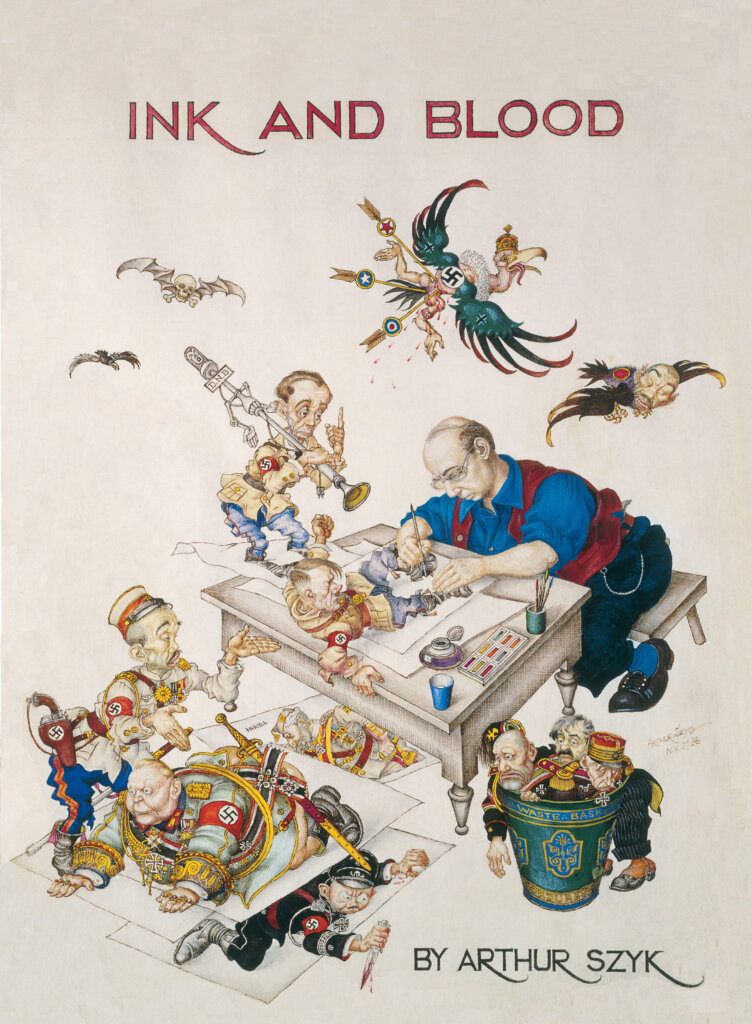
The heroic image of George Washington standing in a boat as it cuts through the icy Delaware River on Christmas Eve in 1776 is etched into the collective American consciousness. But when Polish-born political artist Arthur Szyk painted the scene in 1942, he recast it for a nation at war.
In his Washington Crossing the Delaware, the soldiers are not uniform. Instead, they reflect a diverse America, where freedom and protection belong to everyone. Intricately detailed, the richly pigmented painting is one of more than 100 works by Szyk on view in Art of Freedom: The Life and Work of Arthur Szyk at New York City’s Museum of Jewish Heritage. The exhibition pulls together rarely seen material into public view as the United States approaches the 250th anniversary of its founding.
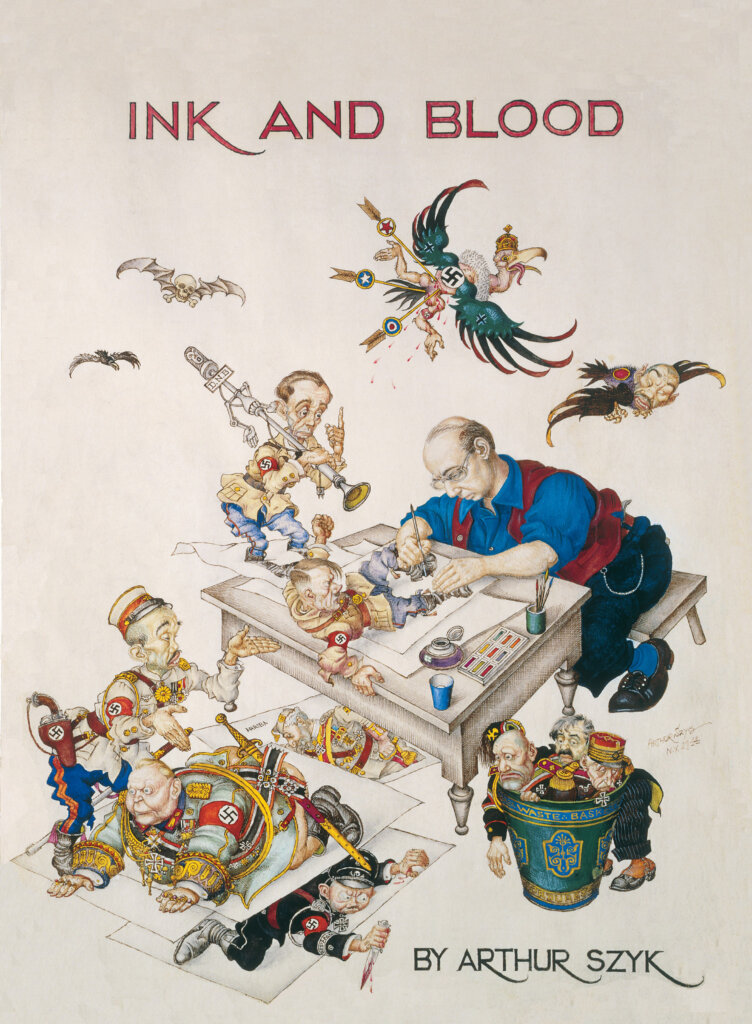
“What makes this exhibition and celebration of Arthur Szyk important for 2026 — 250 years on from the American Revolution and subsequent Declaration of Independence — is how he framed freedom as something to fight for. He loved America and was granted citizenship in 1948,” said Sara Softness, the museum’s director of curatorial affairs. “The title ‘Art of Freedom’ has a double meaning: not only that the artist made pictures about or featuring themes of democratic ideals, anti-Fascism, and pro-pluralism, but that freedom itself is a practice, a metier, a life’s work.”
Born in Łódź, Poland in 1894, Szyk experienced major upheavals of the 20th century: two world wars, the rise of totalitarianism, and Nazism, the founding of the State of Israel, McCarthyism, as well as deeply entrenched American racism and antisemitism.
After Germany invaded Poland in 1939, he, his wife and two children fled to London, ultimately immigrating to the United States in 1940.
While Szyk was an established artist when he arrived in the U.S., most Americans first encountered him through the lavishly illuminated Szyk Haggadah. Completed in Poland in the 1930s and published in London in 1940, The Times of London praised the work as “worthy to be placed among the most beautiful of books that the hand of man has ever produced.”
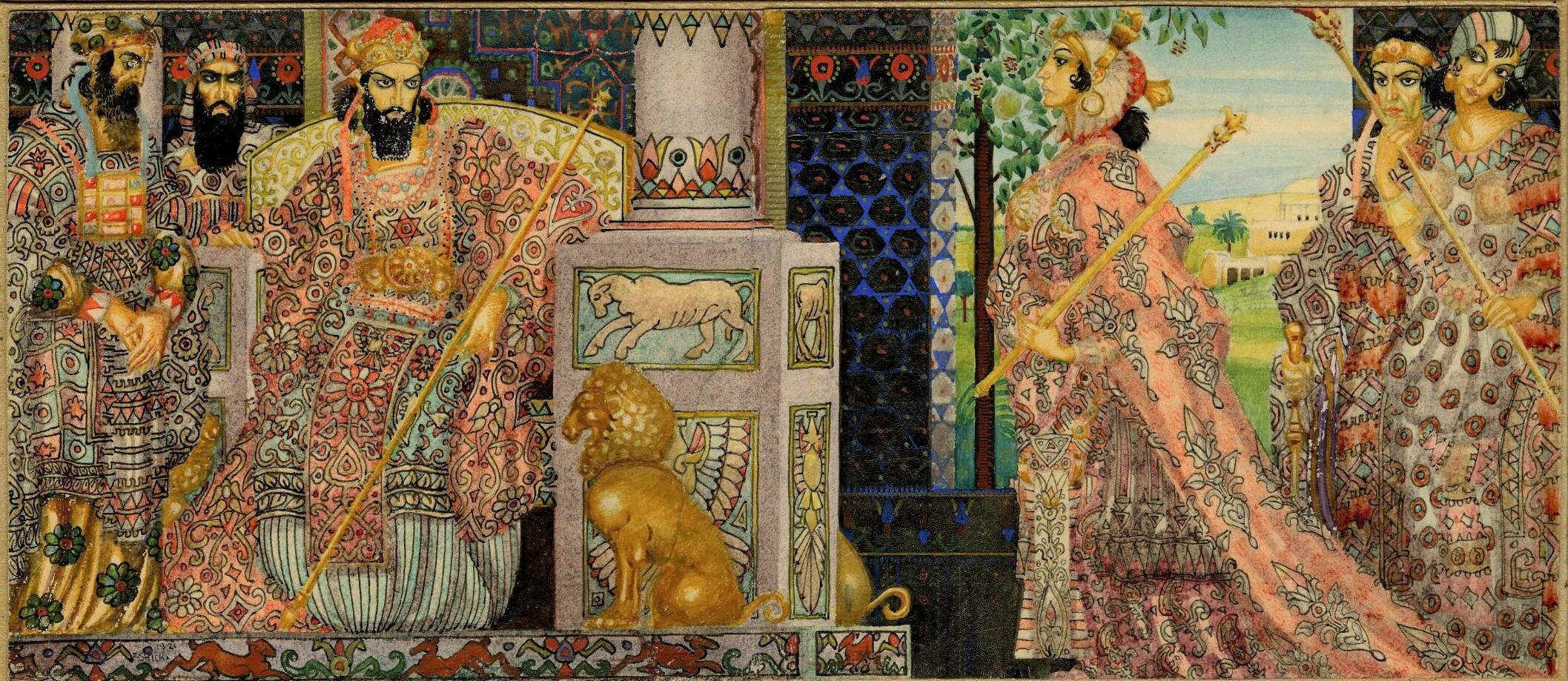
Running through July 26, 2026, the show includes 18 never-before-seen pieces and 38 original works, the majority of which are on loan from Irvin Ungar, a rabbi-turned-antiquarian.
The show includes commercial cartoons Szyk produced for Collier’s Magazine and illuminated manuscripts, as well as his 1928–1929 sketchbook for the Washington and His Times series. Visitors get an up close look at the painstaking labor required to accurately show pivotal battle scenes from the American Revolution as well as Szyk’s efforts to draft the highly specific weaponry and military dress of the Revolution’s fighters.
A fierce anti-fascist, themes of military might pervaded Szyk’s works throughout World War II.
This is never more evident than in his 1942 suite illustrating the Four Freedoms that hung in President Franklin D. Roosevelt’s White House. Each miniature, on display for the first time in 80 years, portrays a medieval knight on a quest to secure Roosevelt’s four essential freedoms — Speech, Religion, Want and Fear.
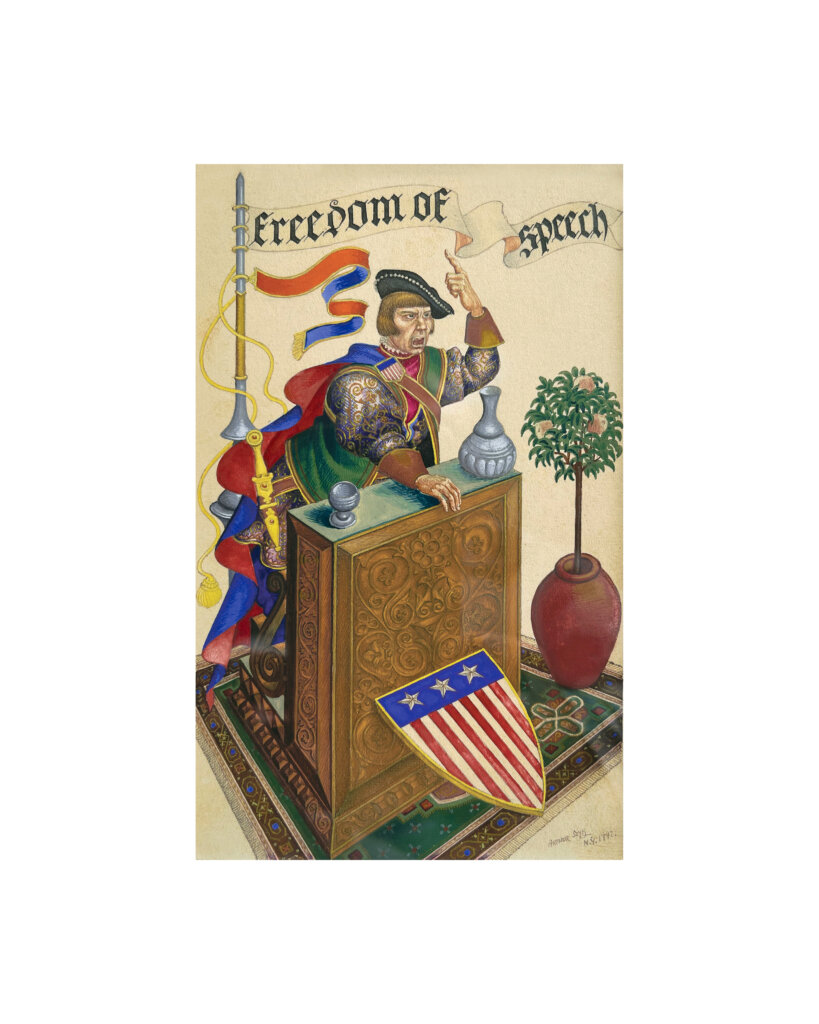
Freedom of Speech shows the knight wearing a red and blue cape pounding a lectern as he speaks freely; a shield embossed in the colors of the American flag rests nearby. In Freedom from Want, abundant food surrounds the knight, in Freedom of Religion he kneels in prayer and in Freedom of Fear he charges into battle.
Many of Szyk’s works meld American ideals with his firm belief that the government must do all it can to rescue Jews. During this period, many of his miniatures were sold as stamps and posters to generate much needed wartime funds. In this way, Szyk not only highlighted the fight against the Nazis, he cemented the defense of these freedoms as a moral obligation for all Americans.
“The exhibition is a portrait of a person who, with his pen, inks and gouaches, never put down the fight — whether for Allied victory or Jewish salvation or, what his career embodied so thoroughly, for freedom of expression,” Softness said.
The latter eventually drew the glare of the House Un-American Activities Committee. Szyk was primarily investigated for his works that challenged racism, whether it was highlighting the experience of Black veterans during World War II or the segregationist policies of the South, as well as his outspoken support for Jewish refugees.
Like the medieval knight he depicted in Freedom from Fear, Szyk charged ahead. Indeed he threw down the gauntlet in his 1951 piece, Thomas Jefferson’s Oath.
The jewel-toned work illuminates Jefferson’s famous quote: “I have sworn upon the altar of God eternal hostility against every form of tyranny over the mind of man.”
74 years after he died in his home in New Canaan, Szyk’s legacy endures.
“He refused to dilute identity or politics. He worked loudly, explicitly, and without apology — a proud American, a committed Jew, and a relentless defender of civil rights,” Softness said.
The post An activist Jewish artist who used his work to fight fascism appeared first on The Forward.
Uncategorized
Downed Planes Raise New Perils for Trump as Tehran Hunts for Missing US Pilot

Traces of an Iranian missile attack in Tehran’s sky, amid the U.S.-Israeli conflict with Iran, in Tehran, Iran, April 3, 2026. Photo: Majid Asgaripour/WANA (West Asia News Agency) via REUTERS
Two US warplanes were downed over Iran and the Gulf, Iranian and US officials said on Friday, with two pilots rescued and a third still missing and being hunted by Tehran’s forces.
The incidents show the risks still faced by US and Israeli aircraft over Iran despite assertions from US President Donald Trump and his Defense Secretary Pete Hegseth that their forces had total control of the skies.
The first plane, a two-seat US F-15E jet, was shot down by Iranian fire, officials in both countries said.
The second plane, an A-10 Warthog fighter aircraft, was hit by Iranian fire and crashed over Kuwait, with the pilot ejecting, two US officials said.
Two Blackhawk helicopters involved in the search effort for the missing pilot were hit by Iranian fire but made it out of Iranian airspace, the two US officials told Reuters.
The degree of injuries among the crew of the aircraft remained unclear. The status and whereabouts of the missing F-15E crew member was not publicly known.
Iran’s Revolutionary Guard Corps said it was combing an area near where the pilot’s plane came down in southwestern Iran and the regional governor promised a commendation for anyone who captured or killed “forces of the hostile enemy.”
Iranians, who have been pummeled by American air power for weeks, posted gleeful messages celebrating the plane downings. Iran’s Parliament Speaker Mohammad Baqer Qalibaf said on X that the U.S. and Israel’s war had been “downgraded from regime change” to a hunt for their pilots.
Trump has been in the White House receiving updates on the search-and-rescue operation, a senior administration official told Reuters. The Pentagon and US Central Command did not immediately respond to requests for comment.
NO SIGN OF END TO WAR
The prospect of a US service person being alive and on the run inside Iran raises the stakes for Washington in a conflict with low public support and no sign of an imminent end.
Iran has officially told mediators it is not prepared to meet with US officials in Islamabad in coming days and that efforts to produce a ceasefire, led by Pakistan, have reached a dead end, the Wall Street Journal reported on Friday.
The US and Israel opened the campaign with a wave of strikes that killed Iran’s Supreme Leader Ayatollah Ali Khamenei on February 28. The war has killed thousands and threatened lasting damage to the global economy.
So far, 13 US military service members have been killed in the conflict and more than 300 have been wounded, according to the US Central Command.
Iran has rained down drones and missiles on Israel. It has also taken aim at Gulf countries allied to the US, which have so far held back from joining the war directly for fear of further escalation.
In a security alert on Friday, the US embassy in Beirut said Iran and its aligned armed groups may target universities in Lebanon and urged US citizens in the country to leave while commercial flights are still available.
Israel has been waging a parallel campaign against Iran-backed Hezbollah in Lebanon after the militant group fired at Israel in support of Iran.
TRUMP THREAT TO STRIKE BRIDGES, POWER PLANTS
On Friday, as Trump threatened to hit its bridges and power plants, Iran struck a power and water plant in Kuwait, underlining the vulnerability of Gulf states that rely heavily on desalination plants for drinking water.
On Thursday, Trump posted footage on social media showing dust and smoke billowing up as US strikes hit the newly constructed B1 bridge between Tehran and nearby Karaj, which was due to open this year, and said more attacks would follow.
“Our Military, the greatest and most powerful (by far!) anywhere in the World, hasn’t even started destroying what’s left in Iran. Bridges next, then Electric Power Plants!” he wrote in a subsequent post.
On Friday, a drone hit a Red Crescent relief warehouse in the Choghadak area of Iran’s southern Bushehr province.
Kuwait Petroleum Corporation said its Mina al-Ahmadi refinery had been hit by drones. Other attacks were also reported to have been intercepted in Saudi Arabia and Abu Dhabi. Missile debris landed near the Israeli port of Haifa, site of a major oil refinery.
Oil markets were closed after benchmark U.S. crude prices gained 11% on Thursday following a speech by Trump that offered no clear sign of an imminent end to the war.
Uncategorized
US-Iran: Diplomatic Push Falters as Qatar Steps Back and Pakistan Talks Stall

Qatari Prime Minister and Foreign Minister Sheikh Mohammed bin Abdulrahman Al Thani speaks after a meeting with the Lebanese president at the presidential palace in Baabda, Lebanon, Feb. 4, 2025. Photo: REUTERS/Emilie Madi
i24 News – Diplomatic efforts to secure a ceasefire between Washington and Tehran appear to have reached an impasse, as key regional mediators pull back and broader talks stall.
According to reporting by The Wall Street Journal, Qatar has informed US officials that it does not wish to take a central role in mediating between the two sides. Officials familiar with the matter said Doha has made clear it is “not willing” to lead negotiations or act as the primary broker.
At the same time, Pakistan-led efforts to bring Iranian and American officials together have also stalled. Mediators say Tehran has refused to attend proposed meetings in Islamabad, calling Washington’s conditions “unacceptable,” further underscoring the widening gap between the two sides and the growing difficulty of restarting dialogue.
Despite the deadlock, diplomatic channels have not fully closed. Turkey and Egypt are continuing parallel efforts to revive talks, with discussions underway about potential alternative venues, including Doha and Istanbul.
US President Donald Trump downplayed the impact of recent military developments on diplomacy, including the destruction of a US fighter jet during operations in Iran. Speaking in a brief exchange with an NBC News journalist, he said: “No, not at all. It’s war. We are at war.”
He further fueled speculation with a cryptic social media post on Truth Social, writing: “Keep the oil, anyone?” criticising international allies on Friday over rising fuel prices. Trump appeared to mock allies such as the United Kingdom, writing that they should “keep the oil.”
Uncategorized
Report: Iran Retains Significant Missile Capability Despite Weeks of US-Led Strikes

Iranian missiles are displayed in a park in Tehran, Iran, Jan. 31, 2026. Photo: Majid Asgaripour/WANA (West Asia News Agency) via REUTERS
i24 News – Despite weeks of sustained airstrikes by the United States and its allies, Iran has reportedly managed to retain a substantial portion of its military capabilities, particularly its ballistic missile arsenal.
According to a report by The New York Times citing US intelligence assessments, Tehran has developed methods to mitigate the impact of the strikes, allowing it to preserve and restore key parts of its missile infrastructure.
While the Pentagon has claimed responsibility for striking more than 11,000 targets over five weeks and reducing the rate of Iranian missile fire, intelligence officials now caution that the actual damage may be more limited than initially assessed. Iranian forces are reportedly able to rapidly repair or reactivate missile launchers stored in heavily fortified or underground facilities, sometimes within hours of being hit.
Analysts also point to the widespread use of decoy sites, which may have drawn strikes away from operational assets. Many of the targeted locations are believed to have contained dummy installations, complicating efforts to accurately gauge the degradation of Iran’s ballistic capabilities. Combined with deep underground bunkers and dispersed storage networks, this approach is seen as enabling Tehran to maintain a higher level of readiness than publicly estimated.
US intelligence officials assess that this resilience reflects a deliberate strategy: preserving a credible long-range strike capability as both a deterrent and a bargaining tool in any future negotiations, while ensuring regime survival and continued regional influence.
Despite sustained air dominance claimed by Washington and its allies, Iran’s adaptive tactics continue to complicate battlefield assessments, leaving the true balance of power in the conflict uncertain.