


Uncategorized
Antisemitism is exploding on the right but the Jewish establishment is focused on the left
America’s antisemitism watchdogs are committing institutional malpractice.
While antisemitism explodes on the right, including throughout the Trump administration and popular right-wing online spaces, anti-antisemitism organizations are disproportionally focusing on left-wing anti-Zionists and Muslim politicians, minimizing if not ignoring white supremacists, Holocaust deniers, and Christian nationalists — many of whom are active in Republican political circles.
And now, with the release of the latest batch of Epstein files and the start of the Iran War, what was already an epidemic has become a plague. As the Forward’s Arno Rosenfeld has discussed at length, the incoherent rationales for the war have led many to the conclusion (mostly incorrect, in my view, though not without some basis) that America has been pushed into fighting Israel’s war — a view that slides quickly into antisemitic conspiracy theories on both the right and the left, as well as antisemitic ”revenge” attacks by Islamists, Muslims, or other Arabs, like the attempted murders at Temple Israel in West Bloomfield, Michigan, last week.
Our communal institutions are failing us. Antisemitism can be found all across the political spectrum, yet as the ADL convenes its annual “Never is Now” conference today, its agenda is and newsfeed are disproportionately focused on the left. Our community needs to engage in some serious soul-searching. And change course.
Almost two-thirds of young conservatives hold antisemitic views
It is shocking to learn how pervasive antisemitic views are among young conservatives, including many working for the government.
A November 2025 study by the conservative Manhattan Institute (not some left-wing org) found that “nearly four in ten in the current GOP (2024 Trump voters plus registered Republicans) believe the Holocaust was greatly exaggerated or did not happen as historians describe. Younger men are especially likely to hold this view (54% of men under 50 vs. 39% of women under 50).” (Interestingly, 77% of Hispanic GOP voters held this view, compared with 30% of white GOP voters.)
In another poll, 64% of young conservatives aged 18-34 agreed with at least one antisemitic statement in a survey. That is absolutely astonishing.
Here’s an even more chilling story. Also last November, Rod Dreher, the post-liberal, far-right conservative thinker, reported on a trip to Washington, D.C. (meeting with Viktor Orban and JD Vance, discussing “the survival of Christianity in Europe”) in his Substack newsletter. After meeting with a number of conservatives in the Trump administration, Dreher wrote:
The claim that I first floated in this space last week, quoting a DC insider who said that in his estimation, “between 30 and 40 percent” of the Zoomers who work in official Republican Washington are fans of Nick Fuentes — that’s true. Was confirmed multiple times by Zoomers who live in that world…. Even young Christians — especially trad Catholics, I learned — are neck-deep in antisemitism. They even use it as a litmus test of who can and can’t join their informal social groups.
Dreher speculated that a number of factors caused this phenomenon, including the losses of economic opportunity, trust in institutions and “common culture.” He continued:
[T]he issue of antisemitism on the young right is much deeper than I had guessed… [A] lot of this is reaction to how Jewish organizations like the ADL have policed speech critical of Israel, and of anything to do with Jews, so heavily over the decades that they have caused intense resentment among the Gentile Zoomercons. One man told me that for as long as he has been in politics, any criticism of Israel got you tagged as an antisemite, and that was a potential career-killer. So his generation has come to hate that, and to cease caring about the opinions of Jews.
Again, Dreher is not hostile to the right; he is part of it. But what he sees within his own movement shocks him. And this was before the Iran War. Dreher concludes:
The Groyper thing is real. It is not a fringe movement, in that it really has infiltrated young conservative Washington networks to a significant degree…. Irrational hatred of Jews (and other races, but especially Jews) is a central core of it. This is evil.
I encourage you to read the whole post. I disagree with almost all of Dreher’s ideological positions, but his serious confrontation with this crisis is a model of honest reflection. I would also recommend reading the work of journalist John Ganz, who has written powerfully of the nihilistic, antisemitic Groyper phenomenon and its significance within the GOP.
To be sure, there is antisemitism on the left as well. But there is absolutely no analogue to the scope of right-wing antisemitism and its proximity to power. Here are a few specific examples.
- Kingsley Wilson has served as the Department of Defense press secretary since May 2025. Less than a year prior, she replied to an ADL post commemorating the lynching of Leo Frank that “Leo Frank raped & murdered a 13-year-old girl,” a noxious lie that circulates in the antisemitic underbelly of the internet — strong evidence that she spends a lot of time in such spaces. Last March, Rep. Ritchie Torres wrote to Hegseth demanding Wilson’s firing, describing her social media posts as a “minefield of antisemitic rhetoric, white nationalist conspiracies, and pro-Kremlin propaganda.” Instead, Hegseth promoted her.
- Paul Ingrassia, currently acting general counsel of the General Services Administration, had been tapped to lead the Office of General Counsel until Politico exposed comments he made in a group chat including “I do have a Nazi streak in me from time to time, I will admit it.” On X (the post has since been deleted), Ingrassia called Fuentes “a real dissident of authoritarianism.”
- Other examples are the often nameless staffers running the social media accounts of the Department of Homeland Security, the White House, and other departments. As has now been well documented, these accounts routinely post images and slogans taken from Neo-Nazi and white supremacist communities like “One Homeland. One People. One Heritage” posted by the Department of Justice, “We’ll Have Our Home Again” posted by DHS, variations of “Which Way Western Man?” (a 1978 book claiming a conspiracy by “World Jewry” against the “Western Man”) and many posts (too many to be coincidence) exactly 14 words long, a probable reference to David Lane’s white supremacist “Fourteen Words” slogan. (The ADL has a database of such references online.) These are both dogwhistles to the extreme right and evidence that these staffers are swimming in the ultra-nationalist swamp.
- And then there are the Young Republican group chats, which somehow keep turning up across the country filled with abject racism, sexism, homophobia and antisemitism. For example, a pile of Telegram chats among Young Republican leaders in New York, Kansas, Arizona and Vermont (once again obtained by Politico) included, among hundreds of lines of abject racism, posts like “I was about to say you’re giving national [leaders] to [sic] much credit and expecting the Jew to be honest” and various jokes about gas chambers.
And that’s not even including Elon Musk, whatever his statements or hand gestures may mean.
To be clear, there are many Jewish voices on the right who have spoken out, including Laura Loomer and Ben Shapiro. So has Trump, who after all has many Jews in his family (even as he often traffics in antisemitic stereotypes about money). But they haven’t made the problem go away, and it’s not at all clear that they even represent the Republican majority anymore. What happens after Trump leaves the political stage?
Meanwhile, other Republican leaders have explicitly rejected calls to isolate or condemn the antisemites. Shapiro, for example, has called out Megyn Kelly for refusing to condemn Fuentes and Owens. And when conservative pundit Scott Jennings asked Vice President Vance, “Does the conservative movement need to warehouse anybody out there espousing antisemitism in any way?” he replied, “No it doesn’t, Scott.” While Vance did also say “I think we need to reject all forms of ethnic hatred, whether it’s antisemitism, anti-Black hatred, anti-white hatred,” that is a toothless statement if he refuses to take any action against those who express it.
So, they remain in office. Carlson, meanwhile, remains welcome at leading conservative institutions like Turning Point USA and the Heritage Foundation, despite a long torrent of antisemitic rhetoric, most recently blaming Chabad Lubavitch for the Iran war, which would be merely ludicrous were it not also exceedingly dangerous. (For good measure, Carlson has recently platformed not only Holocaust deniers but 9/11 “Truthers” who say that Israel was behind the terrorist attacks.)
Antisemitism is intrinsic to right-wing nationalism
This isn’t just a matter of a few bad apples. This is a massive, systemic trend. It is part of the rise of ethno-nationalism, Christian Nationalism, National Conservatism and the triumph of Pat-Buchanan-style America First politics. Despite the efforts of people like Loomer and Shapiro, and prominent Jewish NatCons like Yoram Hazony, it is impossible to somehow surgically remove antisemitism from that politics while leaving the anti-immigrant, anti-feminist, and racist strands in place — as Hazony appears to have recently found out. (“I’ve been pretty amazed by the depth of the slander of Jews as a people that there’s been online the last year and a half,” he said at this year’s NatCon conference. “I didn’t think it would happen on the right. I was mistaken.”)
Antisemitism is not incidental to the nationalistic worldview that is ascendent in the Republican Party; it is essential to it. As Ilya Somin recently wrote in the Unpopulist newsletter:
Nationalism doesn’t just historically correlate with bigotry — it consistently drives antisemitism and other racial and ethnic prejudices. Indeed, nationalism intensifies preexisting antisemitic impulses. To the degree that today’s conservatives decide to embrace — or even just make peace with — nationalism and dispense with the universalist liberal principles of the American Founding, they will find it difficult to impossible to stem the spread of antisemitism in their midst.
Antisemitism is also an integral part of the right-wing internet. The most popular podcaster of all, Joe Rogan, recently hosted conspiracy theorist Ian Carroll, a vicious antisemite who, according to reporting in this publication, “wrote last year that the U.S. was ‘controlled by an international criminal organization that grew out of the Jewish mob and now hides in modern Zionism behind cries of ‘antisemitism’ and claimed Jews control the media; and said that Israel had manipulated the Holocaust for its own gain.” (He also platformed Jake Shields, an MMA fighter-turned-far-right commentator who had said the previous month when he was on the show that Jews control America.)
And Rogan is just the tip of the spear. Andrew Tate routinely spouts antisemitic rhetoric with no corollary anywhere on the left. Influencer Nick Shirley just posted supportively of an antisemitic video by fellow influencer Tyler Oliveira. Right-wing conspiratorial antisemitism is taken for granted in the looksmaxxing and incel worlds. The Great Replacement theory (“Jews will not replace us!”) is routinely embraced on right-wing news media channels. Unambiguous, full-throated right-wing antisemitism is just part of the vibe.
But the ADL has been too busy worrying about Zohran Mamdani’s wife’s political views.
How is this happening?
Why, with an entire Jewish communal infrastructure dedicated to fighting antisemitism, are we failing to focus on the most troubling manifestations of the crisis? Why are our legacy organizations getting it so wrong?
There are several answers to those questions.
The first is obvious: hardline pro-Israel donors have distorted organizational priorities, directing resources and attention to what offends them personally, rather than what poses the greatest threat to Jewish safety. Their motivations may be sincere; clearly many organizational leaders are sincerely dismayed by anti-Zionism, and due to their own emotional connections to Israel and Zionism, they may sincerely experience it as antisemitism. But now, much of the Jewish establishment has concluded that harsh criticisms of Israel, and certainly anti-Zionist ones, are not wrongheaded political views but expressions of antisemitic bigotry. And that has warped organizational priorities and resource allocation decisions.
Again, it’s not that antisemitism does not exist on the anti-Zionist left: It does. And, of course, there is antisemitic violence perpetrated by anti-Zionists motivated by animus toward the State of Israel; we have seen that this week. But the overwhelming majority of that violence is committed by Islamists and terrorists, not campus protesters or obnoxious writers, artists and publishers. Yet the Jewish Establishment continues to paint with a broad brush, lumping together activists with principled objections to Zionism (as they understand or misunderstand it) with murderers and bigots targeting Jews with violence. There is no left-wing equivalent of the world Dreher describes, or the candidacy of James Fishback in Florida, or the popularity of Joe Rogan. And, love him or hate him, Mayor Zohran Mamdani repeatedly, vociferously condemns antisemitism even as he holds views on Israel that are well to the left of many American Jews.
Second, obviously, many of the leading donors to Jewish establishment organizations are either Republicans themselves, or so strongly supportive of the Netanyahu government that they would prefer to trade the American Jewish birthright for the porridge of Greater Israel. Yes, they might concede, right-wing antisemitism is a problem, but plenty of Republicans are against it and the benefits of aligning with the Trump regime – for Israel, for their conservative moral values, or for their own pocketbooks — outweigh the costs.
Whether that is correct or not is impossible to say. But I would suggest, broadly speaking, that ethno-nationalism rarely turns out well for the Jews. The neocons and fiscal conservatives are not in charge anymore, and the MAGA movement’s nationalist-antisemitic monster cannot be contained once it is unleashed. As I fear that today’s coddlers of the party’s antisemitic wing will, one day, look as misguided as those who minimized the threat of nationalists in the past.
It’s also clear that some of our leaders (mostly Boomers or Gen-Xers) are often simply clueless about online culture. They seem not to even know the language. They may now know what a groyper is. But how about goyslop? Agartha? “Noticing”? 14:88? Have these donors ever been on Discord? Scrolled through TikTok? Watched Joe Rogan? Seen what happens to your YouTube feed when you watch a single video featuring conspiratorial content or a manosphere influencer?
Antisemitism is everywhere online, abetted by social media algorithms that are somehow immune to regulation. And if you don’t believe that matters, consider how Gamergate, Pepe the Frog, QAnon, and other online content moved into the mainstream and helped put Donald Trump in the Oval Office. Now imagine that happening with a figure who is closer to Fuentes or Fishback than Trump.
Of course, the ADL as an organization is aware of these phenomena; I’ve cited their own work several times in this article. But if you browse through the speakers at “Never is Now,” or peruse the ADL’s recent press releases, you will quickly see that the threat from the right is given far less prominence than the threat (real and perceived) from the left. The institutional knowledge is there, but the institutional priorities are disordered.
Worst of all, not only is the Antisemitism Industrial Complex failing to focus on the most dangerous forms of antisemitism, many of its efforts are making matters worse — including in the last few weeks.
First, by counting all anti-Zionist protests as antisemitic incidents, the ADL has destroyed its credibility as an objective monitor of antisemitism, making it much harder to track; we no longer have reliable data.
Second, by terrifying thousands, perhaps millions, of Jewish people — including many friends of mine — this emphasis on left-wing antisemitism obscures the more serious threats from white nationalists, Islamists, terrorists, and others who commit acts of violence.
And third, the Jewish establishment has imposed a hyper-woke regime of censorship in which statements in support of Palestine, or in opposition to Israel, or in opposition to Israel’s role in the Iran War, are deemed to be bigotry that merits permanent cancellation. (I have experienced this myself as well.) As Dreher noted, this only makes matters worse, as both conservatives and progressives can see that political speech is being censored by Jewish elites with significant political power — which is exactly what their antisemitic conspiracy theories tell them.
Obviously, it is not the case that if the Jewish community were to do or say a certain thing, antisemitism would disappear. Bigotry never disappears. But the question is not a binary one of existence or non-existence, but one of scope, size, and proximity to power. By way of analogy, racism will also probably never disappear, but when abject racism is espoused by government officials and leading cultural figures, that is measurably worse than when it is consigned to the margins. And that is precisely what has happened with antisemitism.
The anti-antisemitism world has become an echo chamber obsessed with left-wing anti-Zionism, while nationalist antisemitism is now widespread among young Republican activists and online influencers. I only hope our leaders change course before it is too late.
The post Antisemitism is exploding on the right but the Jewish establishment is focused on the left appeared first on The Forward.
Uncategorized
Two women race to save Persian Jewish music before it fades
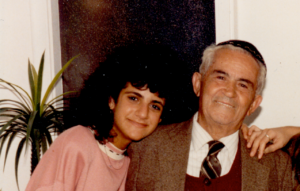
In the 1950s, Younes Dardashti, a Jewish man from Tehran’s Jewish ghetto, became one of Iran’s most celebrated singers. As the country underwent rapid secularization under the Shah, Jewish communities that had long been pushed to the margins found new opportunities. Dardashti’s piercing, unmistakable voice filled Iranian airwaves, exclusive concert halls and the Shah’s palace, earning him the title “Nightingale of Iran.”
Years after Younes Dardashti’s death, his granddaughter Galeet is still singing with him in New York.
Using archival recordings of her grandfather’s voice, Galeet Dardashti created her album Monajat — meaning an intimate conversation with God — layering her vocals over decades-old tapes of him singing Selihot, religious poetry chanted nightly before the Jewish New Year.
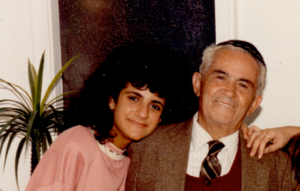
Across the country in Los Angeles, Cantor Jacqueline Rafii is also trying to preserve her Iranian grandfather’s traditional Jewish Persian music.
While in cantorial school, Rafii rediscovered cassette tapes made of her grandfather leading a Passover seder in Tehran. When her family was forced to flee the country following the Islamic Revolution in 1979, they brought that cassette tape with them.
“It was like a time capsule,” said Rafii.
She realized that those grainy and distorted recordings captured a Persian Jewish musical tradition that had only ever been passed down orally from generation to generation. In the diaspora, Rafii worried, they might disappear.
So Rafii sat at the piano with her father to turn what she heard on those old cassette tapes into sheet music so that others might replicate the music Iranian Jews have been singing for centuries.
“We were trying to take this distorted tape from the ’70s and plunk out the notes,” she said. “To write something that had never been written before.”
What began with a single tape became a larger project. Rafii set out to collect and notate as many Persian Jewish melodies as she could. She put out a call on social media to try to find people who remembered Jewish prayers from Iran. Eventually, she found Dardashti, who taught Rafii her grandfather’s Yom Kippur melody for “El Nora Alila.”
A transcription challenge
According to Dardashti, who holds a Ph.D. in anthropology and specializes in Mizrahi culture and music, Jews have played an important role in Persian musical life for centuries.
After the 7th century, when Muslim forces conquered Persia, there were periods during which non-religious music was restricted under Islamic law. Because Jews were classified as najis, or “impure,” they faced limitations on the types of occupations they could legally pursue. Music, being a marginalized and often stigmatized profession, was typically avoided by Muslims. This made it a particularly viable livelihood for Jews who often performed the jobs that were restricted to Muslims.
Because of this, religious minorities, namely Jews, Zoroastrians, and Christians, were responsible for sustaining Persian musical traditions when Muslims could not.
Classical Persian music often features singers interpreting the poetry of figures like Hafez or Rumi. One of its defining features is tahrir, a rapid oscillation in the voice that can sound like a controlled break or yodel, used to convey emotional intensity.
The music relies on modal systems and tonal structures distinct from Western scales. It also includes microtones — notes that fall between the pitches used in Western scales and cannot be easily represented on a standard musical staff. To make the melodies accessible, Rafii notates them “in a format that would be compatible with Western music,” eliminating some (but not all) of those microtones, adding chords to mimic their sound, and establishing a regular meter.
Persian Jewish music draws directly from this tradition, applying its musical forms to Jewish liturgy — Torah chanting, High Holiday prayers, and religious poetry — as well as to songs about daily life written in Judeo-Persian.
“It’s really about interpreting a text,” Dardashti said. “Just as a Persian classical singer would interpret a poem, in Persian Jewish music you’re interpreting Hebrew liturgy in a very similar way.”
For centuries, this music was transmitted entirely orally, passed down from generation to generation, with each singer adding their own interpretation and stylistic flair. During the reign of Shah Mohammad Reza Pahlavi from the 1940s through 1979, Jews enjoyed a golden age in Iran. Jewish musicians, who often came from lineages of family members who had been making music for centuries, moved to the fore and became nationally recognized stars. Dardashti’s grandfather was perhaps the most prominent. Because Israel and Iran had good relations at the time, he frequently traveled between the two countries to share his talents.
Younes Dardashti became a cantor at synagogues across Tehran. Because his chanting was done in a musical style Iranians of all faiths were used to hearing on the radio, Galeet Dardashti says, non-Jews would press their ears to the doors of the synagogue to hear her grandfather’s voice.
A tradition passed down by men
Traditionally, Persian Jewish liturgical music was preserved and performed almost exclusively by men because of Jewish religious norms that limited women’s public singing. Now in the diaspora, that chain of transmission has begun to break down, with fewer and fewer Iranian Jews learning the songs their parents and grandparents once sang.
Rafii says she has faced obstacles in “expressing her cantorial pursuits” to more traditional members of the Persian community in the U.S., where women’s singing is still not embraced. And while she is unsure whether she will “ever in her lifetime … share these melodies personally in such communities,” she remains “hopeful that her work may be useful” to those seeking to transmit Persian Jewish music to the next generation.
For Dardashti, singing Persian Jewish music as a woman is just another layer of the reinvention that has been a feature of Persian Jewish music for generations. Though she too does not perform her music in Orthodox Iranian Jewish settings, she embraces the unique role she can play in leading services for Reform and Conservative Iranian Jews, for whom Ashkenazi-style music is often the default.
“I feel like right now this community needs me; there aren’t many people who can do this work and are willing to do it in an egalitarian setting,” said Dardashti. For the last few years, she has led high holiday services in the traditional Persian style at Kanisse, an egalitarian Jewish community for Sephardic and Mizrahi Jews in New York City.
Though both Rafii and Dardashti are Iranian, neither grew up immersed in Persian Jewish musical traditions.
Like many Iranian Jews who came to the United States after the revolution, their families entered a Jewish landscape dominated by Ashkenazi practice. Dardashti’s father, himself a cantor, trained at the Jewish Theological Seminary, where the focus was almost entirely Ashkenazi. “I grew up the daughter of a Persian cantor who was singing Ashkenazi music,” Dardashti said.
“In order to learn Persian Jewish music, I had to start from scratch,” she added. “I knew nothing.”
She turned to her father, asking him to teach her the melodies he had grown up with in Iran but had not performed formally since coming to the U.S.
Her work, while rooted in a desire to preserve Persian Jewish music, is not without experimentation. Dardashti adds her own flair to her grandfather’s music, laying his vocals over her band and arrangement. “I’m also reinventing, because music isn’t static. Cultural transmission is messy — everyone changes things. So I lean into that messiness.”
Connecting cantors across cultures
Rafii is also continuing to transmit Persian Jewish music in an unconventional way by bringing it to Ashkenazi audiences.
When she entered cantorial school, she said, there were no formal pathways to train in non-European musical traditions. Now, she says cantors from across the country — “in particular, Ashkenazic cantors” — have reached out to her for Persian Jewish sheet music and guidance on incorporating these melodies into their services.
“They want to share how diverse the Jewish family is,” she said. “Now that there’s sheet music for Persian Jewish music, it’s accessible, and they can offer it to their community.”
Dozens of non-Persian cantors have already begun including these melodies in their services.
At Valley Beth Shalom, a largely Ashkenazi congregation in Los Angeles, Rafii regularly weaves her grandfather’s Persian tunes into worship and teaches them to the synagogue’s youth choir.
“I like to include them as part of an everyday service,” she said. “Why don’t we just combine the melodies and make this part of the American Jewish experience?”
The post Two women race to save Persian Jewish music before it fades appeared first on The Forward.
Uncategorized
Passover liberation and US liberty both summon us to remember and renew
At our campus Seder this week, I found myself talking to a student about Passover as a holiday of memory. She seemed puzzled and asked me to explain. The Seder plate, the ritual of reclining, and the talk of freedom, I told her, were all meant as reminders of enslavement in Egypt. Of course, she knew that. But I told her that even before the Jews cross the Red Sea to escape bondage, the Torah says something like “you better remember this!” Just after the final plagues — the killing of the first born — are visited upon the Egyptians, but before the Israelites escape from slavery, God tells Moses how the Passover holiday will be a commemoration of the events about to take place!
This day shall be to you one of remembrance: you shall celebrate it as a festival to GOD throughout the ages; you shall celebrate it as an institution for all time. Ex 12:14
You shall observe the [Feast of] Unleavened Bread, for on this very day I brought your ranks out of the land of Egypt; you shall observe this day throughout the ages as an institution for all time. Ex 12:17
The commemoration of liberation, and the memory of bondage, are given sacred status — and even prior to the liberation itself. The festive meal, the Passover Seder, is a communal insistence on memory. And this insistence is not restricted to what happened to other people in the distant past. The Torah’s word for remembering here is zakhor, which means something closer to “reliving” than to what we usually think of historical recollection. We are slaves in Egypt, just as we are at the foot of Mount Sinai to receive the Commandments.
As it so happens, during Pesach this year I am also working at Wesleyan University on a national program to encourage college students to protect our democracy by participating in it. Inspired by the students who went to Mississippi in 1964 to register Black voters in the face of violent suppression, we launched Democracy Summer 2026, a nonpartisan call to young people to strengthen their democratic muscles by using them. We are mindful of the 250th anniversary of the Declaration of Independence as we build programs along with colleges and universities across the country that aim to remind our fellow citizens of the importance of exercising our powers as constituents of this constitutional republic. The mission statements of educational institutions — from small private religious schools to large public universities — express an obligation to contribute to the public sphere. When we do contribute, we are participating in history, learning about ourselves and the world around us; we contribute to our institutions and to the country whose freedoms allow them to fulfill their purposes.
As part of this work, I’ve been rereading Danielle Allen’s wonderful Our Declaration (2015), a book that helps us through a slow reading of a core founding document. Allen describes teaching the Declaration of Independence to a group of working adults in a night class in Chicago and how by doing so she came to appreciate its famous words more profoundly than ever: “We hold these truths to be self-evident, that all men are created equal, that they are endowed by the Creator with certain unalienable rights, and among these are Life Liberty and the pursuit of Happiness.” She came to see these words (and the Declaration as a whole) as aimed at her and her students — that they were part of that “WE,” members of the political community that recognized the power of these truths. This realization didn’t happen right away. At first her students thought that the Declaration represented “institutions and power, everything that solidified a world that had, as life turned out, delivered them so much grief, so much to overcome.” They had to make the document their own to see themselves as participants in its legacy.
These students “regifted” the Declaration to Allen by helping her see its argument for political equality as her own political patrimony. The founding fathers would not have seen it this way: Allen is a Black woman whom they would not have recognized as a citizen. But by reading the text slowly and carefully with her students, she and they claimed it as their rightful inheritance: “an understanding of freedom and equality, and of the value of finding the right words.”
In Torah study, I strive for something similar to this claiming of an inheritance. Such a claim, I find, is also what we are meant to feel when we read the Haggadah at our Seders. I study not to acquire expertise about holy texts but to participate in an ongoing conversation about enduring questions. Through the teaching that we were slaves in Egypt, we are meant to feel how it is to be oppressed and to consider our obligation to claim our freedoms, an essential step in developing a people. And we are also meant to help other groups escape oppression, make good on claims for liberation that resonate with our story. This is not only for the week of Passover. Rashi teaches that we must make mention of the exodus from Egypt every day. Every day we must claim our freedom and, we might add, find the right words for others to do so.
This is also the message of our summer call to action this year. As we commemorate the 250th anniversary of the Declaration, let us claim our political patrimony, our rightful inheritance. To paraphrase Benjamin Franklin: it is our republic so let us keep it!
The post Passover liberation and US liberty both summon us to remember and renew appeared first on The Forward.
Uncategorized
Downed Planes Raise New Perils for Trump as Tehran Hunts for Missing US Pilot

Traces of an Iranian missile attack in Tehran’s sky, amid the U.S.-Israeli conflict with Iran, in Tehran, Iran, April 3, 2026. Photo: Majid Asgaripour/WANA (West Asia News Agency) via REUTERS
Two US warplanes were downed over Iran and the Gulf, Iranian and US officials said on Friday, with two pilots rescued and a third still missing and being hunted by Tehran’s forces.
The incidents show the risks still faced by US and Israeli aircraft over Iran despite assertions from US President Donald Trump and his Defense Secretary Pete Hegseth that their forces had total control of the skies.
The first plane, a two-seat US F-15E jet, was shot down by Iranian fire, officials in both countries said.
The second plane, an A-10 Warthog fighter aircraft, was hit by Iranian fire and crashed over Kuwait, with the pilot ejecting, two US officials said.
Two Blackhawk helicopters involved in the search effort for the missing pilot were hit by Iranian fire but made it out of Iranian airspace, the two US officials told Reuters.
The degree of injuries among the crew of the aircraft remained unclear. The status and whereabouts of the missing F-15E crew member was not publicly known.
Iran’s Revolutionary Guard Corps said it was combing an area near where the pilot’s plane came down in southwestern Iran and the regional governor promised a commendation for anyone who captured or killed “forces of the hostile enemy.”
Iranians, who have been pummeled by American air power for weeks, posted gleeful messages celebrating the plane downings. Iran’s Parliament Speaker Mohammad Baqer Qalibaf said on X that the U.S. and Israel’s war had been “downgraded from regime change” to a hunt for their pilots.
Trump has been in the White House receiving updates on the search-and-rescue operation, a senior administration official told Reuters. The Pentagon and US Central Command did not immediately respond to requests for comment.
NO SIGN OF END TO WAR
The prospect of a US service person being alive and on the run inside Iran raises the stakes for Washington in a conflict with low public support and no sign of an imminent end.
Iran has officially told mediators it is not prepared to meet with US officials in Islamabad in coming days and that efforts to produce a ceasefire, led by Pakistan, have reached a dead end, the Wall Street Journal reported on Friday.
The US and Israel opened the campaign with a wave of strikes that killed Iran’s Supreme Leader Ayatollah Ali Khamenei on February 28. The war has killed thousands and threatened lasting damage to the global economy.
So far, 13 US military service members have been killed in the conflict and more than 300 have been wounded, according to the US Central Command.
Iran has rained down drones and missiles on Israel. It has also taken aim at Gulf countries allied to the US, which have so far held back from joining the war directly for fear of further escalation.
In a security alert on Friday, the US embassy in Beirut said Iran and its aligned armed groups may target universities in Lebanon and urged US citizens in the country to leave while commercial flights are still available.
Israel has been waging a parallel campaign against Iran-backed Hezbollah in Lebanon after the militant group fired at Israel in support of Iran.
TRUMP THREAT TO STRIKE BRIDGES, POWER PLANTS
On Friday, as Trump threatened to hit its bridges and power plants, Iran struck a power and water plant in Kuwait, underlining the vulnerability of Gulf states that rely heavily on desalination plants for drinking water.
On Thursday, Trump posted footage on social media showing dust and smoke billowing up as US strikes hit the newly constructed B1 bridge between Tehran and nearby Karaj, which was due to open this year, and said more attacks would follow.
“Our Military, the greatest and most powerful (by far!) anywhere in the World, hasn’t even started destroying what’s left in Iran. Bridges next, then Electric Power Plants!” he wrote in a subsequent post.
On Friday, a drone hit a Red Crescent relief warehouse in the Choghadak area of Iran’s southern Bushehr province.
Kuwait Petroleum Corporation said its Mina al-Ahmadi refinery had been hit by drones. Other attacks were also reported to have been intercepted in Saudi Arabia and Abu Dhabi. Missile debris landed near the Israeli port of Haifa, site of a major oil refinery.
Oil markets were closed after benchmark U.S. crude prices gained 11% on Thursday following a speech by Trump that offered no clear sign of an imminent end to the war.