


Uncategorized
As young Jews are move away from Israel, Jewish leaders are reluctant to change their approach
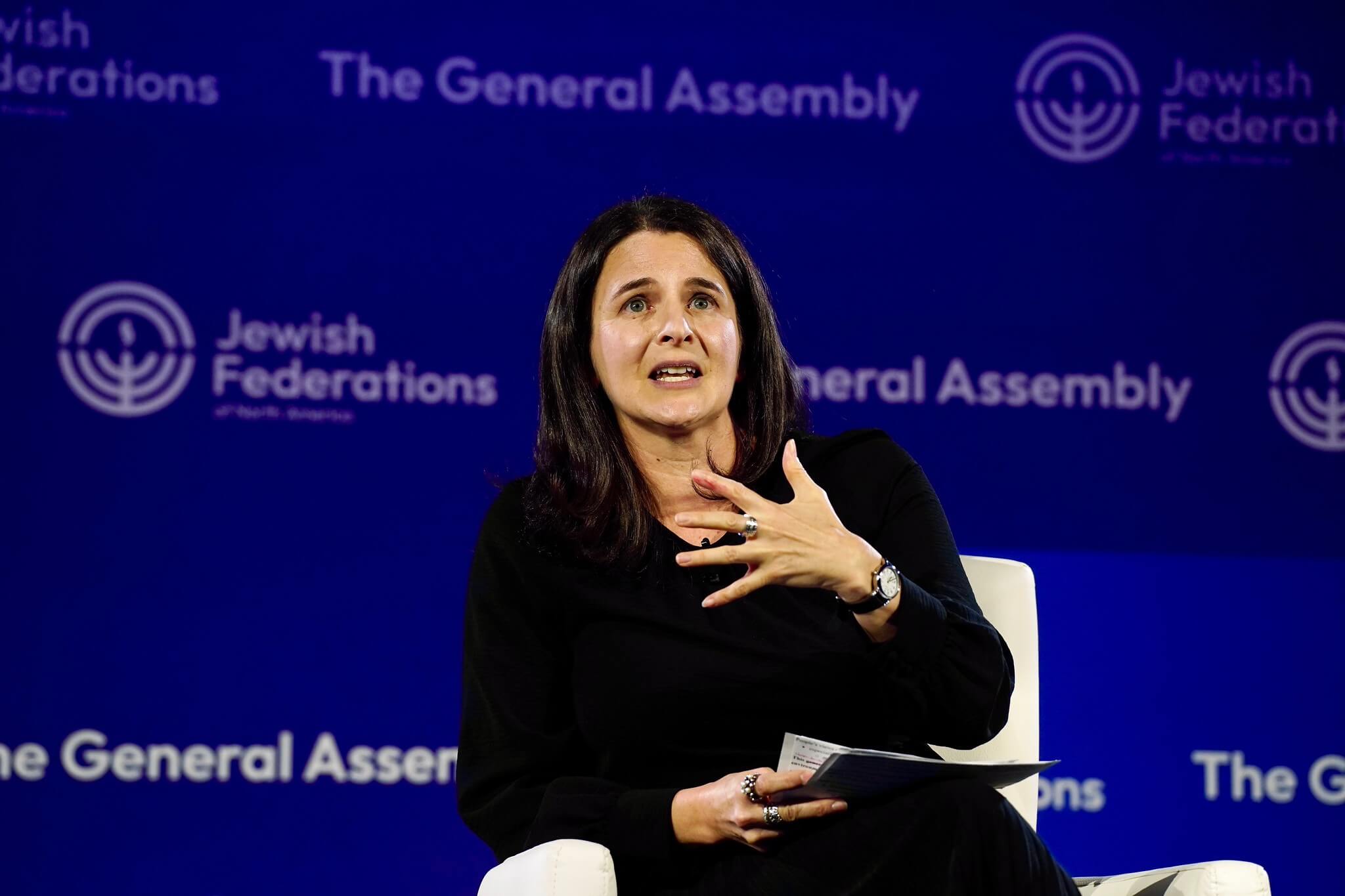
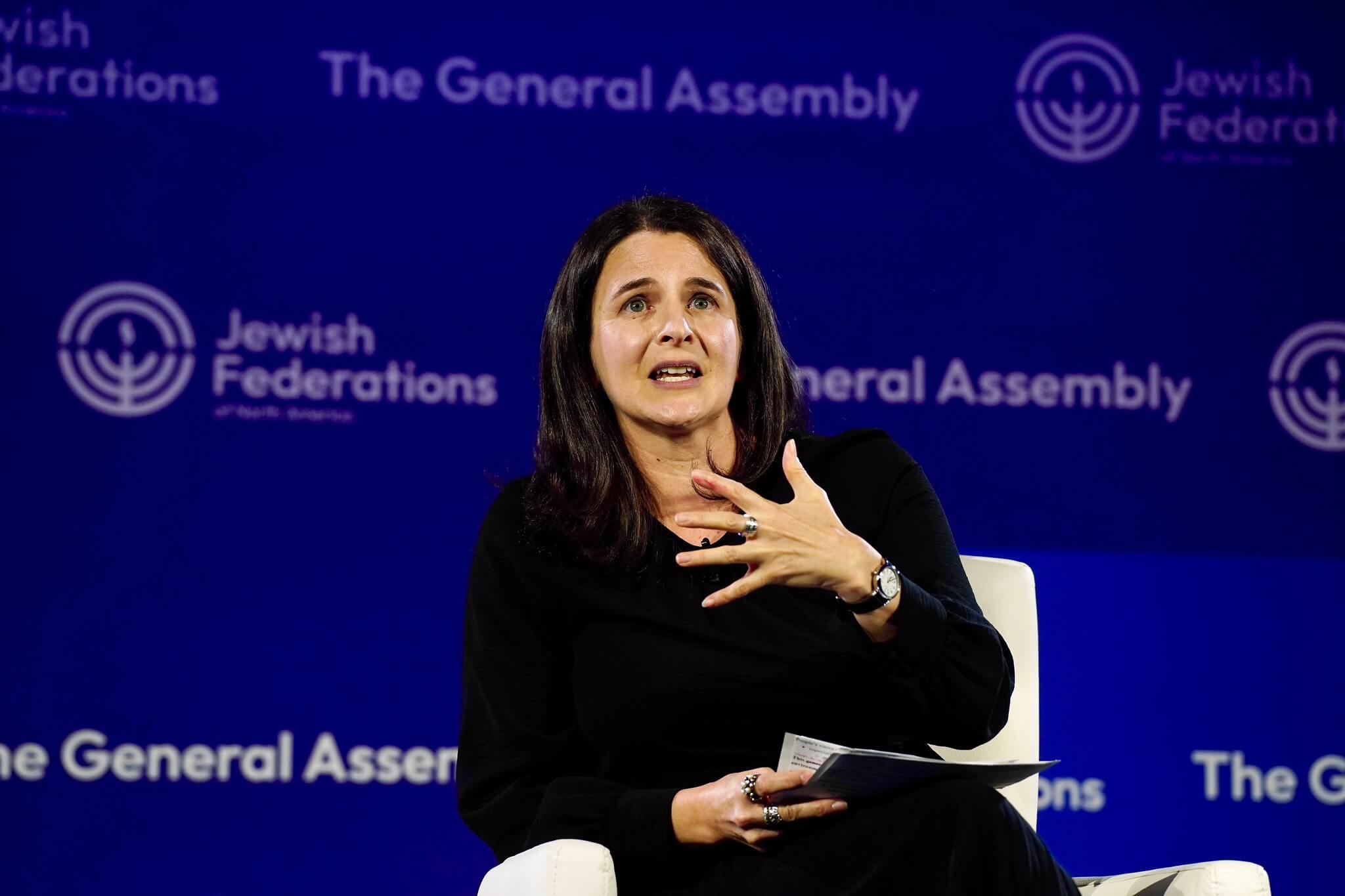
Washington, D.C. — Anna Langer stood behind the podium earlier this week at one of the largest gatherings of Jewish professionals in the world and laid out hard facts of the relationship between American Jews and Israel. Her most striking point: That younger Jews are more than twice as likely to identify as anti-Zionist than the overall population.
“It’s a growing segment of our young people, and it’s an area we must pay attention to,” said Langer, who runs domestic Israel strategy for the Jewish Federations of North America; JFNA helps direct hundreds of millions of dollars in funding for Jewish programming and organizes the annual conference.
From the event’s main stage, Rahm Emmanuel warned that the Israel-Hamas war had battered the country’s reputation among a generation of young American Jews in the same way that the Six Day War in 1967 had invigorated their parents’ support of Israel. “We have our work cut out,” Emmanuel said.
But despite broad concern that many young Jews are abandoning Israel, few of the experts and organizations at the event seemed open to changing much of anything about their approach in order to reach these disaffected members of the community. Instead, the solutions proposed by Jewish educators and philanthropists involved doubling down on existing strategies: cultivating warm feelings toward Israel through more sponsored trips and education, while dismantling the forces — including social media and teachers unions — that they believe are causing young Jews to sour on the country.
“It’s very easy to slide into anti-Zionism.”
Sara HurwitzAuthor of As a Jew
“TikTok is just smashing our young people’s brains all day long with videos of carnage in Gaza,” Sara Hurwitz, Michele Obama’s former speechwriter who has written two books about Jewish identity, told the audience of some 2,000 Jewish professionals. “This is why so many of us can’t have a sane conversation with younger Jews.”
Eric Fingerhut, the head of JFNA, said that two of his organization’s top priorities were facilitating the sale of TikTok to Larry Ellison, the pro-Israel tech mogul who owns Oracle, and countering the influence of the National Education Association, a teachers union that has expressed hostility toward Israel.
“This is a technology coming from outside this country,” Fingerhut said, referring to TikTok’s Chinese ownership. He added that antisemitism and criticism of Israel on social media was “a global attack on Jewish people and the State of Israel, funded with billions and billions — probably trillions — of dollars, fueled by some of the most sophisticated algorithms.”
(A spokesperson clarified in a text message that he was referring to online influence and disinformation campaigns from China, Russia and Iran.)
Another frequent refrain at the conference was that the real solution to communal divisions was a stronger commitment to what Jonathan Greenblatt, CEO of the Anti-Defamation League, described as “Jewish education, Zionist identity and Torah learning.”
“These are the essential elements of a healthy constitution for our community,” he said.
Hurwitz, too, suggested that young Jews were drifting from Israel because their Jewish identities had been reduced to “a big empty void.”
“Young people who have that empty Jewish identity today — it is being filled by antisemitism,” she said. “It’s very easy to slide into anti-Zionism.”
***
On the sidelines of the conference, however, some attendees acknowledged that the belief young Jews critical of Israel were simply devoid of a meaningful Jewish identity overlooked some of the reality. Young Jews remain both supportive of a Jewish state in Israel and emotionally attached to the country. Despite reporting deep levels of discomfort with Israel’s actions, they have joined the “surge” of Jewish engagement that followed the Oct. 7 Hamas terrorist attack in Israel, showing up in increased numbers to synagogues and Jewish events.
“Disengagement is not our problem,” Langer, the JFNA executive, told a group assembled to discuss the future of Israel education. “Rather, it’s our ability to hold space for complexity and cultivate belonging in a deeply connected — and yet deeply divided — community.”
She pointed to statistics that showed half of American Jews believe the community does not allow for nuanced conversations about the war in Gaza. And nearly 70% found it hard to support actions taken by the Israeli government, even though only 7% of Jews report avoiding communal institutions over these concerns.
Langer said the research suggested Israel education needed to feature more nuance: “When students perceive their education as one-sided or incomplete, it undermines their trust and engagement.”
Jon Falk, vice president of Israel engagement and antisemitism for Hillel International, said his organization had brought Palestinian speakers to its chapters to help address this desire. “I believe that Hillel brings more Palestinian voices to campus than even SJP,” Falk said, referring to Students for Justice in Palestine.
But despite acknowledging that young Jews are deeply uncomfortable with Israel — around 65% of Jews under 40 say that Israel’s actions often conflict with their moral, political and Jewish values, according to data presented at the conference — there was no suggestion that Jewish organizations should move away from ironclad support for Israel.
One sticking point may be that, according to Langer, when you consider American Jews of all ages, they are evenly divided over whether communal institutions should be more supportive or more critical of Israel. And many young Jews continue to have a positive relationship with Israel.

“It sounds wonderful to say that we should be a community and serve everyone,” said David Cygielman, the CEO of Mem Global, which runs a network of group houses for young Jews. “But how does that play out? And does that alienate people who are coming to be part of a strong, vibrant Jewish community who love and want to engage with Israel?”
The reluctance of experts who spoke at the conference to consider shifting their Israel strategy was underscored by the absence of liberal pro-Israel groups at the event. J Street was not represented at the conference, nor was the Jewish Council for Public Affairs, one of the most progressive Jewish establishment organizations, which for decades maintained a formal relationship with the federation network.
As for how attendees who were there positioned themselves politically, they overwhelmingly sided with John Podhoretz, a conservative journalist who argued against the feasibility of a two-state solution to the Israeli-Palestinian conflict during a mainstage debate.
And when Greenblatt was asked gently about divisions within the Jewish community over how to fight antisemitism, including criticism of the ADL’s recent announcement that it was creating a Mamdani Monitor to track the new, and Muslim, mayor of New York City, he expressed confidence that his organization had taken the correct approach.
“I am a ferocious and unapologetic Zionist,” Greenblatt said. “Anyone who wants me to apologize: Get in line.”
***
One strategy experts did, repeatedly, endorse included travel to Israel, which plummeted following the Covid-19 pandemic, as a solution to eroding support for the country among both Jews and non-Jews, even as they acknowledged that participating in those kinds of trips now came with “a lot of social isolation and punishment” for participants.
“Imagine if every federation across North America took 100 public school educators and administrations to Israel every year,” said Jenna Potash, an executive at UJA-Federation of Toronto. “That’s really something we should focus on.”
And on the rare occasion that speakers did make allowances for criticizing Israel, many suggested that those discussions take place only in private.
“You need to lead with proud support for Israel, standing publicly and legislatively with Israel in unmatched times of vilification,” Langer said. “At the same time, we need to create internal spaces for honest, nuanced and educational conversations about Israel.”
Yet the bulk of speakers seemed to reject the notion that any consolation was needed for Jews who were uncomfortable with the Jewish establishment’s traditional support for Israel. Mark Charendoff, who runs the influential right-leaning Maimonides Fund, said he was in the process of re-calibrating the organization’s focus to fighting the enemies of the Jewish people, after years focusing on reaching young Jews.
Charendoff said this new strategy means building alliances with people who “we might disagree with on 80%” so long as “we agree with them on Israel.”
“Our enemies are trying to normalize anti-Zionism,” Charendoff said. “We have to re-normalize Israel as part of the conversation and psyche and ethos of American Jewry.”
The post As young Jews are move away from Israel, Jewish leaders are reluctant to change their approach appeared first on The Forward.
Uncategorized
Iran’s Guards Will View Military Vessels Approaching Strait as Ceasefire Breach

FILE PHOTO: A map showing the Strait of Hormuz is seen in this illustration taken March 23, 2026. REUTERS/Dado Ruvic/Illustration/File Photo
Iran’s Revolutionary Guards said on Sunday that any military vessels attempting to approach the Strait of Hormuz will be considered a violation of the two-week US ceasefire and be dealt with harshly and decisively.
The strait is under the control and “smart management” of Iran’s Navy, the Guards said in a statement reported by Iranian state media, adding it is “open for the safe passage of non-military vessels in accordance with specific regulations.”
Uncategorized
Iran Rejected US Demand to Stop Funding Proxies, and Halt Uranium Enrichment During Talks

FILE PHOTO: The atomic symbol and the Iranian flag are seen in this illustration, July 21, 2022. REUTERS/Dado Ruvic/Illustration/File Photo
i24 News – Iran has rejected core US demands in recent negotiations, including an end to uranium enrichment, the dismantling of major nuclear facilities, and a halt to support for regional terrorist groups, according to a senior US official speaking to Reuters.
The official also said that Tehran refused to end backing for Hamas, Hezbollah, and the Houthis, as well as calls to fully open the strategically vital Strait of Hormuz, underscoring deep divisions that continue to stall diplomacy.
The failed talks come as assessments from officials and experts suggest that Iran’s nuclear program has remained largely resilient despite five weeks of intense US and Israeli strikes.
According to reporting from The Wall Street Journal, that while the campaign did cause significant damage to research facilities and parts of Iran’s enrichment infrastructure, the strikes appear to have stopped short of eliminating Iran’s most sensitive capabilities.
Iran likely retains operational centrifuges and access to a heavily fortified underground enrichment site, preserving the technical foundation of its program.
A critical concern for Western officials is Iran’s continued possession of an estimated 1,000 pounds of near-weapons-grade uranium. The International Atomic Energy Agency has reported that roughly half of this stockpile is stored in reinforced containers within tunnels beneath the Isfahan nuclear complex.
Uncategorized
Trump Vows to Blockade Strait of Hormuz After Iran Peace Talks Fail to Yield Agreement

Pakistan’s Prime Minister Shehbaz Sharif meets with Iranian Parliament Speaker Mohammad Bagher Ghalibaf, as delegations from the United States and Iran are expected to hold peace talks, in Islamabad, Pakistan, April 11, 2026. Office of the Iranian Parliament Speaker/WANA (West Asia News Agency)/Handout via REUTERS
President Donald Trump said on Sunday the US Navy would start blockading the Strait of Hormuz, raising the stakes after marathon talks with Iran failed to reach a deal to end the war, jeopardizing a fragile two-week ceasefire.
Trump also said in a post on Truth Social that the US would take action against every vessel in international waters that had paid a toll to Iran, and begin destroying mines that he said the Iranians had dropped in the strait, a choke point for about 20% of global energy supplies that Iran has blocked.
Iran’s Revolutionary Guards responded with a statement warning that military vessels approaching the strait will be considered a ceasefire breach and dealt with harshly and decisively, underlining the risk of a dangerous escalation.
“Effective immediately, the United States Navy, the Finest in the World, will begin the process of BLOCKADING any and all Ships trying to enter, or leave, the Strait of Hormuz,” Trump said in his Truth Social post.
“I have also instructed our Navy to seek and interdict every vessel in International Waters that has paid a toll to Iran. No one who pays an illegal toll will have safe passage on the high seas,” Trump added.
“Any Iranian who fires at us, or at peaceful vessels, will be BLOWN TO HELL!” he added.
Six weeks of fighting has killed thousands, roiled the global economy and sent oil prices soaring as Iran prevented traffic through the strait.
MORE NEGOTIATIONS?
In an interview with Fox News after his post about the strait, Trump said that he believed Iran would continue to negotiate and called the weekend discussions “very friendly.”
“I do believe they’re going to come to the table on this, because nobody can be so stupid as to say, ‘We want nuclear weapons,’ and they have no cards,” Trump told Fox News from his golf course near Miami, Florida.
Trump also said that NATO allies, whom he has criticized for failing to back the war he launched along with Israel on February 28, wanted to help with the operation in the strait.
There was no immediate comment from Washington’s allies.
The weekend talks in Islamabad, which followed the announcement of a ceasefire last Tuesday, were the first direct US-Iranian meeting in more than a decade and the highest-level discussions since the 1979 Islamic Revolution.
“The bad news is that we have not reached an agreement, and I think that’s bad news for Iran much more than it’s bad news for the United States of America,” said Vice President JD Vance, who headed the US delegation.
A US official said Iran had rejected Washington’s call for an end to all uranium enrichment, the dismantling of all major enrichment facilities and the transfer of highly enriched uranium. The two sides also failed to reach agreement on the US demand that Iran cease funding for Hamas, Hezbollah and the Houthis as well as fully open the strait, the official added.
Iran’s Parliamentary Speaker Mohammad Baqer Qalibaf, who led his country’s delegation along with Foreign Minister Abbas Araqchi, blamed the US for not winning Tehran’s trust, despite his team offering “forward-looking initiatives.”
Iran’s President Masoud Pezeshkian, who discussed the talks in a call with Russian President Vladimir Putin, said Tehran wanted “a balanced and fair agreement.”
“If the United States returns to the framework of international law, reaching an agreement is not far off,” he told Putin, Iranian state media reported.
ISRAEL CONTINUES BOMBING LEBANON
Iran’s semi-official Tasnim news agency said “excessive” US demands had hindered reaching a deal. Other Iranian media said there was agreement on a number of issues, but the strait and Iran’s nuclear program were the main sticking points.
Despite the stalemate, three supertankers fully laden with oil passed through the Strait of Hormuz on Saturday, shipping data showed, in what appeared to be the first vessels to exit the Gulf since the ceasefire deal.
Israel has continued bombing Tehran-backed Hezbollah terrorists in Lebanon, insisting – along with Washington – that that conflict was not part of the Iran-US ceasefire. Iran says the fighting in Lebanon must stop.
The Israeli military said it struck Hezbollah rocket launchers overnight into Sunday and black smoke could be seen rising in the southern suburbs of the Lebanese capital Beirut.
And in Israeli villages near the border, air raid sirens sounded, warning of incoming rocket fire from Lebanon.