



Uncategorized
Christiane Amanpour exits CNN with a legacy shaped by the debate over Israel
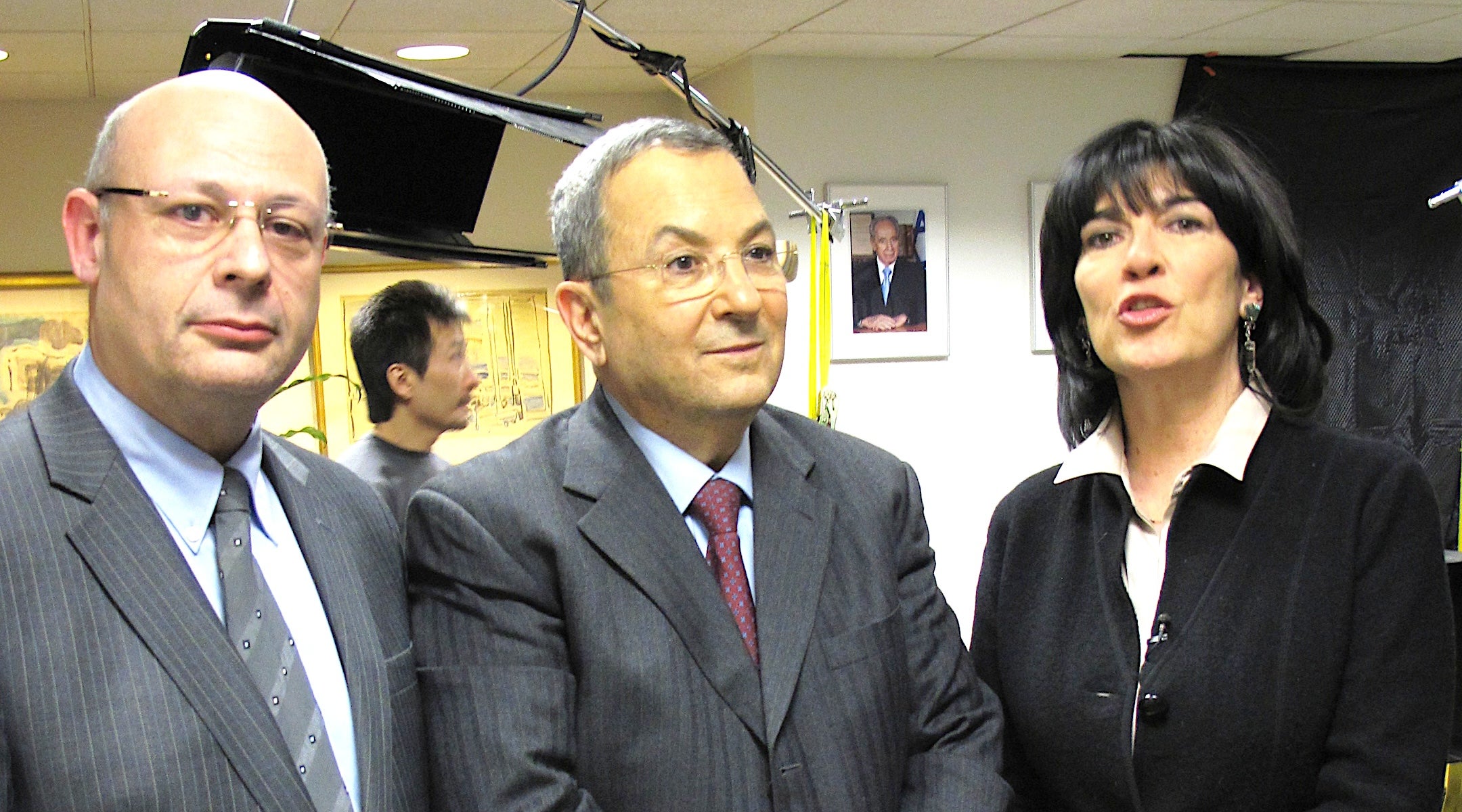
(JTA) — Christiane Amanpour, CNN’s chief international anchor, is leaving the network after 43 years, closing a chapter in a career that made her one of television journalism’s most celebrated war correspondents — and one of its most controversial figures among Jewish and pro-Israel viewers.
For many viewers, Amanpour’s legacy is that of a fearless correspondent who brought the human costs of war into American living rooms, from the first Gulf War to Bosnia, Rwanda and Ukraine.
But her coverage of Israel and the Palestinians has long drawn sharp criticism from some Jewish viewers, who accused her of giving insufficient weight to Israeli security concerns, mischaracterizing events and disproportionately presenting Israeli religious nationalism in an especially unflattering light.
Amanpour, 68, announced Monday that she will wind down her daily CNN International program early next year, conclude its weekly successor in May and leave the network in June 2027. Her PBS program, “Amanpour & Company,” will end at the close of this year. However, she will continue her podcast, “The Ex Files,” with her ex-husband, Jamie Rubin, a former State Department official.
Amanpour did not give a specific reason for her departure, which comes as CNN enters a new era under Paramount Skydance ownership.
“Always be truthful, not neutral,” Amanpour wrote in her farewell message, summing up a philosophy that has animated her reporting — and helped make her a polarizing figure.
Amanpour’s admirers would argue that the same qualities that make her coverage uncomfortable for some Jewish viewers — skepticism toward official accounts, attention to civilian suffering and willingness to challenge powerful governments — are essential to journalism.
When the National Press Foundation honored her in 2025 with its Sol Taishoff Award for Excellence in Broadcast Journalism, its judges called her “a gold standard for international broadcast journalism” and praised her tough questioning of world leaders. The Committee to Protect Journalists, which honored her in 2016, likewise celebrated her commitment to press freedom.
Amanpour, who was raised in Iran and England by her Iranian Muslim father and British Roman Catholic mother, joined CNN in 1983 as a desk assistant and rose through the ranks to become one of its most prominent correspondents. Her reporting from the Bosnian war in the 1990s helped establish her reputation for confronting officials and challenging the language governments use to justify military action.
Some of the sharpest criticism of her work came in 2007, when Amanpour hosted “God’s Jewish Warriors,” the opening installment of a three-part CNN documentary series examining the role of religion in politics and conflict.
Andrea Levin, president of the Committee for Accuracy in Middle East Reporting and Analysis, or CAMERA, condemned the program as a biased portrayal of Jewish religious life and Israeli settlers. A 2010 Jewish Telegraphic Agency commentary revisited the controversy, with Ron Kampeas noting that “the only explicitly religious people she interviewed were ultranationalist settlers,” and that Amanpour ignored religious Jews who opposed the settlements.
Kampeas also said the program’s treatment of the pro-Israel lobby in Washington exaggerated the power of groups like AIPAC and downplayed the shared strategic and moral imperatives that drove the U.S.-Israel alliance.
“God’s Jewish Warriors” became Exhibit A in the case against Amanpour’s work. Legitimate criticism of Israeli policy, her detractors asserted, was framed in a way that left Jewish viewers feeling that Jewish religious identity, political advocacy or national aspirations were inherently suspect.
Reporting from Lebanon during the 2006 war between Israel and Hezbollah, Amanpour was part of a CNN team whose work rekindled a longstanding debate over how journalists should cover conflicts in which a state military fights an armed group embedded in civilian areas.
Even as Amanpour at times acknowledged the difficulty of covering such “asymmetrical warfare,” Israeli officials and supporters argued at the time that images of destruction and civilian suffering in Lebanon obscured Hezbollah’s role in initiating and sustaining the conflict. Those objections anticipated similar complaints, aimed at CNN and other outlets, over coverage of Israel’s devastating war in Gaza after the Hamas attacks of Oct. 7, 2023.
Critics have continued to document what they see as a pattern. CAMERA has maintained a collection of complaints about Amanpour’s reporting, while HonestReporting, another pro-Israel media-monitoring organization, has accused her of repeated anti-Israel distortions.
Although both organizations have a clear advocacy perspective, they often provide specific examples of errors, and often extract corrections.
One example came in April 2023, when Amanpour described the killing of Israeli Lucy Dee and her daughters Maia and Rina in a Hamas-linked West Bank terrorist attack as a “shootout.” The women were driving on a highway when Palestinian gunmen opened fire on their vehicle. Amanpour subsequently apologized on air for her inaccurate characterization.
In 2024, Amanpour also drew criticism for a social media post about Marwan Barghouti, the imprisoned Palestinian political leader convicted by an Israeli court of involvement in deadly attacks. “To many Israelis, he’s a terrorist. To many Palestinians, he’s their Mandela,” she wrote.
The comparison accurately captured Barghouti’s sharply different reputations among Israelis and Palestinians, but critics argued that it risked reducing the gravity of the attacks for which he was convicted.
Complaints about CNN’s Gaza coverage gained a striking new dimension in February 2024, when Amanpour reportedly joined CNN colleagues in accusing the network of a pro-Israel bias in its coverage of the Israel-Hamas war.

According to reporting by The Intercept and The Guardian, journalists at an internal CNN meeting raised concerns that the network’s editorial procedures were favoring official Israeli narratives and making it harder to convey Palestinian perspectives. CNN’s process required coverage of the conflict to pass through its Jerusalem bureau; Amanpour was heard on tape saying that the process led to “changing copy, double standards, and all the rest.”
At the same time, some pro-Israel viewers saw CNN and Amanpour as too willing to accept Palestinian claims and too quick to foreground Gaza’s devastation.
In response to the reports, CNN defended its coverage of the conflict. “We remain absolutely committed to reporting all sides of this immensely challenging, complex and emotive story,” it said in a statement. “We absolutely reject the notion that any of our journalists treat Israeli officials differently to other officials.”
Amanpour again apologized on air in October 2025 for having said that surviving Israeli hostages released from Hamas captivity were “probably being treated better than the average Gazan, because they are the pawns and the chips that Hamas had.” Following backlash from political figures and organizations, Amanpour retracted the statement, calling her remarks “insensitive and wrong.”
Last month, in a rare long-form interview about her career with the podcaster Sam Fragoso, Amanpour discussed CNN’s coverage of the Gaza war. In the immediate aftermath of the Oct. 7 attacks, she said, the network was “practically wall to wall with horrendous stories from the victims in Israel. I mean, just horrendous.”
But as Israel’s military response ground on, “the story flipped,” she said. “As the destruction of Gaza took place and the bodies piled up, most particularly the women and the children, the tone of the coverage reflected the reality.” At the February 2024 meeting with CNN executives, she said, her colleagues expressed frustration that the network took too long to cover the Palestinian side.
In the same interview, Amanpour also walked back an apology she made in 2020 — not about CNN’s Mideast coverage, but for a commentary on the 82nd anniversary of the Kristallnacht attacks. In that segment, she juxtaposed the Nazis’ anti-Jewish pogrom with what she called President Donald Trump’s “attacks on history, facts, knowledge and truth.” After Jewish groups, including the American Jewish Committee, complained that she had “instrumentalized” the Holocaust with a faulty comparison, Amanpour said on air that she regretted any pain her statement may have caused.
Speaking last month with Fragoso, Amanpour said that she stands by her assertion that Kristallnacht demonstrated how quickly “democratic values can slowly slip away.” She also suggested that her employers had bowed to outside pressure and instructed her to apologize.
“There were people, you know, in various communities in regard of this,” she said, referring to her critics, “who decided that I need to be slapped around and pull[ed] down a peg. But I think that’s just because some people are afraid of the truth.”
Amanpour’s departure comes at a moment of uncertainty about CNN’s future under its new corporate owner. Paramount Skydance’s $110 billion merger with Warner Bros. Discovery, CNN’s parent company, has raised concerns among journalists about political influence and editorial independence, particularly given new owner David Ellison’s ties to Trump and the changes he has overseen at CBS News.
Amanpour herself expressed concern in May about what she called an “ideological realignment” at CBS News under its new leadership. “So clearly, obviously, I’m concerned,” she said, speaking at an investigative journalism conference in London. “I would like to think that we would have the very basic, which is editorial independence. I’m hoping for that. I know many of us at CNN are incredibly — including leadership — are very, very committed to that, clearly.”
For some Jewish and pro-Israel observers, however, the same changes have raised hopes that CNN’s coverage of Israel might become more favorable. Bari Weiss, who became CBS News editor in chief after Paramount acquired her strongly pro-Israel publication, The Free Press, has long argued that mainstream news organizations have mishandled Israel and antisemitism.
Amanpour didn’t mention the merger in her announcement. But she noted how her background shaped her perspective.
“Because of my upbringing — I’m half-Iranian and half-British — I’ve had the great privilege of being able to see the world from two very distinct perspectives,” she said. “I’ve always spoken out about the need to bridge gaps. I know we can live in a world that’s not 100% tribalized.”
This article originally appeared on JTA.org.
The post Christiane Amanpour exits CNN with a legacy shaped by the debate over Israel appeared first on The Forward.
Uncategorized
I. B. Singer predicted the war between Fascism and Communism
יצחק באַשעװיס איז אַרײַן אין דער ייִדישער ליטעראַטור אין 1925, װען ער איז געװען בלויז 21 יאָר אַלט. אַז ער איז באַרימט געװאָרן אין אַמעריקע, האָט ער ניט געלאָזט איבערדרוקן אָדער איבערזעצן זײַנע פֿריִערדיקע װערק, װאָס זײַנען דערשינען אין ייִדישע צײַטשריפֿטן אין פּױלן.
לעצטנס האָט מען זײ אָבער אָפּגעזוכט און איבערגעזעצט אױף ענגליש אונטערן קעפּל „אױפֿן עולם־התּועה“. די דאָזיקע אױסגאַבע איז אַ קאָלעקטיװער אױפֿטו פֿון אַ גאַנצער גרופּע רעדאַקטאָרן און איבערזעצער, אַרײַנגערעכנט דניאל קענעדי, יאַן שװאַרץ, ראָזע װאַלדמאַן, אַגניעשקאַ לעגוטקאָ און אַנדערע.
אין זײַנע דערצײלונגען פֿון יענער תּקופֿה מאָלט באַשעװיס אַ ברײטן לײַװנט פֿון ייִדישע צרות אין דער נײַ־אױפֿגעקומענער פּױלישער רעפּובליק. כּמעט אַלע העלדן זײַנע זײַנען יורדים, װאָס שלאָגן זיך מיט די ביטערע עקאָנאָמישע באַדינגונגען און פֿאַלן נאָך טיפֿער אין יסורים און נױט.
גימפּל בעדנער, דער העלד פֿון „אױף דער עלטער“, איז אַ מאָל געװען אַ װאַסערטרעגער, אָבער איצט האָט ער מער ניט קײן כּוח פֿאַר אַזאַ אַרבעט. די אײנציקע שטיצע זײַנע קומט פֿון זײַנע טעכטער, װאָס האַלטן אַ שאַנדהױז. קײן סך אָרט איז דאָרט ניטאָ, מוז ער נעבעך ליגן אין דעם אײגענעם בעט, װוּ זײַן טאָכטער „באַדינט אירע געסט“.
דוד סװירסקי, דער העלד אין „צוריקװעגס“, קערט זיך אום קײן פּױלן פֿון ארץ־ישׂראל. אַן אַמאָליקער ציוניסט, איז ער אַנטױשט געװאָרן אינעם ציוניסטישן חלום און מיד פֿון זוכן „עבֿודה“ בײַ די חלוצישע ייִשובֿים. אָבער קײן מזל אין דער אַלטער הײם האָט ער ניט. זײַן פֿאָטער שיקט אים אַװעק, און מיר געזעגענען זיך מיט אים װען ער לאָזט זיך זוכן גליקן בײַ זײַן מאַמעס משפּחה אין אַ פֿאַרװאָרפֿענעם שטעטל.
באַשעװיס מאָלט אַ רײַכע פּאַנאָראַמע פֿון ייִדישן פּױלן נאָך דער ערשטער װעלט־מלחמה. אים זײַנען גוט באַקאַנט סײַ די אָרעמע ייִדישע גאַסן פֿון װאַרשע סײַ די װײַטע פֿאַרװאָרלאָזטע שטעטלעך. ער לאָזט דעם לײענער ממש שמעקן דעם ריח פֿונעם ביטערן דלות און ייִאוש. עס איז ניטאָ קײן נס װאָס קען ראַטעװען זײַנע העלדן פֿונעם ביטערן גורל.
די אַלטע סטאַבילע װעלט אונטער דער שליטה פֿון די מעכטיקע אימפּעריעס, דער רוסישער און דער עסטרײַך־אונגאַרישער, ליגט אין חורבֿות. די נײַע פּױלישע מלוכה איז שװאַך און אָרעם און זאָגט ניט צו קײן צוקונפֿט פֿאַר ייִדן.
אין די װערק פֿונעם װאַרשעװער פּעריאָד פֿון 1925 ביז 1935 דערקענט מען בפֿירוש די השפּעה פֿון י. ל. פּרץ, סײַ אין די פּרטימדיקע, נאַטוראַליסטישע שילדערונגען פֿון די שטעטלעך און סײַ אין די פֿיגורן פֿון כּלערלײ מערקװירדיקע פּערסאָנאַזשן: מקובלים, משׂכּילים, חסידים, ציוניסטן, אַפּיקורסים און סתּם ייִדן פֿון אַ גאַנץ יאָר.
דאָס זאַמלבוך נעמט אויך אַרײַן אינטערװיוען מיט ייִדישע מחברים, װאָס באַשעװיס האָט געמאַכט פֿאַר דער װאַרשעװער צײַטונג „ליטעראַרישע בלעטער“.
הלל צײטלין באַגריסט באַשעװיסן אין זײַן דירה, װוּ ער לערנט חסידות מיט זײַנע תּלמידים. ער האַלט, אַז מחוץ פּרץ, אַנ־סקי און דער נסתּר האָט די ייִדישע ליטעראַטור ניט קײן אמתע דערגרײכונגען. צײטלין באַדױערט, אַז ער מוז ציִען פּרנסה פֿון דער ליטעראַרישער אַרבעט און באַקלאָגט זיך, אַז ער קען קױם קריגן אַ פּאָר גראָשן פֿאַר זײַנע װערק. אָבער פֿאַר לערנען נעמט ער ניט קײן געלט.
מלך ראַװיטש זעט אױס מער װי אַ דײַטש אײדער אַ ייִד, שרײַבט באַשעװיס. אַנשטאָט צו באַגריסן באַשעוויסן מיט אַ „שלום־עליכם“ װײַזט ראַװיטש אױפֿן זײגער, װײַל באַשעװיס איז אַ פּאָר מינוט שפּעט. נאָך אײדער באַשעװיס שטעלט אַ פֿראַגע, הײבט ראַװיטש אָן צו דערצײלן װעגן זײַן ליטעראַרישן װעג. ער גיט באַשעװיסן אַ גאַנצע דרשה װעגן זײַן „אידעאַליסטישן“ צוגאַנג צו ליטעראַטור: די אידײ איז דער עיקר, זי איז די „נשמה“ פֿון אַ קונסטװערק. פֿאַר ראַװיטשן זײַנען די װיכטיקסטע ייִדישע דיכטער פּרץ מאַרקיש און ה. לײװיק.
דער סאַמע לעבעדיקסטער שמועס האָט באַשעװיס מיט פּרץ מאַרקיש. ער כאַפּט מאַרקישן ממש אַ פּאָר שעה פֿאַר זײַן צוריקפֿאָרן קײן סאָװעטן־פֿאַרבאַנד אין יולי 1926. מאַרקיש איז אױפֿגערעגט, מסתּמא ווײַל ער מוז צוריקפֿאָרן, און „שרײַט“ זײַנע ענטפֿערס צו באַשעװיסעס פֿראַגעס.
ליטעראַטור איז פֿאַר מאַרקישן די „לעבעדיקע אָרגאַנישע ענערגיע“ װאָס פֿליסט פֿונעם יחיד צו דעם כּלל און צוריק. ליטעראַטור האָט ניט קײן צװעק, זי איז אַן אײביקער פּראָצעס פֿון װערן.
מאַרקיש טענהט, אַז די רעװאָלוציעס, מלחמות און פּאָגראָמען צװינגען מענטשן צו קערן זײערע פּנימער צו דעם רעאַלן לעבן. און איצט, האַלט ער, קומט די ייִדישע ליטעראַטור נענטער צו אָט דער נאַקעטער װירקלעכקײט.
עטלעכע חדשים נאָך מאַרקישעס אָפּפֿאָרן קײן סאָװעטן־פֿאַרבאַנד האָט זיך ישׂראל יהושע זינגער, באַשעװיסעס עלטערער ברודער, אומגעקערט קיין אַמעריקע פֿון אַ צװײ־חדשימדיקער רײַזע איבער „נײַ־רוסלאַנד“.
לױט זײַן אײַנדרוק, האָט די סאָװעטישע קונסט אָנגעװױרן דעם גײַסט פֿונעם ראַדיקאַלן אַװאַנגאַרד און האָט זיך אומגעקערט צום טראַדיציאָנעלן רעאַליזם. די דאָזיקע טענדענץ איז זינגערן געװען צום האַרצן װײַל ער איז אַלײן געװען אַן אָנהענגער פֿונעם רעאַליסטישן סטיל.
צום באַדױערן האָט דער איבערזעצער דאָ געמאַכט אַ פּאָר גרײַזן אין די נעמען פֿון סאָװעטישע שרײַבער: דער מחבר פֿון „גאַלאָפּ“ הײסט עזרא פֿינינבערג און ניט Feinberg, און איציק קיפּניס איז ניט קײן E. Kipnis. דערצו איז דער ענגלישער אױסלײג פֿון ייִדישע נעמען ניט אױסגעהאַלטן: איזי כאַריקס נאָמען שרײַבט מען סײַ Kharik סײַ Charik.
באַשעװיס האָט פֿאָרמולירט זײַן אײגענעם עסטעטישן אַני־מאמין אינעם עסײ „צו דער פֿראַגע װעגן דיכטונג און פּאָליטיק“, װאָס איז אַרױס אינעם קלײנעם ליטעראַרישן זשורנאַל „גלאָבוס“ אין 1932.
דאָס איז אַ װיכטיקער דאָקומענט אין דער געשיכטע פֿון דער ייִדישער ליטעראַטור, און עס קומט אַ ייִשר־כּוח די רעדאַקטאָרן און דער איבערזעצערין װעראַ סאַבאָ פֿאַר מאַכן דעם דאָזיקן מקור צוטריטלעך אױף ענגליש.
„דער גײַסט פֿון פּאָליטיק האָט אפֿשר נאָך קײן מאָל נישט אַזױ אַרומגעכאַפּט דעם מענטש װי הײַנט. […] די מלחמה צװישן װעלט־פּראָלעטאַריאַט און דעם פֿאַשיזם דערנענטערט זיך. אידעיִש איז די אַרמײ פֿון דער צוקונפֿטיקער װעלטשלאַכט שױן מאָביליזירט.“ אַזױ שטעלט באַשעװיס זײַן דיאַגנאָז דער תּקופֿה, װאָס װעט זיך ענדיקן מיטן חורבן.
באַשעװיס שרײַבט מיט לײַדנשאַפֿט און קלאָרקײט. ער איז אַ שאַרפֿער קריטיקער פֿון ראַדיקאַלע פּאָליטיקער, סײַ די רעכטע פֿאַשיסטן סײַ די לינקע קאָמוניסטן. סײַ די, סײַ יענע „צײלן שױן זײערע סטאַדעס און מ׳באַשטימט יעדן זײַן אָנטײל אין דעם צוקונפֿטיקן בלוטבאָד.“ די פּאָליטיקער פֿאָדערן, אַז אַ שרײַבער זאָל ענטפֿערן אױף דער פֿראַגע: „מיט װעמען גײסטו? פֿאַר װעמען ביסטו?“
אָבער דער קינסטלער, האַלט באַשעװיס, איז בטבֿע אַנדערש פֿון דעם פּאָליטיקער. דאָס איז „דער מענטשן, פֿאַר װעלכן די פֿלײש־אַריטמעטיק פֿון פּאָליטיקער איז פֿרעמד און עקלדיק“.
אַלע עכטע קינסטלער האָבן „אײן בשותּפֿותדיקע אײגנשאַפֿט: זײ האָבן אָפֿענע אױגן צו זען, װי אומגליקלעך דער מענטש איז. דערין באַשטײט זײער טאַלאַנט.“
ער איז געװען בטבֿע אַ פּעסימיסט, װאָס האָט ניט געגלױבט אין גליקלעכע חלומות. די סאַמע געלונגענע פּערסאָנאַזשן זײַנע האָבן ניט קײן מזל אין לעבן, סײַ אין פּױלן פֿאַרן חורבן און סײַ שפּעטער אין אַמעריקע. זײַנע ווערטער אין אָט דעם אַרטיקל דינען טאַקע ווי אַ שליסל צו באַשעװיסעס קינסטלערישן װעלטבאַנעם.
The post I. B. Singer predicted the war between Fascism and Communism appeared first on The Forward.
Uncategorized
Democratic senators seek to remove US-Israel defense cooperation from spending bill
(JTA) — A group of 12 senators who are Democratic or caucus with the Democrats are lobbying against expanded defense cooperation between the United States and Israel, saying the Netanyahu government’s policies, particularly in Gaza and the West Bank, run counter to U.S. interests.
In a letter to congressional leadership and ranking committee members led by Sen. Chris Van Hollen of Maryland, the lawmakers argued that the 2027 National Defense Authorization Act, as currently written, would “further entrench concerning aspects of the U.S.-Israel defense and intelligence relationship at a time when the Israeli government’s actions are increasingly undermining U.S. interests and values.”
A section of the defense bill would require the secretary of defense to designate an “executive agent responsible for synchronizing cooperative efforts between the United States and Israel, including bilateral defense technology research, development, testing, evaluation, integration, and industrial cooperation.”
Such provisions “would constrain the Administration’s ability” to act independently and “threaten U.S. national security interests by handing Israel leverage over American weapons systems and military technology,” the democratic lawmakers warned, adding that the bill would also “create long-term dependencies by embedding Israeli technology into the U.S. defense industrial base that could make future policy changes costly or difficult to implement.”
The letter — which was signed by Democratic Sens. Elizabeth Warren of Massachusetts and Tammy Duckworth of Illinois and Independent Sen. Bernie Sanders of Vermont, among others — is the initiative of Van Hollen, who has emerged as one of Israel’s fiercest critics in Congress and recently called to “end the American taxpayer blank check to the government of Israel.”
His name has also been mentioned as a possible challenger to Schumer as Senate Majority Leader when the new Congress starts in early January.
The letter comes just over a week after President Donald Trump announced that the U.S. would halt billions of dollars in annual aid to Israel by the end of 2026, potentially ending decades of military funding for one of America’s closest allies in the Middle East.
The annual $3.8 billion sum is mostly spent in the U.S. to purchase weapon components or weapons systems manufactured in U.S. factories. U.S. Ambassador to Israel Mike Huckabee noted the spending has created jobs in the United States. A memorandum of understanding between the two countries calls for that level of aid to continue through 2028.
However, some U.S. critics have dismissed Trump’s statement as a dodge, noting that while there is growing support for cutting defense aid to Israel, there has also been a push among some lawmakers to more tightly integrate the two countries’ defense establishments.
To do this “would be unwise, especially as the Government of Israel continues to pursue policies in Gaza, the West Bank and other parts of the region that are inconsistent with U.S. interests and values,” the Democratic senators warned on Tuesday, arguing that Israeli Prime Minister Benjamin Netanyahu had “openly stated that such an initiative was his idea.”
“The intention behind this is clear: to move U.S. security assistance governed through more traditional pathways, like Foreign Military Financing and arm sales, to more opaque, less discernible avenues through defense acquisitions and programs of record that reduce transparency, as well as increase Israel’s leverage over the United States and our dependency on Israeli technology,” according to the letter..
J Street, the liberal Jewish Middle East advocacy group, thanked Van Hollen for his letter in a post on X, writing that there should be “no deepening of our military relationship with Israel unless they comply with the Gaza peace agreement, end settler violence and reverse their de facto annexation of the West Bank.”
J Street earlier this week declared that the U.S. “needs a fundamental reset of its approach to the Middle East,” which would end offensive arms sales “until it is confirmed that Israel is no longer violating U.S. laws and values.”
This article originally appeared on JTA.org.
The post Democratic senators seek to remove US-Israel defense cooperation from spending bill appeared first on The Forward.
Uncategorized
Non-Jews who follow Jewish law gather in Israel for first international Noahide congress
(JTA) — Gilbert Meñoza spent decades as a Christian pastor in the Philippines before his study of the Hebrew Bible led him to reject the New Testament and embrace the Noahide faith.
Meñoza said most of his followers had embraced his rejection of Christianity, although a small contingent deserted him after he began declaring that the New Testament was false and that “we no longer believe that Yeshua was the Messiah,” he said, using the Hebrew name for Jesus.
Last week, he joined dozens of fellow Noahides from around the world in Israel, part of a movement of non-Jews who follow Jewish religious teachings without converting to Judaism.
The gathering, billed as the First International Congress of Noahides, was organized by Brit Olam, or Noahide World Center, a Jerusalem-based organization that claims thousands of followers in more than 70 countries. Many study online or belong to small local communities, often with limited contact with other Noahides.
The five-day visit by more than 60 delegates from 22 countries included tours of biblical sites in the West Bank, a meeting with President Isaac Herzog and, in a nod to Theodor Herzl’s First Zionist Congress, the signing of a founding scroll of their own.
Unlike converts to Judaism, Noahides retain their non-Jewish identities while accepting the Hebrew Bible as a source of religious and moral guidance. Also known as B’nai Noah, the name Noahide is derived from the biblical account of God’s covenant with Noah following the flood. In Jewish tradition, that covenant established seven universal obligations, including the creation of a justice system and bans on murder, theft, idolatry, blasphemy, sexual immorality and consuming flesh taken from a living animal.
Many, like Meñoza, come from Christian backgrounds, although others have arrived at their beliefs through independent religious study.
Meñoza began studying with rabbis online several years ago, eventually completing a three-year religious leadership course alongside more than 20 members of his community. He now reaches a wider audience through radio and television broadcasts.
The congress sought to bring those communities together under a formal global structure. At a ceremony attended by Jerusalem Mayor Moshe Lion, delegates signed a Scroll of the Noahide Covenant, a Hebrew declaration of their commitment to the people of Israel and the Torah. Organizers also established an international court of rabbis from Brit Olam offering religious guidance to Noahide communities worldwide, and said in a statement that the congress “carries the blessings of Israel’s chief rabbis.”
For centuries, the Seven Laws of Noah remained largely a matter of Jewish religious teaching rather than an organized effort to reach non-Jews. But Rabbi Oury Cherki, president of Brit Olam, believes Israel’s establishment spurred the delivery of those teachings to a wider international audience. Cherki hopes the Jerusalem congress will do for Noahides what Herzl’s 1897 gathering in Basel did for Zionism: transform a shared set of beliefs and aspirations into an organized international movement.
“Zionism achieved the material liberation of the Jewish people,” Cherki said, arguing that the next frontier must include building “a healthy connection with the outside world.”
Steven Lee Rachel, from Montreal, said he didn’t come from a “hardcore” Christian background and that his family and friends have been overwhelmingly supportive of his decision to become a Noahide.
“Becoming a Noahide has changed my everyday life for the better in almost every way, in terms of my spiritual life, my personal life, career as well, in terms of how I’ve been able to use that identity to build relationships in different industries,” he said.
Three years ago, Rachel married fellow Noahide Camila Henriquez in a ceremony in Montreal co-officiated by Rabbi Yisroel Bernath, director of the local Chabad, and Aleeza Ben Shalom, the matchmaker featured in Netflix’s Jewish Matchmaking.
Ben Shalom said she formed a “beautiful connection” with the bride after meeting her. Co-officiating the ceremony fulfilled a longstanding ambition she had been unable to pursue at Orthodox Jewish weddings, which are officiated by male rabbis.
“It was a dream come true,” she said.
The couple exchanged vows beneath a chuppah, or wedding canopy, pledging to build their home according to the Seven Laws of Noah. They also signed a marriage contract and broke a glass. Ben Shalom said the overwhelming majority of guests were not Jewish.
“It was truly a kiddush Hashem,” she said, using the Hebrew term for sanctifying God’s name.
Bernath described the ceremony as highly unusual, saying he was unaware of any precedent for a rabbi officiating at a Noahide wedding.
Eliezer Vicente Yarid, a Cuban who now lives in the United States, spent years helping others reconnect with their Jewish ancestry in a country where religious life had long been restricted, but ultimately chose not to convert to Judaism himself.
Yarid said he was 11 when his grandfather first told him their family descended from Bnei Anusim, Jews who had been forced to convert to Christianity during the Spanish and Portuguese Inquisitions.
“I didn’t understand what he was saying to me,” he said.
But by his mid-teens, his family had begun observing Jewish religious practices at home. In 2000, he and his parents established a Bnei Anusim community to help others reconnect with their Jewish heritage. Yarid initially sought to convert himself and later helped arrange visits by a rabbinical court to Cuba, where some community members underwent conversion.
But when an opportunity to convert arose after his move to the U.S., Yarid decided against it, saying he felt it was unfair to push his family into it.
He now follows the Seven Laws of Noah with his wife and son, while continuing to maintain ties with communities in Cuba, where he said he had also taught Noahide principles to people who had not converted.
The congress offered delegates practical guidance on building Noahide communities and strengthening their ties with Israeli rabbis.
“Israel is the focus of the world’s attention, for better or worse,” Rabbi Chaim Goldberg, chief executive of Brit Olam, said in a statement. “Noahides see the children of Israel, the people of the Bible, coming back to life in the modern age.”
Meñoza hopes to establish permanent institutions and overcome challenges facing Noahides back home in the Philippines. His community, for example, is raising money to purchase land for a cemetery because local burial procedures, he said, have made it difficult to avoid embalming, which conflicts with Torah practices.
“We want the Noahide community in every city where we work to have its own land, its own building, and its own fellowship center, with a beit midrash where they can learn together,” he said, using the Hebrew term for a religious study hall.
This article originally appeared on JTA.org.
The post Non-Jews who follow Jewish law gather in Israel for first international Noahide congress appeared first on The Forward.
