



Uncategorized
Epstein Tried to Build Web of Powerful Ties Across Middle East, Documents Show

Late financier and convicted sex offender Jeffrey Epstein and Sultan Ahmed Bin Sulayem are seen in this undated handout image from the Epstein estate released by Democrats on the House Oversight Committee in Washington, DC, US, on Dec. 18, 2025. Photo: House Oversight Committee Democrats/Handout via REUTERS
The departure of the chief executive of Dubai port giant DP World is the biggest fallout in the Middle East from US Department of Justice documents which show that disgraced financier Jeffrey Epstein tried to build a powerful network of political figures and business leaders across the region.
DP World announced on Friday that Sultan Ahmed Bin Sulayem had resigned as chief executive and chair. The decision to act was taken after Bin Sulayem’s name appeared in the Epstein files, two sources with direct knowledge of the matter told Reuters, and as his relationship with the late convicted sex offender faced increasing scrutiny.
In their correspondence, Bin Sulayem discussed sexual relationships with women with whom Epstein helped him connect. In an email dated Nov. 9, 2007, Bin Sulayem told Epstein he had met one such woman in New York, whom he does not name and with whom he said he did not have sex.
“Yes after several attempts for several months we managed to meet in NY,” he wrote, adding that there was a misunderstanding because “she wanted some BUSINESS! while i only wanted some PUSSYNESS!”
Dubai’s ruler on Friday also issued a decree appointing a new chairman for Dubai’s Ports, Customs, and Free Zone Corporation, one of several roles Bin Sulayem held.
Reuters was able to independently review only some of the Epstein files relating to Bin Sulayem and was unable to ascertain what specifically led to his departure from DP World although the sources said, without providing further details, that it was related to the files.
Bin Sulayem did not respond to Reuters requests for comment on his departure. DP World declined to comment.
COOKING TOGETHER
In one email exchange, Epstein described Bin Sulayem as funny, trustworthy, and a foodie. Epstein went on to say that Bin Sulayem, a Muslim, does not drink and prays five times a day.
An undated photograph that appears in an email and is publicly available shows Epstein cooking with Bin Sulayem and the two of them looking relaxed together. The full name of the person it was sent to by Epstein is not provided.
Bin Sulayem has not publicly commented on Epstein‘s description or the emails about his relationship with him.
Being named in the file is not evidence of criminal activity. But after members of the US Congress said Bin Sulayem’s name appeared in files released by the US Department of Justice (DOJ), he faced renewed questions from some of DP World’s financial backers over his past interactions.
Bin Sulayem did not respond publicly to those concerns.
The UK development finance agency, British International Investment, and Canada’s second-largest pension fund said last week they would suspend all new investment with DP World over Bin Sulayem’s alleged ties to Epstein.
“We are shocked by the allegations emerging in the Epstein files regarding Sultan Ahmed Bin Sulayem,” said a spokesperson for BII, without saying which allegations he was referring to. “In light of the allegations, we will not be making any new investments with DP World until the required actions have been taken by the company.”
Canadian pension fund La Caisse said it was “pausing additional capital deployment alongside the company” until DP World clarified the situation and took “the necessary actions.”
In a statement after Friday’s leadership changes at DP World, BII welcomed DP World’s decision and said it looked forward to continuing “our partnership to advance the development of key African trading ports,” La Caisse said “the company took the appropriate measures” and that it would “move quickly to work with DP World’s new leadership to continue our partnership on port projects around the world.”
Bin Sulayem did not immediately respond when asked by Reuters to comment on the actions taken by BII and La Caisse. DP World declined comment.
NETWORK OF CONTACTS
The large cache of documents released by the DOJ, including text messages and emails, also shows the Middle East was no exception to Epstein‘s efforts to use his wealth to build relationships with prominent people in politics, finance, academia, and business around the world.
Reuters was unable to ascertain how successful Epstein was in seeking to influence his contacts in the Middle East, and whether his advice was heeded.
The DOJ documents reviewed by Reuters show Epstein tried to advise Qatari business leaders and political figures during the 2017-21 blockade of Qatar by Saudi Arabia, the United Arab Emirates, Bahrain, and Egypt over accusations that Doha failed to curb ties with Iran and supported terrorism, which Qatar denied.
In exchanges with a Qatari businessman and ruling family member Sheikh Jabor Yousuf Jassim Al Thani, Epstein urged Qatar to “stop kicking and arguing … let the heat come down a bit.” He said “the current Qatar team is very weak” and “FM is not experienced and it shows.”
Qatar’s foreign minister at the time was Sheikh Mohammed bin Abdulrahman Al Thani, who now serves as both foreign minister and prime minister. Sheikh Mohammed has not commented publicly on Epstein‘s portrayal of him. Asked about the exchange, Qatar’s International Media Office, which handles media requests for the prime minister, declined to comment.
There was no response to a Reuters request for comment emailed to three companies in Qatar that Sheikh Jabor is listed as chairman of, or to a text message sent to an individual who, according to the files released by the DOJ, works in Sheikh Jabor’s office.
Epstein urged Doha to forge links with Israel to stay in the good graces of Donald Trump, who was then in his first term as US president. He suggested the Gulf state either move towards recognizing Israel or pledge $1 billion to a fund for terrorism victims. Ultimately, Qatar stuck to its independent course. In 2021, the blockading countries restored ties with Doha, and ties between the Trump administration and Qatar are now strong.
DISCUSSION OF SAUDI ARAMCO IPO
Epstein discussed Saudi Aramco’s initial public offering in dozens of email exchanges. In one exchange dated Sept. 10, 2016, with a person named as Aziza Alahmadi, and with former Norwegian diplomat Terje Roed-Larson copied in, Epstein warned that Aramco going public could expose Saudi Arabia to lawsuits and asset seizures. Saudi Aramco declined to comment on these emails.
Alahmadi could not be reached for comment, and Reuters was unable to establish her role, if any, in Epstein‘s activities.
In an email dated Oct. 16, 2017, and also sent to Alahmadi, Epstein suggested selling China an option to buy a $100-billion stake in Aramco rather than pursuing a traditional IPO, saying it would provide liquidity while limiting exposure to public markets.
Saudi Aramco declined to comment to Reuters on the emails. Roed-Larsen did not immediately respond to a request for comment sent by email via his lawyer.
Epstein’s reach also extended to Egypt, the documents released by the DOJ show. Some emails show a request from a family member of Hosni Mubarak – the wife of his son Gamal Mubarak – that was passed on to Epstein asking for help in 2011, following the former president’s ouster and subsequent legal troubles. They did not say what kind of assistance was sought and Reuters was unable to establish whether Epstein had tried to intercede on the family’s behalf.
Reuters emailed a request for comment to one lawyer and sent a text message to another, both of whom represented Gamal Mubarak. There was no immediate response.
Uncategorized
Polish novel portrays nostalgic image of the Jewish life that once existed there
ס׳איז לעצטנס אַרויס אַן ענגלישע איבערזעצונג פֿונעם ראָמאַן „איך הייס שטראַמער“, וועגן אַ ייִדישער משפּחה אין דער פּױלישער שטאָט טאַרנע (טאַרנאָוו). דאָס בוך האָט אָנגעשריבן דער פּױלישער שרײַבער מיקאָלײַ לאָזינסקי.
אין משך פֿון העכער װי 150 יאָר האָט טאַרנע געהערט צו דער עסטרײַכישער פּראָװינץ גאַליציע. אונטער דער עסטרײַכישער אימפּעריע האָבן ייִדן ניט געליטן פֿון מלוכישן אַנטיסעמיטיזם, און די באַציִונגען צװישן ייִדן און פּאָליאַקן זײַנען געװען רעלאַטיװ רויִקע.
דער מצבֿ האָט זיך געביטן נאָכן אױפֿקום פֿון דער אומאָפּהענגיקער פּױלישער רעפּובליק נאָך דער ערשטער װעלט־מלחמה. די באַציִונגען זײַנען געװאָרן אַלץ מער געשפּאַנט מיטן צוּװוּקס פֿונעם פּױלישן אַנטיסעמיטיזם אין די 1930ער יאָרן.
די העלדן פֿונעם ראָמאַן זײַנען די משפּחה שטראַמער, װאָס באַשטײט פֿון זעקס מענטשן: דער טאַטע, די מאַמע, פֿיר זין און צװײ טעכטער. זײ זײַנען ייִדן פֿון אַ גאַנץ יאָר. דער טאַטע נתן איז אַ לא־יוצלח, װאָס האָט אַ מאָל עמיגרירט קײן אַמעריקע אָבער האָט ניט געהאַט קײן מזל אין דער „גאָלדענער מדינה“ און זיך אומגעקערט אַהײם צו זײַן פֿרױ און קינדער. זינט דעם פֿעפֿערט ער זײַנע ייִדישע רײד מיט ענגלישע װערטער און האַלט אין אײן חלומען װעגן צוריקפֿאָרן קײן ניו־יאָרק, װוּ ער האָט אַ ברודער אַן אָלרײַטיק.
זײַן פֿרױ רבֿקה איז אַ יוסטע באַלעבאָסטע װאָס האַלט אונטער דאָס גאַנצע געזינד. יעדער אײנער פֿון די קינדער האָט אײגענע דאגות, באַגערן און פּלענער פֿאַר דער צוקונפֿט.
לאָזינסקי שטעלט צונויף דעם סיפּור־המעשׂה אויף אַ קונציקן אופֿן, מישנדיק פּערזענלעכע שטאַנדפּונקטן פֿון פֿאַרשײדענע פּערסאָנאַזשן. אַזױ אַרום שאַפֿט ער אַ פֿילזײַטיקן קאָלעקטיװן פּאָרטרעט פֿון אַ טיפּישער משפּחה מיט אירע טאָגטעגלעכע עסקים.
לכתּחילה איז דער נאַראַטיװער טאָן אַ ביסל איראָניש. עס דאַכט זיך אַז די פּאָליטישע ענדערונגען האָבן ניט קײן סך השפּעה אױף זײער לעבן. דער טאַטע בענקט נאָך די אַלטע גוטע צײַטן פֿונעם אַמאָליקן עסטרײַכישן מלכות: „עס װעט קײן מאָל ניט זײַן אַזױ גוט װי בײַם קייסער פֿראַנץ־יאָזעף“, בעת זײַנע קינדער פּרוּװן זיך צוצופּאַסן צו די נײַע פּױלישע פּאַראָנדקעס.
די קינדער װאַקסן אונטער און די שטימונג פֿונעם ראָמאַן װערט ערנסטער. די האַנדלונג שטײַגט אַריבער די דלתּ־אַמות פֿון דער הײמישער שטאָט טאַרנע. נתן און רבֿקה רעדן נאָך אַלץ ייִדיש, אָבער זײערע קינדער פֿילן זיך הײמיש אין פּױליש. זײ בײַטן זײערע נעמען — הערש־צבֿי למשל װערט העסיאָ – און לערנען זיך אין פּױלישע גימנאַזיעס.
שפּעטער קלײַבן זײ אױס פֿאַרשײדענע דרכים: דער עלטסטער זון שטודירט לאַטײַן און גריכיש אינעם יאַגעלאָנער אוניװערסיטעט אין קראָקע אָבער קלײַבט אױס אַ קאַריערע װי אַ געשעפֿטסמאַן. זײַן ייִנגערער ברודער װערט פֿאַרטאָן אין דער קאָמוניסטישער פּאַרטײ, ער פֿאַרברענגט אַ פּאָר יאָר אין תּפֿיסה און דערנאָך פֿאָרט ער קײן שפּאַניע צו קעמפֿן אינעם בירגערקריג.
מיט דער צײַט װערט דער דערצײלערישער טאָן אַלץ מער דראַמאַטיש. דאָס שפּיגלט אָפּ די אַלגעמײנע פֿינצטערע אַטמאָספֿער אין פּױלן אין די 1930ער יאָרן, װען דער אַנטיסעמיטיזם װערט אַלץ מער בולט, און די עקאָנאָמישע לאַגע פֿון ייִדן ווערט אַלץ ערגער.
„עס האָט זיך אָנגעהױבן מיט ׳יעדער אײנער פֿאַר זײַנע אײגענע און מיט זײַנע אײגענע׳ און ׳קױף ניט בײַ די ייִדן׳ [די פּאָפּולערע אַנטיסעמיטישע לאָזונגען], און ענדיקט זיך מיט צעבראָכענע פֿענצטער אין ייִדישע קראָמען און לאָזונגען ׳ייִדן קיין מאַדאַגאַסקאַר!׳.“
אַזױ טראַכט דער ייִנגערער זון נוסעק, װאָס האַלט זיך װײַט פֿון פּאָליטיק. אָבער אַפֿילו ער װערט געװױר, אַז פּױלן גליטשט זיך אַרײַן אין אַ פֿאַשיסטישן רעזשים װי אין דײַטשלאַנד און איטאַליע.
פֿון דעסט װעגן קומט דער חורבן אומגעריכט פֿאַר די שטראַמערס. אַפֿילו װען היטלער און סטאַלין צעטײלן פּױלן, האַלטן זײ נאָך אַלץ בײַ אַ האָפֿענונג, אַז אַלץ װעט זיך װי ניט איז אױססדרן און דאָס לעבן װעט זײַן װידער נאָרמאַל.
„איך הייס שטראַמער“ געהערט צו אַ נײַער כװאַליע אין דער פּױלישער ליטעראַטור, װאָס פּרוּװט צו באַטראַכטן דעם פּױלישן עבֿר דורך אַ ייִדישן שפּאַקטיװ. פֿאַרן חורבן זײַנען בערך צען פּראָצענט פֿון דער פּױלישער באַפֿעלקערונג, דאָס הײסט, בערך דרײַ מיליאָן נפֿשות, געװען ייִדן. ערשט ניט לאַנג צוריק האָט מען אָנגעהױבן צו באַטראַכטן ייִדן װי אַ װיכטיקער באַשטאַנדטײל פֿון דער פּױלישער געשיכטע.
עס איז ניט קײן חידוש, װאָס דער פֿאָקוס איז דאָ אױף די באַציִונגען צװישן ייִדן און פּאָליאַקן און ניט אױף די אינעװײניקע פּראָבלעמען פֿונעם ייִדישן ציבור. דער דאָזיקער חילוק צװישן דעם פּױלישן און ייִדישן קוקװינקל איז בולט װען מען פֿאַרגלײַכט „ איך הייס שטראַמער“ מיט די ייִדישע ראָמאַנען פֿון יענער תּקופֿה, װי למשל מיכל בורשטינס „איבער די חורבֿות פֿון פּלױנע“, לײב ראַשקינס „די מענטשן פֿון גאָדלבאָזשיץ“ אָדער אַלטער קאַציזנעס „שטאַרקע און שװאַכע“.
די פּערסאָנאַזשן אין אָט די ייִדישע ראָמאַנען זײַנען געװען טיף פֿאַרטאָן אין ייִדישע סאָציאַלע, רעליגיעזע, קולטורעלע און פּאָליטישע פּראָבלעמען, בעת די קריסטלעכע פּאָליאַקן זײַנען געװען זײַטיקע און לרובֿ פֿײַנטלעכע פֿיגורן.
די ייִדישע מחברים האָבן באַטאָנט די אָפּזונדערונג פֿון ייִדן אין פּױלן, בעת בײַ לאָזינסקין זײַנען ייִדן מיטגלידער פֿון דער ברײטער פּױלישער געזעלשאַפֿט, כאָטש זײער אינטעגראַציע איז װײַט ניט קײן פֿולע.
אַזאַ צוגאַנג איז היסטאָריש אַקוראַט, װײַל אַ היפּשע צאָל ייִדן, בפֿרט אין די שטעט, האָבן טאַקע זיך געװאָלט אַסימילירן אין דער פּױלישער געזעלשאַפֿט. לאָזינסקי װײַזט די דאָזיקע טענדענץ גאַנץ גוט, אָבער װען עס קומט צו ייִדישקײט, זײַנען דאָ פֿעלערס װי למשל װען נתן, און ניט רבֿקה און די טעכטער, צינדט אָן די שבת־ליכט און דערצו נאָך, שרײַבט ער, „אײן ליכט פֿאַר יעדן משפּחה־מיטגליד“.
צום סוף פֿונעם ראָמאַן גיט לאָזינסקי צו אַ רשימה ביכער, װאָס ער האָט גענוצט װי היסטאָרישע מאַטעריאַלן. דאָס רובֿ זײַנען דאָס סאָלידע פּױלישע היסטאָרישע שטודיעס און זכרונות, אָבער עס איז ניטאָ קײן אײן מקור איבערגעזעצט פֿון ייִדיש אָדער העברעיִש. עס פֿעלט דאָ אַפֿילו דאָס יזכּור־בוך „טאַרנע: קיום און אומקום פֿון אַ ייִדישער שטאָט“ װאָס איז פֿאַראַן אין אַן ענגלישער איבערזעצונג. אין דער הײַנטיקער פּױלישער ליטעראַטור װעגן ייִדן פֿאַרבלײַבט ייִדיש בלױז אַ סימן פֿון ייִדישקײט, און ניט קײן שליסל צום רײַכן קולטורעלן אוצר.
The post Polish novel portrays nostalgic image of the Jewish life that once existed there appeared first on The Forward.
Uncategorized
There Are No ‘Moderates’: Most of the Democratic Party Is Turning Against Israel

Former Wayne County Health Director Abdul El-Sayed, a Democrat now running for US Senate in Michigan, speaks at a “Hands Off” protest at the state Capitol in Lansing, Michigan, on April 5, 2025. Photo: Andrew Roth/Sipa USA via Reuters Connect
Americans are bracing for a politically charged summer as momentum builds for radical Democrats in key races across the country.
In what is emerging as a clarifying moment for just how far the Democratic Party is willing to swing, current polls depict a competitive race among the three candidates running for US Senate in Michigan’s August Democratic primary.
Some of the latest numbers show Abdul El-Sayed, the Bernie Sanders-endorsed physician, holding a slight lead over the other two Democratic challengers, Michigan State Senator Mallory McMorrow and Congresswoman Haley Stevens.
In a page pulled out of New York City Mayor Zohran Mamdani’s playbook, El-Sayed, who blamed Israel for the attempted terrorist attack in March that targeted preschoolers at Temple Israel in Detroit, often cloaks his radicalism in rhetoric that focuses on affordability and universal healthcare.
He displays open contempt for Israel, and has called the Jewish State “just as evil” as the genocidal terrorist group Hamas.
El-Sayed campaigns with people who justified the 9/11 attacks, and refused to take a position on the death of former Supreme Leader Khamenei for fear of offending the Islamist sensibilities of Michigan’s Dearborn residents.
For many Jewish Americans, the ascendance of El-Sayed, Mamdani, and Graham Platner, the Democratic Senate Candidate from Maine who has praised Hamas’ military tactics (and had an SS symbol tattooed on his body), reflects a new moment — a shifting of the Overton window that not only propels dangerous candidates to prominence, but paves a paradigm in which politicians whose views would have been disqualifying just a decade ago are rebranded as moderates.
Campaigning as a suburban mom trying to capture the votes of centrists and peel off some left-wing voters from El-Sayed’s camp, the present political landscape is planting the 39-year-old Mallory McMorrow firmly in the center of the Democrats’ electoral path in Michigan, with El-Sayed to her left, and the Congresswoman Haley Stevens, who has pro-Israel views, to her right.
Yet when it comes to the state senator’s platform regarding Israel, McMorrow engages with many of the same anti-Zionist ideas espoused by her challenger, El-Sayed.
She traffics in similar language falsely accusing Israel of committing genocide in Gaza with a deft talent for fashioning her far-left views in a palatable package: a Christian wife and relatable mother, whose husband also happens to be Jewish.
McMorrow satisfies the Democrats’ defined virtuous, big-tent philosophy with competing statements insisting that she would not meet with Israeli Prime Minister Benjamin Netanyahu but also believes that Democrats’ affinity for Hasan Piker is a step too far into the realm of radicalism.
Should McMorrow be elected to the US Senate, would she vote any differently than El-Sayed when it comes to supporting the US-Israel alliance and providing Israel with the critical weapons it needs for its self-defense? It seems highly unlikely.
Much of the public discourse surrounds the surge of left-wing Democrats such as El-Sayed, Platner, and Mamdani, but the larger story to consider lies with politicians like McMorrow, who are using the atmospheric conditions to claim the mantle of moderation, but adopting the exact far-left positions of the candidates who hate Israel, and spread libels about Israel committing “genocide” and practicing “apartheid.”
If McMorrow is victorious in Michigan’s Democratic primary, her win would certainly be used by the Democratic establishment and its media allies to uphold a false narrative that the election was a defeat for the far left.
Yet there is perhaps no better example that illustrates just how successful leftists have been in dragging the center down than last month’s vote in the United States Senate, when nearly 80 percent of Democrats voted in favor of two anti-Israel measures introduced by Vermont Senator Bernie Sanders (I-VT) that, if passed, would have blocked approximately $450 million in weapons transfers to Israel.
The retreat from previously held pro-Israel leanings is reverberating beyond Congress, as “moderates” like Pennsylvania Governor Josh Shapiro (D) and Rahm Emanuel showcase their willingness to create daylight between the US and Israel.
For its part, AIPAC has been historically quick to praise and bolster the candidacies of politicians like New Jersey Senator Cory Booker, only to have the lawmaker court his state’s growing Muslim and Arab constituencies by announcing that he will no longer accept money from AIPAC. Senator Booker also backed both Senate resolutions halting military aid to Israel.
If there are legitimate debates about AIPAC’s policies to be had, Democrats aren’t engaging in it. They’re instead using AIPAC as a bogeyman to jump on the “Israel is evil bandwagon,” and perpetuate the libel that Jews control American politics with money.
Progressive populists and Muslim Socialists may differ in their ideological appeal, but both brands of candidates use their gaining leverage as a vehicle to inject their morally blind politics into the American ecosystem and generate a new standard of what constitutes a moderate in today’s Democratic Party.
There’s very little that separates El-Sayed and McMorrow’s foreign policy vision, just as there would be scant differences in how a Shapiro or a Kamala Harris White House would approach America’s relationship with Israel.
When it comes to supporting Israel’s right to exist and defend itself, the party appears nearly united in intensifying its hostility and moving the Democratic coalition onward — and firmly against Israel.
Irit Tratt is a writer residing in New York. Follow her on X @Irit_Tratt.
Uncategorized
Abraham Foxman, Former ADL Head and Advocate for American Jews, Dies at 86
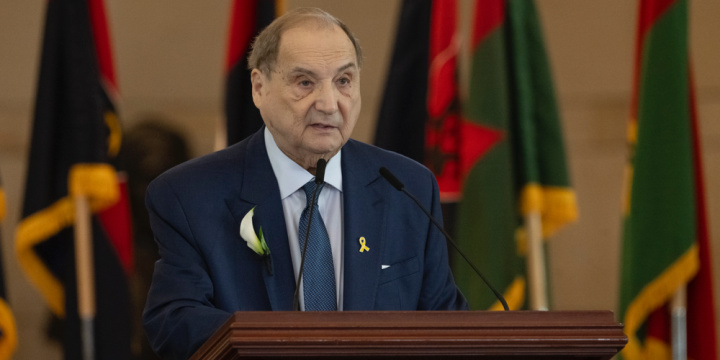
Abraham Foxman, a Holocaust survivor and member of the US Holocaust Memorial Council, speaks at the US Holocaust Memorial Museum’s Annual Days of Remembrance Commemoration in the Emancipation Hall of the US Capitol on April 23, 2025. Photo: Mattie Neretin/Sipa USA via Reuters Connect
Abraham H. Foxman, who was the national director of the Anti-Defamation League for nearly three decades, has died at the age of 86, the ADL announced in a statement on Sunday.
The organization said it “deeply mourns the loss of our longtime national director,” but did not provide details about where, when, and how Foxman died. He is survived by his wife Golda, children Michelle and Ariel, son-in-law Brandon Cardet-Hernandez, and grandchildren, Cielo, Leila, Gideon, and Amirit.
Foxman retired in 2015 after spending his entire 50-year career with the ADL. He was “one of the world’s foremost voices against antisemitism and hate,” as well as an “outspoken, passionate, and tireless advocate for the Jewish people and Israel,” according to the advocacy organization.
Foxman graduated from City College of New York and NYU School of Law. He joined the ADL immediately after graduating from law school and served in various roles in the organization, including assistant director of legal affairs, before being becoming its national director in 1987. When Foxman announced his retirement from the ADL, then-US President Barack Obama said the long-time civil rights activist was “irreplaceable.”
Jonathan Greenblatt, the current CEO of the ADL, described Foxman as “an iconic Jewish leader who embraced the ideal of an America free from antisemitism and hate and who strongly believed that these scourges could be defeated if good people opposed it.”
“America and the Jewish people have lost a moral voice, a passionate advocate for the Jewish people and the state of Israel, and a remarkable leader,” Greenblatt said in a released statement. “In his storied career, Abe transformed ADL while confronting antisemitism and hate (from both left and right), opposing the global rise in antisemitism, holding world leaders accountable and working to ensure that Israel was Jewish, secure and democratic. Abe’s voice was heard – and listened to – by popes, presidents, and prime ministers, a voice he used wherever Jews were at risk. Abe Foxman spoke on the global stage with moral authority and clarity and was relentlessly dedicated to his pursuit of a world without hate.”
“Abe Foxman helped build the modern liberal era of America,” ADL Board Chair Nicole Munchnik added in a separate statement. “He was recognized across the globe as a great leader and passionate advocate for tolerance, a voice of the generation rebuilding in the shadow of the Shoah, and longtime advisor to American presidents and world leaders. To those of us who knew him, Abe was a warm friend, advisor, spirited antagonist and hugger – all over lunch.”
The American Jewish Committee praised Foxman as a “towering figure in the fight against antisemitism and hatred” and someone who “brought moral clarity, courage, and unwavering conviction to generations of advocacy and leadership.” The AJC said his advocacy “helped shape the American Jewish experience and strengthened the global fight against bigotry in all its forms.”
Born in 1940 to Polish Jews in what is now Belarus, Foxman survived the Holocaust under the care of his Polish Catholic nanny Bronislawa Kurpi, who baptized him and raised him as a Catholic to hide his Jewish identity. He lost 14 family members in the Holocaust but was reunited with his parents after the war. Together they immigrated to the United States, where Foxman attended the Yeshiva of Flatbush as a teenager. He later served as vice chairman of the Museum of Jewish Heritage in New York City and was a member of the United States Holocaust Memorial Council, to which he was appointed by President Ronald Reagan in 1987 and reappointed by Presidents George H.W. Bush, Bill Clinton, and Joe Biden.
The Auschwitz Jewish Center Foundation (AJCF) called Foxman “one of the most consequential Jewish leaders of the postwar era” and a Holocaust survivor who “devoted his life to confronting antisemitism and defending the Jewish people.”
“Abe Foxman belonged to a generation that carried the weight of history personally and transformed it into public service,” said AJCF Chairman Simon Bergson in a statement. “He dedicated his life to ensuring that the lessons of the Holocaust were applied to the defense of democratic values, human dignity, and the Jewish people. His legacy will endure for generations.”
Following the news of Foxman’s death, Israeli President Isaac Herzog praised him as a “legendary leader of the Jewish people, a champion of justice and equality, and a longtime, dear friend of mine.”
“Coming into a world at war, the Holocaust shaped Abe’s character and defined his mission: Combating antisemitism and hypocrisy, calling out racism and bias, speaking up for the Jewish people and the Jewish democratic Israel,” Herzog shared in a post on X. “His story, of rising from the ashes, is our story, the story of our people.”
Israel’s president also described Foxman as “a prominent, distinguished force in the American Jewish community, and a bridge between Israel and the Diaspora” as well as a “passionate Zionist, a humanist, and an outspoken, wise friend.”
“The affection and the respect we had for one another enabled us to openly discuss every challenge and every obstacle,” added Herzog. “I am so grateful for the profound conversations we shared over the years, and for the brave leadership he exemplified. I will miss Abe’s counsel and voice, and I know that his legacy and his message will live on.”
Foxman was a board member of the Met Council on Jewish Poverty, America’s largest organization combating Jewish poverty. Its CEO and Executive Director David G. Greenfield said he was “heartbroken” by the passing of his “dear friend and mentor.”
“At Met Council, we were privileged to have Abe as a board member, adviser, and friend,” Greenfield explained. “He brought wisdom, compassion, and deep commitment to everything he did. Even near the end of his life, Abe continued showing up for the community. Just a few weeks ago, he joined us with his granddaughters at Met Council’s Passover Day of Service at the Spitzer Fulfillment Center, helping ensure that New Yorkers in need could celebrate Pesach with dignity.”
“Public leaders do not always match their public reputations in private,” Greenfield added. “Abe was the rare person whose private kindness, humility, and generosity were even greater than his public stature. All who knew him loved him … His voice, his courage, his friendship, and his leadership will be deeply missed.”
Foxman also served as vice chairman of the Museum of Jewish Heritage in New York City.