



Uncategorized
Fate of Iran Peace Talks Uncertain as Deadline Approaches for End of Ceasefire

A view of Iranian-flagged cargo ship M/V Touska as the US Navy Arleigh Burke-class Aegis guided missile destroyer USS Spruance conducts its interception in a location given as the north Arabian Sea, in this screen capture from a video released April 19, 2026. Photo: CENTCOM/Handout via REUTERS
Iran is considering attending peace talks with the United States in Pakistan, a senior Iranian official told Reuters on Monday, following moves by Islamabad to end a US blockade of Iran‘s ports, a major hurdle for Tehran to rejoin peace efforts.
However, the official stressed that no decision had been made.
Adding to the uncertainty, a source told Reuters that Vice President JD Vance was still in the US, denying reports that he was already on his way to Pakistan’s capital Islamabad for talks.
With a two-week ceasefire set to expire this week, the senior Iranian official said Tehran was “positively reviewing” its participation but no final decision had been made. The comments conveyed a clear change of tone from earlier statements ruling out attendance and pledging to retaliate for US aggression.
The Iranian official said mediator Pakistan was making positive efforts to end the US blockade and ensure Iran‘s participation.
BLOCKADE POSES A PROBLEM
The ceasefire had appeared in jeopardy after the US said it had seized an Iranian cargo ship that tried to run its blockade and Tehran vowed to retaliate.
A Pakistani security source said Pakistan’s key mediator, Field Marshal Asim Munir, had told US President Donald Trump the blockade was an obstacle to talks, and that Trump had promised to consider ending it.
The US was hoping to start negotiations in Pakistan shortly before the ceasefire expires, with sweeping security preparations under way in Islamabad.
However, Iran‘s President Masoud Pezeshkian said that “unconstructive & contradictory signals from American officials carry a bitter message; they seek Iran‘s surrender.”
“Iranians do not submit to force,” he added on X.
US-IRAN CEASEFIRE SET TO EXPIRE
Trump announced the two-week ceasefire with Iran on April 7, and has not specified when precisely it ends.
A Pakistani source involved in the talks said it would expire at 8 pm ET on Wednesday, which would be midnight GMT or 3:30 am Thursday in Iran.
The US has maintained its blockade of Iranian ports, while Iran lifted and then reimposed its own blockade of the Strait of Hormuz, which typically handles roughly one-fifth of the world’s oil and liquefied gas supply.
Oil prices rose around 5% as traders remained fearful that the ceasefire would collapse. Traffic through the Strait of Hormuz was at a virtual standstill with just three crossings in the space of 12 hours, according to shipping data.
US MARINES BOARD IRANIAN VESSEL
The US military said it had fired on an Iranian-flagged cargo ship headed towards Iran‘s Bandar Abbas port on Sunday after a six-hour standoff, disabling its engines. US Central Command released video showing Marines descending ropes from helicopters onto the vessel.
The vessel is likely to have been carrying what Washington deems dual-use items that could be used by the military, maritime security sources said on Monday.
Iran‘s military said the ship had been traveling from China and accused the US of “armed piracy,” according to state media. They said they were ready to confront US forces over the “blatant aggression,” but were constrained by the presence of crew members’ families on board.
China, the main buyer of Iranian crude, expressed concern over the “forced interception,” and Chinese President Xi Jinping called for ships to resume passage through the strait as normal and for the conflict to be resolved through political and diplomatic channels, state news agency Xinhua reported.
Trump warned on Sunday that the US would destroy every bridge and power plant in Iran if it rejected his terms, continuing a recent pattern of such threats.
Iran has said that if the United States were to attack its civilian infrastructure, it would strike power stations and desalination plants in its Gulf Arab neighbors.
PREPARING FOR TALKS THAT MIGHT NOT HAPPEN
Pakistan geared up to host the talks despite uncertainty over whether they would go ahead. Nearly 20,000 security personnel have been deployed across the capital Islamabad, a government official and a security official said.
The US and Israel launched strikes against Iran on Feb. 28, in part to prevent the regime from developing nuclear weapons.
Trump said on Monday he believed a nuclear deal the US is currently negotiating with Iran will be better than a 2015 international agreement to curb Tehran’s nuclear program.
“The DEAL that we are making with Iran will be FAR BETTER than the JCPOA, commonly referred to as ‘The Iran Nuclear Deal‘,” Trump wrote in a social media post.
During his first White House term, Trump in 2018 withdrew from the Joint Comprehensive Plan of Action agreed to by Iran, the United States and world powers, calling it “the worst deal ever.”
“I am under no pressure whatsoever, although, it will all happen, relatively quickly!” Trump added in his Truth Social post.
Uncategorized
Remembering Abe Foxman, the longtime ADL leader known as the ‘Jewish pope,’ who always answered my calls
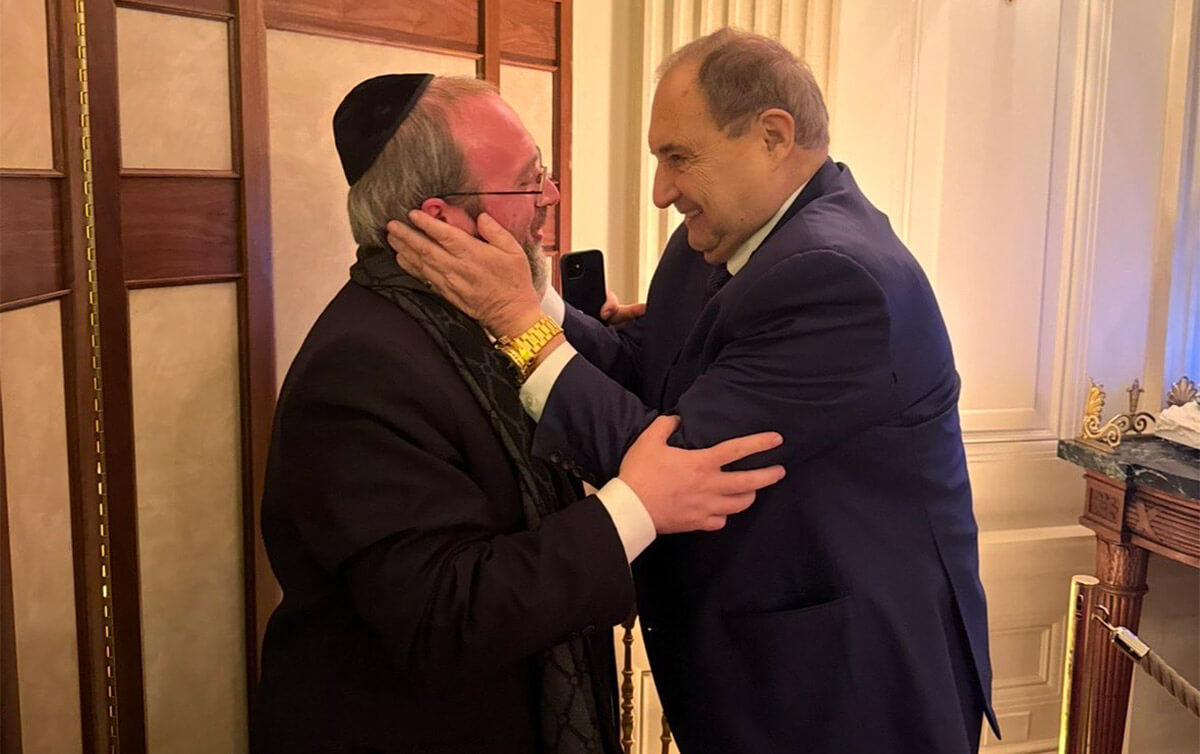
Friday before sundown, I realized that Abe Foxman had not sent me his weekly “Shabbat Shalom” message. For the past seven years, since we began texting regularly about Jewish and political issues, the message would arrive each Friday like clockwork — often accompanied by screenshots of Shabbat memes. My response never changed: “Good Shabbos, tzaddik,” using the Hebrew word for a righteous person that Foxman himself often used.
A few minutes after sundown, I texted him anyway: “Good Shabbos, tzaddik.” Then I turned off my phone. The message showed as “read” Saturday night. But there was no response.
I’m sure I wasn’t the only one waiting for Foxman’s Shabbat greetings. The silence said everything. On Sunday, the Anti-Defamation League announced that its former longtime chief had died at age 86.
I first started texting with Foxman after he stepped down in 2015 as national director of the ADL, concluding a remarkable 50-year run with the organization, including nearly three decades at its helm. By then, he had become one of the most recognizable Jewish communal leaders in America. He was nicknamed the “Jewish Pope.” Former President Barack Obama, a frequent target of Foxman’s criticism over Israel policy, said upon Foxman’s retirement: “Abe is irreplaceable.”
For me, a rookie journalist covering national politics through a Jewish lens, Foxman became an invaluable source. He was in the room with presidents, prime ministers and world leaders during some of the Jewish community’s most consequential moments. Yet he was always available. He answered calls quickly. He texted back. He spoke candidly. He could be sharp, direct and deeply critical when he thought leaders were making mistakes. But he was also compassionate, warm and surprisingly personal.
Every conversation began the same way: asking about me. My kids. How I was holding up. Only then would we get to politics. The conversation would often veer from Yiddish to English and back again.
Our last conversation was on April 15, after a record 40 Senate Democrats voted to block $295 million for the transfer of bulldozers to Israel and 36 of them also supported a measure to block the sale of 1,000-pound bombs to the Jewish state. “A broch,” Foxman replied, using the Yiddish word for disaster. “A sad time for American politics.”
That worldview shaped much of his public commentary in recent years. In interviews with the Forward and other publications, Foxman weighed in on rising antisemitism, campus protests, Democratic divisions over Israel, President Donald Trump’s rhetoric, and the Biden-Netanyahu relationship.
Foxman could be combative and unapologetic. Critics on the left viewed him as too hawkish on Israel, while critics on the right sometimes accused him of being too willing to criticize the Israeli government or American conservatives. But nobody doubted his commitment to the Jewish people and to Israel.
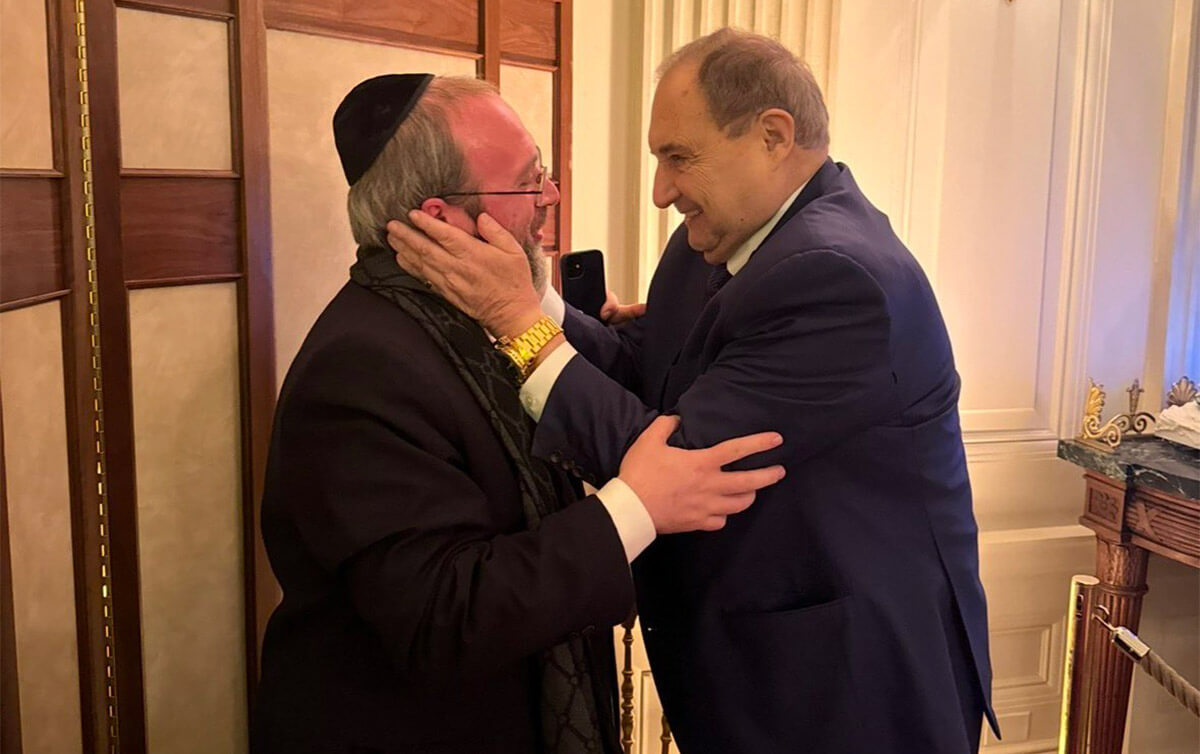
Foxman’s own life story
Born in Baranavichy in 1940, in what is now Belarus, Foxman survived the Holocaust as an infant after being hidden by his Polish Catholic nanny, who baptized him to hide his Jewish identity, while his parents were confined to a ghetto. After the war, he was reunited with his parents, first living in a displaced persons camp in Austria before immigrating to the United States.
Those early experiences shaped the course of his career and ultimately made him one of the most influential Jewish communal leaders of the modern era.
In 1965, after getting degrees from City College of New York and New York University School of Law, Foxman joined the Anti-Defamation League as a legal assistant. Over the next five decades, Foxman rose through the ranks of the organization before being named its national director in 1987, a position he held until 2015.
Under his leadership, the ADL became one of the world’s most prominent voices combating antisemitism and hate.
In 1987, President Ronald Reagan appointed Foxman to serve on the council of the United States Holocaust Memorial Museum. He was reappointed by Presidents George H. W. Bush, Bill Clinton and Joe Biden. He was also vice chairman of the Museum of Jewish Heritage in New York City.
Foxman was often willing to challenge leaders he believed were wrong on Israel, including Democratic presidents he otherwise respected. He was sharply critical of Obama’s approach toward Israel early in his presidency and became one of the leading Jewish voices opposing the administration’s 2009 demand for a freeze on Israeli settlements.
In remarks at Foxman’s farewell dinner in 2015, Susan Rice, former U.S. ambassador to the U.N. and national security advisor under Obama, told the audience: “The thing I most value about Abe is his candor and integrity. He holds everyone to the same high standards, and I can always count on him to tell it to me straight, even when he knows I won’t necessarily like what he has to say.” In 2020, Foxman publicly advocated for Biden to choose Rice as his vice-presidential running mate.
“America and the Jewish people have lost a moral voice, a passionate advocate for the Jewish people and the state of Israel, and a remarkable leader,” Foxman’s successor, ADL CEO Jonathan Greenblatt, said in a statement announcing Foxman’s death.
Foxman’s political commentary
Even after retiring from the ADL, Foxman remained a leading voice in Jewish public life, especially after the election of Trump in 2016.
Foxman told me in an interview at the time that the Jewish community should engage with Trump and hold him accountable when needed. He advised Trump to be cautious about making good on his promise to move the U.S. embassy from Tel Aviv to Jerusalem. He became more critical of Trump after the president said that there were “very fine people on both sides” in response to a 2017 neo-Nazi rally in Charlottesville, Virginia.
In 2020, Foxman broke his tradition of not endorsing political candidates to back Biden. He argued that Trump was a “demagogue” whose reelection would be a “body blow for our country and our community.”
Once Biden took office, Foxman started to express doubts about the president’s handling of the U.S. relationship with Israeli Prime Minister Benjamin Netanyahu. He said it “sends the wrong message to our friends and enemies” that Israel is being held to a higher standard than other countries in the region. Foxman was also a harsh critic of the Netanyahu government’s judicial overhaul, warning that the right-wing cabinet ministers could hamper support for Israel among American Jews.
In 2024, he warned that Biden’s increasingly harsh rhetoric over Israel’s military campaign in Gaza would repel Jewish voters. “I believe that this administration, because of its political season, is taking American Jews for granted or has written us off,” said Foxman. ”If they’re worried that the Arabs in Michigan will vote with their feet, they need to worry that Jews can also vote with their feet.”
Most recently, Foxman was critical of national Democrats opposing the military operations against the Iranian regime in March for a lack of congressional authority. “Sadly, it is purely political games,” Foxman told me, noting that previous Democratic administrations conducted military operations without explicit congressional authorization. “Ninety-nine percent of Democrats are on record saying Iran is a terrorist state and cannot have nuclear weapons. So why this game?” he asked.
Now, as Jews mark Jewish American Heritage Month, that voice is silent. But for me, and for the many people still waiting for one more “Shabbat Shalom” message from Foxman, he will not soon be forgotten.
Foxman is survived by his wife Golda, his daughters Michelle and Ariel and four grandchildren.
JTA contributed to this article.
The post Remembering Abe Foxman, the longtime ADL leader known as the ‘Jewish pope,’ who always answered my calls appeared first on The Forward.
Uncategorized
Jailed Iranian Peace Laureate Mohammadi Moved to Hospital in Tehran

A picture of Nobel Peace Prize winner Narges Mohammadi on the wall of the Grand Hotel in central Oslo before the Nobel banquet, in connection with the awarding of the Nobel Peace Prize 2023, in Oslo, Norway, Dec. 10, 2023. Photo: NTB/Javad Parsa via REUTERS
Iran’s imprisoned Nobel Peace Prize winner Narges Mohammadi has been moved to a hospital in the capital, Tehran, and has been granted a suspension of her sentence on heavy bail, a foundation run by her family said on Sunday.
Mohammadi, 54, won the prize in 2023 while in prison for a campaign to advance women’s rights and abolish the death penalty. She suffered a heart attack two weeks ago.
Her family had called for her to be transferred from Zanjan, northwest of Tehran, where she was serving her sentence and where she had been initially taken to a hospital, so that she could receive better medical care.
She is now at Tehran Pars Hospital for treatment by her own medical team after being transferred by ambulance, the Narges Mohammadi Foundation said in a statement.
Mohammadi was sentenced to a new prison term of 7-1/2 years, the foundation said in February, weeks before the US and Israel launched their war against Iran. The Nobel committee at the time called on Tehran to free her immediately.
She had been arrested in December after denouncing the death of a lawyer, Khosrow Alikordi. A prosecutor told reporters that she had made provocative remarks at Alikordi’s memorial ceremony.
The foundation gave no details of the bail arrangements or suspension of her sentence.
“However, a suspension is not enough,” it said. “Narges Mohammadi requires permanent, specialized care. We must ensure she never returns to prison.”
Iran shut down most of the internet in the country in January as authorities suppressed mass protests triggered by economic unease. Rights groups have reported ongoing executions of people involved in the unrest.
Uncategorized
Israel’s Attorney General Calls to Cancel Netanyahu’s Mossad Chief Appointment

Israeli Attorney-General Gali Baharav-Miara. Photo: Twitter
i24 News – Attorney General Gali Baharav-Miara told the High Court of Justice on Sunday that Prime Minister Benjamin Netanyahu’s decision to appoint Maj. Gen. Roman Gofman as the next Mossad chief must be canceled.
Baharav-Miara filed her position ahead of a Tuesday hearing on petitions challenging the appointment, telling the court that “substantial flaws” had been found both in the process conducted by the advisory committee and in the conclusions it drew. She said Netanyahu’s decision suffered from “extreme and blatant unreasonableness” and could not stand legally.
At the center of the dispute is the case of Ori Elmakayes, who was a 17-year-old minor when he was activated in 2022 by Division 210, without going through authorized intelligence channels. At the time, the division was commanded by Gofman. Elmakayes was arrested in May 2022 under espionage charges after two officers sent him classified information and told him to post it online as part of an “influence campaign,” despite not being authorized to do so. Gofman initiated this operation. Elmakayes was then held in full detention until July, spending an extended period under electronic monitoring and house arrest before the indictment against him was canceled in late 2023.
Baharav-Miara says Gofman’s involvement in leaking the classified information to the minor, “casts a heavy shadow on Gofman’s integrity and thus on his appointment to head the Mossad.” The attorney general also identified serious procedural failings in the advisory committee’s work. She notes that the majority members signed their opinion before committee chairman and former Supreme Court president Asher Grunis had written his dissent and before two members had reviewed several classified documents significant to the full picture. Grunis concluded that integrity flaws had been found and that it was not appropriate to appoint Gofman as Mossad chief.
The attorney general also says the committee failed to hear directly from Elmakayes or from a relevant senior military intelligence officer, instead relying in part on media interviews.
Netanyahu, who appointed Gofman to head the Mossad starting in early June, for a five-year term, submitted his own response to the court on this past Friday, arguing that the decision fell within his executive authority. The Prime Minister also said that his assessment of the matter was “dozens of times superior” to that of the court, adding that Gofman’s integrity was “found pure,” and describing him as the most qualified candidate.
Other coalition figures responded to the attorney general with sharp criticism, including National Security Minister Itamar Ben-Gvir. Ben-Gvir accused Baharav-Miara of fighting the state, while Finance Minister Bezalel Smotrich said her position was “one step too far” and vowed to advance legislation splitting the attorney general’s role in the Knesset’s summer session.