


Uncategorized
Fire at Mississippi’s largest synagogue under federal investigation after arrest
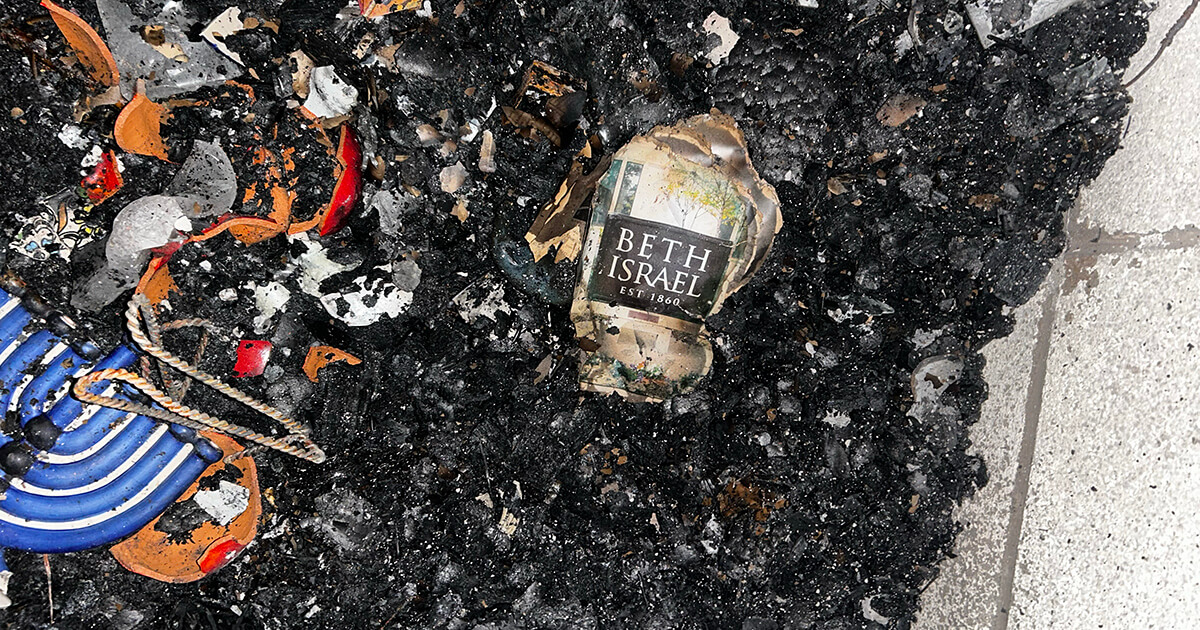
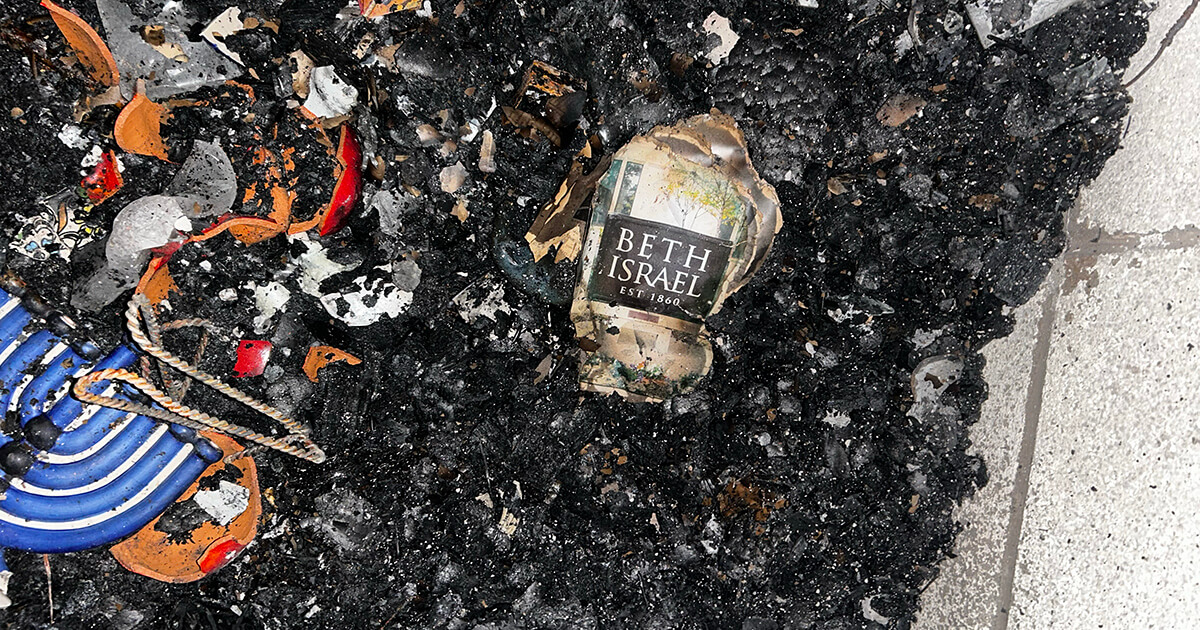
A suspect is in custody as authorities investigate a weekend fire that damaged Mississippi’s largest synagogue, which has been attacked before.
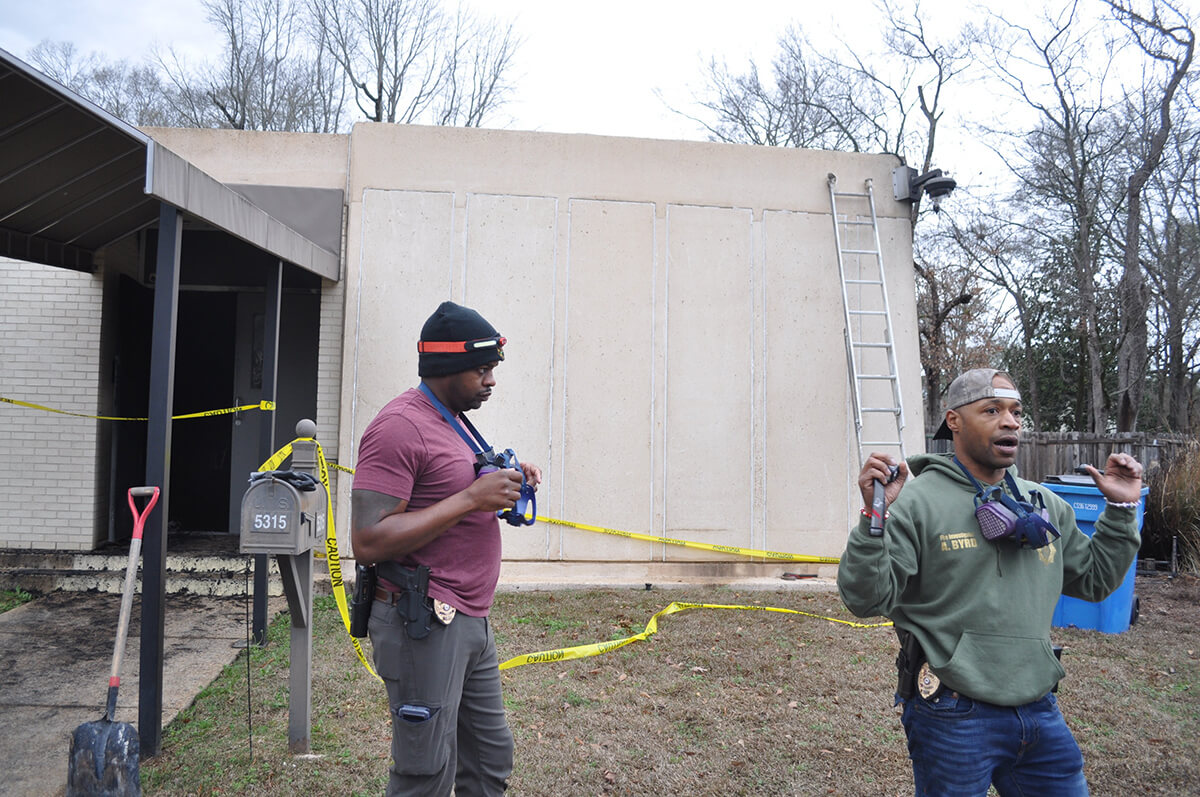
The fire broke out around 3 a.m. Saturday at Beth Israel Congregation, the only synagogue in Jackson, the state capital. Investigators said the blaze originated in the synagogue’s library, burning it and the offices. Soot and smoke damaged the rest of the building, including the sanctuary.
Two of the synagogue’s Torahs, kept in the library, were burned in the fire; another five in the sanctuary were damaged. An additional Torah, rescued from the Holocaust, was behind a glass case and survived the fire.
“At this time, we do have a person in custody for the fire,” said Division Fire Chief Charles Felton, who is overseeing the investigation. The arrest was made at about 8 p.m. Saturday, he said.
Felton said the FBI is now involved and is expected to pursue federal charges, including determining whether the fire qualifies as a hate crime. Local authorities made the initial arrest before federal investigators stepped in, he said.
A reporter who was inside the building before federal authorities secured the scene described extensive damage. Allen Siegler, a reporter with Mississippi Today, said the interior was “very dark and ashen.”
“It was wet — puddles of ashes,” Siegler told the Forward.
Jackson Mayor John Horhn said the fire was an attack not only on the Jewish community, but on the city itself.
“Acts of antisemitism, racism, and religious hatred are attacks on Jackson as a whole and will be treated as acts of terror against residents’ safety and freedom to worship,” Horhn said in a statement. “Jackson stands with Beth Israel and the Jewish community, and we’ll do everything we can to support them and hold accountable anyone who tries to spread fear and hate here.”
A congregation shaped by fire — and defiance
Beth Israel Congregation, which counts around 150 member families, has anchored Jewish life in Jackson since the Civil War, its history closely tracking both the growth of the city and the persistence of a small but visible Jewish community in Mississippi’s capital.
Founded in the early 1860s, the congregation built Mississippi’s first synagogue — a modest structure on South State Street that doubled as a schoolhouse. It burned in an 1874 fire, a common fate of 19th century wooden buildings, though the cause of the fire is not recorded. The congregation built a new brick structure on the same site, dedicated in 1875.
As Jewish families moved within Jackson, Beth Israel moved with them, relocating first to Woodrow Wilson Avenue and, in the 1960s, to its current home in northeast Jackson.
By the mid-20th century, Beth Israel had become the largest Jewish congregation in the state and a familiar civic presence in a predominantly Christian city — a visibility that brought both belonging and risk.
In September 1967, Ku Klux Klan members bombed the synagogue just weeks after the building was dedicated, damaging the rabbi’s office and library. The home of Rabbi Perry Nussbaum, a vocal supporter of the civil rights movement who had helped the Freedom Riders, was also bombed shortly afterward. No one was injured, and the congregation held High Holiday services in the building that same year.
Rabbi Valerie Cohen, who led Beth Israel from 2003 to 2014 and is now at Temple Emanuel Sinai in Worcester, Massachusetts, said the echoes between past and present were impossible to miss.
“The majority of the damage is in the same place as the bombing,” said Cohen, 54.
The fire felt especially disorienting, she said, because she had been inside the building just days earlier.
“That made this moment sad and surreal and awful,” Cohen said. “I was just there last Shabbat, officiating at a wedding for one of my bar mitzvah students from there that is all grown up now. I participated in the Torah study on Saturday morning in the library, led by their current spiritual leader.”
Cohen described Beth Israel as “very resilient throughout the years” and “very integral” to the Jackson community, noting that many non-Jewish residents know the synagogue through its longtime preschool and annual bazaar.
Despite the damage, congregants say Jewish life in Jackson will continue.
Tamar Sharp, 67, a member of Beth Israel since 2006, is scheduled to celebrate her adult bat mitzvah this coming Shabbat — even if it must be held in a borrowed space with a borrowed Torah.
“Absolutely,” Sharp said. “The show must go on.”
The post Fire at Mississippi’s largest synagogue under federal investigation after arrest appeared first on The Forward.
Uncategorized
Lula’s reelection puts the brakes on Latin America’s pro-Israel shift
(JTA) — BUENOS AIRES – Brazilians reelected Luiz Inácio ‘Lula’ da Silva as president, defeating the center-right senator Flavio Bolsonaro, putting the breaks on a regional shift toward closer ties with Israel.
The current president, a left-wing leader of Partido dos Trabalhadores (Workers Party), obtained 51.79% of the valid votes, while Bolsonaro received 48.21%.
Bolsonaro, of the Liberal Party, had pledged a close diplomatic partnership with Israel and cultivated ties with Prime Minister Benjamin Netanyahu, while Lula has become a critic of Israel’s military campaign in Gaza. Bolsonaro said he did not accept the election results, although it is not clear how he could challenge them.
In January 2024, Lula’s government endorsed South Africa’s decision to bring a genocide case against Israel before the International Court of Justice. A month later, Lula compared Palestinian suffering in Gaza to Hitler’s murder of the Jews, triggering a diplomatic crisis between Brazil and Israel. Brazil’s Jewish umbrella organization, CONIB, publicly condemned the comparison as a distortion that offended the memory of Holocaust victims and their descendants.
The remarks were also criticized by the Holocaust Museum of Buenos Aires. Sen. Bolsonaro promised a big shift toward Israel when he spoke on June 28, 2026, in Buenos Aires in a meeting with Jewish leaders. “In 2027, Brazil will not only once again have an ambassador to Israel, but will also take the step of moving its embassy to Israel’s capital, Jerusalem,” he said.
That night he also lauded the 120,000 Jews in Brazil, saying, “They are men and women who rank among the brightest in Brazilian medicine, industry, science, culture and business.”
After Bolsonaro finished ahead of Lula in the first round on Oct. 4, Netanyahu sent a message the following day on X: “Congratulations @FlavioBolsonaro on yesterday’s vote and good luck in the final. I look forward to restoring the extraordinary friendship between Israel and Brazil. Best wishes for your great victory, my friend.”
Since 2023, several Latin American countries have strengthened ties with Israel, in some cases reversing policies adopted by their predecessors, among them:
Argentine President Javier Milei elected in 2023, who makes support for Israel central to his foreign policy and meets with families of hostages Hamas abducted in its deadly Oct. 7, 2023, raid on Israel, which launched the current war;
Bolivian President Rodrigo Paz Pereira, elected in 2025, who restored diplomatic relations with Israel severed by his predecessor;
President Nasry Asfura of Honduras, elected in 2025, who immediately formally recognized Israel’s new ambassador, a process his predecessor left in limbo;
Chilean President José Antonio Kast, elected in 2025, who is rebuilding ties with Israel diminished by his predecessor;
and Colombian President Abelardo de la Espriella, elected in May, who restored diplomatic ties with Israel severed by his predecessor, sent his foreign minister to inaugurate an embassy in Jerusalem and pulled out of the ICJ genocide case against Israel.
This article originally appeared on JTA.org.
The post Lula’s reelection puts the brakes on Latin America’s pro-Israel shift appeared first on The Forward.
Uncategorized
In anti-Muslim speech, Trump says Jews who support El-Sayed should be ‘ashamed’
(JTA) — President Donald Trump disparaged Jewish voters who support Abdul El-Sayed, Michigan’s Democratic Senate nominee, at a rally in Port Huron on Sunday.
“Any Jewish person that supports this guy should be ashamed of themselves,” Trump told some 4,000 supporters in the city north of Detroit, where he stumped for Republican nominee Mike Rogers. “You should never speak to them again.”
Hundreds of Michigan Jews have pledged to vote for El-Sayed, who polls indicate is narrowly leading Rogers in a race key to determining control of the Senate. Another subset of Jews has pressured El-Sayed, a staunch critic of Israel, to defend “Jewish safety — including for Zionist Jews” and “Jewish sovereignty in Israel.” Still others have urged their community members to reject El-Sayed outright and back Rogers.
El-Sayed opposes U.S. military aid to Israel, saying the country has committed genocide in Gaza and is “not an ally.” Those positions divided the Democratic party during his primary campaign against pro-Israel U.S. Rep. Haley Stevens, whom he narrowly bested in August. A former public health official, El-Sayed has also emphasized affordability in healthcare, housing and education. He has made a concentrated push to reach undecided Jewish voters in the homestretch before the Nov. 3 midterm election, hiring a Jewish outreach director last week.
Trump has in the past accused Jews who vote for Democrats of being “disloyal to Jewish people” and “disloyal to Israel.”
He said at the Port Huron rally that he is “polling at 99% in Israel,” which will hold national elections on Tuesday.
Trump did not cite evidence for the claim, which is unsupported by publicly available surveys. While he has historically scored high popularity among Israelis, a poll by the Jewish People Policy Institute in June found the Israeli public’s trust in him was declining. The poll said that 12% of Israelis reported having a great deal of trust in Trump, down from 21% in May, while the share of Israelis with complete distrust in him rose from 32% to 37%.
Trump joined his comments about Jews and Israel to anti-Muslim rhetoric about El-Sayed, who would become the first Muslim in the Senate if he is elected.
Trump baselessly called El-Sayed a “jihadist Muslim Brotherhood member” who was “on the side of the terrorists,” adding that he would “have to go through a metal detector before he’s allowed to go into the Senate.”
He threatened that “if Abdul and the Democrats win, they will open the floodgates and invite hordes of jihadists to our shores, creating a nightmare of violence and terror until you cannot even have a Christmas.”
Trump claimed that El-Sayed’s half sister, Eman Abdelhadi, celebrated the Hamas attacks on Israel on Oct. 7, 2023. On the first anniversary of the attack, Abdelhadi posted a video that said, “no matter how great the brutality, the oppression, the intensity of what we’re going through, the horizon of justice is just around the corner,” according to The New York Times. She did not directly mention or celebrate the violence.
Trump also said that El-Sayed’s mother had “worked for an organization that gave hundreds of thousands of dollars to Osama bin Laden and al-Qaeda.” A Times investigation reported that El-Sayed’s mother worked as a nurse in Missouri for a Muslim aid group that was later designated by the U.S. government as a supporter of terrorist groups. She was never accused of wrongdoing.
El-Sayed’s campaign has said that he “disagrees” with his sister on “a number of political positions and the rhetoric she’s chosen to use, including on foreign policy.” He was raised by his father and stepmother and has said that he had little relationship with his biological mother while growing up.
Former President Barack Obama campaigned with El-Sayed in Detroit on Saturday, saying the candidate was “fighting for change, real change, that will get money out of politics and put money in your pocket.”
This article originally appeared on JTA.org.
The post In anti-Muslim speech, Trump says Jews who support El-Sayed should be ‘ashamed’ appeared first on The Forward.
Uncategorized
CAIR Connecticut urges Greenwich schools to stop using Eisner Camp over Israel ties
(JTA) — GREAT BARRINGTON, Mass. – Greenwich Public Schools in Connecticut said it would proceed with a planned fall trip for sixth graders at a Jewish camp in Massachusetts as planned this week, despite pressure from a Muslim advocacy organization over the camp’s Israeli symbols and Israel-related programming.
CAIR Connecticut, the state chapter of the Council on American-Islamic Relations, objected to the trip, saying that programming at Eisner Camp in Great Barrington “incorporates connections to Israel,” the chapter’s board chair Farhan Memon wrote in a letter to Greenwich Superintendent of Schools Toni Jones dated Oct. 13.
The four-day Greenwich Schools field trip was organized by the Outdoor Classroom project, which works with seven locations in New England, including Eisner. Four of the camps are affiliated with Christian organizations, and two have no religious affiliation. With its clients, Outdoor Classroom coordinates nature-related learning programs for kids.
Memon wrote that some parents in Greenwich had viewed a video and photos of previous school events at Eisner and “identified Israeli flags and yellow ribbons prominently displayed in spaces used during school visits.”
“At the very least, spaces used by Greenwich students on any school trip should be free of national and political displays,” Memon wrote.
Eisner director Paul Isserles said in a statement shared with the Jewish Telegraphic Agency: “We welcome Outdoor Classroom to use our camp facilities. Throughout the year many outside organizations rent our facilities for various programs. URJ Eisner Camp is proud to have an Israeli flag displayed for our camp programs.”
When it comes to visiting groups, “Frankly, we are not regularly asked to do anything to remove those symbols or to cover them,” said Union for Reform Judaism president Rabbi Rick Jacobs in a telephone interview with JTA. “Because to be honest, we wouldn’t.”
Answering Memon’s letter on Oct. 14, Jones wrote in an email that her school district “acknowledges that individuals and families have vastly different views regarding global events” and that it intends to “provide an inclusive and safe educational environment for all Greenwich Public School students, including when they are on field trips under our care.”
She added that she had “made it clear to a few families that we will not take a political or religious stand.” JTA has seen both the CAIR letter and the email response.
CAIR Connecticut did not respond to JTA’s query.
CAIR’s national website says the organization promotes interfaith dialogue and “condemns all acts of violence against civilians by any individual, group or state.”
The Reform movement founded the 600-acre camp in 1958 as the Joseph Eisner Camp Institute for Living Judaism. It is located in the Berkshire Hills south of the town center of Great Barrington.
It is one of more than a dozen of the movement’s overnight camps in the North America. Many of those camps are rented throughout the year by groups that have nothing to do with Judaism, URJ’s Rabbi Jacobs said. “If a group rents the camp, they come up with their own agenda,” he said.
He added, “There are flags and other symbols of Judaism and of Israel in our camps, and we’re proud of that.”
Some parents had raised concerns about the venue as early as March. CAIR urged the district to stop using the camp in the Oct. 14 letter.
Removing decorations from the camp would not be enough, he said, noting that parents were upset after seeing promotional material about Eisner bringing Jewish campers to visit Israeli army bases under the Gadna, an Israeli military youth program.
A July 2019 post on Eisner Camp’s website says a group of participants in its Israel trip chose Gadna, stayed at an army base, practiced drills and learned to shoot at a target.
“URJ Eisner Camp participants who go to Israel have not participated in Gadna since 2023,” camp director Isserles said in a statement provided to JTA. “Our Israel programming at camp and in Israel is focused on Jewish identity, community, education, and connection to Israel.”
What CAIR is saying is that “A Jewish institution can be an unfit place for public-school children because it is visibly Jewish and identifies openly with Israel,” wrote blogger and Eisner alumnus Rabbi Jeff Salkin in his “Unfiltered” Substack on Oct. 19.
“A Jewish institution should not have to hide its Jewish identity to count as a fit place for other people’s children. You would not ask a church camp to remove a cross, or a Muslim camp to take down a crescent. A standard that demands such hiding makes Jewish identity itself the problem,” Salkin wrote.
This article originally appeared on JTA.org.
The post CAIR Connecticut urges Greenwich schools to stop using Eisner Camp over Israel ties appeared first on The Forward.
