



Uncategorized
How Billy Wilder and B&H Dairy birthed ‘The Only Living Pickpocket in New York’
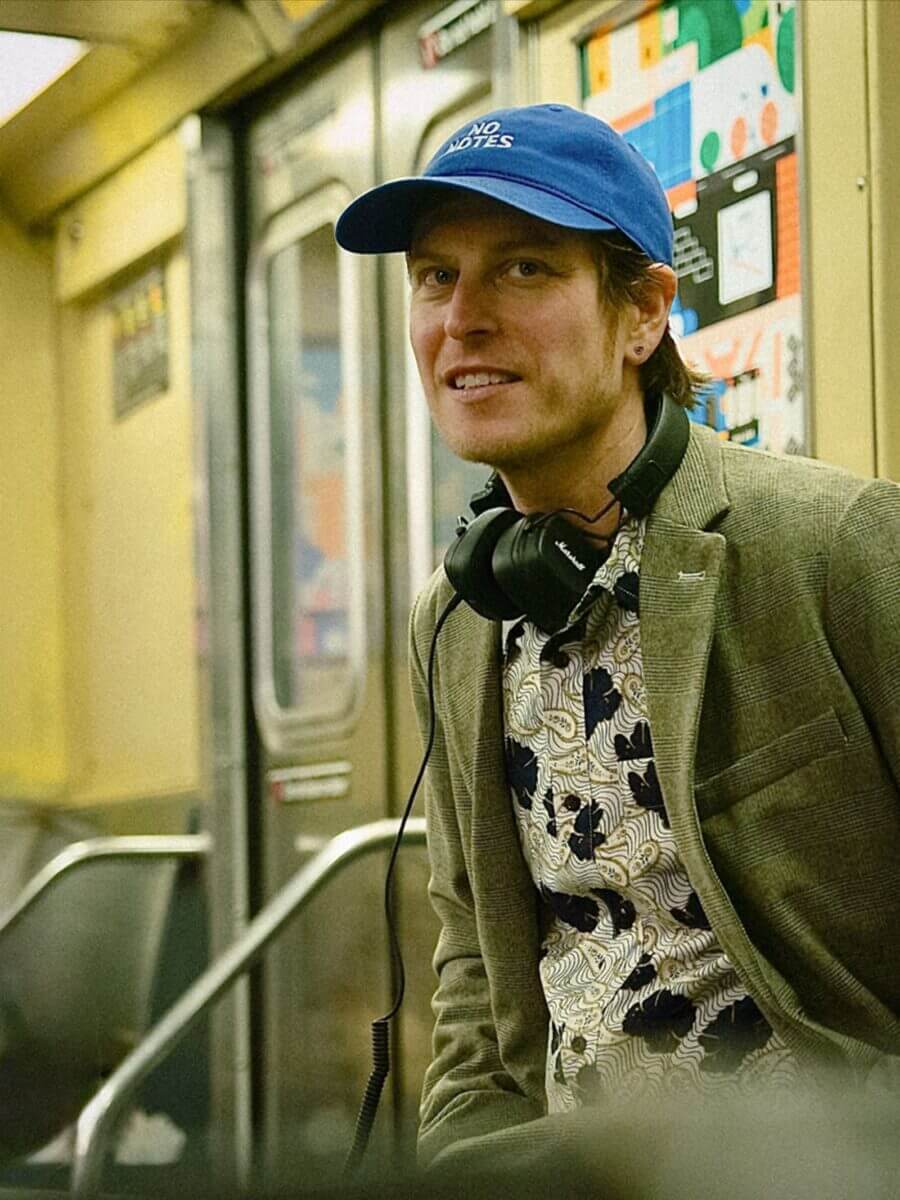
Noah Segan’s crime thriller The Only Living Pickpocket in New York has drawn comparisons to NYC auteurs Spike Lee, Elaine May and John Cassavettes. While the writer-director is far from anxious about these influences, he notes another, less obvious touchpoint: a Billy Wilder comedy.
“There’s a line in The Apartment, where the very kindly Jewish neighbor doctor says to Jack Lemmon’s character, after he’s been through all of this meshugas with his apartment,” Segan, wearing a shirt that reads “I [Image of a heart-shaped pretzel] New York,” said in a Zoom interview.
The neighbor advises Lemmon’s befuddled, hyper-gentile character to “be a mensch.” In explaining what it means, he says, “just be a person.”
In Pickpocket, Harry Lehman (John Turturro), the titular gentleman thief, calls his neighbor across the hall a mensch for looking out for his wife. Her response: “I’m just being a person.”
While the film, about what happens when an old-school filcher accidentally lifts a high-tech MacGuffin, has its share of grit and cynicism for an increasingly impersonal, online world, its open-hearted menschlikeit shines through.
I spoke with Segan about the film, his sophomore feature after his 2022 Jewish vampire romp Blood Relatives, about Yiddish, B&H Dairy and whether Turturro is the GOAT of non-Jewish actors playing Jews. The following conversation has been edited for length and clarity.
How did you arrive at this idea of an ode or elegy to a Luddite New Yorker?
I looked in the mirror. (Laughs) I’m sort of a Luddite New Yorker — at heart. But a realist, I guess.
It started with a character. It started with Harry. You go, “OK, what is he going through? How is he functioning? What are his challenges?” And then you go, “Oh man, this guy is New York. And this can happen in New York. And I’m from New York.” You’re looking for patterns, you’re looking for the thing that works for you — but is it a chicken and the egg? Is it New York? Is it Harry? Are they the same thing? But once you get those two aspects, the rest of it can blossom naturally.
Your embodiment of New York is an old Jewish guy.
The embodiment of me is an old Jewish guy! (He fishes out a chai necklace from under his collar.) I got my little chai. Represent for the Forward.

In your previous film, Blood Relatives, you were a Jewish vampire. You said in an interview you were thinking about the fear of “otherness.” I’m wondering if there’s something in that choice of making Harry Jewish. Someone with community, but kind of on the margins. Obviously, in New York we don’t think of ourselves as being marginal, but maybe it’s indicating a change.
I think for the first film, part of the conversation was how to discuss otherness through both a realistic lens: that of a Jew, and through a cinematic lens, that of a vampire. The more you think about things like blood libel, the more you think about things like how Jews were murdered, all of that colors that dynamic. In Pickpocket, it’s a little bit different because Harry isn’t really an “other” he is one of. Not just because there are lots of Jews in New York, but there’s lots of everybody in New York!
I think that New York is often unified less based on religious and racial lines, much more so on socioeconomic lines, which of course is something this movie talks about.
Part of the texture there is Yiddish as a kind of lingua franca. We have Giancarlo Esposito and Lori Tan Chinn — older, non-Jewish characters. They all use it. I know we all say “schlep,” but I teach kids at City College, they don’t all know the word “mensch.” Is that a disappearing part of New York for you, in the same way Harry is recognizing his obsolescence?
To me, it’s not a disappearing part because I run into it all the time, and I think most New Yorkers know a little bit of Yiddish, just like most New Yorkers know a little bit of Spanish and that’s how you get by.
You’ve spoken of the Jewish-Italian handshake, a principle in casting that lets Robert DeNiro play Ace Rothstein and James Caan play Sonny Corleone. I have long maintained that John Turturro is probably the greatest living non-Jewish portrayer of Jews.
I think the idea with John is that he embodies New York to such a degree, that he truly does get to do any version of a New York character. This is a guy who just is New York, and so if you let him be a New York-coded character, it is what it is. It is whatever it needs to be. That man knows more about Philip Roth than anybody I’ve ever met, which makes me feel like that makes him definitely an honorary Jew.
Harry’s doorpost has a mezuzah and he goes to visit his daughter and there’s a wreath on the door. I was wondering about that bit of set dressing.
The mezuzah on the door — it’s like painted over. The idea that it had been there a long time was really important to me. That this is a matter of fact of one’s life. There is probably a question of how much Harry’s culture and religion influenced his daughter, who he left at a young age, and her choices to identify or not with that. Obviously, who knows who she married and how they practice. There are Jews who feel jolly and put a wreath on their door, so there’s no rule about that. But I do think that it is safe to say that there were historic, cultural, ethnic identifying aspects that Harry did not pass on. And that is part of the tragedy, of course, of leaving one’s family.
Did you shoot the film before the death of the MetroCard, and do you think Harry would have been able to figure out OMNY? I feel like the transition from tokens might have been difficult for him.
The transition from tokens was definitely difficult for him. We still had MetroCards when we shot the movie. I think it was a combo. But he doesn’t have a phone to tap! So what’s he gonna do? He’s gonna get an OMNY card and load it up? I mean, I guess that’s sort of like having a MetroCard.
The other day my phone died, so I just used my credit card. So you could do that in theory.
I don’t know if Harry has a credit card.
He deals in cash.
I think what he’s doing is he’s just waiting for somebody to open the emergency door for him. And then he passes them a couple bucks.
How do you think he would feel about Mamdani and the Knicks championship?
I don’t know if Harry votes. I think he likes to stay off the rolls. The more off-the-grid he could be, the better. But I do think that he would be very pleased about the Knicks. I don’t know if he’d be as pleased as John is. But I think he would be very pleased about the Knicks.
We feel that the days of Harry and his analog life are numbered, but there’s also a glimmer of hope when we see him mentoring a younger guy in the old ways of the five-finger discount.
All hope is never lost, especially in New York. New York is a hopeful place. Because it is sarcastic and cynical and has a sense of humor and it’s very fast. People think that that somehow makes it not an optimistic or hopeful place. But no. New Yorkers are the most resilient people on earth — that’s why the all the Jews move here!
Any there other Jewish tidbits that you’re not going to get a chance to to speak about with the general press?
You picked up on B&H right?
I don’t know if I did!
The first scene with Harry, he’s having his matzo brei at B&H.
Oh! I wasn’t thinking of B&H Dairy. I was thinking of B&H Photo.
There used to be a whole cottage industry of these places that that showed up at the turn of the century called B&H, and people go, “Well, why is it called B&H.” It’s Baruch Hashem. It wasn’t anybody’s name. It was just like, ‘Well, I guess thank God we opened up a store.’
(Author’s Note: Regrettably, in the case of the dairy establishment, this tidbit, while widely believed, appears to be apocryphal; the founders of B&H, who catered to Yiddish actors on Second Ave. were named Abie Bergson and Jack Heller and gave their initials to the enterprise.)
B&H is such a great example of New York because it is still kosher. It is still signed off on by a rabbi. The rabbi puts the stamp on it. Remains kosher. It is run by a Catholic Polish lady, her Muslim-Egyptian husband, and the head chef is Mexican. And if you buy the T-shirt, the T-shirt says “Challah por favor.”
It is a great New York, multi-ethnic, multicultural institution, and I’m very proud that we got to shoot there.
The post How Billy Wilder and B&H Dairy birthed ‘The Only Living Pickpocket in New York’ appeared first on The Forward.
Uncategorized
Call Your Mother bagel shop, JCC were refuge during deadly DC shooting
As a deadly shooting unfolded Thursday in Washington, D.C., people fleeing the scene in the Logan Circle neighborhood took refuge in a bagel shop and a local Jewish Community Center.
The shooting took place at VIDA gym, and outside the gym in the street, just north of the White House. One person was killed, four were injured, and the suspect took his own life, authorities said, after barricading himself in his apartment.
The bagel chain Call Your Mother, located just around the corner from the gym, helped locals stay safe.
“We tried to get as many people who were running out into the building,” general manager Oscar Vazquez told reporters. “After that we locked the doors.”
The shop posted about the incident on its Instagram page. Many users commented thanking Vazquez for ushering people to safety during the crisis.
“We are proud of our shop’s General Manager for leading with care and composure through such a difficult situation, and we thank our entire team for supporting one another,” said the bagel shop in a statement to the Forward.
About 8-10 employees were in the store at the time, Call Your Mother owner Andrew Dana told The Washington Post.
The shop closed for the rest of the day following the incident.
“Obviously, selling bagels is not important,” Dana told the Post.
The Edlavitch DC Jewish Community Center, located a few minutes away from the gym, sent an email to its community members Thursday afternoon assuring them it wasn’t a target of the shooting and noted certain programs would be canceled for the rest of the day:
“Throughout today’s events, we have been grateful that the EDCJCC could serve as a safe, welcoming space for our community, including neighbors who were evacuated from their homes and the law enforcement officers responding to the incident.”
The post Call Your Mother bagel shop, JCC were refuge during deadly DC shooting appeared first on The Forward.
Uncategorized
In a family divided over Israel, which side would Tevye choose?
Sixteen members of my family spent two terrifying years concealed in the attic of a peasant’s home in rural Poland during the Holocaust. Their lives depended on the extraordinary courage of the Polish couple and on the hope that the world outside would eventually become a place where they could live freely again. When liberation came, the 13 survivors emerged carrying memories that would shape generations to come.
My mother was among them. Like so many survivors, she rarely spoke of the past, but its presence was unmistakable in our childhood. We inherited our parents’ anxieties, their sense of vulnerability and their understanding of how suddenly the familiar world could become dangerous.
For the generation raised in the shadow of the Holocaust, the establishment of Israel represented an extraordinary transformation in Jewish history. After centuries of persecution, culminating in the systematic murder of six million Jews, the Jewish people possessed a sovereign state capable of providing refuge and defending its citizens. For families such as mine, whose survival had depended on the willingness of a stranger to risk her life on their behalf, the significance of Jewish self-determination carried an emotional weight far beyond the ordinary language of politics.
For many younger American Jews, their understanding of Israel has been shaped by the occupation of the West Bank, the expansion of Jewish settlements there, the suffering of Palestinians and now the Oct. 7 attacks and the devastating consequences of the war in Gaza.
The result is a profound generational divide in which people who share a historical inheritance increasingly struggle to recognize one another’s moral reasoning. For parents whose understanding of Israel emerged from the Holocaust and its aftermath, challenges to the legitimacy of the Jewish state can awaken deeply embedded fears about Jewish vulnerability. For their children, expressions of unconditional loyalty to Israel can seem incompatible with the moral responsibilities they associate with their Jewish upbringing.
As I began thinking about how to explore these divisions dramatically, I found myself returning to Sholem Aleichem and Fiddler on the Roof. Tevye the milkman struggles to reconcile his love for his daughters with their rejection of traditions he has spent his life upholding. His conversations with God, his humor and his anguish capture something timeless about Jewish family life: the painful realization that the next generation may not embrace the values and beliefs that have sustained its parents.
I wondered what Tevye’s dilemma might look like in an American Jewish family today. The questions have changed, but the underlying struggle remains remarkably familiar. Where Tevye wrestled with his daughters’ choices about marriage and religious tradition, today’s Jewish parents may find themselves confronting children whose views about Israel challenge their deepest understanding of Jewish history and survival. Like Tevye, they must ask themselves how far they can bend without betraying what they believe, and whether holding too tightly to those beliefs risks losing the people they love most.
Marc Chagall’s paintings provided another source of inspiration. His floating violinists, suspended above the rooftops of Eastern European villages, evoke a Jewish world that has largely vanished but whose traditions, memories and anxieties continue to shape succeeding generations. The image of a violinist hovering above a modern Manhattan street became a way for me to connect that lost world to the lives of an American Jewish family struggling with questions their ancestors could scarcely have imagined.
Such tensions form the central conflict of my new play, The Blue Violinist Over West End Avenue, which unfolds during a gathering in the Upper West Side apartment of a Jewish family. The evening descends into confrontation when the youngest son arrives with his anti-Zionist girlfriend, whose convictions challenge the father’s understanding of Jewish history and survival.
As the argument deepens, the son insists that Jewish identity carries no automatic obligation of loyalty to a state, while his father, for whom Israel embodies the aspirations and sacrifices of generations, demands an affirmation of the Jewish state’s importance. Their disagreement becomes so painful that the father orders the young couple to leave, turning a family celebration into an occasion of rupture and exposing the fragility of relationships that had seemed secure.
The father’s anguish emerges from a history that has shaped his deepest convictions, while his son’s resistance reflects a different understanding of the responsibilities that accompany Jewish identity. Each approaches the argument with the conviction that something essential is at stake, and each experiences the other’s position as a challenge to values that have become inseparable from his sense of self. Their inability to recognize the emotional and historical foundations of each other’s beliefs transforms a political disagreement into a crisis of familial belonging.
I recognize in this conflict an echo of the questions that first led me to explore my history. In 1988, I made a documentary about my family’s experiences, returning to Poland with my aunt and cousins to meet the couple who had sheltered our relatives. The journey was an attempt to recover a history that had shaped our lives while remaining largely beyond the reach of ordinary family conversation.
My mother’s generation carried experiences whose enormity often exceeded the possibilities of language, while their children absorbed the consequences of those experiences through the atmosphere of family life. The silence surrounding the Holocaust became a form of communication in itself, shaping our understanding of danger, responsibility and the precariousness of Jewish existence.
Today, the challenge facing many Jewish families arises from the intensity of their disagreements and the difficulty of sustaining meaningful conversation across them. The language of political conviction can leave little room for complexities, and can seem to contradict inherited experience, particularly when arguments about Israel become measures of moral character or Jewish authenticity.
I have experienced some of these tensions within my own extended family, particularly in conversations with younger relatives whose understanding of Israel differs sharply from mine. One nephew has been intensely critical of Israel’s conduct during the war in Gaza and deeply sympathetic to the Palestinians, while firmly rejecting Hamas. He accepted many of the accusations made against Israel during the war, including some that were subsequently disputed or discredited, such as an early account of a hospital bombing. Our disagreements reflected the different sources of information we trusted, as well as the different assumptions and experiences we brought to the conflict.
My nephew and I eventually recognized how quickly our conversations became heated and decided to try a different approach, exchanging articles, podcasts and other material that might help each of us understand the other’s perspective. Even that effort generated tension, and we gradually abandoned it, leaving Israel as a subject we largely avoid when we are together. I have often wondered whether the play might help us find a way back to those conversations, allowing us to recognize in the characters something of ourselves and perhaps understand why the same events can provoke such different reactions among people who love one another.
The fears of older generations deserve to be understood within the historical circumstances that produced them, just as the ethical concerns of younger Jews deserve serious consideration on their own terms. Acknowledging the suffering of Palestinians and the legitimate aspirations of their people can coexist with an understanding of Jewish historical vulnerability and the importance of Israel to Jewish collective life. Such recognition requires a willingness to engage with the experiences and convictions that give different perspectives their emotional force.
Families possess a particular responsibility in this regard because their bonds reach beyond the political positions of any given moment. Parents transmit values, memories and traditions to their children, but the meaning of that inheritance inevitably changes as children encounter the world through their own experiences. The continuity of a family depends in part on its capacity to accommodate that transformation while preserving the relationships through which its history is passed along.
In my play, the father eventually encounters a form of ancestral wisdom through a dream in which his family’s long-departed relatives return, including the milkman who, according to family lore, inspired Sholem Aleichem’s Tevye. These ancestors urge him to apologize for the harm he has caused and to leave the door open for his son, an appeal that places the preservation of their relationship alongside the convictions that have divided them. Family can and must prevail, even when the questions at stake touch the deepest elements of identity.
When I think of the 16 members of my family who survived together in that attic in Poland, I think of the extraordinary value of the lives that were preserved and of the generations that followed because a courageous woman chose to shelter them. Their story belongs to a history of persecution and survival, but it also attaches to the human capacity for solidarity and the responsibility we bear toward one another.
The generations that followed inherited both the memory of that vulnerability and the opportunity to build lives enriched by freedoms their ancestors could hardly have imagined. Honoring that inheritance requires an understanding of the fears that shaped our parents, together with an openness to the different moral questions that confront our children.
The future of Jewish family life will depend in part on our ability to sustain those conversations with generosity, humility and a recognition of the profound bonds that connect us across generations. Our disagreements over Israel may remain intense, and the questions they raise will continue to demand serious engagement. Yet the preservation of our relationships is itself an expression of the continuity that our ancestors struggled so desperately to secure.
We can honor their memory by keeping our doors open to one another.
The post In a family divided over Israel, which side would Tevye choose? appeared first on The Forward.
Uncategorized
This 90-year-old Jewish performer and promoter is the Zelig of folk music

Harry Tuft was in a taxi with Judy Collins, who had her guitar with her. The cab driver looked back and asked if the two of them were folk singers. They replied in the affirmative.
“Folk music is dead,” the cab driver asserted.
“We kind of chuckled a little and said, ‘Oh, really, how come?’” Tuft recalled.
“Did you see Ed Sullivan last night?”
The passengers replied that they hadn’t.
“There was a group on there called The Beatles. Folk music is dead.”
To paraphrase Mark Twain, the reports of the death of folk music were an exaggeration.
“That was a time when, really, we didn’t know what was going to happen,” Tuft said during a recent Zoom interview from his home in Denver.
“I think it’s thanks to groups like Peter, Paul and Mary and maybe somebody like Joan Baez and Judy Collins and John Denver — people who were popular enough and smart enough to appeal to a larger segment of the population. They really kept folk music alive.”

The genre lived on, also, thanks to the efforts of the now-90-year-old Tuft, who was more than a bit player in the folk music revival during the 1960s. He founded the Denver Folklore Center in 1962 and, with others in 1979, founded the Swallow Hill Music Association, which presents concerts, teaches music classes for all ages and offers outreach programs. In 2012, Tuft was inducted into the Colorado Music Hall of Fame.
Tuft was also a link in the chain that led to Bob Dylan meeting the Beatles. He also may be the only nonagenarian who released an album this year.
“Friends, Lovers & Other Strangers” includes songs by artists like Bob Dylan and Paul Simon, as well as ones by some of Tuft’s friends. It also includes a cover of the Nat King Cole Trio’s “Nature Boy.”
“I grew up in Philadelphia listening to pop music of the day on radio stations WPEN and WIBG, and R&B stations at night,” Tuft writes in the album’s liner notes. “This song was popular across the board.”
Tuft’s paternal grandfather, Dr. Jacob L. Manasses, was the founder of Bushkill Farms Camp, a Jewish boys camp in the Pocono mountains. Tuft went to Indian Lake, another Jewish camp in the Poconos. A counselor at his camp played the ukulele. Tuft, who played piano and clarinet, soon acquired a ukulele. “I found out there was such a thing as a baritone uke and it turns out that the tuning of the baritone is the same as the four highest strings of the guitar, so I was already two-thirds of the way to a guitar,” he said. “It was very customary in those days for Jewish kids somewhere in their college years to go to Europe so I bought a Chimes guitar and carried it with me.”
Tuft intended to become a doctor like his father and paternal grandfather. But his grades weren’t good enough to get into medical school. Instead, he graduated from Dartmouth in 1957 with a degree in philosophy. He went to graduate school for architecture at the University of Pennsylvania with thoughts of being a city planner.
“But music won out,” said Tuft.
While at Dartmouth, Tuft met Pete Seeger at a folk club. Seeger met with the club members in the afternoon and performed that night.
“He was really intent on getting us as a group to go out into the community and see if we could find people who had songs to offer. He arrived in a blue Plymouth station wagon with his kids on a mattress in the back. His wife, Toshi, set up a display in the hall and sold Pete’s Folkways Records after the concert. Here was this icon, this important person in my musical life in the moment, and he was just getting along,” he said.
“He requested a large log, and did a song called ‘Didn’t Old John (Cross the Water).’ It included a place to swing the axe. Unfortunately, the podium was very slick and Seeger ended up chasing the log all over the ‘stage.’”
After graduating from Dartmouth, Tuft joined the growing folk music scene that was centered around the Gilded Cage in Philadelphia. There, he met his lifelong friend Dick Weissman, a banjoist and guitarist who was in the Journeymen with John Phillips, who would go on to found the Mamas and the Papas.
Tuft eventually ventured out to Colorado, where he auditioned at The Exodus, a Denver folk club.
Tuft was told about the owner: “If he was going to hire you he would be critical and if he was not he would be nice to you. And he was nice to me, so I knew that I wasn’t going to get a job there.
“I had a repertoire that was out of the ordinary, and I was never really attracted to the ‘quote’ popular folk songs,” Tuft said. “As a matter of fact, when it came to trying to make a living playing in the bars what they wanted to hear were the popular songs by the Kingston Trio or Peter, Paul and Mary or the Brothers Four, and I didn’t know those songs.”
“I’m a sucker for a story, I’m a balladeer. I love ballads. Quite often, I do ballads of 10, 12, 14 verses because I like the form so much.”
The Exodus owner said that he thought someone could make a part-time living opening a folklore center like Izzy Young’s Folklore Center in Greenwich Village. “I sometimes joke and say that he was right. I opened a full-time folklore center in order to make a part-time living.”
Tuft also sold records, instruments, strings and accessories and it was the strings and accessories that paid the rent.
The shop became a way station for up-and-coming folk musicians traveling between Chicago and the West Coast. When Bob Dylan made his first cross-country tour and played in Denver, he had his mail forwarded to Tuft’s store.
“Even then, he had an attitude about him,” Tuft recalled. “The following summer I saw him at the Kettle of Fish in the Village, and he grudgingly acknowledged that we had met.”
After a visit to Chicago’s Old Town School of Folk Music, he started a school for Denver musicians and soon branched out into promotion. His first job was for Joan Baez who sold out a 2,400 seat house in March 1964.
Baez was involved with Dylan at that time and wanted to get him to meet The Beatles, who were playing Red Rocks on August 26. Baez was scheduled to play at the venue a couple days earlier, so a plan was hatched for her to come out a few days early so that she could meet the lads and arrange for them to meet Dylan in New York, where The Beatles were going after Denver.
The day before The Beatles’ show, Tuft and Baez went to see A Hard Day’s Night. The musicians met before The Beatles show and Tuft recalled that Baez and the band members were deferential to one another. Except for Ringo, who wasn’t interested and was reading a comic book.
Tuft also brought the Mamas and the Papas to Denver’s Municipal Auditorium Theater with 7,600 seats in 1966. Richard “Dick” Lamm, a friend and lawyer, fronted him $5,000 for the guarantee. Lamm later admitted that he had absolutely no idea who the Mamas and the Papas were. “That showed the amount of trust he had in me,” Tuft said. “And he said he was nervous until a week before the concert until they were on the cover of Life magazine.” Lamm used his profits to fund his first run for the Denver statehouse.
Later, John Denver offered his services for a benefit Tuft organized and helped raise more than $40,000 for Lamm’s successful run for governor.
Folk music endures, Tuft said, “because the best of folk music involves music. And the best of music is melodic. And whatever it is in our physical makeup that involves not just the heartbeat, which is our basic rhythm, but something about our voice, maybe, and the way we speak and our desire to communicate that all put together leads to somebody creating a song about something that happened, and if the kernel of it, either the music or the words, or both are such that people like it and repeat it and you get musical history, and history of countries and our country in particular, of the songs.”
Tuft is already putting together his next album — a double album of cowboy and western songs, traditional on one side and contemporary on the other.
“I’m a song addict,” Tuft said. “And I like to think that I have pretty decent taste in songs. Nothing pleases me more than to be able to find a new song, make it my own, and pass it on and open it up to whatever audience I’m able to bring together.”
The post This 90-year-old Jewish performer and promoter is the Zelig of folk music appeared first on The Forward.
