



Uncategorized
Israeli Defense Chief Says Hezbollah Will Be Disarmed, Terror Group Vows Continued ‘Resistance’ as Truce Begins

Smoke rises following an airstrike in Lebanon, as seen from Israeli side of the border, April 11, 2026. Photo: REUTERS/Amir Cohen
As a newly agreed ceasefire between Israel and Lebanon took effect, Israel’s defense minister warned on Friday that Hezbollah will ultimately be disarmed and Israeli forces will not withdraw from Lebanese territory, vowing the campaign will continue until the threat to Israel’s northern communities is fully eliminated.
During a press conference, Israel Katz said the military campaign had entered a temporary “freeze” phase under a 10-day ceasefire framework. However, he stressed that Israel’s operational objectives on the ground remain unfinished and the maneuver is far from complete.
“The IDF [Israel Defense Forces] will continue to hold all positions it has cleared and taken inside Lebanon,” the Israeli defense chief said. “The ground operation and nationwide strikes against Hezbollah have achieved significant gains, but the mission is not yet complete.”
“Disarming Hezbollah — whether through military force or political pressure — was and remains the central objective of the campaign to which we are committed,” he continued. “Significant political leverage has now also been created, with the direct involvement of US President [Donald Trump] and increased pressure on the Lebanese government to advance that goal.”
Katz’s remarks came shortly after the Iran-back Lebanese terrorist group issued a defiant statement rejecting the ceasefire and any prospect of direct negotiations with Jerusalem, while vowing its forces would continue resisting Israeli troops.
“Our fighters will keep their hands on the trigger, preparing for the enemy’s betrayal and violation of its commitments. We will remain loyal to the alliance until our last breath, and our flag will not fall,” the statement read.
“The presence of Israeli forces on Lebanese territory gives Lebanon and the Lebanese people the right to resist,” it continued.
Meanwhile, residents across southern Lebanon, Beirut, and other parts of the country began making their way back home as the ceasefire took effect, with social media footage showing reconstruction work already underway on infrastructure damaged during the war.
However, Israel has warned Lebanese citizens against returning to their homes at this stage, with officials saying that Hezbollah could try to exploit the situation to reestablish its terrorist infrastructure under civilian cover.
“With the ceasefire agreement taking effect, the IDF will continue to hold its positions in southern Lebanon in light of Hezbollah’s terrorist activity,” Col. Avichai Edraei, the IDF spokesperson in Arabic, said in a statement.
“Until further notice, you are asked not to move south of the Litani River,” he continued. “If the fire resumes, those who return to the security zone will be forced to evacuate in order to allow the mission to be completed.”
Israeli Prime Minister Benjamin Netanyahu also signaled that Israel does not intend to withdraw its forces from Lebanese territory, saying the military is establishing what he described as a “thickened security zone” along the border area.
“That’s where we are – and we’re not leaving,” the Israeli leader said in a video statement issued on Thursday.
Netanyahu also said the opportunity for a ceasefire emerged only after what he described as a dramatic shift in Lebanon’s strategic balance of power since the start of the war.
He pointed to major blows to Hezbollah’s military capabilities, including the killing of its longtime leader Hassan Nasrallah in 2024 and the subsequent destruction of large weapons stockpiles, saying these developments led to calls from Lebanese officials for direct peace talks for the first time in decades.
With negotiations now underway toward a longer-term arrangement, Netanyahu said Israel’s position rests on two core demands: the full disarmament of Hezbollah and a “sustainable” security-based peace framework.
For its part, Hezbollah insisted any agreement must include a complete Israeli withdrawal from Lebanese territory and adherence to a reciprocal “quiet for quiet”” arrangement — terms Israel has rejected.
Netanyahu also warned that Hezbollah, which openly seeks Israel’s destruction, still retains a significant rocket arsenal, saying neutralizing that threat will remain a central component of the ongoing security and political process.
According to a report by The Wall Street Journal, nearly half of the roughly 8,000 rockets fired by Hezbollah during the war were launched from the southern Litani River region — an area that, under previous agreements, was supposed to be fully demilitarized.
The newly agreed ceasefire, which took effect Thursday-Friday at midnight, establishes a fixed 10-day window intended “to allow for good-faith negotiations toward a permanent security and peace agreement.”
As part of direct mediation efforts from Washington, Trump invited Netanyahu and Lebanese President Joseph Aoun to White House talks aimed at advancing a broader settlement framework.
According to the US Department of State, the Lebanese government pledged to take “significant steps” to prevent Hezbollah from launching further attacks against Israeli targets.
“Both countries recognize the challenge posed by armed groups that violate Lebanon’s sovereignty and threaten regional stability … The only forces authorized to bear arms in Lebanon will be Lebanese government forces,” an official statement from the meeting said.
“Israel will retain its right to take all necessary measures for self-defense, at any time, against planned, immediate or sustained attacks,” it continued.
Uncategorized
China Warns of ‘Red Lines’ After Israeli Lawmakers Visit Taiwan Amid Deepening Ties

Taiwanese President Lai Ching-te meets with Israeli Knesset members Mickey Levy and fellow lawmakers during a diplomatic visit focused on strengthening cooperation in technology and national resilience amid rising regional tensions. Photo: Screenshot
A diplomatic row has escalated between China and Israel after an Israeli parliamentary delegation visited Taiwan on Tuesday, reflecting deepening ties between Jerusalem and Taipei at a time of mounting geopolitical tensions across the Indo-Pacific and the Middle East.
The delegation of Israeli lawmakers — including Knesset members Mickey Levy, Boaz Toporovsky, Ron Katz, and Yonatan Mishraki — met with Taiwanese President Lai Ching-te and senior officials during a diplomatic visit aimed at expanding cooperation, as both countries work to broaden and deepen bilateral ties across multiple sectors.
During a press conference, Lai praised Israel’s strong support for Taiwan’s international participation, adding that closer engagement and expanded cooperation are essential to strengthening diplomatic relations, reinforcing shared democratic values, and bolstering global and regional stability.
“Taiwan and Israel are geographically far apart, yet we share such universal values as freedom and democracy. We also face complicated circumstances in our respective regions,” the Taiwanese leader said.
“As we witness the continued expansion of authoritarianism, we keenly understand that only by constantly enhancing our self-defense capabilities and societal resilience can we ensure peace and protect peoples’ daily lives and democratic institutions,” Lai continued.
Honored to receive the @KnessetENG delegation led by former Speaker @MKMickeyLevy & @BToporovsky. As democracies facing complex regional challenges, #Taiwan & #Israel share much in common. Look forward to deeper cooperation in innovation, resilience, health & security. pic.twitter.com/rUKvBRJWX2
— 林佳龍 Lin Chia-lung (@chia_lung) May 5, 2026
As both countries seek to expand cooperation in technology and national resilience, Taiwan’s Foreign Minister Lin Chia-lung expressed hope to lead a delegation to Israel once conditions in the Middle East stabilize, aiming to deepen ties through what he described as “comprehensive diplomacy.”
Further straining already tense relations, China’s Embassy in Israel on Wednesday denounced the visit as a “provocative” move that “severely undermines the political foundation of China-Israel relations,” accusing the lawmakers of breaching the one-China principle.
“There is only one China in the world, and Taiwan is an inseparable part of China’s territory,” an embassy spokesperson said in a statement, arguing that the People’s Republic of China is the only legitimate government of China and that the one-China principle is a basic rule of international relations.
China regards Taiwan, a self-governed democratic island, as a separatist province that must eventually be reunified with the mainland, by force if necessary. Under pressure from Beijing, most countries maintain no formal diplomatic relations with Taiwan. Israel recognizes Beijing but not Taipei, even as Taiwan has increasingly sought closer defense ties with Jerusalem.
The Chinese Embassy accused Israeli lawmakers of repeatedly violating Israel’s one-China policy and of “cooperating with separatist forces” that support Taiwan independence, describing their actions as “despicable in nature.”
“China will never allow anyone, in any form, to separate Taiwan from China, nor will it allow any external forces to obstruct China’s complete reunification,” the embassy said, warning that officials should “not fantasize that they can cross red lines on the Taiwan question without paying a price.”
“We call on the relevant Knesset members to immediately stop their wrong words and actions,” it added, stressing that China’s determination to defend its sovereignty and territorial integrity should not be underestimated.
In recent years, Taiwanese cooperation with Israel has expanded across multiple fields, including academic exchange, agriculture, and health, with more than 36 agreements and memorandums of understanding signed.
In October, Lai said that Israel is a model for Taiwan to learn from in strengthening its defenses, citing the Biblical story of David versus Goliath on the need to stand up to authoritarianism.
“The Taiwanese people often look to the example of the Jewish people when facing challenges to our international standing and threats to our sovereignty from China. The people of Taiwan have never become discouraged,” he said. “Israel’s determination and capacity to defend its territory provides a valuable model for Taiwan. I have always believed that Taiwan needs to channel the spirit of David against Goliath in standing up to authoritarian coercion.”
He made the remarks during a dinner of the American Israel Public Affairs Committee (AIPAC) in Taiwan.
Lai in October also announced a new multi-layered air defense system called “T-Dome” to defend itself against a possible future attack by China. It is partly modeled on Israel’s air defense system.
Lai told the AIPAC dinner that T-Dome had been inspired by Israel’s Iron Dome missile defense system, as well as US President Donald Trump’s “Golden Dome” missile defense shield plan.
“I believe that trilateral Taiwan-US-Israel cooperation can help achieve regional peace, stability, and prosperity,” he said.
Meanwhile, as regional tensions rise and great-power competition shapes the Middle East, diplomatic and security relations between Beijing and Jerusalem have become increasingly strained.
China, a key diplomatic and economic backer of Iran, has moved to deepen ties with the Islamist regime in recent years, signing a 25-year cooperation agreement, holding joint naval drills, and continuing to purchase Iranian oil despite US sanctions.
With nearly 90 percent of Iran’s crude and condensate exports flowing to Beijing, China stands as the largest importer of Iranian oil.
On Thursday, China ordered companies to ignore US sanctions on Iranian oil by invoking a 2021 Commerce Ministry “blocking statute” that bars compliance with foreign sanctions it deems illegitimate, in a move that further escalates tensions with Washington.
In response, US Treasury Secretary Scott Bessent accused Beijing of effectively financing Iran’s military activities through continued oil purchases, arguing that Chinese demand is sustaining Tehran’s economy.
The tensions between China and Israel expands beyond Iran.
In September, Israeli Prime Minister Benjamin Netanyahu accused Beijing, along with Qatar, of funding a “media blockade” against the Jewish state.
According to a report released by the Institute for National Security Studies (INSS), an Israeli think tank, China has increasingly used state media and covert campaigns to spread anti-Israel and antisemitic narratives in the United States.
The report examined how China’s state media portrays Israel and the United States as solely responsible for the war in Gaza, depicting them as destabilizing actors while spreading anti-Israel and antisemitic messages.
“It is evident that China and its proxies play a significant role in the current wave of antisemitism and anti-Israel sentiment in the United States,” Ofir Dayan, a research associate in the Israel-China Policy Center at INSS, wrote in the report.
In February, the Jewish People Policy Institute (JPPI) published a new report showing how China has embraced overt antisemitic messaging in its domestic propaganda in recent years. The study tied the move to both geopolitical rivalry with the United States and efforts to curry favor with Arab and Muslim countries hostile to Israel.
Uncategorized
Syria Arrests Team of Hezbollah Assassins Trained to Kill Senior Government Officials

Hezbollah fighters walk near a military tank in Western Qalamoun, Syria, Aug. 23, 2017. Photo: REUTERS/Omar Sanadiki
Syria has stopped a Hezbollah terrorist cell that was plotting to assassinate senior government officials, according to the Syrian Interior Ministry.
An investigation “revealed that the cell was in the process of executing a sabotage agenda that included systematic assassinations targeting high-ranking government figures,” the ministry said in a statement on Tuesday.
With raids at multiple locations, Syrian security forces made 11 arrests and seized a cache of weaponry.
Interior Ministry spokesperson Nour al-Din al-Baba said in an interview with Syria’s al-Ikhbariya television that the government had monitored the Hezbollah cell for three months, learning soon after the start of the investigation that the men had crossed over from Lebanon with forged documents after receiving specialized military training.
Hezbollah, an Iran-backed group based in Lebanon, is an internationally designated terrorist organization.
Syrian military leaders reportedly launched the raids to capture the cell right before the terrorists planned to launch their attack, in what authorities described as the “final stages of readiness.” The coordinated action included operations to apprehend suspects in the Damascus countryside, Homs, Hama, Latakia, and Aleppo,
Al-Baba explained that the group planned to use drones and strike in multiple provinces. The raids uncovered a stockpile of drones, rocket-propelled grenade launchers, automatic rifles, hand grenades, and ammunition. He said that Mohammad Mahmoud Abdul Hamid, a former affiliate of Bashar al-Assad’s intelligence service, had led the terrorist cell after Hezbollah had recruited him. While many of the weapons discovered dated back to Assad’s regime, others appeared freshly stocked by Hezbollah.
Assad, the long-time dictator of Syria, was toppled in December 2024. His Iran-backed rule had strained ties with the Arab world during the nearly 14-year Syrian war, during which Hezbollah fought in Syria to help keep Assad in power.
In a post on X featuring mugshots of the men captured, Syria’s Interior Ministry wrote that “among the most prominent of those arrested is the main individual responsible for the assassinations file in the [Hezbollah] militia, who oversaw on-the-ground planning and target identification.”
عناصر الخلية الإرهابية المرتبطة بميليشيا حزب الله، والذين أطاحت بهم وزارة الداخلية خلال الحملة الأمنية الأخيرة، ومن أبرز المقبوض عليهم المسؤول المباشر عن ملف الاغتيالات في الميليشيا المذكورة، والذي كان يشرف ميدانياً على وضع الخطط وتحديد الأهداف.#وزارة_الداخلية pic.twitter.com/RyuaEwd8pY
— وزارة الداخلية السورية (@syrianmoi) May 5, 2026
The Foundation for Defense of Democracy’s Long War Journal analyzed the photographs and identified some of the individuals, describing one as Aqel Mahmoud Aqel al-Bej, a former member of the Syrian Arab Army from the town of Hayyan in Aleppo Governorate. Another man arrested had served with the Liwa al Quds (the Jerusalem Brigade), a group which supported Assad and later joined the Syrian military.
Hezbollah has denied ties to the cell, releasing a statement “categorically denying the false accusations from the Syrian interior ministry.”
The Iran-backed terrorist group “wishes only the best for Syria and its people,” it claimed. “Hezbollah has never been a party that works to destabilize the security of any country or target the stability of its people. It has always taken and will continue to take a position of defense against the Zionist enemy and its expansionist plans — the enemy of Lebanon and Syria, which occupies their lands and encroaches on the wealth and resources of their peoples.”
Hezbollah previously positioned as many as 7,000-10,000 men in Syria to support Assad’s authoritarian regime. Many still operate in secret terrorist cells in spite of Assad’s fall.
In April, Syria’s Interior Ministry announced five arrests in another assassination attempt plotted by Hezbollah. The terrorists targeted Rabbi Michael Khoury in Damascus, with authorities identifying a woman who attempted to plant an explosive outside his home. The suspects later confessed to authorities they had drones supplied by Hezbollah they intended to use in an attack.
In March, Reuters reported that sources had said that Hezbollah had lost more than 400 fighters since the start of conflict with Israel on March 2. Israeli forces have put the figure at well over 1,000. That same month, Israeli broadcaster Kan News also revealed that Syria’s government had directed the military to stop Hezbollah cells from attacking Israel from Syrian territory.
In response to the US-Israeli strikes against the Islamic regime in Iran, Syrian President Ahmed al-Sharaa announced on March 31 that “unless Syria is targeted by any party, Syria will remain outside any conflict.” He added, “We do not want Syria to be an arena of war. But unfortunately, today, things are not governed by wise minds. The situation is volatile and random.”
In addition to threats from Hezbollah cells, Syria also faces Uzbek fighters in the northwest, with sources saying last year that 1,500 lived in the country. On Wednesday, Reuters reported that the Syrian military had arrested five militia members following a disturbance by armed men demanding the release of one of their comrades accused of opening fire in Idlib city.
Uncategorized
Israel’s most dangerous war is with itself
My friend Rabbi Heshy Grossman recently invited me to Jerusalem to meet top Haredi rabbis. Unhappy with my critical writings about the Haredim, this well-meaning true believer hoped to jump-start fruitful dialogue.
So I took the train to Jerusalem, and spent a fascinating day with pleasant and welcoming scholars who left me in even greater despair.
The background: Angst is now dominating Israeli discourse amid a strong feeling among non-Haredi Jews that the country is running out of time to save itself. This can seem related to the Palestinian conflict, or to disputes over authoritarian reforms. But at the end of the day the main issue — for the non-Haredi Jews who are still a majority in the land — is the Haredim.
Concerns used to be about the Haredim — who have always held sway over right-wing coalitions — trying to impose religious strictures, like banning commerce and public transport on the Sabbath, which they have done with varying degrees of success. But the clash has gone far beyond such matters. The wars that began on Oct. 7, 2023 have exposed profound tensions over this large minority evading military service, and the opposition promises to enlist them should it win this fall’s election.
But even that change — heavy lift though it may be — wouldn’t come close to fixing the actual problem.
The Haredi system largely refuses to teach high school boys math, science, English and other non-religious topics. It routes as many men as possible to religious study well into adulthood, for which they expect to receive state stipends rather than pay tuition. With very low male participation in the economy, the community pays minimal taxes and depends on a huge web of ever-expanding welfare. Increasingly, Haredi women do work, but rarely in high-end jobs. The community, which currently makes up about a sixth of the population, is exploding as family sizes approach seven children on average, certainly among the highest for any significant community in the developed world.
This will clearly lead to an economic collapse if nothing changes. On top of that, it does not seem as if the Israeli Haredim can coexist happily with others from a philosophical and cultural standpoint, and the feeling is very much mutual.
‘A sense of separatism’
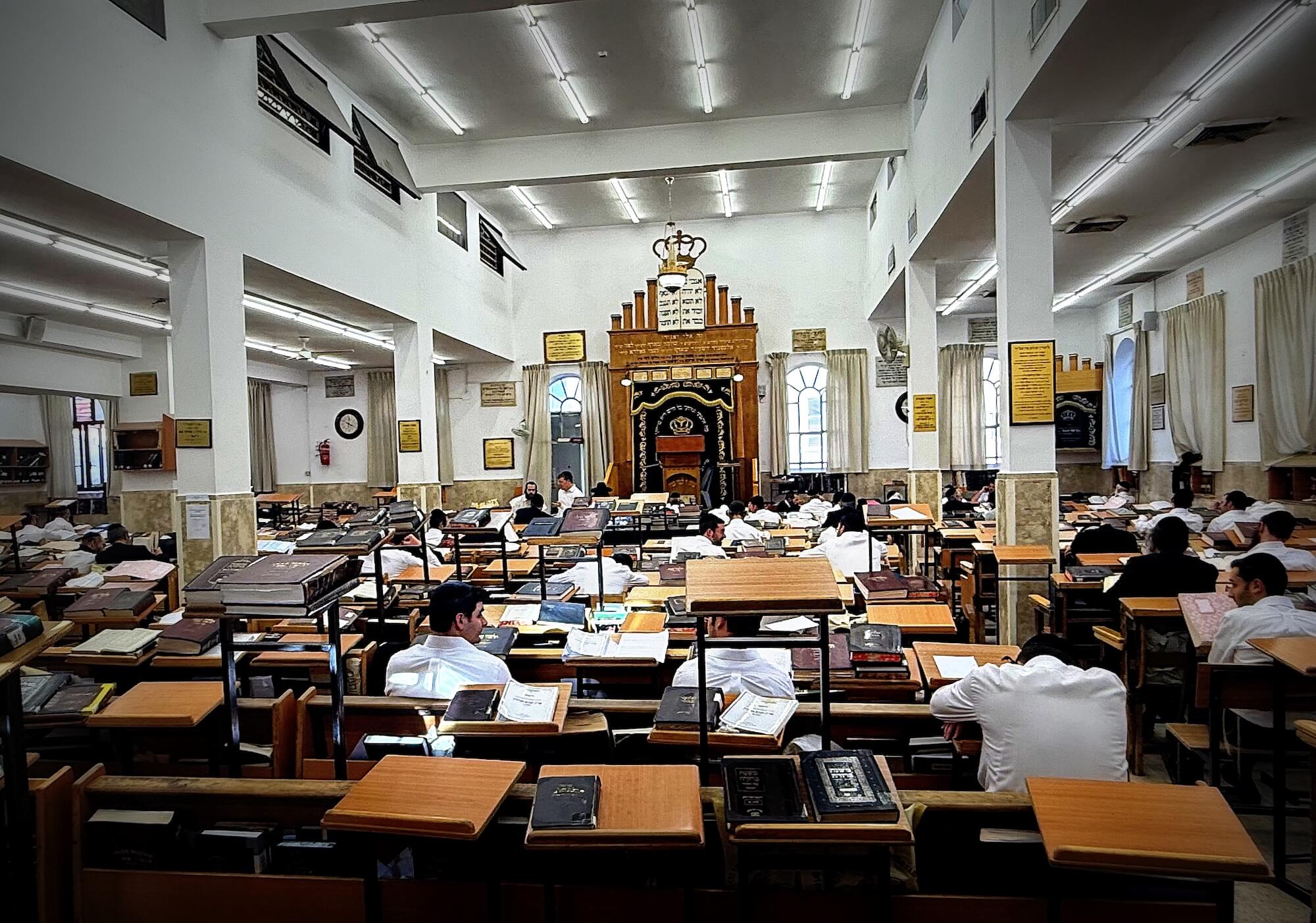
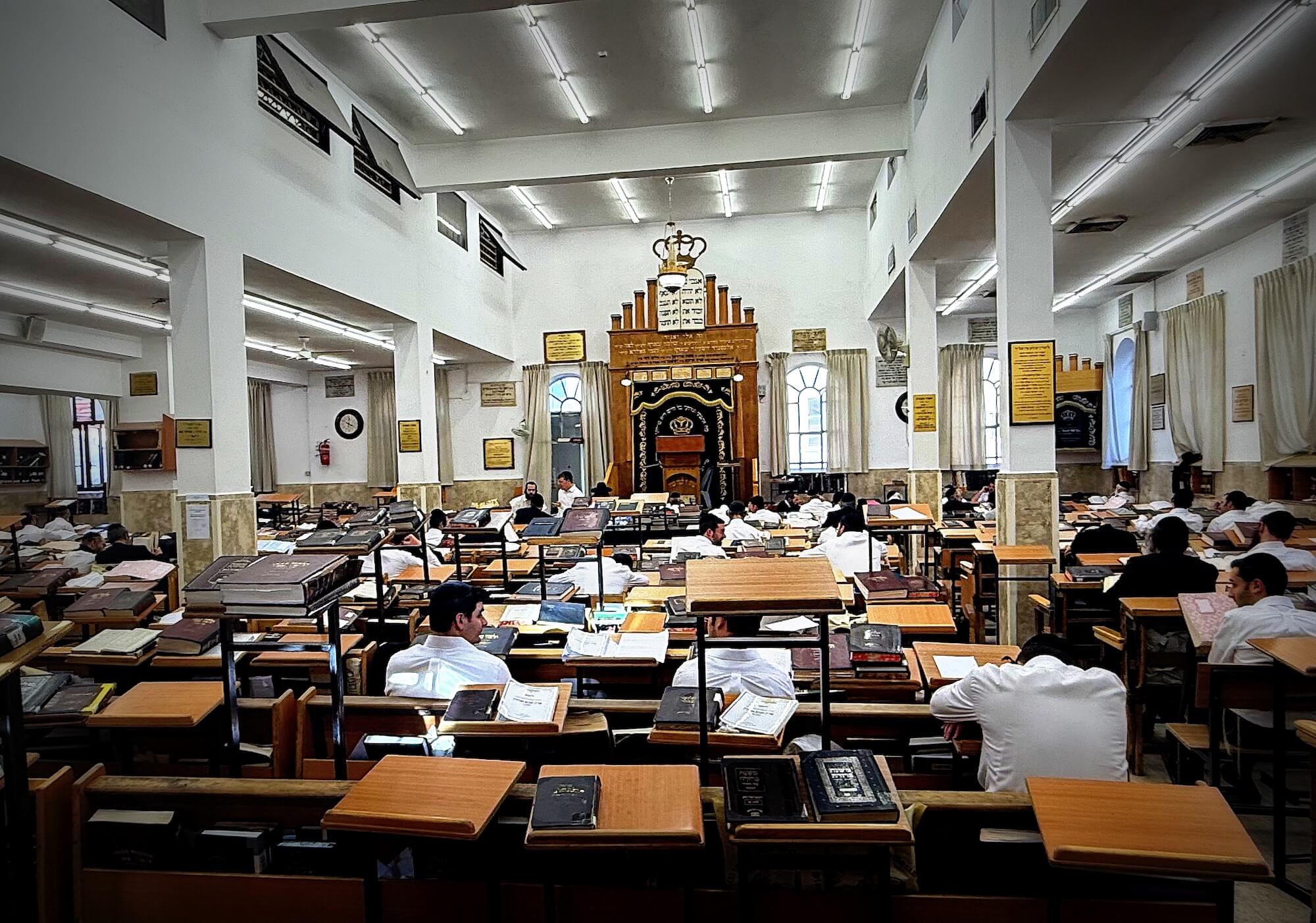
Heshy drove me all over the city in a whirlwind tour that included the head of the Hebron Yeshiva, one of the most senior rabbis of the Mirer Yeshiva — the world’s largest — the head of a major yeshiva serving mainly youth from the United States, a visiting U.S. Haredi rabbi much involved in the local political scene, and Heshy’s own charming father-in-law, who was the chief rabbi of Atlanta and has long been a beloved columnist for the iconic Mishpacha Magazine.
The tone throughout was cordial, at times warm, somewhat prickly and occasionally intellectual. These were serious men who are easy to like. That made the substance of what they said doubly unsettling.
The first fault line, as expected, was education. My question to the rabbis was straightforward: How can a modern economy function when a large and growing share of its population receives little to no instruction in mathematics, science or “secular” language skills?
Rabbi Moshe Meiselman, who holds a Ph.D. from the Massachusetts Institute of Technology, was dismissive of the premise. Meiselman, the U.S.-born founder and head of Yeshivat Toras Moshe, described secular studies as an “intellectual game” that he had experienced at the highest levels and found vastly inferior to studying the Torah. He said that Haredi communities from the beginning of the state perceived an aggressive and arrogant stance from the Zionist authorities, who felt “that no intelligent person” would want to be Haredi.
“There is a basic tension in society, and that tension is what created, more than anything else, a sense of separatism within our own environment,” he said.
“Even at the cost of self-harm?” I asked.
“In your view it’s self-harm,” he said. And if the state cut off funding, he added, “we’d simply get money from our people abroad to support us … we will handle it.”
Like the others, he seemed to believe that whatever practical skills are needed for work can be acquired in a year or two. He offered the existence of certain successful Haredi professionals — lawyers, doctors, accountants — as proof. “What relevance does my knowledge of trigonometry have to anyone’s employment? Where does Euclid come in?” he said. “I don’t have to learn to talk with Plato in order to get a profession.”
I was glad to find a more flexible position expressed by Heshy’s father-in-law, Rabbi Emanuel Feldman.
“I’m not sure personally why they should not be able to study physics or chemistry or mathematics,” he said. “I don’t understand why there’s an objection to it.” He argued that this “is not ideological but political and a decision based upon circumstances.” I suggested the circumstances were the Haredi leadership’s preference for a compliant and unquestioning flock. “It’s unfortunate that there is no effective communication and there are elements on both sides who are interested in maintaining a conflict,” he sighed.
Menachem Zupnik, the U.S.-based rabbi, from Passaic, N.J., was also more pragmatic than the Israeli cohort.
“The biggest problem,” he said, “is that nobody goes to work and has a profession… many, many issues are the outgrowth of the fact that they believe that everybody has to sit and learn Torah all the time.” But even he rejected the idea that external pressure — including cutting subsidies and restructuring incentives — would change behavior. “All you’re going to do is cause more hatred.”
Rabbi Shlomo Spitzer, who preferred that I not mention his affiliation, explained the indifference to practical outcomes this way: From the Haredi perspective, Torah and mitzvot are the organizing principles of life. Everything else a person does — work, eating, recreation — is secondary: “these are means, not ends.”
I asked: “When you describe unwavering commitment to Torah, doesn’t that risk becoming fanaticism?”
“What is fanaticism? That is a serious question,” he argued, explaining that following the Torah “to the end” means accepting it literally. “But societies change,” I said. “Values evolve. Why shouldn’t religious frameworks adapt?” His answer was that there are foundations that must be regarded as absolute.
Military tensions
The issue of military service brings the divide between secular and Haredi priorities into the sharpest relief for most Israelis. Here, too, the argument is about identity.
Again and again, the concern surfaced that exposure to the army would erode the religious character of Haredi young men. The fear was personal, and almost visceral. It is not without foundation: Many Israelis would love to have more of the Haredim join mainstream society — and indeed, exposure to that society is well understood as a trigger for leaving Haredi life.
Rabbi Chaim Yitzhak Kaplan, the dean of students at Hebron Yeshiva, put it plainly: “There’s no way that a young man… is going to go in for two, three years in the army and come out the same Haredi.” Moreover, he noted that the specific ages in question — late teens and early twenties — are precisely when he needs youth to be studying, lest they go astray.
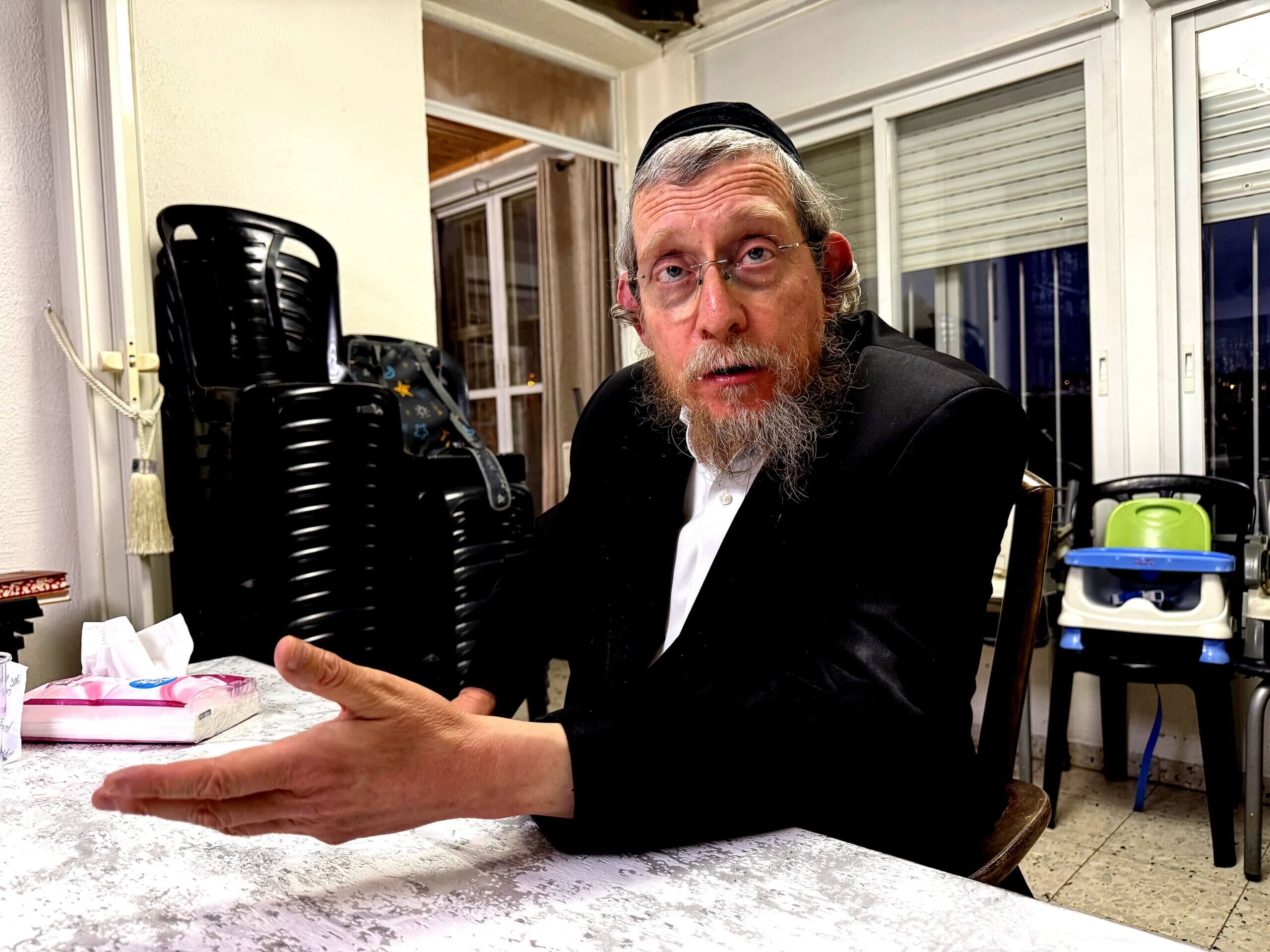
It was clear he was sharing a genuinely felt defense of a way of life, not speaking out of cowardice or selfishness.
“Our nation is about learning,” Kaplan said, describing Torah study as the defining activity of Jewish existence. Once that premise is accepted, the hierarchy of obligations shifts. But the truth is that most secular Israelis cannot in honesty accept this idea. Many don’t ascribe much importance to religion as a vocation. It is one of many things that might be important to a person, but seems imbalanced to insist must be important to a country. So the Haredi argument becomes a little like someone telling you they cannot serve in the military because they must become a pilot, plumber, poet or mathematician, and do nothing else, ever. “Very nice,” many Israelis would say, “I’ll see you in the army.”
Kaplan did concede that at some point in the future Haredim may have to either agree to serve or leave the country. Meiselman was more strident, saying, in effect, that sages were more valuable than soldiers. “Wars in the world are caused by people not being sufficiently Jewish, religious. … if the Jews were here, acting as they’re supposed to act, then there would be no more war, ” he said. Then the Arab world would not be as antagonist.”
I asked: “Do you think Hitler carried out the Holocaust because the Jews were insufficiently religious?” Exactly, he replied, to my despair. I told him this is the language of an irreconcilable cultural war. “I’m a very honest person,” he replied, quite calmly.
Joy, and denial
In general, there is a pleasingly cerebral atmosphere of learning and debate in these institutions. Study can go on, Kaplan noted proudly, well into the night. The Mirer Yeshiva especially positively teems with boys, many from the U.S., who clearly care deeply about the culture they’re preserving. The entire Mea Shearim neighborhood seems designed to serve that yeshiva, with nary a business visible that is not somehow involved — whether that be the kosher eateries or bookstore full of young men reading and debating in a joyous scene for which I could not recall a secular equivalent.
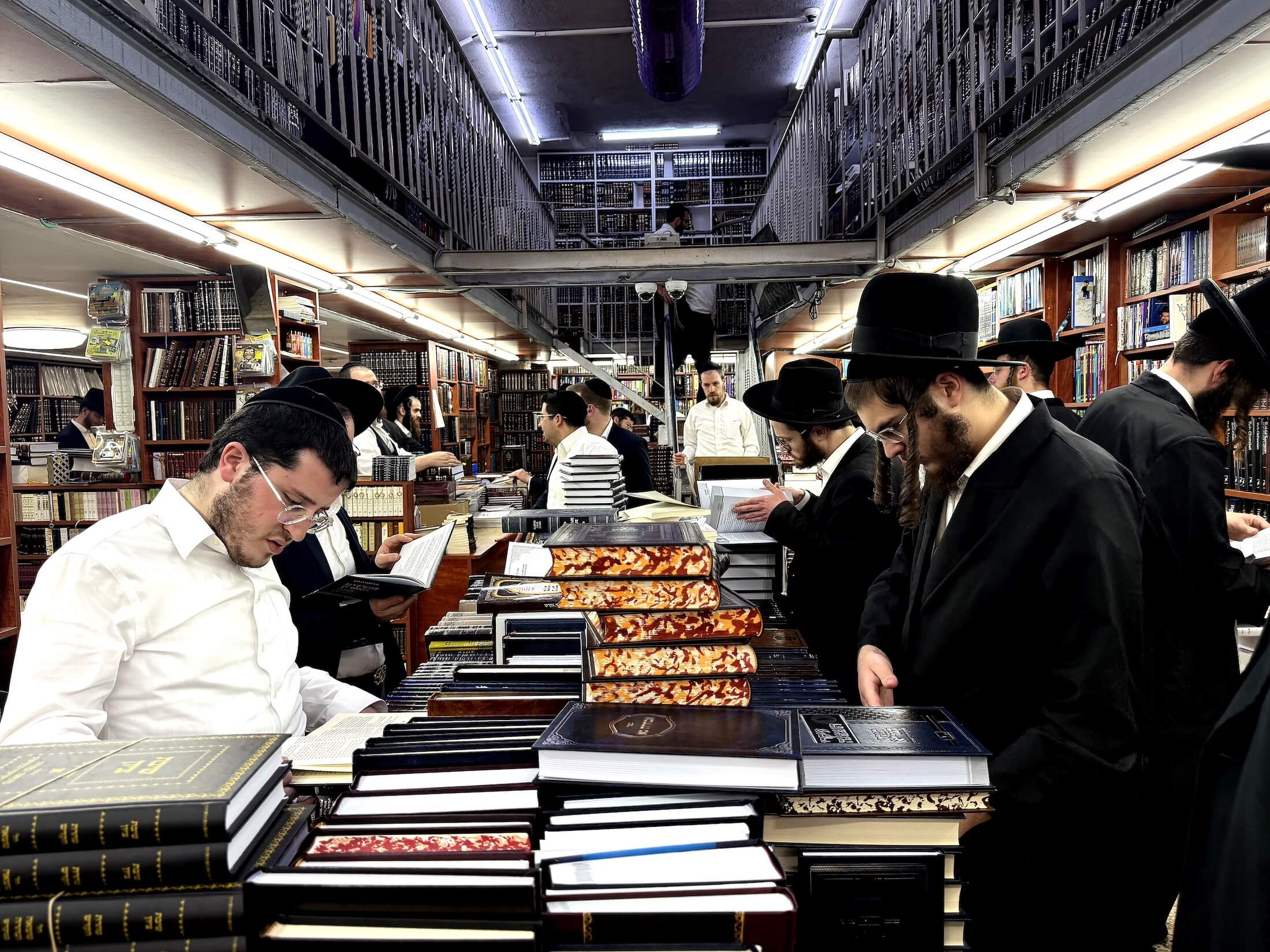
It was an appealing environment in a strange way, and I understood the desire to preserve it. I proposed to some of those I met that the conflict might remain manageable, enabling that preservation, if the community that was at such loggerheads with society were stable in size.
This line of argument is an awkward and delicate business, as it’s not normally advisable to advise others on reproduction. But it’s also the heart of the matter — and Heshy, for one, knows it, frequently bragging, with eyes twinkling, that his side is “winning.”
“Why don’t you go fight with all the people in Tel Aviv that they should get rid of their dogs and they should have five children?” asked Rabbi Zupnick. My points — that the explosive growth of a welfare-dependent sector risks collapsing the very economy it depends on to sustain it — went unacknowledged.
The theological problem
It was when the conversation moved from policy into theology that things got especially hopeless.
Rabbi Spitzer, for example, said scripture allowed no leeway on the matter of the halakhic prescription of capital punishment by stoning for Sabbath violations. When pressed on whether he’d apply it to his own child, he said: “I don’t want to, I have to.” He clarified, though, that the institutional framework required to implement such sanctions is presently absent — for example, there is no Sanhedrin or Jewish Temple.
But then again, if the Haredim end up as the large majority, there will be.
In the car, as we zoomed around Mea Shearim, Heshy tried to explain that the Haredi community and I simply speak different languages, and I had not understood what the learned rabbi meant. “So I shouldn’t take it literally?” I asked, grasping at a straw.
“I didn’t say that,” Heshy snapped.
A modern state depends on a set of shared assumptions: that citizens will be educated in ways that allow them to participate in a complex economy, that they will contribute to collective defense, that public policy will operate within a framework of shared accountability.
What came across very clearly in my listening tour was that a society organized around Torah study operates according to a different set of assumptions: that insulation from external influence is a virtue, that the Torah is the only valuable truth and that no moral or legal framework except what is ordained therein has any meaning.
These two systems can coexist for a time, if the Haredim are in the minority and they are economically supported. If the Haredim become a majority, as is inevitable unless the birth rate comes down fast, that fragile peace will break. Even though demographic predictions must be couched, it seems clear that without change, soon, non-Haredim will start to despair, and many will flee the country.
Correcting the course
Heshy will not be so happy, but the meetings he set up convinced me all the more that radical steps are needed to completely upend the current dynamic. The leaders of Israel’s opposition say they will move to draft the Haredim if they win the upcoming election. They should go much further. Among the steps necessary:
- Impose a secular core curriculum for all religious schools, and completely cut off state funding to any schools in any sector that resist.
- Eliminate most yeshiva stipends, or funds for those who study Torah full-time.The original draft exemption allowed by Israel’s first leader, David Ben-Gurion, allowed for funds for several hundred students, and that’s a number most Israelis could live with.
- Cap the number of child stipends — state funds allocated per child, to help support young families — at three per family. The idea here would be to encourage the birthrate to come down.
- Generously fund adult education and professional training for Haredim, and set up a state authority for absorbing, housing, training and assisting those who want to leave the fold altogether.
Recently, an Israeli news program interviewed a Haredi mother of nine who works to support her husband’s study. She seemed proud of his economic cluelessness since his job was to “keep the flame alive.” She predicted the Haredim will never join the army no matter what. When the exasperated reporter — himself religious but not Haredi — asked whether it was fair that other mothers should spend their days in fear for their sons’ lives as they serve, she replied that she too spends her days in fear of her children becoming secular. She seemed very serious, and not at all apologetic.
Is she an exception? Can this way of thinking be changed? If the answers to these questions are no, we have a national emergency.
The post Israel’s most dangerous war is with itself appeared first on The Forward.