


Uncategorized
Jewish and Muslim comedians team up to turn tension into titters
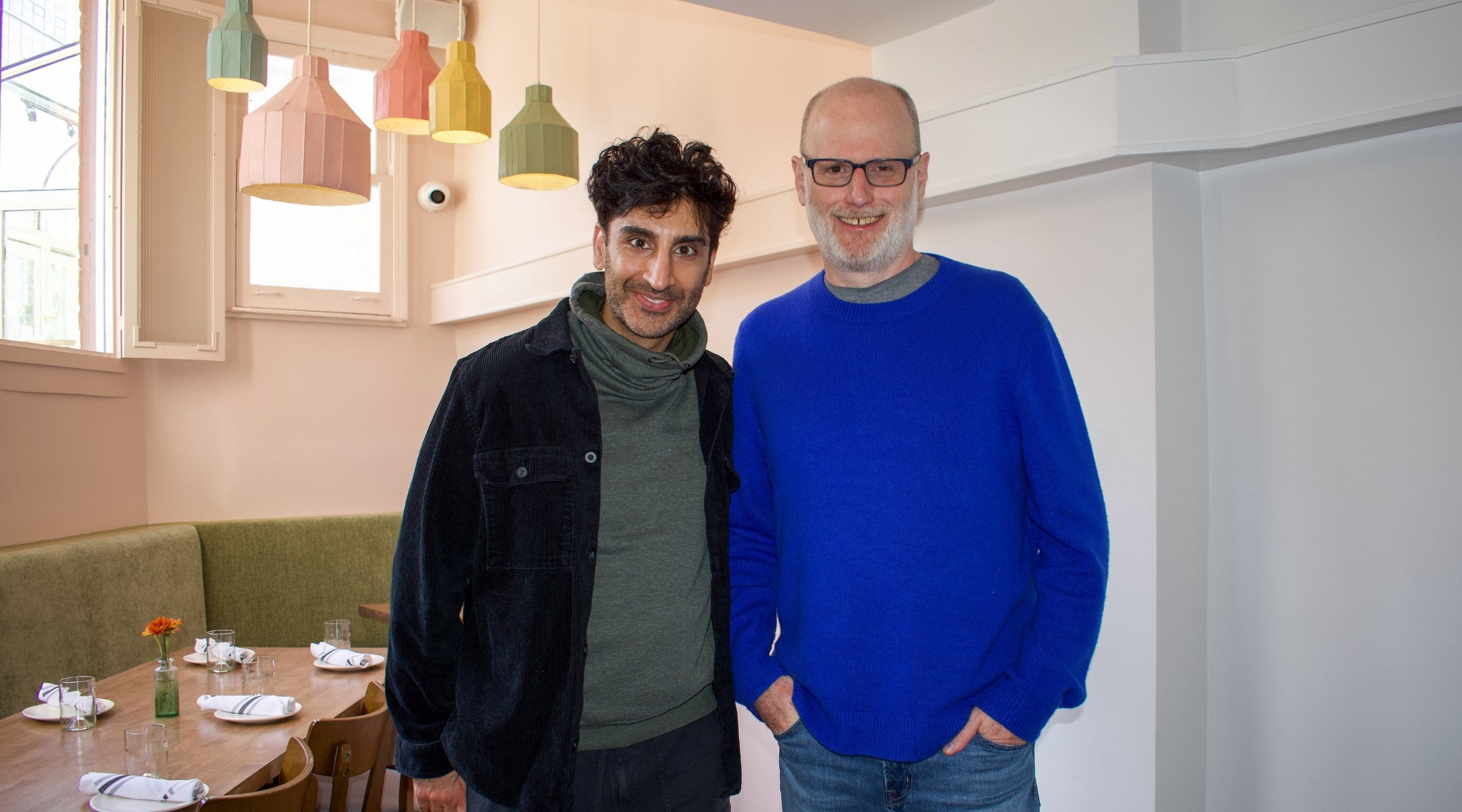
Comedian Gibran Saleem had never met a Jewish person until starting his graduate studies at New York University more than a decade ago. The child of Pakistani immigrants, Saleem was raised in a Muslim household in northern Virginia where, he said, he was mostly surrounded by people with a similar cultural background.
“I knew about the Holocaust, and that was it,” Saleem said. “I didn’t know anything about the [Jewish] religion, culture, any of that until I moved to New York [City], which is pretty wild to me.”
Things have changed drastically since then. Today, Saleem is part of a loose collective of about a dozen comedians known as Comedy for Peace, an international, interfaith comedy project that brings together Jewish, Muslim and Christian comedians. On Saturday, Saleem, along with four other comics, will perform a one-night-only show, “Comedy for Peace,” at the Upper East Side’s Comic Strip Live as part of the New York Comedy Festival.
“It’s a very simple idea,” said the group’s founder, Jewish Israeli comedian Erik Angel, who is also performing Saturday. “It’s to bring, under one roof, different communities and show how easy it is to have fun.”
A 10-year resident of the Upper West Side, Angel, 50, grew up in Petach Tikvah. He founded Comedy for Peace in 2019, just a few years after he entered the comedy circuit following a career as a musician. After two successful interfaith shows early that year, “Comedy for Peace” became a recurring event that aims to promote tolerance. Since then, the group has played more than 200 shows across North America, where they’ve helped raise money for various causes, including helping nurses during the COVID-19 pandemic and supporting the Parents Circle Families Forum, a joint Israeli-Palestinian group that brings together families who have lost relatives on both sides of the conflict.
And now, the group’s latest gig will take place in a tense New York City, with many local Jews worried about the forthcoming mayoral leadership of avowed anti-Zionist Zohran Mamdani. As such, Angel thinks Saturday’s show will be “very important,” adding that he hopes cross-cultural comedy will help alleviate “all the fear, all the things coming from this separation” between Mamdani’s supporters and detractors.
“Even in Israeli media, people online, and I think the panic is — I understand where they’re coming from, and I also have my concerns,” said Angel. “But on the other hand, it’s democracy.”
Despite their lofty ambitions, Angel sees “Comedy for Peace” as a brief respite from politics. “We say to you, ‘OK, you want to fight before? You want to fight after? With us, we’re gonna chill [for] two hours,’” he said. “’We’re gonna chill.’”
Saturday’s “Comedy for Peace” lineup includes Iranian comedian Tehran Ghasri, who is also Black and whose family is Muslim, Zoroastrian and Jewish; lesbian Jewish comedian Liz Glazer, who recently made her “Tonight Show” debut; and Texas-born Ashley Austin Morris, who is Christian.
“The ultimate goal is just unity and shared compassion,” Saleem said.
“Comedy for Peace” will take place on Saturday at 8 p.m. at Comic Strip Live, 1568 Second Ave. Get tickets, $36.60, here.
Other Jewish shows at the NY Comedy Festival
With more than 100 shows across the five boroughs, the annual New York Comedy Festival runs through Sunday, Nov. 16 this year. Here are a few Jewish highlights from the fest:
Anna Roisman co-hosts “Celebrity Drop-In” on Tuesday at 8 p.m. at The Stand West (407 West 15th St.). Roisman is the creator of the one-woman show “Jewish American Prodigy” and known for her impressions and characters on Instagram and TikTok. Get tickets from $29.
Eli Leonard presents “Good Showbiz,” an experimental show exploring the history of Jewish comedy, on Tuesday and Wednesday at 7:30 p.m. at iconic Jewish restaurant Barney Greengrass (541 Amsterdam Ave.). Tickets here from $72.
“Alex Borstein Is Thirsty” plays Wednesday at 7:30 p.m. at The Bell House (149 7th St., Brooklyn). The Jewish comedian and actress is best known for her voice work on “Family Guy” and as Susie Myerson in “The Marvelous Mrs. Maisel,” and this solo show is part of her national tour. Tickets here from $38.
“The Jackie Mason Musical” will have three showings, on Wednesday, Saturday and Sunday at the Triad Theatre (158 West 72nd St.) on the Upper West Side. Mason’s daughter, Sheba, who was not publicly recognized by the late comedian until she was 18 years old, stars in this story about her parents’ relationship. Get your tickets here from $30.
“Good Neighbors: A Fundraiser for Jews for Racial and Economic Justice,” hosted by comedians Orli Matlow and Marcia Belsky, will be performed on Wednesday at 9 p.m. at Brooklyn Art Haus (24 Marcy Ave.). Tickets start at $23.
“Hysterical,” presented by stand-up comedian Hannah Lieberman, will be performed on Thursday at 7:30 p.m. at QED Astoria (27-16 23rd Ave.). The one-woman comedy musical is about Lieberman’s experience learning she has the BRCA-1 gene. Get tickets, $10, here.
“Natan Badalov: Chosen Fam” will be performed Friday at 8 p.m. at Astoria’s Grove 34 (31-83 34th St.). Badalov, a Bukharian comedian, debuted his first stand-up special, “Connect The Dots” at the New York Comedy Festival in 2023. Get your tickets for “Chosen Fam” here from $23.
“Alex Edelman: What Are You Going To Do” will be performed on Saturday at 6 p.m at Carnegie Hall (881 Seventh Ave.). Edelman is the creator of the very Jewish, award-winning special “Just for Us,” and now stars on the Peacock show “The Paper.” (Tickets for this show are sold out.)
“Talia Reese and Friends: Kosher Style” will be performed Saturday at 7:30 p.m. at Rodney’s Comedy Club (1118 First Ave.). Reese, an Orthodox Jewish woman and a former lawyer, is known for her insider-y Jewish comedy. Tickets here from $22.
—
The post Jewish and Muslim comedians team up to turn tension into titters appeared first on Jewish Telegraphic Agency.
Uncategorized
Katz: ‘Israel’s Goal in Lebanon is to Disarm Hezbollah’

Then-Israeli transportation minister Israel Katz attends the cabinet meeting at the Prime Minister’s office in Jerusalem, Feb. 17, 2019. Katz currently serves as the foreign minister. Photo: Sebastian Scheiner/Pool via REUTERS
i24 News – Israel’s Defense Minister Israel Katz held a situation assessment Friday with senior military and defense officials, reiterating that the country’s policy in Lebanon remains focused on disarming Hezbollah by military and political means. Katz emphasized that the goal applies “regardless of the Iran issue” and pledged continued protection for Israeli northern communities.
Katz said the Israel Defense Forces are completing ground maneuvers up to the anti-tank line to prevent direct threats to border towns. He outlined plans to demolish houses in villages near the border that serve as Hezbollah outposts, citing previous operations in Rafah and Khan Yunis in Gaza as models.
The Defense Minister added that the IDF will maintain security control over the Litani area and that the return of 600,000 residents of southern Lebanon who had evacuated north will not be permitted until northern communities’ safety is ensured. Katz also reaffirmed that the IDF will continue targeting Hezbollah leaders and operatives across Lebanon, noting that 1,000 terrorists have already been eliminated since the start of the current campaign.
“We promised security to the northern towns, and that is exactly what we will do,” Katz said. He further warned that the IDF will act decisively against rocket fire from Lebanon, stating that Hezbollah “will pay heavy prices.”
Uncategorized
Pope Leo Urges Israel’s Herzog to End Iran War in Phone Call, Vatican Says

Pope Leo XIV delivers a homily during the Palm Sunday Mass in Saint Peter’s Square at the Vatican, March 29, 2026. Photo: REUTERS/Remo Casilli
Pope Leo spoke on the phone with Israeli President Isaac Herzog on Friday and urged him to “reopen all paths of dialogue” to end the Iran war, the Vatican said.
The pope, who has emerged as a sharp critic of the regional conflict, also urged Herzog to protect civilians and promote respect for international and humanitarian law, the Vatican added.
Uncategorized
Iran Leaders Join Crowds on Tehran’s Streets to Project Control in Wartime

Iranians gather at a park on Nature Day, amid the U.S.-Israeli conflict with Iran, in Tehran, Iran, April 2, 2026. Photo: Majid Asgaripour/WANA (West Asia News Agency) via REUTERS
After more than a month of being stalked by targeted assassinations, Iran’s leadership has adopted a new tactic to show it is still in control – with senior officials walking openly in the streets among small crowds who have gathered in support of the Islamic Republic.
In recent days, Iran’s president and foreign minister have separately mixed with groups of several hundred people in central Tehran. On Tuesday, state television aired footage of the two posing for selfies, talking to members of the public and shaking hands with supporters who had gathered in public areas.
According to insiders and analysts, the appearances are part of a calculated effort by Iran’s theocratic leadership to project resilience and authority — not only over the vital Strait of Hormuz but also over the population — despite a sustained US-Israeli campaign aimed at “obliterating” it.
One insider close to the hardline establishment said such public outings are intended to show that the Islamic Republic is “unshaken by strikes and that it remains in control and vigilant” as the war grinds on.
The US-Israeli war on Iran began on February 28 with the killing of veteran Supreme Leader Ayatollah Ali Khamenei and several senior military commanders in waves of strikes that have since continued to target top officials.
Iran’s new Supreme Leader, Mojtaba Khamenei, has not been seen in public since taking over on March 8 from his father. Foreign Minister Abbas Araqchi, meanwhile, was removed from Israel’s hit list amid mediation efforts last month, including by Pakistan, to bring Tehran and Washington together for talks to end the war.
Talks aimed at ending the war have since appeared to have petered out, as Tehran brands US peace proposals “unrealistic.” Against that backdrop, recent public appearances by President Masoud Pezeshkian and Araqchi appear designed to project defiance, if not a convincing display of public support.
A senior Iranian source said officials’ public presence demonstrates that “the establishment is not intimidated by Israel’s targeted killing of top Iranian figures.”
Asked whether Iran’s foreign minister or president were on any sort of kill list, an Israeli military spokesperson, Nadav Shoshani, said on Friday he would not “speak about specific personnel.”
NIGHTLY RALLIES TO SHOW RESILIENCE
Despite widespread destruction, Tehran appears emboldened by surviving weeks of intense US-Israeli attacks, firing on Gulf countries hosting US troops and demonstrating its ability to effectively block the Strait of Hormuz.
On Wednesday, US President Donald Trump vowed more aggressive strikes on Iran, without offering a timeline for ending hostilities. Tehran responded by warning the United States and Israel that “more crushing, broader and more destructive” attacks were in store.
Encouraged by clerical rulers, supporters of the Islamic Republic take to the streets each night, filling public squares to show loyalty even as bombs rain down across the country.
Analysts say the establishment is also seeking to raise the “political and reputational” cost of the strikes at a time when civilian casualties are deeply disturbing for Iranians.
Omid Memarian, a senior Iran analyst at DAWN, a Washington-based think tank, said the decision to send officials into gatherings reflects a layered strategy, including an effort to sustain the morale of core supporters at a moment of acute pressure.
“The system relies heavily on this base; if its supporters withdraw from public space, its ability to project control and authority weakens significantly,” Memarian said.
Speaking to state television, some in the crowds voice unwavering loyalty to Iran’s leadership; others oppose the bombing of their country regardless of politics; and some have a stake in the system, including government employees, students and others whose livelihoods are tied to it.
Hadi Ghaemi, head of the New York-based Center for Human Rights in Iran, said the establishment is using such loyal crowds as human shields to raise the cost of any assassination attempts.
“By being in the middle of large crowds they have protections that would make Israeli-American attacks against them very bloody and generate sympathy worldwide,” he said.
POTENTIAL PROTESTERS STAY OFF STREETS AT NIGHT
The Islamic Republic emerged from a 1979 revolution backed by millions of Iranians. But decades of rule marked by corruption, repression and mismanagement have thinned that support, alienating many ordinary people.
While there has been little sign so far of anti-government protests that erupted in January and abated after a deadly crackdown, the establishment has adopted harsh measures – such as arrests, executions and large-scale deployment of security forces – to prevent any sparks of dissent.
Rights groups have warned about “rushed executions” during wartime after Iran hanged at least seven political prisoners during the war.
“Many potential protesters are frightened by the continuing presence of armed men and violent crowds in the streets and largely stay at home once darkness falls,” Ghaemi said.