


Uncategorized
Long before Trump’s second-hand Nobel, a laureate sought to curry favor with Nazis by regifting a prize
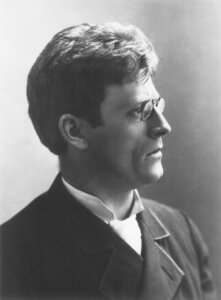
Donald Trump is not the first authoritarian to come into possession of a Nobel medal that wasn’t intended for him. In 1943, Norwegian novelist Knut Hamsun sent his Nobel Prize for Literature to Nazi propaganda minister Joseph Goebbels, a gesture meant to secure a private audience with Adolf Hitler.
Although Hamsun was infamous during World War II and its aftermath, most Americans likely know little about the author. It has taken Trump’s lust for the Nobel Peace Prize — something like Gollum’s slobbering obsession with the “precious” gold ring — to cast fresh light on the Norwegian novelist.
Hamsun occupies a place in history similar to Hitler’s filmmaker Leni Riefenstahl: a genuine artistic innovator who fell under the spell of der Führer and paid for it later in life.
Born to a poor rural family in 1859, Hamsun began writing in his teens. Over his long career he produced more than two dozen novels, along with poetry, short stories and nonfiction. His influence was enormous — Isaac Bashevis Singer once called him the father of modern literature, and his psychological style has often been compared to Franz Kafka’s.
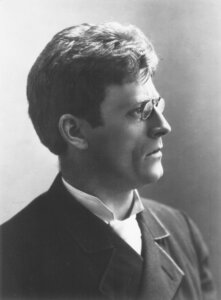
Hamsun vaulted to fame at age 30 with the 1890 publication of the semiautobiographical novel Hunger. He won the 1920 Nobel Prize in Literature for Growth of the Soil, which the Nobel Committee said “aroused the liveliest interest in many countries and has found favorable reception with the most diverse groups of readers.” Those readers included fascists.
Hamsun was a passionate admirer of Germany and of the Nazis’ ideas about Teutonic purity. The admiration was mutual. German critics praised Growth of the Soil for its portrayal of a mystical connection between people and the land — a theme the Nazis eagerly embraced.
During Germany’s 1940–45 occupation of Norway, Hamsun supported the Nazi-installed government of Vidkun Quisling. His devotion to Hitler was so great that he parted with his 18-carat gold Nobel medal, sending it to Goebbels in hopes that it would earn him a personal meeting with the Führer.
It did. But the audience did not unfold as Hamsun hoped. Although he supported the occupation, he objected to some of its harsher measures, including executions. He hoped to persuade Hitler to soften the regime’s policies. The meeting — retold in a 2005 New Yorker article titled “In From the Cold” — took place June 26, 1943, at Hitler’s retreat in the Bavarian Alps. According to the article, as the two men took tea in Hitler’s study, the conversation turned tense when Hamsun urged Hitler to fire Josef Terboven, the Reich Commissioner for Norway. Hitler rebuffed him, saying, “The Reich Commissioner is a warrior; he’s only there for war-related duties.”
Hitler did not bother to say goodbye when Hamsun left and later snapped at his aides: “I don’t want to see that sort of person here anymore.”
The unpleasant encounter did little to dampen Hamsun’s admiration for the Nazi leader. On May 7, 1945, a collaborationist newspaper published Hamsun’s obituary for Hitler, in which he wrote: “He was a warrior, a warrior for mankind, and a prophet of the gospel of justice for all nations.”
After the war, thousands of Norwegian collaborators were arrested and put on trial — including Hamsun. By then he was 86, and his age, along with his stature as Norway’s most celebrated novelist, worked in his favor. While 40 collaborators were executed, including Quisling, Hamsun received a fine of 325,000 kroner, reduced from 575,000.
Hamsun died on Feb. 19, 1952, at age 92.
As for the Nobel medal he sent to Goebbels — it vanished. No one knows what became of it.
Which brings us to Donald Trump and his pre-owned Nobel.
Hitler had no shame in accepting lavish gifts from industrialists, world leaders, and others who arrived in Berlin seeking favor. But Hitler might well be impressed with Donald Trump’s collection during his second term — a glittering haul accumulated on trips to the Middle East and during visits to the White House by foreign dignitaries and sycophantic American business executives.
Size-wise, nothing comes close to the 747 provided by Qatar. And knowing the way to Trump’s heart, Benjamin Netanyahu personally presented him with a letter that the Israeli leader had sent nominating him for the Nobel Peace Prize. FIFA, the world soccer federation, went so far as to create its own peace prize for the American president.
Trump kept pressing his case that he deserved the Nobel prize, sometimes aided by foreign allies who publicly insisted that he, more than anyone else, merited the honor. But the Nobel Committee never budged.
A workaround presented itself in the person of María Corina Machado, the Venezuelan opposition leader who had been awarded the 2025 Nobel Peace Prize for her role in resisting Nicolás Maduro’s dictatorship. Machado, desperate for Trump’s backing as Venezuela enters a volatile transition, made a calculation as stark as Hamsun’s in 1943. She handed Trump her Nobel medal in the hope that the gesture would secure her political survival.
Still smoldering over being snubbed by the Nobel Committee for a Peace Prize of his own, Trump lashed out in familiar ways — threatening to use military force to take control of Greenland and to slap heavy new tariffs on European allies. Those threats eventually fizzled after Europe dug in its heels, but the resentment never did.
It’s unlikely America’s Gollum will abandon the quest for his own golden “precious,” one with his name engraved on it. With the inauguration of Trump’s new “Board of Peace,” he may have convinced himself he’s found a fresh path to Oslo. The board — made up of foreign governments invited by Trump — is billed as a vehicle for resolving global conflicts. Permanent membership is offered to those that contribute more than $1 billion. As chairman, Trump would be in a position to steer the board however he wishes.
If the “Board of Peace” doesn’t help him finally secure a gold Nobel medallion, it may still serve another purpose: expanding his already considerable wealth.
Luxury condos on the Gaza waterfront, anyone?
The post Long before Trump’s second-hand Nobel, a laureate sought to curry favor with Nazis by regifting a prize appeared first on The Forward.
Uncategorized
50 years after the Dirty War, Argentinians remember the Jews who ‘disappeared’
(JTA) — BUENOS AIRES — As Argentina marks the 50th anniversary of the 1976 military coup, a lesser-known aspect of the dictatorship is gaining attention: the disproportionate number of Jews among the disappeared.
Estimates suggest that as many as 1,900 Jews were abducted, tortured and murdered by the military junta during the six-year Dirty War, when many sources say 30,000 people were disappeared. Depending on the source, Jews represented 5% to 8% of the total, even though Jews made up less than 1% of Argentina’s population at the time.
That grim history is being explored in educational initiatives by Argentina’s Jewish community, aimed at younger generations and focused on understanding how the dictatorship operated and the disproportionate suffering it inflicted on Jews.
“The Jews were subjected to a particular form of treatment that resulted in greater brutality on the part of the repressive forces,” according to a new curriculum released by the education department of AMIA, the Jewish community center in Buenos Aires. “The experience of Jewish Argentines who were victims of state terrorism was marked by a strong antisemitic imprint among many members of the task forces.”
The AMIA project includes meetings between Jewish youth and relatives of the Jewish “disappeared,” as well as visits to memorial sites. Some 1,000 students are expected to take part this month.
A parallel digital project, Eduiot (“Testimonies”), documents the stories of Jewish victims of the military dictatorship and includes meetings between relatives of the disappeared and high school students.
The materials rely on personal testimonies to explain the human impact of the dictatorship and to put individual stories in the broader historical context.
Eduiot includes the story of Fernando Ruben Brodsky, a 22-year-old student who disappeared in 1979, including accounts from relatives who continue to seek answers. His mother, Sarah Brodsky, shares accounts of her son, a psychology student and kindergarten teacher who was abducted from his home on Aug. 8 and never seen again.
The testimonials relate how security forces subjected Jews to antisemitic abuse when they were kidnapped or detained, including Nazi language and symbols and “special” interrogations reserved for Jews.
The anniversary comes amid renewed debate over how Argentina interprets the dictatorship. President Javier Milei’s government has called for a broader account that also includes victims of left-wing guerrilla violence, which some suggest is a way to minimize the crimes of the dictatorship. Milei and other voices close to the government have also questioned the 30,000-victim figure, promoting a lower number (often 9,000).
Under the junta, the military and state security forces targeted suspected left-wing sympathizers, including students, unionists, journalists and activists.
In 1979, Jewish advocacy groups such as the Anti‑Defamation League expressed grave concern over the disappearances, focusing on the Jewish victims, and Jewish families in Argentina and abroad helped compile lists of the missing. According to an ADL official at the time, “Jews are not specifically targeted as Jews. However, the security agents tend to be suspicious of Jews.”
The best-known Jewish target of the state was journalist Jacobo Timerman, who published a left-leaning newspaper, La Opinion. In 1977, the generals who ruled Argentina shut down the paper and imprisoned Timerman. Among other things, Timerman was accused of masterminding a plot to establish a Jewish homeland in the remote Patagonia region of southern Argentina.
He survived, and in his 1981 memoir, “Prisoner Without a Name, Cell Without a Number,” he recounted how he was subjected to torture during his 2 1/2 years in confinement.
According to Eduiot, Jewish advocacy for the disappeared “proved effective in bringing early attention to human rights violations.” The U.S. Congress launched investigations, and in a 1978 article in Le Monde, novelist and Holocaust survivor Marek Halter compared the persecution of Argentine Jews to Nazi-era atrocities.
The Eduiot site includes photographs and audiovisual material, and features the accounts of parents, siblings, cousins, nephews and nieces of Jews persecuted and disappeared under the dictatorship.
“Because every testimony matters and holds great value,” according to its website. “Because these dark episodes of our history must never be repeated, and because we want each of the disappeared to have a space of remembrance on this site, helping families sustain their memory and uphold the call for justice.”
The post 50 years after the Dirty War, Argentinians remember the Jews who ‘disappeared’ appeared first on The Forward.
Uncategorized
Fortnite tops ADL’s new ‘leaderboard’ ranking video games on antisemitism safeguards
(JTA) — The online video game Fortnite tops the Anti-Defamation League’s “leaderboard” ranking online video game companies on their efforts to curb antisemitism and extremism on their platforms.
The Online Gaming Leaderboard, which the antisemitism watchdog billed as the “first comprehensive public evaluation” of how online multiplayer games address antisemitism, ranked 10 popular online games based on safety features, moderation, player protections and written policies meant to address antisemitism and hate.
Fortnite was followed at the top of the rankings by Grand Theft Auto Online, Call of Duty and Minecraft. Games labeled as having “limited protection” by the ADL included Counter-Strike 2 and PUBG: Battlegrounds.
Madden NFL, Valorant, Clash Royale and Roblox, a collaborative computer gaming platform for children as young as 7, were ranked as having “moderate protection.”
“Without strong safeguards, these platforms can become breeding grounds for harassment and hateful activity that harms players directly, normalizes hateful ideologies and damages trust,” Jonathan Greenblatt, the CEO of the ADL, said in a statement Wednesday. “This leaderboard provides the transparency that parents, gamers and the industry need to understand where companies are succeeding and where urgent improvements are necessary.”
The leaderboard’s release coincided with a landmark Los Angeles jury verdict finding Meta and YouTube liable for harming a young user through addictive design features.
In the virtual worlds of online gaming, players have posted abusive messages in chats, created antisemitic imagery and even given themselves bigoted usernames.
While Fortnite ranked first, the popular online game has also previously faced scrutiny over allegations that it enabled antisemitic content. Last September, it disabled a character dance feature after users said its gestures resembled a swastika.
Roblox, which has long faced criticism over content moderation, has also been the subject of controversy, including in 2022 when it removed a user-created simulation of a Nazi gas chamber. In the wake of the Oct. 7 attacks in 2023, the Israeli government also urged users to report pro-Palestinian activity in the game that it said included antisemitic content.
The post Fortnite tops ADL’s new ‘leaderboard’ ranking video games on antisemitism safeguards appeared first on The Forward.
Uncategorized
Iran Posts AI Video Showing Missile Striking Statue of Liberty

An Israeli air defense system intercepts a ballistic missile barrage launched from Iran to central Israel during the missile attack, February 27, 2026. Photo: Eli Basri / SOPA Images via Reuters Connect
Iran on Tuesday released an AI-generated video depicting a missile striking the Statue of Liberty in New York Harbor, a global symbol of American freedom and democracy, in one of the regime’s latest propaganda efforts to influence public perception abroad.
Shared by Iranian state broadcaster IRIB as well as a Telegram channel affiliated with the Islamic Revolutionary Guard Corps (IRGC), the minute-long video ends with the slogan “One vengeance for all.”
IRGC Official Telegram Channel Releases AI Video Depicting Iranian Ballistic Missile Strike on United States, Hitting New York City and Toppling Statue of Liberty Shown as Idol of Baal Holding Babylonian Talmud pic.twitter.com/JhgNgHW2Zz
— MEMRI (@MEMRIReports) March 25, 2026
The video was also circulated by Russian state outlet RT, in what appears to be a stark and symbolic threat against the United States.
‘ONE VENGEANCE FOR ALL’ — Iran ‘bombs’ the Statue of Liberty WITH THE HEAD OF BAAL pic.twitter.com/6tPH15fqkZ
— RT (@RT_com) March 25, 2026
Since the start of the US-Israel war with Iran, which began on Feb. 28, Iranian officials have ramped up their propaganda and disinformation efforts, trying to portray Washington and Jerusalem as responsible for decades of regional conflict while seeking to influence left-leaning Americans to mobilize domestic opposition to the war.
This latest widely circulated video presents a striking sequence portraying the United States as the world’s enemy, drawing on imagery from the dispossession of Native Americans and the atomic bombings of Japan to the Vietnam War and more recent Middle Eastern conflicts to craft a sweeping narrative of American aggression.
The clip also features footage alluding to a child on Jeffrey Epstein’s private island — a recurring theme in Iran’s messaging used to suggest that US President Donald Trump launched the current war to distract the public from the Epstein scandal, in which the late financier was convicted of running a sex-trafficking ring involving underage girls and, allegedly, various influential figures.
Later in the video, AI-generated figures of Iran’s former Supreme Leader Ayatollah Ali Khamenei and the late Iranian Major General Qassem Soleimani are shown gazing skyward. Khamenei was killed in an Israeli airstrike on Feb. 28, and Soleimani was killed in a US drone strike in 2020.
The final sequence of the video depicts a missile in Iranian colors striking the Statue of Liberty in New York Harbor, whose head has been replaced with that of Baal, a false god from the Bible, while the statue holds the Talmud, a key collection of Jewish religious teachings and laws.
This video is the latest example of AI-generated propaganda released since the start of the war with Iran.
Last week, Chinese state television CCTV released a separate AI-generated clip illustrating Beijing’s perspective on the Strait of Hormuz crisis, featuring Persian cats in martial arts combat and an eagle-headed human representing the United States.
Experts note that Russian dissemination of Tehran’s video reflects a broader coordinated effort to use visual propaganda to challenge US foreign policy and influence global perceptions amid rising regional tensions.
The latest video came as the US and Iran began engaging in diplomacy over a possible resolution to the war, although Tehran has reportedly responded negatively to Washington’s proposal.