


Uncategorized
Man pleads guilty to hate crime in 2021 arson that damaged Austin, Texas, synagogue
(JTA) — The man charged with setting fire to a synagogue in Austin, Texas, in 2021 has pleaded guilty to two federal charges, including the destruction of religious property, a hate crime.
The board of directors at Congregation Beth Israel endorsed the plea deal, telling members that the agreement had no bearing on Franklin Barrett Sechriest’s ultimate sentence and noting that a trial could deepen their trauma.
The sanctuary, historic front doors and stained glass windows at the Reform synagogue were damaged in the October 2021 fire that Sechriest, during a plea hearing on Thursday, admitted to setting. The fire was extinguished after a passing motorist alerted authorities; Sechriest, then 18, was arrested 10 days after the fire after being identified in surveillance footage.
Investigators found antisemitic and racist material as well as bomb-making supplies in Sechriest’s car, according to details revealed when he was indicted and recounted in a Department of Justice press release on Friday. They also discovered a journal in which he had written, “I set fire to a synagogue.”
Under the terms of the plea deal, Sechriest pleaded guilty to arson and to the hate crime, but prosecutors dropped a third charge, use of a fire to commit a felony. He faces up to 20 years in prison when he is sentenced at a separate hearing, scheduled for June 23.
Congregation Beth Israel’s board of directors had voted to support the plea deal after being consulted by prosecutors, according to a message sent to all members Thursday by the synagogue’s rabbi, president and executive director.
“A plea agreement means the defendant must admit his guilt in open court and allows us to begin to heal without the trauma of being put through what would most likely be a difficult trial,” they wrote. They also noted that members of the synagogue would have the opportunity to submit letters explaining “how the defendant’s actions and the arson impacted us” before Sechriest is sentenced.
The fire came amid a spate of antisemitic incidents in Austin organized by the Goyim Defense League, a white supremacist group that holds antisemitic rallies and distributes literature promoting hatred of Jews. The group, which the Anti-Defamation League said was responsible for nearly 500 antisemitic incidents in 2022, had hung a banner reading “Vax the Jews” from an Austin bridge in the days before the synagogue fire and streamed a swastika-burning event shortly afterwards. The group’s founder told the Daily Beast that Sechriest was not associated with the Goyim Defense League.
—
The post Man pleads guilty to hate crime in 2021 arson that damaged Austin, Texas, synagogue appeared first on Jewish Telegraphic Agency.
Uncategorized
The real winner in Israel’s elections may be the haters
The world has been fixated on Israel since Hamas’ Oct. 7 attack, Jerusalem’s defensive, retaliatory wars in Gaza and Lebanon, and the tsunami of global antisemitism that has resulted from them all. And now, more than three years on, arrives a referendum not merely of Prime Minister Benjamin Netanyahu — but of Israelis themselves, and the nation they believe they are today and still hope to become.
This week’s election takes place as Israel has never been more prosperous or secure. Just last week, the Bank of Israel announced that the nation’s economy is predicted to grow a robust 5.4 percent this year — surging to 7.5 percent in 2027. That puts Israel in the same league as vastly-larger — and still modernizing — countries like Vietnam and India. Meanwhile, Israel has withstood round after round of ballistic missile attacks from Iran — and to a lesser extent, the Houthis in Yemen — while effectively defanging the Iran-backed terror networks operating along its borders. Israel, in other words, is doing just fine.
But none of that really matters to the legions of global politicians, commentators, columnists and diplomats now opining over what they’re endlessly describing as the most important general election in Israel’s 78-year history. “Seismic,” is how the Australian Broadcast Company termed the campaign recently; “An Election Like no Other,” declared The New York Times.
Because what matters is not the defeat of Israeli Prime Minister Benjamin Netanyahu and the potential accompanying regime change that many believe would deliver a much needed political reset after nearly three decades of his hawkish, right-leaning, confrontation- and allegedly-corruption filled rule.
Nor would it matter if Netanyahu’s chief rival, Yashar Party-leader Gadi Eisenkot, were to triumph this week, riding a wave of anti-Netanyahu sentiment that has thrust the former IDF Chief of Staff — whose son and a pair of nephews perished in Gaza — into the current front-runner position. (The two were deadlocked, based on exit polls, when this article was published.)
Described as a gruff and unpolished political newcomer, a victory for Yashar — which means “straight” or “honest” in Hebrew — would mean an end to Bibi-ism, which would matter greatly within Israel. But, ultimately, an Eisenkot win would be of little consequence beyond Israel’s borders.
Because even if Eisenkot were crowned Prime Minister, a big if, Israel’s public face might change, but its core fundamentals would remain relatively the same. Make no mistake, Eisenkot is no dove — he opposes the establishment of a Palestinian state and supports some West Bank settlement expansion. He’s committed to maintaining Israel as a Jewish state with a Jewish majority. And as part of Netanyahu’s government during much of the first year of the Gaza war, he’s determined to defeat Hamas just as forcefully as Bibi. Eisenkot even defended Netanyahu this summer after New York City Mayor Zohran Mamdani branded the Prime Minister a “war criminal,” calling such accusations “pure antisemitism.”
In fact, for Israeli Jews, security and foreign affairs are their chief concerns this election cycle, according to a September report from the Israel Democracy Institute. And whether Bibi or Eisenkot manages to form a coalition in the coming days (or even weeks, if it takes that long), neither will ever allow their nation’s safety to be so near-fatally compromised again.
And this is ultimately what the globally Israel-obsessed really care about: the legitimacy and inviolability of the nation itself — and the desire to see both as fatally compromised as possible. For Israel’s adversaries — whether on TikTok or in the UN — the goal has never been merely an end to Bibi, but an end to Israel and Zionism. Mamdani has repeatedly said so himself; he will never support Israel’s right to exist as a Jewish nation – and no Israeli leader will ever let that happen.
Which is why, just as the coordinated effort to “dismantle” Israel and Zionism kicked into gear even before the first Hamas madman crossed into Israel three Octobers ago, the campaigns to dismiss the results of this week’s election by Israel’s enemies are already hard at work long before the first vote has been cast.
“Israel’s Elections Can’t Fix What Netanyahu Broke,” read a headline from the far-left Nation late last month. If this is what the anti-Zionists are saying in public, just imagine what they’re saying behind closed doors.
The coming weeks will, of course, see voters determining Israel’s future, but they’ll be in America not Tel Aviv. There, most crucially in places like Michigan — where the openly anti-Zionist Senate candidate Abdul El-Sayed may triumph — the midterm elections on Nov. 3 could deliver a Democratic win that could compromise the ongoing arms shipments that are keeping Israel so prosperous and secure.
This would end the “complicity” that fuels anti-Zionist rage and deliver the “accountability” the anti-Zionists have long insisted is a first step toward quelling that furor. And whether it’s Netanyahu’s night or Eisenkot’s morning this week, ending American weapons transfers could also mean an end to Israel — which is what the anti-Zionists have always really wanted.
The post The real winner in Israel’s elections may be the haters appeared first on The Forward.
Uncategorized
Netanyahu leads in exit polls, but change bloc by Eisenkot has more seats
(JTA) — JERUSALEM – Israel’s parliamentary election has ended with Prime Minister Benjamin Netanyahu’s ruling Likud party remaining the largest faction, according to exit polls published as voting ended at 10pm local time.
However, the results showed that Netanyahu’s bloc of parties falls far short of the 61 seats needed to form a government. No other party or bloc of party has the ability to a government either.
Exit polls, taken through the day and published as polling stations closed, are only an indication of the final results, the official count can take hours or days to become clear. Also, exit polls are not always accurate.
And in an election that analysts have predicted will be tight, it’s too early to tell who will lead the next Israeli government.
It was a dramatic day in Israel, with voter turnout reaching its highest level in decades, according to the Central Elections Committee. An hour prior to polls closing, the committee said some 74.3% of the 7.3 million eligible voters had cast their ballot, compared to just 66.3% in the last election in 2022.
Indeed, lines at polling stations were longer than usual, with some Israelis waiting more than an hour to cast their votes.
Israelis have described this election, the first national election since Hamas’s Oct. 7, 2023 attack, as a battle over the country’s character and how best to address the security concerns that have arisen over the past three years.
Prime Minister Benjamin Netanyahu and his coalition partners, a bloc comprising mostly far-right and ultra-Orthodox parties, have largely campaigned on a platform of protecting Israel from existential threats, including what they describe as security threats posed by the country’s Arab population.
Casting his ballot in a school in Jerusalem, Netanyahu said he was voting “For the future of the State of Israel.”
“We cannot leave this battle in the hands of the left and the Arab parties,” Netanyahu said, accusing them of wanting “to bring an end to the Jewish state.”
Adalah, a legal center for Arab minority rights, filed a complaint with the Central Elections Committee. It said in a statement that “senior government officials have been inciting against Palestinian citizens of Israel exercising their right to vote as turnout in Arab towns rises.”
The group of parties trying to oust Netanyahu – the “change bloc” led by former army chief Gadi Eisenkot – has argued that the election is a vote on Israel’s future as a liberal and democratic nation.
The opposition has framed the election as a referendum on Netanyahu’s handling of the aftermath of Oct. 7 and the subsequent wars in Gaza, Lebanon and against Iran.
After casting his vote at a school in the city of Herzliya, Eisenkot told the crowd: “We are setting Israel on a new path. We will be worthy of your trust. I promise.”
It is traditional for party leaders to cast their votes in front of cameras and to campaign right up until polling stations close. Netanyahu and his coalition partners traveled the country trying to mobilize their supporters, warning they would not be re-elected unless more right-wing voters turned out to vote.
However, under Israel’s system of proportional representation, differences in turnout among communities could drastically change the political map. Larger numbers of Arab voters, who tend to vote for one of the two Arab political factions, can affect the distribution of seats and the balance of power between the blocs, potentially complicating Netanyahu’s efforts to form a government.
This article originally appeared on JTA.org.
The post Netanyahu leads in exit polls, but change bloc by Eisenkot has more seats appeared first on The Forward.
Uncategorized
Why I went to Michigan to talk to Jewish voters about Abdul El-Sayed
I’d just climbed the steps to another home on my canvassing list, a lovely residence in the suburbs of Detroit, and rang the doorbell. I was there last week to talk with Jewish voters about the upcoming Michigan Senate election. The woman who answered asked me to come inside, and I demurred, telling her that my project discourages its volunteers from accepting such invitations, for safety reasons. She was petite and elderly, with a soft, open face. She reminded me of my long deceased mother. We chit-chatted a little, then I got down to brass tacks. “What are your feelings about the race?” I asked. “About Abdul El-Sayed?”
Her face sagged. “You’re too late,” she said. “My husband and I already voted. For Mike Rogers. And I feel terrible!” She looked like she was about to cry. “Please,” she said, “Come inside.” I relented (but didn’t sit down on her sofa).
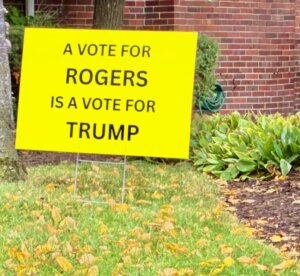
The Michigan race pits El-Sayed, a progressive young Democrat, against Rogers, a Republican former Congress member who is closely allied with Donald Trump. As a New Yorker, I don’t have a vote in the election. But I came to Michigan as a Jew who is increasingly frightened by the threat posed by MAGA and horrified by what Trump-think and Trump power is doing, and not just to immigrants, people of color, sexual and gender minorities, middle-class and working people, students, intellectuals, and those whose jobs and civic activity nurture liberal and progressive causes.
I’m also worried about us Jews.
We are disproportionately members of the communities I just listed. We are also vulnerable to antisemitic acts and policies, which appear to be increasing. (At my shul on Rosh Hashanah I was chilled to find flyers placed by the Siddurs, instructing how to hide or flee if a terrorist were to enter the sanctuary.) And we are vulnerable to the politics of Christian nationalism. I grew up in Texas in the 1950s and 1960s. I vividly recall being made to sing “The Crusaders’ Hymn” in grade school and memorize the words (“Onward Christians soldiers, marching as to war. With the cross of Jesus, going on before!”). Making public school kids do this is now illegal. But for how long?

Mike Rogers’ campaign gets much of its money from a rich Texan named Tim Dunn, a Christian nationalist who wants to abolish public schools. Not long ago, Dunn told a member of the Texas legislature — a Jew — that Jews should not hold major political office.
El-Sayed, on the other hand, is a public health expert with a long history of activism for progressive causes. A native-born American, he went to a suburban Detroit high school where he was on the football team and had many Jewish classmates. He has repeatedly said that the fact that he is Muslim is merely incidental to the fact that he is an American who deeply respects the rights guaranteed to everyone in this country under the U.S. Constitution — including to worship, or not, as one pleases.
Polling shows El-Sayed leading Rogers, but the margin of error puts them very close, and the race is tightening. Pundits say that if El-Sayed loses, the Senate could remain Republican. But if he wins, it would signal to the whole country that the Democratic Party is entering a new phase of progressivism — one prefigured by Zohran Mamdani’s mayoral win in New York City.
Like El-Sayed, Mamdani is a Muslim who sharply criticizes the Israeli government. And though many New York City Jews are wary of him, his main opponent during his campaign, Andrew Cuomo, wasn’t part of MAGA or surrounded by antisemites, as Mike Rogers is. I’d canvassed for Mamdani, and the stakes are much higher in Michigan. So I decided to spend five days in suburban Detroit as part of a joint canvassing effort by Jews in Seed the Vote, Bend the Arc Action, IfNotNow Movement, and Michigan United Action. Our goal was to knock on doors and share our own stories with fellow Jews.
Mine is that my maternal grandparents fled here from the Pale of Settlement, and my mother told me about my grandmother escaping a pogrom after her parents dressed her with a large cross around her neck, and paid a peasant to hide her under hay in a cart. She was fifteen years old when the pogrom happened — prime age for a Jewish girl to be raped.
She and her extended family made it to Pittsburgh. To the United States, the capital of democracy and pluralism. In all of history, Jews have never done so well as we have under democracies like this one. We’ve become so comfortable, as one Detroit-area rabbi remarked in his Kol Nidre sermon this year, that his community’s biggest intramural argument used to be over where to get the best bagels.
Then a Lebanese-American man whose relatives had just been killed by an Israeli air strike on Lebanon drove a truck into Temple Israel, a metro-Detroit synagogue. Dozens of preschoolers were inside. No one was hurt, but the building was damaged. El-Sayed, quickly made a lengthy statement condemning the culprit’s inexcusable antisemitism and vowing to support Jewish safety. But he also tried to explain the man’s terrorism. “Hurt people hurt people,” he said.

He later apologized for introducing political context so soon. But months later, his words still anger some people with whom I spoke. One woman glared, said she had grandchildren at the synagogue preschool, and slammed the door on me. Other canvassers described a man in a car who saw their t-shirts, sporting slogans like “Jews for Shared Safety,” and screamed that if he were to see El-Sayed and his family on fire right now across the street, he would do nothing to help them. He added that he was on the board of a shul.
Rogers’ campaign and its supporters are flooding TV and the social media with material excoriating El-Sayed as a dangerous Islamic fundamentalist and antisemite. AIPAC has also painted him as a threat to Jews, and spent over $30 million attacking him to defeat him in the primary. El-Sayed won anyway, but Michigan’s Jews remain saturated with a miasma of anti-El-Sayed propaganda. The woman who reminded me of my mother said she voted for Rogers because her father was a Holocaust survivor and she had to put Israel first, even though she knew Rogers could “roll back everything, including civil rights and abortion rights, that we Jews have worked so hard for. And even though I’ve never voted Republican in my life!”
I also canvassed Jews who were enthusiastically voting for El-Sayed. Other supporters, though, were terribly conflicted. At one door, a person — I won’t say their gender because they were so anxious about being identified — told me they are high up in local, Jewish-inflected Democratic Party politics. (I looked them up later and verified this.)
They, too, invited me into the sanctum of their home, as though afraid for the neighbors to see them talking with me. “I voted for El-Sayed,” they said. “But it was a horrible decision to have to make!” They strongly agreed with me about the need to vote for him, but they didn’t want their Jewish bigwig colleagues to know. “Half of them would never speak to me again,” they said. “What about your personal friends?” I asked. “Could you talk to them about the need to vote for El-Sayed?” “Yes,” they said. “I can do that.”
“This is what canvassing is about,” I told myself as I left.
Some Jewish bigwigs who openly support El-Sayed have been holding wine-and-cheese house parties for the un-decideds. Michigan Jews for Democracy sponsors these intimate gatherings. I went to one last week, at the house of Elaine Driker, formerly board president of Hillel of Metro Detroit. Former Michigan Congress member and political progressive Andy Levin addressed the group.
The setting was a cozy living room. To ensure that attendees felt comfortable voicing their feelings, journalists were told they could quote the speakers, but questions from the audience were off the record unless the individuals asking them agreed later to be quoted. The attendees were engaged, intent, and split, with some expressing strong support for El-Sayed and others venting reservations.
At the end. Levin summed things up. “We’re here struggling as Jews,” he told the audience. With young progressives entering the Democratic Party, he added, “We are really coming into a new era of politics in the United States, and I’m really hopeful about it.” He talked of the need to elect El-Sayed, then “hold him to be a great senator for the Jewish community.” Yes, he is a Muslim, Levin noted, and that is good. He added that, for Jews as for everyone, pluralism in government “has been great for us.”
This election in Michigan, Levin concluded, is “a time of great wrestling with God. Of wrestling with each other.” Then we all repaired to a room to eat brie and fine bread and wrestle some more.
The post Why I went to Michigan to talk to Jewish voters about Abdul El-Sayed appeared first on The Forward.
