


Uncategorized
Rift between Abdul El-Sayed and Haley Stevens puts Michigan Jews on edge
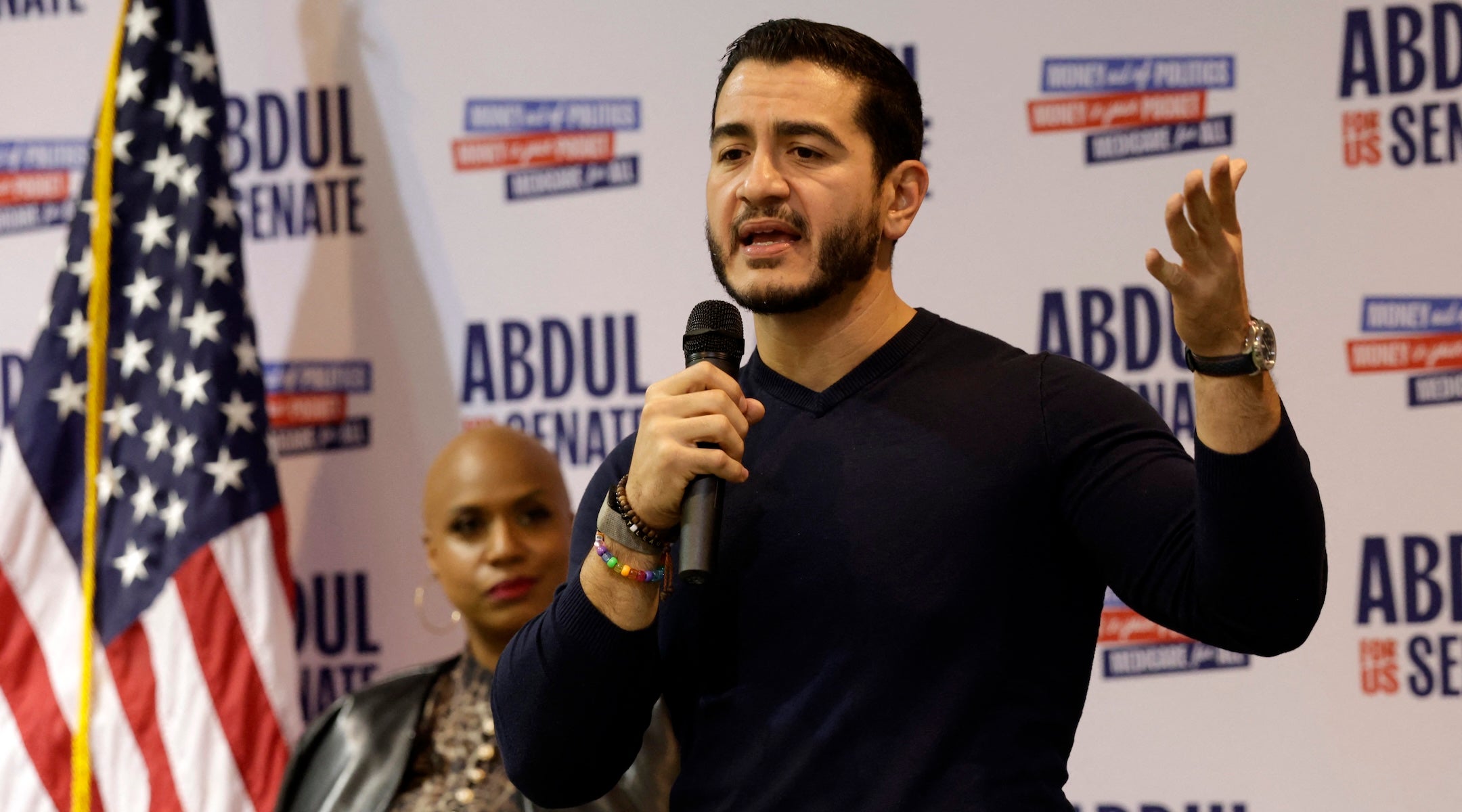
(JTA) — ANN ARBOR, Michigan — An 11th-hour public feud between Michigan Democratic U.S. Senate candidate Abdul El-Sayed and his pro-Israel former primary rival is further exacerbating tensions between Jewish voters and the nominee ahead of Tuesday’s midterm elections.
U.S. Rep. Haley Stevens, who this summer narrowly lost the race for the Democratic nomination to El-Sayed, had previously endorsed her former competitor and was set to join him at a rally Sunday in the crucial final days of campaigning. Michigan is locked in a tight race that could help determine which party controls the Senate.
Instead of a show of unity, Stevens is now forcefully criticizing El-Sayed for his recent criticism of Israel and for not condemning a PAC ad, made by an outside group to boost his campaign, that blamed Israel for rising grocery prices. El-Sayed has shot back, invoking Stevens’ close relationship with the pro-Israel lobby AIPAC.
Stevens, who represents a large Jewish district in suburban Detroit, unloaded on El-Sayed Friday in a series of interviews with the New York Times published early Saturday morning.
On social media Friday, Stevens had said she expected El-Sayed to shortly condemn the ad, paid for by Rebellion PAC, a project of far-left commentator Cenk Uygur. El-Sayed had earlier distanced himself from the ad but had not commented on its content.
“We are not going to say that the cost of groceries is because of Jews and the Jewish state,” Stevens told the Times, adding, “Maybe it is what you want people to believe.” She stopped short of formally rescinding her endorsement of El-Sayed.
The feud comes at a moment when much of the Democratic establishment has coalesced behind El-Sayed in the key Senate race, even as deep concerns remain among many traditionally Democratic Jewish voters. Stevens’ own fiancée, Jewish Democratic megadonor Jason Turkish, said this week he would be voting for Republican nominee Mike Rogers. Stevens told the Times she had met with a rabbi in advance of their wedding and was mulling converting to Judaism.

In a statement sent to the Jewish Telegraphic Agency and other outlets Friday, El-Sayed accused Stevens of “relitigating a primary that ended three months ago.” He also said he had already “defeated” spending “from outside corporations and AIPAC” on behalf of Stevens.
El-Sayed did not mention the Uygur ad, nor another ad — this one produced by his campaign — that featured a brief clip of far-right commentator and anti-Israel voice Tucker Carlson announcing he wouldn’t vote for Rogers. Stevens had publicly urged El-Sayed to take down the Carlson ad, which the campaign had aired on conservative TV channels.
The El-Sayed campaign has dropped Stevens’ name from its description of Sunday’s planned Detroit church event, which is now scheduled to feature Rep. Jim Clyburn of South Carolina and Sen. Angela Alsobrooks of Maryland. USA Today and other outlets have reported that El-Sayed’s campaign has asked Stevens to stay away from all future events.
Stevens and Turkish did not return a JTA request for comment.
In her social media statement Friday prior to El-Sayed’s response, Stevens had outlined Jewish constituent concerns about El-Sayed, noting that he himself has used rhetoric akin to blaming Michigan’s financial ills on Israel.
“The ad did not invent its argument; it dramatized one Dr. El-Sayed has made in his own words throughout this campaign: that Israel is the reason Michigan cannot afford schools, health care, and child care,” Stevens wrote. “Abdul promises to get money out of politics. He can begin by getting Israel out of his explanation for everything Michigan cannot afford.”
Both Turkish, in an earlier JTA interview from a Rogers event, and Stevens, to the Times, said their final breaking point with El-Sayed came after a recent debate in which the nominee had declined to say whether Israel or Iran posed a bigger threat to the United States.
El-Sayed on Friday did condemn a separate comment from anti-Israel streamer and former campaign ally Hasan Piker, who is Uygur’s nephew. In a stream this week, Piker had compared the heavily Jewish Detroit suburb of West Bloomfield to a “KKK neighborhood,” adding, “The supremacist attitude underlying their worldview is identical.”
In a statement to Jewish Insider about Piker’s comments, El-Sayed noted he grew up near West Bloomfield and stated, “Comparing Jewish Michiganders to the Ku Klux Klan is utterly inappropriate and flat out wrong.”
Meanwhile, Republicans are jumping at the Jewish divide. Rogers, a former congressman, has seized on the intraparty feud to appeal to Jewish voters who had supported Stevens in the primary. Earlier this week, President Donald Trump called Jews who back El-Sayed “crazy,” leading to condemnation from some Jewish leaders.
This article originally appeared on JTA.org.
The post Rift between Abdul El-Sayed and Haley Stevens puts Michigan Jews on edge appeared first on The Forward.
Uncategorized
These rivals in a close House race agree on Israel. They’re fighting over who Jewish voters can trust.
Israel and antisemitism have emerged as central issues in several closely watched midterm races. But in New York’s 17th Congressional District, where Jewish voters could help decide one of the country’s most competitive House contests, the two candidates have more in common on those issues than their campaigns suggest.
Cait Conley, the Democratic challenger to incumbent Republican U.S. Rep. Mike Lawler, is not a progressive Democrat who Republicans have been warning Jewish voters about in recent campaigns. An Army combat veteran and former national security official, she strongly supports Israel, opposes additional conditions on U.S. military aid and rejects accusations that Israel committed genocide in Gaza. She has also criticized New York City Mayor Zohran Mamdani over his statement marking the third anniversary of the Oct. 7, 2023 Hamas attack and has vowed to confront antisemitism within her own party. But that may not be enough to win Jewish votes from Lawler, who is popular with Jewish voters.
The district includes Rockland and Putnam counties and parts of Westchester and Dutchess. It has one of the largest Jewish populations in the country, with Jews making up an estimated 19% of its population, according to a 2024 study. It is one of the key House races where Jewish voters could make the difference in a closely contested election that will determine which party controls Congress.
Kamala Harris carried the district by a narrow 50-49 margin in 2024, and it voted for Joe Biden by a 59-39 margin before that. The late Jewish congresswoman Nita Lowey, a Democrat, represented the district for three decades until her retirement in 2020. Her successor, former Rep. Mondaire Jones, chose not to run in the redrawn district in 2022 and instead lost a bid for a House seat representing parts of Manhattan and Brooklyn. During his unsuccessful 2024 campaign against Lawler, Jones had to delete a social media post that some deemed insulting to Orthodox Jews after he remarked that the former Republican House Speaker’s meeting with Rabbi David Twersky, the 86-year-old spiritual leader known as the Skverer Rebbe in Rockland County, “was a waste of everyone’s time.”
Conley, 31, faces a difficult challenge in her bid to unseat Lawler, who has deep relationships with Orthodox and Hasidic voters since he first won his seat in the 2022 midterms by a narrow margin of about 2,000 votes, thanks in part to strong support from the large Hasidic communities in Monsey, New Square and New Hempstead in Rockland County.
That makes the race a test of whether a moderate, pro-Israel Democrat can win back Jewish voters who have grown concerned about the growing influence of progressives within the Democratic Party.
In separate interviews with the Forward, Conley and Lawler both stressed their support for Israel and commitment to fighting rising antisemitism. To draw a contrast, Lawler, 40, questioned whether Conley would stick to her positions if elected, while Conley accused him of using his ties to Jewish voters to distract from his support for President Donald Trump’s agenda.
A Democrat who rejects conditions on Israel aid
Conley, a West Point graduate and 16-year Army combat veteran who later served as counterterrorism director on President Joe Biden’s National Security Council and oversaw election security efforts at the Department of Homeland Security, occupies a different position on Israel than many progressive Democrats.
She supports Israel’s right to exist as a Jewish and democratic state, backs continued U.S. military assistance and opposes imposing conditions on that aid, including on offensive weapons.
“I do not believe that what is going on in Gaza is a genocide, and I do not believe in further conditioning assistance to Israel, so it continues to have the means to defend itself against the very real threats that are posed,” Conley said in an interview. “I will be an effective and strong advocate for the Jewish community and assistance to Israel in the Democratic Party.”
Conley said her experience serving in the Middle East shaped her understanding of the threats Israel faces, particularly from Iran and terrorist organizations.
At the same time, she supports a two-state solution and believes American politicians should be able to criticize Israeli Prime Minister Benjamin Netanyahu or other Israeli leaders without questioning Israel’s legitimacy. She expressed concern, though, that criticism of Israeli government policies can sometimes become an excuse for targeting Jews. Conley also supports expanding federal security grants for synagogues and other religious institutions.
Conley said she supported the targeted American strikes on Iranian nuclear facilities in 2025, but opposes Trump’s war with Iran because she believes it has made the United States less secure and increased energy prices.
Lawler isn’t buying Conley’s pro-Israel pitch
Lawler dismissed the suggestion that he and Conley hold essentially the same positions on Israel and antisemitism.
“That’s laughable on its face,” he said in an interview.
His central argument is that Conley may sound like a moderate on the campaign trail but would ultimately follow Democratic leaders in Congress, as support for Israel becomes increasingly divisive within the party.
“She’ll be a rubber stamp on whatever the majority of the Democrats want to do,” Lawler said, citing the July vote to eliminate the $3.3 billion in annual military assistance to Israel. A record 103 of 212 Democrats supported the measure. Another 10 Democrats abstained. Conley “is not going to stand up and be a lone voice on these issues,” he said.
“At the end of the day,” Lawler added, “I have a very clear record of delivering on these issues, and there’s staunch differences in approach.”
A Republican who speaks the community’s language
Lawler’s relationship with Orthodox and Hasidic voters goes beyond his positions on Israel. A practicing Catholic, Lawler has made those relationships part of his political brand, going back to his election to the State Assembly in 2020. He has taken credit for lowering the temperature in Rockland County after local GOP officials in 2019 posted a video widely criticized as antisemitic. He regularly attends community celebrations and has helped arrange meetings between local rabbis and religious leaders, President Donald Trump and Republican leadership.
Earlier this year, William Paul, the son of Sen. Rand Paul of Kentucky, confronted him in a Washington bar, believing the New York congressman was Jewish. Paul later apologized and said he has a drinking problem for which he is seeking treatment.
His presence in the community has become so familiar that his campaign even has Yiddish materials and songs promoting his reelection. The songs are shared in popular WhatsApp groups, played at weddings and blasted from trucks driving through Hasidic neighborhoods to encourage people to vote.
Lawler’s campaign is aiming to surpass the 22,000 votes he received in Hasidic neighborhoods in 2022 and 26,000 votes in 2024, as polls show the race is a dead heat. In an interview with Punchbowl News, he predicted 30,000 Orthodox votes, arguing that the community’s participation is difficult for pollsters to capture.
In his interview with the Forward, Lawler said his popularity comes from a simple strategy: showing up.
“I am really the first elected official that has shown up, you know, consistently and publicly in this community, and not just to see the leadership of the community, but to meet the people,” he said. Lawler has even picked up some Yiddish vocabulary along the way. Asked what word he had learned, Lawler quipped, “I love the word shanda to describe Chuck Schumer,” using a Yiddish term for disgrace about the Senate Democratic leader, who is Jewish.
Lawler believes his efforts have helped build support beyond the Orthodox and Hasidic communities, including among Reform and secular Jews who might otherwise vote Democratic but are concerned about their party’s direction on Israel. “Democrats have effectively abandoned Jewish Americans,” he said.
Conley acknowledged Lawler’s visibility in the community but questioned whether it is matched with policies that benefit Jewish families. “Mike Lawler shows up for the photo op, but when it comes to acting, he turns his back on the community every time,” she said. Conley pointed particularly to his support for Republican-led legislation cutting Medicaid spending and other federal benefits.
A fight over antisemitism in politics
Conley said her own outreach has focused on convincing Jewish voters that she understands their security concerns and shares their commitment to Israel, even as she disagrees with Lawler on domestic policy.
She also spoke of a personal connection to the Jewish community as a member of the LGBTQ community, recalling how Jewish Americans stood up for LGBTQ rights. “That’s why I proudly stand beside them and let them know that there are people who deeply care and will proudly stand shoulder to shoulder with them and fight back against antisemitism,” she said.
As Lawler highlights his ties to Jewish voters and questions whether Conley would stand up to anti-Israel voices in the Democratic Party, Conley accuses him of associating with Republicans who have faced accusations of antisemitic rhetoric and ties to white nationalists.
She said Lawler had a double standard: condemning antisemitism among Democrats while supporting Republicans who have faced accusations of antisemitic rhetoric or associations with white nationalists. “He is the biggest hypocrite,” she said of Lawler. “He is a political operative who will do whatever is politically convenient for his political ambition.”
Conley cited, for example, Peter Oberacker, a Republican state legislator running against Democratic Rep. Josh Riley in the neighboring 19th District, who came under fire after a Facebook post from Veterans Day 2015 resurfaced in which he paid tribute to his grandfather who served in the Nazi-German military during World War II. Lawler attended Oberacker’s campaign launch last year and praised him. Lawler also contributed $5,000 to his campaign.
Conley described Oberacker as an “overt Nazi sympathizer” and said Lawler’s support for him undermined his claim to be a defender of Jewish Americans. Conley also pointed to Lawler’s past connections with members of the New York State Young Republicans, whose group was disbanded following a Politico investigation exposing racist and antisemitic messages. Lawler condemned it and called for those involved to resign from leadership positions.
Asked directly about the criticism, Lawler defended Oberacker. “He’s not an antisemite,” Lawler said, adding that Oberacker represents Jewish constituents in the state Senate. He dismissed Conley’s accusations as an attempt to distract from her own political alliances. “I think Cait is grasping at straws,” he said.
Lawler pointed to Conley’s decision to run on the Working Families Party ballot line, a progressive party that endorsed Mamdani in last year’s mayoral primary and has accused Israel of genocide. He also noted her remarks in a September interview, when she said that she “respects” what Mamdani represents to many New Yorkers. “I don’t respect antisemites,” Lawler said.
Lawler was the lead sponsor of the bipartisan Antisemitism Awareness Act that would require the Department of Education to use the controversial International Holocaust Remembrance Alliance definition of antisemitism — which classifies most anti-Zionism as antisemitic — when investigating allegations of discrimination. It passed in the House in 2024 by an overwhelming majority of 320-91, but was stalled in the Senate due to resistance over constitutionally protected free speech. It was reintroduced in the House last year.
More recently, Lawler partnered with Rep. Josh Gottheimer, a Jewish moderate Democrat from New Jersey, on a bipartisan House resolution condemning antisemitic rhetoric from online personalities including Hasan Piker and Candace Owens.
Conley said she recognizes the rise of “extremism and antisemitism in both parties” and has heard from Jewish voters who feel abandoned by some of the same political allies they once supported. By speaking out on these issues and committing to confront them within her own party, Conley is aiming to convince these voters that they do not have to support a Republican to feel protected.
“The Jewish community knows they have a home in the Democratic Party. Period,” she said.
The post These rivals in a close House race agree on Israel. They’re fighting over who Jewish voters can trust. appeared first on The Forward.
Uncategorized
BDS is on the ballot in Illinois, sort of
(JTA) — On a recent weeknight, a local Jewish federation official met with a small group of Jews in suburban Chicago for an election organizing event.
Leaders of the group preemptively barred journalists, and anyone they deemed could be a journalist, from entry on Zoom.
Chicago Jewish leaders were quietly organizing an effort with big implications: how to convince voters to defend a state law designed to shield Israel from boycotts.
“It’s a fight, to put it simply,” Dan Goldwin, public affairs officer at Chicago’s Jewish United Fund, told the Jewish Telegraphic Agency.
JUF and other Jewish groups, Goldwin said, would be mounting “planned and meaningful opposition” to growing progressive efforts to overturn the law, which bars the state from investing pension funds in international companies that boycott Israel. Illinois was the first state to pass a law targeting the Boycott, Divestment, Sanctions movement, and many other states followed suit soon after.
Now activists in some Illinois towns are leading the charge to repeal that first-in-the-nation law. Those efforts have resulted in a handful of ballot measures ceremonially opposing the law that will appear in municipalities around the state on Nov. 3.
“Illinois, which was really a laboratory for creating anti-BDS state laws years back, inevitably has become a site for backlash,” James Loeffler, a Jewish historian at Johns Hopkins University and author of “Exceptional Hatred: Antisemitism and the Fight Over Free Speech in Modern America,” told JTA.
The measures appear to have no binding power over the anti-boycott law itself, which has been on the books since 2015 and would require action by the state legislature and governor to overturn.
A representative for JB Pritzker, Illinois’ Jewish Democratic governor who is often rumored to be a 2028 presidential candidate, did not return a request for comment on Pritzker’s views about the state law or the ballot initiatives.
Yet the municipal measures, which will be presented to the Chicago suburb of Oak Park as well as communities around Champaign, Peoria and other towns, come at a moment when support for Israel has declined precipitously, particularly among Democrats. Following the country’s military response to the Oct. 7, 2023, Hamas attacks, interest in BDS as a lever of protest has been rekindled on the left.
Residents of Providence, Rhode Island, will vote on a more consequential measure on Election Day that could result in the city divesting its pension funds from Israel. Somerville, Massachusetts, a Boston suburb, has been charged with finding a way to do the same following a successful divestment vote last year.
The Illinois BDS campaign, in contrast, targets a statewide law that has been on the books for more than a decade. Activists turned to gathering signatures for ballot measures in a handful of communities after a state representative’s efforts to repeal the law were scuttled during the most recent legislative session.
The law was signed by Pritzker’s Republican predecessor, Bruce Rauner. Upon its initial passage, the law was celebrated by Jewish leaders including the then-head of the JUF, Chicago’s Jewish federation arm.
“In the face of the BDS movement, legislators are simply determined to stand with a key U.S. ally and to align our values with our investments and trade policies,” Steven Nasatir wrote then.
He praised the Illinois law as having “real teeth” and stated, “We’re seeking to replicate our statewide success on the county and local level throughout Illinois and to assist other communities to do the same across the country.”
Dozens of other states, led by both Democrats and Republicans, have since followed suit with similar laws, many of which are more restrictive than Illinois’. Among the most contentious anti-BDS laws is in Arkansas, which requires anyone doing business with the state to sign a pledge affirming they will not boycott Israel.
Such laws have been challenged numerous times in court, with objectors arguing that they impinge on free speech rights. Loeffler sees the laws as “a continuation of a long story of trying to balance free speech versus equal protection in the law, when it comes to Jewish Americans.”
In 2023 the U.S. Supreme Court declined to hear a challenge to Arkansas’ law, allowing it to stand without providing a defense of the general legality of such laws.
Daniel Biss, a Jewish Democratic congressional candidate running for a seat in Illinois, recently told JTA that he supports efforts to repeal the state law.
“I don’t support the BDS movement,” Biss, who held Israeli citizenship when he was younger, told JTA during a recent visit to Detroit. “I don’t think it builds a broad coalition for justice. But I also don’t think government should be involved in criminalizing free speech, and I think it’s important to say that the law on the books in Illinois is very strange.”
Proponents of Illinois’ law argue that it is narrower in scope than other state anti-BDS laws, targeting only international companies that have boycotted Israel for political reasons.
“We don’t want to be seen as restricting people’s ability to protest and boycott on their own,” Goldwin told JTA. The goal, he said, was to ensure that the state’s “priorities are aligned in how they invest.”
But even with those limitations, the list of companies barred from Illinois state investments for boycotting Israel – currently numbering 27, according to the state investment board that applies the law – includes entries that appear to go beyond the parameters of the law.
One of the companies is Air Canada, which Goldwin said was on the list because of years-old news items about the airline dropping Israeli-owned Sabra hummus from its in-flight menu. According to Goldwin, the state investment board gave the airline an opportunity to affirm that they are not boycotting Israel but Air Canada has not done so. Goldwin believes that is due to simple oversight.
“Mistakes can happen,” Goldwin said. “It’s just amplified because everything gets so focused on Israel.” A spokesperson for Air Canada did not return a JTA request for comment.
The most significant town casting a vote on the symbolic rejection of Illinois’ anti-BDS law is Oak Park, which also has the most organized Jewish community of the municipalities where these votes are being held. Oak Park’s ballot measure, as written, asks the state to “repeal laws that ban state investment in businesses that boycott the state of Israel.”
Jewish Community and Friends for Democracy, a local ad-hoc group, is organizing against the ballot measure with the help of JUF.
“We are hopeful that Oak Park voters will reject the divisive and misleading campaign,” a recent communication from Jewish Community and Friends for Democracy to its supporters reads. “Neighbors hearing from their Jewish neighbors and friends makes a big difference—indeed, it may make ‘THE’ critical difference in the outcome.”
The group’s organizers declined requests from JTA to comment. The ballot measure followed an earlier effort by activists in Oak Park Township, a separately incorporated community, to pass a more stridently worded BDS measure by voice vote at a town hall meeting. After local Jewish groups mobilized against the township measure, that effort was defeated.
This summer, following the signature-gathering phase, two Oak Park residents filed an objection in an unsuccessful effort to prevent the new measure from reaching the ballot on technical grounds. A follow-up lawsuit challenging the objection was also unsuccessful in preventing the measure from making the ballot.
Oak Parkers For Free Speech, a local activist group that had pushed the ballot measure, told JTA in August that the successful ballot placement “marks a victory for democracy.”
“By upholding our referendum, the board affirmed the right of community members to tell legislators that their constituents want the unconstitutional Illinois anti‑boycott law repealed,” the group wrote in an emailed statement. “On election day, we look forward to a victory for free speech and human rights.”
Other regions casting votes on whether to oppose the anti-BDS law include Champaign and Cunningham Townships, located near and around the University of Illinois; Normal Township, near Illinois State University in Bloomington; and multiple townships in the Peoria area in central Illinois.
The Jewish federations of Champaign-Urbana and Peoria did not return requests for comment. Rebecca Weininger, regional director for the Anti-Defamation League’s Midwest office, told local news outlets, “The social impact of repealing the anti-BDS law will be catastrophic to Jews.”
This article originally appeared on JTA.org.
The post BDS is on the ballot in Illinois, sort of appeared first on The Forward.
Uncategorized
What happened when Isaac Herzog asked 150 Jews to solve their people’s problems
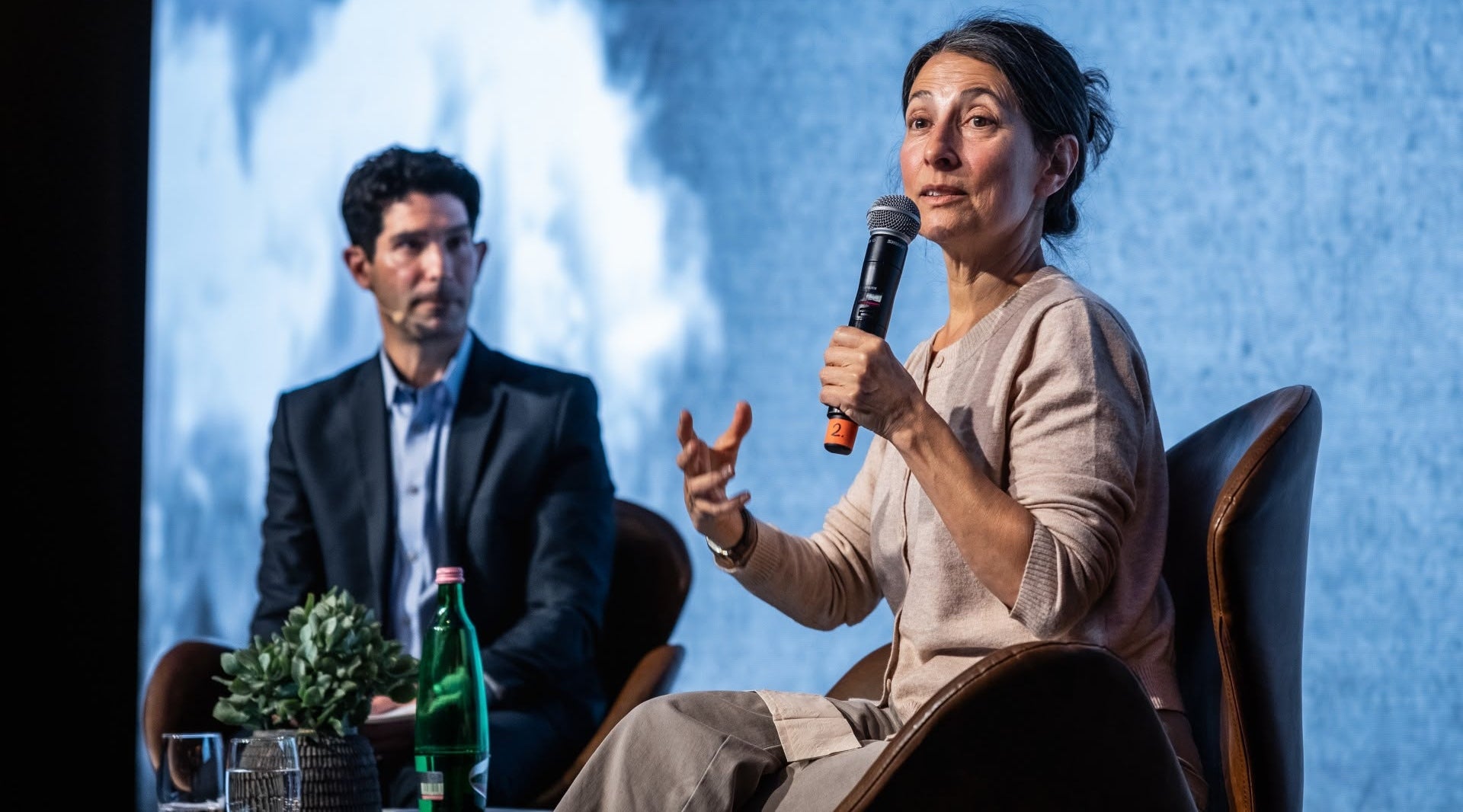
(JTA) — BUDAPEST — After a gala dinner attended by Israeli President Isaac Herzog, most of the guests at the closing conference of his Voice of the People (VOP) initiative in Budapest were in no hurry to call it a night, staying on to dance to Israeli pop music.
That so many stayed for the obligatory let-your-hair-down activity, so often a cringe-inducing, sparsely attended affair at gatherings like these, was an encouraging sign. There was plenty to unwind from: 18 months grappling with some of the Jewish world’s most divisive problems, with war disrupting their work along the way.
Herzog conceived the initiative amid Israel’s bitter divisions over judicial reform, but its launch was delayed by Oct. 7. Run in partnership with the Jewish Agency and the World Zionist Organization, the VOP receives funding from the Azrieli Foundation, the Wilf Family Foundations and the Patrick and Lina Drahi Foundation. Part global networking venture, part Jewish version of “Shark Tank,” VOP divided 150 council members, drawn equally from Israel, North America and the rest of the world, into 10 working groups tasked with coming up with solutions for five major challenges: antisemitism, polarization, Jewish identity and heritage, Israel-Diaspora relations, and relations between Jews and non-Jews.
Over the 18 months, the groups developed 38 initiatives, with more than 20 reaching the proof-of-concept stage and 21 receiving seed grants of up to $20,000.
At the three-day finale in Budapest last month, council members presented projects ranging from artificial intelligence tools designed to bridge communal divisions to programs exploring Jewish identity through meditation and movement.
Yet only 89 of the original 150 council members attended the conference in Budapest. The conference had been postponed because of the war with Iran, leaving some unable to attend, while others had dropped out or disengaged along the way. Organizers had established an ethics committee and barred those who had failed to meet their participation commitments.
One council member from North America, who requested anonymity to speak candidly, said their 15-person working group had dwindled to nine after the inaugural gathering in Haifa in March 2025. It raised questions about whether Herzog had set himself an impossibly ambitious task: bringing together a diverse array of Jews and expecting them to produce lasting results. Or, as the council member quipped, if two Jews have three opinions, what happens when you bring together 150?
An algorithm helped select council members according to age, gender, religious affiliation, professional background and other characteristics, organizers said, with the aim of assembling a group that reflected a far wider cross-section of Jewish life than conventional communal leadership forums.
One of the few conditions for admission was recognizing Israel as the state of the Jewish people. But that hardly eliminated ideological tensions, with some left-leaning participants feeling silenced in disputes over Israel’s actions in Gaza, while Haredi participants objected to pluralistic values being treated as axiomatic.
Shirel Dagan Levy, Voice of the People’s CEO, said the aim was to cultivate “generous leadership,” in part through what she called “radical listening” to people with opposing views.
“It’s tough. You have to sit there and feel uncomfortable with listening, but you realize, what can I learn from this?” she said.

During one session at the Budapest conference, Rachel Goldberg-Polin, whose son Hersh was murdered in Hamas captivity, spoke about the difficulty of engaging with people whose views are deeply upsetting.
“This is what really being human is about: grappling, struggling and wrestling with how we do this. How do we see the godliness in the person across from us who’s saying things that we digest as hateful? How does that work?” she said.
Aleeza Ben Shalom, the star of Netflix’s “Jewish Matchmaking,” said the relationships forged among council members were the initiative’s greatest achievement.
“The most powerful thing about this is the network that we created,” she said.
It was a sentiment shared by Ranit Budaie-Hyman, CEO of Meitarim, an Israeli network of integrated religious-secular schools, who collaborated with fellow council members on Mitzion Tetze Torah, a project promoting social cohesion among Israeli schoolchildren. Its educational materials, sent to 50 schools, include games introducing children to Jewish and democratic values. One of the others in her group, Jeremy Leibler, president of the Zionist Federation of Australia, invited Budaie-Hyman to speak at a Jewish educators’ conference in Melbourne, an opportunity she said would never have arisen without the council.
The project’s name, Hebrew for “From Zion shall go forth the Torah,” reflected the group’s belief that divisions affecting Jewish communities worldwide needed to be addressed first in Israel.
“Polarization starts in Israel and affects the world,” Budaie-Hyman said.
Not everyone agreed. Other members of her wider working group argued that each Jewish community faced its own particular divisions and went on to develop a separate initiative.
Herzog, who combined the conference with a state visit to Hungary, said Israel needed to listen more closely to Diaspora Jews, telling reporters on the conference sidelines that “whatever we do or say in Israel affects Jews around the world.”
Yuval David, a filmmaker and LGBTQ activist, was part of a working group focused on relations between Jews and non-Jews.
“Being here means being with doers,” he said. “They don’t just talk about what needs to be done, they take action. They’re motivated and they motivate others.”
The group developed the Jewish & Indian Alliance, seeking to strengthen ties between Jewish communities and the vast Indian diaspora. The alliance has already organized gatherings in Los Angeles and Tel Aviv, bringing together diplomats, entrepreneurs and community leaders to explore cooperation in business, technology and education.
But coordinating the working groups across continents was no small undertaking. Interviews with council members and facilitators revealed the difficulties of scheduling lengthy, sometimes weekly Zoom meetings across time zones, particularly as members were participating on a voluntary basis alongside demanding professional commitments.
“Everyone is extremely busy,” Budaie-Hyman said. “But it’s very important so I feel like there’s no choice. It’s totally worth it.”
For at least one participant, pursuing the project meant giving up his day job. Joshua Buchalter left his position at an Israeli software company to concentrate on OneBayit, a nonprofit platform connecting Israelis traveling abroad with Jewish families willing to host them for Shabbat and holiday meals.
Some council members complained that the inaugural gathering in Haifa had been dominated by lectures and presentations, leaving insufficient time for networking and practical collaboration. Ben Shalom said organizers had taken that feedback seriously, significantly increasing opportunities for members to interact at the Budapest conference.
Other complaints were more fundamental. Several council members questioned whether they had been recruited to exercise leadership or to participate in a tightly managed process in which organizers ultimately determined which ideas could proceed. Frustrations included the rejection of proposals that members had hoped to pursue. One member, speaking on condition of anonymity, said the expectations had never been adequately explained.
“We weren’t told the rules of the game,” the council member said. “We asked from the beginning what the goal was and were told: Go figure it out.”
Dagan Levy pushed back, saying that some proposals had failed to pass the evaluation process, while other groups produced no projects. But she argued that projects were not the only measure of success.
“You don’t have to come up with an initiative to be a great council member,” she said.
A former technology executive, Dagan Levy compared the experience to launching a startup, where trial and error are expected. “We had failures, but I’m proud of them,” she said. “You test, you pivot, you grow.”
Nate Looney, a transgender U.S. Army veteran and director of community safety and belonging at the Jewish Federations of North America, was among those not working on an initiative, but the uncertainty that frustrated other participants was precisely what appealed to him.
“Honestly, that was a part of what drew me to it,” he said. “They made it clear from the beginning that they’re figuring it out and the fact that they were approaching it that way versus saying, ‘we know exactly what we’re doing so jump on board,’ made me more interested.”
Organizers have promised clearer guidance for Voice of the People’s second cohort, which attracted 2,500 completed applications. The program has been shortened to 16 months, with its first four months devoted to building relationships before members vote on which challenges to address. Working groups will have three possible outcomes: launching a new initiative, organizing a campaign or developing a proposal for an existing organization to implement. Organizers also said they were working to improve how contentious discussions and ideological disagreements are handled.
Looney said he remained invested because he believed in where the initiative was headed, despite some bumps along the way.
“If you’re in innovation, your first idea is not always going to be what gets you to your moonshot,” he said. “But it gets you started on the path.”
This article originally appeared on JTA.org.
The post What happened when Isaac Herzog asked 150 Jews to solve their people’s problems appeared first on The Forward.
