


Uncategorized
She claims she saw Hitler’s ashes and danced with Goering. But is any of it true?
Hitler and My Mother-in-Law
By Terese Svoboda
O/R Books, 416 pages, $23.00
Patricia Hartwell had many stories from her time as a correspondent for the US Office of War Information. Once, she said, she took a picture with Adolf Hitler’s ashes so American citizens would see that the war was over. It’s a thrilling tale, but nobody knows if it’s true.
The mystery surrounding this photo — where it is, if the ashes were actually Hitler’s, whether there even was a picture — takes center stage in Hitler and My Mother-in-Law, a lengthy memoir by author Terese Svoboda.
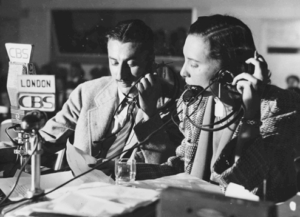
As a correspondent for the US Office of War Information during World War II, Hartwell was the first female reporter to arrive at Dachau and Hitler’s Eagle’s Nest. She also pocketed several of Hermann Goering’s medals. Well-researched, engaging, and occasionally cringe-inducing in its depiction of awkward interactions between Svoboda and Hartwell, the book paints Hartwell as a woman who was both morally dubious and undeniably impressive.
Svoboda, author of the novels Cannibal and Dog on Fire, has plenty of reasons not to believe her mother-in-law, who died in 1998 at age 82. She lied in an oral history of Hawaii’s State Foundation on Culture and the Arts about being accepted into Harvard Law School in 1936, even though women weren’t admitted there until 1950. She claimed several times to have been close friends with Eleanor Roosevelt and that she was invited to stay in the White House on occasion. No records of such a relationship with the former-First Lady exist.
While Svoboda doesn’t hold back her criticisms of her mother-in-law — and she has plenty — the memoir does not demonize her. Instead, Svoboda attempts to understand her mother-in-law’s penchant for embellishment in the context of the patriarchal society in which she lived, one that forced impressive women to be quiet about their achievements. Maybe struggling so long for recognition led Hartwell to feel the need to exaggerate her life story.
The book does not just explore the lies Hartwell told others but also the ones she told herself, such as refusing to believe that her second husband, Dickson Hartwell, a World War II veteran and fellow journalist, beat her children.

And yet among all the falsehoods, there are known facts about Hartwell’s life that seem stranger than the ones she invented. During the Allied occupation of Germany, Hartwell served briefly as the mayor of Berchtesgaden, a resort town where Hitler and other Nazi leaders vacationed. She got to see a collection of looted art recovered from Goering — and picked out a painting to take home. Apparently it wasn’t unusual for members of the American press and military to take souvenirs, no matter how heinous their origin story.
The piece, one of Lucas Cranach’s many versions of “Cupid Complaining to Venus,” was one of Hitler’s favorites. Nearly two decades after Hartwell brought it back to New York, Dickson sold the painting, apparently without her permission, to E. A. Silberman Galleries in order to purchase a small newspaper in Arizona. The Jewish-owned art firm then sold the painting to the National Gallery of London for over a hundred times more than what they bought it for.
Hartwell also claimed to have danced with Goering at a party that the American soldiers held the night of his arrest. According to some reports, rather than punishing Goering, the military fraternized with him. Based on her own archival research, Svoboda determines this claim to be plausible.
Why, Svoboda wonders, would Hartwell “want to boast of not only meeting the second most evil Nazi, but dancing with him?” If it’s a lie, it’s one that seems to work against its teller. If it’s the truth, it’s one most people would probably like to keep hidden. To some, whether it’s fiction or not may not be important. But Svoboda contends that to those who want to understand the type of person Hartwell was, the truth behind this story is crucial.
Although Svoboda remembers seeing the photo of Hartwell with Hitler’s ashes, it never resurfaced after the woman’s death. According to Svoboda’s husband, Hartwell’s oldest son, the ashes were not Hitler’s, just a random pile picked for a posed photo to mark the end of the war. No matter who — or what — the ashes belonged to, it’s the power behind the story, one of a fallen dictatorship, that mattered. And Hartwell clearly understood the power of stories.
The post She claims she saw Hitler’s ashes and danced with Goering. But is any of it true? appeared first on The Forward.
Uncategorized
Katz: ‘Israel’s Goal in Lebanon is to Disarm Hezbollah’

Then-Israeli transportation minister Israel Katz attends the cabinet meeting at the Prime Minister’s office in Jerusalem, Feb. 17, 2019. Katz currently serves as the foreign minister. Photo: Sebastian Scheiner/Pool via REUTERS
i24 News – Israel’s Defense Minister Israel Katz held a situation assessment Friday with senior military and defense officials, reiterating that the country’s policy in Lebanon remains focused on disarming Hezbollah by military and political means. Katz emphasized that the goal applies “regardless of the Iran issue” and pledged continued protection for Israeli northern communities.
Katz said the Israel Defense Forces are completing ground maneuvers up to the anti-tank line to prevent direct threats to border towns. He outlined plans to demolish houses in villages near the border that serve as Hezbollah outposts, citing previous operations in Rafah and Khan Yunis in Gaza as models.
The Defense Minister added that the IDF will maintain security control over the Litani area and that the return of 600,000 residents of southern Lebanon who had evacuated north will not be permitted until northern communities’ safety is ensured. Katz also reaffirmed that the IDF will continue targeting Hezbollah leaders and operatives across Lebanon, noting that 1,000 terrorists have already been eliminated since the start of the current campaign.
“We promised security to the northern towns, and that is exactly what we will do,” Katz said. He further warned that the IDF will act decisively against rocket fire from Lebanon, stating that Hezbollah “will pay heavy prices.”
Uncategorized
Pope Leo Urges Israel’s Herzog to End Iran War in Phone Call, Vatican Says

Pope Leo XIV delivers a homily during the Palm Sunday Mass in Saint Peter’s Square at the Vatican, March 29, 2026. Photo: REUTERS/Remo Casilli
Pope Leo spoke on the phone with Israeli President Isaac Herzog on Friday and urged him to “reopen all paths of dialogue” to end the Iran war, the Vatican said.
The pope, who has emerged as a sharp critic of the regional conflict, also urged Herzog to protect civilians and promote respect for international and humanitarian law, the Vatican added.
Uncategorized
Iran Leaders Join Crowds on Tehran’s Streets to Project Control in Wartime

Iranians gather at a park on Nature Day, amid the U.S.-Israeli conflict with Iran, in Tehran, Iran, April 2, 2026. Photo: Majid Asgaripour/WANA (West Asia News Agency) via REUTERS
After more than a month of being stalked by targeted assassinations, Iran’s leadership has adopted a new tactic to show it is still in control – with senior officials walking openly in the streets among small crowds who have gathered in support of the Islamic Republic.
In recent days, Iran’s president and foreign minister have separately mixed with groups of several hundred people in central Tehran. On Tuesday, state television aired footage of the two posing for selfies, talking to members of the public and shaking hands with supporters who had gathered in public areas.
According to insiders and analysts, the appearances are part of a calculated effort by Iran’s theocratic leadership to project resilience and authority — not only over the vital Strait of Hormuz but also over the population — despite a sustained US-Israeli campaign aimed at “obliterating” it.
One insider close to the hardline establishment said such public outings are intended to show that the Islamic Republic is “unshaken by strikes and that it remains in control and vigilant” as the war grinds on.
The US-Israeli war on Iran began on February 28 with the killing of veteran Supreme Leader Ayatollah Ali Khamenei and several senior military commanders in waves of strikes that have since continued to target top officials.
Iran’s new Supreme Leader, Mojtaba Khamenei, has not been seen in public since taking over on March 8 from his father. Foreign Minister Abbas Araqchi, meanwhile, was removed from Israel’s hit list amid mediation efforts last month, including by Pakistan, to bring Tehran and Washington together for talks to end the war.
Talks aimed at ending the war have since appeared to have petered out, as Tehran brands US peace proposals “unrealistic.” Against that backdrop, recent public appearances by President Masoud Pezeshkian and Araqchi appear designed to project defiance, if not a convincing display of public support.
A senior Iranian source said officials’ public presence demonstrates that “the establishment is not intimidated by Israel’s targeted killing of top Iranian figures.”
Asked whether Iran’s foreign minister or president were on any sort of kill list, an Israeli military spokesperson, Nadav Shoshani, said on Friday he would not “speak about specific personnel.”
NIGHTLY RALLIES TO SHOW RESILIENCE
Despite widespread destruction, Tehran appears emboldened by surviving weeks of intense US-Israeli attacks, firing on Gulf countries hosting US troops and demonstrating its ability to effectively block the Strait of Hormuz.
On Wednesday, US President Donald Trump vowed more aggressive strikes on Iran, without offering a timeline for ending hostilities. Tehran responded by warning the United States and Israel that “more crushing, broader and more destructive” attacks were in store.
Encouraged by clerical rulers, supporters of the Islamic Republic take to the streets each night, filling public squares to show loyalty even as bombs rain down across the country.
Analysts say the establishment is also seeking to raise the “political and reputational” cost of the strikes at a time when civilian casualties are deeply disturbing for Iranians.
Omid Memarian, a senior Iran analyst at DAWN, a Washington-based think tank, said the decision to send officials into gatherings reflects a layered strategy, including an effort to sustain the morale of core supporters at a moment of acute pressure.
“The system relies heavily on this base; if its supporters withdraw from public space, its ability to project control and authority weakens significantly,” Memarian said.
Speaking to state television, some in the crowds voice unwavering loyalty to Iran’s leadership; others oppose the bombing of their country regardless of politics; and some have a stake in the system, including government employees, students and others whose livelihoods are tied to it.
Hadi Ghaemi, head of the New York-based Center for Human Rights in Iran, said the establishment is using such loyal crowds as human shields to raise the cost of any assassination attempts.
“By being in the middle of large crowds they have protections that would make Israeli-American attacks against them very bloody and generate sympathy worldwide,” he said.
POTENTIAL PROTESTERS STAY OFF STREETS AT NIGHT
The Islamic Republic emerged from a 1979 revolution backed by millions of Iranians. But decades of rule marked by corruption, repression and mismanagement have thinned that support, alienating many ordinary people.
While there has been little sign so far of anti-government protests that erupted in January and abated after a deadly crackdown, the establishment has adopted harsh measures – such as arrests, executions and large-scale deployment of security forces – to prevent any sparks of dissent.
Rights groups have warned about “rushed executions” during wartime after Iran hanged at least seven political prisoners during the war.
“Many potential protesters are frightened by the continuing presence of armed men and violent crowds in the streets and largely stay at home once darkness falls,” Ghaemi said.