



Uncategorized
Slain Security Guard of California Mosque Engaged Gunmen in Shootout, Hailed as Hero

A man places a candle on the ground as he pays his respects in front of the Islamic Center of San Diego after the vigil in a park, the day after a fatal shooting incident, in San Diego, California, US, May 19, 2026. Photo: REUTERS/Daniel Cole
The security guard slain at the Islamic Center of San Diego was hailed on Tuesday as a fallen hero who sacrificed his life to keep 140 school children inside the mosque safe by engaging two gunmen in a shootout that deterred the teenage suspects and helped thwart their attack.
Authorities also disclosed that the 17- and 18-year-old assailants, who took their own lives shortly after Monday’s shooting, were believed to have met online and were apparently “radicalized” in hate-related ideology on the internet.
Late on Tuesday, CNN reported that it had obtained and reviewed graphic video purported to be footage of the mosque shooting recorded and livestreamed by the two suspects, including a final clip that appears to show one of the gunmen shooting his companion and then himself.
A day after the gun violence, police, FBI, and other officials held a news conference focused on the three victims, all men affiliated with the mosque, who were slain in the attack and credited with putting themselves in harm’s way to save others.
The security guard, Amin Abdullah, 51, also known to friends as Brian Climax, immediately recognized the two youths as a threat and opened fire on them as they ran past him outside the mosque, according to San Diego Police Chief Scott Wahl. The suspects then paused to return fire, Wahl said.
Abdullah wound up fatally shot in the parking lot, along with two other men who distracted the suspects after they stormed into the building, drawing their attention through a window, thus luring the two teens back outside, Wahl said.
TWO MEN LURED GUNMEN OUTSIDE
The two other victims, mosque elder Mansour Kaziha, 78, and Uber driver Nadir Awad, 57, a neighbor whose wife worked as a teacher at the school there, were cornered and shot to death in the parking lot by the gunmen when they re-emerged.
In the midst of the confrontation, it was Abdullah who transmitted the radio call that activated a security lockdown, which Wahl said also prevented further bloodshed there.
The gunfight and the security alert gave others in the building time to take shelter behind locked doors, Wahl said, while Kaziha and Awad coaxed the suspects out of the building. Kaziha also was the first person to call 911 emergency before he was shot, police said.
Minutes before officers from around California‘s second-most-populous city converged on the mosque, the two suspects fled by car. They were found dead in their vehicle a short time later several blocks away, apparently from self-inflicted gunshot wounds, police said.
Wahl singled out Abdullah for special praise of his “heroic action,” adding that at first, “I had no idea how heroic those actions were.”
“His actions, without a doubt, delayed, distracted, and ultimately deterred those two individuals from gaining access to the greater areas of the mosque where as many as 140 kids were within 15 feet of these suspects,” Wahl said.
Taha Hassane, the imam and director of the Islamic Center, called all three of the victims “our martyrs and our heroes.”
Addressing a separate news conference at a local park, the security guard‘s daughter, Hawaa Abdullah, offered prayers and paid a tearful tribute to her father as a man who doted on his family and was so dedicated to his job that he would not break for meals when he was on duty.
She called on people of all faiths to honor him by coming together and being kind. “He stood against any form of hate,” she said.
PURPORTED LIVESTREAMED VIDEO OF SHOOTING
Police and FBI have said that they are investigating the attack as a hate crime but have declined to offer details about a possible motive.
“What I can say is [the suspects] definitely had a broad hatred towards a lot of folks,” FBI special agent Mark Remily told reporters.
Although authorities have not officially named the two suspects, the gunmen have been identified as Caleb Vasquez, 18, and Cain Clark, 17, a Department of Justice official told Reuters.
Remily said one of the gunmen left behind a manifesto, but he declined to characterize it in detail.
CNN reported that a 75-page manifesto from the gunmen citing racist, Islamophobic and antisemitic ideology, as well as “incel” culture, was under scrutiny by investigators.
The cable network said it had obtained a copy of the document from the Institute for Strategic Dialogue, which studies extremism, along with a video the two gunmen appeared to have recorded during their attack and posted to the internet in real time.
Summarizing the video in writing according to an AI-generated description of the footage, CNN said White supremacist symbols were visible on the two attackers’ guns and clothing as they are seen moving through the Islamic Center, with one firing a rifle before they walk back outside, fire a pistol, and then appear to stand over someone lying in a pool of blood.
CNN said it geolocated the final moment of the video to the neighborhood where police found two teens dead from gunshot wounds inside the getaway car. The footage ends with the driver stopping the vehicle, then appearing to shoot his passenger before shooting himself, according to the network.
A copy of a video that appears to match CNN’s written summary began circulating online on Tuesday.
Uncategorized
Tucker Carlson on Israeli TV: US, Israel Are ‘Not Democracies,’ Israel ‘Most Violent Country in the World’

Tucker Carlson speaks on first day of AmericaFest 2025 at the Phoenix Convention Center in Phoenix, Arizona, Dec. 18, 2025. Photo: Charles-McClintock Wilson/ZUMA Press Wire via Reuters Connect
Far-right podcaster Tucker Carlson came under fire after appearing on prime-time Israeli television and accusing both Israel and the US of betraying democracy, calling Israel “probably the most violent country in the world” and saying Prime Minister Benjamin Netanyahu had dragged President Donald Trump into the war with Iran.
In an interview with Channel 13 anchor and senior political analyst Udi Segal aired on Tuesday night, Carlson also repeated his claim that Israel’s actions in Gaza amounted to “genocide,” while saying the wording mattered less than what he described as the killing of civilians. The country had “definitely lost its morality,” he said.
When Segal pushed back, Carlson responded, “Israel has murdered all these children, thousands of children in Gaza. But the real criminal is me because I describe that as genocide. OK, it’s not genocide. It’s killing innocents. It’s wrong. You can call it genocide or ethnic cleansing. You can call it a crime, a sin, an atrocity. I don’t really care.”
Israel treats “Arabs like animals or sub-humans,” he added, not mentioning that Arabs, who comprise about 20 percent of Israel’s population, hold full political and civil rights and regularly serve at the highest levels of the government.
“That is not an attack on Jews,” Carlson continued. “Israel does not represent all Jews, despite its claims. It does not. That is factually incorrect, and you know it.”
The vast majority of Jews globally support Israel’s right to exist, with polls consistently showing that roughly 70% to 90% of Jewish adults feel an emotional attachment to the country and believe it has a right to exist as a Jewish state. A recent Washington Post survey found that 76% of American Jews believe Israel’s existence is vital for Jewish survival.
The full, exclusive interview: @TuckerCarlson speaks with @usegal on Israel’s @newsisrael13
– What’s behind his retreat from supporting Trump?
– Responding to antisemitism claims (and why did he host Nick Fuentes?)
– The war in Iran & Gaza
– Does he think Israel is trying to… pic.twitter.com/tnFcxJmYYC— Yosef Yisrael (@yosefyisrael25) May 19, 2026
Carlson said he believed both the US and Israel were failing their own citizens.
“I would like a democracy in the United States like I’d like one in Israel. Israel is not a democracy; the United States apparently is not a democracy either. Our government keeps doing things that people don’t want, so that’s not democracy; it’s the opposite of democracy.”
“Of course, Israel is not a democracy in any sense. There are millions of people who live under Israeli control who cannot vote,” he told Segal. “These places which Israel has controlled since 1967 have people living in them who have no control over the government that controls their lives, which is true, it’s not a democracy.”
Israel “is probably the most violent country in the world,” he said.
When Segal said Israel was acting in self-defense, Carlson responded that “no country has boasted more about killing its political opponents than Israel.”
“Israel makes a public relations campaign out of boasting about killing its opponents.”
Carlson also accused Trump of yielding to Netanyahu over Iran.
“Why did Trump let a nation of 9 million people drag a nation of 350 million people into a war that would change its future, and that is bad for the United States?”
“It’s wrong that I’m paying for Israel’s actions,” he said. “There’s no reason the United States should be sending any money at all to Israel and particularly not to its military.”
The Israeli prime minister pushed the US president, he said, “who turned out to be far weaker than I understood, into a war that hurts the United States.”
The White House issued a statement to Israel’s Channel 13 on Wednesday saying Carlson “is a low-IQ person who spreads fake news for cheap publicity.”
“Long before he was elected, President Trump has been consistent in his belief that Iran can never be allowed to possess a nuclear weapon,” the statement said. “Israel has always been a great ally to the United States, especially through Operations Midnight Hammer and Epic Fury that obliterated Iran’s nuclear facilities and destroyed their defense industrial base. President Trump took bold, decisive action to protect the American people — something presidents have talked about for 47 years, but only this president has had the courage to address.”
Carlson’s appearance came after a lightning trip to Israel in February for an interview with US Ambassador Mike Huckabee, part of an escalating feud in which Carlson has increasingly singled out evangelical Christian Zionists as a political target. The visit drew further criticism after Carlson used it to amplify a series of conspiracy claims, saying he was mistreated by Israeli authorities, while never actually leaving Ben-Gurion International Airport.
Commentators on social media pointed out that Carlson’s posting “Greetings from Israel” from an airport logistics zone, then flying out, does not amount to visiting the country in any ordinary sense.
Carlson’s brief trip to Israel contrasts with his interview of Russian President Vladimir Putin in 2024, when he spent multiple days in Russia praising the country on video and infamously marveling at the use of locks on shopping carts — a common feature in Europe.
The podcaster’s visit to Israel also differed from his trip to Doha in December, when he interviewed Qatari Prime Minister Mohammed bin Abdulrahman bin Jassim Al Thani and revealed his plans to purchase a home in the country. Qatar has been a long-time backer of the Muslim Brotherhood, including its Palestinian offshoot Hamas, an internationally designated terrorist group.
Carlson has ramped up his anti-Israel content over the last year, according to a study released in December by the Jewish People Policy Institute (JPPI), which tracked the prominent far-right podcaster’s disproportionate emphasis on attacking the Jewish state in 2025.
In September, for example, the podcaster appeared to blame the Jewish people for the crucifixion of Jesus and suggested Israel was behind the assassination of American conservative activist Charlie Kirk.
Uncategorized
Israel Takes Step Toward Snap Election as Knesset Votes to Dissolve

Israeli politicians react following a vote to dissolve the Knesset, Israel’s parliament, before the end of its term, at the Knesset, in Jerusalem, May 20, 2026. Photo: REUTERS/Ronen Zvulun
Israel moved closer on Wednesday to a snap election after lawmakers gave an initial nod to dissolve parliament, with opinion polls showing Prime Minister Benjamin Netanyahu would lose the first national vote since the 2023 Hamas attacks.
Lawmakers voted almost unanimously for an early ballot in a preliminary reading of a bill to disband the 120-seat Knesset. If it receives final approval, a process that could take weeks, Israel could hold an election several weeks ahead of an Oct. 27 deadline.
Netanyahu’s own coalition submitted the bill to dissolve parliament after an ultra-Orthodox faction traditionally close to the Israeli leader accused him of failing to deliver on a promise to pass a law exempting their community from mandatory military service.
NETANYAHU BEHIND IN POLLS
Some 110 members of parliament voted in favor of the bill to dissolve, with no opponents or abstentions. It now heads to committee where an election date is agreed, before going back to the Knesset for final approval.
The vote comes at a pivotal time for Netanyahu, Israel‘s longest-serving prime minister who leads the most right-wing government in his country’s history.
Israel has been at war with Hamas in Gaza, Hezbollah in Lebanon, and Iran, fronts that remain volatile and could have an impact on the election.
Netanyahu still faces a long-running corruption trial. Israel‘s President Isaac Herzog is mediating talks to broker a plea deal in the case, which could see the 76-year-old Netanyahu retiring from politics as part of the deal.
Netanyahu’s health could also be an issue. He recently disclosed that he was successfully treated for prostate cancer and in 2023 he was fitted with a pacemaker.
Since the Oct. 7, 2023, Hamas attacks on Israel, polls have consistently shown Netanyahu’s governing coalition falling far short of a parliamentary majority.
However, there is also a chance that opposition parties will fail to form a coalition, leaving Netanyahu at the head of an interim government until the political stalemate is broken.
Uncategorized
What does a swastika mean?
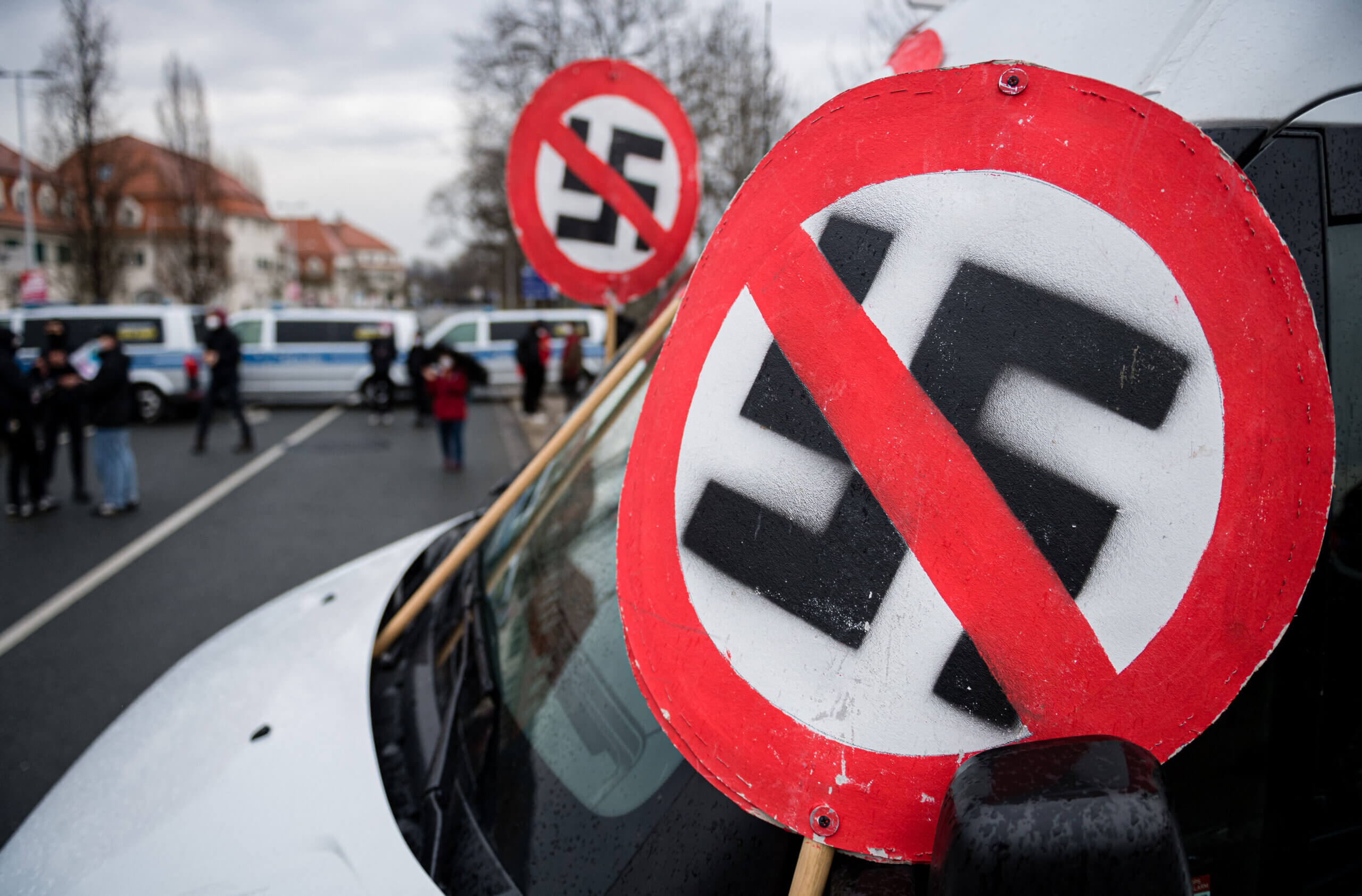
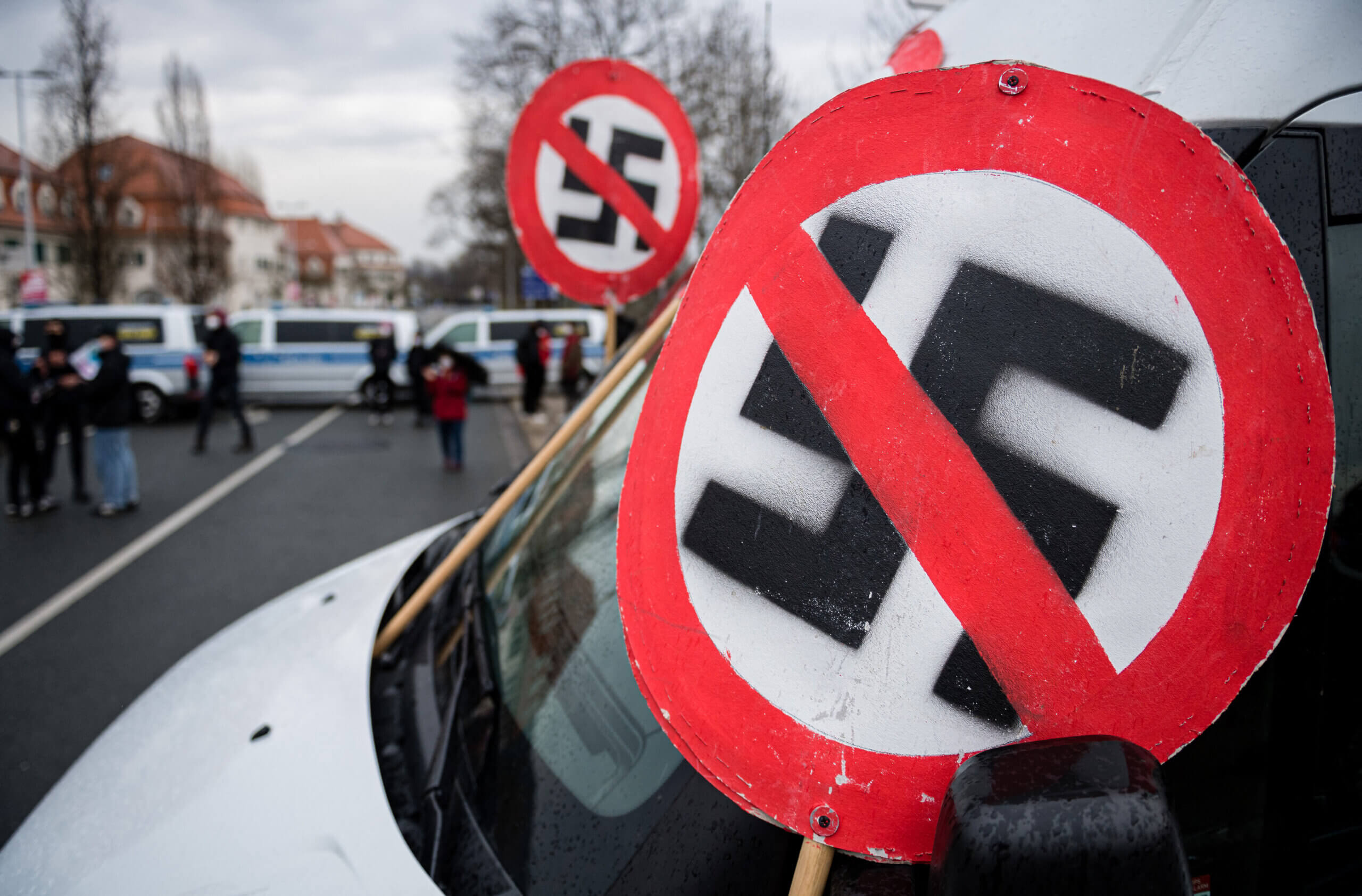
Jews may not agree on much these days, but we all know that a swastika is shorthand for celebrating the Nazi regime, white supremacy and the mass murder of Jews. At least when the intent is clear.
Vandals who sprayed swastikas on a Jewish school in Brooklyn last fall made a clear statement, as did two teens who added antisemitic slogans to the swastika drawn outside a home in suburban Detroit in April, as did those who appended “Heil Hitler” to their graffiti on a Jewish community center in Queens earlier this month.
Other cases are murkier. Sometimes swastikas appear without explanation scrawled in public bathrooms or bus stops. Hikers in Seattle have grown frustrated with recurrent swastika graffiti on a popular trail that in one instance was paired with an ominous, if confusing, message: “He’s waching [sic].”
And then there are the swastikas displayed to condemn fascism. A man in my San Francisco neighborhood liked to wear a shirt featuring an enormous red swastika, which startled me every time I saw it, even though it also said “F— Nazis” and featured a boot stomping on the symbol.
Some Hindu groups have also sought to reclaim the swastika, which originally held meaning for various eastern religions, and argue that the Nazi version of the symbol is better called a Hakenkreuz.
But the most contested contemporary uses of the swastika are those that seek to brand Israel and its supporters as Nazis. Israeli flags featuring blue swastikas in place of the Star of David are not unusual at large pro-Palestinian demonstrations, and a similar but rather odd version of this flag — purple and featuring two swastikas alongside a Jewish star atop the New York University logo — flew over a building on campus last week.
“We are shocked and deeply troubled that this hateful symbol expressing antisemitism was raised on a flagpole overlooking Washington Square Park,” Wiley Norvell, a school spokesperson, told the student newspaper.
That equating Israel with Nazi Germany should be considered be antisemitic is an axiomatic truth for many Jews, and a prohibition on such comparisons is enshrined in the controversial, but widely used, International Holocaust Remembrance Alliance’s working definition of antisemitism.
“It invokes painful collective memories for Jews,” wrote Paul Iganski, a British hate crimes scholar. “Those who play the Nazi-card know exactly what it means.”
***
Beyond the emotional gut punch that displaying a swastika can pack — there have also been incidents of demonstrators taunting Jews with swastikas displayed on their phone screen — many Jewish scholars argue that the comparison is antisemitic because it is meant to diminish the reality of the Holocaust.
Deborah Lipstadt, the State Department’s antisemitism envoy during the Biden administration, has said that people who compare Israeli policy to the Nazis are engaged in “soft-core denial” of the Holocaust.
“They are making a false comparison which elevates by a factor of a zillion any wrongdoings Israel might have done, and lessens by a factor of a zillion what the Germans did,” she told JTA. “That’s not to defend everything Israel does, but you can’t call it a Holocaust unless you want to distort what the Holocaust is.”
A similar strain of argument contends that comparing Israel to Nazi Germany is intended to demonize Israel and is therefore part of the “new antisemitism” that projects longstanding animosity toward Jews onto the Jewish state. “When Israel’s actions are blown out of all sensible proportion; when comparisons are made between Israelis and Nazis and between Palestinian refugee camps and Auschwitz — this is antisemitism, not legitimate criticism of Israel,” Natan Sharansky wrote as part of his “3D Test.”
There is, of course, a tautology at play in the arguments from both Lipstadt and Sharansky: Comparing Israel to the Nazis is antisemitic because it is an outrageous exaggeration. But many of those who make these comparisons argue that there are legitimate parallels to draw between the two governments.
Jean Améry, a Jewish writer from Austria who survived the Holocaust, wrote about his great dismay with the European left’s turn against Israel and Zionism — including Nazi comparisons — but acknowledged disturbing similarities between rumors of Israeli soldiers torturing Palestinian prisoners and his own experience at the hands of the Nazis during the Holocaust, which he said tested his allegiance to the state. “In my value system, for all that I have experienced the full horror of its concretization, the abstract category ‘human being’ outranks the concept ‘Jew,’” Améry wrote in 1977. “When barbarism begins, even existential commitments must end.”
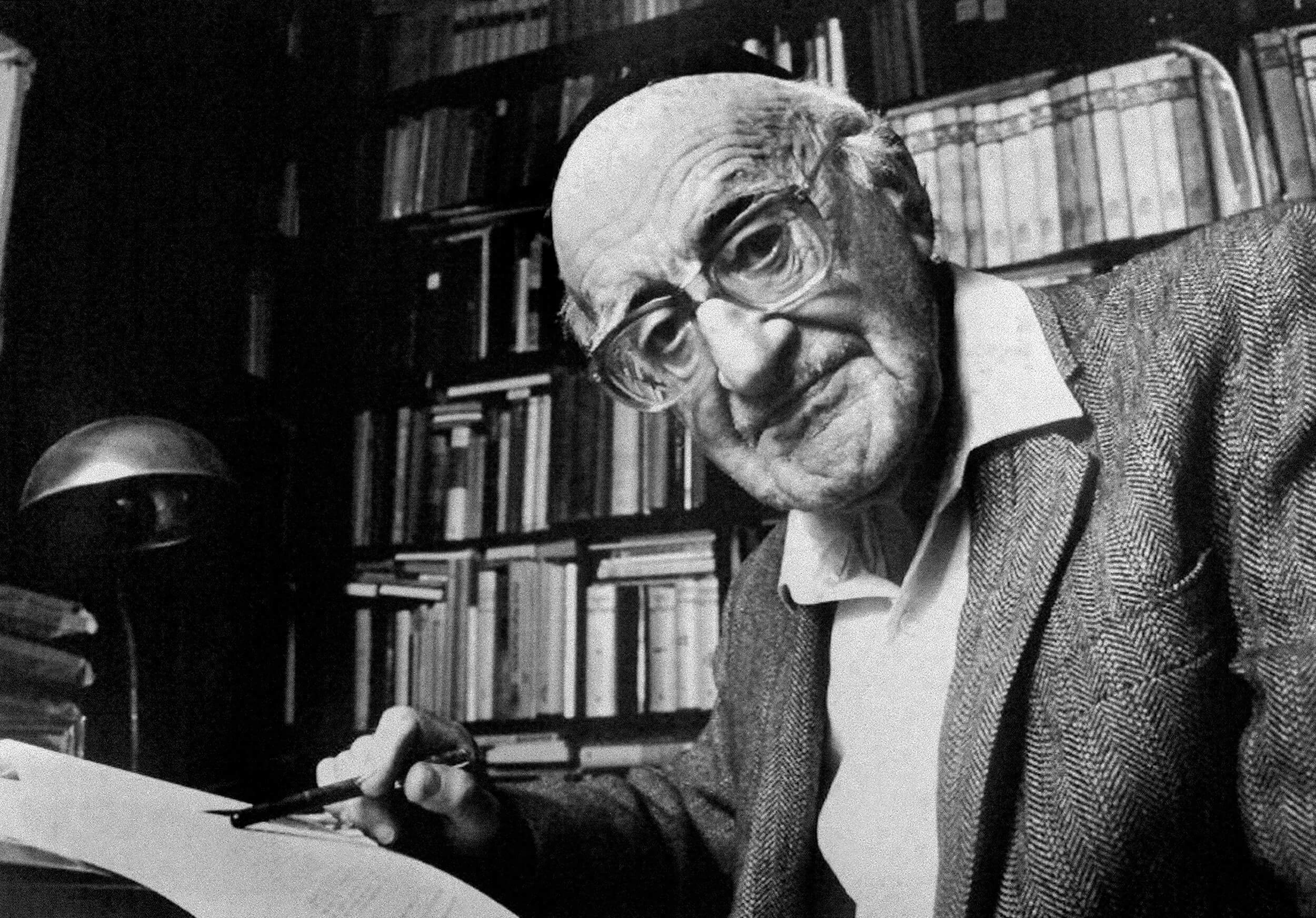
Yeshayahu Leibowitz, the brilliant Israeli scientist and public intellectual who escaped Europe for Mandate Palestine shortly before the Holocaust, called Israeli judges who allowed Arab prisoners to be tortured “Judeo-Nazis” and warned that the entrenched occupation of the West Bank and Gaza coupled with rising ethno-nationalism among Israeli Jews was sending the country down the same road as Germany.
Then there’s the genocide claim, which is distinct from direct Nazi analogies — the Holocaust was not history’s only case of genocide, though it remains by far the most famous — and has been accepted by many Jewish scholars and political leaders, including Jeremy Ben-Ami, president of dovish but nonetheless Zionist advocacy group J Street.
Norman J.W. Goda, a professor of Holocaust studies at the University of Florida, has spoken out forcefully against the genocide claim, which he argues “encourages what historians call ‘Holocaust inversion’ — the mischaracterization of Israel’s self-defense efforts as genocide.”
The argument that Israel’s opponents are using the Holocaust in offensive ways to score cheap political points is weakened, somewhat, by the kneejerk insistence by many of the country’s supporters that Iran and Hamas are equivalent to the Nazis and that its Oct. 7 attack was an act of genocide. It seems that both sides of the Israeli-Palestinian conflict remain stuck in a framework where the Holocaust seems like the most potent point of reference.
Israeli philosopher Omri Boehm has lamented that the Israeli government is “using the memory of the Holocaust to fight human rights” while, at the same time, the global left is dismissing Holocaust remembrance.
“It’s become almost impossible to talk and think about it,” Boehm said.
And this only captures aspects of the Jewish debate. Many Palestinians feel, at a minimum, as though they have been forced to pay the price for the crimes of Nazi Germany through displacement and occupation.
***
I should end on a point of caution. The swastika is at once inflammatory and inscrutable — it can be used to promote fascism and white supremacy, and to condemn it — and is rarely received well, even when it is used by opponents of Nazism.
A few years ago, Kurosh ValaNejad pasted “kinetic art” on the fence of a Los Angeles museum that was meant to look like the Iranian flag from one angle and the Nazi swastika from another. ValaNejad was trying to compare the Iranian government to the Nazis, but most passersby only saw a huge Nazi banner and police announced plans to charge ValaNejad with a hate crime.
And in my reporting on George Washington University, I repeatedly heard a story about a swastika being drawn on a Jewish student’s dorm room. It was true. The vandal had drawn the swastika, along with a Hitler mustache, on photos of Donald Trump and Mike Pence that were taped to the door. But the headline version made it sound like unadulterated antisemitism.
The most famous spate of swastika vandalism also turned out to be far stranger than it initially appeared: The so-called swastika epidemic that began with vandalism at a synagogue in Cologne, West Germany, in 1959 and rapidly spread across the globe — stretching from Rhodesia to the United States and even Israel — was revealed in the past few years to be part of a Soviet propaganda campaign that sought to paint capitalist countries as antisemitic.
Who knows what the perpetrators of the swastika stunt at NYU were trying to communicate. The flag was hoisted over the Steinhardt School, named for Jewish philanthropist and Birthright booster Michael Steinhardt. Was he the target? Was it a Nazi message suggesting that NYU itself was controlled by Jews? Was it an anti-Nazi message equating Israel with the Third Reich? Was it something even more convoluted or strange than either of those options?
The lesson here — in case it needs to be spelled out — is that, while I don’t believe in limiting the parallels or lessons that we can draw from history, anyone who wants their political message to be read in good faith should avoid relying on swastikas to make their point.
The post What does a swastika mean? appeared first on The Forward.