


Uncategorized
The ADL’s turn away from civil rights was years in the making — Oct. 7 accelerated it
The Anti-Defamation League’s broad coalition that helped pass a hate crime law in Georgia at the height of the Black Lives Matter movement six years ago was a classic campaign for the organization, drawing together an alliance of civil rights groups with civic and business leaders to pass a landmark piece of liberal-minded legislation.
After helping the ADL shepherd the bill through Georgia’s legislature, Robert Sills, a young Atlanta-based attorney, decided to apply for a job with the organization. “I thought, ‘I know these people and really like them,’” Sills recalled in an interview.
He was hired in August 2023 to manage state and local policy and set to work on a toolkit to help city governments stop hate groups. “When I joined, the perception was still very much that it was white supremacists and neo-Nazis that we were focused on,” Sills said.
Three years later, much has changed at the nation’s largest Jewish advocacy organization. Sills is gone, and the ADL has shut down its teams focused on democracy and civil rights. Much of the information about #HateFreeGA has been archived and is no longer available on the ADL’s website, nor are hundreds of other pages related to civil rights and extremism, as the organization narrows its focus to antisemitism.
“Core civil rights work is going away,” said Sills, who resigned about a year after he started.
The ADL has tried to walk a fine line between acknowledging a shift away from civil rights while insisting that it remains committed to its historic mission of helping both Jews and non-Jews. The organization said, for example, that removing “protect civil rights” from a prominent section of its website was a technical update; it still notes a commitment to “safeguarding civil rights” in its work countering extremism.
At the same time, Jonathan Greenblatt, the organization’s CEO, has said that the surge of antisemitism following the Oct. 7 Hamas terrorist attack in Israel has been forcing a retreat from the ADL’s historic commitment to such work.
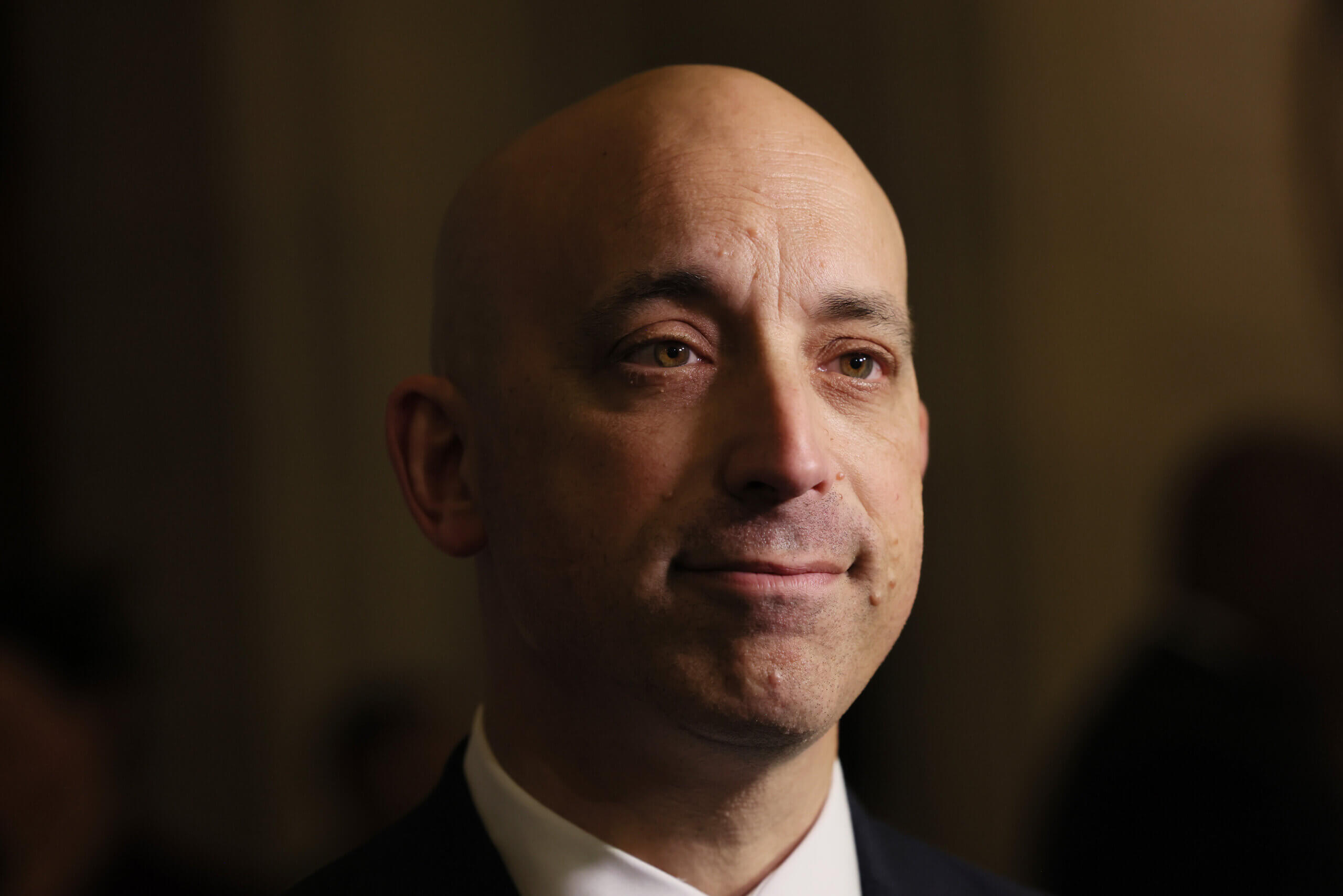
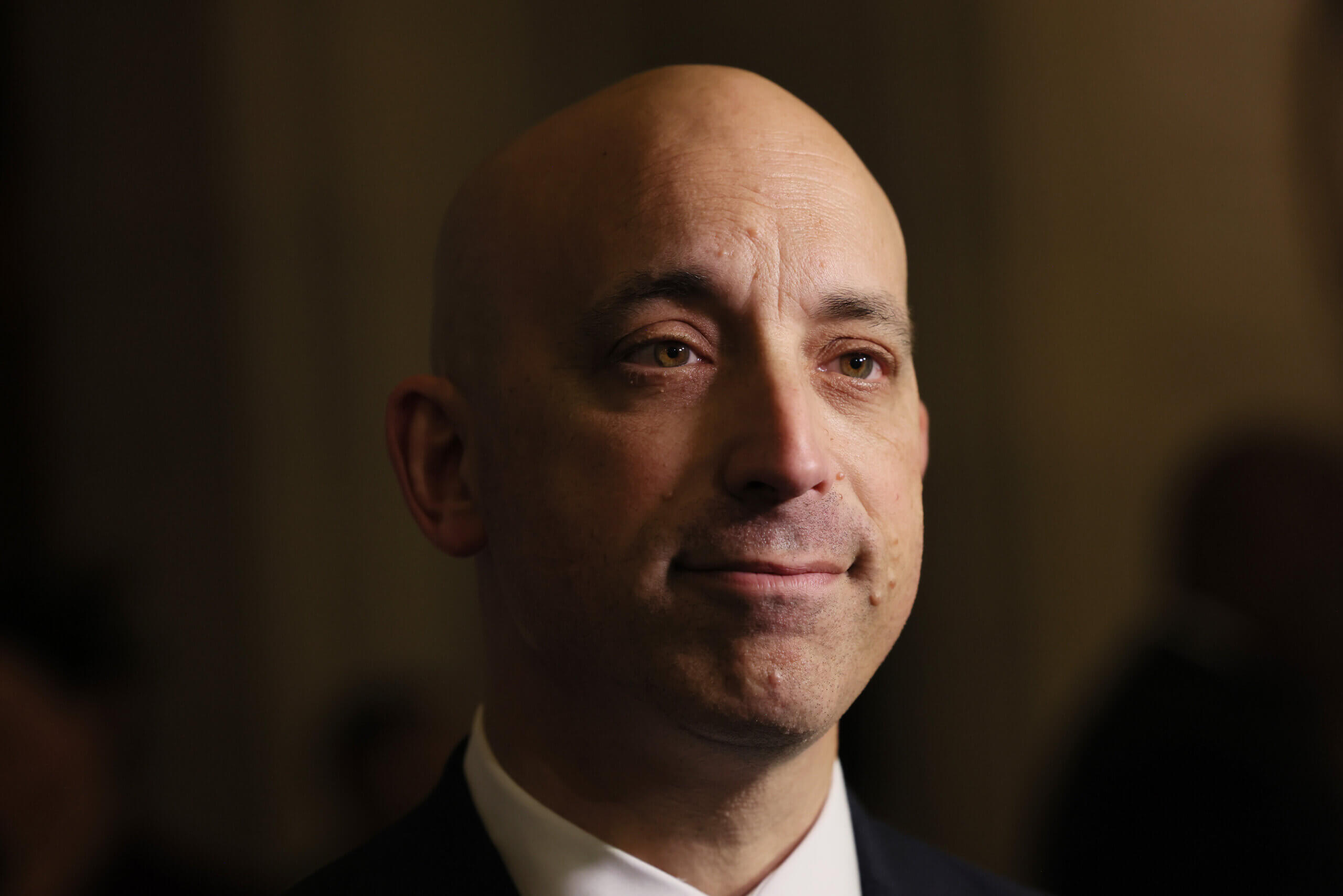
“This moment has required us to be more and more focused on fighting the rise of antisemitism,” Greenblatt said in an interview. “And I hope when this situation abates — when there’s a cessation of hate, when the numbers start to come down — that we’ll be able to make different decisions about how we allocate our resources.”
But many close observers say Greenblatt began shifting the organization away from work on voting rights, abortion, and LGBTQ+ issues, among others, well before Oct. 7 and that the ADL is unlikely to return to those issues under his leadership — a shift that could have major implications for American Jews given the ADL’s outsize influence in shaping the way Americans understand antisemitism.
“Groups that should be natural allies of a group like the ADL aren’t going to trust anything it says.”
Rabbi Jill JacobsDirector of T’ruah
This article is based on interviews with 14 current and former ADL employees, board members and major donors, along with other Jewish leaders who have worked closely with the organization, most of whom spoke on the condition of anonymity because they had signed non-disclosure agreements or because being named would jeopardize their current employment or their working relationship with the ADL.
Jill Jacobs, the director of T’ruah, a liberal rabbis and cantors group, said the ADL’s decision to stop working on behalf of other vulnerable groups, and increasing willingness to antagonize former allies on the left, has been making it hard for every Jewish organization trying to convince partners to take antisemitism seriously.
“Groups that should be natural allies of a group like the ADL aren’t going to trust anything it says — and aren’t going to trust much of what’s said publicly about antisemitism by anyone,” she said.
Sherman Fabes, a spokesperson for the ADL, defended the organization’s track record and said that even as it focuses more narrowly on antisemitism it recognizes that “we can’t do it alone.” Fabes pointed to Greenblatt’s decision to sponsor the 60th anniversary of the March on Washington shortly before Oct. 7, ongoing partnerships with the National Urban League and the League of United Latin American Citizens, and lawsuits defending a church targeted by white supremacists over its support of LGBTQ+ rights and an Ohio city suing a neo-Nazi group.
But Greenblatt has also spoken publicly since Oct. 7 about his frustration with the civil rights organizations that he believes failed to show up for Jews as antisemitism spiked. And the ADL’s move away from civil rights work in the two years since has alienated several mainstream organizations.
Both GLAAD, an LGBTQ+ advocacy group and longtime partner of the ADL, and the Asian American Foundation, which was created with support from the ADL, have pulled back from work with the ADL’s Center on Extremism since Oct. 7 as the organization began almost exclusively monitoring antisemitism, according to a former employee. Meanwhile, a global LGBTQ+ rights coalition and the ADL parted ways as well.
The NAACP once partnered closely with the ADL, including on a campaign targeting social media companies, but the organizations have drifted apart more recently and CEO Derrick Johnson has been absent from recent ADL conferences, though Fabes said he remains affiliated with the organization. And several people close to Maya Wiley, who runs the Leadership Conference on Civil Rights, said she and Greenblatt have repeatedly clashed.
Abe Foxman, the ADL’s former longtime director, cautioned against Jews abandoning civil rights work during a podcast last spring. “We can’t throw it away because at the end of the day we’ll be alone,” he said. “And we can’t survive alone.”
An early retreat from civil rights
Greenblatt had been CEO of the ADL for just over a year when Donald Trump was first elected in 2016, and quickly positioned himself as a bulwark against what many feared would be an erosion of civil liberties under the president. “If one day Muslim Americans will be forced to register their identities, then that is the day that this proud Jew will register as Muslim,” Greenblatt declared shortly after the election.
And when Trump nominated Brett Kavanaugh to the Supreme Court in 2018, Greenblatt issued a statement warning about the risk to “the future of civil rights, civil liberties, and our democracy” and referenced “LGBT rights, voting rights, and women’s rights” before raising an alarm about Kavanaugh’s “demonstrated hostility to reproductive freedom.”
The expression of concern was standard fare for the organization, which was founded in 1913 with a mission “to stop the defamation of the Jewish people and to secure justice and fair treatment to all” and had been reliably liberal on domestic political issues, including abortion.
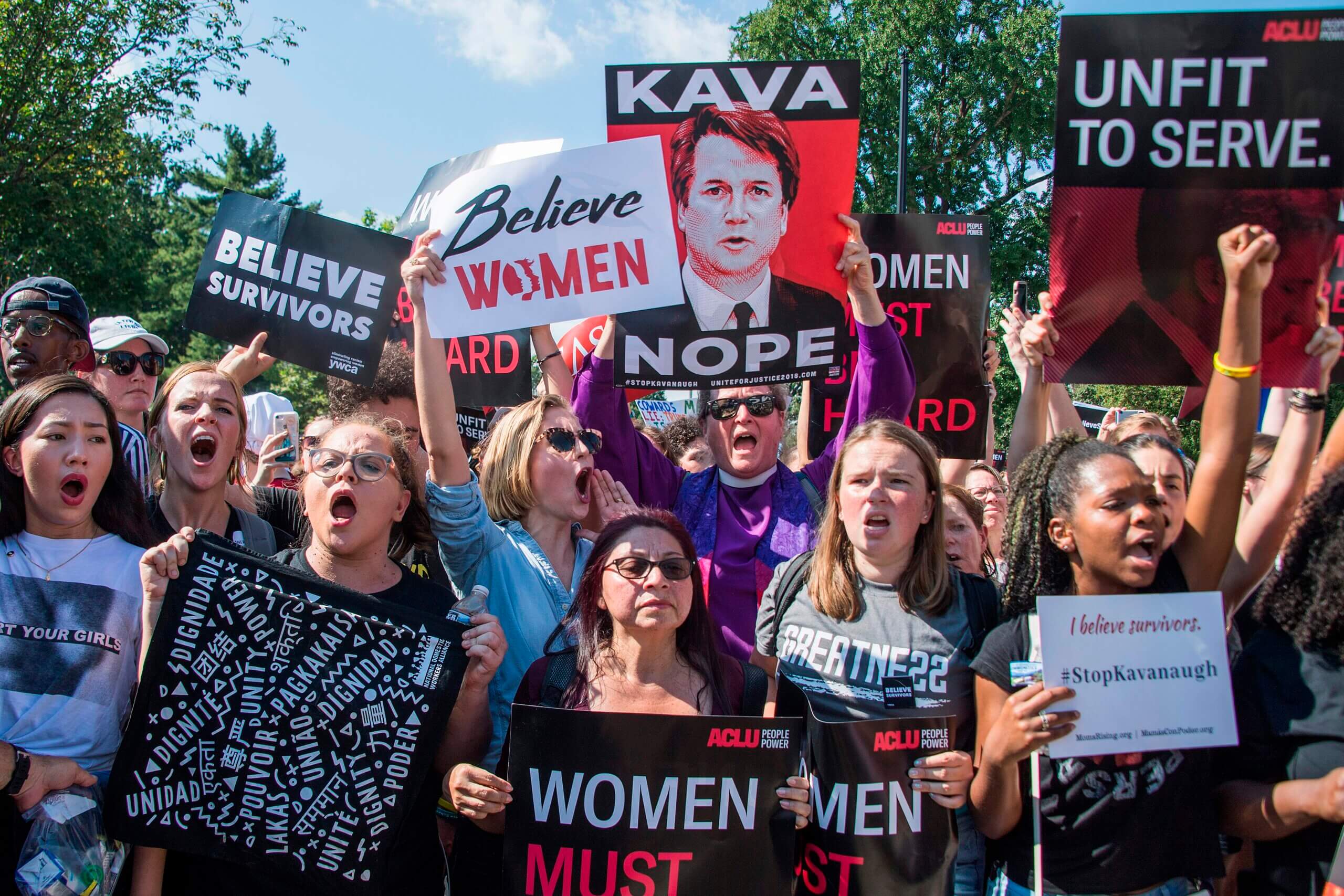
But the Kavanaugh statement frustrated conservative Jews already wary of Greenblatt’s background working as a special assistant to President Barack Obama. Liel Leibovitz wrote an op-ed for The Wall Street Journal claiming that “Greenblatt has frequently steered the ADL into the murky waters of party politics” and was “leaving American Jews behind.”
The column was part of a flurry of attacks across right-wing media that seemed to hit a nerve.
“Jonathan utterly freaked out,” said a former senior ADL leader familiar with the incident. He announced that the organization would not change its official position on abortion “but we’re kind of going to bury and downplay it,” the source recounted.
Melanie Robbins, the former deputy director of the organization’s New York and New Jersey regional offices, told JTA in December that Greenblatt yelled during a meeting following the Kavanaugh hearings that women’s issues were not core issues for the ADL.
Nancy Kaufman, who was CEO of the National Council on Jewish Women at the time, said she also recalled Greenblatt’s decision to stop working on abortion rights following Kavanaugh’s nomination.
“It was the beginning of the retreat by ADL of dealing with the kind of human rights issues that we had come to believe they were supporting,” Kaufman said in an interview. “I was concerned then; I’m concerned now.”
Fabes, the ADL spokesperson, said that the organization had never been an abortion rights organization and that “the confirmation hearings, nor any response, had no impact on the direction of ADL’s work in any area.”
He denied that Greenblatt had been alarmed by right-wing attacks, and said that he “did not yell at anyone.”
Early in his tenure, Greenblatt also diminished the role of the organization’s national commission, a group of several hundred lay leaders that served as its governing board — who were overwhelmingly liberal, committed to broad civil rights work and had long helped set the organization’s policy agenda.
Joe Berman, a Boston attorney who served on the national commission for 15 years, acknowledged that the 350-member body could be unwieldy and said Greenblatt persuaded them to turn power over to a more traditional 20-person board. But Berman said that however practical it may have been, the move “kneecapped” the influence of volunteer leaders and allowed Greenblatt to shift the organization away from a focus on civil rights.
“Let’s be honest, it’s always been a more progressive, left-leaning organization,” Berman said. “Jonathan is paddling upstream against that.”
Fabes said the ADL has always been “strictly nonpartisan and nonpolitical” and that the transition to a more traditional board reflected best practices for nonprofit governance and was made with broad support.
Greenblatt also oversaw the 2017 departure of Deborah Lauter, who had served as national civil rights director at the ADL for nearly a decade when Greenblatt was hired, and shortly thereafter several of the organization’s most senior civil rights staff — including Michael Lieberman, Erika Moritsugu and Moran Benai — departed within a few months of one another, taking with them years of specialized experience.
“It’s always been a more progressive, left-leaning organization. Jonathan is paddling upstream against that.”
Joe BermanFormer member of the ADL’s national commission
Lieberman had served as Washington counsel for the organization since 1989 and led a portfolio focused on hate crime prevention, religious freedom, and LGBTQ+ equality and voting rights, a role that has not been filled. He also managed the ADL’s relationship with many non-Jewish civil rights groups, which gave him credibility to speak with those groups about antisemitism and Israel.
“We need to stand with others if we think that we want them — expect them — to stand with us,” Lieberman said during a speech shortly before he resigned. “If you want a friend, you have to be a friend.”
Eileen Hershenov’s departure without replacement as senior vice president for democracy initiatives in August 2023 marked the end of an executive-level position focused on civil liberties.
When Greenblatt took over in 2015, the ADL had around 10 full-time employees coordinating the organization’s work on its civil rights portfolio. But despite hiring 200 new staff members over the past decade — and nearly tripling the ADL’s budget from $57 million to $163 million — a combination of attrition and the reassignment of regional civil rights counsels to new roles has led to the elimination of any dedicated teams working on civil rights or democracy.
Fabes said Hershenov’s portfolio and the former civil rights counsels were converted to “policy counsels” and folded into a new 29-person “national affairs” team, “the majority of whom do civil rights work.” But he downplayed the significance of these structural changes over the past decade. “All of our work relates to antisemitism,” Fabes wrote in an email. “That’s true now as it was true then.”
In response to a question about how Greenblatt viewed the departures of Lieberman and other senior civil rights staff, Fabes said that the ADL did not comment on personnel matters. But in a recent op-ed Greenblatt lamented that in working on “the broader landscape of social issues” the organization had sometimes “ranged far from our core purpose.”
Oct. 7 and the ‘bolt of lightning’
Greenblatt’s explanation for how the ADL came to eschew a broader advocacy portfolio in favor of a “laser” focus on antisemitism centers on Oct. 7, 2023, and its aftermath. “It was like a bolt of lightning,” Greenblatt told the Forward in an oral history of the day. “I’ve had tough days, but Oct. 7 was the toughest.”
It wasn’t just the carnage in Israel but a sense of betrayal that struck Greenblatt.
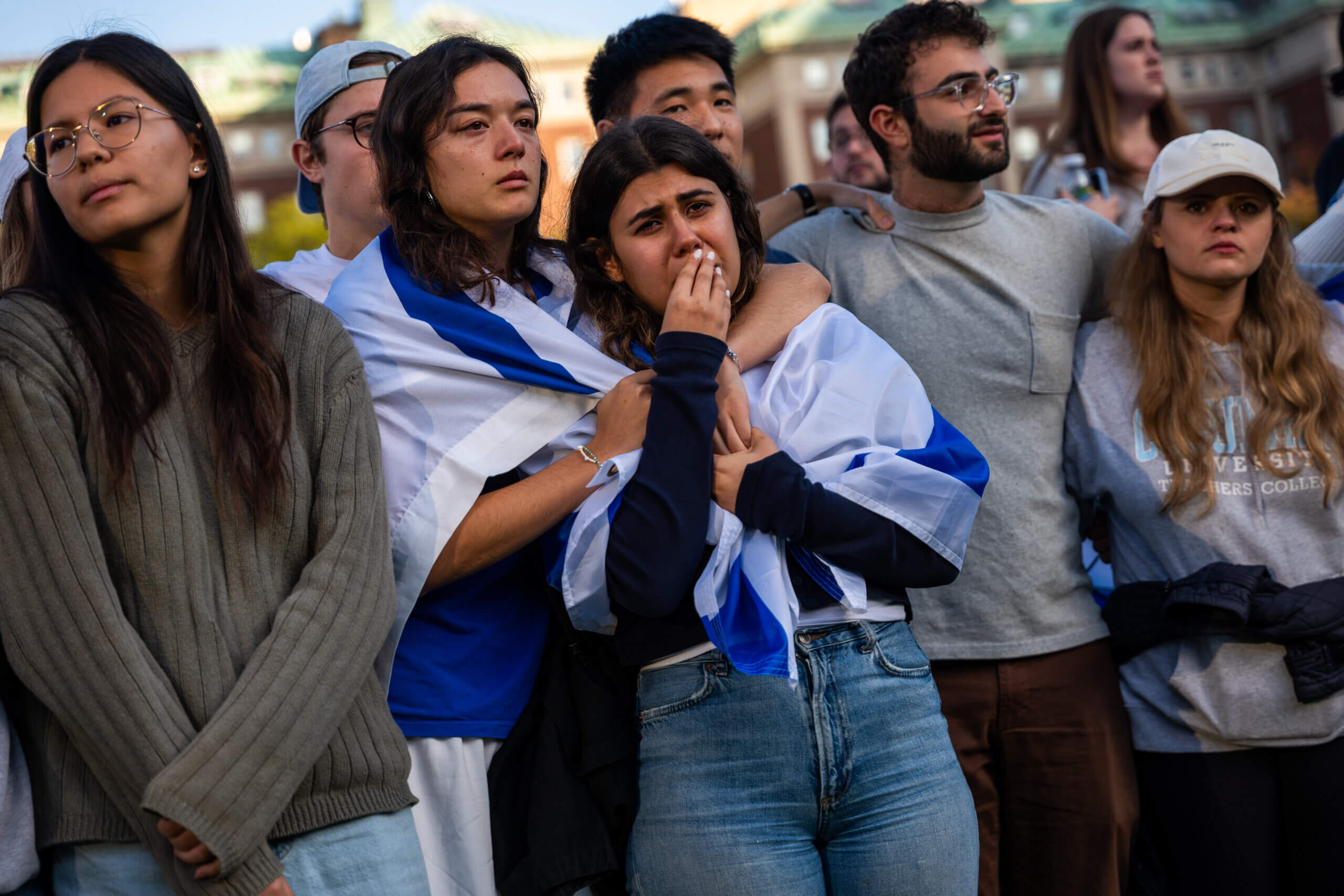
“Jews around the world and here in America mourned,” Greenblatt recalled in a speech this past November. “Yet, to our dismay, many of our so-called allies were nowhere to be found.”
One of those so-called allies was the Council for Global Equality, a coalition promoting LGBTQ+ rights overseas that the ADL had helped create in 2008 and that Julie Dorf, the council’s co-chair, said had regularly partnered with the ADL on policy campaigns during the Obama administration.
But as the ADL began working less on civil rights issues, they faded into the background of her coalition, Dorf said.
Still, the ADL believed that the council’s statement about the Israel-Hamas war, which condemned “all attacks on civilian populations” and called for a ceasefire, was a departure from the organization’s mission and “harmful to our ADL community,” according to Fabes.
“CGE was unwilling to acknowledge the harm the statement had caused,” Fabes added. “ADL, therefore, made the values-based decision to end our membership in the coalition.”
Dorf said she wasn’t sure what the ADL’s specific objection was even after meeting with them at the time.
“It was clear they didn’t even read it carefully because they accused us of all kinds of things that weren’t true — I said, ‘Pull it up, do you see these sentences?’” recalled Dorf, who is Jewish. “They were just grasping for something that would make it an antisemitic statement.”
“There was a time before Oct. 7 and there’s a time after.”
Jonathan GreenblattCEO of the ADL
Dorf said she didn’t hear anything from the ADL following the meeting and removed the organization from the coalition herself. The council continues to represent some of the largest LGBTQ+ groups in the country, including GLAAD, the Human Rights Campaign and the Trevor Project. Following the ADL’s departure, its only Jewish member is American Jewish World Service.
Fabes said the ADL continues to support LGBTQ+ rights and pointed to recent partnerships with Equality Illinois on a hate crimes training law for police in the state and with Free State Justice on an anti-masking law in Maryland.
Inside the ADL, Sills, who previously worked for Amazon, said Greenblatt began adopting the kind of corporate mantras favored by Jeff Bezos. Instead of “every day is day one,” Greenblatt began telling staff that every day was Oct. 8. “It seemed to communicate the expectation that ADL exists in this trauma response state indefinitely,” Sills said.
Greenblatt has maintained this perspective. “When I say we’re still in an Oct. 8 world, we are — and that doesn’t mean that we don’t adapt and evolve, but there was a time before Oct. 7 and there’s a time after,” he said in an interview.
After Oct. 7, what had been a gradual shift away from working on issues other than antisemitism expanded into what some staff saw as a disregard for safeguarding civil liberties when it came to antisemitism work.
A few weeks after Oct. 7, Greenblatt called on nearly 200 college and university presidents to investigate pro-Palestinian student clubs for “materially supporting” Hamas, and months later the organization endorsed mask bans at political demonstrations.
Sills, the head of local policy at the time, said the anti-masking campaign drove his resignation.
“I laid out the legal argument, commented on the fact that employees at ADL with significant expertise were not being listened to, and said, ‘You’ve got to find somebody else to do this — it’s not going to be me,’” Sills recalled. “It’s unconstitutional.”
Fabes said Sills was not privy to high-level decision making at the ADL and that many experts supported the push for anti-masking laws.
“Ultimately, the proposed anti-masking legislation gained full support from Black and LGBTQ groups because ADL’s approach was responsible and legal, harkening back to the anti-masking laws that were first passed to combat the Ku Klux Klan,” Fabes said. He noted that the NAACP’s local chapter in New York backed a law in the state.
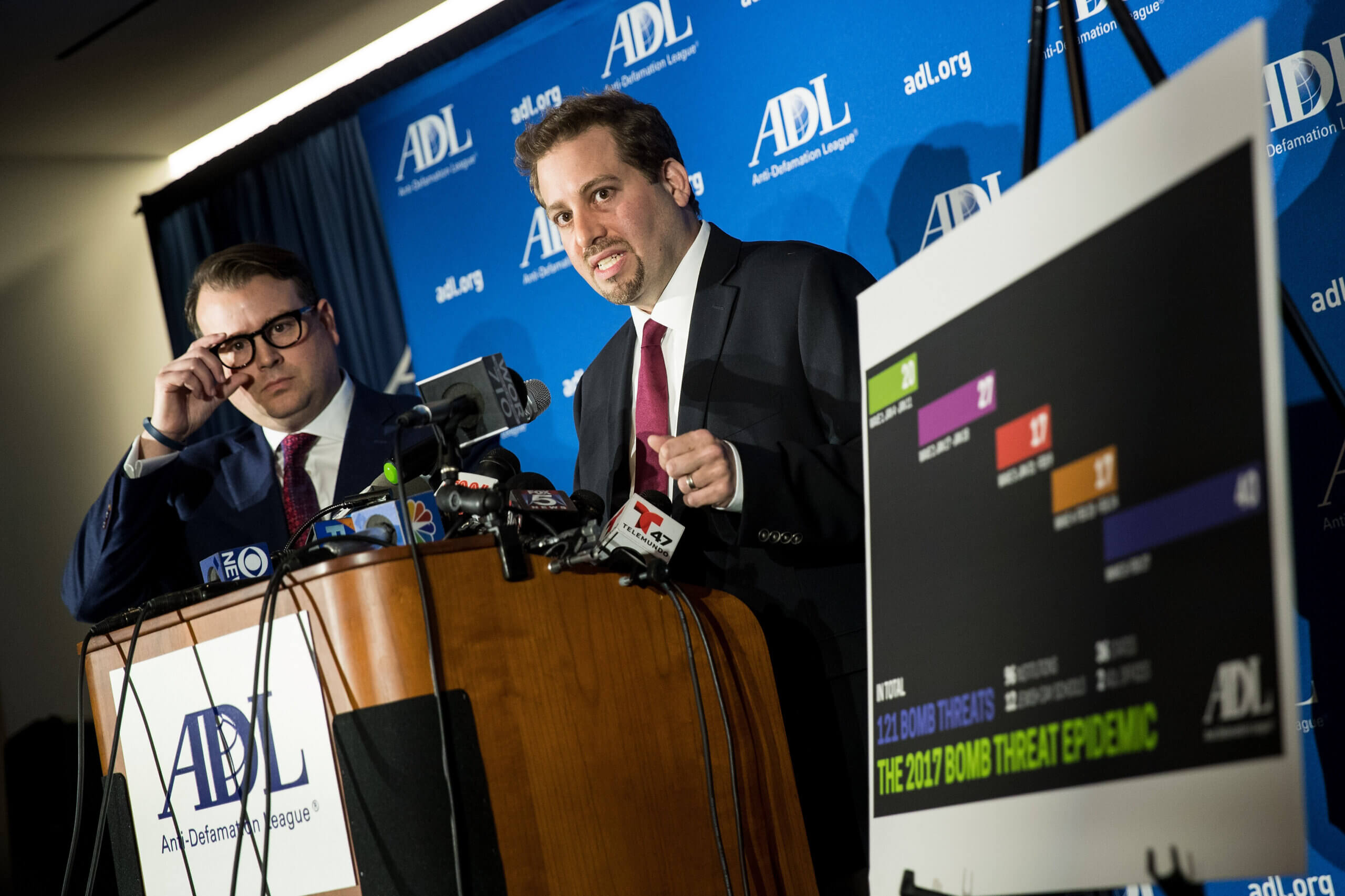
There was also a push within the organization to categorize a wider range of speech as antisemitism, specifically speech targeting Israel. One former employee, who helped the Center on Extremism track antisemitic incidents, said staff initially responded to Greenblatt’s 2022 speech — in which he more forcefully articulated his existing view that anti-Zionism was a form of antisemitism — by defining the concept extremely narrowly.
“The team cared a lot about the data and said, ‘Well, Jonathan has defined anti-Zionism as specifically not supporting a Jewish right to self-determination in Israel, so just saying ‘Israel is a racist state’ isn’t saying Jews have no right to self-determination,’” the employee recalled.
But after Oct. 7, the person said, ADL executives began insisting that the center’s staff classify many pro-Palestinian demonstrations as antisemitic based on the use of anti-Zionist slogans and signs.
The ADL said in a statement to the Forward in January 2024, following the release of its first annual tally of antisemitic incidents following Oct. 7, that it had significantly broadened its definition of antisemitic incidents to include rallies that feature “anti-Zionist chants and slogans.”
“While our methodology may change slightly from time to time, there was no mandate from senior leadership to make changes after Oct. 7,” Fabes said. He added that the ADL only counted 2,596 out of more than 5,000 protests against Israel in 2024 as antisemitic.
The Asian American Foundation, a civil rights organization modeled after the ADL and created with significant support from Greenblatt, has come under pressure to cut ties with the group from 70 Asian American groups and allies frustrated with Greenblatt’s criticism of pro-Palestinian activists. The foundation has maintained its relationship with the ADL, including sharing a board member with the organization, though The New Yorker reported that it ended its partnership with the Center on Extremism in the spring of 2024.
Around the same time, Sarah Moore, who had been monitoring anti-LGBTQ+ extremism in a dual role for both the ADL and GLAAD, started a new role working exclusively for GLAAD. GLAAD did not respond to multiple questions about its current relationship with the ADL, but three former employees said the organization had made an intentional decision to cut ties.
Fabes said the ADL was “proud of the work our teams accomplished together” and “proud that this effort enabled GLAAD to fully fund and house this position within its own team.”
ADL staff in the Center on Extremism wrote a letter to their boss, quoted by The New Yorker, warning that the organization was losing trust with “other extremism researchers, media outlets, anti-hate organizations, civil rights groups and — perhaps most concerningly — large swaths of the Jewish community that we are committed to serving.”
The letter came from “a few people” and “did not represent the views of all staff,” according to Fabes, but he said that Greenblatt met with the team to discuss the issues raised.
The ADL also said that it was in the process of adding a new researcher to the Center on Extremism funded by the League of United Latin American Citizens to monitor threats to the Hispanic community.
Greenblatt made waves early in the second Trump administration for initially defending Elon Musk’s controversial gesture at an inaugural rally as an “awkward gesture,” and then supporting the White House’s “bold” attempt to revoke the permanent residency of Mahmoud Khalil, a leader of the pro-Palestinian demonstrations at Columbia University, and detain him at an immigration jail in Louisiana.
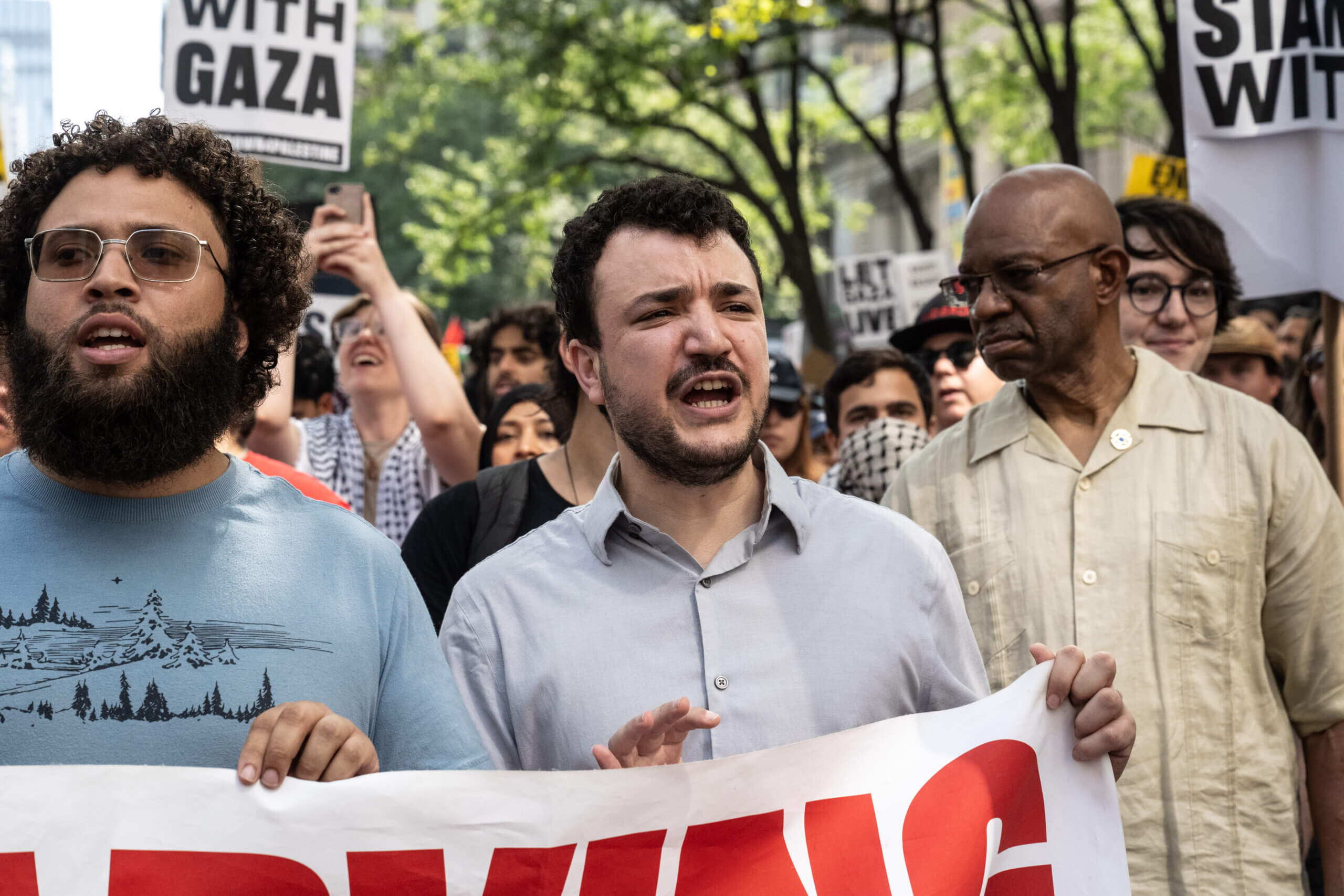
The response to Khalil’s arrest was the final straw for Berman, who first joined the ADL’s regional New England board in 2001 and had held leadership positions on the national commission.
Berman had little sympathy for Khalil’s views, which he called “reprehensible” in his resignation letter, but defending the arrest had “irrevocably degraded the ADL’s moral authority.”
“If we don’t stand for civil rights, we stand for nothing,” he added.
The Khalil controversy did little to change Greenblatt’s hostile posture toward campus protesters. In a closed-door meeting with Republican attorneys general over that summer, he compared masked demonstrators at Columbia to ISIS and al-Qaida terrorists.
In an interview, Greenblatt emphasized that his remarks were not intended for the public.
But his intensifying rhetoric toward protesters drove an even deeper wedge between the ADL and other civil rights groups. In the initial aftermath of Oct. 7, many Jewish clergy and other leaders wondered why their interfaith and social justice partners weren’t condemning Hamas more forcefully, while leaders in other communities questioned a perceived lack of sympathy for Palestinian civilians.
Ginna Green, the founder of Horizon Philanthropy, which encourages Jewish donors to support liberal democracy, said she understood the fear that led to this schism between not only the ADL but many other Jewish establishment groups and civil rights groups in recent years — but said it was shortsighted.
“The American Jewish community has never been less safe,” Green said. “We’ve never needed the protection of democracy and coalitions and partners more than right now — so to make this move at a time when nobody is safe unless they’re a straight, white Christian male seems like an absolute abandonment of the principles the ADL was founded on.”
A former senior staff member at the ADL who worked there before and after Oct. 7 said he shared the frustration toward the progressive and human rights communities but thought there was an opportunity for cooler heads to prevail.
Instead, the organization’s approach — including the call to investigate students for ties to Hamas — caused a tonal shift among former allies from, “We don’t want to work with the ADL because we don’t think they care about us,” he said, to “We can’t work with them because they’re a hate organization.”
Greenblatt tests ‘old friendships’
The ADL’s shifting approach to civil rights began around 2017, but the rupture with other groups also grew from a new understanding of where antisemitism was coming from, which Greenblatt began to articulate a few years before Oct. 7.
Early in the Biden administration, Greenblatt argued that a record-shattering spike in antisemitic incidents was being caused not just by the right, which was responsible for most of the physical violence toward Jews, but by people criticizing Israel. “When you have people make wild claims about the Jewish state, make unhinged accusations, maybe it shouldn’t surprise us that then people attack Jewish Americans,” he said on PBS News Hour in April 2022.
Just a few weeks later Greenblatt delivered a watershed speech at the ADL’s national leadership summit in which he declared that “anti-Zionism is antisemitism” and said the groups promoting it — including Students for Justice in Palestine, Jewish Voice for Peace and the Council on American-Islamic Relations — were the “photo inverse” of violent white supremacists.
“These organizations might not have armed themselves,” Greenblatt said, but “if you demonize another group enough, there are more than a few people out there who will act.”
Greenblatt had spoken out against anti-Zionism for years, but the speech marked a new era in which he would start regularly describing anti-Zionists as posing an equivalent threat to white supremacists.
According to several former employees familiar with the matter, he delivered these remarks over the objection of most of the ADL’s senior leadership team, including Oren Segal, who runs the organization’s Center on Extremism and cautioned that law enforcement might take Greenblatt’s remarks as an excuse to surveil peaceful advocacy groups.
“Oren himself says that he has no recollection of ever having a conversation” in which he raised those concerns, Fabes said.
Greenblatt recognized in his speech that the new direction he was plotting would “fray some old friendships” and “cost us some donations.”
One of those old friendships seemed to fray almost immediately.
Greenblatt’s speech was followed by remarks from Maya Wiley, the incoming CEO of the Leadership Conference on Civil Rights, one of the country’s oldest coalitions of its kind that includes the ADL, NAACP and ACLU, along with scores of smaller groups.
Wiley had not been warned that Greenblatt would unveil a more aggressive posture toward progressive organizations at the event, and it prompted an immediate challenge for her work keeping a sprawling coalition united despite differences over Israel, according to multiple people familiar with the matter.
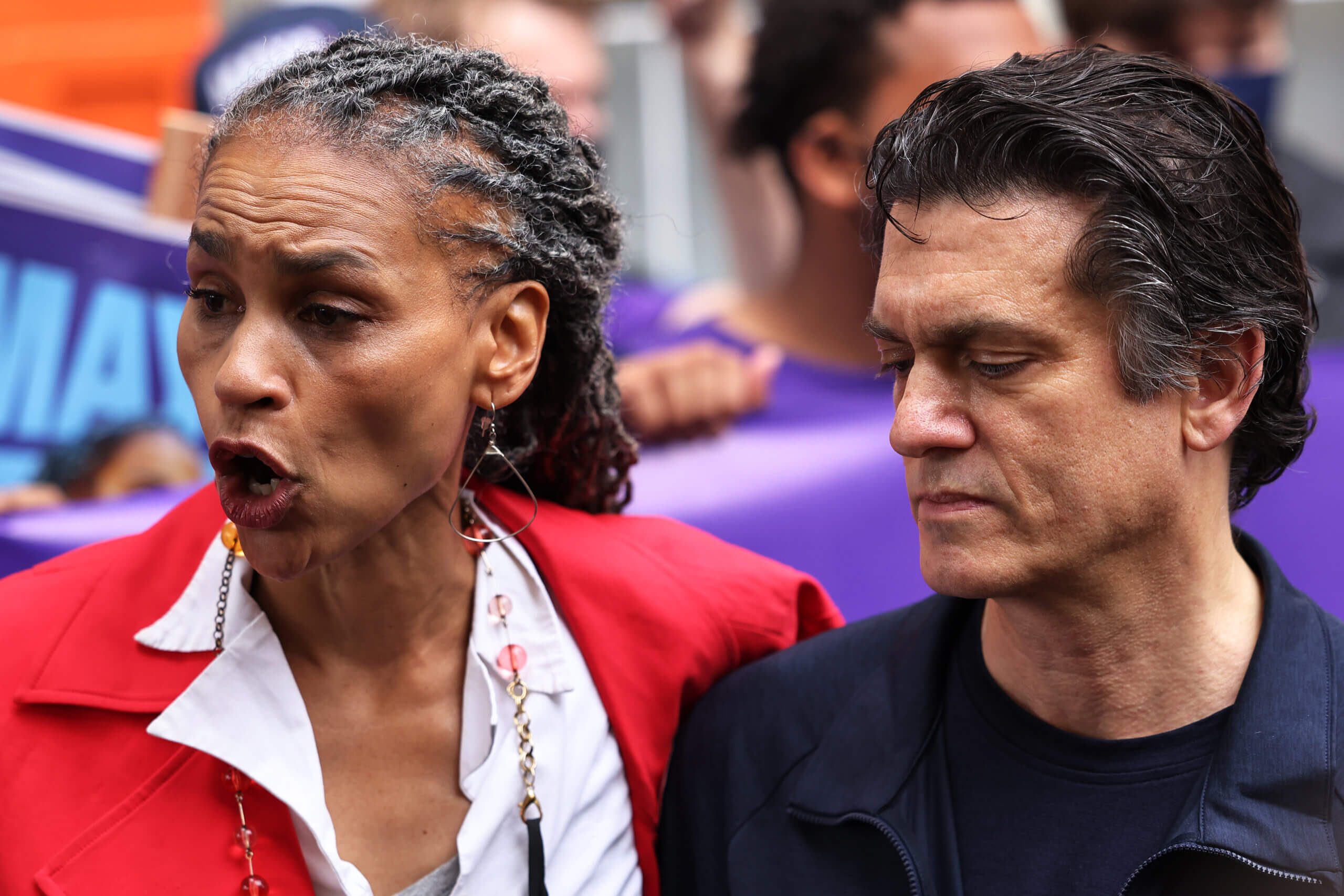
The relationship between Wiley and Greenblatt has continued to deteriorate, sometimes in personal terms, three people familiar with the matter said.
Greenblatt unequivocally denied this. “That’s not true,” he said. “I have a lot of respect for Maya.”
Wiley declined to answer questions about her relationship with Greenblatt.
The ADL was not among the 65 civil rights organizations that signed onto a June statement from the Leadership Conference condemning “antisemitic hate crimes” following the attacks at the Capital Jewish Museum and at a rally in Boulder, Colorado, last spring. Wiley also released a statement last summer defending the National Education Association, a member organization, after Republicans pushed to shut it down over a vote to boycott the ADL.
Several Leadership Conference member organizations also took issue with the ADL before Oct. 7 over a preliminary version of survey results about antisemitism in the African American community that they found oversimplified and offensive. The ADL eventually agreed to delay the survey’s release and modify its presentation. Fabes described the incident as part of the ADL’s belief in “a counsel culture, not a cancel culture.”
Fabes said that Greenblatt has a recurring call with Wiley and that the ADL currently serves on the Leadership Conference’s board and sits on its hate crimes task force. He also said that the ADL continues to work with the NAACP, and that Johnson served as co-chair of its Sports Leadership Council even as he has been absent from recent conferences and called for an arms embargo against Israel.
The NAACP did not respond to questions about the current status of its work with the ADL.
Maya Berry, executive director of the Arab American Institute, is the co-chair of the hate crimes task force that the ADL sits on, and while she once testified alongside Greenblatt during a 2021 congressional hearing about violent extremism, Berry recently said she was pleased the FBI had decided to end its partnership with the ADL.
The ADL has continued to work closely with two Leadership Conference members: the National Urban League, another Leadership Conference member, whose president spoke at its annual conference last year, and the League of United Latin American Citizens.
Wiley said in a statement to the Forward that, despite various divisions, the Leadership Conference has always sought to maintain a diverse coalition committed to “fighting antisemitism and all forms of hate.”
ADL loses longtime supporters
While the ADL has long faced criticism from progressives — including a campaign to #DropTheADL over its support for Israel — many former employees and board members who are speaking out now were unswayed by these previous critiques.
Tracey Lagbold, who served as leadership chair on the national commission and head of the ADL’s education committee, said that “breaking up with ADL was one of the hardest things I’ve done in my entire life.”
She first got involved with the ADL in 2008 after an acquaintance invited her to an event the organization was hosting. “It was the first time I really heard about civil rights from a Jewish perspective,” she said. “I was like, ‘Wow, I didn’t know I was looking for that my whole life, but that’s what I’ve been wanting.’”
Lagbold eventually became chair of the ADL’s Florida board and assumed several national roles. She stomached a series of frustrating decisions made by Greenblatt, she said, including shrinking the organization’s education programming focused on combating bias and eliminating the dedicated civil rights team.
But presenting an award to Jared Kushner in early 2024 for his work on the Abraham Accords was the final straw.
Walter Jospin, a longtime ADL donor, was also angered by the award, and said Greenblatt’s decision to give it caught the organization’s then-board chair Ben Sax by surprise. “He told me that the national board was blindsided — Jonathan just did it,” Jospin said. “They didn’t like it.”
Sax did not respond to a request for comment, and Fabes said the organization does not discuss Greenblatt’s interactions with the board.
“The ADL was founded on this mission of doing two things that I thought were inextricable: caring for others and caring for ourselves,” said Lagbold, whose resignation from the ADL has not been previously reported. “I don’t think of them as two things, because they need each other, they inform each other — and it became clear in the last few years that’s not the way the organization is operating anymore.”
Aaron Ahlquist, who ran the ADL’s regional office in New Orleans and eventually became a regional vice president, resigned in July over similar concerns with the organization, according to a copy of his resignation letter obtained by the Forward.
In a scathing critique of the organization’s leadership, Ahlquist wrote that national board chair Nicole Mutchnik had told regional leaders that “our sole focus was on an immediate ROI on our activity and we would be looking [for] short-term results only.”
“This is a false assertion and the characterization of Nicole is inaccurate,” Fabes said.
Ahlquist argued that this made it hard to advocate for investing in civil rights issues or in building coalitions with other minority groups, work that often takes “years or decades to earn our place at the table.”
He said that a more forceful emphasis on defending Israel while pulling back on education programs that focused on protecting all minority groups was marginalizing the organization and allowing longtime opponents of the ADL, like the Council on American-Islamic Relations, to increase their influence.
“Our move away from our integrated mission has potentially done irreparable harm for ADL in non-Jewish spaces,” Ahlquist wrote.
Greenblatt has framed the ADL’s turn away from working on issues beyond antisemitism as one meant to pair the organization’s limited resources with a growing number of incidents targeting Jews.
“Our core purpose is to protect the Jewish people — not in an esoteric way, not in some attenuated manner, but right here, right now.”
Jonathan GreenblattCEO of the ADL
Fabes noted that the organization tallied the highest number of antisemitic incidents on record in 2019 and then again in 2021 and 2022, and that the synagogue shootings in both Pittsburgh and Poway, California, predated Oct. 7. “The growing crisis underscored our hyperfocus on addressing rising levels of antisemitism,” he said.
But some see this as a false binary.
Lagbold is now a board member at the Jewish Council for Public Affairs, which has argued that preserving democratic norms helps guarantee Jewish safety, and that trading quick wins — like the deportation of college students who protest Israel in ways that some Jews find offensive — in exchange for the erosion of due process is a bad deal. “It’s impossible to separate these issues,” Amy Spitalnick, JCPA’s CEO, said in a text message.
Greenblatt understands this position, and even articulated it in his 2022 book, It Could Happen Here, in which he wrote that “the founders of ADL believed in the simple but powerful premise that America could not be safe for its Jews unless it was safe for all its people.”
Steven Ludwig, a longtime regional board member in Philadelphia, seized on Greenblatt’s previous writing in his resignation letter over the summer.
“Did you mean it when you wrote … ‘There’s still time to stand up for the peaceful, democratic society we want to gift to our children and grandchildren,’” Ludwig asked. “If so, why are you not standing up now?”
In an interview, Greenblatt described the ADL as stepping into a more service-oriented role amid a “tsunami” of antisemitism. “When Jewish people find their homes or their businesses defaced,” he said, “when Jewish professionals are being boycotted from their lines of work, when Jewish members of unions are being harassed — we stand up for them.”
The ADL has responded to these issues with advocacy and also, increasingly, with practical tools, including several helplines that field complaints of discrimination in K-12 schools and on college campuses, which have yielded hundreds of reports and in some cases federal complaints or lawsuits on behalf of callers. Greenblatt said high-minded advocacy on behalf of civil rights or democratic norms was too abstract for the current moment.
“One could make the argument that protecting democracy protects the Jews,” he said. “But our core purpose is to protect the Jewish people — not in an esoteric way, not in some attenuated manner, but right here, right now.”
And, he added, all the work the ADL is doing defending Jews against antisemitism?
“That’s civil rights work.”
The post The ADL’s turn away from civil rights was years in the making — Oct. 7 accelerated it appeared first on The Forward.
Uncategorized
Congressional Hopeful Michael Blake Seeks to Erase AIPAC Support, Misleads on Past Trips to Israel

Former New York State Assemblyman Michael Blake is running for US Congress in the Democratic primary in New York’s 15th Congressional District. Photo: Screenshot
Michael Blake, a progressive Democrat running for US Congress in New York City, appeared to have recently made misleading statements about the nature of his previous trips to Israel and relationship with AIPAC, the country’s foremost pro-Israel lobbying group.
In Instagram comments, Blake characterized one of his visits to Israel as being done in his capacity as a reverend. Blake visited Israel in 2014 with the Jewish Community Relations Council (JCRC) and in 2017 with the AIPAC-affiliated American Israel Education Foundation.
“I attended a trip and spoke at previous events about my faith as an ordained reverend and about the Black & Jewish relationship but haven’t been involved in years,” he posted when asked to clarify his ties to AIPAC, which seeks to foster bipartisan support for the US-Israel alliance.
Blake, a former New York state assemblyman, is running an insurgent left-wing campaign to unseat incumbent US Democratic Rep. Ritchie Torres, a staunch supporter of Israel, in the state’s 15th congressional district.
Regarding previous support from AIPAC, Blake said, “Donations would have been minimal in the past.”

Social media screenshot
However, Blake’s social media comments contradict previous documentation about the nature of his trip to Israel and relationship with AIPAC. Although Blake asserted that he visited Israel with an AIPAC-linked group as a reverend, reports indicate that he attended AIPAC events through 2019 and only became ordained as a reverend following his 2020 Democratic primary defeat to Torres.
“The Bronx Democrat then gave up his Assembly seat to fall to Ritchie Torres in a 2020 congressional race. Since then, he’s run his public affairs firm, backed Maya Wiley’s 2021 run for mayor, and got ordained as a reverend,” Politico reported in 2024 in an article on Blake considering a bid at the time for New York City mayor.
Contrary to Blake’s assertions that he only participated with AIPAC as a reverend, the politician participated in multiple AIPAC events, including its annual policy conference in 2017 while serving as vice chairman of the Democratic National Committee (DNC). Skeptics have suggested that Blake invoked religion to minimize progressive blowback over his connections to AIPAC.
Last year, the New York Post first reported that Blake deleted several past social media posts touting his attendance at AIPAC events.
Since announcing his campaign to unseat Torres, Blake has lurched farther left on the Israeli-Palestinian conflict in an apparent attempt to court progressive voters. Blake has issued blistering statements condemning Israel of committing a so-called “genocide” in Gaza and vowed to vote against any military aid to the Jewish state.
“I am ready to fight for you and lower your cost of living while Ritchie fights for a Genocide. I will focus on Affordable Housing and Books as Ritchie will only focus on AIPAC and Bibi,” Blake posted on X in a statement last year announcing his candidacy, referencing Israel Prime Minister Benjamin Netanyahu.
In May 2025, however, during his failed campaign for mayor, Blake walked back his accusations of “genocide” against Israel, claiming that he regretted using the term to characterize the war in Gaza.
“It was wrong language to use,” Blake said, referencing his October 2023 post which accused Israel of committing genocide in Gaza. He apparently again reversed his stance when launching his congressional bid in New York’s 15th district.
Despite his efforts, Blake’s previous trips to Israel and history of praising the Jewish state have elicited skepticism among left-wing voters in New York City. Progressive critics have pointed to his 2017 speech at the annual AIPAC conference in which he lavished praise on Israel. In 2020, while speaking with Jewish Insider, he compared his experience as an African American to the struggles of Jewish people in Israel.
As the relationship between the Democratic Party and Israel continues to deteriorate following the breakout of the Israel-Hamas war, liberal politicians have continued to recalibrate their approach to Middle Eastern geopolitics. Many ambitious Democratic candidates have staked out positions on Israel more aligned with the far-left, progressive flank of the party, accusing the Jewish state of “genocide” and “ethnic cleansing” while vowing to oppose any arms sales to Jerusalem.
Despite his aggressive overtures to progressives, Blake’s campaign to unseat Torres still remains a longshot. The 15th district encompasses Riverdale, a heavily Jewish and affluent community and hub of pro-Israel activism. Polling suggests that Torres maintains heavy levels of support in his district, placing him among the most popular politicians in the state of New York.
Blake’s campaign did not respond to a request for comment for this story.
Uncategorized
National support group for interfaith Jewish families guts staff amid funding crisis
(JTA) — A national nonprofit that supports interfaith Jewish families has slashed its workforce after facing an unanticipated budget shortfall.
18Doors announced on March 31 that it had “significantly” reduced its staff due to budget constraints. In fact, about two-thirds of the staff were laid off the week before the announcement, board member Laurie Beijen told the Jewish Telegraphic Agency.
The nonprofit had 15 staff members last August, according to an archived version of its website. This week, it lists four employees, nearly all in the C-suite.
CEO Mike Wise has stepped down, and 18Doors is now being led by Ellen Frank, the chief operating officer, and Adam Pollack, the chief program officer, the organization said.
Among those no longer at 18Doors are employees responsible for fundraising, creating digital content about interfaith inclusion and running a referral service to connect interfaith families and clergy. That service, which the organization says reached 2,000 families a year, remains operational, Beijen said, but “to a lesser degree.”
She said the budget crunch was complex and had come as a surprise. She cited in particular the squeeze felt by nonprofits like 18Doors in recent years as foundations and donors shifted their giving priorities toward Israel and fighting antisemitism.
“We were kind of caught off guard by the severity of our funding issues,” Beijen said. “It’s a myriad of causes that are sort of short, medium and long term, and we ended up just getting caught in this storm.”
Jodi Bromberg stepped down as CEO in 2024 after helming the organization for a decade, including during its 2020 rebrand from InterfaithFamily. The organization hired a search firm to find her replacement and a consulting firm to help draw up a strategic plan, which Beijen said it had been “on the cusp” of announcing before instead sharply contracting.
A delayed annual gift also scrambled budget planning, Beijen said, with a gap of just a few months sending the organization into a financial crisis. 18Doors declined to identify the donor or the size of the gift.
The nonprofit has raised $2 to 3 million a year in recent years and spent all of that or more, according to its filings with the IRS. Its significant donors have included the Marcus Foundation and Combined Jewish Philanthropies, the Jewish federation in Boston, where 18Doors is based. The Marcus Foundation and CJP did not respond to requests for comment.
In a statement emailed to the 18Doors community and posted on social media last week, the nonprofit wrote, “The Board has since secured necessary funding to stabilize the organization in the short term.”
Jewish philanthropic giving has changed since the Hamas attack on Israel on Oct. 7, 2023, with many donors choosing to focus on pro-Israel giving and causes that address antisemitism.
In December, the Shabbat dinner nonprofit OneTable laid off a quarter of its staff, citing donors’ funding priorities. The group is adapting its programming to include more Israel content.
At the recent Jewish Funders Network international conference, speakers, funders and philanthropy executives put a heavy emphasis on giving toward Israel and antisemitism-related issues, according to video and recaps of the conference.
Activists and educators in other areas say that while Israel and antisemitism are important issues, other causes are being left behind.
Founded in 2001, 18Doors says its mission is to encourage mixed-heritage families to engage in Jewish life, while encouraging Jewish communities and clergy to become more welcoming and inclusive.
18Doors’ vision of inclusion for interfaith families has grown closer to reality in the decades since its launch. In 2001, a Pew survey found that half of Jews who married in the previous 10 years had married non-Jews. Two decades later, in 2021, it found that the rate for marriages in the last decade had risen to 61%. Most children of the couples were being raised Jewish, the survey found, with participation in synagogue life and Jewish institutions common.
Two major seminaries recently began admitting students who are in relationships with people who are not Jewish, saying that they wanted to ordain rabbis who match the communities they serve. And in December, while continuing to prohibit intermarriages performed by its rabbis, leaders of the Conservative Movement formally apologized for decades of discouraging intermarriage between Jews and non-Jews and vowed to create new opportunities for inclusion in Conservative synagogues.
But advocates for interfaith families say much more needs to be done.
“The idea that being warm and welcoming is sufficient is false. There’s much more to learn and to do,” said Keren McGinity, an interfaith educator and scholar. “18Doors is important because they are part of the work that gets done, including training clergy.”
McGinity has her own experience with layoffs in the interfaith inclusion space. She was the interfaith specialist at the United Synagogue of Conservative Judaism before her position was eliminated last year.
She said she is optimistic that 18Doors’ financial crunch will be temporary — but she said she believed the Jewish philanthropic landscape needs to change nonetheless.
“What concerns me is that there should be more funding channeled towards engaging interfaith couples and families,” McGinity said.
Though no other institution has quite the national reach that 18Doors has, other organizations addressing some aspects of interfaith family life include the children’s Jewish literacy program PJ Library; Embark at Mem Global, a program for interfaith and mixed-heritage couples in their 20s and 30s; and Honeymoon Israel, which provides trips to Israel for “young couples of all backgrounds.”
Beijen said 18Doors is aiming to preserve its flagship 18-month clergy program, the Rukin Rabbinic Fellowship, which provides training for spiritual leaders who work with interfaith families.
Bromberg, the group’s former CEO, says 18Doors serves families like hers: Her wife is Catholic and they have children together. Now a consultant helping other nonprofits, she said the cuts at 18Doors signify both a crushing loss and a pressing question.
“These are long time, long-tenured staff. The Jewish community as a whole will lose the institutional knowledge and the relationships that it’s had through 18Doors, through the laying off of those staff,” she said.
Bromberg added, “The question it leaves in the minds of families like mine is: Whose priority are mixed-heritage and interfaith families in Jewish life?”
The post National support group for interfaith Jewish families guts staff amid funding crisis appeared first on The Forward.
Uncategorized
Jewish groups condemn Trump’s threat that a ‘whole civilization will die’ in Iran
(JTA) — Jewish groups were among those criticizing President Donald Trump and accusing him of using genocidal rhetoric on Tuesday after Trump posted online that “a whole civilization will die tonight” if Iran does not reopen the Strait of Hormuz.
“A whole civilization will die tonight, never to be brought back again,” wrote Trump in a post on Truth Social. “I don’t want that to happen, but it probably will. However, now that we have Complete and Total Regime Change, where different, smarter, and less radicalized minds prevail, maybe something revolutionarily wonderful can happen, WHO KNOWS?”
The president’s comments came hours before his 8 p.m. deadline for Iran on Tuesday to reach a deal to reopen the Strait of Hormuz, and were met by swift condemnation by a group of Senate Democrats, including Minority Leader Chuck Schumer.
“We speak today with one voice and one purpose: to condemn President Trump’s threat to extinguish an entire civilization,” Schumer wrote in a joint statement. “This is not strength. Intentionally destroying the power, water or basic infrastructure upon which tens of millions of civilians depend to punish the very civilians who suffer at the hands of the Iranian regime would constitute a war crime, a betrayal of the values this nation was founded on and a moral failure.”
Amy Spitalnick, the CEO of the Jewish Council for Public Affairs, condemned the president’s remarks, saying in a statement that there were “simply no words to describe the danger of a U.S. president openly threatening to erase an entire civilization.” She alluded to Jews’ history of facing genocidal leaders in her comments.
“Make no mistake: the president’s threats are deeply reprehensible to us as Jews and as Americans, and must be condemned by all leaders – regardless of their stance on the war with Iran,” Spitalnick said. “We know what it means when leaders call for communities and populations to be wiped out.”
Spitalnick was not the only Jewish leader to weigh in. Jeremy Ben-Ami, the president of the liberal pro-Israel lobby J Street, said in a statement that the group was “appalled by President Trump’s heinous remarks.”
“This language – a threat to carry out war crimes – is a searing violation of Jewish and American values, certainly will not lead to the de-escalation we desperately need and is a terrifying example of the senseless violence that has characterized Trump’s leadership,” Ben-Ami said, calling on Congress and the Cabinet to “do everything in their power to restrain and remove him.”
Other progressive Jewish groups and leaders accused Trump of promoting genocide, including Bend the Arc: Jewish Action, which wrote in a post on Instagram, “This is not strength. This is not safety. This is a call for genocide.”
Timothy Snyder, a historian of the Holocaust, also leveled the accusation against the president in a Substack post published on Tuesday titled “The president speaks genocide.”
“To bomb a bridge or a dam or a power plant or a desalinization facility, very likely a war crime in any event, could very well have a different legal significance, a genocidal one, if it takes place after the expression of genocidal intent by the commander and head of state,” Snyder wrote.
For some Jews, the president’s looming deadline for Iran carried added significance as it came during the final days of Passover — and as Iran continued to barrage Israel with missiles.
“Tonight, I pray that the Pharaohs who insist on our demise recognize the harm that they may bring on themselves,” Rabbi Arie Hasit, associate dean of the Schechter Rabbinical Seminary in Israel, wrote on Facebook. “That they recognize that Iran can put aside its insistence that Israel must be destroyed and that they can make the necessary steps to end this war.”
“And I pray that if they are overcome by Pharaoh, that no leader try to play the part of God,” Hasit continued. “That in the name of my future, we do not wipe out any civilization. That we understand that even the worst of enemies does not justify the use of the fiercest of our power.”
The post Jewish groups condemn Trump’s threat that a ‘whole civilization will die’ in Iran appeared first on The Forward.