


Uncategorized
The Loneliness of American Jews Post-October 7: A Reflection on True Friendship, Antisemitism, and Double Standards
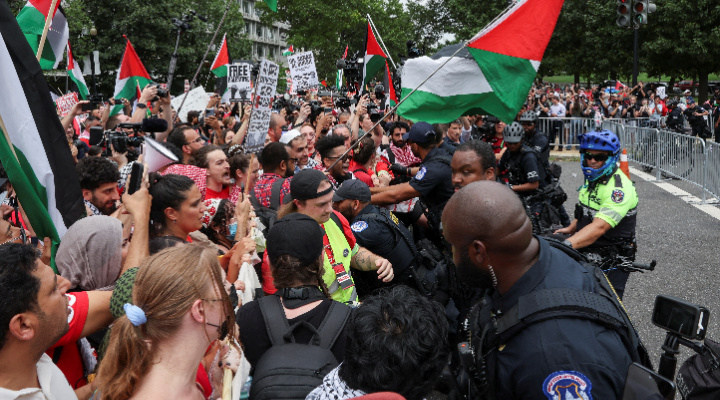
The world revealed a terrible ugliness and horrific hate on October 7, 2023, when Hamas launched a brutal terror attack on Israel, and started the ongoing war against Hamas, Palestinian Islamic Jihad, Hezbollah, and their supporters.
The global rise in anti-Jewish bigotry and hatred have been shocking, but not surprising. The hatred of Jews being so openly expressed, and often masked as anti-Zionism and anti-Israel activism, has left a deep scar on the Jewish community worldwide.
For American Jews, this tragedy has not only been a moment of profound sorrow, but also a time of painful revelation. When the terror attack began and the world reacted, many American Jews began to grapple with the uncomfortable realization of who their real friends are. The rise in anti-Jewish racism and bigotry, and the hypocritical double standards justifying antisemitic, anti-Israel, and anti-Zionist sentiments have exacerbated a profound sense of loneliness and alienation.
The Shock of Silence
In the immediate aftermath of the October 7 attack, Jewish communities across the United States looked to their friends, colleagues, and allies for support and solidarity. Many of us found solidarity among our own Jewish communities and the few allies who rose as upstanders.
While many stood in solidarity, offering condolences and condemning the violence, a distressing number of erstwhile allies were conspicuously silent. The absence of unequivocal support from individuals and organizations who had previously championed human rights and social justice was a stark and painful revelation.
This silence was not just an absence of words; it was a loud declaration of where allegiances truly lay. For many American Jews, it felt like a betrayal, a stark reminder that our pain and suffering were not seen as legitimate or worthy of the same empathy extended to other marginalized groups.
The Rise of Antisemitism
Antisemitism is anti-Jewish racism. No matter if it is called anti-Israel or anti-Zionist, it is anti-Jewish.
The resurgence of antisemitism has been another bitter pill to swallow. According to the Anti-Defamation League, antisemitic incidents in the United States have been on the rise for several years, and the aftermath of the October 7 attack has only intensified this trend. Synagogues have been vandalized, Jewish individuals harassed or attacked, and anti-Jewish rhetoric has proliferated online and in public discourse.
The surge in antisemitism is not just a reaction to the conflict in Israel, but a reflection of deep-seated prejudices that have been allowed to fester. The false dichotomy between being anti-Zionist and antisemitic has provided a convenient cover for those who harbor ill will towards Jews. The vilification of Israel often spills over into a broader hatred of Jews, making it increasingly difficult for American Jews to feel safe and accepted in our own country.
Every day, my social media accounts are filled with anti-Jewish hatred, personal threats, and even death-threats against me as an individual. And the hatred online does not stay online. I have needed security to be hired for my speaking engagements outside of Israel. News reports, and countless stories shared with me by individuals and organizations, reveal the ever-increasing targeting, bullying, harassment, hate crimes, vandalism, and terrorism.
Hypocrisy and Double Standards
One of the most insidious aspects of this experience has been the hypocritical double standards employed to justify anti-Jewish racism and anti-Zionism. Many who speak out passionately against other forms of racism and discrimination are conspicuously quiet when it comes to antisemitism. The selective application of principles of justice and human rights is glaring.
Critics of Israel often frame their arguments in the language of human rights, yet they ignore the existential threats faced by the Jewish State and its people. They hold Israel to an impossible standard, one not applied to any other nation. This hypocrisy extends to the justification of violence against Israelis and Jews, which is often downplayed or excused in ways that violence against other groups would never be.
My own liberal, progressive, and LGBTQ communities have revealed terribly anti-Israel and anti-Zionist factions that I actively speak out and stand against — and some of these are former fiends and organizations I used to be involved with.
It is vital that we stand up for our people, our values, and our rights and security, even if it means we stand up against some of the communities that were supposed to include and represent us. The harsh reality of their words and actions let us know who supports us and who is against us.
In the first months after October 7th, I felt as if two-thirds of my friends were not real friends, or had become former-friends. In the following months it felt like almost three-quarters of them were former-friends.
I was pained when people directly expressed anti-Israel, anti-Zionist, and anti-Jewish sentiments in their social media posts, in marching and attending the protests, riots, and encampments, and even in direct messages to me. But I shifted away from that pain towards the hopeful outcomes of my activism and advocacy. These former-friends revealed to me that they never were the types of people who should have been my friends to begin with.
Finding True Friends
In these challenging times, American Jews have found solace and support in unexpected places. True friends have emerged, those who understand that standing against antisemitism and supporting Israel’s right to exist is not mutually exclusive with advocating for Palestinian rights. These allies recognize that condemning terrorism and supporting Jewish communities in their time of need is a matter of basic human decency.
Jewish organizations and some interfaith groups have also played a crucial role in providing support and fostering solidarity. By coming together, sharing experiences, and working towards mutual understanding, these groups have helped to mitigate the feelings of isolation and loneliness that many American Jews have been experiencing.
I have been traveling across the United States and Canada on a speaking, advocacy, and media tour. As keynote speaker, my goal is to empower, inspire, and motivate Jews and allies towards being activists and advocates for the Jewish people, Israel, and the values we find important.
While I consistently am met with hatred and threats in many of these cities (and across social media), I have also made new friends and have witnessed communities coming together and new bonds being formed.
Moving Forward
The path forward is fraught with challenges, but it is also filled with opportunities for growth and solidarity. American Jews must continue to advocate for our rights and work towards educating others about the realities of anti-Jewish racism, hatred, and bigotry. We also must share the truths and the complexities of the Israeli-Palestinian conflict. Building bridges with other communities and finding common ground will be essential in combating the double standards and prejudices that persist.
In the aftermath of the October 7 attack, and the ever-increasing anti-Jewish hatred, violence, and threats, the loneliness felt by American Jews is a painful reminder of the work that still needs to be done. But it is also a testament to the resilience and strength of the Jewish people — and why the Zionist movement exists. We have faced adversity time and again. By standing together and reaching out to true friends, American Jews can continue to fight against antisemitism and for a more just and compassionate world. We are fighting for our existence today and for the future of our people, here in America, Israel, and around the world.
Am Israel Chai.
Yuval David is an Emmy and Multi-Award-Winning Actor, Filmmaker, Journalist, and Jewish LGBTQ+ activist and advisor. A creative and compelling storyteller, on stage and screen, news and across social media, Yuval shares the narrative of Jewish activism and enduring hope. Follow him on Instagram and X.
The post The Loneliness of American Jews Post-October 7: A Reflection on True Friendship, Antisemitism, and Double Standards first appeared on Algemeiner.com.
Uncategorized
Israeli Report Sounds Alarm Over ‘America Only’ Faction Influencing US Right

Tucker Carlson speaks at Indiana University in Bloomington, Indiana, Oct. 21, 2025. Photo: Gage Skidmore/ZUMA Press Wire via Reuters Connect
Israel’s Ministry for Diaspora Affairs and Combating Antisemitism has published a new report warning of a high-stakes schism among US President Donald Trump’s so-called “Make America Great Again” (MAGA) movement propelled by an “America Only” alliance known for advancing antisemitic invective.
“The picture emerging from the report is concerning: Alongside significant American support for the war against the Iranian terror regime, a discourse is expanding in the US that attempts to present Israel as acting manipulatively, as if it dragged the US into war,” Amichai Chikli, minister for diaspora affairs and combating antisemitism, said in a statement announcing the research.
“This is a dangerous discourse that often devolves from political and diplomatic criticism into conspiratorial rhetoric with a sharp antisemitic aroma,” he continued. “Our role is to identify these trends in time, alert people to them, and act together with our partners to understand deep-seated trends and know how to prepare and respond to them.”
Avi Cohen-Scali, the government ministry’s director general, added that “we identify an increasingly tightening connection between internal political debate in the US and the dissemination of anti-Israel and antisemitic messages online.”
The report, released on Thursday, analyzes the public sentiment of Republicans and conservatives regarding the US-Israeli military campaign against the Islamic regime in Iran. It defines two alliances on the American political right which have voiced opposition to the joint strikes: so-called “America First” and “America Only.” The Israeli researchers characterize the former faction as “restraint-oriented,” noting that adherents argue “”the strikes contradict anti-war campaign rhetoric, risk drawing the United States into another prolonged Middle East conflict, and impose economic costs that undermine domestic priorities.”
Advocates of this approach have also advanced narratives around the term “Israel First,” which the report describes as “including antisemitic claims alleging disproportionate Israeli or Jewish influence over US foreign policy, as well as slogans such as ‘dying for Israel’ that frame the war as serving foreign rather than American interests.”
The report names and profiles three prominent podcasters it identifies with this mentality: Tucker Carlson, Candace Owens, and Joe Rogan, as well as streamer Sneako (Nicolas Kenn De Balinthazy).
In contrast, the Israeli researchers name “a more radical fringe, sometimes referred to as ‘America Only,’ which promotes extreme isolationism combined with conspiratorial, white nationalist, and antisemitic narratives.”
In this category, the report offers six profiles, leading with former US Rep. Marjorie Taylor Greene (R-GA), who features “America Only” in her descriptor and banner on her X social media account where she routinely shares her views with 1.6 million followers. The report notes five others and includes data about their followings on billionaire Elon Musk’s X website: white nationalist podcaster Nick Fuentes (1.3 million), former mixed martial arts fighter Jake Shields (over 900,000), British-American influencer Sam Parker (over 300,000), neo-Nazi Lucas Gage (over 286,000 but now blocked), and radio host Stew Peters (over 900,000).
According to the report, “the core distinction between right-wing populists (America First) and white nationalists (America Only) lies in how they define the in-group.”
While America First advocates “emphasize culture, nativism, and hostility toward elites,” those in America Only “place race and ancestry at the center of their worldview and openly support either the maintenance or restoration of white dominance. Their ideology prioritizes the preservation of ‘ethnic purity’ and often rests on explicit racial doctrines that can also shape their positions on foreign and international policy.”
Researchers describe how these voices “play a central role in shaping discourse, particularly among younger audiences, amplifying anti-war messaging and framing the conflict as misaligned with American interests.”
Noting that polls show Republican support for the war with Iran is limited with voters expressing caution about sending soldiers back to the Middle East, the report says that “divisions within conservative media and among some Republican figures, particularly within ‘America First’ and ‘America Only’ circles, indicate that support could weaken if the conflict becomes prolonged, expands operationally, or imposes sustained economic costs.”
These divisions do not remain in the domestic sphere. The ministry describes how pro-Iran networks “amplify narratives of American opposition to the conflict to deepen perceived divisions. These trends may have implications for Jewish and Israeli communities in the United States, particularly in relation to the risk of increased antisemitic discourse and incidents.”
The report cites polling showing a collapse of the American public’s sympathy for Israel (down to 36 percent, according to a recent Gallup survey) in the Israeli-Palestinian conflict, with – for the first time ever – more Americans now aligning with the Palestinians (41 percent). This has flipped from February 2025 when 46 percent stood with the Jewish state and 33 percent supported the Palestinians.
While most of this rising anti-Israel sentiment has grown among Democrats, the report notes that “among Republicans, the same tendencies are evident to some degree, but the changes are significantly smaller. Among Republicans, sympathy for Israel decreased from 80 percent in 2021 to 70 percent in 2026, while sympathy for Palestinians edged up from 10 percent to 13 percent.”
A survey of 1092 people conducted from March 26-30, released on Thursday by YouGov and the Center for Public Opinion at UMass Lowell, offers further illumination about the potential levels of American enthusiasm for these ideologies.
Asked whether the close US-Israel alliance does more to help or harm the American national interest, 42 percent said more to hurt, 29 percent said more to help, and 29 percent said neither. Among Republicans those figures were 23 percent more to hurt, 52 percent more to help, and 24 percent neither.
Analyzing the survey results, CNN senior political reporter Aaron Blake shared data and noted that “Tucker Carlson isn’t that popular among Republican-leaners anymore,” with 31 percent having a favorable opinion compared to 24 percent unfavorable. Overall, 38 percent of respondents said they have an unfavorable view of him, compared to 17 percent favorable.
Even among Carlson’s heaviest bloc of backers – self-identified conservatives — the former Fox host showed limited support. While 34 percent of conservatives expressed a favorable opinion, 26 percent affirmed “unfavorable,” 31 percent offered no opinion at all, and 10 percent had never heard of him. Meanwhile, the poll showed that 7 percent of Democrats and self-described liberals expressed favorable views.
The pollsters also researched how Carlson would potentially fare against California Gov. Gavin Newsom and Rep. Alexandria Ocasio-Cortez (D-N.Y.), two widely floated potential Democratic presidential candidates, in the 2028 contest.
Head-to-head with the California leader, 25 percent of voters would support Carlson, while 33 percent would vote for Newsom and 20 percent would refuse to vote. Two percent of Democrats said they would back Carlson while six percent of Republicans said they would vote for Newsom, as did 7 percent of conservatives.
Up against Ocasio-Cortez, the numbers remained similar with 25 percent saying they would support Carlson and 32 percent backing the leader behind the so-called “squad” of left-wing congressional representatives.
Many observers in the media have speculated that Carlson could run for president in 2028.
Uncategorized
Antisemitic Social Media Personality Dan Bilzerian Launches Longshot US Congressional Bid Against Randy Fine

Dan Bilzerian arrives at the Fashion Nova x Cardi B Collection Launch Party held at the Hollywood Palladium on May 8, 2019, in Hollywood, Los Angeles, California, United States. Photo: Xavier Collin/Image Press Agency/NurPhoto via Reuters Connect
Antisemitic social media personality Dan Bilzerian launched a bid for the US Congress this week, setting off a firestorm of controversy as he seeks to unseat incumbent Republican Rep. Randy Fine in Florida’s 6th Congressional District, a race already defined by personal attacks and inflammatory rhetoric.
Bilzerian, who grew a massive social media presence by showcasing his hedonistic lifestyle, formally filed paperwork on Tuesday to run as a Republican, challenging Fine in what is shaping up to be one of the most unconventional GOP primaries of the 2026 election cycle.
During an interview with TMZ this week, Bilzerian was confronted over his previous comments referring to Fine as a “fat Jew.” He responded by condemning Fine as a “Jewish supremacist and he puts Israel ahead of America, and I think that, you know, he should be tried for treason.” Bilzerian also dismissed antisemitism as a “made-up term.”
“I think we just have a big Jewish supremacy problem in the country, and everyone’s talking about it, and nobody’s doing anything about it,” he told the Daytona Beach News-Journal in a separate interview, echoing a message he has previously posted on social media.
The remarks drew swift backlash online and placed Bilzerian’s candidacy under intense scrutiny, raising questions about the viability of the campaign.
Fine responded forcefully, arguing that Bilzerian’s comments were not accidental but reflective of deeper hostility. He said the rhetoric demonstrated that his challenger is unfit for public office and outside the bounds of acceptable political discourse.
“This isn’t about disagreement,” Fine said in a media appearance. “It’s about whether someone who speaks this way about an entire group of people belongs anywhere near Congress.”
Fine responded directly to Bilzerian’s condemnations, suggesting to TMZ that the social media provocateur views the Jewish religion “as some sort of negative thing.”
During the TMZ discussion, Bilzerian also used the n-word, comments which drew sharp criticism from Fine.
“It’s my view that anyone who can use that word so easily, probably uses it in their everyday language and that’s not a word that I believe has any place in the Republican party and I’m not interested in platforming it,” Fine said.
The congressman has pledged not to back down and also touted his close ties to US President Donald Trump.
“Congressman Randy Fine is the only person in America that President Trump has endorsed three times in the past two years, including in his current reelection,” a spokesperson for the lawmaker told The Hill, describing the Florida Republican is one of Trump’s “greatest allies.”
“Randy Fine will never back down in the face of any effort to impeach President Trump and obstruct the will of the American people,” the spokesperson added.
The clash has highlighted the unusually combative tone of the race. While Fine has positioned himself as a mainstream conservative with strong ties to Trump, he is no stranger to controversy himself. Critics have previously pointed to his own inflammatory statements about Muslims and Palestinians, which resurfaced in recent interviews as the campaign feud intensified.
Fine has repeatedly justified Islamophobia as “rational” rather than a form of bigotry.
“We need more Islamophobia, not less. Fear of Islam is rational,” Fine wrote on X.
He has warned about the “Islamification of America” and cautioned that the growing influence of Islam could lead to the banning of pet dogs.
“If they force us to choose, the choice between dogs and Muslims is not a difficult one,” Fine posted on X.
Despite weathering a bevy of controversies, Fine has sought to reinforce his standing with conservative voters. He announced this week that he is joining the House Freedom Caucus, a move that underscores his alignment with the GOP’s most conservative faction and signals an effort to consolidate support ahead of the primary.
Despite the backlash, Bilzerian has not backed down. He has insisted that his remarks are being mischaracterized and has continued to attack Fine on social media.
In the immediate aftermath of Hamas’s Oct. 7, 2023, massacre across southern Israel, Bilzerian transformed his public image from a social media provocateur to a prominent critic of Israel and Judaism writ large.
Bilzerian has engaged in Holocaust denial, saying during an interview with British journalist Piers Morgan that casualty figures of the genocide have been “revised” and he “would bet [his] entire net worth that it was under 6 million.” He has also declared that “Jewish supremacy is the greatest threat to the world today” and denied that Jews experience antisemitism in any meaningful way, asserting that Palestinians are “the real semites.” Bilzerian has also parroted the unsubstantiated conspiracy theory that Israel orchestrated the assassination of US President John F. Kennedy and claimed that the Israeli government also killed Libyan President Muammar Gaddafi in 2011.
“I wasn’t there, but everything I’ve seen, evidence-wise, points to Israel,” Bilzerian said.
For now, the race remains heavily tilted in Fine’s favor, given his incumbency, established political track-record, and close relationship with Trump.
Bilzerian, a Florida native, currently resides in Las Vegas, Nevada and possesses no political experience. His repeated antisemitic and anti-Israel commentary is likely to serve as a liability in a conservative district with a significant Jewish population.
Uncategorized
42 Jewish authors slam Jewish Book Council for ‘bias toward centering Israeli and Zionist voices’
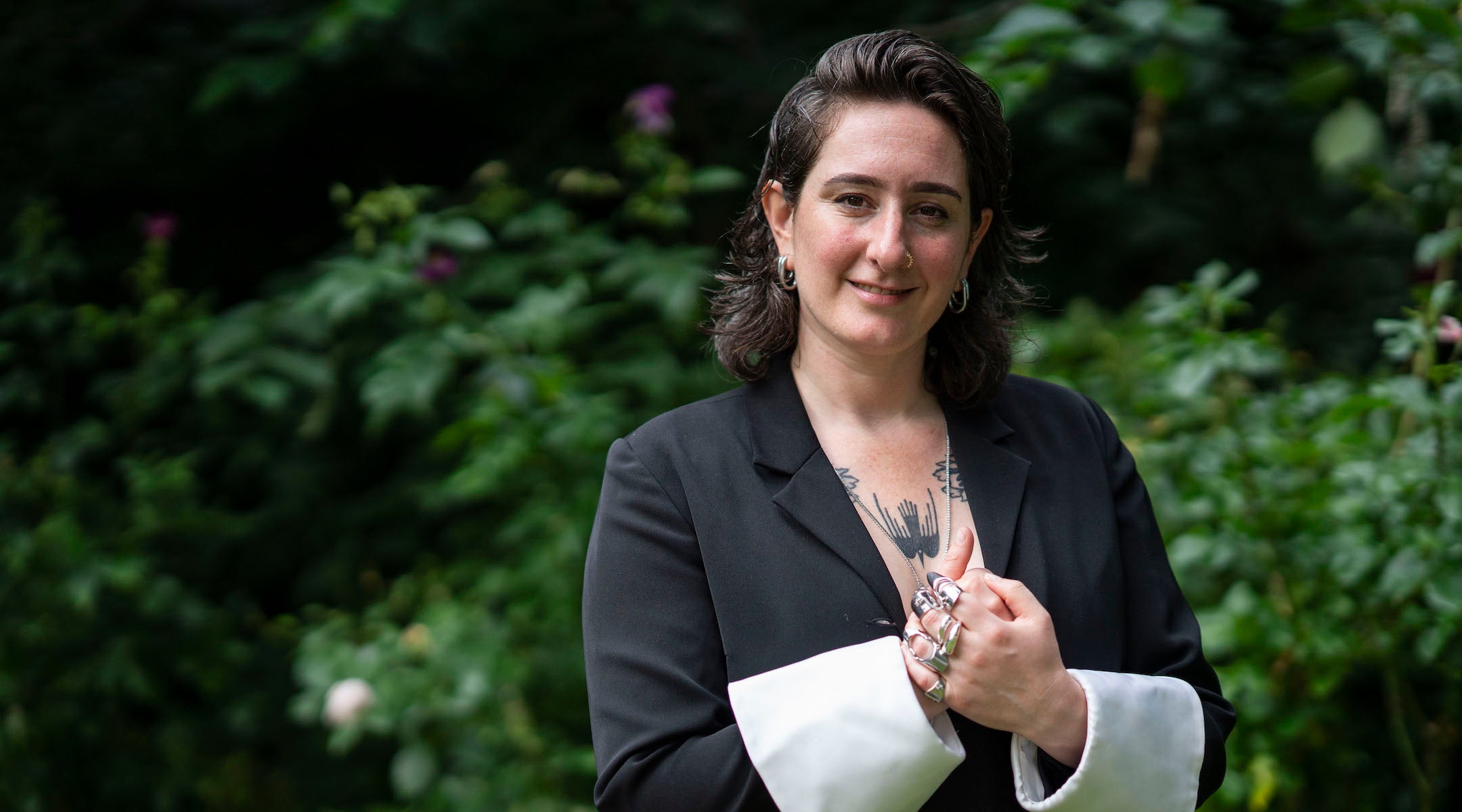
(JTA) — Dozens of anti-Zionist and non-Zionist Jewish authors are criticizing the Jewish Book Council, a historic literary group, for what they said was a “bias toward centering Israeli and Zionist voices” and “narrowing its vision to a Zionist approach to Jewish culture.”
A new open letter signed by 42 authors argues that the council, which was founded in 1925, should commit itself more to spotlighting Jewish voices who disagree with traditional Zionism and should not have showcased Israeli and Zionist voices after Hamas’ Oct. 7, 2023, attack on Israel.
“Because the JBC is our most visible and longstanding Jewish literary institution, its focus on Zionist authors and books gives both Jewish and non-Jewish readers the false impression that Jewish books are inherently Zionist,” the open letter, published Thursday by “a Concerned Group of Jewish Writers,” argues.
Notable signatories include Israeli-Dutch novelist Yael van der Wouden, whose 2024 debut “The Safekeep,” a Jewish LGBTQ romance set in postwar Amsterdam, was shortlisted for a Booker Prize and won an award from the Jewish Book Council; memoirist Qian Julie Wang, whose book “Beautiful Country” was a New York Times bestseller, recommended by former President Barack Obama and winner of an award given by the council; novelist Adelle Waldman, author of “Help Wanted”; and Michael David Lukas, a professor at San Francisco State University and past winner of both the National Jewish Book Award and Jewish literature’s prestigious Sami Rohr prize for his 2018 novel “The Last Watchman of Old Cairo.”

Yael van der Wouden, winner of the 2025 Women’s Prize for Fiction, during The Women’s Prize Trust Summer Party & Awards Ceremony 2025 at Bedford Square Gardens on June 12, 2025 in London, England. (David Levenson/Getty Images)
The Jewish Book Council was founded to support and award Jewish authors and topics. In addition to handing out the annual National Jewish Book Awards, the council also connects authors with Jewish speaking engagements, publishes reviews of Jewish books, and provides other forms of support. In 2024, after a list purporting to expose “Zionist” authors circulated online, the council launched a hotline to report antisemitism in the books world.
The council’s CEO, Naomi Firestone-Teeter, told the Jewish Telegraphic Agency the letter represented a “difference in expectations” about what the institution can stand for.
The authors said they initially contacted the council’s leadership in private last year, engaging in a dialogue over a list of specific concerns. Those included the council’s failure to define antisemitism in its reporting tool, as well as its stated support of Israel and Israeli authors in recent awards ceremonies.
The authors also urged the council to state that criticism of Israel “is not inherently antisemitic,” and to “create programs and content in the coming year that reflect a more genuine diversity of Jewish views on Israel/Palestine and create spaces for Jews and cultural workers engaged with Judaism to have these difficult conversations.”
When the council didn’t follow up on their requests, the authors claimed, they decided to take their letter public. “We were—and remain—concerned that the institution’s apparent bias toward centering Israeli and Zionist voices is not only exclusionary but harmful, contributing to the dehumanization of Palestinians and advancing a system of cultural apartheid,” they wrote.
The open letter was the latest salvo in a series of dust-ups about Jews and Israel throughout the book world. Literary free-speech organization PEN America, after months of protest over its perceived Zionist tilt, this year replaced its leadership and retracted a statement standing in solidarity with an Israeli comedian whose performances had been cancelled. Bestselling authors have called to boycott Israeli literary institutions, and Guernica magazine experienced an internal upheaval after publishing an essay about the Gaza war by an Israeli writer arguing for coexistence.
The Jewish Book Council, however, had not experienced much public pushback from within its ranks of authors, until now.
“What the open letter is reflecting is a difference in expectations about our role as an institution, not a lack of engagement,” Firestone-Teeter told JTA. “Our role is to be a platform for literary exchange. We’re not a political advocacy group.”
Firestone-Teeter said that, contrary to the authors’ claims that the council had failed to follow up on their requests, she had “engaged in good faith” and made the council’s position clear to them. She said she disagreed with their assessment that the council deprioritizes Jews who are critical of Israel.
“You will see the diversity of the Jewish community represented, including some of these voices,” she said. “Jews are not a monolith. Our writers write with a lot of nuance, a lot of complexity.”
She also defended the council’s decision not to narrowly define antisemitism for its hotline, noting that they received hundreds of antisemitism reports and that different authors have different ideas of what constitutes antisemitism. The council intends to analyze the data it received. “We have not used the tool to take punitive action,” Firestone-Teeter said.
In addition, she said, it was appropriate for the council to spotlight Israeli authors after Oct. 7. “We are an organization that supports Jewish authors in America, Israel and beyond. Israel is a key part of our efforts to support the Jewish community,” she said. “Our Israeli authors represent a very wide range of views, politically and otherwise.”
Despite the authors’ objections, Firestone-Teeter told JTA, the council still considered them part of its constituency: “These are Jewish authors.”
This article originally appeared on JTA.org.
The post 42 Jewish authors slam Jewish Book Council for ‘bias toward centering Israeli and Zionist voices’ appeared first on The Forward.