


Uncategorized
‘The Pitt’ tackled the trauma of the Tree of Life attack. Here’s how survivors of the synagogue shooting reacted to the episode.
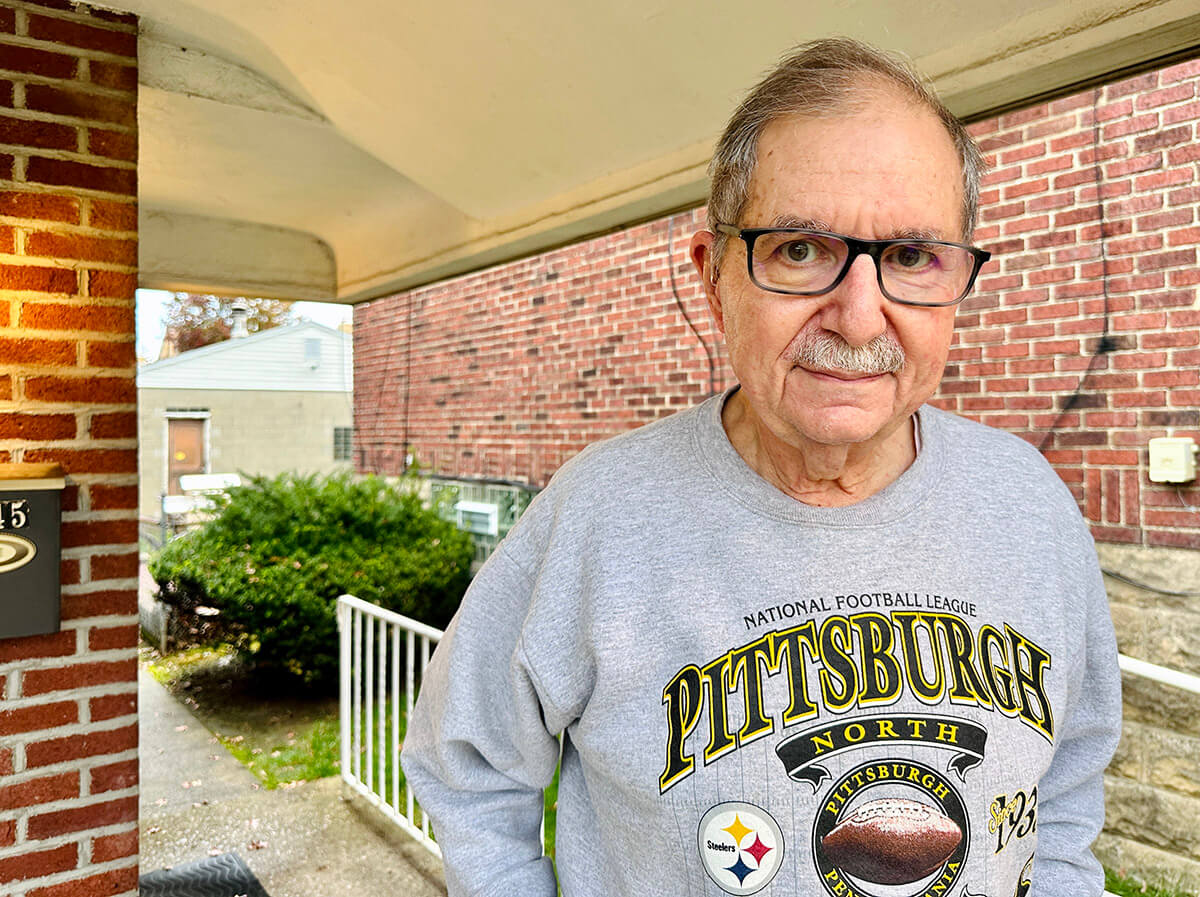
When Audrey Glickman, a lifelong Pittsburgher and a survivor of the Tree of Life massacre, sat down to watch The Pitt Friday morning, she knew exactly what was coming. And still she found herself moved by it.
On Thursday’s episode of the HBO Max medical drama, which is set in Pittsburgh, a patient arrives at the emergency room with a burn. It’s the Fourth of July. Fireworks crackle outside. In her kitchen, the woman had been using a samovar — a traditional metal urn often used in Jewish homes to heat water — when the sudden noise startled her and she dropped it.
The scalding water spilled onto her leg.
When her doctor asks what happened, she offers an explanation that reaches further back than the holiday. “I was on my way inside,” she says. “October 27, 2018.”
She doesn’t need to say more.
The episode never recreates the Tree of Life synagogue shooting, the deadliest antisemitic attack in American history. There are no gunshots, no flashbacks, no swelling score. Instead, the trauma surfaces the way it often does in real life: indirectly, years later, triggered by noise, memory, or the body’s refusal to forget. The scene assumes the audience already carries the weight of that day. That restraint reflects how the show has handled Jewish moments.
In its first season, The Pitt established – not through backstory but through behavior – that its protagonist, Dr. Michael “Robby” Rabinovich (played by Noah Wyle), is Jewish. In one episode, after a brutal shift, he sits on the floor of a makeshift morgue, clutching a Star of David and reciting the Shema prayer. The moment is brief and unresolved; he later admits he isn’t even sure he believes the words he’s saying. It’s not a declaration of faith so much as a reflex — what surfaces when language runs out.
In the new episode, the survivor, named Yana Kovalenko and portrayed by actress Irina Dubova, asks Dr. Robby where he goes to synagogue.
“Rodef Shalom,” he replies, naming an actual Reform shul in Pittsburgh.
Kovalenko says she is a Tree of Life member and was at the synagogue on the day of the attack.
“They’re rebuilding,” Dr. Robby says.
“Yes, something new,” she says, adding, “Remember, rebuild, renew,” echoing the same phrase Tree of Life uses on its website.
That exchange gains more meaning if you know that Tree of Life is, in fact, rebuilding on its original site — and that, for now, its congregation meets in Rodef Shalom’s building. That insistence on local specificity extends beyond the script. Wyle, who is Jewish and whose parents met while attending college in Pittsburgh, has said authenticity is key to the series, which was inspired by the city’s Allegheny General Hospital.
Glickman said friends texted her about the episode Friday morning, so she was prepared for the reference but was still affected by how it unfolded.
“It’s really delightful,” she told the Forward. Not because every detail was perfect — she laughed about the accents, and the samovar struck her as more inherited than typical — but because the episode captured something truer than procedural accuracy.
“They do a lot of calling out of Pittsburgh,” Glickman said. “They treat it the way other shows treat New York or San Francisco. It lends authenticity, and it’s kind of exciting.”
Television often treats trauma as singular and spectacular, something that happens once and violently to one person at a time. The Pitt depicts it instead as communal and environmental, something that hums in the background long after the event itself has passed. “There is no clock on how long it takes,” Dr. Robby tells his patient.
Barry Werber, another Tree of Life survivor, knows that trauma personally. Werber was in the basement with his fellow congregants when they heard gunfire. He escaped into a storage room with two others, Carol Black and Melvin Wax. “We couldn’t find the light switch,” he later recalled. “It was pitch black.”
After a few moments, Wax, who was hard of hearing, thought the shooting had ended, so he took a fateful step outside the storage room and was instantly shot dead. His body fell back into the storage room, and the shooter, Robert Gregory Bowers, stepped inside. Through the darkness, Werber said, Bowers could not see Black hiding behind the door or himself toward the back of the room.
“To this day, I can’t go into a room and sit with my back facing the door,” he told the Forward.
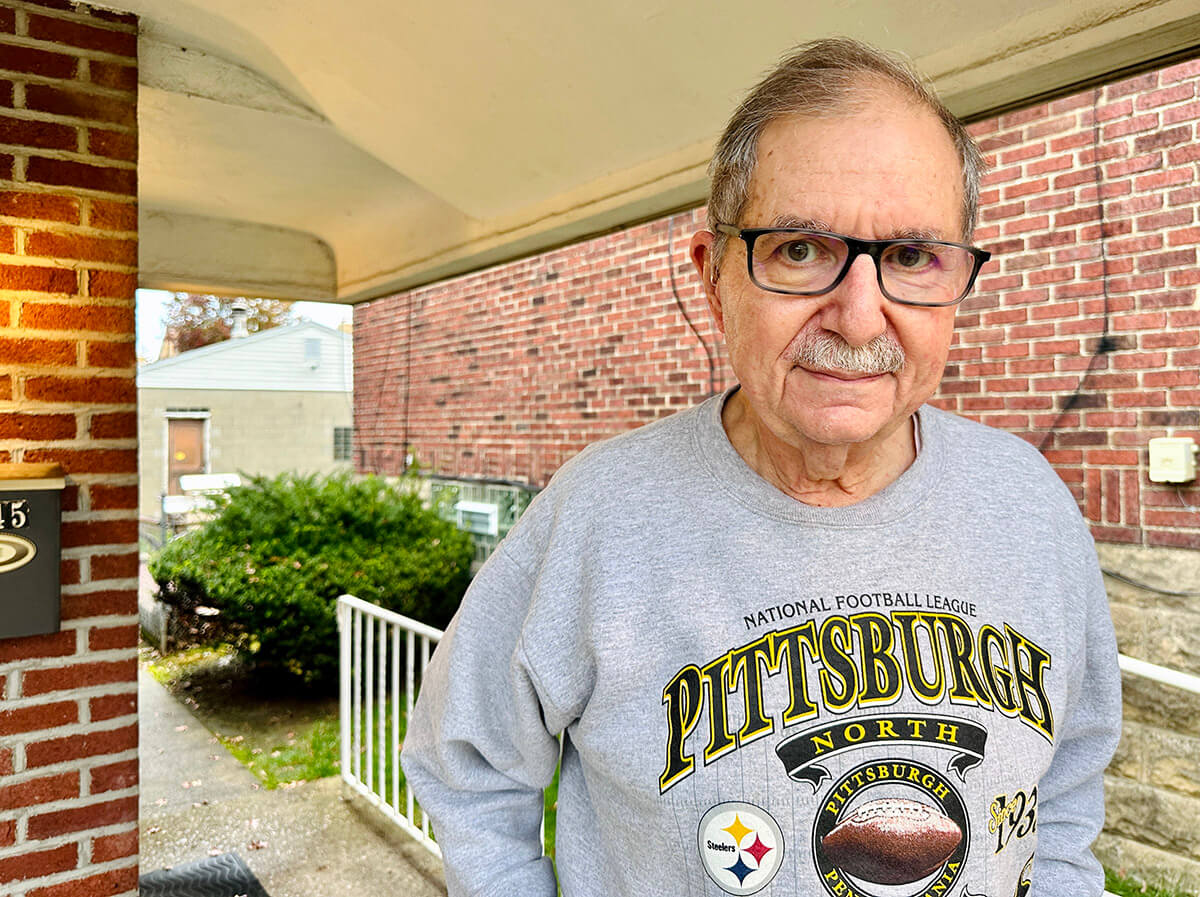
Years later, that vigilance remains. Werber is still in therapy. He avoids crowds. He instinctively scans buildings for security. He attends synagogue services now via Zoom — partly because his wife is ill, and partly because being in a room full of people still doesn’t feel safe. “It took a lot out of me,” he said.
Werber, who worked for nearly 40 decades for the healthcare company that inspired the show, has yet to see the episode. He doesn’t subscribe to Max. “I spend enough on cable,” he said. “I don’t think we’ll get HBO. I’ll see if any of my friends have watched it.”
Carol Black, who was hiding in the same basement storage area as Werber during the attack, said the episode’s portrayal of flinching felt immediately familiar. “Every little unexpected sound still makes me jump,” she told the Forward. “If somebody sneezes and I’m not expecting it, I jump.” She said she has learned to live with the reflex. “You’re never going to get over it,” she said. “You just get used to it.”
Black, whose brother Richard Gottfried was among the 11 people killed in the shooting, said she was grateful to see the story reach a wider audience. “I don’t want the story of what we experienced to go cold,” she said. “This is a very popular show. People need to know about this.”
One of the episode’s most quietly revealing moments comes when the patient asks the nurse tending to her burns if she is Muslim. When the nurse says yes, the patient thanks her — not for the care she’s receiving in the room, but for what came years earlier. After the shooting, she recalls, it was the Muslim community that showed up, raised money, and paid for funerals.
Wyle, who also co-wrote this episode, told Variety that the interfaith solidarity “was the most underreported aspect of the story, and perhaps the most hopeful moving forward.” R. Scott Gemmill, an executive producer, added: “You can’t do a medical show, set in Pittsburgh, with a Jewish doctor without addressing that.”
The exchange in the episode is brief, almost awkward. The nurse doesn’t know what to say. The patient waves it off. “Anyway,” she says. “Thank you.” The show doesn’t pause to turn the moment into a lesson. It lets it pass, the way lived history often does.
That restraint resonated deeply with Glickman, who remembers the support across religious lines that followed the attack, and the ache of realizing how rare that feeling now seems. “I hope it means we’re going to get past the divisions we’re having right now,” she said. “We were there before. We can be there again.”
She also laughed at a detail few critics would think to note: Before arriving at the hospital, the patient treats her burns with honey. “That is so us,” Glickman said with a laugh. “That is so Jewish.”
#ThePitt’s Noah Wyle, who wrote Episode 3, talks with @TVLine Senior Editor Ryan Schwartz about revisiting the Tree of Life shooting and the Muslim community’s support and solidarity in the aftermath. https://t.co/KEHiBVeuUu pic.twitter.com/WTDSeL2Gkg
— TVLine.com (@TVLine) January 23, 2026
The post ‘The Pitt’ tackled the trauma of the Tree of Life attack. Here’s how survivors of the synagogue shooting reacted to the episode. appeared first on The Forward.
Uncategorized
They want Jewish life without Zionism. Now they’re building the institutions to match.
(JTA) — One year after Jewish Currents editor-at-large Arielle Angel called for “new Jewish institutions” that have no attachment to Israel or Zionism, more than 100 Jews crammed into a Victorian house-turned-event space in central Brooklyn in hopes of creating them.
The event was billed as a bootcamp for people hoping to get fledgling Jewish groups off the ground. Sessions focused on topics like staffing and funding, as well as discussions about who, exactly, is welcome in a space that is “anti-Zionist,” “non-Zionist,” “diasporist” and the like.
Many of the groups represented on Monday were minyans, which host prayer services in locations like people’s apartments or community spaces. They sought practical guidance for building their institutions, but also for defining who to welcome as their ranks expand.
“If we’re doing things right,” Angel said, “many of these small minyans will be synagogues in a few years.”
Esti, 27, who declined to share her last name to maintain privacy, is involved in leading an anti-Zionist minyan in Brooklyn. She said she has heard from “so many” attendees that they were relieved to attend services in a space without an Israeli flag.
“People are like, ‘I never thought I could be in a Jewish space like this, I never thought I’d see queer people leading, I never thought I could be in a Jewish space where they’re saying Free Palestine,’” she said. The minyan averages about 50 attendees at Shabbat services, she said.
Some of the speakers at the workshop detailed how they have refused to compromise their organizations’ politics. One panel led by Rabbi Brant Rosen, who helped found the anti-Zionist synagogue Tzedek Chicago, and Rebecca Vilkomerson, the former director of the anti-Zionist group, Jewish Voice for Peace, focused on the process of setting an organization’s “political boundaries.”
Rosen spoke from his own experience, saying that Tzedek Chicago was presented as “consciously not an inclusive community.”
“In other words, this is what we stand for, it might not be for you, it might not be for everyone, and that’s OK. There are many places out there that you can choose,” he said. Rosen added that potential members were not forced to agree in order to join, but rather that they were faced with the question: “Given that these are our values, is this a community you want to belong to?”
Esti spoke to the Jewish Telegraphic Agency on the sideline of the Urbane Arts Club event, which JTA attended on the condition that attendees’ in-session remarks throughout the day were kept off the record, though panelists’ remarks were all on the record.
Americans’ support for Israel has dropped writ large amid its military campaign in Gaza and the war with Iran. A survey by the Jewish Federations of North America found that 37% of Jewish respondents said they identified as Zionist, while 7% labeled themselves anti-Zionist and another 8% said they were non-Zionist. Another 18% said they weren’t sure, while 30% said none of the labels described them.
According to an AP-NORC poll from earlier this year, support for Israel is a less significant component of younger Jews’ religious identity versus Jews older than 45.
“These groups are starting up because of demand,” Rabbi Alissa Wise told JTA.
Wise is a co-founder of the Jewish Diaspora Movement, the group behind Monday’s bootcamp, which is itself in its beginning stages. She has previously worked for JVPe and in October 2023 founded Rabbis for Ceasefire, which has protested for a Gaza ceasefire and an end to U.S. military aid to Israel.
While JVP “played a pivotal role in building Jewish life outside of Zionism,” Wise said there was still a major gap in religious and cultural Jewish institutions that reject Zionism.
In addition to the represented minyans, which facilitate prayer services, and the havurahs, which offer events such as Shabbat dinners and other holiday celebrations, Angel said some attendees were looking to start projects including summer camps, educational offerings and cultural projects such as theater collectives.
Jen Kaminsky, an attendee who is part of the Buffalo Jewish Collective’s leadership team, told JTA that her organization welcomes “a range of Jews, many of whom have not felt comfortable in legacy Jewish institutions.”
“We say that we welcome anti-Zionists and non-Zionists, and people who are questioning Zionism and people who have a range of relationships to Zionism,” Kaminsky said. “If you are comfortable with the values that we put out, or you’re comfortable being in a room where those values are the dominant values, we welcome you.”
Vilkomerson told the group that there should be an attempt to grow membership by engaging people closer to the center in “left-liberal coalitions,” but without making concessions on left-wing values. She put the concept into New York City political terms, pointing to the political alliance between the anti-Zionist Mayor Zohran Mamdani and the liberal Zionist Brad Lander.
“Brad, as a liberal Zionist, was able to partner with Zohran Mamdani — but Zohran set the terms of the campaign, not Brad,” she said.
Also on Monday, Lissy Romanow — a co-founder of the group IfNotNow, which describes itself as “anti-occupation” — gave a nuts-and-bolts session on the first steps of creating an organization, including how to concisely conceive of a group’s DNA and how to avoid burnout among volunteers.
As groups look to grow and achieve loftier goals like setting up permanent locations and hiring paid staff, one clear obstacle stands in the way: funding.
“There’s only so much money on the Jewish left,” Angel told JTA.
Any anti-Zionist group is highly unlikely to receive funds from one of the country’s many Jewish federations, which often maintain deep ties to Israel.
Three left-wing Jewish donors — Liana Krupp, Deborah Sagner and Kathleen Peratis — spoke on Monday about the limited landscape of funding for Jewish anti-Zionist organizations.
“If we don’t flip liberal Zionists we’re not going to grow, because that’s where the money is,” Peratis said.
Participants on Monday, whose groups are mostly volunteer-run, did not have any illusions about that landscape.
“For now, the goal is to keep doing Shabbat in a sustainable way on a regular basis,” Esti said. But she also shared her long-term vision.
“I think it would be amazing to have a brick-and-mortar shul, a place we could call our definitive home,” she said. “But that’s way, way far down the line.”
This article originally appeared on JTA.org.
The post They want Jewish life without Zionism. Now they’re building the institutions to match. appeared first on The Forward.
Uncategorized
After bronze win, judo athlete Raz Hershko tells JTA, ‘I stand for something far bigger than myself.’
(JTA) — Israeli judoka Raz Hershko, one of the country’s top athletes, missed a major opportunity in 2025 when the 12-day war between Israel and Iran closed Israeli airspace, preventing her from traveling to Budapest. Earlier this year, she withdrew from the Tashkent Grand Slam after the Shin Bet ordered the Israeli team to leave Uzbekistan.
But nothing could keep Hershko off the podium this weekend, when she won a bronze medal at the World Judo Championships in Baku, Azerbaijan.
Hershko, 28, burst into tears after winning the bout that secured her medal.
“Representing Israel has always been something that moves me, but at this moment, it carries so much more meaning,” Hershko told JTA. “At the end of the day, I step onto the mat alone, but I feel like I have an entire country behind me.”
Hershko dedicated her victory to the memory of Yonatan Gutin, an Israeli soldier killed on Oct. 7, 2023, as well as his family and the people of Israel.
According to his official memorial page, Gutin, a 20-year-old Israel Defense Forces officer, was killed fighting to rescue civilians during the battle for Kibbutz Be’eri. Judo was a central part of his life. He had trained in the sport for about 14 years and was a member of Israel’s cadet national team. Even during his military service, he occasionally returned to his judo club to coach.
Despite the achievement, Hershko made clear that bronze was not the result she had hoped for.
“I’m pretty disappointed that the day ended with a bronze medal, because I was aiming for gold,” she said. “But now it’s time to look ahead to the next goals.”
Hershko has established herself in recent years as one of the world’s leading judokas and one of Israel’s most prominent athletes. She won an individual silver medal at the 2024 Paris Olympics and a gold medal at the 2024 European Championships. She competes in the women’s heavyweight division.
Her latest achievement came just days after Israel marked the third anniversary of the Oct. 7 Hamas-led attacks, a date that has continued to shape the country’s public life and weigh heavily on its athletes competing abroad.
“Knowing that I was able to give people back home even a few moments of happiness, a smile, a sense of pride — that means so much to me. Especially during the times we’re going through, these are the moments that remind me why I do what I do,” she added.
The judoka said that “everything has felt different since Oct. 7” and that she can’t “disconnect” herself from the Israeli reality.
“Before that, I would go into competitions feeling immense pride in representing my country,” she said. “Today, that pride is even stronger. I’m much more aware of what the flag I wear represents, and of the fact that I stand for something far bigger than myself.”
Hershko, however, has little time to dwell on the medal. She told Channel 13 that she would take two days off before returning to training ahead of another competition next week. Asked by JTA how she has managed to stay hungry and focused after achieving so much, the Israeli athlete said she simply enjoys the journey.
“I really love what I do. I love judo, I love competing, I love the challenges, and I think that’s what keeps me hungry,” she said. “Of course, I’m proud of everything I’ve achieved, but I never feel like I’m done or that there’s nothing left to strive for. At the end of the day, the medals are incredible moments, but the journey is what builds me as an athlete, and I’m still enjoying that journey.”
This article originally appeared on JTA.org.
The post After bronze win, judo athlete Raz Hershko tells JTA, ‘I stand for something far bigger than myself.’ appeared first on The Forward.
Uncategorized
Jewish school educators cancel trip to Italy after Italian education program required participants to denounce ‘genocide’ in Gaza
(JTA) — Educators from Jewish schools across the U.S. canceled a study trip to Reggio Emilia, Italy, over whether the hosts would require participants to formally distance themselves from Israel’s actions in Gaza and the West Bank.
The controversy has drawn accusations of antisemitism from Jewish educators and from Italian Jewish community leaders. It has also sparked a political dispute in Italy.
In an email sent to participants on Oct. 9, the American organizers, the Paradigm Project, said they canceled the trip because of “antisemitic pressure being placed on the group.” In a Zoom call with the participants, the organizers also cited safety concerns amid the scrutiny of the Jewish school educators’ personal profiles by pro-Palestinian activists who were agitating for the declaration, a participant said.
In a leaked audio recording broadcast Monday evening by Italy’s Tg3 TV news program, the president of the host organization Reggio Children, Maddalena Tedeschi, discussed asking participants to sign declarations distancing themselves from the “occupation of territories and genocide.” The recording is of an Oct. 6 meeting of the city’s early childhood education council.
In an interview with the Jewish Telegraphic Agency, Reggio Children spokesperson Francesca Severini said the request — intended to appease local pro-Palestinian activists — had never become an official participation requirement, but acknowledged that the additional wording had been discussed.
The Paradigm Project, a professional development network for Jewish early childhood educators, organized the trip for 68 Jewish educators. A separate delegation of 22 educators from Israel arrived in Reggio and was participating in the program this week.
“Now, more than ever, we must bring back the light and keep the bridge between us strong,” the Israeli educators said in opening remarks Monday.
Reggio Children, an educational organization partly owned by the municipality, promotes the city’s internationally influential approach to early childhood education and provides training for educators. Reggio Emilia Mayor Marco Massari and the city’s education official Marwa Mahmoud did not respond to requests for comment.
The cancellation, which came in a phone call from Paradigm to Reggio Children on Oct. 7, follows months of tensions in the city, where pro-Palestinian activists had protested the participating schools’ ties to Israel. During the weeks preceding the trip, activist Cosimo Pederzoli had publicly accused some of the schools of supporting the Israeli military.
At the Oct. 6 meeting, Reggio Children presented a charter, titled “For a Democratic and Participatory Education,” asking visiting groups and partners to uphold human rights, oppose discrimination, reject war, and condemn genocide. The charter, which was approved and is now on the organization’s website, also opposes violations of human rights in occupied territories worldwide, without naming Israel or Gaza.
Severini, the spokesperson, said that activists, teachers and parents had pressured Reggio Children and the municipality to take the charter one step further and requiring participants to agree to the statement: “I … hereby declare that I distance myself from the occupation of Gaza and the violation of children’s and human beings’ rights in occupied territories as well as every place in the world.”
Severini said that the wording was included as “material for discussion” in a private WhatsApp group. The American organizers were not in the chat, she said, and subsequently received the wording without the context that it would not, in the end, be official language.
Her account contradicts Reggio Children’s earlier public statements. On Oct. 7, the organization acknowledged that the educators had been asked to explicitly distance themselves from the policies of Israeli Prime Minister Benjamin Netanyahu’s government in response to concerns raised in the city. Mayor Marco Massari also acknowledged the additional commitment in a public statement, which says, “This Charter will be signed by all delegations visiting Reggio Emilia in the coming months and years.”
In an email to parents, leaders of Wilshire Boulevard Temple’s early childhood centers in Los Angeles said seven of their educators had been scheduled to join the trip and expressed support for Paradigm’s decision to cancel.
“Paradigm, on behalf of our educators and dozens of others, rightfully refused and canceled participation in the study tour and conference, due to the refusal to sign and other security considerations,” read the email. “All participants were notified on October 7, 2026.”
Pesha Kletenik, head of Manhattan Day School, had planned to join the trip. “This was one of the most painful experiences I’ve had,” Kletenik told JTA. “I never felt so targeted as a Jew before in my life. I’m an American citizen. I have one passport. I’ve lived here my entire life.”
Kletenik said she had hoped to adapt the Reggio approach to Jewish teaching and practice, including their model Passover seder, because “it aligns so beautifully with Jewish values.”
Steve Freedman, head of Solomon Schechter Day School of Bergen County, New Jersey, said his school withdrew an educator from a separate trip planned for November. In a letter to families, he criticized the demand for a political declaration while affirming the school’s commitment to the Reggio approach.
The council of the Jewish Community of Modena and Reggio Emilia, a single institution based in nearby Modena that serves both cities, condemned efforts to boycott educational and cultural initiatives involving Jews. It described the conflation of diaspora Jews with Israel’s government as antisemitic.
The Reggio Emilia approach, developed after World War II by educator Loris Malaguzzi and local families, places children’s exploration, expression, and participation at the center of early childhood learning. It gained wider international recognition after Newsweek named one of the city’s preschools among the world’s 10 best schools in 1991.
Severini said Reggio Children’s relationships with American Jewish and Israeli educators stretch back roughly three decades. The Israeli liaison first visited in 1996, she said, and educators from Reggio have also traveled to the United States and Israel.
The organization has hosted educators from all over the world, Severini said, including China, Russia, and Iran. She said she knew of no comparable controversy involving other visiting groups, including previous delegations from Jewish schools.
Reggio Children, she said, hoped to continue its dialogue with the American educators. For Manhattan Day School’s Kletenik, the cancellation stood in stark contrast with the educational values that had drawn her to the approach.
“How are we to navigate rejection by the very experts we collectively idealized—the gatekeepers of the sensitive worldviews and teachings we trusted to nurture our most tender children?” she wrote in a message to her school’s board.
This article originally appeared on JTA.org.
The post Jewish school educators cancel trip to Italy after Italian education program required participants to denounce ‘genocide’ in Gaza appeared first on The Forward.
