


Uncategorized
Their anti-Mamdani letter makes it clear: Rabbis face pressure that fractures us all

In recent days, nearly 1,000 rabbis have signed “A Rabbinic Call to Action: Defending the Jewish Future.” The letter, written in response to rising anti-Zionism and the rhetoric of political figures like New York City mayoral frontrunner Zohran Mamdani, affirms Israel’s right to exist and warns against the normalization of anti-Zionist language in public life.
It’s a passionate, well-intentioned statement — and it has ignited a painful public reckoning. Jewish communities are circulating spreadsheets of who signed and who didn’t. Some rabbis are being lauded for courage; others are being shamed or questioned for their silence. Congregants are searching the list to find their rabbi’s name, drawing conclusions about loyalty and belonging.
The very leaders tasked with holding the Jewish people together are, yet again, being torn apart.
Being a rabbi or cantor right now feels nearly impossible. We are expected to comfort the grieving, officiate under the chuppah, teach Torah, write and deliver sermons, model moral clarity, serve simultaneously as chief executives and moral guides, and hold divided communities together.
I have come to understand the challenges rabbis face as executive director of Atra, the national center I lead for rabbinic innovation and professional learning. Our forthcoming comprehensive study on the American rabbinate and rabbinic pipeline will show that while 97% of rabbis find their work deeply meaningful, many — especially those leading congregations — face unsustainable expectations.
And so, when a letter like this appears, rabbis can face a no-win choice: risk alienating some of the people they serve, or risk being seen as abandoning our people altogether.
There are many reasons a rabbi might choose not to sign a public political statement. Some lead communities that are split down the middle and fragile. Some worry about the erosion of trust that comes when clergy are seen as partisan. Some are thinking carefully about the changing enforcement of the Johnson Amendment and what “political activity” means for faith leaders and institutions today.
And yes, some rabbis may disagree with the letter’s framing or focus — but remain fully devoted to the safety and flourishing of the Jewish people.
Absence of a signature does not mean absence of love for Israel or for the Jewish people. It may reflect a different kind of leadership, one that prioritizes the relationships within a community over public declaration.
At Atra, we see this complexity every day — and we’re trying to help rabbis work through it. Together with Cara Raich, an expert facilitator and partner in this work, we’ve developed and led a national series of workshops on “Facilitating Difficult Conversations Across Lines of Difference.”
In one of our text studies, we reflect on two models of leadership drawn from Torah: Moses, who speaks prophetic truth and demands justice, and Aaron, who pursues peace and reconciliation. Both are holy roles.
Sometimes a rabbi must lead like Moses — speaking with moral clarity and drawing clear boundaries. In those moments, we act as advocates externally and create internal spaces where shared commitments can be affirmed. That work matters: naming what belongs in our spiritual homes helps people understand a specific community’s values and decide how they wish to engage. This is especially effective in larger communities with many places to belong.
Sometimes a rabbi must lead like Aaron — listening deeply, staying present with people in their pain, and working to keep the community from shattering. In smaller or less-resourced communities, where affinity is simply being Jewish together, a rabbi may see this as the only way forward.
The rabbinate, at its best, holds both instincts at once: the courage to stand firm and the compassion to keep everyone in the room. Increasingly, rabbis are learning from the fields of dialogue, mediation, and facilitation how to create communities where disagreement can coexist with dignity, and conflict can become connection.
Speaking with clarity matters; so does holding together and avoiding public litmus tests. In a time when few know how, we clergy are called to try. Our tradition, and good leadership practice, tells us how.
Humility reminds us that no one holds the whole truth. Empathy seeks understanding without demanding agreement. Curiosity keeps us open when it would be easier to armor up and fight.
These practices don’t erase difference; they make relationship possible within it.
The letter that so many rabbis signed is, at heart, a call to defend the Jewish future. But the Jewish future will not be defended by uniformity. It will be defended by the strength of our relationships.
By rabbis and communities who can stay in dialogue even when we disagree. By the courage to speak and the humility to listen. By the ability to say: I love Israel. I oppose antisemitism. And I also see this moment differently.
To the rabbis who signed the letter: your conviction matters.
To the rabbis who didn’t: your restraint and care for your communities matter too.
To the Jewish public watching: know that every one of these leaders is trying, in their own way, to serve the Jewish people with integrity and heart.
Let’s support rabbis — all rabbis — who are carrying impossible burdens on behalf of us all.
If we truly want to defend the Jewish future, we must resist dividing ourselves into pieces. The real work — the holy work — is learning how to stay in community, even when we don’t agree on the same sentence to sign.
—
The post Their anti-Mamdani letter makes it clear: Rabbis face pressure that fractures us all appeared first on Jewish Telegraphic Agency.
Uncategorized
Ford was the most pro-Israel president in US history, and we need his playbook now
If you ask historians to name the most pro-Israel president in U.S. history, you’ll generally hear variations of the same responses. Harry Truman recognized the Jewish state; Ronald Reagan and Joe Biden defended Zionism; George W. Bush, Barack Obama, and Donald Trump have all, at various points, been dubbed “the first Jewish president.”
Gerald Ford almost never makes the list. He is usually lumped in with Dwight D. Eisenhower and George H.W. Bush as a president who was hostile to Israel. I would argue, contrary to the popular perception, he belongs at the very top. In Israel’s hour of need, Ford provided what only a true friend can offer: tough love.
After the 1973 Yom Kippur War shattered Israel’s self-confidence, Ford perceived what many in Israel could not: Militarism as a substitute for diplomacy is self-destructive.
Much like today, the wars of 1967 and 1973 involved remarkable technical feats on the part of Israel; they also nearly triggered global nuclear conflict. Secretary of Defense Robert McNamara described the U.S. and Soviet Union as being a “hair’s breadth” away from war in 1967. In 1973, with Richard Nixon and Leonid Brezhnev drinking heavily, the CIA reported that the Soviets had moved nuclear weapons to Alexandria, Egypt; the U.S. subsequently went to DEFCON III. What made 1973 so deeply troubling was that Egypt’s Anwar Sadat had secretly attempted to avert war and pursue peace. Still more troubling is the fact that King Hussein of Jordan had personally flown to Israel to warn of the imminence of an Arab attack.
Even after Ford took office, Israel’s government did not take Sadat seriously. But Ford and his secretary of state, Henry Kissinger, a Holocaust refugee and a friend of Israeli Prime Minister Yitzhak Rabin, did. If Nixon and Kissinger brought out the worst in each other — from supporting the coup in Chile to prolonging the Vietnam war — Ford and Kissinger brought out the best in each other, at least when it came to Middle East diplomacy.
In March 1975, after Israel continued to resist compromises with Egypt, Kissinger advised Ford to take a tougher line with Rabin. On March 21, Ford wrote one of the harshest letters in the history of the U.S.-Israel relationship, indicating that he had ordered “an immediate reassessment of U.S. policy in the area, including our relations with Israel.” Ford subsequently suspended or deferred new arms deliveries, including F-15 fighter jets. These were extremely risky political moves with very little domestic upside. But Ford was not simply another politician looking to the next election; he was a statesman looking to the next generation.
More importantly, Ford was acting as a true ally. Friends do not let friends squander a fleeting chance for peace with a mortal enemy. The Sinai II agreement was signed in 1975, committing Israel and Egypt to resolve their differences through diplomacy rather than warfare, laying the groundwork for the 1979 Camp David Accords. Jimmy Carter rightly gets credit for finishing the job with the former Irgun leader Menachem Begin as Israeli prime minister; but it was Ford who enabled the breakthrough. Six years after Sinai II, Sadat became a martyr for peace; two decades after the agreement (and two years after the first Oslo Accord), Rabin met the same fate.
For nearly half a century, that peace has served as the cornerstone of American and Israeli security in the region. It has survived wars, revolution, and terrorism. Peace with Egypt broke the taboo on Arab-Israeli pacts, demonstrating that coexistence was indeed possible; it paved the way for a treaty with Jordan and, ultimately, the Abraham Accords. To this day, Egypt remains one of Israel’s most vital intelligence partners.
What Ford can teach today’s leaders
Israel’s current leaders appear oblivious to this history. Highly credible reports have indicated that Israel was warned of war by Egyptian and other officials prior to the Oct. 7 attacks, which were themselves strikingly reminiscent of 1973. Remarkably, Egyptian intelligence chief Abbas Kamel is even said to have flown to Israel days before the slaughter to warn Israeli Prime Minister Benjamin Netanyahu’s government. Former Defense Minister Yoav Gallant’s claim that he only learned of these warnings from the media raises profound questions.
Oct. 7 and what followed have demonstrated the absolute bankruptcy of the “escalate to deescalate” doctrine and also the centrality of the Middle East conflict to regional and global security. So, in this world-historic moment, what can we learn from Gerald Ford?
First, like Ford, we must be realistic about the severity and trajectory of the crisis. It is clear that one or more players are inching closer toward the deployment of an unconventional weapon, ground forces, and/or a major conventional attack that would destroy critical infrastructure. Any such action would certainly be reciprocated, taking the global economy off a cliff.
Second, we must insist on known solutions. Former Israeli Prime Minister Ehud Olmert confirmed to me that Palestinian Authority President Mahmoud Abbas never said no to the map he proposed in 2008. This is because the two men were essentially in agreement. Instead of sending Israel 40,000 one-ton bombs, Trump should do what Ford did. Freeze weapons shipments until Netanyahu negotiates with Abbas in good faith to conclude an agreement along the lines of the Olmert parameters. As its name suggests, the “Axis of Resistance” would be severely undermined by peace with the Palestinians.
Third, we are faced with a simple truth: military escalation in the Persian Gulf cannot achieve what global diplomacy can. We must ask ourselves why China and Russia both supported the first Iran deal. While both countries would love to see the U.S. weakened in the region, does anyone really believe either power desires Iranian nuclear weapons in the Strait of Hormuz any more than the U.S. would desire them in Venezuela’s oil fields or the Panama Canal? History and economics suggest otherwise: Russia, once dubbed the “lesser Satan” by Iran, attempted to dismember the country after World War II, and China currently purchases roughly 90% of Iran’s exported oil. Ford, who used diplomacy with Egypt to weaken the USSR in the Middle East, would recognize these underlying frictions and use them to turn China and Russia against Iran. Today, we have accomplished the exact opposite.
Ford paid a profound political price for his courage, but he did the right thing anyway. When he took the oath of office, his hand rested on the wisdom of Solomon: “Lean not unto thine own understanding.” Many of our leaders today lean on little else.
The most pro-Israel thing an American president can do today is exactly what Ford did: Get some good advice and then administer tough love.
The post Ford was the most pro-Israel president in US history, and we need his playbook now appeared first on The Forward.
Uncategorized
She left Russia as a Jewish refugee — she returned to tell the stories of a new group of undesirables
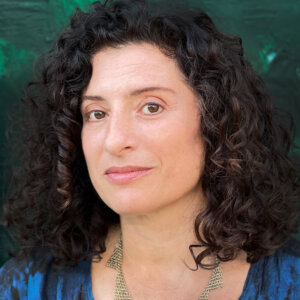
Julia Loktev left the Soviet Union with her family in 1979, when she was 9, during a brief window when Jews were allowed to emigrate.
The pretext, in this time of refuseniks, was to go to Israel and practice their religion: only her family had no intention of going to Israel, and the last person in her family who went to temple was her great-grandmother.
“My mom sort of did it on a whim,” Loktev, 56, the film director, recalled in a Zoom interview from her home in New York. “She said ‘We have friends who applied for many, many years and were being rejected,’ and they said, ‘Oh, why don’t you try applying?’” When she did, the answer came back almost immediately: “Get out.”
“We left not knowing what country we were going to,” Loktev said. They were, effectively, refugees.
They spent time in Vienna, then a suburb of Rome before ultimately arriving, with sponsorship from HIAS, in Loveland, Colorado. Loktev’s experience of immigration, and of her own Jewishness, was bound up with state-sanctioned antisemitism.
“It was in my passport, it was in my school papers, it was on my face,” she said. “My parents couldn’t go to certain universities. They couldn’t get certain jobs, like literally, it was a state policy.”
Decades later, in 2021, she flew to Moscow to document a new policy for undesirables. The Russian government declared a number of journalists “foreign agents,” and they were forced by law to disclose themselves as such. She filmed the fallout, not knowing it was just the start of a larger story of displacement.
“When you were named a foreign agent, you had to put a paragraph-long disclaimer that had to be in a type larger than anything else, like larger than the headline, saying in very legalistic terms, ‘This was brought to you by a foreign agent,’” Loktev said. “This had to go on everything: on all your articles, on your podcast, your TV shows. It had to go on your Instagram puppy pictures. It had to go on your comments on a friend’s baby on Facebook — anywhere you were in public, even if you walked into a court of law, if you were in a parents’ chat, you had to present yourself as a foreign agent.”

The plight of these foreign agents, documented in her 2024 film My Undesirable Friends: Part I — Last Air in Moscow, had glaring historical parallels of past regimes that made citizens identify themselves as “other.” In early 2022, the situation of her characters began to mirror her own journey as a refugee.
One week into Russia’s war in Ukraine, the young reporters at TV Rain, one of the last bastions of the free press under Russian president Vladimir Putin, were tipped off that their studio was about to be raided. Loktev filmed the moment. From there they left the country within a few hours, booking tickets on whichever plane had seats to whichever countries didn’t require visas.
My Undesirable Friends: Part II — Exile starts with this mass exodus and ends a few months before the film debuted at Venice in September. To follow her characters, Loktev travelled light and racked up passport stamps, filming on her iPhone in Istanbul, Amsterdam, Tel Aviv, Riga and New York. Situated in new countries, the journalists regrouped in ad hoc offices to continue reporting on the motherland from a distance. Their work became even more vital, providing their fellow Russians an alternative to state media that only ever referred to a war of aggression as a “special military operation.”
The film grew even more personal for Loktev in part two, but she’s quick to distinguish her subjects’ experience of exile from her immigration.
“When I was 9, I was told ‘Say goodbye to your grandparents, say goodbye to your aunts,’” said Loktev. “But that was part of the deal. I grew up in a closed world of the Iron Curtain where going to America was going to Mars. There was no return flight.”
Loktev’s characters, the youngest of whom are in their early 20s at the start of the film, had grown up with the internet and Zara and H&M down the street. They were unaccustomed to the scale of repression with the outbreak of Putin’s war: tellingly, they liken their predicaments not to life under Stalin or his successors, but to the totalitarian campaigns of villains from Harry Potter.
“None of these people chose to leave,” Loktev said. “They literally had to be put in a situation where they were like, ‘I can go to jail, where I won’t be very useful. I can shut up, or I have to leave the country.’ And at that moment, they chose leaving the country.”
Many — a number have prison sentences waiting for them — don’t anticipate returning anytime soon. If there’s a part three, she and her subjects have pledged, it will likely arrive only after the death of Putin.
My Undesirable Friends is a sprawling portrait of reporters weathering the whims of foreign governments and the aggression of their own abroad. (One writer, Elena Kostyuchenko, known for her longform work, was poisoned over the course of filming.)
Loktev’s film had its U.S. premiere at New York Film Festival last month. Among her festivalmates were Yuval Abraham and Rachel Szor, whose documentary NAZA, alleging war crimes by the Israeli Defense Force, has led Israeli Prime Minister Benjamin Netanyahu to threaten to revoke Abraham and Szor’s citizenships.
“I’ve been thinking a lot about Rachel and Yuval, whom I don’t know personally, but who are now very much in a similar position as my characters, where they have been targeted by the government, targeted by hateful, angry mobs and are now facing the possibility of being in exile,” said Loktev, who recalled an interview where Abraham said he had “nothing to do abroad.”
She thinks Abraham, himself a journalist, must find it difficult to be “cut off” from his home, in no small part due to his desire to report on the ground. But she still distinguishes between the “flavors of the threats” in Israel and Russia.
“With Russia most of the threats are somehow government-related,” Loktev said. “You are able to print some things in Israel without going directly to jail. Haaretz still operates. Like in Russia that would be shut down in a hot second.
“What Russia doesn’t have, I suppose, which is what I fear most, I think, in the case of Rachel and Yuval, is the messianic mobs.”
Loktev sees events in Russia, Israel and America all trending toward a reality where those in power won’t countenance any story critical of their country. While Trump tries to ban news outlets from the White House briefing room and Putin cracks down on demonstrations, the war in Ukraine no longer makes headlines.
Within Russia, she describes a climate of fear and paranoia. She mentions a friend who used to go back to film events like Navalny’s funeral on the street but says it’s no longer possible. “She said ‘everyone is so suspicious. People are just terrified.’” At the same time, the war in Ukraine shows no sign of stopping. Much of the media has its eyes elsewhere, though she believes Russia will intensify its offensive this winter.
Apathy and numbness are not feelings Loktev’s characters can afford, though they naturally have their share of fear.
Dispersed among countries with no extradition agreement with Russia — a surprisingly limited club — they continue to try and speak the truth to their viewers in Russia relying on workarounds like VPNs. The fatigue of an unchanging story is real, but Loktev says the reality must not be normalized.
Lately, Loktev’s heard that potential audiences are tired of stories about freedom of the press and authoritarianism. To this, she has a ready response: “It’s not tired of you.”
The post She left Russia as a Jewish refugee — she returned to tell the stories of a new group of undesirables appeared first on The Forward.
Uncategorized
Eva Marie Saint was born Quaker, but found her ‘Exodus’ in Jewish stories
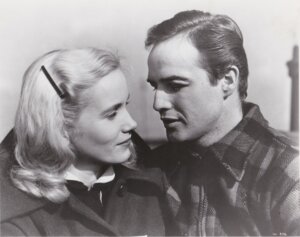
Oscar-winning actress Eva Marie Saint, who has died at age 102, preferred mishpocheh to political posturing.
Her stance was akin to that of author Albert Camus, who during a press conference in 1957 after winning the Nobel Prize in Literature, commented on strife in his native Algeria by opining of the terrorism used to liberate the nation from French colonialism, endangering his family still in his homeland: “If that is justice, I prefer my mother.”
Born to a Quaker family in Newark, Saint likely followed that religion’s wartime and immediate postwar concern for the fate of Europe’s Jews. Yet by 1951, when she married the American Jewish television director and producer Jeffrey Hayden (born Raphael Levine), to whom she would remain wed for 65 years, Saint apparently diverged from the official Quaker line.
By that year, previous collaborations between Quakers (officially the Religious Society of Friends) and Jewish communities during the Holocaust were halted by conflicts ensuing from the 1948 Arab-Israeli War. Traditional Quaker pacifism and historical Christian theology which downplayed Jewish presence in the Middle East opposed Israeli nationalist aims.

Instead, a policy purporting to favor balanced partiality claimed Quaker neutrality between Israeli authorities and Arab populations. Later, intense Quaker advocacy would make observers such as the historian Nancy Gallagher consider that the historic alliance with Jewish organizations was compromised.
Not so with Eva Marie Saint, who won acclaim in such early career explorations of Yiddishkeit as Paddy Chayefsky’s 1954 television production, Middle of the Night, which centered on a romance between Jerry Kingsley, a 53-year-old widowed Jewish garment manufacturer, who falls in love with Betty Prieser, his 24-year-old receptionist.
Nominated for an Emmy for her turn as Betty, Saint played opposite E.G. Marshall, but when the play transferred to Broadway two years later, the veteran of the shmatta trade was played by Edward G. Robinson (born Emanuel Goldenberg) with such heart-wrenching emotion that some theater mavens considered his work to be the single finest performance seen on the modern New York stage.
By then, Saint, replaced on Broadway by Gena Rowlands, had already conquered cinemagoers in Budd Schulberg’s 1954 film On the Waterfront, widely seen as an onscreen argument for betraying fellow Jews by naming names to political authorities. Screenwriter Budd Schulberg and director Elia Kazan had given friendly testimony to the House Un-American Activities Committee (HUAC) during the McCarthy era, decimating the lives and careers of many creative Jews in Hollywood. Among those cited in 1951 by Schulberg as dangerous Communist Party associates were the writer-director Herbert Biberman and screenwriter Albert Maltz. Meanwhile, in speaking to HUAC in 1952, Kazan singled out the writer Clifford Odets; actors Morris Carnovsky and J. Edward Bromberg; and actress Paula Strasberg.
In On the Waterfront, the protagonist played by Marlon Brando was shown breaking a code of silence to testify against mob-controlled union bosses. The result incensed Arthur Miller, who had originally written an unproduced screenplay about corruption on the Brooklyn docks, which Kazan had agreed to direct. At this point, Columbia Pictures head Harry Cohn demanded that the villains be altered from corrupt union bosses to Communists. Miller demurred, left the project, and was replaced by Schulberg. In 1955, Miller’s play A View from the Bridge was considered a response to Schulberg, in which informing was shown to be a destructive betrayal driven by jealousy, rather than noble whistleblowing.
Saint transcended this tzimmes pitting Jew against Jew by delivering an Oscar- winning performance in her first screen role. As the younger sister of a murdered dockworker, Saint demanded justice for her brother’s death and challenged the conscience of the character played by Brando.
Saint was later cast in Otto Preminger’s Exodus, whose overblown and boring nature is best summarized by a legendary historical burn: At a preview of the film in 1960, the Canadian Jewish comedian Mort Sahl rose from his seat and supposedly pleaded, “Otto, let my people go!”

The film was based on Leon Uris’ melodramatic novel about the founding of the State of Israel, which historians Matthew Silver and Deborah Dash Moore diagnosed as more redolent of shoot-em-up cowboy films than Jewish history. Nevertheless, once again Saint surpassed the limitations of a script given her, as a widowed American nurse toiling in Cyprus with Jewish refugees who becomes enamored of a Palestine-born Haganah leader, Ari Ben Canaan (played by Paul Newman).
Newman’s character tells Saint’s nurse, “I just wanted you to know that I’m a Jew. This is my country,” as Brandeis professor Stephen J. Whitfield notes in American Space, Jewish Time. Shortly afterward, she is seen wearing a khaki uniform and holding a gun, joining her betrothed and other Jews to resist an Arab attack. Film maven Tony Shaw asserted that, during the movie’s production, Saint made it a personal mission to recount to the international press “stories of Israel’s steadfastness” and “democratic spirit.” She also lauded the Jewish State’s “stoicism in the face of constant Arab invasion threats” and, further, spoke of the “opportunities Israeli women had” compared to “their Arab counterparts.”
In less fraught contexts, Saint continually proved that she was a mensch, as recalled by Brooklyn-born actor Bernie Kopell, a mainstay as Dr. Adam Bricker on TV’s The Love Boat. When the cast of one 1983 episode was temporarily outside the Parthenon in Athens, Kopell stated, Saint saw him studying his lines for a forthcoming stage role and offered her partnership to help him memorize the words. This solidarity from an Oscar-winning actress to a humble Love Boat actor impressed Kopell, but Saint told him with egalitarian zest that she did the same for all her friends.
On a more somber note, Saint’s personal steadfastness and Camus-like preference of family to debates on current events extended to portraying Marilyn Klinghoffer, the widow of Leon Klinghoffer who was murdered by Palestinian terrorists during the sea-jacking of the Italian cruise ship in a 1990 two-part miniseries, Voyage of Terror: The Achille Lauro Affair.
Saint incarnated the resolve of Marilyn Klinghoffer, who although fatally ill, had the fortitude to travel to Italy to testify against the four terrorists after her wheelchair-bound husband was separated from other passengers as a Jew during the 1985 Achille Lauro hijacking, murdered, and thrown overboard. It was a noble and compelling performance, like all of her work during a long acting career inspired by Yiddishkeit.
The post Eva Marie Saint was born Quaker, but found her ‘Exodus’ in Jewish stories appeared first on The Forward.
