


Uncategorized
This school is fighting antisemitism all wrong. Why is it working?
ELON, N.C. — A friend approached Rachel Bermont as she was leaving a high school party in New York City over the summer. “I know you’re Jewish,” he began, “but don’t you hate what’s happening with Israel?”
Bermont had come to expect these questions, the same way she anticipated stares when she wore a Star of David necklace on the subway. But it took a toll. “Just because I’m Jewish doesn’t mean I’m Noa Tishby,” Bermont told me, referring to the Israeli actress-turned-activist. “I’m not a representative.”
She picked Elon University to escape that pressure, and felt her choice validated on move-in day in August when her Catholic roommate’s questions were about Shabbat meals, not Gaza. “We don’t have to talk about Israel or Palestine,” Bermont said. “It’s safe to be a Jew.”
Others agree. The Anti-Defamation League vaulted Elon to prominence as a destination for Jews when it awarded the school one of just two “A” ratings on its inaugural campus report card last year, alongside Brandeis University.
The grade was a gamechanger.
Greg Zaiser, Elon’s vice president for enrollment, said that every Jewish family he met during a recent trip to Seattle had learned about the school from the ADL. StopAntisemitism, another watchdog group, also awarded Elon an “A,” and the liberal arts college is a favorite with Mothers Against College Antisemitism, an influential Facebook group with more than 60,000 members.
What’s surprising is that Elon does almost none of the things that these groups and others, including the Trump administration, insist is necessary to keep Jewish students safe. The school hasn’t amped up student discipline or mandated special antisemitism training for the community. It hasn’t banned slogans, scaled back its diversity programs or adopted a definition of antisemitism that includes strident protests against the war in Gaza.
“We really just want to keep our students talking with each other”
Jon DooleyVice president for student life at Elon University
The school has instead focused almost its entire response to Oct. 7 on education and civility, leveraging a longstanding obsession with student satisfaction — borne decades ago from an expansion plan that relied on tuition dollars rather than an Ivy League endowment — to head off some campus conflicts over Israel before they begin (sometimes, literally, by asking nicely) while avoiding limitations on freedom of expression that other universities have found necessary to achieve the same effect.
When Jon Dooley, Elon’s vice president for student life, attended a recent summit on antisemitism in higher education he realized how much his school’s approach differed from other universities.
“You’d sit with a table and they’d talk campus by campus about policy things — the ways they were trying to legislate it,” Dooley recalled. “We really want to just keep our students talking with each other.”
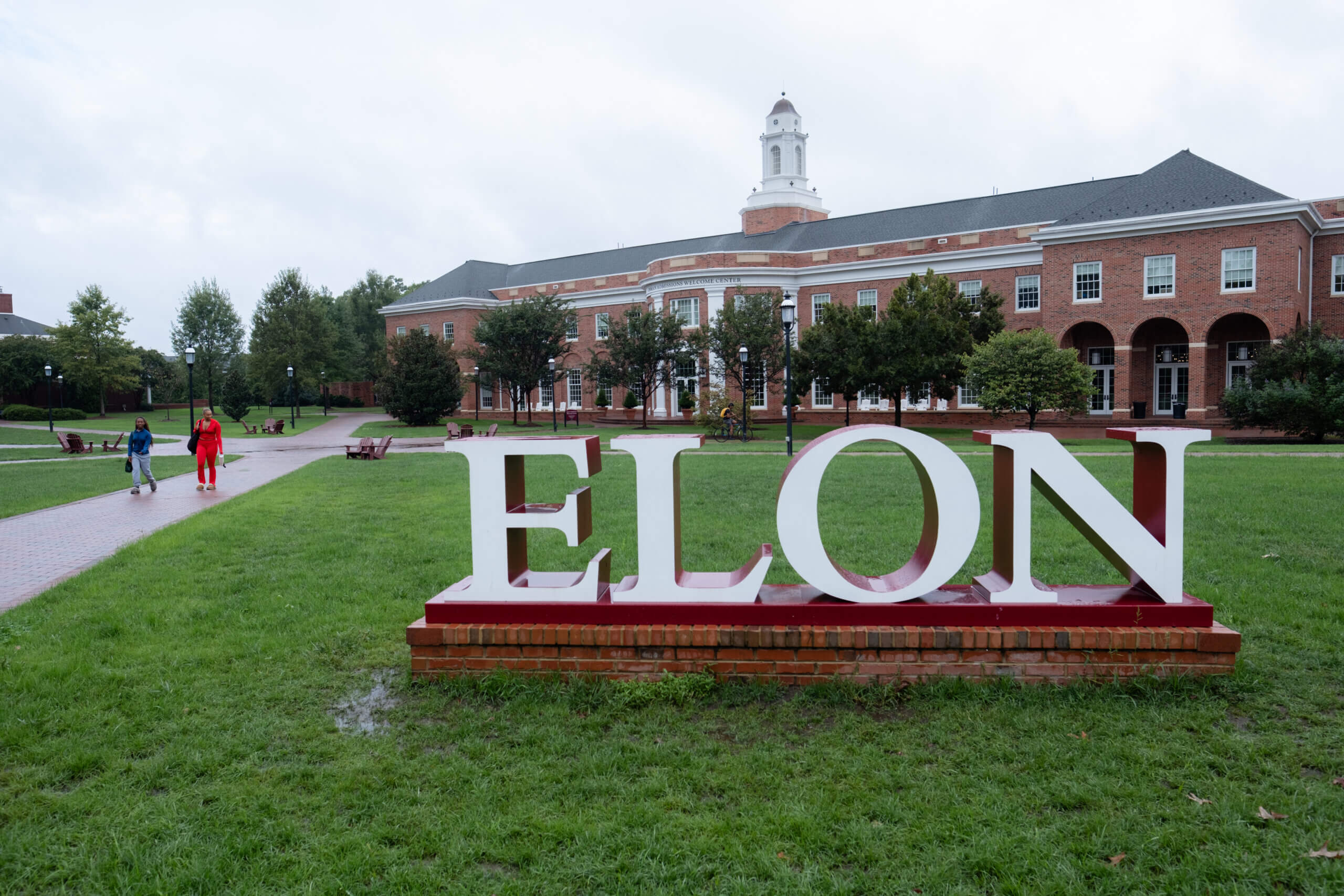
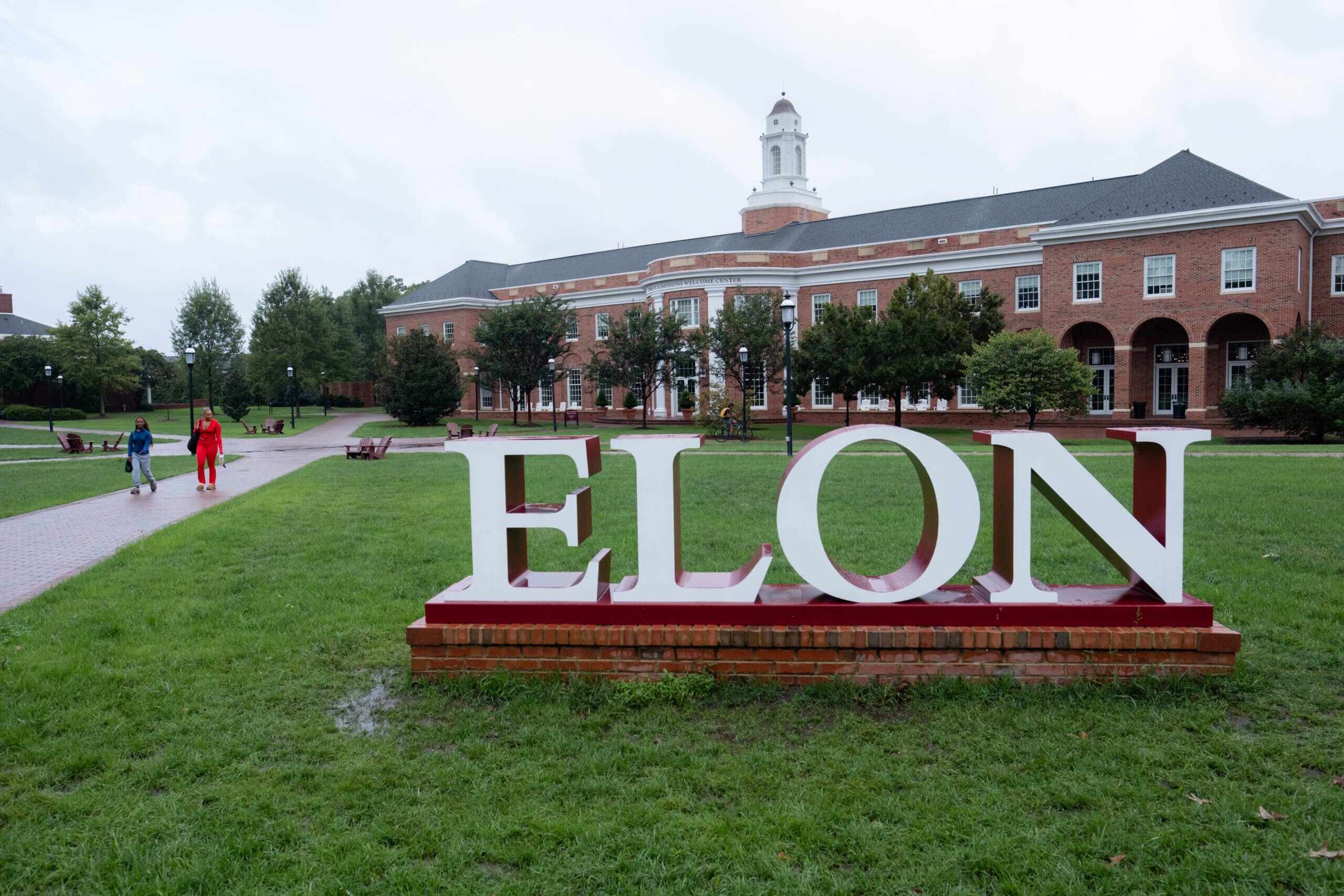
Elon’s student body is less political than those at schools like Columbia University, and its “speakers corner” meant to enable impromptu protests often sits empty. Yet the administration greenlit two marches for Gaza — “I would be lying to you if I said that didn’t make me anxious,” Zaiser told me — and faculty hosted a lecture by the founder of a Palestinian human rights group that pioneered the accusation of apartheid against Israel in the early 2000s. A student at the law school graduation two months after Oct. 7 unfurled a Palestinian flag while crossing the stage without incident. People have written “from the river to sea, Palestine will be free” in chalk on university walkways and placed pro-Palestinian stickers on the large “Elon” sign outside the admissions building (maintenance quickly cleaned up both). A Palestinian-American comedian who has accused Israel of genocide was hosted as part of a prestigious campus lecture series last spring.
Any one of those incidents might have been grounds for months of parent outrage, a news cycle or even a federal investigation at another school.
Yet none of them seems to have dented Elon’s reputation with Jews. When I first visited campus in April 2024, at the height of Gaza solidarity encampments at schools across the country, the students I spoke with at Hillel and Chabad said that, strained friendships aside, they were thriving.
“You hear about people hiding in their dorm rooms at other colleges,” Guy Brill, a sophomore at the time, told me as we sat outside the Hillel house on a Friday evening last year. “I feel very grateful to come out here every week and feel completely safe and comfortable.”
And while Jewish students played a leading role in many of the demonstrations and encampments on other campuses, Elon has managed to win plaudits from pro-Israel organizations without alienating those who are deeply critical of Israel — an almost unheard of feat two years into the Gaza war.
“We’ve said that we want more dialogue that represents our beliefs, and they’ve said, ‘OK.’”
Tess TraynerJewish student at Elon University
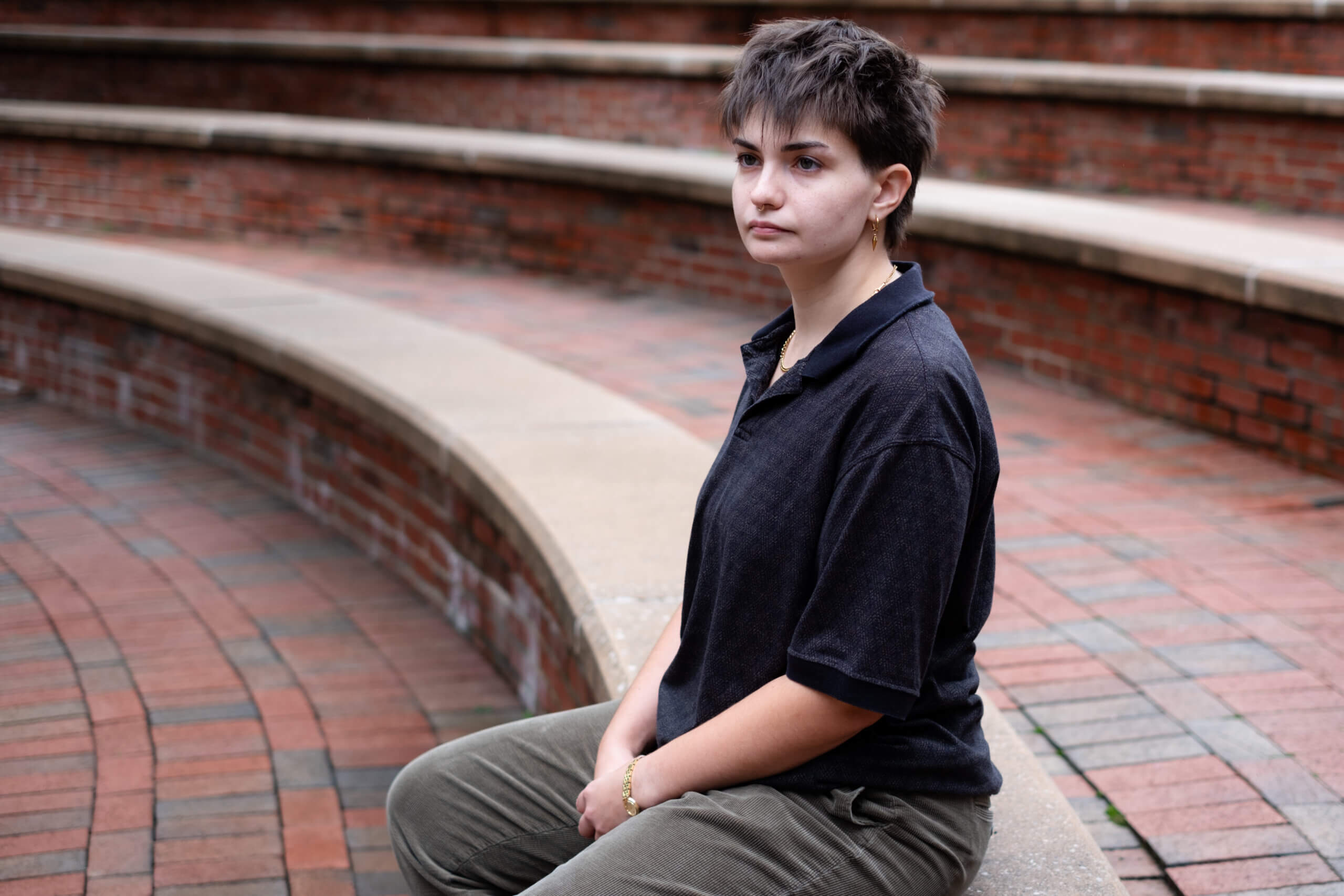
“The wielding of antisemitism as a weapon to silence protest or differing beliefs hasn’t happened here,” Tess Trayner, a Jewish student who joined both the marches for Gaza, told me. “We’ve said that we want more dialogue that represents our beliefs, and they’ve said, ‘OK.’”
Elon’s success in navigating this maze can be seen in the composition of its freshman class, which is estimated to be at least 17% Jewish, maybe as much as 25% according to Chabad. “Thankful to have a top notch university that is so supportive of our Jewish students,” one woman in the Facebook moms group wrote earlier this month alongside the enrollment news, a break from the group’s regular diatribes about what other schools are doing wrong.
How did a small university with little national profile and virtually no history of Jewish life — Elon’s mascot was the Fighting Christians until 1999 — become a mecca for Jewish students while ignoring the most forceful advice about how to fight antisemitism?
And what can the answer tell us about the future of Jews in higher education after Oct. 7?
White, wealthy and apolitical
Southern schools have started to develop a reputation for offering Jewish students a respite from protests against Israel and Zionism, through a less charged political climate — sometimes code for a more conservative one.
But that manifests differently at Elon than at its neighbors. At Duke University, about 40 minutes away, pro-Israel students told me they felt buoyed by a supportive administration and an aggressive Chabad chapter to go “on the offense” by blanketing the campus in Israeli flags and confronting protesters.
And at the University of North Carolina in Chapel Hill, the school’s chancellor made headlines for storming into the middle of a tent encampment surrounded by a phalanx of police and fraternity members to restore an American flag that had been replaced with a Palestinian one.
At Elon, Jewish students who support Israel aren’t confronting their opponents with the help of police or school leaders — they’re largely avoiding such confrontations altogether.
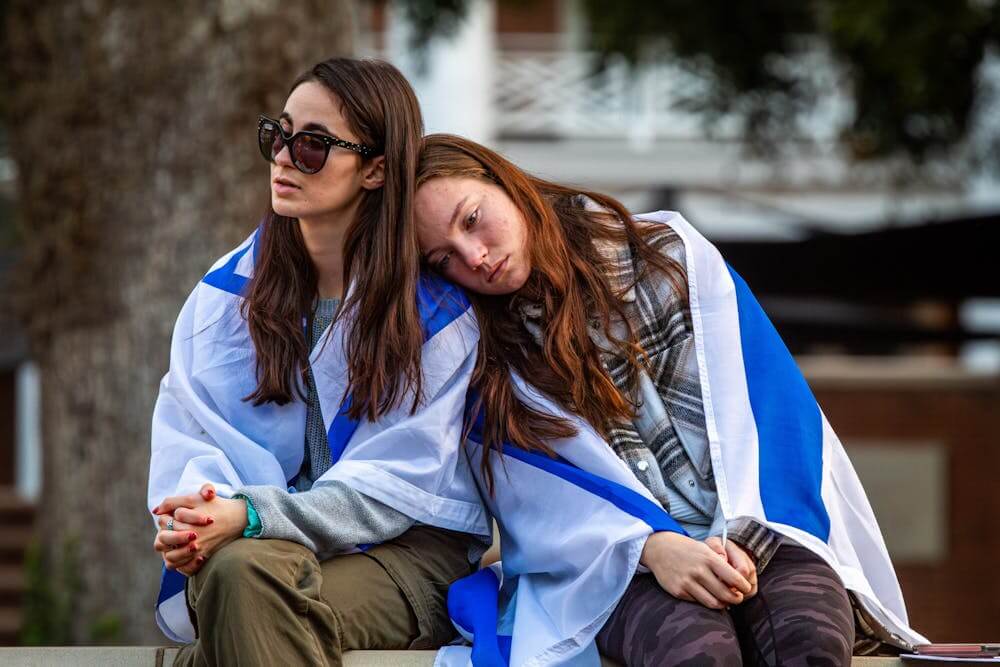
In the first days after the Oct. 7 Hamas terrorist attack, Hillel and Chabad held a gathering for Israel, and the Jewish fraternity AEPi led a march through campus. But the school did not descend into warring factions. “There are definitely two sides, but never to a point where I’m scared to walk through the middle of campus,” Simon Mendelsohn, a senior, told me last year.
Part of the placid climate is due to the fact that Elon is not trying to manage the kind of diversity that exists at the City University of New York, for example, which has a porous relationship with the city it serves and absorbs thousands of Jewish and Palestinian students, among a wide range of others.
Elon is a bubble. Nearly 80% of graduates are white — compared to 26% at Columbia, for example — and students pay 95% of the full cost of tuition on average, reflecting the affluent nature of a school some call “Camp Elon.”
“Families say, ‘Oh, Elon, it’s so diverse!’” said Zaiser, the admissions director. “If you’re coming from a prep school in New England, Elon is very diverse… But we have a long way to go.”
A relatively homogeneous student body that tends to be less interested in politics — less than 3% of students major in political science, well under the roughly 10% rate at Columbia and Harvard — certainly gives Elon an advantage when it comes to avoiding acrimony over the war in Gaza.
Around 150 people joined the “Walk for Palestine” last year, less than 2% of Elon’s 7,300 students, while national polls have found that around 7% of students across the country participated in pro-Palestinian demonstrations and an even higher share joined in at hotspots like Columbia, where 16% protested in support of Palestinians.
“Elon hasn’t followed the same playbook.”
Betsy PolkSenior director for Jewish life at Elon University
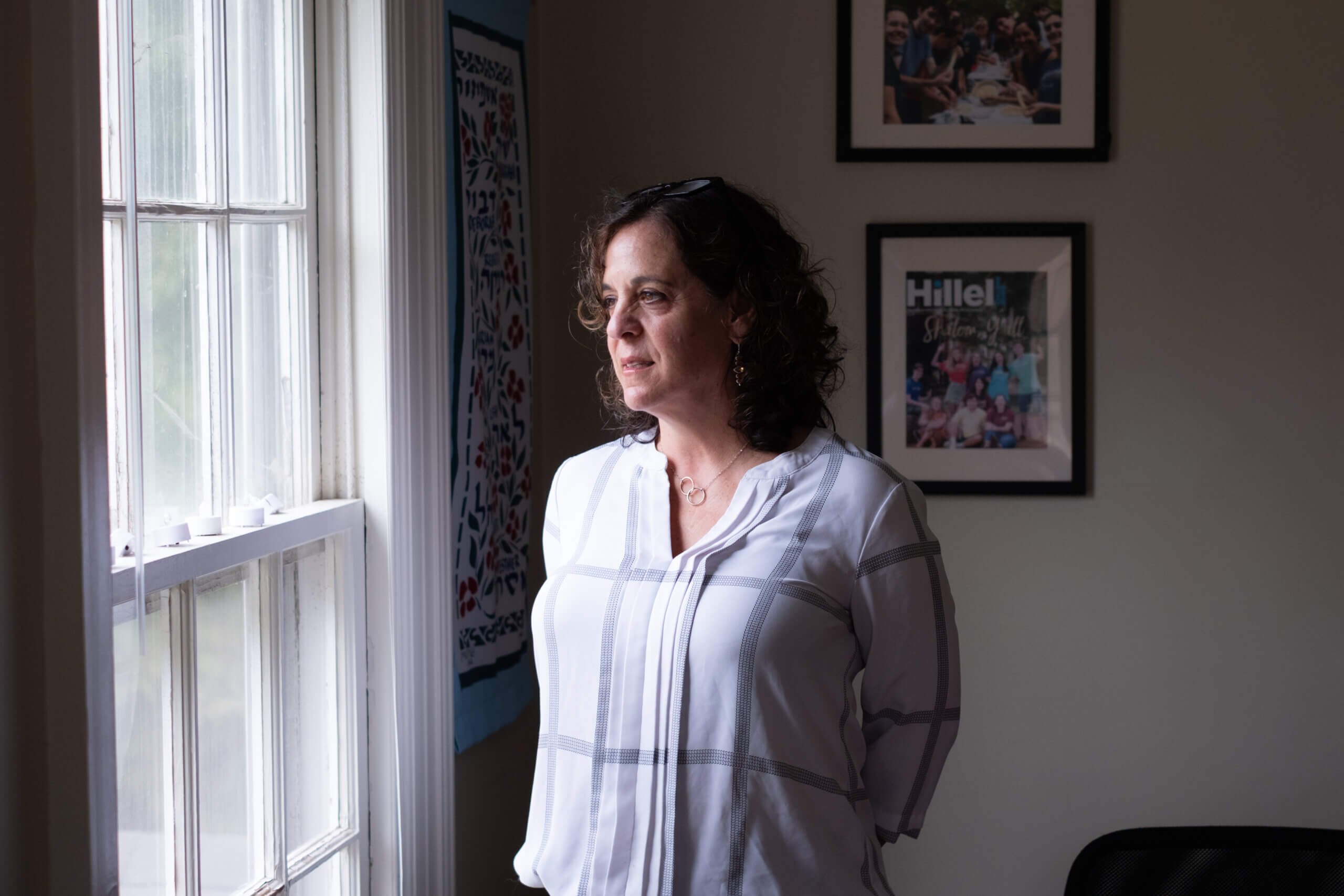
Betsy Polk, the director of Jewish life at Elon, has been reluctant to celebrate the school’s ADL rating in part because she felt the report card penalized her colleagues on other campuses who were “actually doing even harder work and, because of things beyond their control, they were put in a bad light.”
Still, Elon’s various advantages aren’t a guarantee of success. Lehigh University is nearly 20% Jewish — and 62% white — but has been rocked by campus demonstrations and was forced to settle claims of antisemitism with the federal government. And while Elon and Colorado College share two of the wealthiest student bodies in the country, the latter was branded with a “D” by the ADL, and the Trump administration is investigating the school over its handling of antisemitism on campus.
Elon’s leadership has made a combination of savvy, occasionally risky, decisions over the past two years that helped it escape the toxic climate that has swept over other schools. “Elon hasn’t followed the same playbook,” Polk acknowledged.
A sense of belonging
Almost immediately after Oct. 7, a group of Elon faculty organized a lunchtime discussion where hundreds of students cycled through 15 tables with different staff and professors explaining various aspects of the conflict. One talked about how the media was covering the war, another explained what the West Bank was. It was, I was told, classic Elon. The school, which has been rated best in the country at undergraduate teaching for four years running, tries to respond to horrific news — including the recent assassination of Charlie Kirk — with education.
President Connie Book responded to the roundtable discussion on the war by appointing a committee to create programming about the conflict, including inviting speakers to campus.
One of those speakers was Jonathan Kuttab, the founder of Al-Haq, a Palestinian human rights organization that has repeatedly been branded as a terrorist organization by Israel, who accused Israel of genocide. His comments outraged some Jewish students, but the school didn’t apologize or seek to reign in the committee. Instead, it organized a dinner between a few of the angry students and Kuttab at a hotel on campus and Book sent out an email defending the faculty who invited Kuttab while adding that his remarks were “divergent” from the planned program.
The controversy died down, and it didn’t stop Elon from allowing students to select Maysoon Zayid, a Palestinian-American comedian who has been outspoken in her opposition to Israel’s war on Gaza, as part of a longstanding liberal arts lecture series.
Elon’s leniency toward speech that has found other universities hauled before Congress and defunded stems in part from the fact that, in virtually every other area of campus life, few seem to doubt the administration has their back at a school where 15% of the students are Jews and Jewish life has been woven into the university for years.
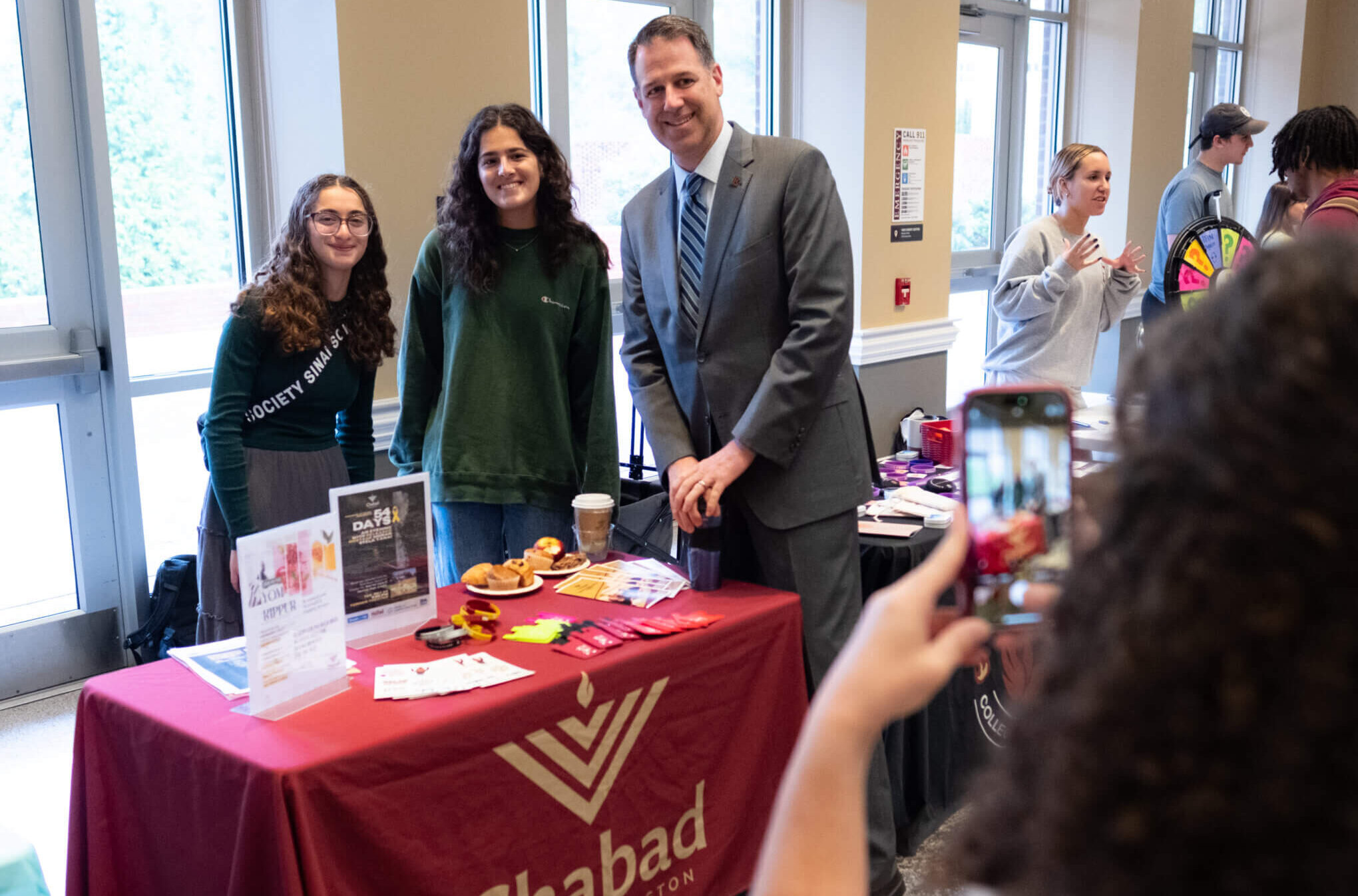
Around the last Gaza war in 2021, Elon commissioned a survey that found Jewish students were more likely to feel valued at the school than non-Jewish students (67% compared to 61%) and to feel a sense of belonging (70% compared to 65%).
When I tagged along on a campus tour, the student guide was a graduate of a Jewish day school who mentioned that the on-campus movie theater had screened both the Will Ferrell flick Step Brothers (“One of the greatest movies of all time”) and hosted a Holocaust survivor (“That was really cool”).
The Catholic priest on campus built an ark to hold the university’s Torah scroll, carving acorns into the doors to represent the abundant oak trees on campus, and administrators regularly attend Jewish services at Elon. A Jewish parents council was created in 2011, the year before a Jewish studies minor was created, and the school has chapters of Jewish fraternities ZBT and AEPi, which hangs an Israeli flag in its window. This year, the Jewish sorority AEPHi opened a chapter at Elon.
During Shabbat services at family weekend in September, Shani Spiegle, chair of the parents group, noted the huge banner hung outside the multifaith center on campus celebrating Rosh Hashanah and Yom Kippur. “On other campuses that might not still be standing — or it might have some graffiti — but it is loud and proud,” Spiegle said to applause.
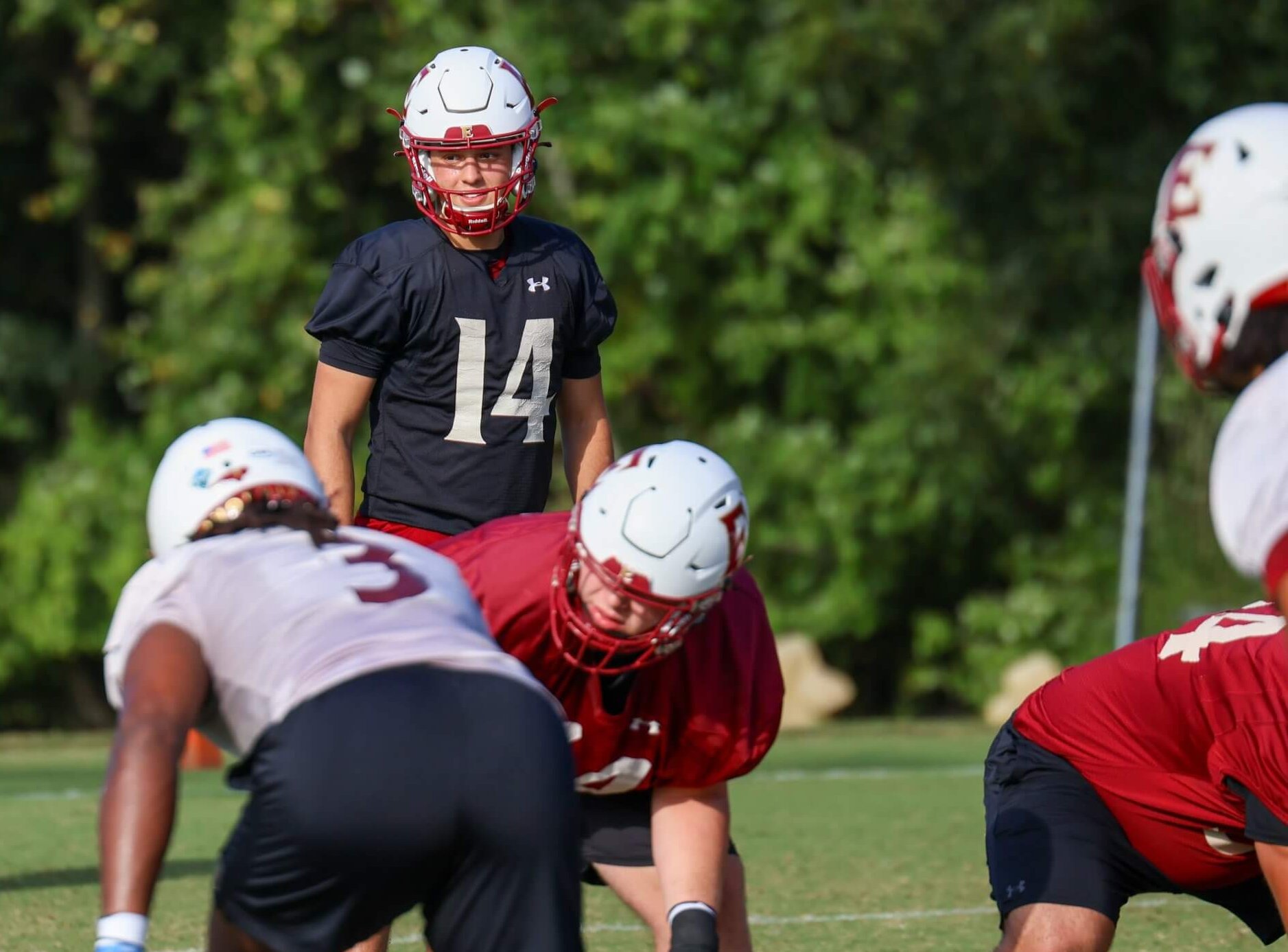
The football team even has a Jewish quarterback, Elijah Guttman, who spent years on teams where players would gather to recite prayers about Jesus. Not at Elon. “Coach doesn’t want to make Christianity the faith of the team,” Guttman told me.
This has created a climate in which Jews are primed to assume that the school is acting with good intent, even when some disagree with what it does around Israel or antisemitism.
Book’s schoolwide email after the Hamas assault referred to the “devastating and deliberate attacks against Israeli civilians,” but otherwise avoided weighing in on the conflict itself, and insisted that “harassment against any member of the Jewish, Israeli, Palestinian, Arab or Muslim communities” was unacceptable at Elon. It also came four days late, but generated little of the rancor that greeted other presidents who waited to speak out — or were seen as insufficiently supportive of Israel — in part because nobody seemed to believe that Elon had a problem with the way it treated Jewish students.
A progressive — and pragmatic — approach
I found Book’s approach interesting in part because it diverged from other presidents praised for their approach to campus antisemitism. Ronald Leibowitz, who was president of Brandeis University when it received the other “A” grade from the ADL, had swiftly accused Students for Justice in Palestine of supporting Hamas, banned the club from campus and then became one of the first university leaders to have student protesters arrested after Oct. 7.
Daniel Diermeier, the chancellor of Vanderbilt, which was upgraded to an “A” of its own this year, has agreed with conservatives that campuses are becoming hotbeds of radicalism.
Florida governor Ron DeSantis announced that his state’s public universities were open to students fleeing antisemitism elsewhere, and Ben Sasse, the University of Florida’s president at the time, called a professor’s comments comparing Israel to Nazi Germany “antisemitic drivel,” and said campus protesters were making “an ass and an idiot” of themselves.
Book, who has led Elon since 2018, has done none of this.
When I ran into her before a Shabbat service at Hillel, I asked how the school had earned its reputation for protecting Jewish students without angering those concerned about freedom of expression. “You do want a dynamic campus where we’re being challenged with ideas,” Book said of free speech on campus. “But when speech is at its worst, a community should reject it.”
Did anti-Zionism represent that kind of unacceptable speech?
“We do not use the IHRA definition,” she said.
This marked another deviation from the prescribed best practices that Elon seems to be sidestepping. The Trump administration and many large Jewish groups have pushed universities, including Columbia, to adopt the controversial International Holocaust Remembrance Alliance’s working definition of antisemitism, which considers a broad swath of criticism toward Israel — accusing it of racism, for example, or holding it to a double standard — to be antisemitic.
By this definition, almost the entire protest movement on campuses is a direct affront to Jews.
Elon instead relies on the Jerusalem Declaration on Antisemitism, a document created by a number of Jewish scholars as an alternative to IHRA to offer a more detailed framework. It holds that denying Jews the right to “flourish collectively” in Israel is antisemitic, but calling for a binational state “between the river and the sea” is not.
Universities have been slow to adopt the IHRA definition, which draws its credibility from recognition by various countries and state governments. The Jerusalem Declaration has found even less institutional backing. The ADL furiously lobbied the Biden administration to exclude it from the White House’s national plan to counter antisemitism. And when I was reporting at George Washington University a few years ago, a speaker from the pro-Israel StandWithUs told students the Jerusalem Declaration was the result of “a group of antisemites that got together and defined what antisemitism is.”
Dooley, the head of student life, seemed unbothered by the fracas over definitions, saying that the school’s goal was to support any student who reported discrimination regardless of whether it met a specific definition.
Many of the explanations I heard from Elon’s leadership, including this one, seemed like platitudes: “When you are a university leader that tries to stay on the pulse of what’s happening with students, you can quickly address challenges,” Dooley told me during our conversation at his office in the Alamance Building at the heart of Elon’s historic campus.
But I ran into Dooley the next day, zipping through the opposite side of campus on a golf cart and stopping to chat with students and staff, and he showed up again at Hillel’s Shabbat service, seeming, in fact, to be aware of what was happening with students.
Book, the president, participated in one of Elon’s study abroad programs related to the Holocaust and said she did all the readings alongside students. “It’s really important for them to see us as learners with them,” she said. “We’re modeling, ‘Hey, we’re all in this.’”
There also seemed to be some clever ways that administrators sought to push the campus climate toward civility without, strictly speaking, silencing anyone. Book’s creation of the faculty committee just so happened to bring professors and staff with the strongest feelings about the conflict to work together on a shared task, which may have helped Elon avoid the academic feuds that have taken place elsewhere.
“It gave us all an opportunity to disagree — and some cases, like really fight — in a space that we knew was confidential,” said Brian Pennington, director of Elon’s Center for the Study of Religion, who led the committee.
And while the school hasn’t banned speakers or canceled events, it has policies that can make holding protests burdensome, including a requirement that organizers cover the cost of campus security for any event that poses a “safety risk,” a term that is not defined.
There has never been a Students for Justice in Palestine chapter at Elon, although Students for Peace and Justice (SPJ, rather than SJP) has organized two marches focused on Gaza since the war began. But Madeline Mitchener, one of the club’s leaders, told me that she often has to choose between requesting funding for queer coffee hour or paying for security at a march.
Ross Marchand, an attorney with the civil liberties group FIRE, said Elon’s “safety risk” provision “gives the administration too much leeway to burden expression that is unpopular.”
“Elon applies its policies in an even-handed, content neutral manner,” a spokesperson said in a statement.
While the school said requests for demonstrations are normally approved or denied within two business days, some events can take weeks to be approved and include negotiations with the administration. Organizers of the Gaza marches agreed to avoid certain chants and rhetoric — especially those targeting Zionists or invoking “intifada” — that Hillel’s leadership said would be especially offensive, but it was difficult to determine whether this was truly voluntary or gently coerced by school officials with the power to withhold approval.
Keeping students happy
None of the university leaders mentioned it, but Elon has a financial incentive to keep its students happy. Many of the country’s elite universities have huge endowments that they use to fund operations and discount tuition. Harvard, for example, lists an annual cost of around $86,000 but students actually pay an average of $18,000.
Elon, which means oak in Hebrew, was founded in 1889 as an egalitarian Christian college and has historically had a tiny endowment. It sat at just $5 million in 1980, around the time that president J. Fred Young realized the school offered little more than new community colleges in the area but charged five times more in tuition. The small endowment has made it hard to diversify the school, but it has also meant that prioritizing student satisfaction is a financial imperative.
(Elon’s endowment is now more than $300 million, still paltry compared with the $15 billion controlled by Columbia and $50 billion at Harvard, and Elon students pay close to 70% of the full cost to attend.)
To draw more students, Young hired a landscape architect who specialized in luxury resorts to redesign the campus and transform the school into “a storybook southern college.” And during a major construction push in the 1990s, Elon opened a sprawling fitness center — complete with a pilates studio and squash courts — before it upgraded the library. It’s currently in the process of building a new recreation building with an Olympic-size pool. I passed a suggestion board at one of the dining halls where the staff replied to every request by hand (“Iced coffee and ice cream toppings… stay tuned.”). The maintenance team has boasted of cleaning every bathroom on campus before 8 a.m.
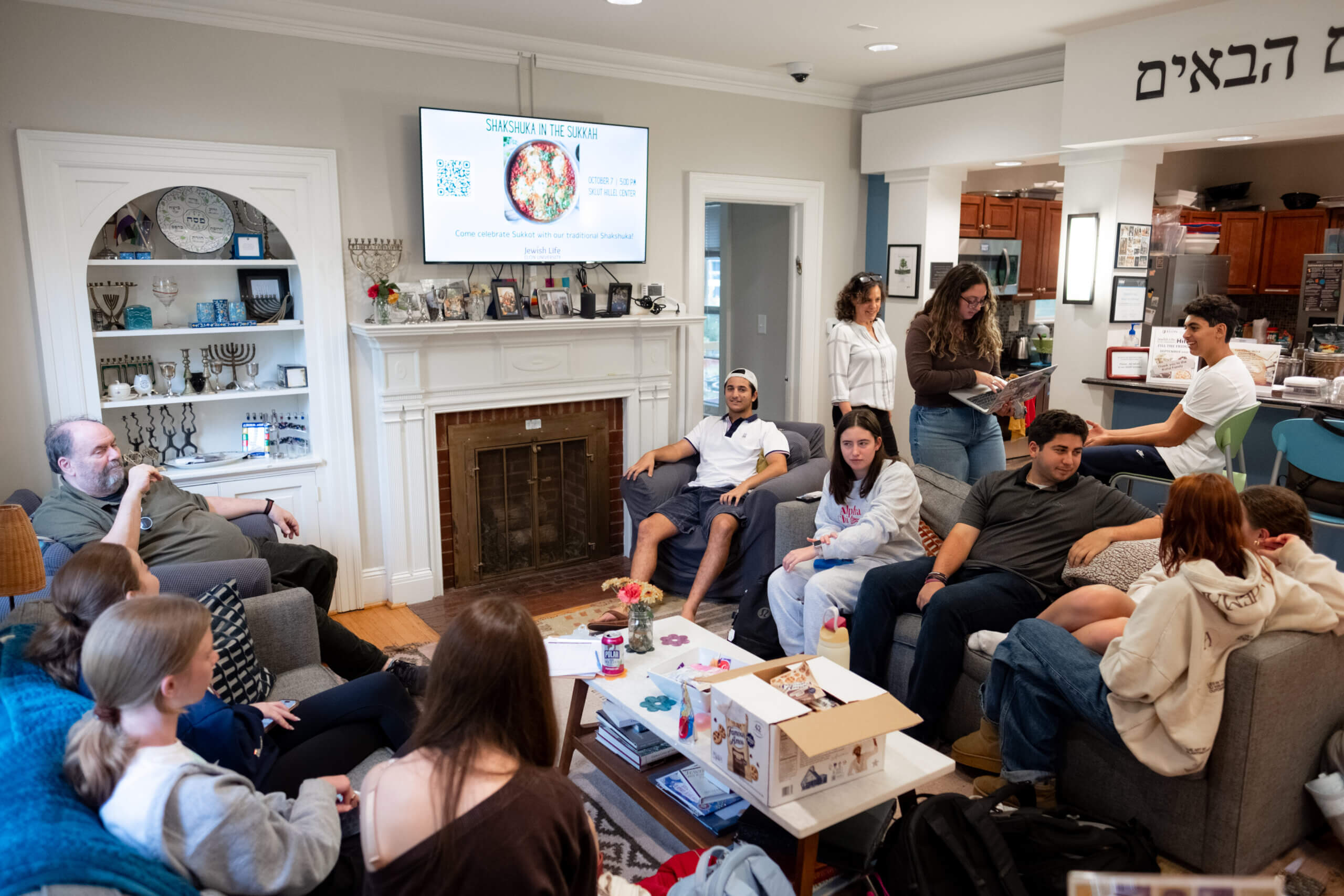
A tent encampment at the center of campus or an occupation of the president’s office, the sort of things that took place elsewhere, wouldn’t just violate Elon’s preference for civility — it would undermine the school’s insistence that it answers to the students in ways that avoid confrontation.
When LGBTQ students protested the Chick-fil-A outlet on campus, the school created a presidential task force and ultimately created a Gender and LGBTQIA Center that won it a place on the national CampusPride index (even as the restaurant remained). And Dooley said that during Black Lives Matter protests around the country, the administration managed to preempt a planned list of student demands by meeting with the organizers early in the process.
Raucous protests would also threaten more than two decades of work that Elon has done to make Jewish students feel comfortable on campus. By the 1990s, Young’s push to grow the school by scooping up children with middling grades, who were being turned away from the country’s elite liberal arts schools as competition increased, had worked. (“We shouldn’t lust for a college full of highly intellectual students,” Smith Jackson, Dooley’s predecessor, told the author of a book about Elon’s growth).
In 1993, as enrollment approached 4,000 students drawn from across the East Coast, a few dozen Jewish students organized under the banner of the Jewish Awareness Cultural Society. But they weren’t immediately embraced; budget requests for the earliest incarnation of Hillel at Elon show the student government slashing funding for Shabbat dinner nearly in half and attempting to correct the line item to read “Sabbath dinners.”
This was around the same time that Elon decided to move on from its Fighting Christian moniker, which was represented by a red-haired mascot, who did not look especially aggressive nor Christian but still managed to alienate prospective students.
Not everyone was happy about the change. A local official who had graduated from Elon wrote an angry email to the school suggesting that the change was a cheap bid to recruit more students from the north, with what may have been a rather pointed reference to the growing number of Jews on campus. “One wonders what the new administration will think is a correct name: the Yankees? The money changers?” David Barber wrote, according to a copy of his 1999 email held in the university archives.
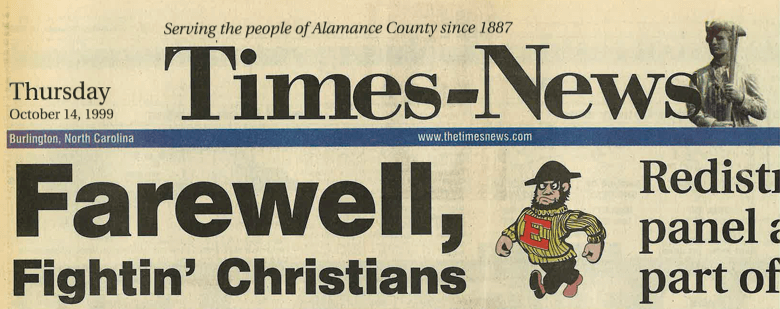
And when the school solicited ideas for a new mascot, the community overwhelmingly voted to become the Crusaders, an idea that the school’s new president Leo Lambert promptly rejected. “The Crusades are not regarded in the very late 20th century as a happy event,” he wrote in a note during the selection process. “To go from Fightin’ Christians to the Crusaders would be to go from the fryin’ pan into the fire.”
The eventual transition to Elon’s new mascot, the Phoenix, in 2000, removed one of the most obvious hurdles to drawing more Jewish students. But when Jeff Stein joined Elon as an assistant dean two years later, he found few resources for the growing number of Jews on campus.
Stein said that in the early days, Hillel International told Elon to focus on staffing rather than opening a building for Jewish students on campus. The school first hired a part-time employee to work 18 hours a week, but by 2010 it had two staff members dedicated to Jewish life. “It was really about having a champion — someone students and parents could turn to, someone who was waking up every day thinking about Jewish life,” Stein said.
Staying independent
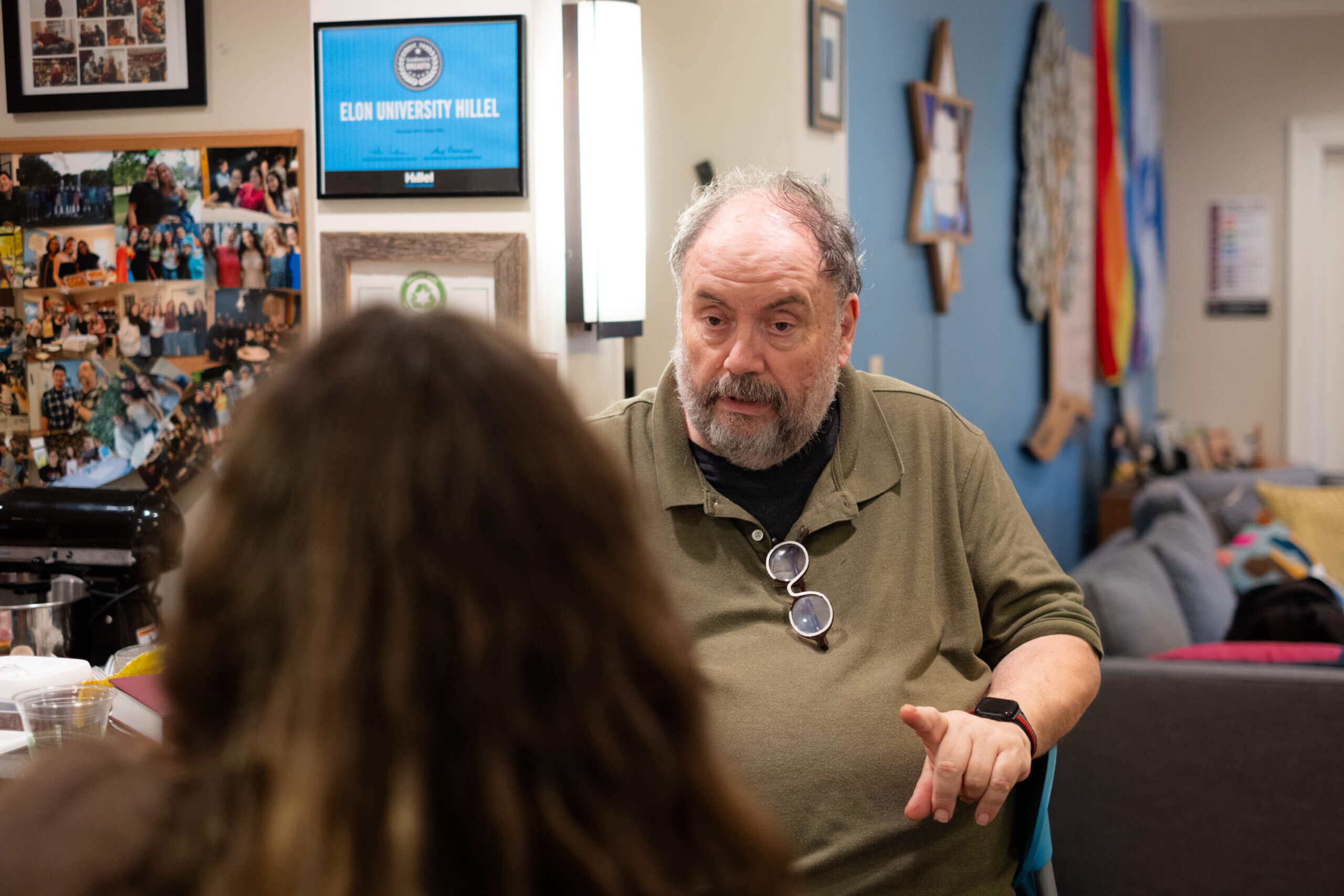
Stein said that Elon decided early on not to bring an official branch of Hillel’s centralized North Carolina operation to Elon. “We needed to do it our way,” he said. That means “Hillel” at Elon is technically limited to a student club and campus building, and the staff all work for the university.
This has allowed Elon to carefully construct its Jewish life staff. When I was reporting on George Washington University, some anti-Zionist Jewish students told me they felt abandoned by the school because the only campus rabbi worked for Hillel, which has an official pro-Israel stance and has been targeted by student protests at GW.
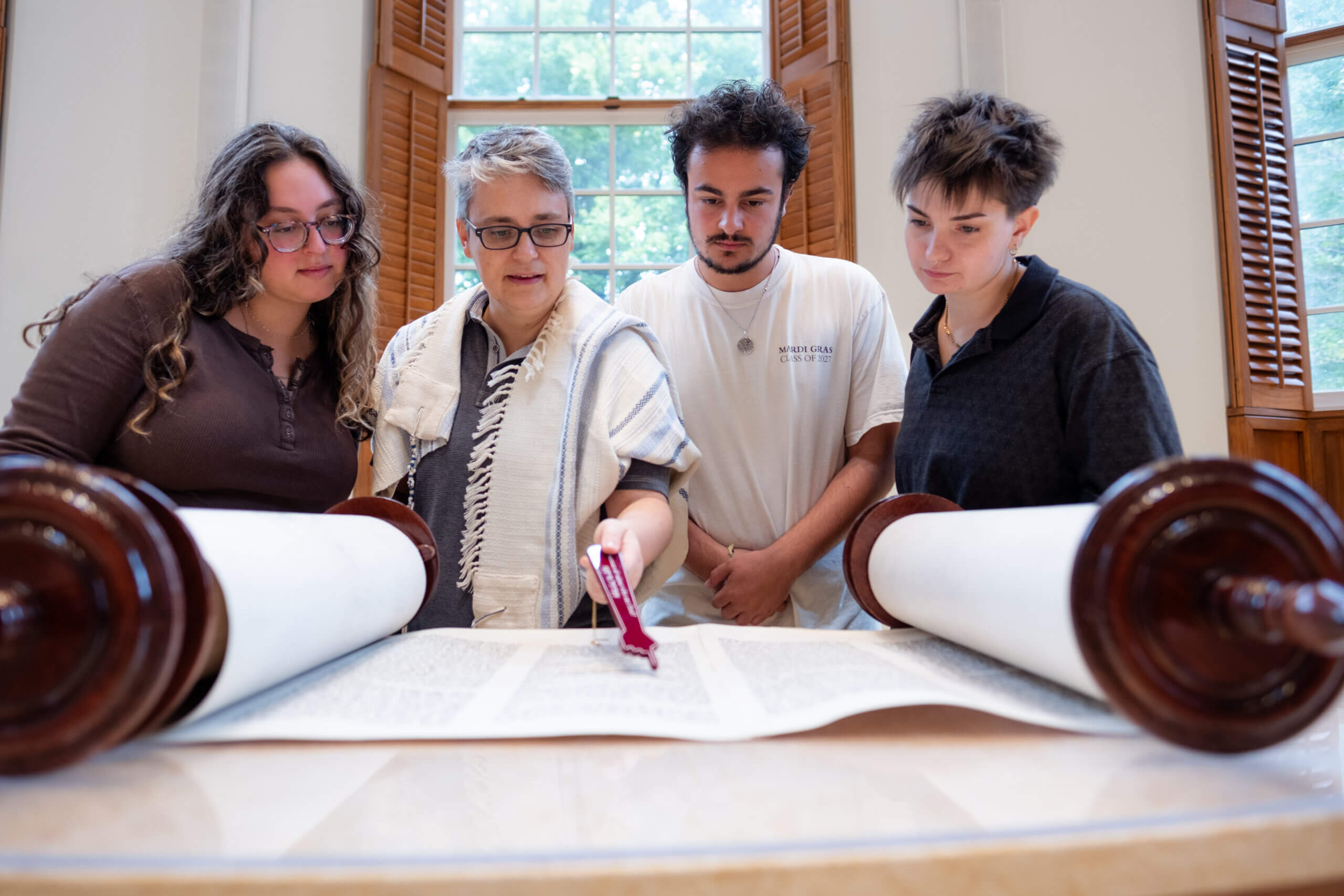
But at Elon, campus rabbi Maor Greene, who is nonbinary and previously worked for the progressive Jewish climate change group Dayenu, said they have been able to support left-wing Jewish students. “I don’t think there have been really loud, anti-Zionist students that we’ve lost touch with compared with other institutions,” Greene said. “They’re not connected with Hillel and Chabad, but they’re not disconnected from Jewish life.”
And while Greene does not work much with “the super right-wing Jewish students,” Elon’s Jewish educator, Boaz Avraham-Katz, who teaches Hebrew and an Israeli food class called “Falafel Nation” and posed for his official staff photo wearing a yellow ribbon for the Israeli hostages in Gaza, has maintained those connections.
Polk, the director of Jewish life, has sought to maintain a careful neutrality and called me after I left campus to make sure she had not disclosed her own political position on Israel (she hadn’t).
Staff have discouraged students from creating campus chapters of national organizations, meaning that not only is there no Students for Justice in Palestine, but there is also no affiliate of a group like Students Supporting Israel, meaning student activists aren’t coordinating with leadership from outside the community.
If at some schools, protests against Israel have been impossible to avoid, the opposite seems to be true at Elon. Julia Finkel, Israel chair at Hillel during spring of 2024, said that the message from leadership was: “They let us have our demonstrations, let them have theirs,” and many seemed to do just that.
“The pro-Palestinian marches, from what I understand, weren’t really pro-Palestinian, they were more ‘peace for everyone’ or whatever,” Spiegle, the parents council chair, told me with a laugh. “Compared to what was going on at other campuses, we’re like, ‘Fine, let them have their little walk.’”
But the picture of amity between the two sides was slightly more complicated than it appeared.
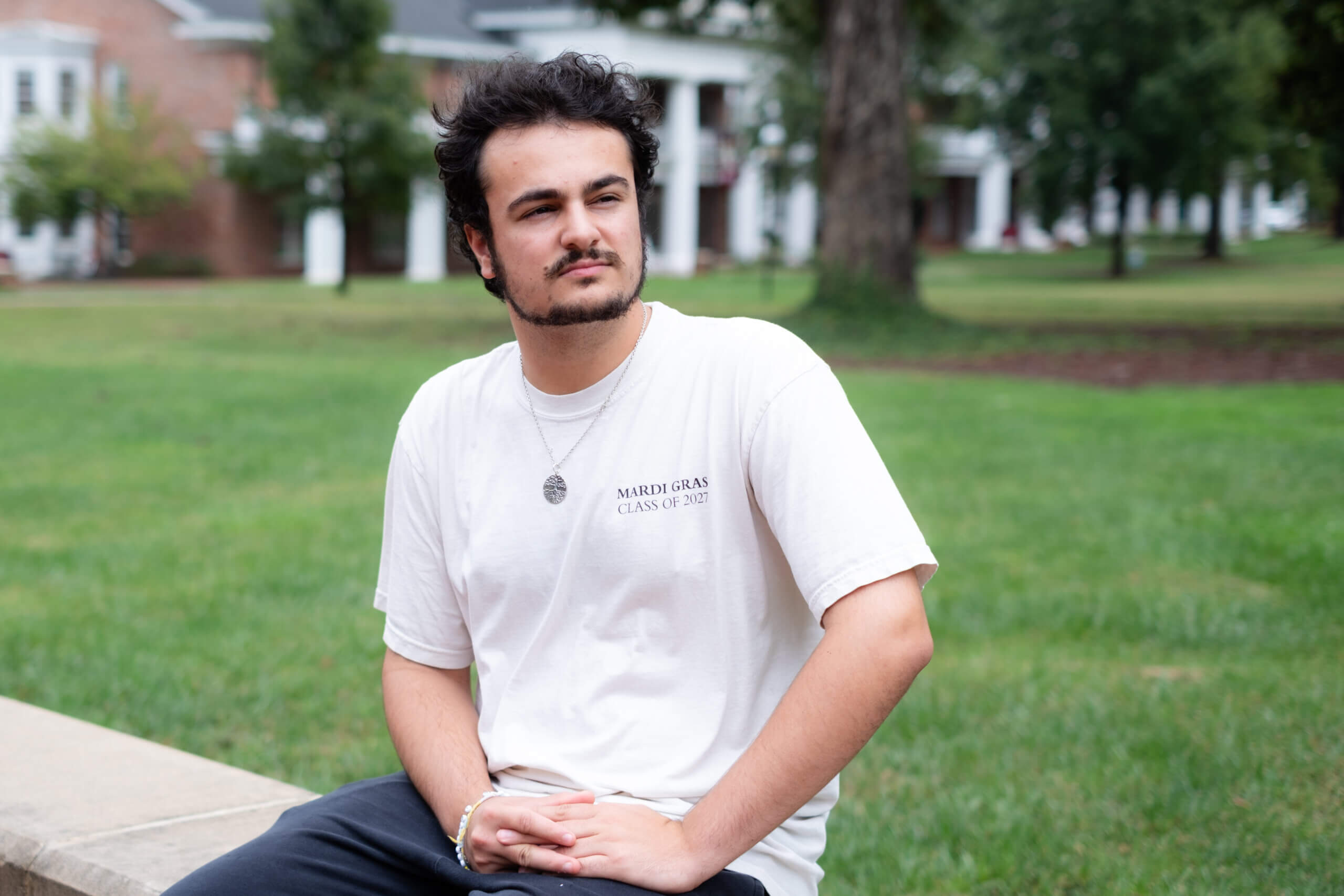
Frankel, now a senior, is one of the Jewish students who started to feel unwelcome at Hillel after the war began. He said in the weeks after Oct. 7, some of the students who spent time there were calling for the destruction of Gaza and he felt “iced out” for objecting.
Greene said they worked to temper the most extreme rhetoric on both sides. “There were some strong feelings in the wake of Oct. 7 and it was like, ‘Okay, you might have strong feelings but that doesn’t mean that we want to bomb the entire civilian population of Gaza like, that’s a red line.”
Frankel and Trayner, another Jewish student who participated in the pro-Palestinian marches, said they clashed with Mandi Lichtenstein, the Hillel president at the time, over the marches and a day of programming focused on Gaza that Frankel organized at the campus radio station.
“The Hillel president’s response was to bully us online and kind of ice us out in person,” Frankel said, adding that she came to one of the marches to film speakers.
When I spoke with her last year, Lichtenstein was the least sanguine about the climate at Elon. She agreed that it was better than other campuses, but said her attempts to explain why various terms (“Zionist” used as a pejorative, “apartheid,” “intifada”) were antisemitic had not seemed to penetrate with student activists.
“I’ve just tried to do everything I possibly can to stop it before it starts here — and I know it’s going to start because it already has,” she told me. “They don’t educate themselves or know what these words mean. They have no idea what these words mean.”
This particular conflict didn’t seem inescapable — everyone involved had chosen to participate in student activism — but it pointed to real tensions on campus.
“People are going crazy, because we don’t want what’s happening at Columbia and other schools to creep into here.”
Shani SpiegleCo-chair of the Jewish Life Advisory Council at Elon University
Greene said they were struck by the “A” grade that Elon received from the ADL because, despite various helpful moves by the administration, there was still “just a huge social fallout” as students saw each other post things on social media and ended friendships in the same way that was happening at other schools.
And while many Jewish parents are strong advocates for Elon, others have raised alarms over minor incidents. After Elon’s Facebook page shared a collage of students who had studied abroad, including one woman in Jordan wearing a red-and-white keffiyeh around her shoulders, a member of the Mothers Against College Antisemitism group expressed her despair.
“Is there any question what that young woman believes about Jewish people?” she asked.
Spiegle, the parents council leader, said she had been rattled when her own son had studied abroad in Dubai and sent home a photo of himself wearing the same kind of scarf, which is popular in the Middle East. “He was like, ‘Mom, not everyone who wears that is antisemitic — there are a lot of Arabs in the world,’” she recalled. “And I was like, ‘OK, you’re right, you’re right.’”
“But people are going crazy,” she added. “Because we don’t want what’s happening at Columbia and other schools to creep into here.”
A path forward
Despite some discord, there is equanimity at Elon that seems straight out of a different era, before “normalization” became a dirty word and both Students for Justice in Palestine and Hillel International implemented policies that banned partnerships with groups that had diverging views of the Israeli-Palestinian conflict.
Before posting divisive memes on Instagram became a favored method of political activism for college students. And before colleges decided — often under great duress — to settle on a politically expedient understanding of antisemitism.
But it also harkens back to a time before Oct. 7, 2023. Before Palestinian militants broke through Israel’s ostensibly impenetrable barrier surrounding Gaza, rampaging through military posts and massacring more than 1,100 people often in shockingly brutal fashion, and kidnapping hundreds more. Before Israel responded with a brutal aerial and ground campaign in Gaza, killing more than 64,000 Palestinians and wreaking more death and destruction in two years of war than in the prior 75 years of Israel’s existence.
The fallout from this war has torn apart families and Jewish communities. It has reshaped American politics and posed fundamental questions about the position of Jews in the United States, and the country’s alliance with Israel.
Elon’s success in avoiding some of the schisms seen elsewhere is not without its tradeoffs.
“If you’re engaging respectfully and being nice, but you’re not actually delving into issues that matter, I don’t know that I consider that to be entirely good,” Kirstin Boswell, the university chaplain, told me.
Boswell doesn’t think that’s exactly what has happened at Elon, though. She says students care deeply, but they’re also thoughtful about how they demonstrate that.
And it’s hard to imagine what was lost by Students for Peace and Justice’s leaders meeting with Lichtenstein, one of their harshest critics, before a march for Palestine to hear her concerns about slogans that target Zionists. Or to see a problem with Geoffrey Claussen, a Jewish studies professor, helping Frankel and Trayner launch Tikkun Olam, a club to promote a more progressive view on Israel.
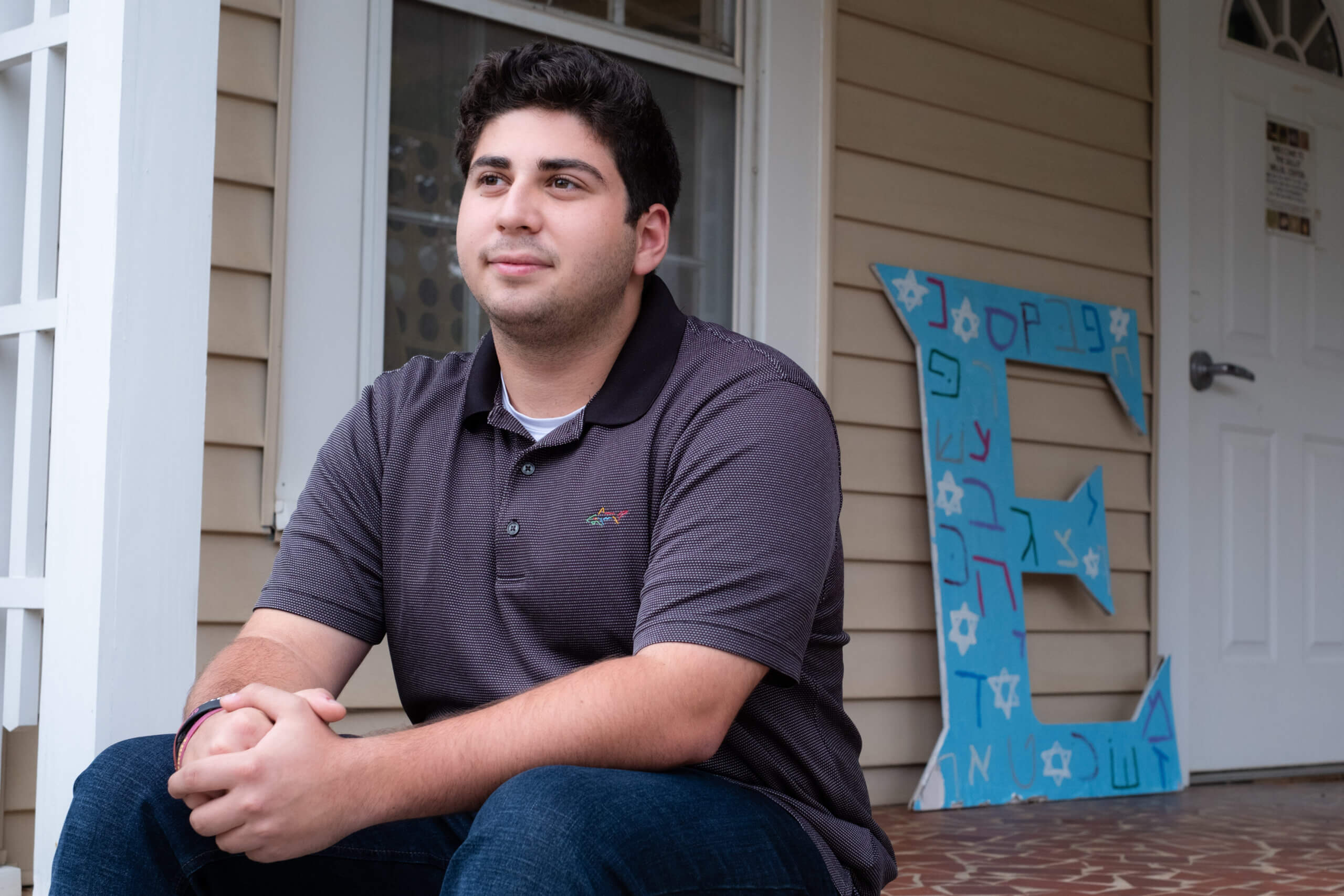
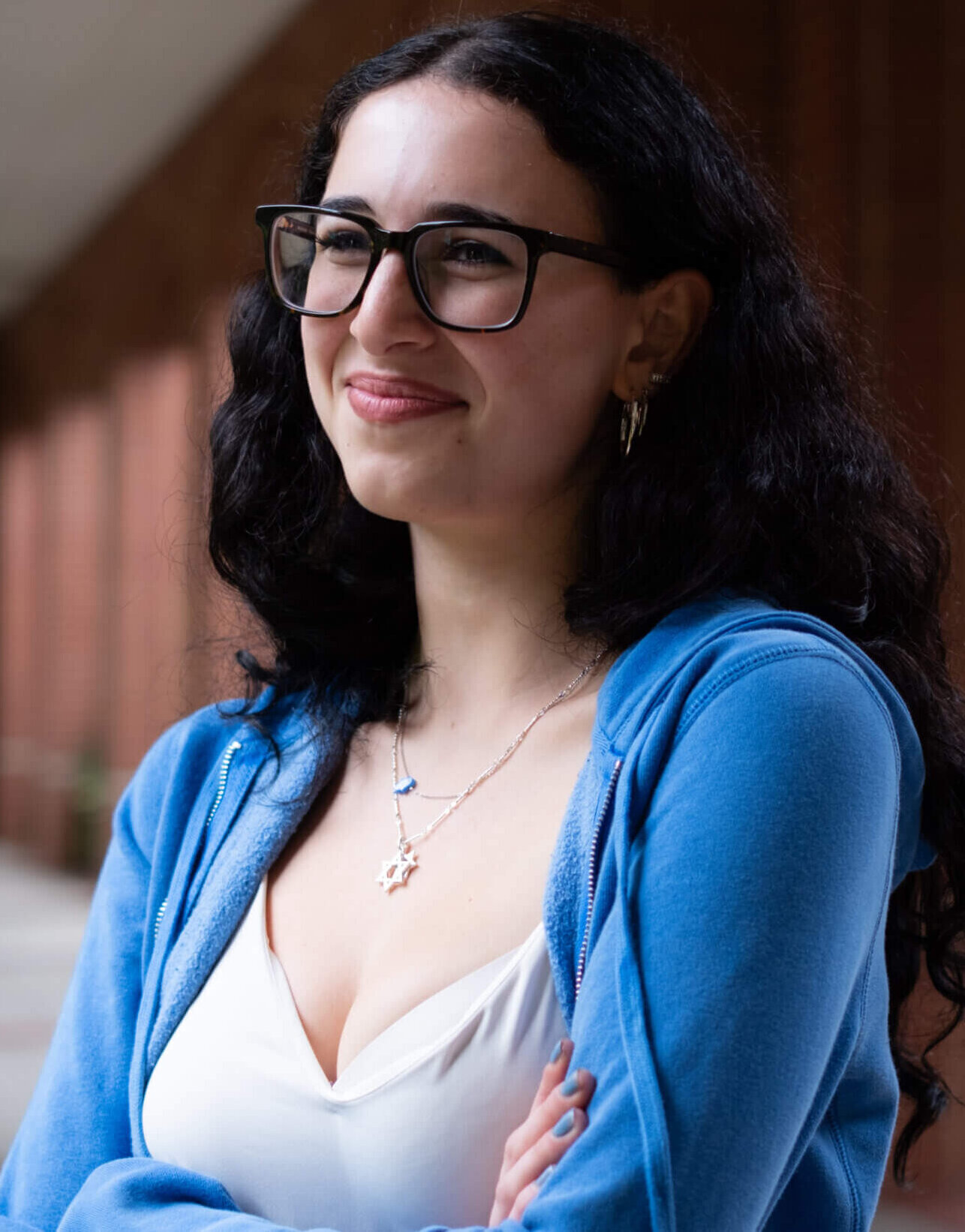
And there’s Benji Stern, one of Hillel’s student presidents who helped organize the gathering for Israel after Oct. 7, telling everyone about the club at Hillel’s Rosh Hashanah dinner. Frankel was sitting at dinner next to Bermont, the freshman who landed at Elon in part because she was tired of being called a genocidal colonist by friends who never seemed to actually want to talk about the conflict. “He thinks differently than I do and we were still able to sit and exist and enjoy each other’s company,” Bermont said. “We can still walk to class.”
This spirit of camaraderie is part of why there’s not an SJP chapter at Elon, or one for Jewish Voice for Peace. “I don’t want to unnecessarily trigger people — especially if it stops us from having a helpful discussion,” Trayner told me. “Jews are scared and that’s not something I want to ignore.”
A few days ago, Avraham-Katz stopped Frankel while crossing one of the streets on Elon’s bucolic campus and told him, in Frankel’s recollection, “I just want you to know, with everything that’s going on right now, I’m seeing it and I’m disgusted — I just want to see peace.”
Mendelsohn, a member of Hillel’s “Shabband” that performs on Friday nights, told me that things have changed since the war began. That the gulf between students who felt cast out of Hillel after Oct. 7 and those who found solace in the house full of memorial candles and dog tags for the hostages has been shrinking. The yellow ribbon next to the front door is faded and weathered.
“How people feel about the two sides now is so different than how people felt about it two years ago,” he said of the war. “People just want it to stop.”
And the parents, who at other schools have been some of the loudest voices demanding the expulsion and deportation of dissident students, gathered with their children under the pavilion for a Shabbat celebration that did not dwell on the fight against antisemitism.
Spiegle, from her perch atop the parents council, reassured everyone that there is a way to protect Jewish students without showing up at the president’s office with pitchforks every time someone comes after Israel on campus. “We have to allow free speech,” Spiegel said.
“And we have to let the students — as much as they can — handle it.”
Correction: A previous version of this article incorrectly referred to the University of North Carolina official involved in an altercation with protesters. It was the chancellor, not the president.
The post This school is fighting antisemitism all wrong. Why is it working? appeared first on The Forward.
Uncategorized
VIDEO: A Hasid gives us a tour of Morocco in Yiddish
דער ירושלימער יוטוב־שטערן וועלוול קירשנבוים האָט לעצטנס אַרויסגעשטעלט אַ ווידעאָ אויף ייִדיש פֿון אַ פּרעכטיקן וויזיט, וואָס ער האָט געמאַכט אין מאַראָקאָ. עס באַגלייט אים זײַן חבֿר אַבֿרהם פּרץ.
אינעם ווידעאָ זעט מען ווי קירשנבוים דאַוונט שחרית מיט די אָרטיקע ייִדן און באַזוכט אַ גוט אָפּגעהיטענעם בית־עולם, וווּ עס ליגן באַערדיקט גרויסע צדיקים ווי למשל הרבֿ חיים בן עתר (1696–1743), באַקאַנט ווי דער „אור החיים“. „מענטשן מיינען, אַז נאָר אין אייראָפּע זענען דאָ קבֿרים פֿון צדיקים!“ זאָגט קירשנבוים.
מיר זעען אַ גרויסע, שיינע שיל מיט אַ פֿײַנער אַרכיטעקטור אין קאַזאַבלאַנקאַ; דעם גרויסן אַראַבישן שוק, וווּ קירשנבוים קויפֿט זיך אײַן מלבושים פּונקט ווי די מאַראָקאַנער גייען אָנגעטאָן. ער באַוווּנדערט אויך די שיינע טיי־גלעזער און טשײַניקן, וואָס מע פֿאַרקויפֿט דאָרט, און באַקענט זיך מיט אַ ייִדישן סוחר וואָס האַנדלט מיט זילבער און גאָלד, פּונקט אַזוי ווי זײַן טאַטע און זיידע האָבן געטאָן פֿאַר דור־דורות.
The post VIDEO: A Hasid gives us a tour of Morocco in Yiddish appeared first on The Forward.
Uncategorized
Conservative and Christian movies are coming for Hollywood
A star-studded new movie set in a Soviet prison is coming out in November. James Franco and Rob Lowe anchor the cast of Confession, playing a brutal prison guard and an imprisoned dissident professor, and a disheveled Nick Nolte appears as a fellow prisoner.
These actors were once huge gets, and their names could convey legitimacy to a project. Nolte and Franco both have received Academy Award nominations. Lowe was a member of the Brat Pack, and was a regular on The West Wing.
Confession, written by Ben Shapiro and produced by the rightwing tabloid-esque news site The Daily Wire, is not the expected fare for actors with that kind of name recognition; Shapiro’s screenwriting aspirations have been the target of ridicule for years.
Nevertheless, this isn’t the only Daily Wire production getting big names; Danny Trejo signed onto a pro-ICE movie about Minneapolis in the aftermath of the Renee Good shooting, and Jonathan Majors led Run, Fight, Hide: Infidels earlier this year.
Each one of these actors has been, in some way, canceled or in career doldrums so may have been more open to working with The Daily Wire. And some have claimed that they did not know who Shapiro was, or what his politics were; Trejo’s son, Gilbert, said his 82-year-old father did not endorse ICE and was misled about the movie before he signed his contract.
Movie studios have struggled through the pandemic and the streaming era, both of which have tanked box office receipts, leaving the field open for movies from offbeat production studios. In addition to The Daily Wire, there has been a whole ream of Christian movies attempting to shift the stereotype of bible movies — that they’re preachy, low-budget straight-to-TV affairs with cardboard acting — to something more prestigious, or at least profitable.
The Christian company Angel Studios has been placing screenings of the half philo-semitic, half-antisemitic Jesus TV series The Chosen in movie theaters across the country, produced the right-wing hit The Sound of Freedom and is pumping out faith-based movies like the animated King of Kings Christmas story and David, a kiddie movie about the biblical king. Recently, Pinnacle Peak Pictures, another faith-based production company, premiered Daniel and the Fiery Furnace, another bible movie that was notable enough to merit a review in The New York Times. (Though admittedly it wasn’t a particularly positive one.)
For decades, Hollywood, and the media industry at large, has been associated with liberalism, progressive politics and diversity. (This is part of why conservative conspiracy theorists often insist that Jews control the media.) Even when conservatives are in power, satirical movies have poked fun at the ruling class — Team America: World Police spoofed George W. Bush’s foreign policy, while M*A*S*H critiqued Richard Nixon. During the current Trump administration, we’ve seen One Battle After Another lambasting immigration policies and rising white nationalism, Eddington on misinformation and populism, and The Apprentice depicting Trump directly.
But a rising number of higher-budget, bigger releases from the right wing, whether The Daily Wire’s conservative political parables or the Christian fables, are bringing a new kind of messaging — about the importance of God and country, about gender roles, about about the centrality of Jesus to the U.S. — to the American movie-going public.
This is no accident. A group of powerful conservative Christians, many of whom worked on Project 2025, are proponents of the Seven Mountains Mandate, a blueprint for Christian nationalism that instructs Christians to gain influence and control over the “seven mountains” of society — which include media, entertainment and the arts. The Mandate is part of the New Apostolic Reformation, a decentralized evangelical movement embraced by millions of Americans.
Jeremy Boreing, the director of many Daily Wire movies — though he has since left the company — said on a podcast hosted by businessman Patrick Bet-David that “It had always been part of our strategy to move into making culture, not just criticizing culture” as a way of proving that “there is a future where conservatives aren’t losing. There’s a future where we have political power and cultural power.”
Cultural power, of course, requires more than just a lot of movies; they have to be well-done, or at least appear to be. Previous Daily Wire productions, as well as other right-wing, MAGA movie ventures, have been hacky. Lady Ballers, about an unsuccessful men’s basketball team pretending to be women so they can dominate the league, was an unsubtle, unfunny and ultimately unwatchable spoof of transgender athletes. And even plenty of higher-budget attempts, like Daniel and the Fiery Furnace, can still fall victim to wooden acting and writing.
But now, with the financial success of movies like The Sound of Freedom and biblical parables like The Chosen, bigger stars are being drawn to projects like the Daily Wire’s lineup of pro-ICE, anti-immigration and anti-LGBTQ movies. With those bigger stars may come new audiences who might not have watched a Christian movie or Daily Wire project otherwise. And where there is money and viewers, mainstream Hollywood will go, too, no matter how progressive people expect the industry to be. We’ve already gotten a biblical epic from Amazon Prime, with The House of David, and there are likely to be many more to come.
After all, it wasn’t so long ago, after all, that Cecil DeMille’s The Ten Commandments was the biggest movie in town.
The post Conservative and Christian movies are coming for Hollywood appeared first on The Forward.
Uncategorized
‘Heil’ Mary? New Atlanta Falcons logo inspires Nazi comparisons
If there was something off about the logo the Atlanta Falcons unveiled on social media Wednesday, whoever runs their accounts did, uh, not see it.
Behind the black falcon graphic that began appearing on the football team’s helmets in the 1960s was a new background — a flag of red, tan, black and white vertical stripes. To thousands of people who responded to the logo, it looked distinctly German — in a 1930s kind of way.
“The Atlanta Falcons are preparing to invade Poland,” one fan wrote.
A day after its posting, the new profile picture had unleashed a deluge of Nazi memes in the 4,000-plus replies on X. One picture swapped in the logo for Nazi flags in the background of a historical photo of a Hitler rally. Another edited the Falcon claw to look like a Nazi salute.
Others depicted Hitler in a Falcons cap, references to Inglourious Basterds and the Battle of the Bulge and a World War II joke invoking a blown lead in Super Bowl LI.
“Falcons were up 28-3 at Dunkirk,” that tweet read.
The Falcons’ snafu enters a small but growing catalogue of Reich-coded brand mixups. Who can forget the German national soccer team’s ‘44’ soccer jerseys? There was also the swastika-emblazoned Hallmark gift wrap; the accidental Hitler mugs; and (for my money) the worst of the bunch, Zara’s concentration camp uniform shirt.
All of those have been addressed; so far, the Falcons’ has not. We’ve reached out to them for comment.
The post ‘Heil’ Mary? New Atlanta Falcons logo inspires Nazi comparisons appeared first on The Forward.
