


Uncategorized
Toronto City Hall Announces Plan to Fly Palestinian Flag Next Week

Toronto Mayor Olivia Chow speaks to reporters in Toronto, March 8, 2025. Photo: Christopher Katsarov/The Canadian Press via ZUMA Press via Reuters Connect
A Canadian nonprofit organization has succeeded in persuading the city staff of Toronto to fly the Palestinian flag at city hall next week in recognition of the “State of Palestine’s Independence Day” on Saturday.
Braman Thillainathan, press secretary for Toronto Mayor Olivia Chow, explained that the city’s protocol office had made the decision requested by the International Center of Justice for Palestinians (ICJP) to fly the flag this coming Monday, not the mayor or city council.
“City Council provided city staff the authority to manage the public flagpole booking process based on policy approved by council in 1999,” he said in an emailed statement to Canadian media.
“The use of the city’s courtesy flagpole neither implies nor expresses support for the politics or policies of nations and/or organizations but raises the flag in recognition of those citizens or members that have made the request,” a spokesperson for the city of Toronto told the CBC.
ICJP lawyer Shane Martinez framed the raising of the flag as a move to counter racism.
“Visibility is something that’s particularly important,” Martinez said. “Anti-Palestinian racism is carried out in large part through attempts to erase Palestinian identity, erase Palestinian voices, and ensure that they don’t have a place in society, that they’re stigmatized, that they’re tabooed, that they’re othered and sometimes that their existence is denied altogether.”
Martinez described the activist move as “really a statement as to Palestinian resilience in the face of oppression, in the face of unprecedented oppression by Israel.”
The statement came days after members of Toronto Metropolitan University’s Students for Justice in Palestine chapter led a mob that spilled blood and caused the hospitalization of at least one Jewish student after forcibly breaching a venue in which an advocacy group had convened for an event featuring veterans of the Israel Defense Forces (IDF).
Bashar Alshawwa, a Palestinian activist living in Toronto, called the raising of the flag “symbolic,” but said he believed it would “encourage other parties and institutions, individuals inside Canada, to join the journey for human rights and equality and justice regarding the issue of Palestine.”
The decision to raise the flag follows Canada recognizing a Palestinian state in September and Prime Minister Mark Carney saying he would support arresting Israeli Prime Minister Benjamin Netanyahu.
Earlier this month, Jewish groups also began circulating a petition calling for Chow to resign after the mayor chose to use the word “genocide” to describe Israel’s war to defeat the Hamas terrorist group in the Gaza Strip.
“The genocide in Gaza impacts us all,” Chow said on video. “A common bond to shared humanity is tested, and I will speak out when children anywhere are feeling the pain and violence and hunger.”
The Canadian Antisemitism Education Foundation pushed back against Chow’s rhetoric, stating that “the only Gaza genocide was the massacre perpetrated by Hamas and its allies against Israelis on Oct. 7, 2023. Somehow, we doubt that’s what the mayor was referencing.”
The Center for Israel and Jewish Affairs (CIJA) called the mayor’s statement “reckless, divisive, and dangerous.” The group added that “the Jewish community expects the mayor to make this right by addressing the harm caused and taking immediate action to restore trust and ensure our safety.”
Toronto and Canada more broadly have seen antisemitism surge over the past two years, following Hamas’s Oct. 7 atrocities and amid the ensuing war in Gaza.
In May, the J7 Large Communities’ Task Force Against Antisemitism — a coalition of Jewish organizations in Argentina, Australia, Canada, France, Germany, the United Kingdom, and the United States — released its first J7 Annual Report on Antisemitism.
CIJA provided the data and analysis on Canada, reporting that the Jewish community “was easily the most targeted religious minority, accounting for some 70 percent of religiously motivated hate crimes (with 900 total hate crimes against Jews recorded). Hate crimes against Jews increased by 71 percent from 2022 to 2023, and 172 percent in total since 2020.”
The report also documented that Toronto police tallied 164 hate crimes against Jews as of October 2024, representing a 74.5 percent jump from the previous year.
“What is at stake is not only the safety and well-being of our community, but the future of a Canada where everyone can live free from fear and discrimination,” CIJA interim resident Noah Shack said in a statement.
Uncategorized
Two women race to save Persian Jewish music before it fades
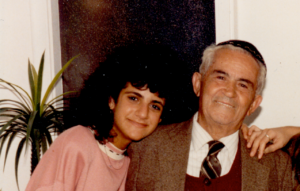
In the 1950s, Younes Dardashti, a Jewish man from Tehran’s Jewish ghetto, became one of Iran’s most celebrated singers. As the country underwent rapid secularization under the Shah, Jewish communities that had long been pushed to the margins found new opportunities. Dardashti’s piercing, unmistakable voice filled Iranian airwaves, exclusive concert halls and the Shah’s palace, earning him the title “Nightingale of Iran.”
Years after Younes Dardashti’s death, his granddaughter Galeet is still singing with him in New York.
Using archival recordings of her grandfather’s voice, Galeet Dardashti created her album Monajat — meaning an intimate conversation with God — layering her vocals over decades-old tapes of him singing Selihot, religious poetry chanted nightly before the Jewish New Year.
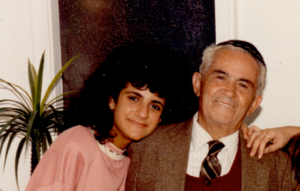
Across the country in Los Angeles, Cantor Jacqueline Rafii is also trying to preserve her Iranian grandfather’s traditional Jewish Persian music.
While in cantorial school, Rafii rediscovered cassette tapes made of her grandfather leading a Passover seder in Tehran. When her family was forced to flee the country following the Islamic Revolution in 1979, they brought that cassette tape with them.
“It was like a time capsule,” said Rafii.
She realized that those grainy and distorted recordings captured a Persian Jewish musical tradition that had only ever been passed down orally from generation to generation. In the diaspora, Rafii worried, they might disappear.
So Rafii sat at the piano with her father to turn what she heard on those old cassette tapes into sheet music so that others might replicate the music Iranian Jews have been singing for centuries.
“We were trying to take this distorted tape from the ’70s and plunk out the notes,” she said. “To write something that had never been written before.”
What began with a single tape became a larger project. Rafii set out to collect and notate as many Persian Jewish melodies as she could. She put out a call on social media to try to find people who remembered Jewish prayers from Iran. Eventually, she found Dardashti, who taught Rafii her grandfather’s Yom Kippur melody for “El Nora Alila.”
A transcription challenge
According to Dardashti, who holds a Ph.D. in anthropology and specializes in Mizrahi culture and music, Jews have played an important role in Persian musical life for centuries.
After the 7th century, when Muslim forces conquered Persia, there were periods during which non-religious music was restricted under Islamic law. Because Jews were classified as najis, or “impure,” they faced limitations on the types of occupations they could legally pursue. Music, being a marginalized and often stigmatized profession, was typically avoided by Muslims. This made it a particularly viable livelihood for Jews who often performed the jobs that were restricted to Muslims.
Because of this, religious minorities, namely Jews, Zoroastrians, and Christians, were responsible for sustaining Persian musical traditions when Muslims could not.
Classical Persian music often features singers interpreting the poetry of figures like Hafez or Rumi. One of its defining features is tahrir, a rapid oscillation in the voice that can sound like a controlled break or yodel, used to convey emotional intensity.
The music relies on modal systems and tonal structures distinct from Western scales. It also includes microtones — notes that fall between the pitches used in Western scales and cannot be easily represented on a standard musical staff. To make the melodies accessible, Rafii notates them “in a format that would be compatible with Western music,” eliminating some (but not all) of those microtones, adding chords to mimic their sound, and establishing a regular meter.
Persian Jewish music draws directly from this tradition, applying its musical forms to Jewish liturgy — Torah chanting, High Holiday prayers, and religious poetry — as well as to songs about daily life written in Judeo-Persian.
“It’s really about interpreting a text,” Dardashti said. “Just as a Persian classical singer would interpret a poem, in Persian Jewish music you’re interpreting Hebrew liturgy in a very similar way.”
For centuries, this music was transmitted entirely orally, passed down from generation to generation, with each singer adding their own interpretation and stylistic flair. During the reign of Shah Mohammad Reza Pahlavi from the 1940s through 1979, Jews enjoyed a golden age in Iran. Jewish musicians, who often came from lineages of family members who had been making music for centuries, moved to the fore and became nationally recognized stars. Dardashti’s grandfather was perhaps the most prominent. Because Israel and Iran had good relations at the time, he frequently traveled between the two countries to share his talents.
Younes Dardashti became a cantor at synagogues across Tehran. Because his chanting was done in a musical style Iranians of all faiths were used to hearing on the radio, Galeet Dardashti says, non-Jews would press their ears to the doors of the synagogue to hear her grandfather’s voice.
A tradition passed down by men
Traditionally, Persian Jewish liturgical music was preserved and performed almost exclusively by men because of Jewish religious norms that limited women’s public singing. Now in the diaspora, that chain of transmission has begun to break down, with fewer and fewer Iranian Jews learning the songs their parents and grandparents once sang.
Rafii says she has faced obstacles in “expressing her cantorial pursuits” to more traditional members of the Persian community in the U.S., where women’s singing is still not embraced. And while she is unsure whether she will “ever in her lifetime … share these melodies personally in such communities,” she remains “hopeful that her work may be useful” to those seeking to transmit Persian Jewish music to the next generation.
For Dardashti, singing Persian Jewish music as a woman is just another layer of the reinvention that has been a feature of Persian Jewish music for generations. Though she too does not perform her music in Orthodox Iranian Jewish settings, she embraces the unique role she can play in leading services for Reform and Conservative Iranian Jews, for whom Ashkenazi-style music is often the default.
“I feel like right now this community needs me; there aren’t many people who can do this work and are willing to do it in an egalitarian setting,” said Dardashti. For the last few years, she has led high holiday services in the traditional Persian style at Kanisse, an egalitarian Jewish community for Sephardic and Mizrahi Jews in New York City.
Though both Rafii and Dardashti are Iranian, neither grew up immersed in Persian Jewish musical traditions.
Like many Iranian Jews who came to the United States after the revolution, their families entered a Jewish landscape dominated by Ashkenazi practice. Dardashti’s father, himself a cantor, trained at the Jewish Theological Seminary, where the focus was almost entirely Ashkenazi. “I grew up the daughter of a Persian cantor who was singing Ashkenazi music,” Dardashti said.
“In order to learn Persian Jewish music, I had to start from scratch,” she added. “I knew nothing.”
She turned to her father, asking him to teach her the melodies he had grown up with in Iran but had not performed formally since coming to the U.S.
Her work, while rooted in a desire to preserve Persian Jewish music, is not without experimentation. Dardashti adds her own flair to her grandfather’s music, laying his vocals over her band and arrangement. “I’m also reinventing, because music isn’t static. Cultural transmission is messy — everyone changes things. So I lean into that messiness.”
Connecting cantors across cultures
Rafii is also continuing to transmit Persian Jewish music in an unconventional way by bringing it to Ashkenazi audiences.
When she entered cantorial school, she said, there were no formal pathways to train in non-European musical traditions. Now, she says cantors from across the country — “in particular, Ashkenazic cantors” — have reached out to her for Persian Jewish sheet music and guidance on incorporating these melodies into their services.
“They want to share how diverse the Jewish family is,” she said. “Now that there’s sheet music for Persian Jewish music, it’s accessible, and they can offer it to their community.”
Dozens of non-Persian cantors have already begun including these melodies in their services.
At Valley Beth Shalom, a largely Ashkenazi congregation in Los Angeles, Rafii regularly weaves her grandfather’s Persian tunes into worship and teaches them to the synagogue’s youth choir.
“I like to include them as part of an everyday service,” she said. “Why don’t we just combine the melodies and make this part of the American Jewish experience?”
The post Two women race to save Persian Jewish music before it fades appeared first on The Forward.
Uncategorized
Passover liberation and US liberty both summon us to remember and renew
At our campus Seder this week, I found myself talking to a student about Passover as a holiday of memory. She seemed puzzled and asked me to explain. The Seder plate, the ritual of reclining, and the talk of freedom, I told her, were all meant as reminders of enslavement in Egypt. Of course, she knew that. But I told her that even before the Jews cross the Red Sea to escape bondage, the Torah says something like “you better remember this!” Just after the final plagues — the killing of the first born — are visited upon the Egyptians, but before the Israelites escape from slavery, God tells Moses how the Passover holiday will be a commemoration of the events about to take place!
This day shall be to you one of remembrance: you shall celebrate it as a festival to GOD throughout the ages; you shall celebrate it as an institution for all time. Ex 12:14
You shall observe the [Feast of] Unleavened Bread, for on this very day I brought your ranks out of the land of Egypt; you shall observe this day throughout the ages as an institution for all time. Ex 12:17
The commemoration of liberation, and the memory of bondage, are given sacred status — and even prior to the liberation itself. The festive meal, the Passover Seder, is a communal insistence on memory. And this insistence is not restricted to what happened to other people in the distant past. The Torah’s word for remembering here is zakhor, which means something closer to “reliving” than to what we usually think of historical recollection. We are slaves in Egypt, just as we are at the foot of Mount Sinai to receive the Commandments.
As it so happens, during Pesach this year I am also working at Wesleyan University on a national program to encourage college students to protect our democracy by participating in it. Inspired by the students who went to Mississippi in 1964 to register Black voters in the face of violent suppression, we launched Democracy Summer 2026, a nonpartisan call to young people to strengthen their democratic muscles by using them. We are mindful of the 250th anniversary of the Declaration of Independence as we build programs along with colleges and universities across the country that aim to remind our fellow citizens of the importance of exercising our powers as constituents of this constitutional republic. The mission statements of educational institutions — from small private religious schools to large public universities — express an obligation to contribute to the public sphere. When we do contribute, we are participating in history, learning about ourselves and the world around us; we contribute to our institutions and to the country whose freedoms allow them to fulfill their purposes.
As part of this work, I’ve been rereading Danielle Allen’s wonderful Our Declaration (2015), a book that helps us through a slow reading of a core founding document. Allen describes teaching the Declaration of Independence to a group of working adults in a night class in Chicago and how by doing so she came to appreciate its famous words more profoundly than ever: “We hold these truths to be self-evident, that all men are created equal, that they are endowed by the Creator with certain unalienable rights, and among these are Life Liberty and the pursuit of Happiness.” She came to see these words (and the Declaration as a whole) as aimed at her and her students — that they were part of that “WE,” members of the political community that recognized the power of these truths. This realization didn’t happen right away. At first her students thought that the Declaration represented “institutions and power, everything that solidified a world that had, as life turned out, delivered them so much grief, so much to overcome.” They had to make the document their own to see themselves as participants in its legacy.
These students “regifted” the Declaration to Allen by helping her see its argument for political equality as her own political patrimony. The founding fathers would not have seen it this way: Allen is a Black woman whom they would not have recognized as a citizen. But by reading the text slowly and carefully with her students, she and they claimed it as their rightful inheritance: “an understanding of freedom and equality, and of the value of finding the right words.”
In Torah study, I strive for something similar to this claiming of an inheritance. Such a claim, I find, is also what we are meant to feel when we read the Haggadah at our Seders. I study not to acquire expertise about holy texts but to participate in an ongoing conversation about enduring questions. Through the teaching that we were slaves in Egypt, we are meant to feel how it is to be oppressed and to consider our obligation to claim our freedoms, an essential step in developing a people. And we are also meant to help other groups escape oppression, make good on claims for liberation that resonate with our story. This is not only for the week of Passover. Rashi teaches that we must make mention of the exodus from Egypt every day. Every day we must claim our freedom and, we might add, find the right words for others to do so.
This is also the message of our summer call to action this year. As we commemorate the 250th anniversary of the Declaration, let us claim our political patrimony, our rightful inheritance. To paraphrase Benjamin Franklin: it is our republic so let us keep it!
The post Passover liberation and US liberty both summon us to remember and renew appeared first on The Forward.
Uncategorized
Downed Planes Raise New Perils for Trump as Tehran Hunts for Missing US Pilot

Traces of an Iranian missile attack in Tehran’s sky, amid the U.S.-Israeli conflict with Iran, in Tehran, Iran, April 3, 2026. Photo: Majid Asgaripour/WANA (West Asia News Agency) via REUTERS
Two US warplanes were downed over Iran and the Gulf, Iranian and US officials said on Friday, with two pilots rescued and a third still missing and being hunted by Tehran’s forces.
The incidents show the risks still faced by US and Israeli aircraft over Iran despite assertions from US President Donald Trump and his Defense Secretary Pete Hegseth that their forces had total control of the skies.
The first plane, a two-seat US F-15E jet, was shot down by Iranian fire, officials in both countries said.
The second plane, an A-10 Warthog fighter aircraft, was hit by Iranian fire and crashed over Kuwait, with the pilot ejecting, two US officials said.
Two Blackhawk helicopters involved in the search effort for the missing pilot were hit by Iranian fire but made it out of Iranian airspace, the two US officials told Reuters.
The degree of injuries among the crew of the aircraft remained unclear. The status and whereabouts of the missing F-15E crew member was not publicly known.
Iran’s Revolutionary Guard Corps said it was combing an area near where the pilot’s plane came down in southwestern Iran and the regional governor promised a commendation for anyone who captured or killed “forces of the hostile enemy.”
Iranians, who have been pummeled by American air power for weeks, posted gleeful messages celebrating the plane downings. Iran’s Parliament Speaker Mohammad Baqer Qalibaf said on X that the U.S. and Israel’s war had been “downgraded from regime change” to a hunt for their pilots.
Trump has been in the White House receiving updates on the search-and-rescue operation, a senior administration official told Reuters. The Pentagon and US Central Command did not immediately respond to requests for comment.
NO SIGN OF END TO WAR
The prospect of a US service person being alive and on the run inside Iran raises the stakes for Washington in a conflict with low public support and no sign of an imminent end.
Iran has officially told mediators it is not prepared to meet with US officials in Islamabad in coming days and that efforts to produce a ceasefire, led by Pakistan, have reached a dead end, the Wall Street Journal reported on Friday.
The US and Israel opened the campaign with a wave of strikes that killed Iran’s Supreme Leader Ayatollah Ali Khamenei on February 28. The war has killed thousands and threatened lasting damage to the global economy.
So far, 13 US military service members have been killed in the conflict and more than 300 have been wounded, according to the US Central Command.
Iran has rained down drones and missiles on Israel. It has also taken aim at Gulf countries allied to the US, which have so far held back from joining the war directly for fear of further escalation.
In a security alert on Friday, the US embassy in Beirut said Iran and its aligned armed groups may target universities in Lebanon and urged US citizens in the country to leave while commercial flights are still available.
Israel has been waging a parallel campaign against Iran-backed Hezbollah in Lebanon after the militant group fired at Israel in support of Iran.
TRUMP THREAT TO STRIKE BRIDGES, POWER PLANTS
On Friday, as Trump threatened to hit its bridges and power plants, Iran struck a power and water plant in Kuwait, underlining the vulnerability of Gulf states that rely heavily on desalination plants for drinking water.
On Thursday, Trump posted footage on social media showing dust and smoke billowing up as US strikes hit the newly constructed B1 bridge between Tehran and nearby Karaj, which was due to open this year, and said more attacks would follow.
“Our Military, the greatest and most powerful (by far!) anywhere in the World, hasn’t even started destroying what’s left in Iran. Bridges next, then Electric Power Plants!” he wrote in a subsequent post.
On Friday, a drone hit a Red Crescent relief warehouse in the Choghadak area of Iran’s southern Bushehr province.
Kuwait Petroleum Corporation said its Mina al-Ahmadi refinery had been hit by drones. Other attacks were also reported to have been intercepted in Saudi Arabia and Abu Dhabi. Missile debris landed near the Israeli port of Haifa, site of a major oil refinery.
Oil markets were closed after benchmark U.S. crude prices gained 11% on Thursday following a speech by Trump that offered no clear sign of an imminent end to the war.