


Uncategorized
What Iran’s Internet Blackout and the Patagonia Fires Revealed About Global Disinformation

Cars burn in a street during a protest over the collapse of the currency’s value, in Tehran, Iran, Jan. 8, 2026. Photo: Stringer/WANA (West Asia News Agency) via REUTERS
The lie that raced across social media during Argentina’s recent Patagonia wildfires was not just grotesque. It was revealing.
Within hours, recycled images and viral posts blamed Israelis for igniting the fires. The language was familiar: vague references to “foreign states,” insinuations of coordination, and the ritual refrain that “the media” was covering it up. Argentine journalists documented how quickly the fires became a vehicle for antisemitic conspiracy theories, including false claims involving an “IDF grenade” in Patagonia.
Days later, a seemingly unrelated anomaly appeared in Europe. A cluster of pro-Scottish independence accounts on X, previously prolific, fell abruptly silent. Their disappearance coincided precisely with Iran’s imposition of a nationwide Internet shutdown amid domestic anti-regime protests. British reporting and independent researchers had already identified many of these accounts as part of an Iranian-linked influence operation masquerading as Scottish voices. When Tehran pulled the plug at home, the “Scots” abroad went quiet too.
Two continents. Two narratives. One underlying mechanism.
Authoritarian regimes — and the ecosystem of state media, proxy outlets, and cutout accounts they cultivate — are pushing democratic societies along their fault lines. Increasingly, Israel is authoritarian regimes’ accelerant of choice.
Influence operations are often exposed by sloppy tradecraft: recycled phrasing, unnatural engagement patterns, or accounts created in batches. But recent platform transparency has added a more revealing diagnostic: origin.
As researchers gained better tools to determine where accounts actually operate, a striking pattern emerged. Accounts branding themselves as “MAGA,” hyper-focused on American culture-war issues, were frequently traced to Bangladesh. Accounts claiming to post from Gaza — offering supposedly raw, on-the-ground testimony during the war — were often operating from Pakistan or Indonesia.
This matters because it punctures a central illusion of the online age: that what feels like organic, local outrage usually isn’t. Much of it is, in fact, geographically divorced from the societies it claims to represent.
Iran’s January 2026 Internet shutdown and its cyber iron curtain made this impossible to ignore. When Tehran cut connectivity nationwide, clusters of supposedly local voices in Western democracies stopped posting. The blackout did not merely suppress dissent inside Iran; it exposed the scaffolding of external influence operations. When the lights go out at headquarters, the field offices go dark too.
Once you see the pattern, the choice of disguises stops looking random.
Democracies argue in public. That is not a flaw. It is the point, and it is precisely what authoritarian systems exploit.
Separatist politics, immigration debates, populist movements, and foreign conflicts provide ready-made content pipelines. Operators do not need to invent controversies; they need only to impersonate participants and intensify the most divisive frames through distortion, omission, and outright falsehood.
The Scottish case is illustrative, not exceptional. The same architecture animates accounts posing as Midwestern Americans furious about election integrity, or as desperate Gazans posting emotionally fluent English from thousands of miles away. The objective is not persuasion in any classical sense. It is erosion — of trust, cohesion, and confidence that democratic disagreement reflects real people rather than staged performance.
So why did an environmental disaster in Argentina metastasize so quickly into an “Israeli plot”?
Because Israel is uniquely useful to anti-Western authoritarians.
Israel sits at the convergence of several propaganda imperatives. It is framed as a Western-aligned democracy in a region hostile to that model — making it a proxy target for liberal democracy itself. It allows classic antisemitic conspiracies — hidden power, omnipresent influence, coordinated deception — to be laundered through the more respectable language of “anti-Zionism.” And it offers moral intoxication: if Israel is cast as a singular source of global evil, then every crisis, anywhere, can be folded into a pre-existing narrative of resistance to that evil.
Coverage of the Patagonia fires demonstrated this dynamic precisely. Israel was inserted reflexively into an unrelated catastrophe because audiences had already been conditioned to accept Israel-blame as plausible background noise. The speed was the point.
These narratives are not born on social media alone. They move through a supply chain.
At one end are state broadcasters and aligned outlets — Tehran, Moscow, Doha, Beijing — each with its own tone but a shared objective: undermine trust in Western institutions and normalize cynicism or outright hostility toward democratic governance. At the other end are social platforms, where content is stripped of provenance and redistributed as “what ordinary people are saying.”
These regimes often fit a familiar pattern: control information distribution at home, and export confusion abroad. When regimes clamp down domestically, they often compensate by escalating external information warfare. Destabilizing other societies becomes a way to offset internal fragility.
If the volume of Israel-related falsehoods feels overwhelming, that sensation is intentional.
The Scottish accounts that vanished, the Bangladesh-based “MAGA” profiles, the Pakistan- and Indonesia-based “Gaza voices,” and the Patagonia wildfire conspiracy are not separate scandals. They are iterations of the same method: impersonation, amplification, moral outrage, repeat.
The temptation is to treat each viral lie as a discrete incident: debunk it, move on.
But the pattern is systemic.
Israel is not merely a target in this ecosystem. It is a tool — the tip of the spear in a broader campaign designed to erode confidence not only in Israel, but in the legitimacy of democratic societies themselves.
Israel is the test case — but free societies are the ultimate target.
Micha Danzig is an attorney, former IDF soldier, and former NYPD officer. He writes widely on Israel, Zionism, antisemitism, and Jewish history. He serves on the board of Herut North America.
Uncategorized
He saved dozens of kids in Auschwitz — he kept it a secret for nearly the rest of his life
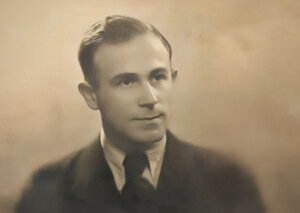
Growing up in Israel as the daughter of Holocaust survivors, Judith Richter was taught not to discuss the Shoah. While her mother was very open about her experiences, Richter’s father was more reserved, and Israeli society at the time looked down on European Jews for, as they wrongly assumed, not fighting back. It wasn’t until Richter was an adult that she learned her father had played a critical role in protecting children at Auschwitz-Birkenau — a secret she gleaned not from her father himself but from an article on Josef Mengele in a LIFE magazine that her husband happened to spot in a grocery store.
Erno “Zvi” Spiegel was 29 years old when he was deported from Hungary to Auschwitz along with other members of his family, including his twin sister Magda. As a twin, Spiegel was selected to be a subject for Mengele’s scientific experiments, where he injected subjects with diseases and cancer cells to study their effects on the human body; due to their shared genetics, one twin could serve as a control for the experiment. If one died from the procedure and the other didn’t, the surviving twin would still be killed and subject to an autopsy to understand why they lived.
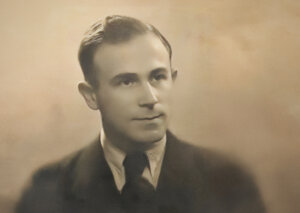
Mengele also charged Spiegel with looking after the other kids he was experimenting on, whose lives Spiegel would end up saving multiple times. The PBS documentary The Last Twins, directed by Perri Peltz and Matt O’Neill, captures the deep and unexpected relationship Spiegel had with his charges through interviews with the surviving sets of twins from Mengele’s lab along with Spiegel’s family. Uncle Spiegel, as the twins called him, was the only adult that many of the kids trusted during their imprisonment.
When SS physician Heinz Thilo ordered the extermination of all sets of twins, Spiegel was able to intervene by telling Mengele that his subjects were at risk. Sometimes siblings were mistakenly brought in as twins, but Spiegel lied about their birth days so they wouldn’t be sent to the gas chambers. Many recounted how he would teach them math and geography to distract them from their horrific conditions.
When she heard these stories for the first time, Richter told me, she was not surprised her father had put such an emphasis on education, even in the camps.
“My father taught me since I was very young that while your material possessions, home, even your freedom can be taken away from you, the single asset that cannot be taken away from you is your knowledge,” she said.
After Auschwitz was liberated, Spiegel led the kids on an arduous journey through Eastern Europe helping them return to their homes — or at least, to what was left of them.
Although Spiegel, who died in 1993, never told his own children what he had done during the war, he spoke with LIFE Magazine for their 1981 article on Mengele’s experiments. The LIFE piece didn’t just cause revelations for Spiegel’s family; one of the survivors, Peter Somogyi, saw the issue, prompting him to contact Spiegel. The two reunited for the first time in almost four decades in Boston, and after that, Spiegel arranged meetings with a number of the other surviving twins.
Richter began researching her father’s story and the lives of those he had saved for an academic project. However, when director Peltz’s mom, who had known Richter for years, connected the two women, Richter realized the importance of turning her father’s story into a movie.
Directors O’Neill and Peltz, who had previously worked together on the documentary Can’t Look Away: The Case Against Social Media, knew the project was time sensitive given how few living survivors are left. Since they first started shooting the film almost a decade ago, all but one of their interview subjects has died. O’Neill added that today’s political climate contributed to the urgency of getting the film to the public.
“At a time of rising antisemitism, of misinformation of the Holocaust,” O’Neill said, “it’s an essential time for journalistic work based entirely on indisputable truths to come out.”
Peltz noted that Spiegel’s heroism wasn’t embodied in one grand act, but “in the step by step, day by day.” Although Mengele’s horrific experiments get a brief mention, the filmmakers chose to focus on the uplifting story of how people came together and protected each other in the midst of tragedy.
“Right now, many of us feel overwhelmed by world events, by things that feel out of control,” O’Neill added. “This is a story of hope in a time of horror and of a man who took the small space that he could control and did good within it.”
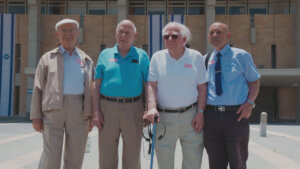
In 2017, Richter organized a reunion of the survivors in Israel, where they dedicated a plaque to Spiegel and the twins in Jerusalem. Richter said her father’s strong sense of social responsibility had a profound effect on her life. She noted that in the homes of some Holocaust survivors, the “children grow up with a very strong sense of revenge.” Instead, her father taught her that the best response to hatred was to ask herself how she could help other people.
“Erno was a fighter in his own way,” O’Neill said. “He fought the Nazis by teaching the kids to call each other by their names. He fought the Nazis by teaching them geography. He fought the Nazis by giving them humanity in darkness.”
The Last Twins will be available to stream on pbs.org on April 13 and have a broadcast premiere on Monday, June 15 at 10/9c.
The post He saved dozens of kids in Auschwitz — he kept it a secret for nearly the rest of his life appeared first on The Forward.
Uncategorized
I’m probably going to be on the government’s list of Jews at UPenn
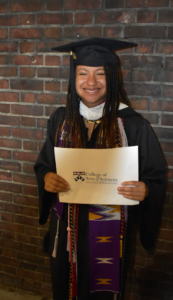
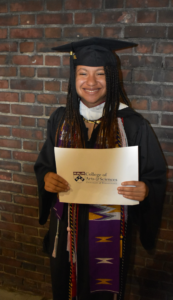
When I graduated from the University of Pennsylvania in 2024, tensions on campus about Israel and Gaza felt hotter than ever. Nearly every week of my senior year, another student or faculty member was being doxxed online for their politics. In the middle of spring finals, police forcibly disbanded the pro-Palestinian encampment in the center of campus. A week later, and four days before graduation, pro-Palestinian activists occupied a campus building, leading to another confrontation with law enforcement and arrests. At graduation, several students whipped out Palestinian flags and signs about justice for Palestine as they walked the stage.
I will once again be a Penn student come fall, having been accepted to the school’s sociology Ph.D. program. Last month, when I returned to campus for the department’s open house, I was surprised that I didn’t notice even a trace of the conflict I had left behind. The fences that had been erected around College Green to prevent a second encampment were gone. There were no cardboard signs about Palestine or Israel on Locust Walk. Talking with my professors and friends still at Penn, they confirmed that pro-Palestinian activism on campus had died down, likely due to a mix of intimidation on the part of the school administration — which only got more intense after the federal government got involved — and a loss of energy in activist spaces.
It’s not that students became completely disconnected: The university still offers clubs for students with a wide range of political perspectives, and courses on Israel and Gaza. But it seemed like the Penn I would be returning to in August had established some semblance of calm, albeit in part due to the university restricting open expression.
Now, the recent ruling that Penn must comply with the federal government’s demand for a list of students and faculty affiliated with Jewish groups and organizations — a sweeping categorization that could include anyone involved in Jewish Studies or Jewish associations regardless of their actual identity — could threaten to bring back the campus wide anxieties when doxxing and harassment were at their highest.
The Equal Employment Opportunity Commission’s investigation began in December of 2023, with a stated goal of determining if the university was failing to properly protect Jewish employees from discrimination and harassment. In March 2025, the EEOC asked Penn for membership lists of Jewish campus groups and names of Jewish Studies employees. Penn refused, instead offering to inform all employees about the investigation and how to contact the EEOC if they felt like they had an incident to report. This didn’t satisfy the EEOC, leading to subpoenas, lawsuits and countersuits. And it’s not over yet: Penn has indicated the school plans to appeal the decision forcing the handover of student and faculty names.
Although the EEOC’s jurisdiction is workplace discrimination, some of the lists the EEOC are asking for include students. One such group is those who were involved in confidential listening sessions conducted by the university’s antisemitism task force where Jewish students shared their experiences on campus.
I’ll go ahead and get ahead of the EEOC and make it known that I attended one of these listening sessions. Their confidentiality made them one of the few places on campus where Jewish students could feel comfortable openly discussing their feelings about the situation in Israel and Gaza as well as events at Penn. It was the administration’s way of giving Jews room to be vulnerable — and now the government is weaponizing it against the university.
The irony is stark. Under the auspices of protecting the interests of Jewish students and faculty, the EEOC is threatening the sanctity of the spaces where Jewish students and faculty feel safe.
For me, it’s hard not to feel like part of how we got here is that different political camps of the Jewish community could never seem to figure out how to speak to one another after Oct. 7. There was never really a clear idea of what Jewish students wanted political activity on campus to look like, with some advocating for a complete ban of encampments and anti-Israel referendums and others fully supporting them. Ultimately, I think what most people wanted on campus was a sense of civility, the feeling that screaming matches between pro-Israel and pro-Palestinian students wouldn’t constantly erupt in the middle of campus, but different factions were too busy arguing with each other to make a well-thought-out plan for how to achieve that.
The faculty who originally complained to the EEOC clearly thought getting the federal government involved was the catch-all solution. But instead, after two of the four classes of undergraduate students who lived through the conflict have graduated, and students are talking to each other in organized dialogue, the EEOC wants to revisit old wounds. The EEOC has discretion when it comes to what steps they choose to take, including issuing a subpoena and determining how to gather information they believe is necessary to their investigation. They have decided to use that discretion to gather information in a way that resurfaces generational trauma for Jews.
After such a period of divisiveness at Penn, it’s telling that an unidentified professor told the student paper The Daily Pennsylvanian that “a remarkably ideologically, religiously, and politically diverse array of organizations and individuals have united” against the subpoena. I didn’t always see eye to eye with the Penn Hillel leadership while I was an undergraduate student, but I agree with their assertion, in the statement they released last week that, “accountability in the face of discrimination is essential, but it must not be achieved by compromising the security of any minority community.”
Despite all the anxiety and frustration this development has provoked, I am choosing to look on the bright side: It seems like Penn’s Jews have finally found something they can unite over.
The post I’m probably going to be on the government’s list of Jews at UPenn appeared first on The Forward.
Uncategorized
Iran’s regime is obsessed with Jeffrey Epstein
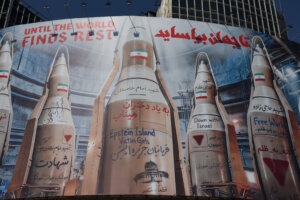
In the hours leading up to the recent ceasefire between the U.S. and Iran, pro-regime AI-generated videos flooded social media. In one widely circulated clip, a Lego version of Donald Trump is shown desperately pleading with Iran for a ceasefire. The response comes in the form of a ballistic missile with the words “in memory of the victims of Epstein’s Island” written on it, hurling toward U.S. allies in the region.
Another video shows a terrified Trump in bed with young girls, having a nightmare of an Iranian missile barrage before waking and agreeing to ceasefire terms while eating a taco — a reference to the acronym “TACO” (“Trump Always Chickens Out”).
These videos are just some of the dozens released by media organizations affiliated with the Iranian regime that invoke pedophile sex abuser Jeffrey Epstein in its anti-Western propaganda.
“The IRGC is very happy to use him in every venue they have—in media, newspapers, speeches,” said Saeid Golkar, an Iranian-born expert on the Iran regime’s propaganda, using the acronym for the Islamic Revolutionary Guard Corps. “Everything they are talking about, especially right now, goes back to the corruption of the West and Epstein.”
Golkar, who grew up exposed to regime messaging, said the fixation on Epstein reflects a broader ideological goal: convincing Iranians that the West is a place of moral decay.
“From the beginning, one of the pillars of the Islamic Republic’s ideology was anti-Westernism and portraying the West as a corrupt place,” he said. “There is no respect for families or values … no limitation for sexual interaction. I remember the phrase ‘living like pigs’ — that they are living together like animals. That was a big concept.”
Golkar says the Epstein files released by the U.S. Department of Justice earlier this year have been a “gift” to the regime, offering a concrete example of the Western immorality it hopes to present to its people. When Iranians express a desire for a “normal life” without Sharia law or morality police, the regime invokes Epstein.
“They say, ‘You don’t want a normal life — you want a corrupted life…. These people don’t care about your freedom. They are a group of pedophiles.’” This, despite the fact that girls can be legally married in Iran at the age of 13, and even younger with the approval of a male guardian and judge.
The Baal game
One of the most prominent features of pro-regime rallies in Iran is the burning of Baal statues. The figure of Baal — meaning “lord” in ancient Semitic languages — is referenced in the Old Testament as a rival to the God of the Israelites. Historically, Baal was a fertility deity associated with rain and agricultural prosperity. Later interpretations and conspiracy theorists came to portray the worship of Baal as tied to sexual deviance and child sacrifice.
A popular online conspiracy theory ties Jeffrey Epstein and his co-conspirators to Baal, pointing to a viral document from the Epstein files that appears to show bank transfer details with the name “Baal.name” listed where a financial institution would typically appear. They interpret this as evidence that Epstein maintained an account connected to the deity, suggesting he may have worshiped Baal or been involved in ritual abuse. Popular right-wing influencer Candace Owens weighed in with a video titled, “BAAL SO HARD: The Epstein Files,” where she referred to Jews as “pagan gypsies.” It has almost 3 million views.
Fact-checkers have disputed the interpretation of the bank document, noting that “Baal.name” is likely a misreading or formatting artifact of “Bank Name,” and that the actual account name — Clearlake Centre, LLC — is clearly identified elsewhere in the record.
On numerous occasions, the Iranian regime has staged the burning of Baal statues in major cities during pro-regime rallies, sometimes even coordinating multiple burnings across the country. Mehr News Agency, a state-owned Iranian news network, reported on one such rally in early February, writing: “Participants set fire to the symbolic Baal idol, describing the act as a representation of condemnation over crimes linked to Jeffrey Epstein’s island, where children were abused.”
These events are often accompanied by chants of “Death to America,” “Death to Israel,” or “God is Great.” In some cases, the statues have been marked with a painted Star of David.
The Baal figure has also appeared in many of the AI-generated videos circulating online amidst the war. In one, created by pro-regime media organization Explosive Media, Lego versions of a drunken Pete Hegseth and Trump are paired with a rap track: “We hitting the Baal-worshipping Epstein Island crew, the ones who hurt the kids. Revenge for every American soul you and Trump’s dirty crew oppressed and did. We taking payback for the girls you broke.”
Though Explosive Media claims it is not directly affiliated with the Iranian government, Golkar said he has seen evidence suggesting it operates as part of the IRGC’s media apparatus. The regime has also acknowledged granting tiered internet access to select individuals tasked with amplifying official messaging. In early March, government spokesperson Fatemeh Mohajerani said full internet access had been given to those “who can carry the voice of the government further.” Explosive Media, which says it has 2.5 million followers across Iranian messaging platforms, has cited its status as a media organization to explain its continued access. This has prompted experts like Moustafa Ayad, a researcher with the Institute of Strategic Dialogue, to raise questions about how closely it is connected with the state.
Another video, played on Iranian state TV, depicts figures the regime frames as victims of the West — a Native American man, a Gazan child, an Epstein victim, and former Iranian general Qassem Soleimani, who was killed in a US strike in 2019 — gazing skyward as an Iranian missile strikes the Statue of Liberty. In this version, the statue is reimagined as Baal holding a Talmud. Upon impact, both sink into the Hudson River.
The Epstein fixation extends beyond rallies and social media. Golkar said Epstein is frequently referenced in official Basij (a plainclothes paramilitary volunteer militia in Iran) and IRGC materials, as well as in speeches by Iranian officials. Just two days before his assassination, Ali Larijani, Iran’s top security official, posted on X, “It has been reported that what remains of Epstein’s network is working to prepare a conspiracy aimed at fabricating an incident similar to the September 11 attacks, in preparation for accusing Iran of being behind it.”
In another post in response to U.S. Defense Secretary Pete Hegseth, Laranjani posted on X, “Mr. Hegseth! Our leaders have been, and still are, among the people. But your leaders? On Epstein’s island!”
The Epstein War?
These propaganda videos are largely made in English. With Iran still in a media blackout, the Iranian people may not be their intended audience.
Shaping global perception through media is a key part of the Iranian war strategy. In a meeting with a group of Iranian poets in 2024, Ayatollah Khamenei, who was assassinated on the first day of the war, stated, “All war is a media war. Whichever actor has greater media influence will achieve their goals.”
The IRGC has spent years building a media apparatus designed to do just that. IRGC-affiliated production studios, media-focused university programs, and cultural centers are dedicated to training and refining propaganda content. Iran also outsources some of its media production to countries more attuned to Western cultural cues, particularly Pakistan.
A key element of the regime’s narrative is the claim that the Trump administration initiated the war to distract from the Epstein files. This theory has also circulated on both the left and the right in the United States.
In Washington D.C., posters cover the streets referring to the War in Iran, formally titled Operation Epic Fury, as Operation Epstein Fury.
U.S. Republican Rep. Thomas Massie of Kentucky posted on X shortly after the war began, garnering over 250 thousand likes, “Bombing a country on the other side of the globe won’t make the Epstein files go away, any more than the Dow going above 50,000 will.”
The popular podcaster Joe Rogan espoused the theory on a recent episode, stating, “Look, the Epstein files comes out — we go to war with Iran. It’s a good way to get people to stop talking about certain things.”
The post Iran’s regime is obsessed with Jeffrey Epstein appeared first on The Forward.