


Uncategorized
Why a forgotten teacher’s grave became a Jewish pilgrimage site
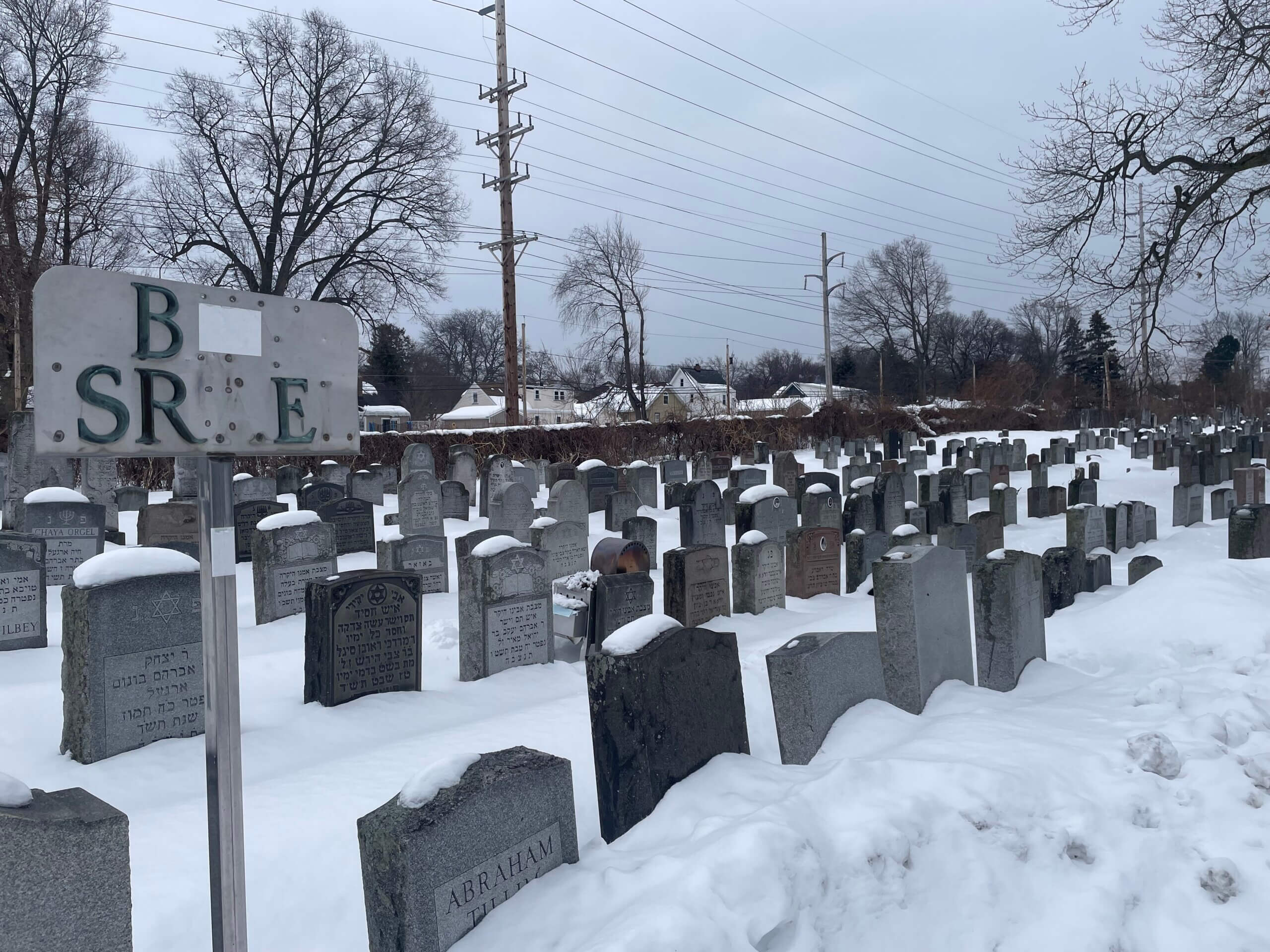
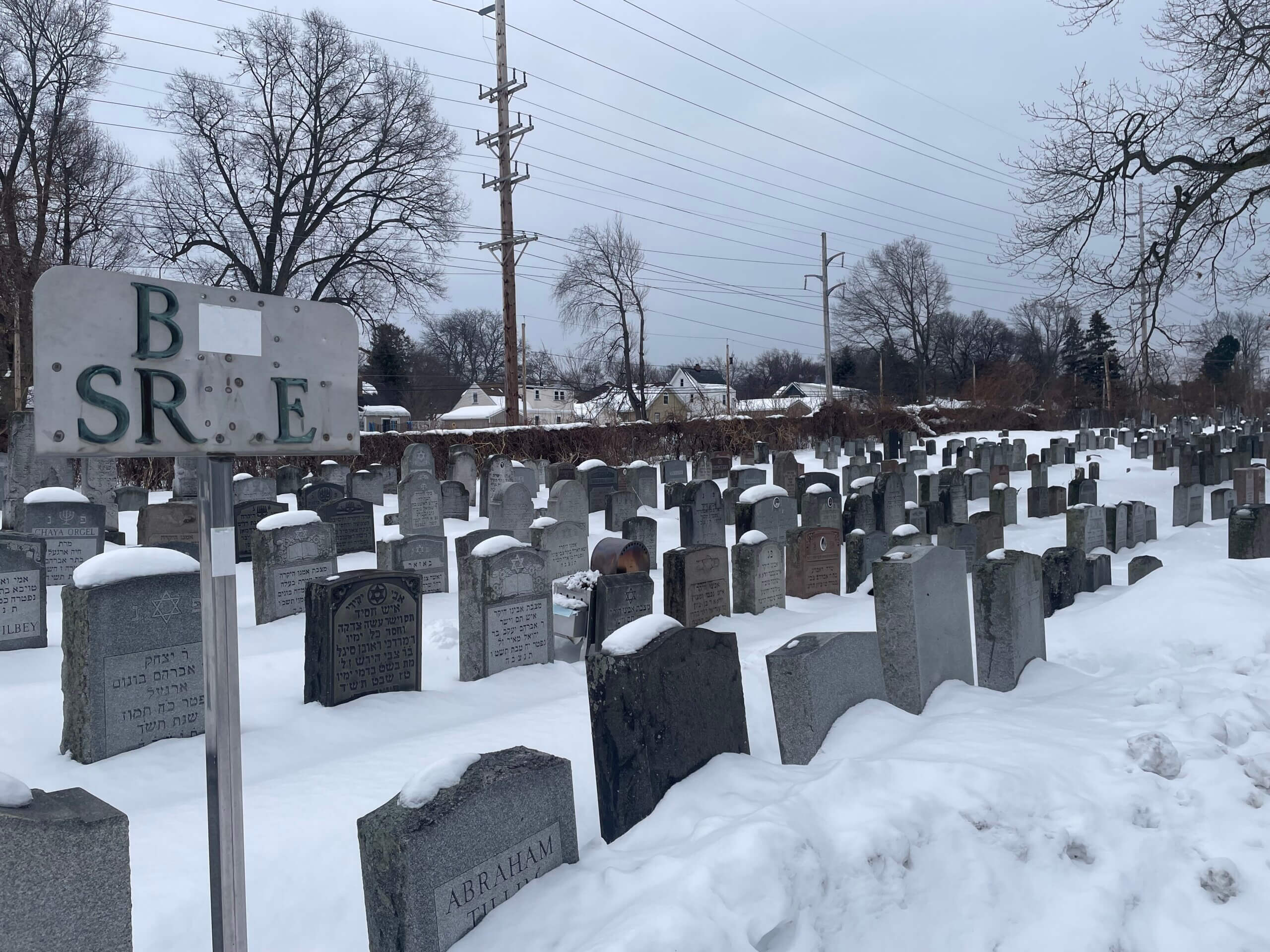
Along Britton Road in Rochester, New York, a brick gatehouse sits across from ordinary homes. Beyond it lies Britton Road Cemetery, its grounds divided into family plots and sections claimed over time by Orthodox congregations and fraternal associations, past and present. Names like Anshe Polen, Beth Hakneses Hachodosh, B’nai Israel, and various Jewish fraternal organizations are found here.
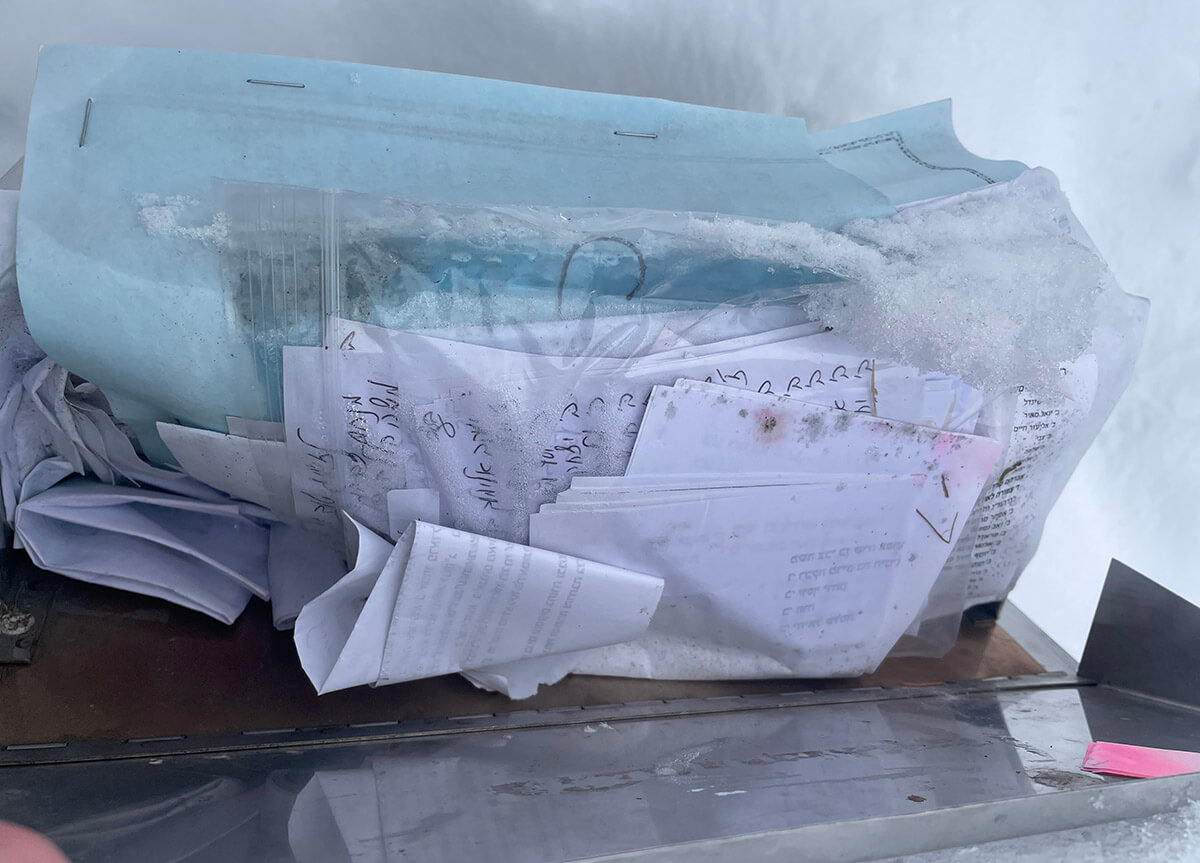
On the east side of the cemetery, a modest gray headstone draws visitors who do not personally know the man buried there, who were never taught his name in school, and who claim no personal connection to his life. Some leave notes. Some light candles in a small metal box set nearby. Others whisper prayers and stand for a moment before going. They come because they believe holiness can be found here.
The grave belongs to Rabbi Yechiel Meir Burgeman, a Polish-born teacher who died in 1938. He did not lead a major congregation or leave behind an institution that bears his name. And yet, nearly a century after his death, people still visit.
Over time, Burgeman has come to be remembered as a tzaddik nistar, a hidden righteous person, whose holiness is known through their teaching and daily life rather than through any title or position. His grave has become a place of intercession. People come to pray for healing, for help in times of uncertainty, and for the hope of marriage. What endures here is not an individual’s biography so much as a practice: the belief that a life lived with integrity can continue to shape devotion, even after the body has been laid to rest.
In life, Burgeman was not known as a miracle worker or a public figure. He was a melamed, a teacher of children, living plainly among other Jewish immigrants in Rochester’s Jewish center in the early decades of the 20th century. At one point, he was dismissed from a teaching post for refusing to soften his instruction. He later opened his own cheder, or schoolroom. There was no congregation to inherit his name, no institution to archive his papers. When he died, he was buried in an ordinary way at Britton Road Cemetery, one grave among many.
What followed was not immediate.
Remembered in return
The meaning attached to Burgeman’s resting place accumulated slowly. Stories began to circulate. People spoke of his kindness, his discipline, his integrity. Over time, visitors came. The grave became a place not of answers, but of belief. For generations, this turning toward the dead has taken this same form. It is not worship. It is proximity. A way of standing near those believed to have lived rightly, and asking that their merit might still matter.
In Jewish tradition, prayer at a grave is a reflection on those believed to have lived with righteousness, asking that their merit accompany the living in moments of need. Psalms are traditionally recited. Words are often spoken quietly.
I have done something similar too. Years ago, before I converted to Judaism and before I had the means to travel, I sent a written prayer through a Chabad service that delivers letters to the grave of the Lubavitcher Rebbe in New York. Someone else carried it. I cannot say with absolute certainty what happened because of it. Only that the practice itself made space for hope that I was seen, and that a prayer was later answered in ways that shaped my life and deepened my understanding of Judaism.
Burgeman’s grave functions in a similar register, though without any institutional frame. People come not because his name is widely known, but because the story has endured. Over time, that story gathered details. The most persistent involves a dog said to have escorted Jewish children to Burgeman’s cheder so they would not be harassed along the way by other youths. The dog then stood watch until they were ready to return home. The versions differ. Some are reverent. Some are playful. Some verge on the miraculous. The story endures because it names something children needed: care, in a world that could be frightening.
In recent decades, Burgeman’s afterlife has taken on a digital form. His name surfaces in comment threads and genealogical forums, passed along by people who never met him and are not always sure how they are connected. Spellings are debated. Dates are corrected. A descendant appears. A former student’s grandchild adds a fragment. Someone asks whether this is the same man their grandmother spoke of. No single account settles the matter. Instead, memory gathers. What once traveled by word of mouth now moves through hyperlinks.
The internet allows fragments to remain visible. Burgeman’s story survives not because it was officially recorded, but because enough people cared to remember it. In this way, his legacy resembles the man himself: quiet, unadorned, sustained by actions rather than declaration.
This story does not offer certainty. It is about remembering a life and asking if we might still learn from it and if, perhaps, it can bring us closer to faith. Burgeman left no grand monument. He left descendants. A grave. A life of Jewish values that continues to teach.
Burgeman did not seek recognition in life. After death, he became something else: a teacher still teaching, not through words, but through the way people continue to act on his memory. That is the lesson. Not any miracle. Not any legend. The quiet insistence that a life lived with integrity does not end when the casket is placed into the earth.
Some graves are instructions.
This one still asks something of us.
The post Why a forgotten teacher’s grave became a Jewish pilgrimage site appeared first on The Forward.
Uncategorized
We were instant friends. Then came the Israel question.
There’s one thing these days Jewish publications of all stripes seem to agree about: The Jewish future — geographically, politically, spiritually — is Florida. An article last month in the conservative magazine Tablet pondered whether Miami was “the new Jerusalem,” and left-wing quarterly Jewish Currents made the Sunshine State the theme of an entire 2024 issue.
As a Jewish journalist, inveterate spring breaker and friend of a Florida man with a couch for me to crash on, I wanted to see for myself. So last week, with paid time off burning a hole in my swim trunks, I took my talents to South Beach … and spent essentially no time in the Jewish community at all. (Though I did DoorDash banana bread from Zak The Baker.) But just as Jonah could not outrun his destiny, the Jewish future inevitably found me anyway. This happens when you like talking to random people at bars.
I had spent much of the night getting to know an ebullient pair of strangers, Will and Deanna. (Names changed here.) They are best friends and roommates, two Dallas-born transplants chasing careers in fashion design. Both are gay, and neither is Jewish. But we found common ground when Will told me he is religious. As I told Will, I’ve reported extensively on the experiences of queer Orthodox Jews for the Forward (“a really cool Jewish newspaper”). I spoke of the challenges they face, their resilience and their breakthroughs, and Will spoke about bringing his queerness to his faith.
There was something he needed to ask me, though: Had I been reporting on Jewish people where I’m from, or — he ventured nervously — “Israeli Jews”? I told Will I mostly write about American Jews, but that this Jewish issue transcended borders.
Then the real purpose of the question came out. He volunteered his sense of horror about Gaza and related his shock about the circumstances of Israel’s establishment. What he believed about the history was unclear — it was loud in there, and I couldn’t quite make out his claims — but I could tell: I was being tested.
Yes, this did feel like the Jewish future: one in which any conversation about Judaism will become one about Israel or — and this is how I read the question — your Israeli politics. A future in which Jews everywhere, upon identifying themselves as Jews, are asked (or held) to account for Israel’s actions. And, frankly, a future where it is harder for Jews to make friends with non-Jews.
In another context, or a different mood, I might have been put off by the turn our conversation had taken and quit the interaction. But I liked these two old souls. I said to Will that what has happened in Gaza was terrible; as a journalist, I keep my politics close, but this was sticking to facts. And I saved the looming debate over Israeli history for another time. The three of us went back to enjoying the music and yapping about our dreams and nightmares, and when the lights finally came on at the bar, they invited me to meet them for brunch the next day. I said yes.
Part of me wanted to bring Israel up the next day, but at brunch I couldn’t find a place for it. Yet I found there were lots of opportunities to discuss Judaism. I told them about my grandmother’s recent passing, the dignity of Jewish burial rites and the intensity of shiva. We told stories, laughed, got closer: I learned that Deanna had lived in her car when she first moved to Miami, and Will showed pictures of himself in drag. When the food arrived, this fledgling trio held hands and said something like grace.
A couple hours later, we laid down towels on South Beach. Deanna stayed on the shore as Will and I waded waist-deep into the water. Here was my chance to say something about “Israeli Jews,” or invite him to ask me anything he wanted to know about Israel. But what crossed my mind in the ocean was a mitzvah I often contemplate at the beach. “In Judaism,” I explained, “there’s this practice of ritual immersion…” We never did circle back to Israel.
Florida (particularly South Florida) has come to represent the Jewish future because its Jewish community is ethnically diverse and teeming with young people. (It’s also deeply pro-Israel.) Other features seem predictive of everywhere else: Chabad reigns supreme and religious schools are heavily subsidized. The state is also a kind of extremist incubator — see gubernatorial candidate James Fishback; Florida International University’s antisemitic conservative group chat; or the Miami nightclub that played Kanye West’s “Heil Hitler” for conservative influencers — with Jews a prime subject of obsession.
Meanwhile, American Jews should expect to field uncomfortable questions from strangers about Israel and Gaza for the foreseeable future. It might not be fair, but reality rarely is. All we control — besides the weather, media and global financial system, of course — is our reaction.
The post We were instant friends. Then came the Israel question. appeared first on The Forward.
Uncategorized
Iran Urges Citizens to Spy on One Another as US-Israeli Strikes Cripple Regime

Smoke rises following an explosion, after Israel and the US launched strikes on Iran, in Tehran, Iran, March 3, 2026. Photo: Majid Asgaripour/WANA (West Asia News Agency) via REUTERS
Amid relentless US and Israeli airstrikes that have decimated Iran’s military capabilities and key energy facilities, Iran has called on citizens to report on each other in a new push to crush domestic dissent, as talks of a possible ceasefire remain uncertain.
On Thursday, the semi-official Fars News Agency, which is affiliated with Iran’s Islamic Revolutionary Guard Corps (IRGC), called on all Iranian citizens to help “identify those who have turned their backs on the homeland and threaten national security,” warning that “the country is facing external threats and internal betrayals.”
“Iranians will not allow this betrayal to be forgotten,” Fars wrote in a post on X, linking to a website called “Our Memory” to offer a platform for citizens to snoop and inform on each other.
“The efforts of ‘Our Memory’ also carry a clear message to those who might be contemplating betrayal or collaboration with the country’s enemies: The society is vigilant and awake, and actions that pose a threat to national security will be identified and exposed,” Fars posted.
The regime’s latest propaganda campaign of intimidation comes as Israel’s offensive increasingly focuses on dismantling Iran’s internal repression systems, aiming to create a leadership vacuum and logistical breakdown that could hinder Tehran’s ability to respond if mass protests erupt again.
Even amid Israel’s major battlefield advances, however, a senior Israeli security official said Wednesday that Iran still retains the ability to launch missiles at its current rate for the next several weeks, according to Israel’s N12 media outlet.
“Iran can maintain its current rate of missile fire for weeks,” the Israeli official reportedly said in a closed-door briefing. “It has sufficient launchers and reinforced squads to sustain and stagger the attacks over time.”
On Thursday, US President Donald Trump announced he was extending, “at the request of the Iranian government,” the deadline to strike the country’s energy grid by 10 days, as Washington works to bring a possible ceasefire deal to the table.
Should diplomatic efforts falter, the Pentagon and US Central Command are reportedly preparing military plans for a “finishing blow” on Iran, potentially involving some level of ground forces and massive airstrikes.
According to multiple media reports, Washington is considering several options against Iran, including invading or blockading Kharg Island, the country’s main oil export hub, or even seizing Arak Island to secure control over the Strait of Hormuz, a critical passage through which roughly a fifth of the world’s oil supply flows.
Other potential measures include taking Abu Musa and two close islands near the western entrance of the strait or blockading or seizing ships exporting Iranian oil on the eastern side, threatening a vital route for global energy shipments.
Since the start of the war last month, combined US and Israeli strikes have dropped more than 25,000 munitions on targets in Iran, with nearly 15,000 of those carried out by the Israeli Air Force alone, according to updated Israeli intelligence data.
“These numbers are large and significant by any measure,” a senior Israeli military officer told the Hebrew-language news site Walla.
“We are concentrating strikes on the regime’s centers of gravity in Tehran, Isfahan, and other key sites. Iran may be a large country, but hitting the very heart of its infrastructure has a profound strategic impact,” he continued.
He also said the operation, which began with “leadership decapitation” and quickly shifted to paralyzing surface-to-surface and surface-to-air missile arrays, has effectively reduced Iran’s missile firing to low single- or double-digit daily levels, far below its plan of over 100 launches per day.
So far, Israel has destroyed more than 200 launchers, even as mobile units hidden in deep tunnels continue to pose serious obstacles, which are being bombed and blocked since missiles cannot always reach their depths.
Israeli forces have also systematically targeted Iran’s weapons manufacturing, attacking over 1,000 sites to degrade production, development, and research capabilities.
According to a Reuters report, US intelligence can only confirm the destruction of about a third of Iran’s missile arsenal, while another third has likely been damaged, destroyed, or buried in underground bunkers, with a similar situation affecting the regime’s drone capabilities.
While most of Iran’s missiles have been destroyed or rendered inaccessible, Tehran still may retain a significant stockpile and, as of now, could potentially recover some buried or damaged missiles after the current fighting ends.
As the war continues to escalate, Israel has shifted its strategy, with its Air Force last week striking a major natural gas processing facility in southwestern Iran — a move that damaged roughly 40 percent of the country’s gas production capacity.
Facing a gas shortage, the Iranian government was reportedly forced to prioritize fuel for electricity production, sharply cutting civilian fuel allocations and causing major disruptions to transportation and deliveries to Turkey.
“This is just a sample of our ability to crush Iran’s energy backbone,” an Israeli security official told N12.
With the US also threatening strikes on key Iranian energy infrastructure, the Islamist regime is now facing pressure to consider a ceasefire agreement to bring the war to a close.
“The Iranians are in panic,” the Israeli official said. “They understand that further damage [to its energy facilities] will make governing the country impossible.”
In one of the latest blows to the regime, the Israeli Air Force on Friday attacked the heavy water reactor in Arak, central Iran, after Israeli intelligence detected repeated attempts to restore the site — a facility considered key for producing plutonium for nuclear weapons.
Israeli officials also confirmed an attack on Iran’s only facility in Yazd that processes raw materials into starting components for uranium enrichment, as well as multiple steel plants in a major blow to an already devastated Iranain economy.
After these attacks, the IRGC threatened to target six steel plants in retaliation, including sites in Israel, Saudi Arabia, the UAE, Bahrain, Qatar, and Kuwait.
Uncategorized
Man arrested over alleged firebomb plot targeting pro-Palestinian activist Nerdeen Kiswani
(JTA) — A New Jersey man was arrested on Thursday for allegedly plotting to firebomb the home of the prominent pro-Palestinian activist Nerdeen Kiswani.
Alexander Heifler, 26, was arrested by authorities in Hoboken after a weeks-long undercover operation led by the New York City Police Department revealed that he allegedly planned to throw a dozen Molotov cocktails at Kiswani’s residence.
The investigation into Heifler began in early February when Heifler discussed using Molotov cocktails on a group video call that included an undercover law enforcement officer, according to a criminal complaint filed in the U.S. District Court of New Jersey.
He later told the undercover officer that he had planned to flee the country following the attack. (The criminal complaint did not specify the name of the group or the country he planned to flee to.)
During a search of Heifler’s home Thursday night, detectives and FBI agents uncovered eight Molotov cocktails. He has been charged with unlawful possession of firearms and making of destructive devices.
In a statement Friday, New York City Mayor Zohran Mamdani said that Heifler was an alleged member of the Jewish Defense League, a far-right pro-Israel group that the has FBI labeled as a terrorist organization since 2001, and that the country he had planned to flee to was Israel.
“Last night, an alleged member of the Jewish Defense League — designated by the FBI as a ‘known violent extremist organization’ — attempted to blow up the home of Nerdeen Kiswani in a chilling act of political violence and an apparent assassination plot,” the statement read. “The defendant allegedly planned to flee to Israel following the attack. This comes amidst an alarming rise in threats and violence across the country targeting Palestinian human rights advocates.”
“Let me be clear: We will not tolerate violent extremism in our city. No one should face violence for their political beliefs or their advocacy. I am relieved that Nerdeen is safe,” the statement continued.
A police official confirmed that Heifler was a member of a branch of the Jewish Defense League on Friday, according to The New York Times.
Last month, Kiswani, who has long drawn accusations of antisemitism for her rhetoric on Zionists, sued Betar USA, a far-right militant pro-Israel group, accusing the group of violating her civil rights by putting out social media “bounties” on her and repeatedly harassing her. (In January, Betar USA agreed to dissolve its New York operations following a settlement with the state attorney general.)
The activist has also been singled out by far-right Florida Jewish Rep. Randy Fine, who reposted a tweet of Kiswani’s last month to make disparaging remarks about Muslims which sparked calls for his censure.
In a post on X, Kiswani, a Palestinian-American who co-founded the hardline pro-Palestinian group Within Our Lifetime, wrote that she had been informed by the FBI Joint Terrorism Task Force on Thursday night that “a plot against my life that was ‘about to’ take place.”
“For months, Zionist organizations like Betar and politicians like Randy Fine have encouraged violence against my family and me,” Kiswani continued. “I will have more to say as additional details come to light. I will not stop speaking up for the people of Palestine. Thank you for your support.”
In response to The New York Times’ post about the arrest, Betar USA wrote that it was “not surprising if other terrorists targeted her.”
“Violent terrorist Nerdeen Kiswani wants to globalize the intifada not surprising if other terrorists targeted her. Palestinians have always targeted one another,” the group posted on X alongside a video of Kiswani’s rhetoric. “Not surprising given the violent nature of these people who have globalized the intifada.”
The announcement of the arrest drew praise from the Jewish Community Relations Council of New York, which wrote in a post on X that there is “absolutely no place in our city for violence, threats, or attempts to take someone’s life—ever.”
“While we adamantly disagree with Nerdeen Kiswani’s inflammatory rhetoric and her organization’s tactics, we condemn in the strongest possible terms the reported plot against her,” the group said.
Brad Hoylman Sigal, the Jewish Manhattan borough president, also praised the NYPD for the arrest in a post on X.
“Grateful to @NYPDnews for their swift work in preventing this horrific plot against Nerdeen Kiswani,” Sigal wrote. “Political violence, against anyone, for any reason, has no place in our city.”
This article originally appeared on JTA.org.
The post Man arrested over alleged firebomb plot targeting pro-Palestinian activist Nerdeen Kiswani appeared first on The Forward.