


Uncategorized
Why I already miss Rev. Jesse Jackson
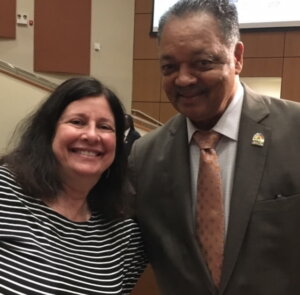
I first met Rev. Jesse Louis Jackson Sr. in 1979, not long after I joined the staff of the Jewish Council on Urban Affairs (JCUA). Rev. Jackson was an early friend of the organization, which was founded in 1964 by Rabbi Robert Marx out of the Civil Rights Movement to combat poverty, racism and antisemitism. Jackson and Marx met when Dr. Martin Luther King, Jr. moved to Chicago with the goal of bringing the Civil Rights Movement north.
Rev. Jackson was an aide to Dr. King. He subsequently founded Operation Breadbasket, later renamed Rainbow PUSH (People United to Save Humanity). JCUA’s early work in Chicago was focused on building partnerships throughout Chicago with groups predominantly in the Black and Latinx communities and among the most oppressed in Chicago. Since those early years, Rainbow PUSH and JCUA have worked together, organizing communities and building coalitions, tackling rampant racism in housing, schools, businesses and the police, all while working to try to end political corruption, ensure voting rights, and explicitly envision a just city and world.
My introduction to Rev. Jackson came at a shaky time for the Black and Jewish coalition. As minorities in America, the Black and Jewish communities, having experienced systemic discrimination, had forged common ground during hard-fought campaigns for civil rights, winning new rights and protections for all minorities with the passage of the Civil Rights Act of 1964, the Voting Rights Act of 1965, and the Fair Housing Act of 1968. Our communities’ bond is often remembered and personified by the courageous work of three young civil rights workers, James Chaney, Andrew Goodman, and Michael Schwerner, Black and Jewish, who tragically were murdered by the KKK while traveling together to work on behalf of voting rights.
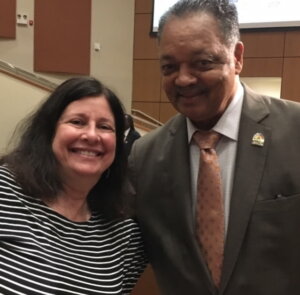
By 1979, however, breaches in the communities’ relationship were visible and tensions had emerged. Some in the Jewish community were angry that Rev. Jackson had met with Palestinian leader Yasser Arafat. Meanwhile, in Chicago, leaders and residents from the Black community were angered by conditions facing Black families newly arrived to the south and west sides of Chicago following the exodus of Jewish families from these same communities. Some of the new Black residents were particularly incensed by former Jewish residents who retained control as landlords, shop owners and political bosses.
With all this as a backdrop, Milt Cohen, then JCUA’s Executive Director, and Rev. Jackson convened a meeting in our then-tiny offices, inviting leaders from both communities to air their grievances, find common ground, and renew the alliance. Jackson and Cohen sought to identify joint actions for local social justice issues where there remained strong agreement.
A press conference followed the meeting, where we announced our plan to strengthen Chicago’s Black and Jewish coalition and jointly tackle inequities involving schools and housing. I was in awe, overwhelmed by Rev. Jackson’s powerful presence. Even though I was the youngest person at the press conference, both Milt and Rev. Jackson pushed me forward to speak. This was just the first of many occasions when Rev. Jackson would encourage my participation, leadership, visibility, and partnership.
After that first up-close experience almost 50 years ago, I enjoyed many opportunities to answer Rev. Jackson’s invitations as he exhorted me to speak, participate in programs, and join him and PUSH in actions. In engaging me, he was also consciously choosing to include JCUA and bring a Chicago Jewish presence to the work.
I spoke at PUSH’s weekly Saturday forums and served as a panelist on Rev. Jackson’s Upfront cable show. With JCUA members and diverse coalitions from across Chicago’s communities, we marched through the streets of Chicago and Washington D.C. We joined Rev. Jackson when he took on the corrupt Chicago political machine, then led by Mayor Jane Byrne, and as he launched a raucous and successful boycott of Chicagofest, the Mayor’s favorite lakefront festival, and lucrative gift to her political cronies.
We spoke of the dangers of Reaganomics that threatened the elimination of schoolchildren’s lunches, we got out the vote and elected Harold Washington, Chicago’s first Black and progressive Mayor. We spoke out against the Trump administration and MAGA’S attacks against hard fought and won civil and human rights.
Rev. Jackson magnetically built alliances across faith, race and ethnicity. Untiringly, brilliantly, he literally changed the face, policies and politics of Chicago, the nation and the world. He sought to overturn injustices, shatter obstacles to change and non-violently revolutionize the social order. He galvanized millions to act. He commanded every room. His astute in-depth analyses turned meetings into classrooms and calls to action.
By 1984, Rev. Jackson was a leading national and global figure. Barack Obama said that Jackson’s two presidential runs in 1984 and 1988 laid the groundwork for his own election. At the 1984 Democratic National Convention in San Francisco, as part of the Harold Washington Favorite Son delegation, we listened carefully as Rev. Jackson delivered his convention speech, one that resonated so powerfully that it would become known as the “Peace Speech.” He regaled, quieted, then inspired thunderous roars from the room.
“Our flag is red, white and blue, but our nation is a rainbow — red, yellow, brown, black and white, and we’re all precious in God’s sight,” Rev. Jackson said. “America is not like a blanket, one piece of unbroken cloth, the same color, the same texture, the same size. America is more like a quilt, many patches, many pieces, many colors, many sizes, all woven and held together by a common thread. The white, the Hispanic, the Black, the Arab, the Jew, the woman, the Native American, the small farmer, the businessperson, the environmentalist, the peace activist, the young, the old, the lesbian, the gay, and the disabled make up the American quilt.”
Rev. Jackson’s speech was among the most profound, insightful and powerful addresses I had ever heard. He offered an extraordinary vision, calling upon our better selves to rise to the occasion and illuminating the roads we could take together. Inspired by his outreach and challenge, I was deeply moved. I was grateful for the opportunity to express my choice and to stand with our delegation to vote for Rev. Jesse Jackson for president.

As Rev. Jackson became a global celebrity, a position he used strategically and effectively to wield exceptional influence and carry out extraordinary actions such as negotiating the freedom of political prisoners around the world; he exhibited warmth and kindness to strangers and the powerless. He famously made the children of local neighbors feel seen and appreciated; he listened to their stories and took them to baseball games.
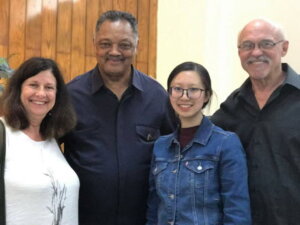
When I brought Yingxi, one of my students who was visiting from Mainland China, to Rainbow PUSH, Rev. Jackson noticed her and warmly welcomed her. He invited her into his office, took time to get to know her and to listen, responded thoughtfully to her questions. Yingxi has told me that, to this day, she still treasures the time she spent with him. On so many occasions, I saw the light in his eyes, from afar and up close, as he greeted young people and old, engaging them, ensuring they were seen. I felt that same connection even as I was just one of many thousands of activists who crossed his path.
In March 2021, Rev. Jackson’s and my friend, Rabbi Robert Marx passed away. I asked Rev. Jackson to speak at a memorial, even though I was aware that this would not be easy, as he was already showing signs of the Parkinson’s-like illness that made his once booming, eloquent voice more difficult to hear. However, he enthusiastically accepted the invitation, and shared heartfelt memories at the service. “We have always been together. I love him so much. I miss him already,” he said of Marx.
In recent years, I grew increasingly fond of Rev. Jackson as he never stopped fighting for justice and acting with compassion. Even as he found it difficult to speak, he kept drawing all of us in.
A few years ago, Rev. Jackson asked me to bring a busload of people to the annual reenactment of the march in Selma across the Edmund Pettus Bridge. He didn’t give me much time to get a bus together, but I was able to get a carload of religious and community leaders, including an imam and a Baptist minister. We sat in the Brown Chapel AME Church, where services were reenacted, and we protested, prayed and sang before we marched together across the bridge. Rev. Jackson led, pulling me upfront to join him. With the diverse crowd from across the country, we marched, all astutely aware that the job is not yet finished.
Rev. Jackson grew from a student with Dr. Martin Luther King, Jr. to a global leader, gaining followers while infuriating leaders and the status quo. But he could not be ignored, would not be ignored. He was somebody, and made sure you knew you were somebody, too.
While movement leaders have courageously fought and sacrificed over the years, many in time moved to the background. Rev. Jackson, on the other hand, passionately, powerfully, brilliantly and strategically, stayed the course. Even in his last weeks, he persevered from his wheelchair, determined to remain a force, to continue the fight and , famously, to Keep Hope Alive.
I have much to be grateful for in reflecting on the life and work of Rev. Jesse Louis Jackson, Sr. including the friendship he extended, his outsized impact on our lives, on our communities, our country, and, given his legacy, into the future.
I already miss him.
The post Why I already miss Rev. Jesse Jackson appeared first on The Forward.
Uncategorized
Israel’s National Security Council Warns Israelis Abroad Not to Attend Passover Events in Open, Public Spaces

El Al planes are seen on the tarmac at Ben-Gurion International airport, near Tel Aviv, Israel, March 10, 2020. Photo: Reuters / Ronen Zvulun.
Israel’s National Security Council (NSC) has “strongly recommended” that Israelis traveling abroad avoid public Passover events, following its assessment that the ongoing war with Iran increases the risk of them being targeted in terrorist attacks around the world orchestrated by the Iranian regime.
The NSC issued the warning on Wednesday, one week before the Jewish holiday of Passover is set to begin, explaining that the Islamic Republic will increase efforts to carry out terrorist attacks against Israeli and Jewish targets abroad.
“Throughout Passover (as well as other spring holidays and commemorative days such as Shavuot, Memorial Day, and Independence Day) there are large gatherings of Israelis abroad. These constitute potential targets for terrorists, both organized and lone-wolf attackers,” the NSC said in a statement. “In light of the above, and based on the current situational assessment, the NSC calls on Israelis abroad to exercise increased precautionary measures in any country worldwide. We strongly recommend not attending Passover events that are unsecured or held in open, public spaces.”
“In recent weeks, several terrorist attacks, led by Iran and its proxies as well as lone-wolf attackers acting under Iranian inspiration, have been carried out or thwarted,” the NSC added. “Several attacks and attempted attacks have targeted synagogues and Jewish sites (explosives in synagogues in Belgium and the Netherlands, and an attempted attack on a synagogue in the United States).”
Regarding countries bordering Iran — including Azerbaijan, Georgia, Turkey, the United Arab Emirates and Gulf states — the NSC advised that Israelis should not participate in holiday events, including holiday meals, at venues identified with Israelis or Jews, “due to concerns that these will be targets for kinetic attacks by Iranian elements.”
A separate advisory on the same topic was published on March 5.
Last week, the NCS urged Israelis in the United Arab Emirates to exercise extreme caution as Iran continued its campaign of drone and missile attacks across the country and broader Gulf region, warning that their safety could be directly at risk.
Jews and Israelis living in the UAE were advised to avoid public events, synagogues, Israeli-linked businesses, and unnecessary gatherings, including at airports, unless holding a valid flight ticket.
In Wednesday’s statement, the NSC also advised Israelis abroad to take “increased precautions” in Asia, especially in Thailand and the Philippines, and said it strongly recommended Israelis not to stay in the region of the Sinai Peninsula, except if they are traveling to and from Taba Airport in Egypt.
Israeli authorities also urged citizens to enter and exit Israel through Ben Gurion Airport. Those choosing to travel through Egypt or Jordan are advised only to use Taba Airport or Aqaba Airport in Jordan, “and avoid staying in these countries longer than your flight requires.” The NSC additionally recommended that Israelis try to avoid connecting flights in countries classified as Level 4 (high threat).
Uncategorized
A new book of contemporary Yiddish poetry with Russian translations
נישט יעדער ווייסט, אַז די ייִדישע פּאָעזיע לעבט און בליט נאָך אינעם 21סטן יאָרהונדערט. די נײַע זאַמלונג „איך קער זיך אום“, וואָס איז אַרויס אין מאָסקווע סוף 2025, קומט דווקא צו ווײַזן, אַז דאָס פּאָעטישע לעבן אויף ייִדיש גייט אָן ווײַטער — אין פֿאַרשידענע לענדער, שפּראַכן און סטילן. דאָס בוך האָט אַרויסגעגעבן דער ייִדישער פֿאַרלאַג „קניזשניקי“ מיט דער הילף פֿונעם פּריוואַטן אַרויסגעגעבער ברוך־לייב (באָריס) זײַטשיק.
די אַנטאָלאָגיע איז צווײ־שפּראַכיק אוןמע קען זי לײענען פֿון בײדע זײַטן׃ אײן טײל איז אױף ייִדיש, און דער צווייטער – אױף רוסיש. די אויסגאַבע שליסט אײַן צוועלף דיכטער. יעדער אײנער פֿון זײ ווערט פֿאָרגעשטעלט מיט צען לידער. אַוודאי זענען דאָ אַ סך מער ייִדישע דיכטער הײַנט אױף דער וועלט, אָבער, ווי עס שרײַבן אינעם אַרײַנפֿיר־וואָרט ברוך־לײב זײַטשיק און יואל מאַטוועיעוו, דער צונויפֿשטעלער און רעדאַקטאָר פֿון דער זאַמלונג, איז דער ציל געווען צו געבן אַ פּאַנאָראַמישן איבערבליק פֿון דער ייִדישער פּאָעטישער לאַנדשאַפֿט.
די צוועלף דיכטער רעפּרעזענטירן פֿאַרשידענע דורות און לענדער׃ לעוו בערינסקי, פֿעליקס חײַמאָוויטש, מיכאל פֿעלזענבאַום, וועלוול טשערנין, גיטל שעכטער־ווישוואַנאַט, ישׂראל נעקראַסאָוו, ברוריה וויגאַנד, שלום בערגער, יואל מאַטוועיעוו, מאַרעק טושעוויצקי, דוד־עומר כּהן און אַני הקטנה. זײ זענען געבוירן געוואָרן צווישן 1938 און 1993 און ווױנען אין ארץ־ישׂראל, רוסלאַנד, בעלאַרוס, די פֿאַראײניקטע שטאַטן, ענגלאַנד, פּוילן און האָלאַנד.
דער טיטל פֿון דער אַנטאָלאָגיע איז אַ שליסל צום בוך – אַ ציטאַט פֿון וועלוול טשערנינס ליד וועגן דעם אײביקן אומקער און זוכן אַ באַשטימטן צוועק. אין אָט דעם קאָנטעקסט מײנען די ווערטער אינעם טיטל, אַז די ייִדישע פּאָעזיע בײַט זיך און אַנטוויקלט זיך ווײַטער. דער פֿאַקט, וואָס מע שרײַבט הײַנט ווײַטער אױף ייִדיש און נײַע זאַמלונגען לידער זענען אַרױס כּמעט יעדעס יאָר, קען זײַן אַ חידוש אַפֿילו פֿאַר די, וואָס פֿאַרנעמען זיך מיט ייִדיש.
ווי עס שרײַבט דער מיטרעדאַקטאָר וואַלערי דימשיץ אין זײַן הקדמה צום בוך׃ „מענטשן, וואָס זײַנען ווײַט פֿון דער הײַנטצײַטיקער ייִדישער ליטעראַטור, גיבן פֿון צײַט צו צײַט אַ ביטערן קרעכץ און טענהן, אַז ייִדיש, שױן אָפּגערעדט פֿון דער שפּראַכס ליטעראַריש לעבן, איז געבליבן אינעם עבֿר.“
די שאַפֿער פֿונעם בוך וואַרפֿן אָפּ אַזעלכע פֿאַרשפּרייטע סטערעאָטיפּן. זײַטשיקס און מאַטוועיעווס אַרײַנפֿיר־וואָרט איז באַטיטלט „נײַע רינגען פֿון דער ׳גאָלדענער קײט׳“ — די קייט, וואָס פֿאַרבינדט די מאָדערנע ייִדישע דיכטונג מיט דער לאַנגער טראַדיציע פֿון פֿאַרגאַנגענע דורות. די הײַנטצײַטיקע פּאָעטן זענען נישט קײן אײנצלנע איזאָלירטע עפּיזאָדן, נאָר טײלן פֿון אײן גרױסן ליטעראַרישן פּראָצעס.
אין דער זעלבער צײַט געהערט יעדער פֿון זײ צו דער ליטעראַרישער טראַדיציע פֿון זײַן לאַנד און סבֿיבֿה. הײַנט, ווי מיט אַ הונדערט יאָר צוריק, זענען ייִדישע דיכטער פֿילשפּראַכיק. זײ זענען אױפֿגעוואַקסן אַלע מיט אַנדערע ליטעראַטורן אַרום זיך – די רוסישע, אַמעריקאַנער, פּױלישע. דעריבער ברענגען זיי מיט זיך זײער לאָקאַלע ירושה.
די אַנטאָלאָגיע ווײַזט אױך ווי פֿילפֿאַרביק ס׳איז די וועלט פֿון דער הײַנטיקער ייִדישער פּאָעזיע׃ די דיכטער האָבן גאַנץ פֿאַרשידענע סטילן און טעמעס. פֿון דער וויסנשאַפֿטלעך־טעכנישער רעוואָלוציע בײַ לעוו בערינסקי ביז צום „חסידישיזם“ פֿון דוד־עומר כּהן; פֿון טושעוויצקיס „דזשאָגינג“ (לויפֿלען) אין וויליאַמסבורג ביז שעכטער־ווישוואַנאַטס ליד וועגן דעם קאָוויד; פֿון מאַטוועיעווס קבלה־מאָטיוון ביז וויגאַנדס שפּילן מיטן ייִדישן פֿאָלקלאָר. די געזאַמלטע ווערק שטײַגן איבער אַלע דערוואַרטונגען.
דאָס אױסזען פֿונעם בוך קען אַרױסרופֿן עפּעס אַן אַנדער רושם. די הילע – פּרעכטיקע „רײזעלעך“ מיט בלומען און חיות – דערמאָנט אין דער ייִדישער פֿאָלקסקונסט און מע קען דענקען, אַז דאָס בוך האָט עפּעס אַ נאָסטאַלגישן טעם. אָבער נײן, דער תּוכן פֿון די לידער איז ווײַט פֿון דער שטעטל־עסטעטיק. אַגבֿ, וועגן די קאָמפּליצירטע באַציִונגען מיטן אימאַזש פֿון אַ שטעטל רעדט דאָס טרױעריק־איראָנישע ליד פֿון שלום בערגער אין זײַן ליד „דער ייִדישער ליטעראַטור“:
דער ייִדיש־דיכטער שעפּט פֿון שטעטל־חלום
אַ טעם געמישטן פֿון חרוסת־כרײן,
נאָר פֿונעם שטעטל איז אַנטלאָפֿן יעדער,
און צו דעם שטעטל קען מען ניט דערגײן.
דאָס בוך איז די ערשטע דוגמא פֿון אַן אַרומנעמיקער צווײ־שפּראַכיקער אַנטאָלאָגיע פֿון דער הײַנטיקער פּאָעזיע אױף ייִדיש, הגם אַ קורצע באַשיידענע אַנטאָלאָגיע פֿון אַזאַ מין איז דערשינען אינעם אַלמאַנאַך „ביראָבידזשאַן“ אין 2023. הגם עס זענען געווען עטלעכע לידער־אַנטאָלאָגיעס אױף ייִדיש (צום בײַשפּיל, „אַ רינג“, 2017) איז „איך קער זיך אום“ די ערשטע ברייטע פּרעזענטאַציע פֿון דער טעמע פֿאַר אַ נישט־ייִדיש־רענדניקן עולם. דאָס מאַכט די זאַמלונג אױך אַ מין מאַניפֿעסט גופֿא – ייִדישע פּאָעזיע איז לעבעדיק, זי האָט אַ שטאַרק און זיכער קול. פּאָעזיע אױף ייִדיש דאַרף פֿאַרנעמען אַ גלײַך אָרט צווישן אַלע אַנדערע הײַנטצײַטיקע פּאָעטישע טראַדיציעס און קען זײַן אינטערעסאַנט דעם ברייטן עולם אױסער דער ייִדישיסטישער סבֿיבֿה.
אױב מע זוכט וואָס צו קריטיקירן אינעם בוך, קען איך אָנמערקן, אַז עס זענען דאָ נאָר דרײַ דיכטערינס קעגן נײַן דיכטערס. די פּראָפּאָרציע שפּיגלט אָפּ, צום באַדױערן, דעם אמתדיקן מאַנגל פֿון פֿרױען־שטימען אין דער ייִדישער פּאָעזיע. אָבער איך בין אָפּטימיסטיש – מירצעשעם וועלן מיר הערן מער און מער נײַע פֿרוייִשע קולות. ווער ווײסט, אפֿשר אין אַ פּאָר יאָר אַרום וועט מען קענען אַרױסגעבן אַ גאַנצע אַנטאָלאָגיע פֿון הײַנטיקע ייִדישע דיכטערינס.
The post A new book of contemporary Yiddish poetry with Russian translations appeared first on The Forward.
Uncategorized
At least 40% of Russia’s Oil Export Capacity Halted, Calculations Show

The Druzhba oil pipeline between Hungary and Russia is seen at the Hungarian MOL Group’s Danube Refinery in Szazhalombatta, Hungary, May 18, 2022. Photo: REUTERS/Bernadett Szabo
At least 40% of Russia’s oil export capacity is at a halt following Ukrainian drone attacks, a disputed attack on a major pipeline and the seizure of tankers, according to Reuters calculations based on market data.
The shutdown is the most severe oil supply disruption in the modern history of Russia, the world’s second largest oil exporter, and has hit Moscow just as oil prices exceeded $100 a barrel due to the Iran war.
Russia’s oil output is one of the main sources of revenue for the national budget and is central to the $2.6 trillion economy.
UKRAINE HAS INCREASED ATTACKS
Ukraine intensified drone attacks on Russia’s oil and fuel export infrastructure this month, hitting all three of Russia’s major western oil export ports, including Novorossiysk on the Black Sea and Primorsk and Ust-Luga on the Baltic Sea.
According to Reuters calculations, about 40% of Russia’s crude oil export capabilities – or around 2 million barrels per day, were shut as of Wednesday after the most recent attack.
That includes Primorsk and Ust-Luga as well as the Druzhba pipeline, which runs through Ukraine to Hungary and Slovakia.
Kyiv has also targeted pipeline oil pumping stations and refineries. Kyiv says it aims to diminish Moscow’s oil and gas revenue, which accounts for around a quarter of Russia’s state budget proceeds, and weaken its military might.
Russia says the Ukrainian strikes are terrorist attacks and has tightened security across its 11 time zones.
PORTS, PIPELINES, AND TANKERS
Ukraine said that part of the Druzhba pipeline was damaged by Russian strikes at the end of January, while both Slovakia and Hungary demanded Kyiv restart the supplies immediately.
The Novorossiysk oil terminal, which can handle up to 700,000 bpd, has been loading oil below plan since damage from a heavy Ukrainian drone attack early this month.
In addition, frequent seizures of Russia-related tankers in Europe have disrupted 300,000 bpd of Arctic oil exports flowing from the port of Murmansk, traders said.
With its westward export routes under fire, Moscow must rely on oil exports to Asian markets, but those routes are limited due to capacity, traders said.
Russia continues uninterrupted supplies via pipelines to China, including the Skovorodino-Mohe and Atasu-Alashankou routes, as well as ESPO Blend exports by sea via the port of Kozmino.
Together, the three routes account for some 1.9 million bpd of oil.
Russia also continues to load oil from its two far eastern Sakhalin projects, shipping about 250,000 bpd from the island.
Traders also say that Russia is supplying the refineries in neighboring Belarus with around 300,000 bpd of oil.