



World Views
Eisenkot Tapped to Lead Coalition Push Amid Deep Political Divide in Israel
In a pivotal moment for Israeli governance, President Isaac Herzog formally appointed Gadi Eisenkot to spearhead the process of forming the nation’s next administration. This mandate comes nearly two weeks after the country held its recent national election, thrusting Eisenkot into a high-stakes political race to unify a deeply fractured parliament. The former military commander has been given a six-week window to secure a governing coalition, which requires a majority of at least 61 seats in the Knesset. Eisenkot himself warned that the nation’s democratic health is currently facing significant strain, stating that the current trajectory could lead the country to a point of no return.
The Mandate for Unity and Change
During the official ceremony, President Herzog urged Eisenkot to build a government that would serve the entirety of the Israeli populace, regardless of their political leanings, faith, or lifestyle. Eisenkot acknowledged the intense political divisions revealed during the consultations, noting that he intends to bridge these gaps and attempt to establish a national emergency government, even if it requires unconventional political maneuvers. His campaign has positioned him as a figure dedicated to change, contrasting sharply with the incumbent leader, Benjamin Netanyahu, who has called on Eisenkot to join a national unity front.
Ideological Pillars for Coalition Partners
To guide potential partners, Eisenkot has outlined four core principles that any joining party must accept. These demands are designed to define the new administration as one committed to both Jewish national identity and democratic stability. The first principle requires the recognition of Israel as a Jewish and democratic state. Secondly, partners must embrace the foundational values outlined in the Declaration of Independence, emphasizing equality and peace for all residents. The third, and perhaps most contentious, condition mandates universal service—military, national, or civilian—for all citizens, a direct challenge to ultra-Orthodox exemptions. Finally, Eisenkot insists on the official recognition of Hamas as a terrorist organization and a commitment to dismantling its governing power.
Navigating Political Fault Lines
These principles reveal the immense ideological hurdles ahead. The requirement for universal service has met resistance from certain ultra-Orthodox factions, while the demand to label Hamas a terror group faces reluctance from some Arab political groups who seek to maintain dialogue with Palestinian factions. Eisenkot is now set to issue formal invitations to all Knesset factions, requiring them to commit to these four tenets if they wish to become part of his proposed government. The success of this mission will not only determine the immediate political future of Israel but will also define the ideological direction of the country in the years to come.
World Views
Boy George Finds Emotional Release and Defiance on Tel Aviv Stage
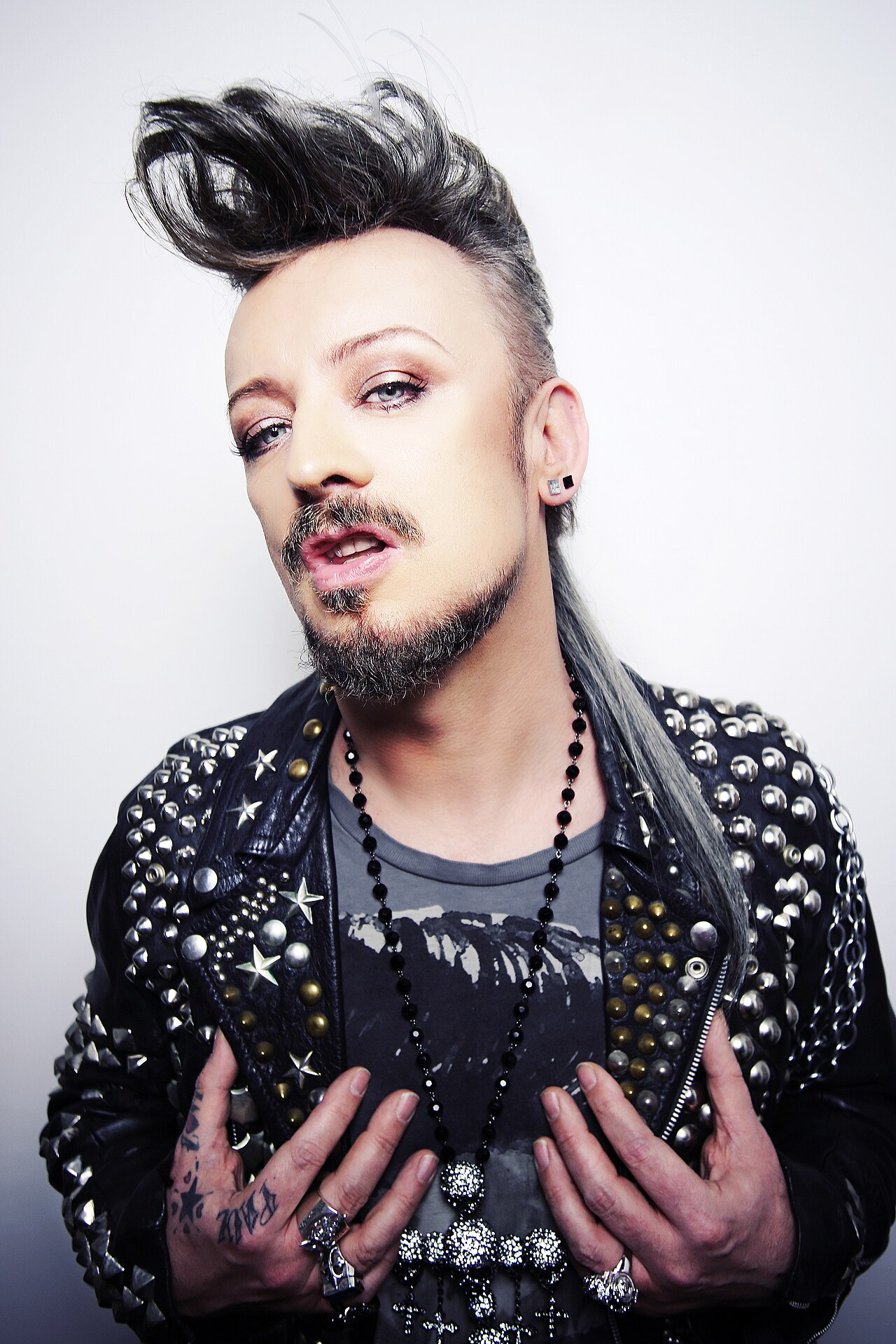
The second performance of British pop icon Boy George in Tel Aviv was a complex blend of theatrical humor, musical nostalgia, and profound political weight. At 65, the former star of Culture Club surprised audiences with a show that was far more than just a nostalgia tour; it served as a powerful declaration of solidarity and a cathartic reckoning with recent national trauma. Despite minor technical hiccups and forgotten lyrics, the singer captivated a near-capacity crowd, weaving his personal resilience into the fabric of the evening’s intense atmosphere.
A Concert of Defiance and Dedication
George’s visit, which included a visit to the Nova massacre site and a meeting with President Isaac Herzog, placed him at the center of Israel’s recovery narrative. He is known for his outspoken support of Israel, a stance that has drawn significant criticism from within the global music community. During the show, he directly addressed his detractors, asserting that his personal opinions were secondary to his unwavering convictions. He emphatically stated that remaining silent on the October 7 Hamas attack was simply not an option, a sentiment met with thunderous applause.
Addressing National Pain and Personal Struggles
The evening was deeply dedicated to the survivors and families of the Nova music festival tragedy, with thousands of tickets donated to community members. The emotional climax arrived with his song, ‘We Will Dance Again,’ which explicitly referenced the atrocities of the recent violence and challenged the silence of other artists. George, who appeared visibly moved, shared the stage with bereaved relatives and survivors, embracing them as the reggae-inflected track played. He noted that being an outsider witnessing this mix of sorrow and recovery felt ‘awkward’ for him.
The Spectrum of Response
While some attendees were deeply moved by the performance’s humanity, others offered sharp critiques. Some audience members praised George for handling the performance’s imperfections with grace and humor, while others criticized the musical execution and the crowd’s perceived need for approval. George maintained his characteristic irreverence, dismissing global disapproval while affirming that his mother would be proud of his stance in support of Israel. He contrasted the relaxed feeling of the Israeli atmosphere with the tension he described in London, concluding the nearly two-and-a-half-hour spectacle with a powerful rendition of ‘Karma Chameleon.’ The concert cemented his role not just as an entertainer, but as a defiant and vocal figure in the ongoing national discourse.
World Views
Beyond Fluency: How Hebrew is Redefining Identity for American Jews

For many American Jews, the relationship with the Hebrew language is one of deep complexity—a mix of cultural longing, academic struggle, and profound personal meaning. New research suggests that the struggle for fluency is less important than the language’s ability to serve as a vital tool for self-definition and community building. Sharon Avni, a linguistics professor at CUNY, details this nuanced dynamic in her book, ‘Speaking of Hebrew: What Language Does for American Jews,’ drawing on extensive interviews with over one hundred language enthusiasts.
The Functional Role of Language
Avni’s central argument challenges the traditional view that linguistic proficiency is the ultimate measure of Jewish engagement. She posits that Hebrew performs crucial work for her subjects, helping them process their values, discuss their concerns, and ultimately figure out what kind of Jewish person they wish to become. The study moves beyond the notion of a simple ‘deficit’—the perceived lack of proficiency—to explore the diverse ways individuals access and appreciate the language. Avni notes that for some, the act of engaging with Hebrew, even imperfectly, provides a necessary space for their American Jewish life, independent of formal synagogue affiliation.
Historical Pressure and Modern Tensions
Historically, Jewish thinkers have long championed the necessity of Hebrew, viewing it as the essential linguistic thread connecting American Jews to their ancient traditions. Scholars have warned that without this language, much of Jewish heritage risks fading from American life. This emphasis has often been tied closely to the modern state of Israel. Avni points out that any discussion about American Jews and Hebrew cannot be separated from their relationship with Israel itself. Furthermore, the language is currently caught in modern ideological tensions; while traditionalists champion its primacy, some anti-Zionist groups have embraced Yiddish, while others have even questioned the cultural significance of Hebrew’s grammatical structure.
A New Definition of Belonging
Avni highlights a shift in motivation among her participants. While previous generations viewed the language primarily through a religious or historical lens, many contemporary learners are driven by a desire for community and intellectual curiosity. These individuals seek connection through Hebrew clubs and classes, finding kinship in shared study. For these enthusiasts, the value is not always in perfect grammar, but in the shared experience. Even the use of a few specific Hebrew phrases—what linguists might call ‘smatteracy’—can create a powerful sense of belonging, acting as a secret handshake that affirms their shared identity.
Ultimately, Avni suggests that insisting on a singular, perfect way of practicing Jewish life—whether through immersion schools or strict adherence to tradition—can be limiting. The modern engagement with Hebrew demonstrates that for many, the language is a flexible, dynamic vehicle for building a meaningful and authentic life in America.
World Views
Jewish Athletes Shine Amid NBA Breakout and Major Sports Transitions
As the calendar approaches the close of 2026, the spotlight is shining brightly on Jewish athletes who are achieving significant milestones across multiple professional sports. The momentum is particularly strong in the NBA, where Israeli forward Deni Avdija is demonstrating that his exceptional performance last season was not a fleeting success. Playing for the Portland Trail Blazers, Avdija is spearheading the team’s offensive charge, leading the squad in scoring, minutes, and field goal attempts.
The Ascent of Avdija and Portland’s Surge
In the early stages of the young season, the Blazers are enjoying a stellar 6-1 record, ranking as the top team in the Western Conference. Avdija’s impact is profound, averaging 23.4 points, 6.4 assists, and 6.3 rebounds per contest. Despite having teammates like Ja Morant and Damian Lillard on the roster, Avdija has solidified his role as the primary offensive catalyst. Sources indicate that the team’s new head coach, Micah Nori, actively worked with the 25-year-old Israeli during the summer to ensure his continued development. Avdija stated that he felt the coach was keenly aware of his specific strengths and desired his continued progression, affirming that he felt the leadership understood what was best for the team’s overall success.
Shifting Landscapes in MLB and Legacy Sports
Beyond the hardwood, significant transitions are occurring in Major League Baseball. Team Israel veterans Joc Pederson and Garrett Stubbs have both entered free agency. Pederson opted not to exercise his $18 million mutual option with the Texas Rangers, while Stubbs concluded his tenure with the Philadelphia Phillies. Meanwhile, Chicago Cubs player Alex Bregman is receiving significant recognition, having recently secured his second career Gold Glove and being named a finalist for the National League Silver Slugger Award after hitting 28 home runs in his debut season with the club.
Broader Context and Weekend Action
The sports world continues to feature figures of historical importance. Robert Kraft, owner of the New England Patriots, has been named another finalist for the Pro Football Hall of Fame in the contributor category, continuing his bid for induction in the 2027 class. As the year draws to a close, the focus shifts to major decisions within the Jewish community, from Knesset campaigns to American midterm elections. For those tracking the action, this weekend offers a packed schedule, featuring Avdija’s Blazers taking on the Lakers in the NBA Cup group stage, alongside high-profile matchups in hockey, soccer, and racing.
