



World Views
Escalation in the Red Sea: Houthi Militia Claims Strike on Major Saudi Refinery, Targets Riyadh Financial Hub

Tensions across the Arabian Peninsula have reached a critical point following claims from the Houthi militia group that they successfully targeted Saudi Arabia’s vital Ras Tanura oil refinery. The Iran-aligned faction, which controls significant territory in western Yemen, asserted that the attack resulted in significant fires at the massive industrial complex, which serves as the kingdom’s largest refining facility and sits adjacent to a major crude export terminal. Satellite imagery provided by international agencies corroborated the presence of thick black smoke above the installation, lending credence to the reports of the assault.
The Refinery Incident and Conflicting Reports
A source familiar with the situation confirmed that an attack had occurred on the sprawling refinery complex. This facility, which boasts a refining capacity of 550,000 barrels per day, is a crucial node in Saudi Arabia’s Gulf coast export network. While the Houthi spokesperson publicly claimed responsibility for the strike, neither the Saudi government nor the state energy corporation, Aramco, offered an immediate official response. In a separate statement, the Saudi-led coalition indicated that its air defenses successfully intercepted and destroyed four drones in the Eastern Province, though they did not confirm that the refinery itself had been struck.
Dual Threat: Attacks on Riyadh’s Financial Center
The aggression did not stop at the energy sector. The same Houthi spokesperson also announced that the group had carried out multiple assaults on Riyadh’s central financial district. This escalation highlights a strategic shift in the militia’s targeting. In the capital, Saudi civil defense reported that eleven individuals were injured during a strike on the towering headquarters of the Public Investment Fund, the nation’s sovereign wealth fund. This incident marks the second such attack on the landmark skyscraper in less than a week, following an earlier impact that caused structural damage but no injuries.
Regional Instability and Economic Fallout
These coordinated acts of aggression are part of a sustained campaign by the Houthi militia, which has been launching attacks against Saudi airports and critical infrastructure since the civil conflict in Yemen reignited in July. The ongoing instability, which is linked to broader regional geopolitical tensions, has already caused significant disruption. Previous attacks have forced Aramco to temporarily halt certain operations, necessitated the cancellation of numerous international flights into Riyadh, and led to the postponement of major regional events, including the AFC Asian Cup and a key investment conference.
The targeting of both essential oil infrastructure and the capital’s financial nerve center underscores the militia’s intent to inflict maximum economic and psychological damage. As the conflict continues to evolve, observers are watching closely to see how the Saudi state and its allies will respond to this renewed and multifaceted campaign of attacks.
World Views
Iraq’s Supreme Court Greenlights Federal Takeover of Kurdish Borders and Oil Assets
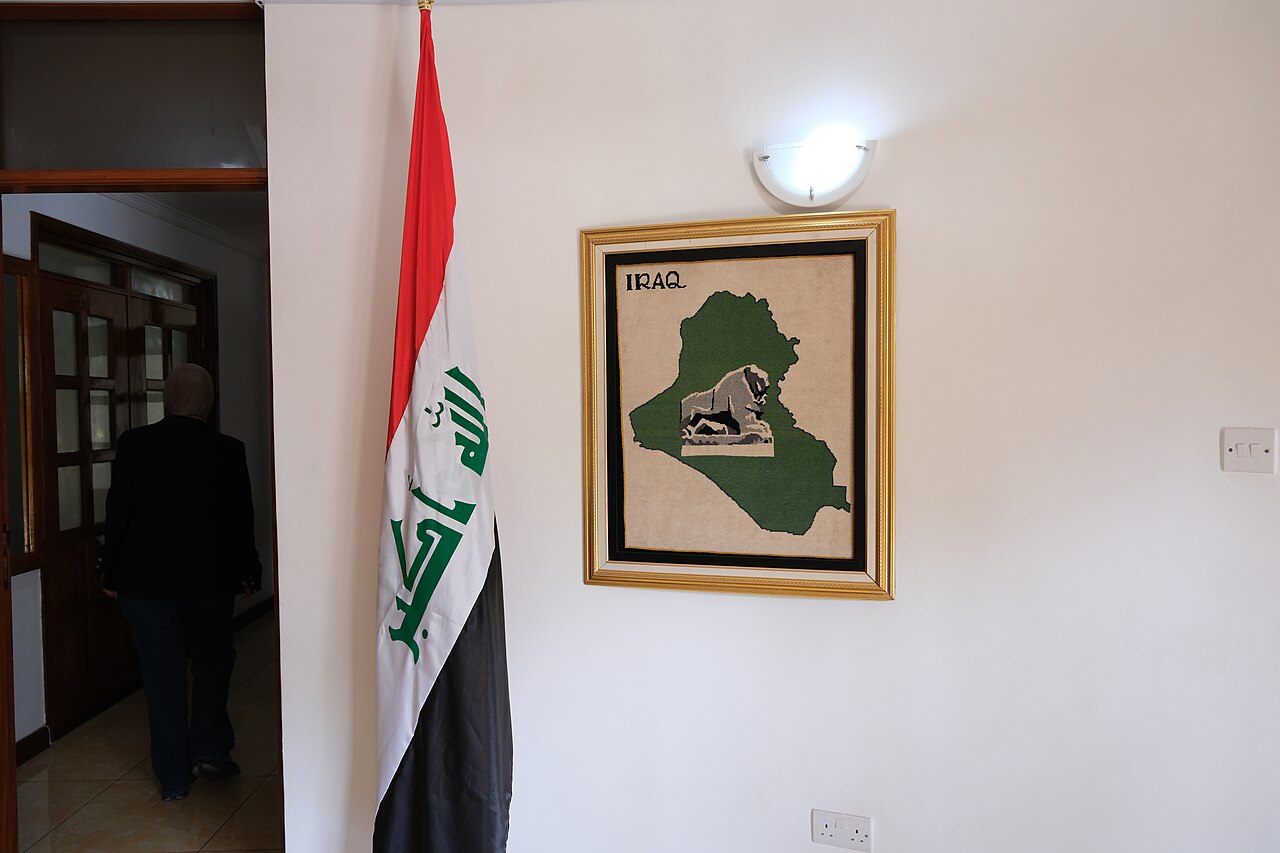
The highest judicial body in Iraq has effectively provided the green light for Baghdad to extend federal authority deep into the semi-autonomous Kurdistan Region, marking a significant escalation in the nation’s ongoing struggle for centralized control. The ruling permits federal forces to deploy along all international boundaries, including those within the Kurdish territories, directly supporting Prime Minister Ali al-Zaidi’s determined push to assert the central government’s dominance.
Federal Authority Expands into Kurdish Territory
The court decision allows federal agencies to oversee operations at all border crossings. However, it mandates that this oversight must be coordinated with regional and provincial administrations regarding customs administration. Furthermore, the ruling grants the federal oil ministry the power to audit and supervise oil and gas fields. This is a critical development, as Mr. Zaidi has already directed the federal ministry to manage state-owned oil fields located in provinces near the Kurdish region, including Kirkuk, Nineveh, and Diyala.
The Centralization Agenda
These aggressive moves are viewed by political observers as part of a comprehensive effort by the Prime Minister to dismantle the deeply entrenched system of ‘states within a state’ that has long defined the country. Zaidi’s strategy is twofold: to restrain armed groups operating outside state command and to draw clear boundaries on the KRG’s independent control over vital economic and security matters. Experts suggest that the judiciary has been highly supportive of this governmental campaign, providing the necessary legal framework to define issues of sovereignty and legality.
The immediate impetus for this push stems from serious allegations of illicit trade. State intelligence reports indicate that state-owned oil from North Oil Company is being diverted and smuggled from Kirkuk and Sulaymaniyah into Iran and onward to Afghanistan. This smuggling probe was the catalyst for Zaidi’s recent confrontation with the Iran-backed militia Kataib Hezbollah, demonstrating his willingness to challenge non-state actors.
Resistance and Future Implications
The Kurdistan Regional Government swiftly dismissed the federal measures, publicly labeling them as ‘military language and threats.’ Despite the KRG’s strong rejection, security sources indicate that a direct military clash with Kurdish forces is not a viable option for Baghdad. Instead, the coming days are expected to see the deployment of additional federal personnel near strategic oil fields, signifying a gradual, yet firm, assertion of central power.
Political analysts warn that while the judiciary has provided the legal foundation for this drive, implementing changes that challenge decades of power accrued by powerful factions—both Kurdish and Shi’ite militias—will remain politically complex and fraught with resistance.
World Views
Literary Giants Form Breakaway Chapter Amid Deepening Split Over Gaza Conflict

A significant fracture has emerged within the global literary community, as over one hundred prominent writers have established a new, independent chapter to challenge the established position of PEN America regarding the ongoing conflict in Gaza. The group, named PEN Writes US, was founded by a diverse roster of authors, editors, and artists, including Ta-Nehisi Coates, M. Gessen, and Jacqueline Woodson. The formation signals a sharp divergence in how some literary professionals interpret the principles of free expression when confronted with intense geopolitical upheaval.
The Philosophy of the New Chapter
PEN Writes US aims to uphold the foundational ideals of the PEN Charter, focusing on ‘one humanity, living in peace and equality in one world.’ However, the new organization emphasizes a structural difference from its predecessor: a commitment to sustained and equitable advocacy for all writers, rather than adhering to institutional caution. Founding member Maaza Mengiste explained that the group believes a PEN center must be one that defends the freedom of expression for writers, explicitly including the right to participate in boycotts without exception.
The group is not seeking to replace PEN America but rather to create a space where diverse voices and perspectives can be championed. They intend to mobilize writers at every stage of their careers to support artists facing risk and to champion the vital work of reading and translation, with plans to seek full affiliation with the worldwide PEN network by 2027.
A History of Internal Dissent
The split is rooted in prolonged disagreements over the organization’s response to the war. This is not an isolated event; PEN America has faced multiple high-profile resignations. Dinaw Mengestu, a prize-winning novelist, previously stepped down as president, citing the organization’s failure to support those calling for a cultural boycott of Jewish and Israeli writers. Similarly, Suzanne Nossel, the Jewish president, resigned after the group faced criticism for allegedly neglecting to condemn threats targeting Palestinian writers during the conflict.
The organization’s current stance is complex: while PEN America publicly opposes any attempts to restrict the free international exchange of ideas, it simultaneously asserts that writers must be protected when they advocate for or against cultural boycotts. This ambiguity has fueled the current rift. Furthermore, the organization’s annual events were forced to cancel in 2024 due to a large number of collaborators withdrawing in protest of the official response to the Gaza war.
Looking Ahead for Literary Freedom
The leadership of PEN America, including current President Phil Klay, has maintained that the organization remains dedicated to defending universal free expression. Yet, Klay has also publicly voiced criticism regarding Israel’s military actions in Gaza. The emergence of PEN Writes US puts the concept of literary freedom on trial, forcing a global reckoning over whether the defense of expression must remain politically neutral, or if it must actively champion specific advocacy efforts, such as boycotts, to be truly effective.
World Views
Literary Giants Launch Counter-Group Challenging PEN America Over Geopolitical Speech Rights
A significant division is emerging within the global literary community as a new organization, PEN Writes US, has formally launched. This breakaway group, founded by prominent figures including Ta-Nehisi Coates and Viet Thanh Nguyen, aims to provide a platform that specifically supports cultural boycotts of Israel. The group positions itself as a dedicated center for protecting free expression, stating its intent is to offer a community for writers who have fled censorship and persecution.
The Split from PEN America
The formation of PEN Writes US represents a sharp divergence from the established PEN America, a literary body also founded on principles of human rights and liberty. Activists have long criticized the larger organization for not sufficiently condemning the military actions in Gaza or adequately supporting Palestinian writers. While PEN America maintains that it defends a writer’s right to participate in boycotts, the new organization pledges to actively support those boycotts themselves. The exodus includes notable authors such as Dinaw Mengestu, who resigned from his previous post, and established writers like Gary Shteyngart and Francine Prose.
The tensions escalated dramatically over the past two years. Writers Against the War on Gaza had previously called for a boycott of PEN America, accusing the organization of normalizing certain ideologies. Although PEN America later took steps—including establishing an emergency fund for Palestinian writers—and updated its policies to defend the right of authors to advocate for boycotts, the fundamental disagreement over the scope of free speech persisted. Founding members of the new center emphasized that their mission is to mobilize members to protect the right to speak and create without fear of persecution.
Challenging Definitions of Discrimination
Beyond the geopolitical dispute, PEN Writes US has adopted a distinct philosophical stance regarding definitions of discrimination. The group’s charter specifically challenges the use of the International Holocaust Remembrance Alliance’s definition of antisemitism. They argue that public institutions and educational settings are employing this definition to police legitimate political speech. One founding member stated that the center would defend protected speech without making exceptions for what is deemed politically inconvenient at the time. This stance mirrors previous warnings from PEN America regarding the potential for codifying the definition to suppress legitimate criticism of Israel.
Looking Ahead
PEN America responded to the launch by reaffirming its dedication to protecting free expression universally, emphasizing that its commitment remains regardless of viewpoint. The new organization, however, has outlined ambitious future goals. The members of PEN Writes US announced their intention to seek full membership within the global PEN network during the International Congress scheduled for September 2027. This signals that the rift is not merely a temporary disagreement, but a foundational challenge to how literary institutions define and protect the boundaries of speech in a polarized world.
