



World Views
Israel’s New Parliament Sworn In Amid Deep Political Stalemate and Coalition Chaos
Israel’s 26th Knesset officially convened this week, marking the start of a new legislative session shrouded in profound political uncertainty. Despite the swearing-in ceremony, a stable government remains elusive, as the nation grapples with a deadlocked general election that stripped the incumbent Prime Minister of his majority. Former general Gadi Eisenkot, tasked by President Isaac Herzog with forming a governing coalition, faces an ‘extraordinarily complex’ path to power, leaving the country in a state of legislative limbo.
The Struggle for a Governing Majority
The parliamentary session began with Eisenkot attempting to unite disparate political factions. However, his bloc, comprising four parties, holds only 48 seats, a figure insufficient to secure a clear majority. While the largest party, led by Benjamin Netanyahu, also failed to achieve a majority, the political landscape is defined by intense opposition. Eisenkot’s alliance has found potential support among Arab-led parties, which hold 19 seats, aligning with their strong opposition to the current administration. This delicate balance suggests that the new body could immediately pursue several key legislative objectives, such as establishing a state commission to investigate the horrific Hamas attacks of October 7, a measure largely opposed by Netanyahu.
Clash of Visions in the Knesset
The newly seated members quickly signaled their intent to enact sweeping changes. Eisenkot’s representatives submitted bills aimed at reversing controversial laws enacted under the previous government, including those related to the judicial overhaul. Furthermore, they proposed imposing term limits on the Prime Minister’s office. This push for systemic change stands in sharp contrast to Netanyahu’s urgent call for a national unity government, which he argues is necessary to confront escalating international and military threats, particularly concerning Iran’s nuclear ambitions. Netanyahu has also cast doubt on the election results, alleging voter misconduct, though officials have stated they have found no evidence of widespread fraud.
A Presidential Mandate for Compromise
President Herzog, presiding over the ceremony, issued a powerful mandate to the lawmakers, urging them to prioritize national cohesion over political rivalry. He implored the members to seek ‘compromise’ and ‘generosity,’ emphasizing that the public yearns for security and stability. Political analysts note that even without a functioning government, the Knesset retains significant power to oversee and pass private legislation. This gives the new parliament substantial time to shape the country’s trajectory, regardless of whether Eisenkot succeeds in his quest to form a cabinet before his deadline. If the current political impasse continues, the President has indicated that the next step could be asking Netanyahu to attempt coalition building, before the possibility of another national election is forced upon the nation.
World Views
Applying the Lens of Ambassador Avner: Timeless Principles Confront Modern Israeli Crises
The late Ambassador Yehuda Avner, renowned diplomat and author of the definitive work, The Prime Ministers, offered a profound historical record of Israel’s founding. His life’s work, which chronicled the actions of nation-builders, was underpinned by a deeply personal set of guiding ethics he referred to as his Ten Commandments. As the nation navigates extreme political volatility, escalating regional threats, and internal divisions, analysts are examining how Avner’s unwavering principles—which prioritize survival and dignity—would inform today’s fraught decisions.
Domestic Stability and the Price of Unity
Avner’s philosophy stressed that national survival required uncompromising commitment to the Jewish people’s rights. In the current climate of complex coalition negotiations, where ultra-Orthodox parties hold pivotal leverage over legislative matters, his perspective would likely focus less on political maneuvering and more on communal cohesion. He advocated strongly for internal solidarity, a lesson he learned during the national unity efforts preceding the Six-Day War. For Avner, the maintenance of peace within the community, even amid deep disagreement, was paramount. He would have viewed the persistent debates over military service and religious exemptions not merely as political disputes, but as existential tests of national resolve.
Navigating External Threats and Peace
Regionally, Avner’s commandments provide a stark framework for risk assessment. His first guiding rule—to trust warnings from adversaries regarding intentions to destroy the nation—resonates powerfully with current geopolitical tensions involving Iran. He saw the historical pattern of aggression and would likely advise a posture of extreme vigilance. Furthermore, his ninth commandment, which balances the desire for peace with the absolute need for freedom, frames the ongoing conflict in Gaza. Avner acknowledged the historical path toward peace, yet he emphasized that disarmament and genuine security must precede any lasting agreement. He would maintain that the pursuit of freedom, defined as the right of the Jewish people to self-determination, remains the ultimate goal.
The Global and Spiritual Imperative
Avner’s commitment extended beyond mere politics. He consistently maintained that Jerusalem is not exclusively a Jewish city, but a holy place that accommodates the prayers of all faiths. This pluralistic view was central to his eighth commandment: unwavering loyalty to the truth that Israel is the Jewish nation-state and Jerusalem is its eternal capital. On the diplomatic front, he would have been critical of any perceived weakening of Israel’s sovereignty, whether through external political pressure or diminished international support. His career taught him the critical importance of national self-assurance, believing that a nation must stand strong on its own merits, rather than relying on external validation. His legacy remains a powerful reminder that national identity is defined by both historical truth and moral courage.
World Views
Israeli Defence Systems Become Global Necessity as World Faces Heightened Threats
The geopolitical landscape is undergoing a profound shift, with Israeli military technology increasingly becoming a cornerstone of national defence for dozens of nations worldwide. Once primarily serving its own security needs, the nation’s advanced defence industry is now a dominant global supplier, providing sophisticated protective systems to countries across continents. This growing reliance highlights a universal recognition that modern states require cutting-edge countermeasures against escalating threats.
The Rise of an Arms Powerhouse
Israel has established itself as one of the planet’s most significant defence manufacturers. Its arms sales reached a record $19.2 billion in 2025, representing a substantial portion of the nation’s total exports. The market reach is extensive, with sales extending not only to established European buyers for systems like the Arrow 3 and Iron Dome but also to several Arab states, including Morocco, the UAE, and Bahrain. This robust export market is supported by decades of necessity, as the Israeli military developed its innovative arsenal in response to sustained regional hostility and international embargoes.
Advanced Systems Meet Global Demand
At the forefront of this technological appeal is the Spike guided missile. This versatile anti-tank and anti-personnel weapon has garnered immense international attention due to its precision, compactness, and impressive range of up to 32 kilometers. The global popularity of the Spike system is evidenced by the annual gathering of its user club, which recently saw the membership grow to 48 nations. This international forum, held in Cyprus, brings together representatives from over 20 NATO members, including Canada and the United States, to share operational knowledge and best practices.
A Reflection of Global Vulnerability
The increasing demand for Israeli defence products reflects a broader, worrying trend: the heightened vulnerability felt by nations globally. Countries such as Germany, Lithuania, and Poland are keenly aware of the need to bolster their national preparedness. While some nations, like Australia, have faced political scrutiny regarding their support for Israel due to diplomatic disagreements, they are nevertheless exploring the adoption of protective measures, such as the Iron Dome system. Officials within the Australian defence sector have defended the acquisition of top-tier military equipment.
Strategic Implications
The proliferation of this advanced technology suggests that the pursuit of national survival is transcending political and diplomatic boundaries. While the long-term political dividends of this global support remain uncertain, the strategic benefit to the countries adopting these systems is undeniable. The success of Israel’s homegrown defence industry, which was forged through necessity, has positioned it as a crucial provider of security solutions in an increasingly volatile world.
World Views
Impartiality Under Scrutiny: Outspoken Judges Take Seats on ICJ Amid Gaza Genocide Case
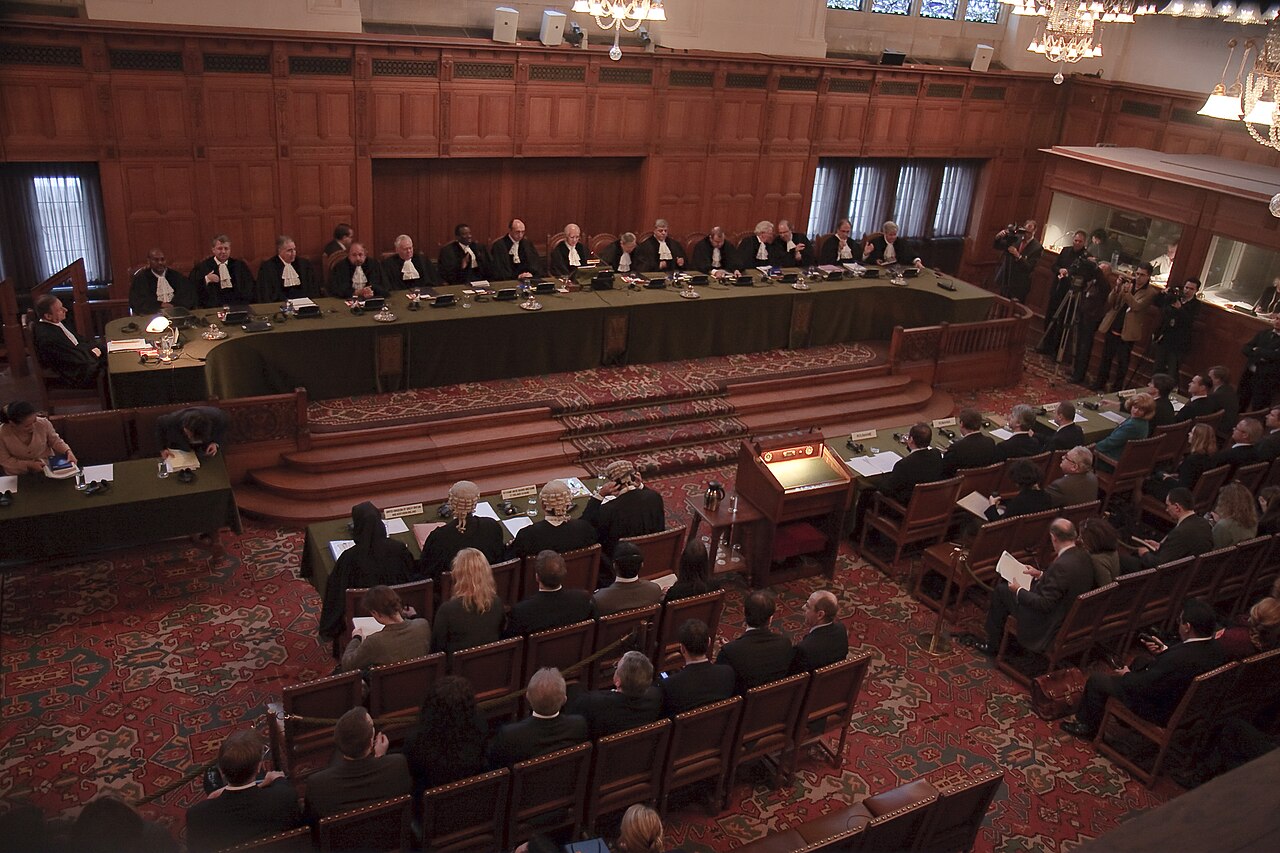
The integrity of the International Court of Justice (ICJ) faces intense scrutiny as several highly vocal diplomats, who have publicly leveled severe accusations against Israel, are set to take judicial seats on the court. This situation raises fundamental questions about the separation between judicial duty and political advocacy, particularly as the ICJ is preparing to rule on whether Israel has violated the Genocide Convention. The involvement of figures like Jordan’s Mahmoud Hmoud and Namibia’s Phoebe Okowa highlights a growing tension between international legal proceedings and the geopolitical conflicts they address.
Accusations and Judicial Appointments
Mahmoud Hmoud, Jordan’s former UN representative, publicly declared that Israel’s actions in northern Gaza constituted ‘ethnic cleansing and genocide’ in late 2024. He has since been appointed to a nine-year term on the ICJ, where he will participate in the ongoing case. Similarly, Phoebe Okowa, who represented Namibia in ICJ proceedings regarding Israel’s occupation, accused the nation of committing inhumane acts and apartheid against Palestinians. Both individuals were recently elected to full nine-year terms on the court.
Navigating Judicial Bias and Precedent
While the ICJ is mandated to be objective, the outspoken nature of these judges prompts debate. However, established court precedent suggests they may not be disqualified. In a past instance involving an Egyptian judge, Israel attempted to challenge his participation based on prior anti-Israel statements. The majority of judges rejected this claim, ruling that remarks made in a representative capacity do not necessarily reflect personal judicial bias on the specific matter at hand. This ruling suggests that Hmoud, whose accusations were made in his official diplomatic capacity, and Okowa, whose claims did not specifically use the term ‘genocide,’ are likely to be allowed to participate.
The Broader Political Challenge
The concerns about the ICJ’s neutrality extend beyond former diplomats. The court has also been criticized for allowing its members to pursue political careers in nations involved in the conflicts they adjudicate. For example, Nawaf Salam, a judge, resigned to become Prime Minister of Lebanon, openly expressing hostility toward Israel while still serving on the ICJ. Although the court rules do not strictly forbid this, it creates an appearance of conflict of interest.
Evidence of National Influence
This skepticism is supported by academic research. Studies have provided evidence that ICJ judges tend to favor the geopolitical interests of their home countries. This suggests that even if the court operates under strict rules of procedure, national affiliations may subtly influence outcomes. As the ICJ moves toward a potential ruling on genocide, the question of whether the court remains a truly impartial, politically detached body remains a critical, unresolved debate.
