



World Views
Jordan’s Thirst Trap: $4 Billion Project Races Against Geopolitical and Environmental Collapse

Jordan is facing an existential crisis, caught between catastrophic water shortages, crumbling infrastructure, and a profound geopolitical dependency on external water sources. The Kingdom’s leadership has publicly emphasized water security as fundamental to national sovereignty, warning that access to this vital resource must never be subjected to political maneuvering. Amid this deepening drought, the nation has staked its future on an ambitious, multi-billion dollar plan to achieve self-sufficiency, yet the viability of this massive undertaking remains highly questionable.
The Immediate Pressure Cooker: Scarcity and Mismanagement
The reality on the ground is dire. Classified among the world’s three driest nations, Jordan’s per capita water availability has plummeted far below international safety thresholds. In the capital, Amman, residents often experience water supply interruptions lasting days, forcing families to rely on large storage tanks. This strain is compounded by rapid demographic growth, driven significantly by the influx of refugees from neighboring countries, which has pushed the existing system to the point of failure. Furthermore, internal inefficiencies severely exacerbate the problem; an estimated 41% of drinking water is lost to aging, leaky piping and unauthorized connections, while the agricultural sector consumes half the nation’s supply for crops that yield minimal national output.
The High-Stakes Gamble: Aqaba and the Energy Paradox
To break free from reliance on foreign supplies—which previously included significant annual volumes under a specific treaty that recently expired—Jordan is pursuing the massive National Water Carrier project in Aqaba. This engineering marvel aims to construct a large desalination facility on the Red Sea coast, pumping 300 million cubic meters annually through a 450-kilometer pipeline to the capital. This undertaking, valued at over four billion dollars, is a testament to national ambition, but it introduces a complex energy dilemma. Moving desalinated water across the desert requires enormous pumping power. While the plan incorporates a dedicated solar power plant to address this demand, this renewable energy source will only cover a fraction of the total energy needs, requiring the majority of the power to still be drawn from the national grid, which relies heavily on natural gas.
A Delicate Balance of Debt and Diplomacy
The project’s success hinges not only on engineering prowess but on economic stability. The financial burden is immense, and the government faces a difficult choice: raise utility prices to cover the budgetary shortfall, a move that could trigger significant social unrest in the city. Analysts note that the logistical challenge of delivering extremely costly desalinated water into a network that already suffers from massive leakage is akin to ‘filling a leaky bucket with liquid gold.’ Ultimately, this national gambit is inextricably linked to regional stability. If the massive infrastructure project fails to deliver, the fundamental question remains: can Jordan escape its geographic constraints, or will regional political dynamics force it back into dependence on its eastern neighbor?
World Views
Incoming Rep. Hamawy Defies Norms, Calls for Diplomacy Over Confrontation with Iran
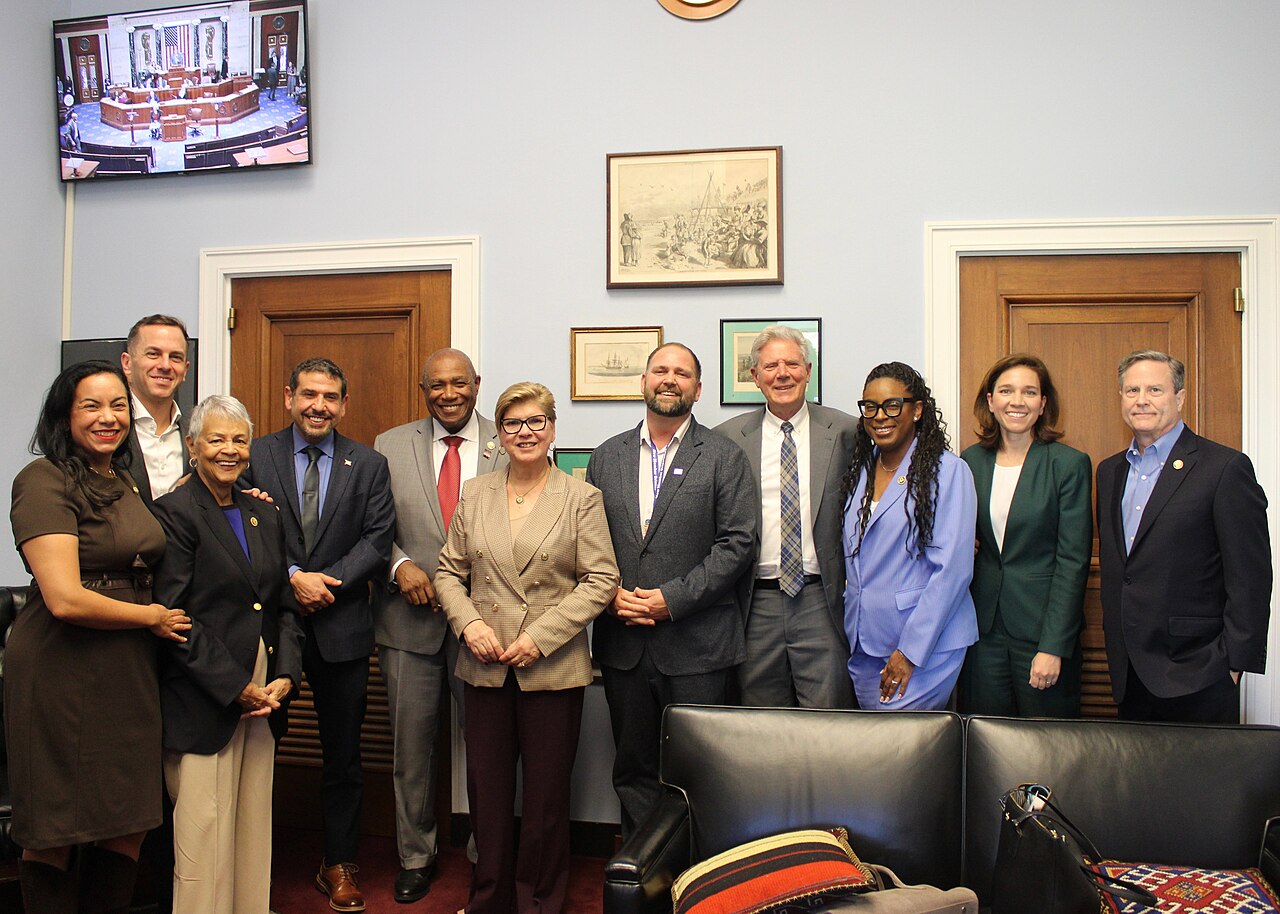
Adam Hamawy, the newly elected Democratic representative for New Jersey’s 12th Congressional District, has ignited debate over US foreign policy by refusing to classify Iran as a geopolitical adversary during a recent heated television debate. Despite repeated questioning from CNN anchor Pamela Brown, Hamawy maintained that the United States should pursue diplomatic solutions with Tehran rather than escalating military confrontations, arguing that American actions had contributed significantly to the regional instability.
Challenging the Adversary Narrative
Hamawy consistently sidestepped definitive answers regarding Iran’s status, instead shifting the focus of conflict responsibility. He asserted that the ongoing hostilities were precipitated by actions taken by Israel, stating that the conflicts were detrimental to American interests. When pressed about the nature of the relationship, he contended that Washington should aim to build alliances rather than create enemies. He stressed that the US possessed the diplomatic leverage necessary to bring Iran to the negotiation table, pointing to past successful diplomatic efforts as a viable model.
Policy Stances and Controversial Views
While characterizing the Iranian government as an authoritarian dictatorship detrimental to its populace, Hamawy agreed that preventing Iran from acquiring nuclear weapons was a vital objective. However, he strongly opposed military intervention, advocating instead for political agreements. Furthermore, his political platform includes a firm opposition to all American military assistance provided to the Jewish state, including funding for its missile defense systems. This stance places him at odds with established bipartisan foreign policy consensus.
Broader Political Context and Scrutiny
Hamawy’s outspoken views are not new to his political profile. He has previously faced public scrutiny regarding his past association with Omar Abdel-Rahman, a notorious radical cleric, and has made controversial statements regarding the events of September 11th and the conflict in Gaza. His rise to Congress aligns with a growing trend among newly elected Democrats who are challenging traditional American alliances and foreign policy doctrines.
His refusal to use standard terminology regarding Tehran marks a significant departure from the prevailing view that Tehran represents a major threat to US security. As he prepares to take office, Hamawy’s unique and often contentious positions are expected to become a central point of discussion in the House of Representatives, forcing a national conversation about the future of US engagement in the Middle East.
World Views
Amid Rising Hate, Dutch Leader Appeals to Jewish Community to Remain Home
In a stark appeal to the Dutch Jewish community, Prime Minister Rob Jetten urged those considering emigration to remain in the country, emphasizing that the Netherlands represents a shared and secure home for all. The address, delivered during a remembrance ceremony marking the devastating 1938 pogrom in Amsterdam, came as the nation grapples with a palpable surge in anti-Jewish hostility. Jetten acknowledged the deep anxiety within the community, condemning the escalating wave of threats directed at Jewish institutions across the nation.
Domestic Crisis and Visible Presence
The Prime Minister sought to reassure citizens that they are an essential part of the Dutch fabric, highlighting recent increases in funding allocated for security measures at Jewish sites and governmental efforts to bolster communal life. He expressed profound sadness that families are questioning the long-term viability of their children’s futures here. Jetten underscored his personal commitment to ensuring Jewish life maintains a visible presence in Dutch society, a commitment he symbolized by placing a traditional Jewish prayer case, a mezuzah, on the doorframe of his official residence.
He noted that the fear surrounding negative public reactions is causing fewer people to display this traditional symbol. Meanwhile, the lived experience for many Dutch Jews reflects this climate of caution; rising public hostility has led some to conceal Jewish symbols, avoid speaking Hebrew in public forums, or hesitate to openly affirm their identity.
Geopolitical Tensions Intensify Strain
Jetten’s domestic call for reassurance occurs against a backdrop of increasingly fraught diplomatic relations between the Netherlands and Israel. Tensions have reached a low point in recent decades following the deadly military action across southern Israel in October 2023. The friction has manifested in several high-profile disputes. For example, Israel recently mandated that Dutch diplomats working in Ramallah return their Israeli-issued credentials, a move taken in response to the Netherlands’ September imposition of trade restrictions on goods originating from Israeli communities in the West Bank.
The Dutch trade measures, which are notably comprehensive, restrict commerce not only with Israeli settlements beyond the designated Green Line but also with areas in the Golan Heights. Furthermore, the government faces significant criticism from both Israeli officials and Jewish leaders, who accuse the state of inadequately addressing the growing tide of anti-Jewish hatred and violence targeting its citizens.
The Unchanging Threat
The statistics paint a troubling picture of the ongoing crisis. Despite Jews constituting less than one-third of one percent of the national population, anti-Jewish hate crimes account for a disproportionate twenty-six percent of all discrimination cases reported. Authorities indicated that the number of registered antisemitic incidents remained virtually stagnant, recording 867 cases in 2025, a figure closely matching the 880 cases documented the preceding year. The Prime Minister’s appeal serves as a public declaration of intent to safeguard the community, even as the nation navigates a complex intersection of internal prejudice and external political conflict.
World Views
New Digital Archive Unlocks Centuries of Jewish History in New York

The comprehensive historical record of Jewish life in New York City is undergoing a major transformation. The National Library of Israel has made available, for the very first time, the digitized collection of nearly fifty years of The New York Jewish Week, the city’s premier Jewish publication. This monumental effort grants the public unprecedented access to the community’s narrative, ranging from sweeping cultural shifts to daily personal concerns, offering a deep look into New York’s evolving Jewish identity since its founding in 1654.
Event Details and Expert Insight
To mark this significant preservation milestone, the National Library of Israel and the newspaper are jointly hosting a special evening event. Titled ‘The Pages of Our Past: Digitizing New York’s Jewish Stories,’ the free discussion will take place on Tuesday, November 17th, at Hebrew Union College-Jewish Institute of Religion in Manhattan. Attendees will hear from Gary Rosenblatt, who spent a substantial portion of the publication’s history as its editor and publisher, alongside current staff writers for The New York Jewish Week and Eyal Miller, who manages the National Library of Israel’s collection of historical press materials. A virtual option is also available for those unable to attend the physical gathering.
A Vast Scope of Preservation
The inclusion of The New York Jewish Week is part of an extensive global initiative by the National Library of Israel to secure and democratize access to historic Jewish periodicals worldwide. This project, which began over two decades ago, has compiled newspapers written in thirty different languages, some dating back to the late 17th century. Experts, including renowned Brandeis University academic Jonathan Sarna, have lauded the newspaper as ‘the most vital American Jewish newspaper of its era.’ This new addition provides a crucial, detailed lens into the experiences of successive generations of Jewish New Yorkers.
Connecting Past Struggles to Modern Challenges
Beyond the archive itself, the two institutions are launching a supplementary initiative. This feature will guide readers through nine pivotal, often overlooked moments in the city’s Jewish history. These accounts span centuries, starting with the arrival of refugees from Recife, Brazil, in 1654, and extending to contemporary debates regarding kosher standards for city water. By examining these historical turning points, the initiative aims to reveal how the community navigated change, established institutions, and defined its place within the urban landscape. As the Jewish community in the city confronts both rising anti-Semitic sentiment and internal disagreements, these resources offer a powerful opportunity for reflection, encouraging the community to draw lessons from its complex past and strengthen its collective bonds.
