



World Views
Michigan Rep’s Shock Endorsement Triggers Deep Ideological Rift in Democratic Party
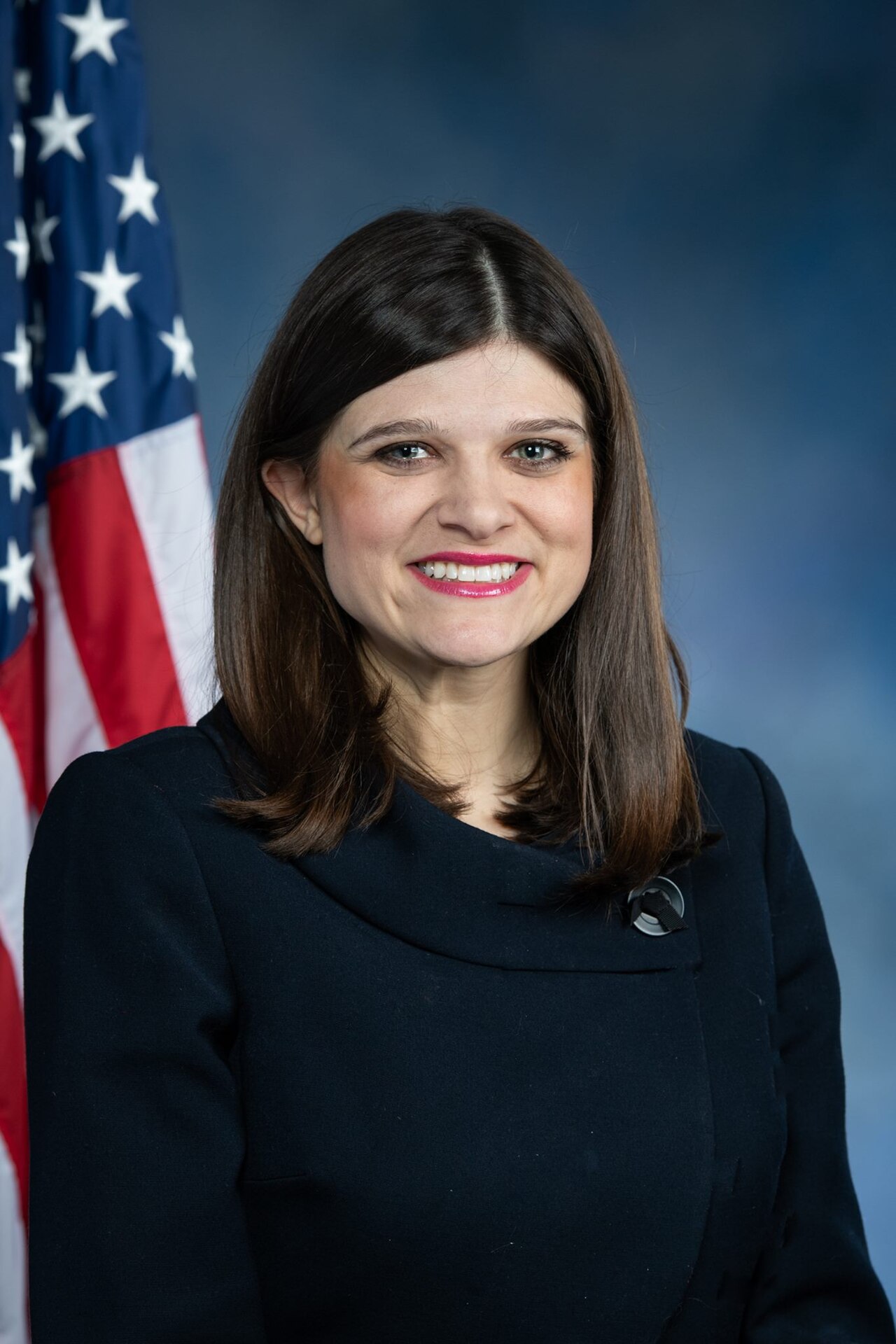
The political landscape in Michigan has been dramatically altered following the decision by Representative Haley Stevens, a Democrat, to publicly endorse Republican Senate hopeful Mike Rogers. This high-profile move, coming mere days before an election, has sent major tremors through the Democratic ranks, exposing deep and long-simmering ideological fissures within the party regarding foreign policy and domestic economic issues. Stevens, who had initially supported her primary opponent, Abdul El-Sayed, found her commitment unraveling amidst intense political pressure and a growing internal conflict over the role of American support for Israel.
Escalation from Policy Dispute to Political Exile
The controversy began not over a candidate, but over a political advertisement. A progressive outside group released messaging that linked the financial support for Israel to rising costs for Michigan families. Stevens found the rhetoric unacceptable and demanded that the El-Sayed campaign explicitly denounce the ad and distance itself from the claims. Although El-Sayed’s camp eventually disavowed the material, the relationship between the two candidates deteriorated rapidly. Tensions reached a breaking point after Stevens’ fiancé publicly denounced El-Sayed as an antisemite and announced his support for Rogers. When El-Sayed’s campaign subsequently informed Stevens that she was no longer welcome at a planned campaign event, she reacted by crossing party lines.
In a public statement, Stevens declared that the exclusion left her with no alternative, leading to her endorsement of Rogers. The response from the Democratic establishment was swift and severe. Senate Minority Leader Chuck Schumer condemned the action as a ‘despicable betrayal,’ while Michigan Democratic Party Chairman Curtis Hertel announced that she would no longer be recognized by the state party. Several prominent Democratic figures also voiced their disapproval of the Congresswoman’s decision.
The Broader Crisis of Party Unity
This Michigan incident serves as a microcosm of a wider national debate. For decades, support for Israel enjoyed widespread backing across the Democratic coalition. However, this consensus has been increasingly challenged by progressive activists who are pushing for a more confrontational stance on the conflict in Gaza, often framing the issue as a litmus test for party loyalty. The controversy also highlights the risk of reinforcing age-old antisemitic tropes by linking foreign policy decisions to domestic economic woes.
While the Democratic leadership has largely reacted with condemnation, some Democrats chose to offer support, arguing that political unity should not supersede individual conscience. Nevertheless, Stevens’ actions have cemented her status as a political pariah within her own party. While her endorsement offers a significant opportunity for Rogers to appeal to disillusioned Democrats, El-Sayed’s campaign successfully raised a record amount of money in the immediate aftermath, suggesting that despite the political fallout, his base remains highly engaged. The episode signals a profound challenge for the Democratic Party as it attempts to reconcile its progressive wing with its moderate, traditionally pro-Israel constituency.
World Views
Economic Anxiety, Not Middle East Conflict, Defined 2026 Midterm Voter Priorities
A recent electoral survey indicates that the complex geopolitical tensions in the Middle East, including the ongoing conflict in Gaza, did not serve as a dominant factor in shaping voter choices during the 2026 midterms. Despite extensive international media coverage and heated debates surrounding US support for the Jewish state, a new poll commissioned by the Vandenberg Coalition found that domestic financial pressures overwhelmingly captured the attention of the electorate.
The Dominance of Domestic Concerns
The research, conducted by JL Partners, revealed a significant disconnect between international headlines and voter priorities. Only a small percentage of respondents ranked the relationship between America and Israel among their top three issues when considering how they would vote. Furthermore, while the Iran conflict garnered some attention, it ranked lower than other concerns. In stark contrast, economic instability and the rising cost of living were identified by nearly half of all participants as one of their top three concerns, making financial worries more than four times more prevalent than geopolitical issues.
Deepening Partisan Rift on Israel
The poll also exposed a growing chasm in how American voters view the Jewish state, illustrating a clear ideological divergence between political parties. A substantial portion of the electorate viewed Israel as a key American ally (46 percent), yet a notable segment described it as an adversary (27 percent). This sentiment was sharply divided along partisan lines. Republican voters displayed significantly higher levels of support, with 77 percent viewing Israel as an ally. Conversely, Democratic voters displayed markedly more antagonistic views; a plurality of this group (41 percent) classified the Jewish state as an adversary.
Foreign Policy vs. Financial Stability
The findings challenge narratives suggesting that Republican electoral difficulties were primarily rooted in their pro-Israel stance or support for military action against Iran. Instead, the data suggests that economic anxieties overshadowed foreign policy debates for the broader public. While the survey did reveal strong Republican support for pursuing American objectives in the Iran conflict before any withdrawal, the underlying message remains clear: for the average voter, grocery prices and the cost of living were far more pressing than international diplomatic struggles.
Looking ahead, the survey suggests that while opposition to Israel is gaining traction within Democratic political circles, it has yet to translate into a decisive electoral force for the general public. The results may signal a future trend where the partisan divide over Israel continues to grow, even as the immediate electoral focus remains fixed on household finances.
World Views
Fatah Spokesman Declares Absence of Jewish History in Israel, Citing ‘Palestinian Fingerprints

High-ranking figures within the Fatah movement have recently advanced sweeping claims that deny the historical presence of Jewish communities in the land now known as Israel, asserting that all of the territory belongs inherently to Palestine. A recent statement by Dr. Jamal Nazzal, the Fatah spokesman in Europe, declared that there is minimal discernible Jewish heritage within the region, effectively dismissing the extensive documentation held by generations of historians and archaeologists.
Digital Appropriation of Key Landmarks
The movement’s narrative was recently amplified through an AI-generated video that deliberately reclaims the Sea of Galilee, a major landmark integral to the State of Israel since 1948. The content displayed on the video explicitly labeled the body of water as the ‘Palestinian Sea of Galilee.’ Accompanying text further asserted that Jewish people arrived as colonialists, claiming they found no significant historical record to support their exaggerated claims of presence in the area. The video maintained that every segment of the land bears the evidence of Palestinian civilization, both in its agricultural practices and its architectural development.
Broadening the Territorial Narrative
These declarations are part of a wider pattern of historical revisionism promoted by the Palestinian Authority (PA). Official PA television broadcasts have frequently depicted Palestine as a vast, thriving coastal region, listing major metropolises such as Jerusalem, Haifa, Jaffa, Bethlehem, and Hebron as inherently Palestinian cities. Furthermore, PA officials have actively sought to rename and recontextualize Israeli towns. For instance, a recent broadcast identified a village near Jaffa, which is currently an Israeli municipality, as a prominent Palestinian settlement. Another PA tourism official emphasized that every stone and alleyway within the historic city of Hebron speaks to thousands of years of Palestinian settlement and deep roots in the area.
Implications for Regional Stability
Analysts suggest that these continuous narratives of historical denial and territorial reclassification are fundamentally opposed to the pursuit of a lasting peace. By systematically fabricating the premise that Jewish people lack a historical claim to the Land of Israel, the PA, according to observers, works to delegitimize the Jewish presence in the nation. This perspective is viewed by some researchers as a contributing factor to the escalation of conflict and acts of violence. The sustained promotion of this ideology presents a significant challenge to any diplomatic effort aimed at resolving the long-standing conflict between Israelis and Palestinians.
World Views
Investigative Review: How Media Oversights Distort Political Reality in Israeli Elections

A recent broadcast by ABC News highlighted the potential influence of Arab-Israeli Member of Knesset (MK) Ahmad Tibi in shaping the next government of Israel, portraying him as a crucial minority figure capable of challenging the established right-wing leadership. However, an examination of the segment reveals significant omissions, failing to provide the audience with critical context regarding Tibi’s documented history of supporting militant groups and his controversial political stances. The narrative presented by the network largely ignored the fundamental reasons why Tibi is not, in fact, a viable coalition kingmaker.
The Political Barrier to Coalition Building
While ABC presented a picture of Tibi and his Joint List as potential agents of change, the underlying political reality is far more restrictive. High-level political figures, such as Gadi Eisenkot, have clearly set prerequisites for any coalition partner. These conditions mandate that parties wishing to participate in the governing body must officially classify Hamas as a terrorist organization. Despite this clear requirement, the Joint List has steadfastly refused to adopt this designation. Furthermore, Tibi himself has repeatedly declined to label the group, asserting that such a classification would inadvertently support Israel’s military campaign in Gaza following the severe atrocities committed on October 7, 2023.
A History of Controversial Rhetoric and Ties
The segment failed to introduce viewers to the complex background of the MK. Prior to his service in the Knesset, Tibi held a position as a political advisor on Israeli affairs for Yasser Arafat, the former leader of the Palestine Liberation Organization (PLO). The PLO, which was responsible for significant civilian casualties and hostage-taking in the years preceding Israel’s territorial control of the West Bank and Gaza, is widely recognized as a militant organization. This history is compounded by his past public statements. The Knesset Ethics Committee previously reprimanded Tibi in 2012 for using language that glorified violence, specifically by praising those who died for the homeland—a term widely employed by terrorist entities.
Ignoring Extremist Comparisons
Beyond his ties to militant figures, Tibi has also made remarks that drew international scrutiny. In 2008, he reportedly excused the actions of both Palestinian groups and the Iran-backed Hezbollah, arguing that resistance against the occupation was a permissible right. The media report completely neglected this comparison. By omitting these deeply problematic elements—the refusal to condemn Hamas, past association with PLO leadership, and the glorification of violence—the network successfully sanitized the political figure, presenting a misleading portrait of a moderate representative when the facts indicate a far more extremist political profile.
