



World Views
From Bankruptcy to Renewal: Modern Jewish Camps Battle to Preserve Tradition Amid Ownership Changes

Two highly regarded Modern Orthodox Jewish sleepaway camps, Camp Lavi and Camp Mesorah, are undergoing dramatic transitions following severe financial difficulties. What began as a crisis of corporate insolvency has shifted into a complex community conversation about preservation versus progress. Families, who viewed these institutions as integral parts of their children’s lives, are now scrutinizing the new leadership to ensure that the core spiritual and communal values remain intact.
The Crisis and the Community Response
The turmoil originated when SIMAD Holdings, controlled by brothers Michael and David Shabsels, filed for Chapter 11 bankruptcy earlier this year. Both Lavi and Mesorah were among 30 facilities placed up for sale, having been utilized as collateral for substantial bonds. The news caused widespread alarm among parents. At Camp Lavi, for instance, the uncertainty spurred hundreds of emails and led to a petition signed by nearly 5,000 individuals, reflecting the deep emotional attachment families have to the institutions.
The question facing these communities is no longer whether the camps will survive, but how their identity will be shaped under new management. For many campers, these settings are seen as more than just summer programs; they are described as a long-term sanctuary for spiritual growth.
Shaping the Future: Lavi and Mesorah Under New Hands
At Camp Lavi, relief arrived with the appointment of Joey Hoening as a new co-owner. Hoening, alongside new co-owners like Yael Rudolph, has assured the community that the goal is continuity, not reinvention. The new administration plans extensive campus upgrades, including improved facilities, updated water treatment, and enhanced security measures. However, some long-time attendees remain apprehensive. One young attendee voiced concern that the camp’s religious focus might shift, particularly with the relocation of the daily Torah leader.
Meanwhile, Camp Mesorah is also transitioning under new ownership, with real estate investor Daryl Hagler taking the reins alongside Avishai Neuman. Mesorah’s plans focus heavily on modernizing amenities, introducing features such as a new indoor trampoline park, an outdoor golf range, and a dune buggy course.
Balancing Tradition and Modernity
While both camps are promising growth—with Lavi reporting strong enrollment despite the changes—the central tension remains the balance between new facilities and established culture. Experts in Jewish education stress that maintaining the foundational experiences is just as vital as introducing new staff or infrastructure. New leadership teams are actively meeting with families to address concerns, emphasizing their commitment to maintaining the current religious character of the institutions. Despite the upheaval, the future of these cherished communal spaces appears to be one of cautious, yet promising, evolution.
World Views
Global Political Pressure Threatens Israel’s Music Scene Amid Cultural Boycotts

In a striking display of artistic resilience, the Israeli music industry recently hosted a high-stakes showcase in Jaffa, where international booking agents and record executives engaged in rapid-fire meetings with local musicians. These intense sessions, held in a venue constructed from reclaimed shipping containers, allowed artists to pitch their work to global industry leaders. However, the vibrant exchange of talent and creativity is being overshadowed by escalating geopolitical tensions, which have severely curtailed the festival’s ability to attract international participation.
The Collapse of International Attendance
The festival, which has successfully launched numerous Israeli acts onto the global stage since its founding in 2009, is facing unprecedented challenges. While organizers had previously extended hundreds of invitations, the number of delegates attending this year plummeted drastically. Festival leadership noted that the difficulty in securing responses has grown exponentially since the conflict began in Gaza three years ago. Initially, objections from prospective attendees focused on security concerns; however, these have since evolved into overtly political objections.
A Shift from Concern to Rejection
Organizers reported that the current climate feels fundamentally different from previous years. They described the widespread sentiment among international delegates as a pervasive hostility toward the nation, noting that they were not even receiving the critical feedback they had in prior years. The festival, which is a collaboration between a local music center and the Ministry of Foreign Affairs’ cultural division, has historically faced scrutiny and financial constraints, including targeted calls for divestment from campaigners.
- Impact: Attendance dropped significantly, reflecting a profound shift in global willingness to engage with Israeli culture.
- Pressure: Even individuals who attended the event in the past have reportedly requested the removal of all digital records of their association with Israel.
- Stance: Some prospective delegates required explicit clarification on the government’s policies before they would consider involvement.
Art vs. Politics: A Defiant Stand
Despite the overwhelming external pressure, the musicians themselves continue to champion the universal power of art. Artists like Eden Derso, who fuses diverse genres, highlighted the profound connection listeners feel to music, even if they do not comprehend the lyrics. Conversely, delegates such as Maciej Nestor argued that culture must serve as a vital space for human dialogue and connection, even when global conflict rages. Isaac Green, an executive from a major American record company, emphasized the innovative breadth of the Israeli sound, describing the energy of the audiences as remarkable.
The festival’s leadership maintains that the motivation for travel should not be framed as charity, but rather as a recognition of the exceptional quality of the music. Even as the institution battles budget reductions and the weight of global political disapproval, the core mission remains: to ensure that art continues to function as a space for human expression, regardless of the surrounding political climate.
World Views
Civil Rights Scrutiny Hits Hunter College Amid Vibrant NYC Cultural Scene

Tensions are rising at Hunter College as political figures and community leaders demand a formal investigation into the recent cancellation of a significant campus arts event. Allegations suggest the undergraduate student government may have halted the gathering because the campus Jewish organization, Hillel, was involved. This controversy has prompted high-level intervention, with elected officials calling for an official review under civil rights guidelines.
Political Pressure Mounts Over Campus Event
The dispute escalated rapidly after prominent Jewish activists voiced strong opposition to the decision. Community leaders stated that Jewish students should not have to question their level of inclusion at their own institution’s cultural celebrations. Democratic U.S. Representative Josh Gottheimer specifically addressed the college president, urging the institution to initiate a civil rights probe into the event’s cancellation. This demand was echoed by several City Council members, including Eric Dinowitz and Virginia Maloney, who formally sent correspondence to the chancellor of the City University of New York, pressing for a Title VI investigation.
Cultural Resilience and Historical Reflection
While the political battles unfold in the academic halls, the city’s cultural life continues to thrive, offering a snapshot of the community’s enduring traditions. For those approaching the holiday season, nostalgia is on the menu. The New York Times recently published a classic recipe for latkes, drawing inspiration from the legendary Carnegie Deli, which, despite its closure in 2016, has recently reopened its doors in a new Midtown location.
A Look at Global and Local Storytelling
The city’s artistic offerings also highlighted a significant piece of global history. The upcoming documentary, ‘The Woman in White,’ is set to premiere in New York next week. Directed by Emmanuelle Mayer, the film focuses on Tamar Golan, an Israeli figure whose efforts were instrumental in facilitating secret negotiations that ultimately led to the 1979 peace agreement between Israel and Egypt. The film was previously recognized with an award for best Israeli documentary at the 2026 Docaviv Film Festival, underscoring its historical weight.
These simultaneous events—the high-stakes institutional debate, the celebration of culinary heritage, and the examination of pivotal international history—underscore the multifaceted nature of Jewish New York. The community continues to demonstrate its deep commitment to advocacy and cultural visibility, reinforcing a tradition of actively supporting its own presence in the city.
World Views
Controversial Thanksgiving Ad Sparks Fierce Debate Over US Aid and Conflict in Gaza
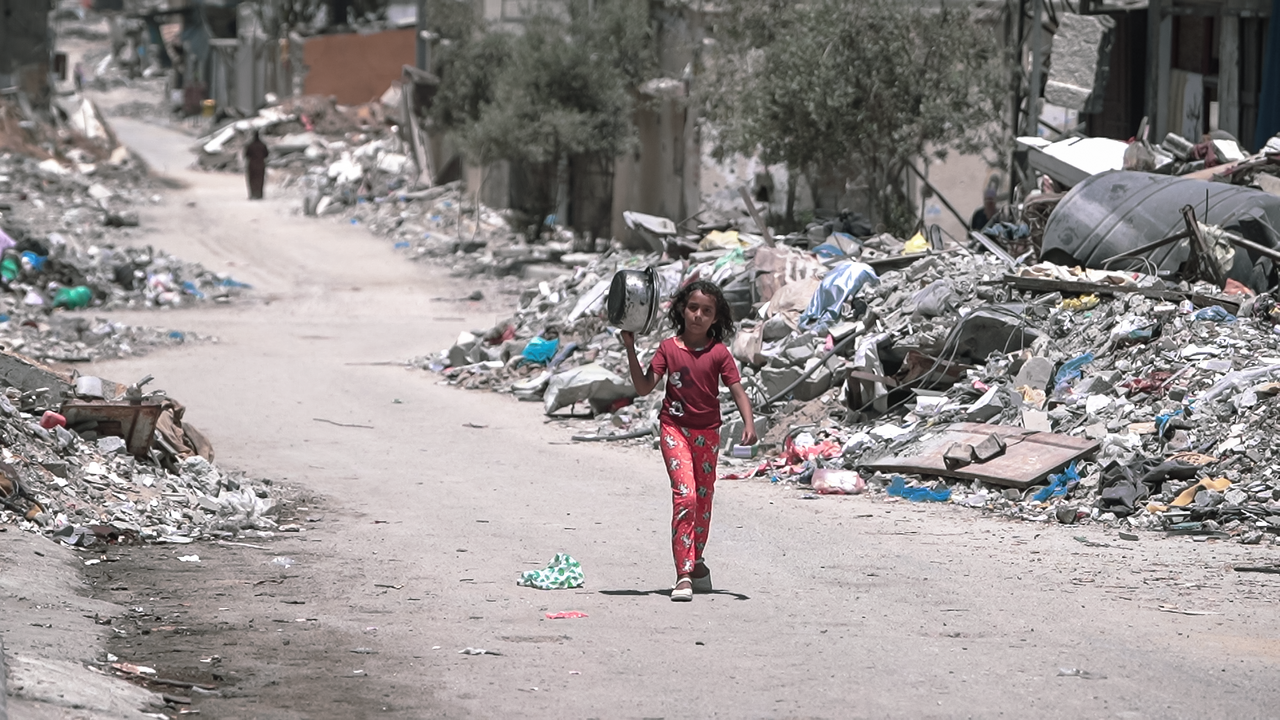
A 30-second commercial aired during NBC’s Thanksgiving Eve special on ‘Saturday Night Live’ has ignited a significant controversy, drawing sharp criticism from prominent Jewish organizations. The advertisement, created by the Palestinian rights advocacy group IMEU Policy Project, drew a direct link between American taxpayer assistance to Israel and the suffering of children in Gaza. The network subsequently decided not to re-air the spot, while the advocacy group expressed disappointment at the decision.
The Content and The Controversy
The spot presented a stark visual juxtaposition. It first depicted a suburban American girl saving money to buy a bicycle. The scene abruptly transitioned to a harrowing image of a young girl in Gaza, standing amidst rubble with a visible amputation and crutches. A voiceover narrator claimed that every three seconds, the government allocates $400 of public funds to Israel to facilitate this situation. IMEU Policy Project identified the injured child as Meral al-Babli, stating that she was harmed when the Israeli military attacked her home, resulting in the deaths of her mother and grandmother.
The advocacy group maintained that the advertisement successfully passed NBC’s internal verification protocols, asserting that the facts presented were ‘indisputable.’ However, the commercial generated immediate and widespread pushback from various Jewish religious and advocacy bodies. Groups including the Anti-Defamation League and the Orthodox Union condemned the piece, arguing that it misrepresented the reality of American financial support for Israel and the broader conflict in Gaza.
Examining the Critique
Critics pointed out that while they acknowledge the distress of innocent civilians in both nations, the ad was exploitative. The Orthodox Union noted that the commercial capitalized on civilian hardship while omitting the involvement of Hamas. Similarly, the Union for Reform Judaism argued that the piece reduced a complex and tragic war into a simple, emotionally manipulative accusation that American taxpayers were directly funding the maiming of Palestinian children.
Leaders from groups like the ADL described the decision to broadcast the spot as ‘indefensible,’ stating that there was no justification for promoting such a skewed narrative. The National Jewish Advocacy Center even threatened to file a complaint with the Federal Communications Commission if NBC failed to provide supporting evidence for the claims made in the advertisement.
Broader Geopolitical Context
The advertisement arrived amid ongoing discussions regarding a successor to the existing 10-year, $38 billion Memorandum of Understanding between the U.S. and Israel. While the current agreement provides military aid largely through grants for American-made defense purchases, the political landscape remains volatile. The IMEU Policy Project criticized the potential successor agreement as a ‘long-term weapons giveaway to Israel.’ The incident also reflects a wider trend of political messaging in the run-up to elections, where anti-Israel ads have used themes of financial aid to fuel political arguments, leading some advocacy groups to express concern over the normalization of antisemitic tropes.
