


World Views
Analysis of NPR Interview Raises Concerns Over Misinformation and Narrative Shaping

A recent broadcast on NPR’s ‘Morning Edition’ has sparked significant debate regarding journalistic practices, with critics pointing to the alleged fabrication of statistics and the strategic omission of key conflict details during an interview with former Biden administration deputy national security adviser Jon Finer. The seven-minute discussion, which featured Finer discussing the shifting global perception of Israel, drew scrutiny for appearing to push a predetermined, anti-Israel narrative, according to observers of the broadcast.
The Discrepancy in Data and Public Opinion
The core of the criticism centers on the actions of host Leila Fadel. When Finer mentioned that American sentiment was turning negatively toward Israel, even should Netanyahu’s opponents win, Fadel reportedly introduced a figure that was not substantiated by Finer. She stated that a recent survey indicated that over sixty percent of U.S. voters desired an end to military assistance to Israel due to actions in Gaza. However, independent analysis suggests this figure was highly misleading. Data from organizations like the Chicago Council on Global Affairs and the Washington Post indicated that figures seeking to curtail support were closer to the twenty-nine to thirty-five percent range. While an older poll from Quinnipiac provided a related data point, context suggests it was outdated, predated the ceasefire agreement, and specified opposition to *additional* aid, not an outright cessation of all support.
Shifting the Focus: Omitting Hamas’s Role
The conversation took a sharp turn when Finer offered a nuanced perspective on the conflict’s duration, suggesting that both the Israeli government and Hamas displayed reluctance in pursuing a comprehensive deal and that hostages perished during the protracted negotiations. Yet, the questioning quickly pivoted away from this complexity. Fadel subsequently pressed Finer regarding the culpability of previous administration officials for the violence in Gaza, listing civilian casualties and military actions in hospitals and schools. This line of inquiry, critics argue, effectively erased the role of Hamas in the conflict. By focusing solely on civilian losses, the discussion allegedly failed to acknowledge Hamas’s well-documented use of human shields, tunnel networks beneath civilian infrastructure, or its own responsibility for seizing hostages.
A Call for Context and Accuracy
The incident highlights a broader concern among media watchdogs: the potential for high-profile interviews to become platforms for coordinated messaging rather than balanced reporting. Critics assert that by failing to account for the terror group’s strategies or the full scope of the conflict’s origins, the interview presented an incomplete and skewed picture. For viewers and listeners, the situation underscores the necessity of demanding rigorous, contextualized data and fair reporting, rather than accepting narratives that selectively present facts to build a predetermined argument.
World Views
Palestinian Authority Media Faces Scrutiny Over Contradictory Holocaust Narratives

An examination of recent broadcasts from Palestinian Authority (PA) television has revealed a deeply troubling pattern of institutional contradiction regarding historical memory and the Holocaust. When faced with criticism concerning PA leader Mahmoud Abbas’s alleged denial of the Holocaust, state media did not reject the accusations; instead, it mobilized to defend Abbas while simultaneously amplifying the very historical distortions at the core of the controversy.
Political Defense of Abbas Against Accusations
During a recent program discussing the political platforms of Israeli parties, a PA television analyst, identified as an expert on Israeli affairs, publicly rebutted claims that President Abbas minimizes the genocide of European Jewry. The analyst dismissed the criticism outright, asserting that Abbas’s views were not denialist but rather rooted in proving a connection between the Nazi regime and early Zionist leadership. The expert argued that the accusation of Holocaust rejection was false, stating that Abbas had demonstrated a link between the two movements, despite the opposing party’s claims.
The defense was particularly forceful, taking place during a discussion of a specific Israeli party’s election agenda. The analyst presented the PA leader’s perspective as established fact, countering the notion that Abbas minimizes the atrocities committed against Jewish people. This defense implicitly relied on the premise that Abbas’s academic work suggested the Jewish population’s losses were significantly less severe than commonly accepted, positing that the actual number of fatalities was only in the hundreds of thousands.
Amplification of Historical Distortion
The contradictions became starkly apparent when PA TV subsequently aired a segment featuring a Palestinian academic. This expert echoed the narrative of exploitation, suggesting that the events known as the Holocaust were significantly exaggerated. The academic argued that the immense suffering was leveraged by Jewish interests to facilitate greater emigration opportunities to Palestine. This broadcast, occurring just weeks after the political defense, cemented the media institution’s role in disseminating a specific, contested historical viewpoint.
Institutional Inconsistency and Impact
The pattern of broadcasting reveals a critical inconsistency within the PA’s media messaging. On one hand, the authority actively works to discredit external charges of Holocaust denial leveled against its leadership. On the other, it grants prominent airtime to scholars and analysts who promote the idea that the historical narrative of the Holocaust has been inflated for political gain. This simultaneous rejection of denialism while promoting distortion raises serious questions about the authority’s commitment to objective historical discourse. The media’s actions suggest a strategic use of historical narratives to support political objectives, rather than a commitment to factual accuracy.
World Views
Systemic Barriers Undermine Narrative of Peace for Iranian Jewish Community
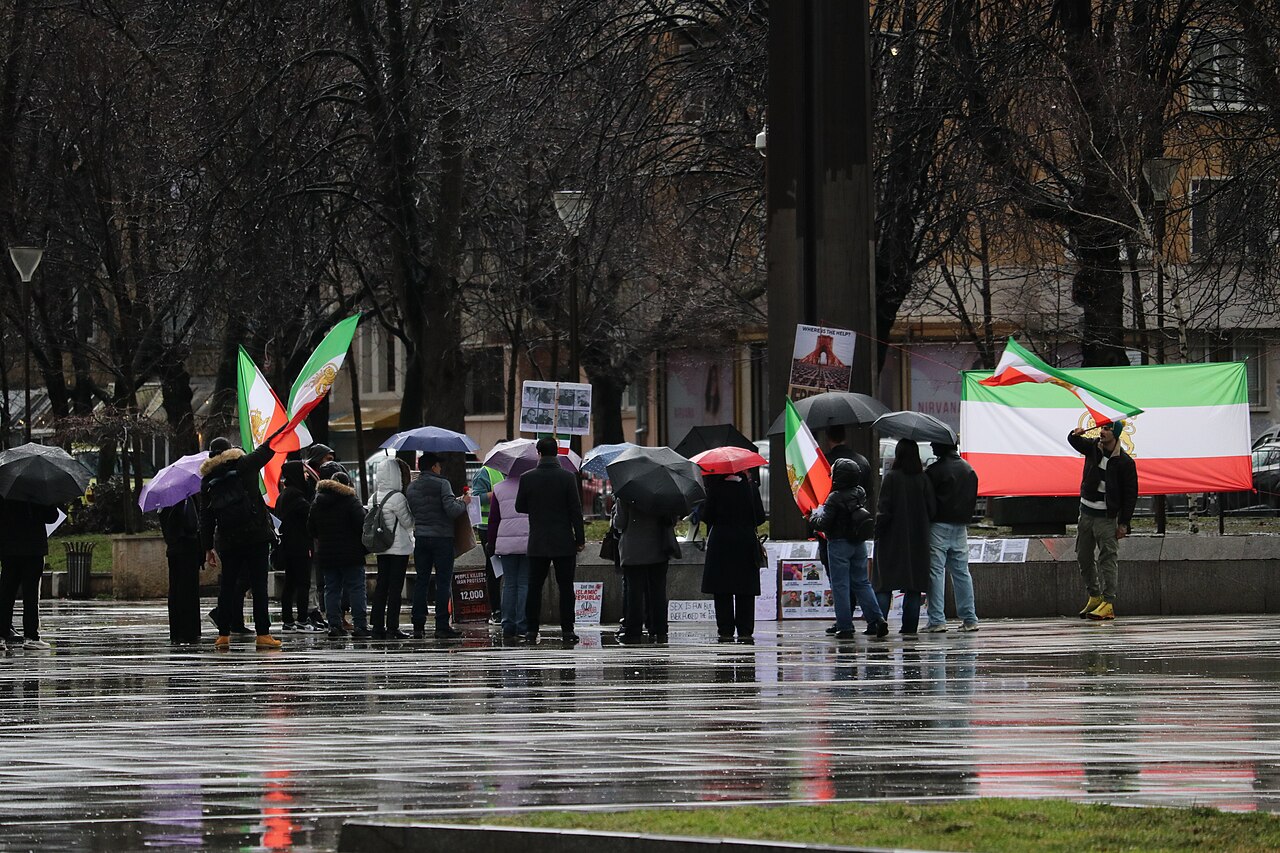
Recent media coverage presenting the Iranian Jewish community as existing in a state of tranquil coexistence with the majority Muslim population has drawn sharp criticism from human rights watchdogs. Critics argue that while profiles published by major international networks attempt to portray a harmonious minority existence, they systematically overlook deep-seated structural and political limitations imposed by the ruling government. These reports, which suggest that the community lives in peace while framing external political entities as disruptive forces, fail to capture the full reality of life for Iranian Jews.
Structural Limitations Challenge Media Portrayals
The journalistic focus on cultural integration, such as the operation of Jewish schools teaching both Farsi and Hebrew, is challenged by the underlying legal framework. According to documentation from the United States State Department, the functioning of these educational institutions is contingent upon the principal adhering to a Muslim faith. Furthermore, the political representation of the community is severely restricted. For instance, while one individual is cited as the sole Jewish member of parliament, critics point out that this is not a matter of cultural preference, but a constitutional mandate limiting non-Muslim citizens to a single designated seat in the legislature.
Beyond political representation, the community faces significant constraints on expression and legal parity. Reports indicate that religious leaders and other community members are not afforded the freedom to publicly engage in political discourse. Moreover, the legal system does not treat non-Muslim citizens identically to Muslims, suggesting pervasive inequality within the judicial sphere. These systemic issues, which are deliberately omitted from the picturesque narratives, define the actual experience of the community.
A Pattern of Selective Reporting
This critique is not isolated; observers have pointed out similar oversights in previous international profiles. Eight years ago, a similar analysis highlighted a network’s coverage of Iranian Jewry, noting a pattern of emphasizing positive aspects while downplaying pervasive discrimination. Critics suggest that the current profile, much like its predecessor, risks serving the state’s preferred narrative of stability. The author of the critique, who contributes to a media monitoring group focused on biases, suggests that the profile reflects a historical tendency among certain journalists to package government perspectives as objective news coverage.
Need for Nuanced Coverage
The findings underscore a persistent gap between the idealized image presented to international audiences and the lived realities of minority groups under authoritarian rule. True investigative reporting, the critics argue, must move beyond celebrating cultural coexistence and instead address the foundational challenges concerning religious freedom, political equality, and the systemic limitations placed upon the Jewish community in Iran. This shift is crucial for providing an accurate and comprehensive understanding of the country’s religious landscape.
World Views
From Emmy Success to Cultural Icon: Noah Wyle Discusses Heritage and Representation in ‘The Pitt

Actor Noah Wyle, known for his work in high-profile medical dramas, has recently received widespread recognition after being named one of People magazine’s ‘Sexiest Man Alive.’ While the accolade celebrated his on-screen appeal and personal attributes, Wyle himself used the platform to discuss the profound connection between his acting roles, his family history, and the critical importance of authentic cultural representation in television.
The Arc of a Character
Wyle, who stars as Dr. Michael Robinavitch in the critically acclaimed HBO Max series, ‘The Pitt,’ has garnered multiple awards for his portrayal of the physician. The magazine highlighted his ‘smoldering intensity’ and compelling appearance. The actor, who is 55 and a father of three, initially expressed surprise at the honor, noting that his wife encouraged him to accept the recognition. His career has spanned decades, including a notable role in the 1990s series ‘ER.’ Wyle explained that the character of Dr. Robinavitch, and his Jewish background, was a deliberate creative choice. He revealed that the name Robinavitch was inspired by his great-grandmother’s father, connecting the character to his family’s Ukrainian and Russian Jewish ancestry, a lineage that is part Jewish and part Episcopalian.
Beyond the Screen: Faith and Context
The evolution of Dr. Robinavitch’s character was heavily influenced by real-world events. Wyle noted that the concept of the character’s faith journey became particularly significant following the events of October 7th. Initially, the character’s Jewish identity was established before the massacre, but the subsequent period prompted the writers to explore a narrative where the character was distant from his faith, necessitating a deep search for spiritual connection. This thematic development culminated in a poignant scene in the first season, where the character clutches a Star of David necklace and recites a Jewish prayer during a moment of extreme distress in the emergency room.
The Responsibility of Media
Wyle emphasized the powerful influence that media has on global perception of Jewish people. He stated that the way audiences understand Judaism is often filtered through depictions presented in entertainment. This awareness has led to a personal shift; his daughter has shown interest in learning about Judaism, and a Bat Mitzvah celebration is being planned. Wyle shared that through his daughter and the visibility of ‘The Pitt,’ he feels that the significance of Judaism in his own life has increased dramatically. His commitment to nuanced storytelling, as seen in his co-writing of a second-season episode focusing on a patient tied to the 2018 Pittsburgh Tree of Life synagogue shooting, underscores his dedication to portraying complex human experiences with depth and sensitivity.
