



World Views
Veteran Holocaust Witness Urges Global Law Enforcement to Confront Modern Hatred
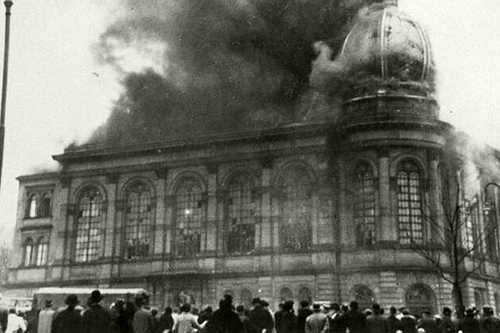
At the 88th anniversary observance of Kristallnacht, a veteran Jewish survivor delivered a powerful message to senior law enforcement officials from across Europe and North America: the duty to learn from the darkest chapters of history is perpetual. George Shefi, one of the last witnesses to the devastating 1938 pogrom, returned to the city of his birth to share his harrowing account, emphasizing that modern generations bear a profound obligation to ensure such violence never recurs.
The Call to Action: Learning from the Past
Speaking at the New Synagogue—a site that tragically stood as a target of the Nazi-fueled mobs—Shefi stressed that preserving the memory of the Holocaust is an eternal commitment for Germany. While he did not assign personal blame to contemporary Germans, he asserted that they possess a critical duty to draw lessons from the past. His testimony highlighted the crucial role of courage, citing Wilhelm Krützfeld, the local police head who intervened to prevent the synagogue from being destroyed. Shefi urged police officers today to emulate Krützfeld’s human decency, insisting they must refuse to remain passive in the face of rising hatred.
Shefi recounted the immediate terror of the night, describing the broken glass and antisemitic graffiti daubed on local businesses. These vivid memories underscore the swift descent into violence. The event, organized by the International March of the Living, serves as part of a wider global effort to educate police representatives on the historical weight of the Holocaust.
A Global Crisis of Remembrance
The urgent nature of this remembrance is underscored by contemporary global trends. Recent reports indicate a sharp escalation in antisemitic incidents worldwide, with hundreds of documented attacks on Jewish worship centers across multiple nations. This heightened climate prompted leaders to frame Kristallnacht not merely as a historical lesson, but as a critical warning sign. Phyllis Greenberg Heideman, president of the March of the Living, stated that had the world acted decisively to halt the persecution then, the consequences might have been drastically different.
The conversation extended beyond Germany, where police officials acknowledged the nation’s ‘immense guilt.’ International delegates stressed that the lessons learned in Germany apply universally. Paul Goldenberg, who chairs the international delegation, cautioned that no nation is immune to the politicization of policing or institutional prejudices. He called on global law enforcement to apply the same level of critical scrutiny to their own internal practices as they demand of others.
Protecting the Community
The importance of visible symbols of remembrance, such as the memorial stones (stolpersteine), was also emphasized. Shefi noted that these markers represent the existence of Jewish communities and that their protection is intrinsically linked to the rights safeguarded by police forces. As the world navigates increasing political polarization, the veteran witness’s plea remains clear: active protection and unwavering vigilance are the only ways to secure a democratic future.
World Views
Political Calculus in Israel: Eisenkot Gains Parliamentary Edge, But Mandate Remains Uncertain
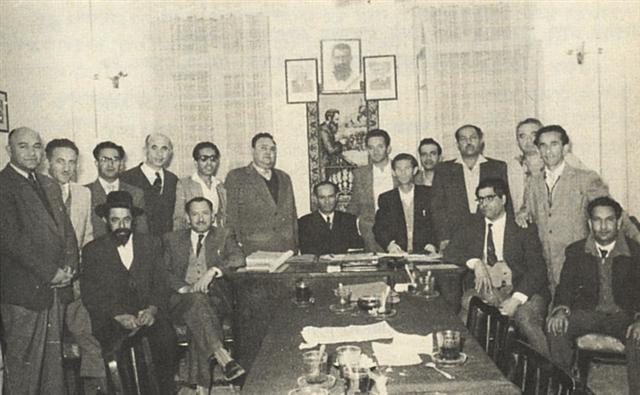
The political landscape of Israel is undergoing a dramatic shift, with Yashar Party leader Gadi Eisenkot securing a significant parliamentary advantage over Benjamin Netanyahu. While Eisenkot has garnered the backing of 67 out of 120 members of the Knesset, he has not yet been granted the official authority to form a new government. This delicate political standoff highlights the complex maneuvering required to navigate the country’s fragmented legislative body.
The Numbers Game and Coalition Potential
President Isaac Herzog, whose constitutional role is to determine which leader possesses the capacity to establish a government, recently concluded extensive discussions with various political factions. Herzog confirmed that Eisenkot currently holds more endorsements than the 46 members supporting Netanyahu. Eisenkot’s potential coalition is bolstered by several key groups. He anticipates support from the Jewish-Israeli parties, including B’Yachad, Israel Beytenu, and the Democrats, which could assemble a coalition bloc of 48 seats. Furthermore, the Arab-Israeli party Ra’am has recommended him, and the Joint List, despite having only 11 seats, is expected to provide crucial outside support, meaning they would vote with the governing block without being formally part of the coalition.
The President’s Deliberation
Despite the seemingly clear numerical advantage held by Eisenkot, President Herzog has stated that the final decision will not be made until Sunday. Herzog explained that while the consultation results may appear definitive, the legal authority vested in him requires careful consideration before appointing a Prime Minister. He indicated that he would continue engaging with the leaders of the various parties to ensure a comprehensive understanding of who is truly positioned to lead the nation.
A Season of High-Stakes Decisions
This political crisis is part of a broader period of intense decision-making for Jewish communities globally, spanning from domestic political campaigns to major international elections. The uncertainty surrounding the Israeli government’s formation underscores the deep divisions within the political spectrum. The process illustrates the intricate balance of power, where sheer numbers must be matched by political viability and legal standing. The coming days will be critical in determining whether Eisenkot can translate his majority support into the executive power needed to govern, fundamentally reshaping the nation’s political trajectory.
World Views
Post-Election Narratives Challenge Media Framing of Israeli Identity and Democracy
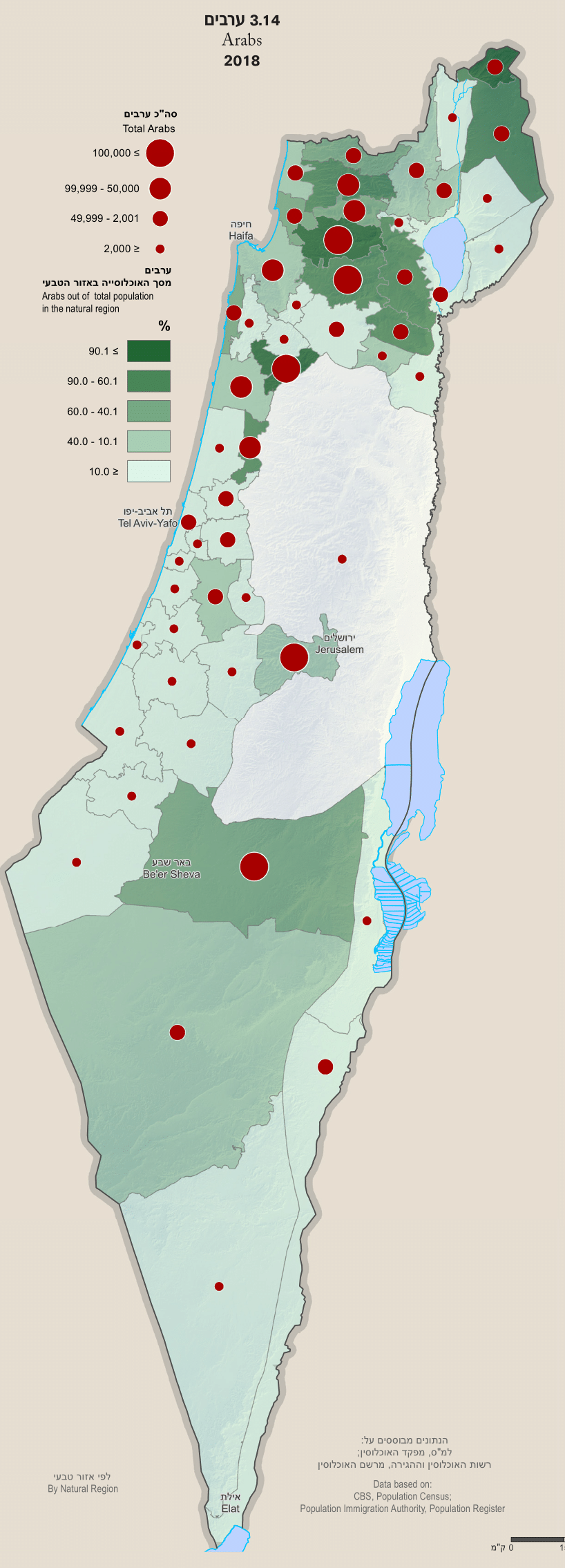
Following Israel’s recent national elections, two politically charged narratives have gained traction across social media and traditional news outlets. These talking points—one concerning the identity of the Arab minority and the other questioning the democratic scope of the voting process—have drawn scrutiny for their accuracy. Experts suggest that both narratives represent highly politicized interpretations, designed to cast doubt on the Jewish state rather than reflect objective political reality.
The Complexities of Identity: Debunking the ‘Palestinian Citizen’ Label
The first circulating claim revolves around the frequent use of the phrase ‘Palestinian citizens of Israel’ when reporting on the Arab minority’s electoral surge. Critics argue this phrasing is a ‘politicized misnomer’ that attempts to impose an external political narrative onto domestic reporting. By using this terminology, media outlets risk suggesting that the Arab community shares closer ideological ties with neighboring Palestinian societies than with Israeli society.
However, research indicates a far more diverse reality. A recent study conducted by the Moshe Dayan Center for Middle Eastern and African Studies revealed that the Arab population of Israel holds a wide spectrum of allegiances. The data showed that only a small fraction, specifically 13.5%, viewed their Palestinian identity as a primary component of their personal self. Instead, the majority prioritized their Arab identity (33.3%), followed by religious affiliation and Israeli citizenship.
Analyzing the Democratic Rights Debate
The second narrative posits that the system is inherently undemocratic because non-citizen Palestinians residing in the West Bank and Gaza are excluded from the national vote. This argument, commentators assert, constitutes a distortion of legal facts. The fundamental distinction is citizenship; those individuals are not Israeli citizens. Extending their right to vote in Israeli elections would, by definition, be tantamount to annexation, a move that opponents of the claim would strongly reject.
While acknowledging that Palestinians in those territories do have the right to participate in elections for the Palestinian Legislative Council under the Oslo II Accords, the debate over Israeli voting rights remains outside the legal framework. Furthermore, the argument that Israel’s policies impact non-citizens and thus grants them a right to vote in Israeli elections is deemed a ‘bad faith argument’ and a logical fallacy. Just as one nation’s domestic policies do not automatically grant foreign non-citizens voting rights in that nation’s polls, the same principle applies here.
A Campaign of Smears?
Those monitoring the discourse suggest that the proliferation of these highly contested arguments is not rooted in genuine democratic concern, but rather in a deliberate effort by certain anti-Israel commentators to smear the nation. The reliance on these specific, easily refutable claims—such as the voting rights issue—is viewed by some observers as evidence of an immature and unserious campaign aimed at portraying Israel as an apartheid state.
World Views
Iran Conflict Splits Republican Party, Challenging Trump’s Foreign Policy Mandate

The ongoing military campaign in Iran has rapidly become a pivotal and divisive issue within the Republican Party, exposing deep fissures following the 2026 midterm elections. The conflict has created a significant rift between President Donald Trump’s unwavering commitment to the military engagement and a growing chorus of voices advocating for a more restrained, isolationist approach. This internal struggle threatens to redefine the party’s direction and its core identity.
The Electoral Liability Argument
The internal debate escalated sharply when Vice President JD Vance released a forceful public assessment of the party’s electoral defeat. Vance directly linked the Republican loss to the war, questioning the political and economic benefits of the sustained intervention. He asserted that the conflict was the primary reason for the party’s failure to retain control of the Senate. Vance further argued that voters who supported the administration in 2024 became disillusioned due to several issues, including the Middle Eastern war, increasing costs of living, a perceived deviation from the ‘America First’ platform, and dissatisfaction with U.S. relations with Israel.
Clash of Philosophies: Necessity vs. Cost
Vance’s remarks signaled a clear divergence from the administration’s official stance. In sharp contrast, President Trump rejected the notion that the military actions constituted a mistake. He maintained that the campaign was necessary for national security, insisting that the U.S. must prevent Iran from obtaining nuclear capabilities. Trump emphasized that military action was unavoidable, while simultaneously refusing to provide a specific timeline for the conflict’s conclusion, stating it would end when he deemed appropriate.
Political Ramifications and International Fallout
The disagreement is proving instrumental in shaping the future of the GOP. Vance, who previously supported the military strategy, is now positioning himself as a potential 2028 presidential contender who champions a more cautious foreign policy. His public challenge indicates a recognition of the political danger associated with the conflict. This internal pushback has found support among influential figures within Trump’s own political circle, suggesting that opposition to the war is not limited to traditional conservative non-interventionists.
Meanwhile, the geopolitical repercussions have been immediate. Iranian officials celebrated the Republican electoral setback, framing the results as a clear rejection of American military policy by the electorate. Tehran officials used the defeat to claim that the U.S. strategy had failed, even as the administration maintains military pressure. The war thus stands as a critical litmus test, forcing Republicans to reconcile their foundational promise of prioritizing domestic interests with their commitment to expansive overseas military engagements.
