



World Views
Ambitious Global Initiative Faces Internal Hurdles Amidst Post-Conflict Review
The closing conference of the Voice of the People (VOP) initiative, held in Budapest, showcased a monumental effort to address some of the most complex and divisive issues facing the global Jewish community. While the program has generated numerous innovative solutions, the event also brought to light significant operational and ideological challenges. The initiative, conceived amid deep political disagreements in Israel, aims to bridge divides ranging from antisemitism and polarization to the relationship between Jews and non-Jews worldwide.
The Scope of the Vision
Partnering with major Jewish organizations and funded by several foundations, VOP assembled 150 council members from Israel, North America, and various parts of the world. These individuals were divided into working groups tasked with developing actionable answers to five major challenges. Over eighteen months, the participants generated a substantial body of work, producing thirty-eight distinct initiatives. Many of these concepts moved into proof-of-concept stages, and numerous projects secured initial funding grants of up to $20,000.
Networking and Impact
The conference, attended by Israeli President Isaac Herzog, emphasized the necessity for Israel to listen more closely to the Diaspora, underscoring that actions taken locally affect communities globally. Participants highlighted the profound network they built, which several members cited as the program’s greatest achievement. Specific projects included the development of the Jewish & Indian Alliance, designed to foster cooperation in technology and education between Jewish communities and the vast Indian diaspora. Furthermore, initiatives focused on promoting social cohesion within Israel through educational materials reached dozens of schools.
Operational and Ideological Friction
Despite the high level of commitment—with some participants sacrificing their professional careers—the process was not without friction. The final conference saw lower attendance than anticipated, with only 89 of the original 150 members present, partially due to the ongoing geopolitical instability. Critiques from council members focused on the lack of clarity regarding the program’s operational rules, with some feeling that expectations were never adequately defined. Furthermore, ideological tensions persisted, as participants struggled to reconcile differing political views on Israel’s actions, highlighting the difficulty of achieving consensus among diverse groups.
A Path Forward
Organizers acknowledged these difficulties, citing the voluntary nature of the commitment and the complexity of coordinating across international time zones. In response to feedback, the initiative has vowed to improve its structure. The upcoming second cohort, which received thousands of applications, will be shortened to sixteen months. Crucially, the initial months will be dedicated to relationship building before challenges are voted upon, and the program will offer clearer guidance on how contentious discussions are managed. Organizers maintain that the experience, including its inevitable failures, is part of a necessary process of growth and innovation.
World Views
Iranian Singer and Team Face Severe Penalties for Defying Dress Code in Online Performance
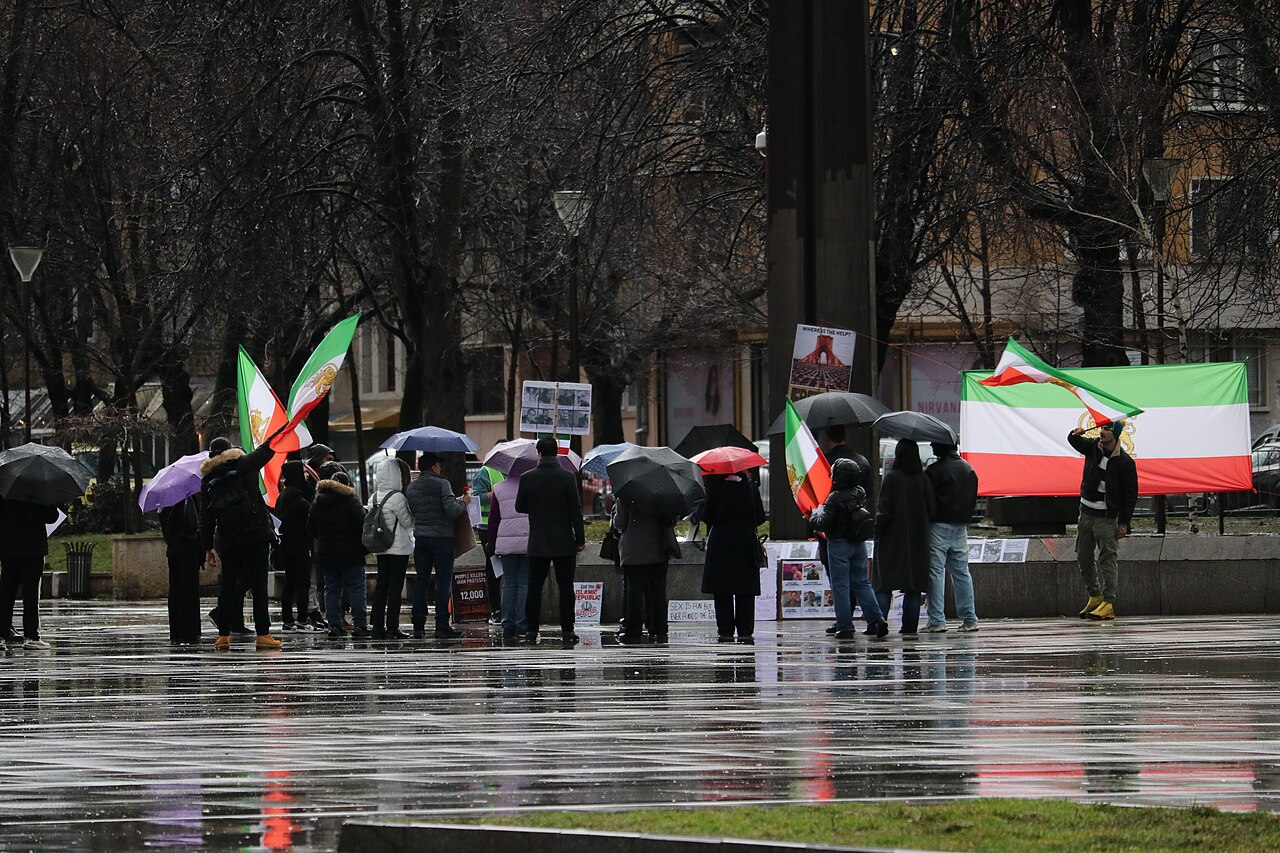
A prominent Iranian singer and four members of her production staff have been subjected to severe corporal punishment following a controversial online performance. The individuals were each sentenced to 74 lashes after Iranian authorities determined they had violated cultural standards by creating and disseminating material deemed inappropriate and immoral. The harsh sentencing underscores the government’s strict enforcement of social and religious codes in the Islamic Republic.
Details of the Public Condemnation
The singer, Parastoo Ahmadi, and her team faced these penalties after a video surfaced on YouTube in late 2024. The footage depicted Ahmadi performing in the city of Qom, located south of the nation’s capital, without adhering to the mandatory hijab requirement, while sharing the stage with male musicians. According to reports citing legal counsel, in addition to the physical punishment, all five individuals have received a two-year prohibition on engaging in musical or artistic endeavors, alongside restrictions on international travel.
Human rights organizations based in Western countries have strongly condemned the use of flogging, labeling it as a violation of international law and a form of torture. Conversely, the Iranian government has consistently rejected these criticisms, asserting that external nations should instead address their own domestic human rights issues.
Deep Roots of Cultural Enforcement
This case is situated within a broader context of strict adherence to religious dress codes, which have become a highly sensitive issue in Iran. The enforcement of the hijab rules gained significant global attention during the massive protests in 2022, which were sparked by the death of Kurdish Iranian woman Mahsa Amini, who was detained for allegedly violating the dress code. Since then, while the rules have been increasingly challenged on the streets of cities like Tehran, the application of these regulations has also exhibited a pattern of selective enforcement.
The legal proceedings confirm that the authorities view the distribution of the video as a serious transgression against public morality. While specific details about the legal representation of the defendants were not provided, the severity of the sentence suggests a high-profile crackdown on perceived cultural dissent. The situation highlights the continuing tension between individual expression and state-mandated religious conformity within the country, leaving international observers concerned about the preservation of personal liberties.
World Views
Political Pressure Fuels Nvidia CEO Reinstatement Amid Governance Scrutiny

Jensen Huang has returned to the role of Chief Executive Officer at Nvidia, following a dramatic reversal by the company’s board. This comeback, which occurred after his initial departure amid revelations of personal misconduct, was heavily influenced by political figures and industry leaders, sparking intense debate over corporate independence and executive accountability. The reinstatement immediately sent Nvidia’s stock soaring, but it has also placed the company under a microscope regarding its governance standards and its critical role in the global AI supply chain.
The Tumultuous Return and Governance Questions
Huang’s return capped a volatile week that shook the technology sector. His initial resignation stemmed from reports concerning his extramarital affairs, which included allegations involving a Chinese national. Although Huang has acknowledged infidelity and apologized, he has not provided full details regarding the alleged relationships. Governance experts, however, are deeply concerned about the board’s decision-making process, suggesting it raises serious questions about the company’s autonomy. A financial analyst noted that such a move signals that certain top executives may be subjected to different standards based on their stature, while simultaneously noting that Huang will still face rigorous questioning from Congress.
Nvidia stated that, following input from the US government, the board felt confident that Huang’s return presented no national security risk. This claim was publicly reinforced by Donald Trump, who stated that after extensive research, the administration concluded there was no security problem. The move was supported by a petition gathering over 180,000 signatures, underscoring the unusual level of support for the executive.
Geopolitical Stakes and Congressional Oversight
The drama is unfolding against the backdrop of heightened geopolitical tension surrounding advanced AI chips. Nvidia is currently facing intense scrutiny from Washington over the flow of its technology to China, with US authorities tightening licensing rules. The reinstatement of Huang, a figure who has advocated for greater access to the Chinese market, is seen as vital for the company’s business interests there. Lawmakers from both parties strongly objected to the decision, with some senators warning that the move did not absolve Nvidia of accountability regarding national security concerns and the movement of sensitive technology.
The legal and regulatory overhang remains substantial. Huang has agreed to appear before the US Senate Banking Committee on December 3rd. Furthermore, the company is facing multiple investigations, including those related to potential accounting irregularities and shareholder lawsuits accusing the firm and Huang of misleading investors about his personal relationships. The board has formed committees to investigate potential foreign intelligence targeting and is seeking to appoint a new chief compliance officer, reflecting the gravity of the current crisis.
World Views
US Eyes Limited Military Partnership with Damascus Amid Geopolitical Thaw

The United States is reportedly advancing discussions regarding a specialized military training program intended for Syrian armed personnel, focusing specifically on the critical skills of demining and explosive ordnance disposal. Sources indicate that if approved, this initiative would mark the first official US military training mission with the Syrian government since the establishment of the current administration in Damascus in 2024. While the proposal holds the potential to facilitate a modest return of American military presence to the region as early as next year, it currently faces substantial legal and operational resistance.
Framework for Cooperation
The envisioned multinational effort is set to build upon the existing infrastructure of the Damascus Coordination Center (DCC), a body established last year in Jordan to coordinate regional allies, American forces, and Syrian authorities. Initial plans suggest the training would focus on ordinance safety, but officials suggest the program could evolve into a broader model for international collaboration. The framework under consideration involves participation from approximately fifteen allied nations, including Germany, France, Australia, the United Arab Emirates, and the United Kingdom. American military spokespeople confirmed that the DCC continues to support the goal of achieving a stable and peaceful Syria, though the precise scope and future mission objectives remain undecided.
Navigating Political and Legal Obstacles
Despite the diplomatic thaw—which includes the lifting of broad economic restrictions on Syria—significant hurdles persist. On the American side, the Leahy Laws represent a major legal barrier, prohibiting U.S. assistance to foreign security units if credible evidence of grave human rights violations exists. American authorities would therefore be required to rigorously vet prospective Syrian recipients. These human rights concerns are compounded by the fact that some commanders within the new security forces have backgrounds tied to former Islamist fighting groups, a point documented by United Nations investigators.
Syrian Reluctance and Operational Realities
The Syrian side presents its own complications. Reports indicate that certain officials within the defense ministry have been hesitant to grant American personnel access to necessary facilities and institutions, complicating the establishment of any training regimen. This proposed cooperation follows a period of significant geopolitical realignment, as Washington has eased sanctions and removed Syria’s designation as a state sponsor of terrorism. Furthermore, recent high-level meetings between a Syrian defense minister and the commander of the Operation Inherent Resolve mission underscored the ongoing dialogue about multinational mechanisms and border security. Some options under review include conducting the training in both Jordan and Syria, potentially starting in March, with limited U.S. military involvement, possibly utilizing funds remaining from the prior mission.
