


Uncategorized
‘They’re fed up’: Post-ceasefire, Israel faces an enormous political reckoning

My brother-in-law, David Levy, didn’t sleep much the night before the release of the last living hostages. That day, he stayed glued to the family TV — along with what seemed like the entire country.
“You could just see the injection of spirit this has given to Israel,” he said.
“I finally get why Judaism talks so much about ‘the redemption of captives,’” he said, referring to the religious duty to free prisoners. “You see how this has just driven Israelis crazy for the past two years.”
Now, there’s a budding sense of normalcy, he said, and a tentative if clear-eyed hope for the future.
But when I asked David if he thought Palestinians and Israelis would achieve coexistence — the last point on President Donald Trump’s 20-point plan to end the war — he broke into a smile.
“Yeah,” he said, “maybe Hamas will ask for the sheet music to ‘HaTikvah.’”
After the hostage release, a reckoning
I called David, my wife’s brother, on Oct. 7, 2023, after news broke of the Hamas attack. He and his wife, Etti, had just endured a two-hour missile barrage at Kibbutz Mishmar HaNegev, where they have lived for 40 years, some 20 minutes by car from the Gaza border. He was seething with anger at how his government could let this happen.
“This is a total f-ed up,” he said at the time. He spent the next several days at funerals, shivas and memorial services for many murdered friends and colleagues.

With the release of the 20 living hostages Monday, in exchange for close to 2,000 Palestinian prisoners, there’s finally a real chance for the anger he and other Israelis felt that day to have a political impact, David said when we spoke by video app on Monday.
There will likely be an election before fall, David said — elections are mandated in 2026. He expects Prime Minister Benjamin Netanyahu to face a reckoning over three primary issues: the cash payments Qatar made to Hamas under his watch, essentially financing the Oct. 7 attack; his refusal to force Haredi men to serve in the army, which has contributed to enormous strains on Israel’s reserve forces amid the war; and his rejection of a government investigation into Israel’s failures on and leading up to Oct. 7.
“As opposed to almost everybody else, he has never said, ‘I’m sorry,’ David said.
The long-running complaint of many Israelis is that the political opposition to Netanyahu has never coalesced around a strong candidate. But David said the past two years may have changed that as well. A new generation of young people became politically engaged because of the attack, the hostage crisis and the war.
“You had guys with jobs and families spending 400, 500, days in the army doing reserve service,” he said. “They’re fed up. All these young, capable people that just went through this war, I wouldn’t be surprised if they’re going to get their say and do something.”
‘Israelis are still mourning’
I asked David if that reckoning will include an acknowledgment of Israel’s destructiveness in the war in Gaza. If the ceasefire holds, rebuilding efforts will surely be accompanied by more reports on the death toll and debastation — although international journalists are still being denied entry to the strip.
How will Israelis come to terms with it?
“What did Mosul look like after the Americans left?” he asked. Meaning: American, Iraqi and allied troops destroyed an estimated 60% of the Iraqi city of Mosul in a 2017 effort to rout ISIS fighters, killing an estimated 9,000 civilians. Did Americans ever really confront that harm — or even, as a collective, feel an obligation to?
“I don’t think the mindset was we just turn the place into rubble for the sake of turning it into rubble,” he said.
He has seen the rubble of Gaza himself, during visits to friends in border communities, and said he agrees “the destruction is going to be something that has to be reckoned with,” he said.
“But you know, Israelis are still mourning. That sounds like a cop out, but Israelis have not totally not dealt with the other side.”
The reason, he said, is that two years later, the trauma of Oct. 7 is still fresh.
“The Israeli public has been so devastated,” he said, “we’re wrapped up in ourselves. I don’t know when we’ll get over it. Everybody knows somebody who knows somebody who’s been affected directly by this war.”
What comes next?
Israel wants its image abroad to improve, David said. Trump’s peace plan, although fragile — already, there are clashes over Hamas’ delay in returning the bodies of slain hostages — offers an opening.
“If there’s peace, and Gaza gets rebuilt properly, so that these people can have a good life instead of just being pawns in this crazy death cult of Hamas, then I’m sure that this will improve Israel’s reputation around the world,” David said. “But will Hamas give up power and disarm?”
That question is central to fears over whether Trump’s plan will be fulfilled. It’s a serious concern. Even as David raised it, I noticed an incoming news alert that Hamas militants had killed at least 33 Gazans whom the group accused of collaborating with Israel.
Yet there are still reasons to be hopeful. After attending a day of memorials on the second anniversary of Oct. 7, David said he was preparing to spend Simchat Torah — the holiday on which the massacre took place in 2023 — at a festive family meal, cooked by his son-in-law, who owns a Jerusalem restaurant.
Is that kind of true celebration a sign the war is really over? I asked.
“I want to hope so,” he said. “I really, really want this to be over.”
The post ‘They’re fed up’: Post-ceasefire, Israel faces an enormous political reckoning appeared first on The Forward.
Uncategorized
Experimenting with translation on today’s Yiddish stage

„פֿרײַנד און פֿײַנט, ברוכים הבאים! זײַט באַגריסט צו דער װעלט־באַרימטער װעלט־מײַסטערשאַפֿט פֿון ייִדישע קללות!“
אַזוי רעוועט אויף דער בינע אַן אָנזאָגערין (געשפּילט פֿון װיװי לאַקס) אױף ייִדיש, אײדער אַ צווייטער אָנזאָגער (פּאָל קענדלער) זעצט איבער דעם זאַץ אױף ענגליש, אָנהייבנדיק מיט דער פֿראַזע !Friends and foes.
שטייענדיק אין אַ מיזרח־לאָנדאָנער טעאַטער האָט קענדלער מיט אַ געדאַכטן שופֿר פֿאַרבעטן די צװײ קאָמאַנדעס פֿון „קללה־קעמפֿערס“ אויפֿצוטרעטן. די זיבן „שדים פֿון חילול־הכּבֿוד“, אױף בינע־לינקס, האָבן בײז געקוקט אױף די פֿינף קעמפֿערס פֿון „גולם פֿונעם עולם“, אױף בינע־רעכטס. די ריכטערין — אַן איבערגעבױגענע, 3,000-יאָר־אַלטע „דבֿורה פֿון דער תּורה“ — איז געזעסן אױפֿן שופֿט־בענקל. צװײ ספּאָרט־קאָמענטאַטאָרן אױף דער הינטערבינע האָבן אַנאַליזירנט דעם גאַנצן פֿאַרמעסט.
די קעמפֿערס האָבן גענומען שעלטן זײערע קעגנערס, קודם־כּל מיט מילדע זידלװערטער און שפּעטער מיט שװערע װייטיקן, קרענק און טױטקאָמישן שלימזל׃ „זאָל די לעבער דיר שטיקלעכװײַז אַרױספֿליִען דורך דער נאָז“!
אױף יעדער קללה האָבן די קעמפֿערס רעאַגירט אויף אַן איבערגעטריבענעם אופֿן, אַזױ װי מע וואָלט זיי געשלאָגן מיט אַ גװאַלדיקן זעץ. פֿאַר ווייטיק האָבן די אַקטיאָרן זיך געהאַלטן בײַ די זײַטן, אומגעפֿאַלן — ווידער אויפֿגעשטאַנען און דערלאַנגט צוריק. בשעת־מעשׂה האָבן די קאָמענטאַטאָרן איבערגעזעצט אַלע קללות אױף ענגליש — אָבער אױך אַרײַנגעװאָרפֿן אײגענע װיציקע באַמערקונגען. „ממש אַ פּאַטש אינעם דורכגאָס פֿון האָרמוז!“ האָט איינער אויסגערופֿן.
אַזוי ווי עס טרעפֿט אָפֿט הײַנט בײַ ייִדישע פֿאָרשטעלונגען וווּ ס׳רובֿ צוקוקער קענען נישט קיין ייִדיש, האָט מען נאָך יעדן וויץ געהערט צװײ כװאַליעס געלעכטער: אײן רעאַקציע אױף דער ייִדישער קללה גופֿא און אַ צװײטע — אַ העכערע רעאַקציע אױף דער איבערזעצונג.
שפּראַך־עקספּערימענטן אױף דער בינע
דער קללה־פֿאַרמעסט איז געװען בלױז אײנער פֿון פֿערצן קורצע אַקטן אין דער ערשטער אָװנט־פּראָגראַם פֿון די „לאָנדאָנער ייִדיש־שפּילערס“ אין יוני. די נײַע טרופּע איז אָנגעפֿירט דורך פֿינף באַקאַנטע טוערס אין דער אָרטיקער ייִדיש־סבֿיבֿה׃ סאָניאַ גאָלאַנס, װיװי לאַקס, תּמרה מיצנער, שמואל־לײבל אָגין און דוד שנײַדער (נישט קײן קרובֿ מײַנער).
כּמעט יעדע סצענע האָט אײַנגעגלידערט די ענגלישע שפּראַך אױף אַן אוניקאַלן אופֿן.
פֿאַר די צװײ קאָמעדיע־פּיעסקעלעך פֿון שלום־עליכמען און די װײניק באַקאַנטע מעלאָדראַמע פֿון ש. אַן־סקין האָט מען פּראָיעקטירט ענגלישע איבערקעפּלעך הינטער דער בינע. אין רובֿ פֿאַלן, אָבער, האָבן די שפּילערס גערעדט אָדער געזונגען אַ געמיש. אין אַן אױסצוג פֿון „דער דיבוק“, למשל, האָבן געװיסע אַקטיאָרן איבערגעזעצט וואָס אַנדערע אױף דער בינע האָבן געזאָגט. אין אַ סצענע פֿון שנײַדערס אָריגינעלער דראַמע, „לאָזן סטאַלינען לאַכן“, רעדן די ייִדישע פּאַרשױנים ייִדיש, בעת די קאָמוניסטישע פֿונקציאָנאַרן רעדן ענגליש.

אין אײן סצענע האָט מען בכלל נישט צוגעשטעלט קײן איבערזעצונגען׃ אַ נײַע ייִדיש־אַדאַפּטאַציע פֿונעם קאַנאַדער קינדערביכל „מױרעס געבורטסטאָג“ פֿון ראָבערט מונש. תּמרה מיצנער האָט נישט נאָר פֿאַרטײַטשט, פֿאַרבעסערט, דראַמאַטיזירט און רעזשיסירט די מעשׂה, נאָר אױך געשפּילט די הויפּטראָלע.
די סופֿליאָרשע תּמרה גליסאָן־פֿרידבערג האָט אַרײַנגעפֿירט די סצענע מיט אַ קורצער ענגלישער הקדמה און איז פּלוצלינג נעלם געװאָרן, צוזאַמען מיט דער ענגלישער שפּראַך.
דער סיפּור־המעשׂה פֿון „מױרעס געבורטסטאָג“ איז אַ פּשוטער. מױרע פֿאַרבעט אַלע קינדער פֿון איר גאַנצער עלעמענטאַר־שול אױף אַ שׂימחה בײַ זיך אין דער הײם. אַזאַ סך הונגעריקע קינדערלעך! װאָס טוט מען — און װאָס עסט מען?
אויף דער בינע האָט מען געשפּילט די קאָמעדיע זײער „פֿיזיש“. במשך פֿון דער סצענע האָט מיצנער איבערגעחזרט אַלע קלאַסן וואָס זי האָט פֿאַרבעטן אויף איר געבוירן־טאָג שׂימחה (קלאַס א׳, קלאַס ב׳…) און יעדעס מאָל האָט זי געניצט די זעלבע איבערגעטריבענע אָרעם־באַװעגונגען — אַ פֿיזישער פֿאָרם פֿון טעאַטער מחוץ ווערטער.
איך אַליין האָב קױם באַמערקט אַז עס פֿעלן די איבערזעצונגען. נאָר מײַן זיץ־שכנטע האָט דאָס יאָ באַמערקט. „װאָס איז געװאָרן פֿון די איבערקעפּלעך?“ האָט זי מיר געשעפּטשעט. „עפּעס אַ טעכנישער פֿעלער?“
ווי עס ווײַזט זיך אַרויס, איז דאָס בפֿירוש נישט געווען קיין טעות.
דער עולם איז דאָך נישט קײן גולם
סאָפֿי אַבלעט, אַן אַקטריסע פֿון דער טרופּע, האָט דערצײלט אַז איר יאַפּאַנישער חבֿר אין עולם, נישט קײן ייִדיש־רעדער, האָט פֿאַרשטאַנען „מױרעס געבורטסטאָג“ אױף אַן אַנדער מדרגה מחוץ דער שפּראַך. הגם ער האָט נישט געכאַפּט דעם גאַנצן סוזשעט, האָט ער אָפּגעשאַצט די קינדערשע פּאַרשױנים, זײער באַשײַמפּערלעכע פֿרײד און דערקװיקונג.
אַבלעט האַלט אַז מע דאַרף מוטיקן דעם עולם „זיך מער אומצוקוקן“ אויף דער סצענע, װײַל אַנישט װעט מען בעיקר לײענען די אייבערקעפּלעך און „פֿאַרפֿעלן די װיזועלע דערפֿאַרונג“. די איבערזעצונגען, פֿון אַבי װאָסער פֿאָרמאַט, שטעלן מיט זיך פֿאָר קאָמפּראָמיסן. בקיצור׃ נישטאָ קײן אוניװערסאַלע לײזונג.
דער הױפּט־רעזשיסאָר דוד שנײַדער האָט מיר באַשריבן די גאַנצע פּראָגראַם — װאָס הײסט אױף ענגליש „Yiddish Theatre Reboot“ — װי אַ רײ עקספּערימענטן: „אָט איז דער בופֿעט [פֿון סטראַטעגיעס]. װאָס האָט גערירט דעם עולם? װי אַזױ האָט דאָס געװירקט אױף די אַרטיסטן די נישט ייִדיש־רעדנדיקע? װי אַזױ האָבן געאַרבעט די פֿאַרשײדענע עקספּערימענטן אַרײַנצונעמען ענגליש אינעם סצענאַר?“
צװײ־שפּראַכיקײט הינטער די קוליסן
דער אַנסאַמבל שטעלט מיט זיך פֿאָר אַ מין „װען־דיאַגראַם“: אײן קרײַז מענטשן געניטע אױף דער בינעקונסט און אַ צװײטער קרײַז מענטשן באַהאַװנטע מיט ייִדיש. אַ קלײנע צאָל ייִדיש־רעדנדיקע, פּראָפֿעסיאָנעלע אַקטיאָרן פֿאַרבינדט בײדע קרײַזן.
מע האָט אױך עקספּערימענטירט הינטער די קוליסן, בײַ די װאַרשטאַטן און רעפּעטיציעס, װוּ די 20 שפּילערס זענען זיך צונױפֿגעקומען. אַ טײל האָבן נישט תּיכּף געכאַפּט די בינע־אָנװײַזונגען ווי למשל: װעלכע זײַט איז „בינע־רעכטס“? — און אַנדערע האָבן זיך געבראָכן די צונג אױף די רעפּליקן.
דער אַקטיאָר בען װאַרדי האָט פֿאַרגליכן דעם ייִדיש־טעאַטער מיט זײַנע ייִדיש־לעקציעס: „קײן מאָל װעל איך נישט פֿאַרגעסן די װערטער װאָס איך האָב געזאָגט אױף דער בינע. זײ ׳קלעפּן זיך׳ דאָרט אַ סך פֿעסטער װי אין קלאַסצימער. איך האָב זײ צוגעבונדן צו עפּעס פֿרײדיקס, קינסטלערישס און שאַפֿערישס. דאָס פֿאַרזיגלט זײ אין מײַן מוח.“
די שפּילערס האָבן צוגעהאָלפֿן אײנער דעם צװײטן. בײַ די רעפּעטיציעס האָט מען געמאַכט אַ פּאַמעלעכן איבערגאַנג פֿון ענגליש אױף ייִדיש — און געפּרוּװט צו שפּילן דראַמאַטישער, ייִדישלעכער טאַקע, נישט „פֿון האַלדז אַרױף“ (ד״ה, בלױזן מיטן קאָפּ און מיטן קול), װי אין ענגלישן טעאַטער.
שנײַדער, 63, געדענקט נאָך דעם ייִדיש־טעאַטער פֿון אַ מאָל. זײַנע באָבע־זײדע זענען געװען ייִדיש־אַקטיאָרן און טעאַטער־מאַכערס. אין די 1980ער יאָרן האָט ער אָנגעהויבן שרײַבן אַ דיסערטאַציע בײַם אָקספֿאָרד־אוניװערסיטעט לגבי ייִדיש־דראַמעס. אָבער אַנטשטאָט צו שרײַבן אַקאַדעמישע אַנאַליזן האָט ער צום סוף געשריבן אײגענע סצענאַרן און געשפּילט קאָמעדיע אין טעאַטער, טעלעװיזיע און קינאָ.
שנײַדער געפֿינט זיך אין סאַמע מיטן דיאַגראַם.
מגדל בבֿל׃ אַן אוראַלטע מעשׂה
מע דאַרף נישט מײנען, אַז די לאָנדאָנער ייִדיש־שפּילערס ראַנגלען זיך מיט שפּאָגל־נײַע פּראָבלעמען, אָדער אַז יעדער אײנער אין אַ ייִדישן טעאַטער האָט פֿריִער געקענט „דעם קיניגינס ייִדיש“.
לױטן רומענישן ייִדיש־רעזשיסאָר אַלעקסאַנדער האַוזפֿאַטער האָט דער ייִדישער טעאַטער זינט בראשית — 1876 אין רומעניע, מיט פּונקט 150 יאָרן צוריק — תּמיד געהאַט אַ לינגװיסטיש געמישטן עולם. טאַקע דערפֿאַר זענען די זינגלידער, דער ספּעקטאַקל און דאָס איבערגעזאַלצענע שפּילן אַזױ צענטראַל.
אינעם מלוכישן ייִדיש־טעאַטער פֿון בוקאַרעשט, װאָס האָט זייער אַ לאַנגן ייִחוס, שפּילט מען עד־היום אױף מאַמע־לשון מיט רומענישע איבערקעפּלעך — כאָטש נישט די אַקטיאָרן און נישט דער עולם קענען הײַנט האַלטן אַ שמועס אױף דער שפּראַך.
שױן אין די 1950ער יאָרן האָט דער בוקאַרעשטער טעאַטער פֿאַרמאָגט אַ הײַ־טעק־סיסטעם פֿאַר אױדיאָ־איבערזעצונגען. קינדװײַז פֿלעג האַוזפֿאַטער דאָרט אױסלײַען אַ הער־אַפּאַראַט אינעם פֿאָיע און אַרײַנשטעקן די שנור אין אַ שטעפּסל בײַ זײַן זיץ. דורך אײן אױער האָט ער זיך צוגעהערט צו די אַקטיאָרן אױף ייִדיש, און דורכן צװײטן — צום רומעניש־דאָלמעטשער, װאָס האָט אױף אַ באַלקאָן געשושקעט אין מיקראָפֿאָן אַרײַן.
האַוזפֿאַטערס טאַטע, זיצנדיק לעבן אים, האָט נישט געדאַרפֿט קײן איבערזעצונג. ס׳האָט נישט אויסגעמאַכט וואָס דער טאַטע האָט געלאַכט פֿון די וויצן אַ ביסל פֿריִער.
The post Experimenting with translation on today’s Yiddish stage appeared first on The Forward.
Uncategorized
Their art was whimsical, elegant, ‘scandalous,’ and colorful. It was also revolutionary.
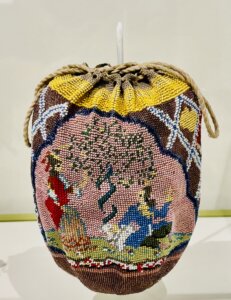
Even under glass, designer Fritzi Löw’s intricately beaded “Adam and Eve” bag manages to sparkle.
One of 200 objects and artifacts on display in “Modernity and Opulence: Women of the Wiener Werkstätte,” a major new exhibition at the Jewish Museum, presented in cooperation with the MAK — Museum of Applied Arts, Vienna, the piece captures the show’s theme of casting off old ways and old fashions.
Founded in 1903 and active through 1932, the Wiener Werkstätte, or Vienna Workshops, gave women, who were entering public life and the workforce in greater numbers, a way to turn specialized artistic skills into lifelong professions, including architecture, decorative arts, ceramics and textiles. In so doing they changed the way they and women outside the workshop saw themselves.

“For some, their first opportunities for paid artistic work were through the Wiener Werkstätte, which became a vital professional pipeline for women artists while also bringing an influx of virtuosic experimentation to the workshop,” Kristina Parsons, the museum’s assistant curator, said.
At least one-quarter of the nearly 200 women who worked for the multidisciplinary collective were of Jewish faith, Jewish descent, or came from Jewish families.
While the exhibition features many Jewish artists, it spotlights Vally Wieselthier and Felice Rix-Ueno. Their prolific work in ceramics and textile design has had a lasting influence on both disciplines.
The exhibit “brings together art, design, fashion and Jewish history to illuminate the central role Jewish women played in shaping modernity, both as visionary makers and as influential patrons,” said James S. Snyder, director of the Jewish Museum.
For example, Rix’s fanciful, colorful designs appeared on toys, tableware, wallpaper and dresses. The exhibit showcases her elegant tasseled cigarette case, a chiffon cinched waist dress as well as whimsical designs for a papier-mâche bird and another for a toy carriage pulled by a dog.
The early 1900s ushered in the era of the “New Woman,” a time when women were shedding the boned and corseted fashions of the past in favor of more fluid, and even fanciful, garments. It was also a time when women increasingly pursued higher education, fought for suffrage, and challenged restrictive gender roles and clothing.
That sensibility is captured in the dozens of fashion postcards on display, which served as both advertisements and collectibles. In one, a woman wearing a sky-blue turban and a form-fitting white-and-black dress trimmed with fur glances casually over her right shoulder as she walks a small black dog. In another, a woman peers assuredly from beneath a plumed hat, her curly hair cut in a bob, scarlet red lipstick her only hint of makeup.
As Parsons explained, the Wiener Werkstätte’s fashion department allowed women to directly address public perceptions of modern femininity by designing clothes and accessories that they, and other like-minded women, could incorporate into daily life.
“Women’s dress was an important point of convergence between larger impulses toward reform and feminist politics — fashion was then, as now, understood for its capacity to be a revolutionary statement,” she said.

It’s an idea captured in Wilhelm List’s 1910 “Young Woman in Undergarments.” The oil painting depicts a woman believed to be Wally Neuzil, who later trained as a nurse. She wears ruffled “umbrella drawers,” which fall loosely around her knees, and a sleeveless chemise. The garments allow for ease of movement and comfort in one’s own skin.
The exhibition also shows how Jewish women such as the noted socialite and arts patron Adele Bloch-Bauer and the journalist and salon hostess Berta Zuckerkandl helped ensure the workshop’s success.
In turn, upper-class clientele, including progressive Jewish intellectuals, commissioned furniture and interiors, wore Werkstätte fashions, sent Rosh Hashanah greetings on Werkstätte-designed stationery, and celebrated the workshop’s creations.
During its 30 years of operation, the workshop produced hundreds of patterns. Between 1910 and 1917 alone, it created more than 500 designs. One wall of the gallery is given over to textiles. Bold reds and purples evoke coral formations, while zigzag patterns combine purple and orange with chocolate and persimmon.
Aside from textiles and illustrations, there are also dozens of ceramics, such as Susi Singer’s design for a green and gold oven that, with its cake-like tiers, looks as if it belongs in a Disney animated film.
Artist Vally Wieselthier’s mirror, fashioned from glazed earthenware and adorned with a trio of busts, hangs near a collection of her outsized ceramic heads. The heads, some of which stand nearly two-feet tall, were modeled after mythological and classical figures, but also shopkeepers and everyday people. The works drew both praise and ridicule, dismissed by one newspaper as “scandalous bimbo business.”
While the Werkstätte sputtered out in 1932 for a host of reasons, including poor management, financial troubles, a resistance to mass production, and a decline in wealthy patrons, its influence remains.
According to Parsons, “In bringing together highlights from the remarkable body of work made by Jewish women for the Werkstätte, this exhibition spotlights their creativity, ambition, and influence, while inviting visitors to explore a group of artists who embraced decoration as a central expression of modernity.”
Modernity and Opulence: Women of the Wiener Werkstätte continues through Nov. 15, 2026 at the Jewish Museum.
The post Their art was whimsical, elegant, ‘scandalous,’ and colorful. It was also revolutionary. appeared first on The Forward.
Uncategorized
‘Politically homeless’: As Maine’s Collins-Jackson Senate race kicks off, some Jewish voters find themselves adrift
(JTA) — BANGOR, Maine — With Maine’s marquee U.S. Senate race now set, many Jewish Democratic voters are confronting a difficult choice: whether concerns over newly nominated Democrat Troy Jackson’s rhetoric on Israel outweighs their longstanding opposition to incumbent Republican Sen. Susan Collins.
“I, and many Jews in Maine, certainly feel politically homeless at this point,” said Chris Myers Asch, a history teacher at Colby College and Jewish resident of Hallowell, Maine. “We don’t feel like there are candidates who actually represent us and that we trust to defend our interests, and I think that’s sad, particularly for people like myself who have been active and involved and supportive of many different candidates over the years.”
Jackson, 58, a former logger and state Senate president, secured the Democratic nomination Saturday following the party’s nominating convention to replace Graham Platner, who withdrew earlier this month following a sexual assault allegation, which he denies.
But as Jackson shored up his bid for the nomination, he began to echo the rhetoric of Platner, a staunch Israel critic whose Nazi-linked tattoo sparked concern across Maine’s Jewish community. Since joining the race, Jackson has, for the first time, embraced the term “genocide” to describe Israel’s war in Gaza and called for an end to U.S. military aid to Israel.
Those positions contrasted with the union advocacy and affordability agenda on which Jackson had built his two-decade political career in the state. They also alarmed some Maine Jewish voters, who overwhelmingly lean Democratic.
“I thought Platner was a disaster from the beginning, so pretty much anyone would be an improvement, and I think Jackson is an improvement,” said Myers Asch, who identifies as an independent. “But I can’t say I am wholeheartedly enthusiastic about him. I think he has bowed to the pressure of far-left activists on foreign policy issues, particularly on Israel, and I think that’s unfortunate.”
But while Jackson’s newfound stances on Israel have alienated some Jewish Democrats, it has not necessarily made their choice in November’s general election any easier. Many remain critical of Collins, 73, who has paired strong support for Israel with votes backing much of President Donald Trump’s agenda.
The latest polling in the race, conducted by the University of New Hampshire, finds the contest is a toss up, with Jackson receiving 49% of the vote compared with Collins’ 46%. The poll, which surveyed 1,236 likely voters from July 15 to 20, has a margin of error of +/-2.8%.
With Election Day just 99 days away, the choice facing Jewish voters carries stakes beyond Maine. Democrats see the Maine contest as one of their best pickup opportunities in the battle for control of the Senate. Independent analysts, including the Cook Political Report, rate Maine as one of the few GOP-held Senate seats that Democrats have a decent shot at this year.
While Jews make up a small share of Maine’s electorate, the community leans heavily Democratic. The state has roughly 19,000 Jews across 10,600 households, nearly 70% of which identify as liberal or very liberal, according to the 2024 Maine Jewish Community Study, conducted by Brandeis University in partnership with the Jewish Community Alliance of Southern Maine.
Maine State Rep. Laurie Osher, who is Jewish and said she intends to vote for Jackson, said that despite the anxiety many Jews have felt since Hamas’ Oct. 7 terror attack, the stakes of defeating Collins outweighed broader political concerns.
“Long before that, we have had a problem with having Susan Collins give strength and support to crazies that are Republican,” Osher said. “We need to get rid of her, and most of the Jews I know agree with that.”
Despite the Maine Jewish community’s overwhelmingly liberal bent, Myers Asch said he had heard more Jews than ever before discussing voting for Collins.
“I have heard more people talking about voting for Susan Collins than I ever have before, because I think a lot of Jews in Maine feel abandoned by the Democratic Party and feel politically homeless,” said Myers Asch.
Brian Kresge, the president of Congregation Beth Israel in Bangor, Maine, said that while he had seen peers in the Jewish community “get behind (Jackson) and trying to overlook the word genocide,” he had also observed many throwing their support behind Collins.
“It’s that hard choice a lot of Jews are weighing. What does the rhetoric against genocide really mean when he’s so good in all these other ways?” Kresge said, referring to Jackson’s strong union ties. “We like him for all of this, and so that’s the hard part. I don’t envy any Jew that hasn’t already made up their mind about the election.”
While Collins has received an endorsement from Trump, she has also broken with the president on several key votes, including in April when she backed a resolution to end U.S. military action against Iran.
Still, during his acceptance speech for the Democratic nomination Saturday, Jackson used much of his remarks to hammer Collins’ record of supporting Trump’s policies.
“Thirty years later, Susan Collins is still in Washington, so I do have one question. Who has she served? She has served Donald Trump. She voted with him 96% of the time,” Jackson said. “She helped deliver enormous tax breaks to the corporations and the wealthy on our backs, and she voted to confirm Kavanaugh and Gorsuch, the Supreme Court justice who overturned Roe versus Wade.”
Collins, who has worked to distance herself from Trump and voted with the president’s opinion 95% of the time in 2025, took her own stab at her new opponent Saturday, calling him “hyper-partisan” in an interview with News Center Maine.
“I have known him for more than 20 years, he has been an Augusta insider, and he’s very much a person who takes a hyper-partisan approach to the issues,” Collins said. “I think that’s one of the big contrasts between us. I have always prided myself in working in a bipartisan way.”
For some Jews in the state, the choice between Collins and Jackson has been much more clear-cut.
Lila Kohrman, a 33-year-old Jewish Portland resident, voted for Jackson during the nominating convention Saturday. “Susan Collins has been a senator for almost my entire life, and during that time, things have pretty clearly just gotten worse and worse for Americans,” she said.
“Jewish voters are not a monolith,” Kohrman added. “But I hope that people will be able to support a candidate who has clearly demonstrated that — and I mean Troy Jackson — that has clearly demonstrated that he cares for the lives of marginalized and oppressed people in the United States and around the world, and right now that means opposing sending money to Israel because they are using that money to commit a genocide against the Palestinian people.”
Jackson, who has raised over $1 million since announcing his bid for the nomination, is also facing a significant funding gap against Collins, who has $11 million in her campaign account, according to the latest Federal Election Commission findings.
While Jackson vowed he would not accept any “dark money,” and specifically said he won’t be taking any funding from AIPAC, Collins has received over $1.5 million in donations from at least 750 donors whose contributions were earmarked through AIPAC, according to the latest FEC findings.
The race has also already seen a massive influx of outside ad spending. Collins’ campaign, her allies and other groups aligned with Senate Republican leadership have reserved roughly $60 million in airtime through the fall, while the Senate Democrats’ main super PAC and its affiliates have purchased roughly $24 million.
This article originally appeared on JTA.org.
The post ‘Politically homeless’: As Maine’s Collins-Jackson Senate race kicks off, some Jewish voters find themselves adrift appeared first on The Forward.
