



Uncategorized
Fearless or foolish? Michael Roth, Wesleyan’s Jewish president, stands apart in opposing Trump’s campus policies
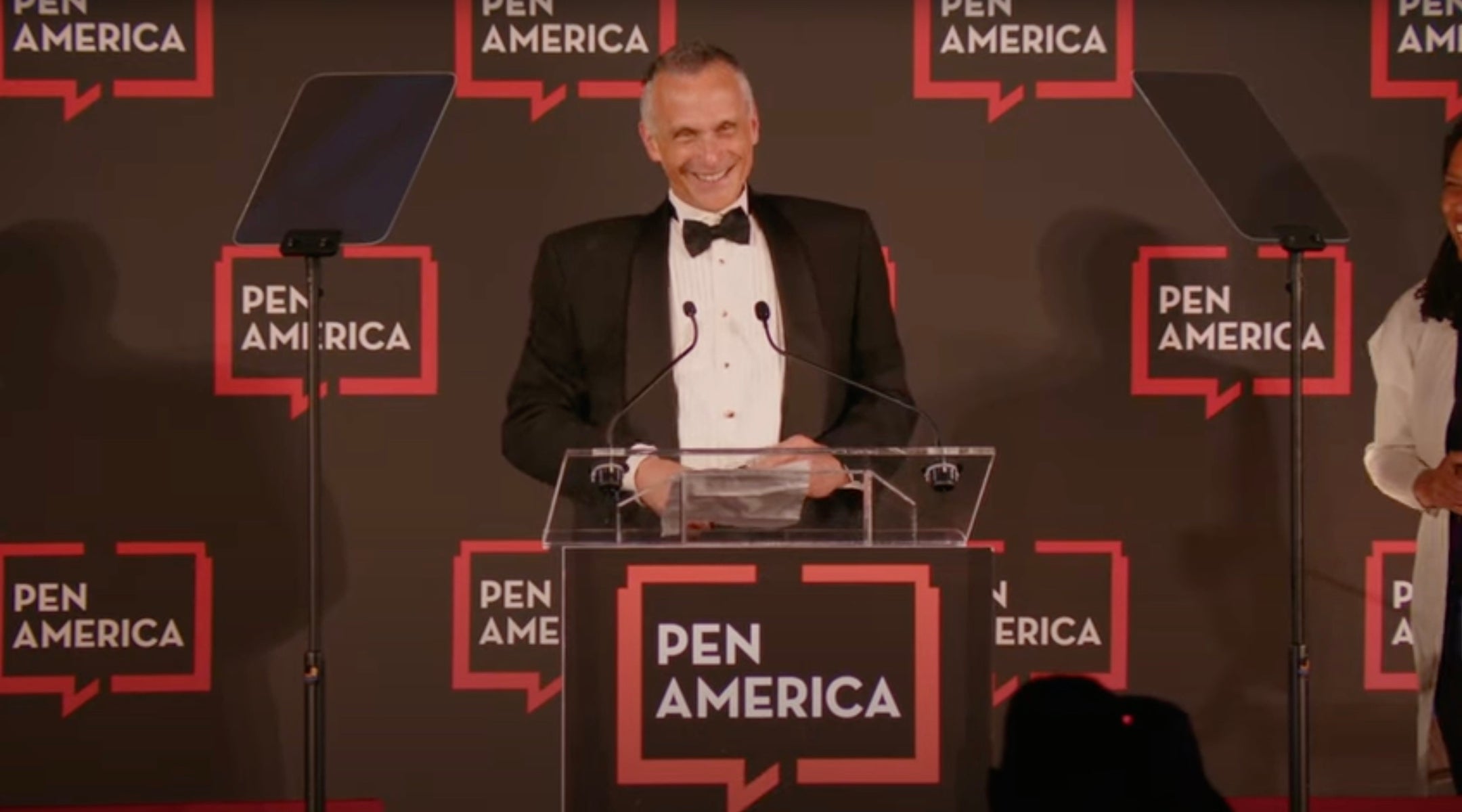
As he often does these days, Wesleyan University president Michael Roth recently delivered a lecture on another campus outlining all the reasons why academia should be more forcefully standing up to President Trump’s policies.
He peppered the lecture with Yiddish words. He laid thick on what he called his “Jewish accent.” A colleague came up to him afterwards.
“You’re doing Jew-speak,” they told him.
Roth laughed recalling his response: “No s–t, Sherlock. That’s part of what I’m doing.”
What he’s doing, Roth told the Jewish Telegraphic Agency in a recent interview, is constantly reminding his potential critics who he is. For one, he’s the only university president in the country who openly, repeatedly rejects Trump’s claims that the administration’s campus crackdowns — rescinding grants, limiting international student visas, dismantling “DEI” — are a means of fighting antisemitism after the Oct. 7, 2023, Hamas attack on Israel.
For another, when his own school dealt with pro-Palestinian encampments last year, he made no secret of handling the matter diplomatically instead of through discipline — an approach that landed other university presidents in hot water, but not him.
And above all that, he’s proudly Jewish.
“If you’re going to accuse Wesleyan’s administration of being antisemitic, start with me. But don’t call me on Saturday,” Roth quipped. “Because I’m going to be in Torah study.”
Roth isn’t quite sure how he, the leader of a small-town Connecticut liberal arts school with a mere 3,000 students, became so unusual among his profession by defending what he sees as the central principles of academic freedom.
“It’s a bit of a puzzle,” he told JTA. “I don’t think my view is very original. Any of the presidents I know at different schools probably have similar views.” His views also seem to align with most American Jews, at least according to polls, which show that nearly three-quarters of them also believe Trump is using antisemitism as an excuse to attack higher education.
In recent days, two other Jewish presidents, at the Massachusetts Institute of Technology and Brown University, have publicly rejected a Trump administration offer of “priority” funding that would have required them to bar some forms of speech, making them the only university leaders to do so. But Roth still stands out in the lengths he is going to rebuff Trump’s higher education policies — and to center his Jewish identity in doing so.
There he is, accepting a “courage award” from the literary free-speech group PEN America “for standing up to government assaults on higher education.” There he is, giving interviews in which he lambasts “prominent Jewish figures around the country who get comfortable with Trump, it seems to me, because they can say he’s fighting antisemitism: ‘He’s good for the Jews.’ It’s pathetic. It’s a travesty of Jewish values, in my view.”
There he is, signing an open letter declaring that antisemitism “is being used as a pretext to abrogate students’ rights to free speech, and to deport non-citizen students.” The leaders of Jewish Voice for Peace, an anti-Zionist group that has been suspended from multiple college campuses for disruptive protests, were on that letter. So was the leader of Wesleyan University.
And there he is, telling JTA that so-called institutional neutrality positions, adopted by a range of universities amid the Israel-Gaza war (and supported by the Jewish campus group Hillel International), are “bogus.”
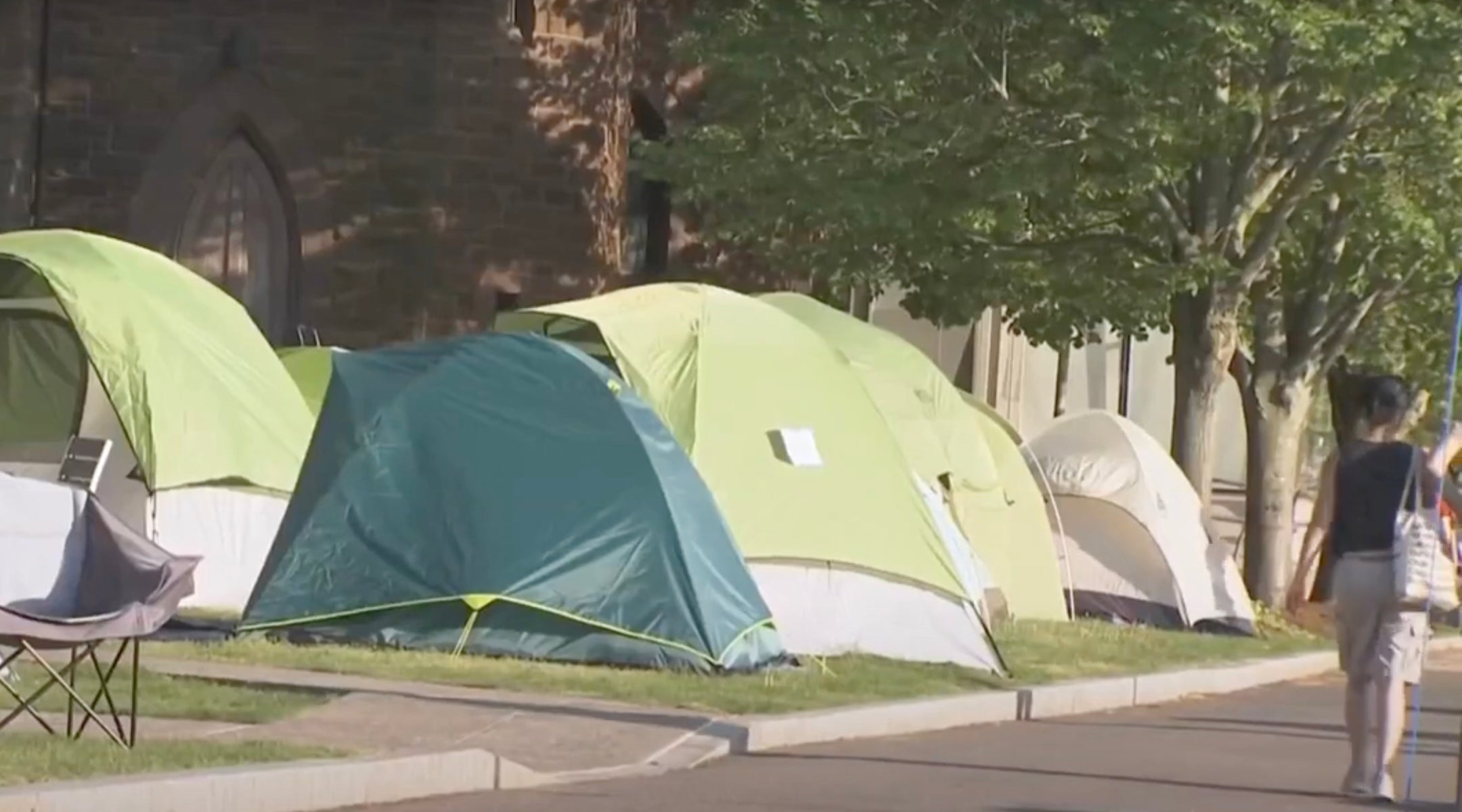
Pro-Palestinian encampments at Wesleyan University in Middletown, Connecticut, May 9, 2024. (Screenshot)
A representative for the American Association of University Professors, a faculty union that has dropped its former opposition to boycotting Israel, praised Roth’s presence on the national stage.
“Michael Roth is criticizing the misuse of Title VI to define anti-semitism as criticism of Israel and its weaponization in the campaign to attack higher education. There is nothing startling about that position,” Joan W. Scott, a Jewish researcher at the Institute for Advanced Study who sits on the union’s academic freedom committee, told JTA.
Scott added, “I’d say Roth’s reasons for his courageous stance have to do with his integrity and perhaps his knowledge of history. He doesn’t want to be among those who, like Heidegger, thought that appeasing the regime in power was a safe position to take.” (A spokesperson for the Foundation for Individual Rights and Expression, a campus free-speech advocacy group that supports institutional neutrality, declined to comment on Roth.)
Roth’s profile has caught the attention of some Jewish families, including that of Mason Weisz of White Plains, New York, who said Roth was one reason that his son is a first-year at Wesleyan now. Weisz recalled hearing an NPR interview with Roth in April, after admissions decisions were out but before seniors had to pick their schools, as particularly pivotal.
The interview “in which he argues that Trump’s use of antisemitism to justify his strong-arming of universities actually is bad for the Jews, encapsulates everything I appreciated about Roth.” Weisz told JTA. “Here is a university president who is willing to risk going on record against the administration, again and again, to fight for academic integrity. He has a nuanced view of world events, an appreciation for true debate, and a fearlessness that I hope are an inspiration for Wesleyan’s faculty and students.”
Roth also earns good marks from some Jewish students on campus.
“He does care about Jewish students. He’s someone who does take their concerns seriously. And compared to other university presidents, he’s been better,” said Blake Fox, a Jewish senior at Wesleyan who identifies as pro-Israel and serves on the campus Chabad board. “He wants to be the ‘cool’ president.”
Fox says he had a good experience as a Jew at Wesleyan, in part because the encampments there never felt threatening (he noted the protest movement was much smaller at Wesleyan than it was at other schools). That was due, at least in part, to Roth’s efforts to peacefully negotiate an end to the encampments.
Yet, Fox said, the president — whom he’s met several times — was also deeply concerned for the well-being of Jewish students. In meetings with Fox and other Jews on campus, Roth vowed to take action if any protesters ever threatened a Jewish student by name.
He also appreciated Roth standing up to Trump, particularly on issues of campus speech. “I’m pro-Israel, but I also support the First Amendment,” Fox said. “Even if there are individuals whose speech is bad, targeting them for deportation is a dangerous precedent, I think.”
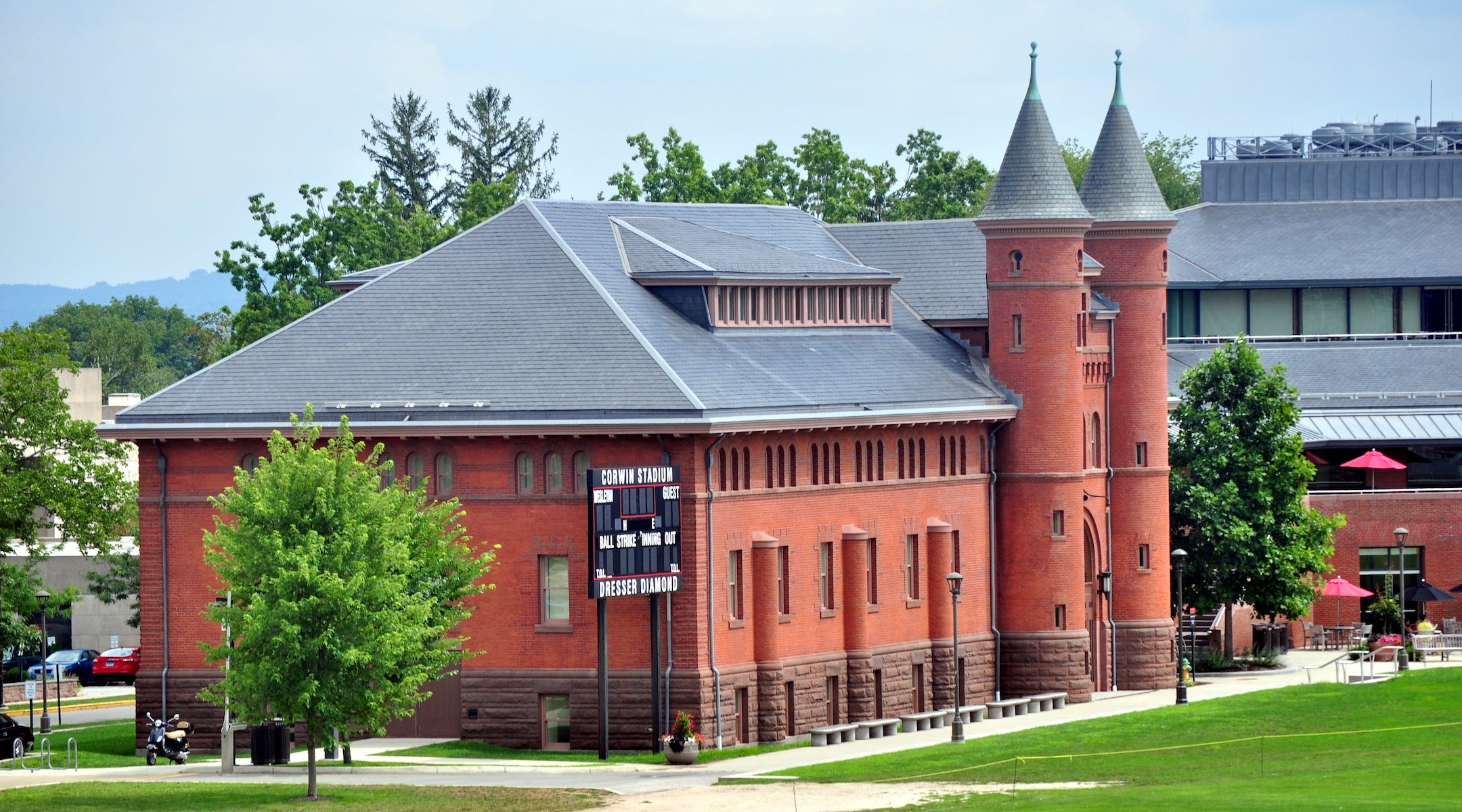
The campus of Wesleyan University, July 24, 2013.(Joe Mabel via Creative Commons)
Though a historically Methodist school, Wesleyan today has no religious affiliation and enrolls around 600 Jewish students — nearly 20% of the student body. There’s no Hillel, but the school’s Jewish community includes a full-time rabbi, student leadership, dedicated Jewish residential housing, and a unique, modern sukkah that has won architecture awards. The Wesleyan Jewish Community rabbi declined to comment for this story.
There’s also a Chabad outpost, which opened in 2011. Its director, Rabbi Levi Schectman, told JTA he was “grateful for the open door to the President’s office and for the strides that have been made so far,” adding, “There is still more work to be done so that all students feel heard and safe.”
Schectman also said the Wesleyan Jewish community he interacts with is “living and thriving”: A recent “Mega Shabbat” gathering drew what he said was a center record attendance of 175 students.
And then, of course, there’s Roth, the school’s first Jewish president, who has held the post since 2007. A free-speech scholar, he’s published books about the campus environment, including one called “Safe Enough Spaces.” He grew up in a Reform household on Long Island and has written essays on Jewish identity, but considered himself “only modestly observant” until his father died 25 years ago. After that point, he said, he “began saying Kaddish and subsequently attending Torah study.”
Nowadays Roth makes a point of involving himself in Jewish campus life — all forms of it. He spent Rosh Hashanah with the affiliated Jewish community, and, last year, caught a Shabbat service held at the pro-Palestinian student encampments.
The latter group wasn’t too thrilled to see him there, he recalled; they’d been targeting him by name, often in insulting language. But he wanted to learn more about the Jews who were participating in the protests right outside his office. When one of them, an Israeli, personally apologized to Roth for the aggressive behavior of other encampment participants, he invited the student to his office and they had a long chat. “There were so many interesting conversations,” he said.
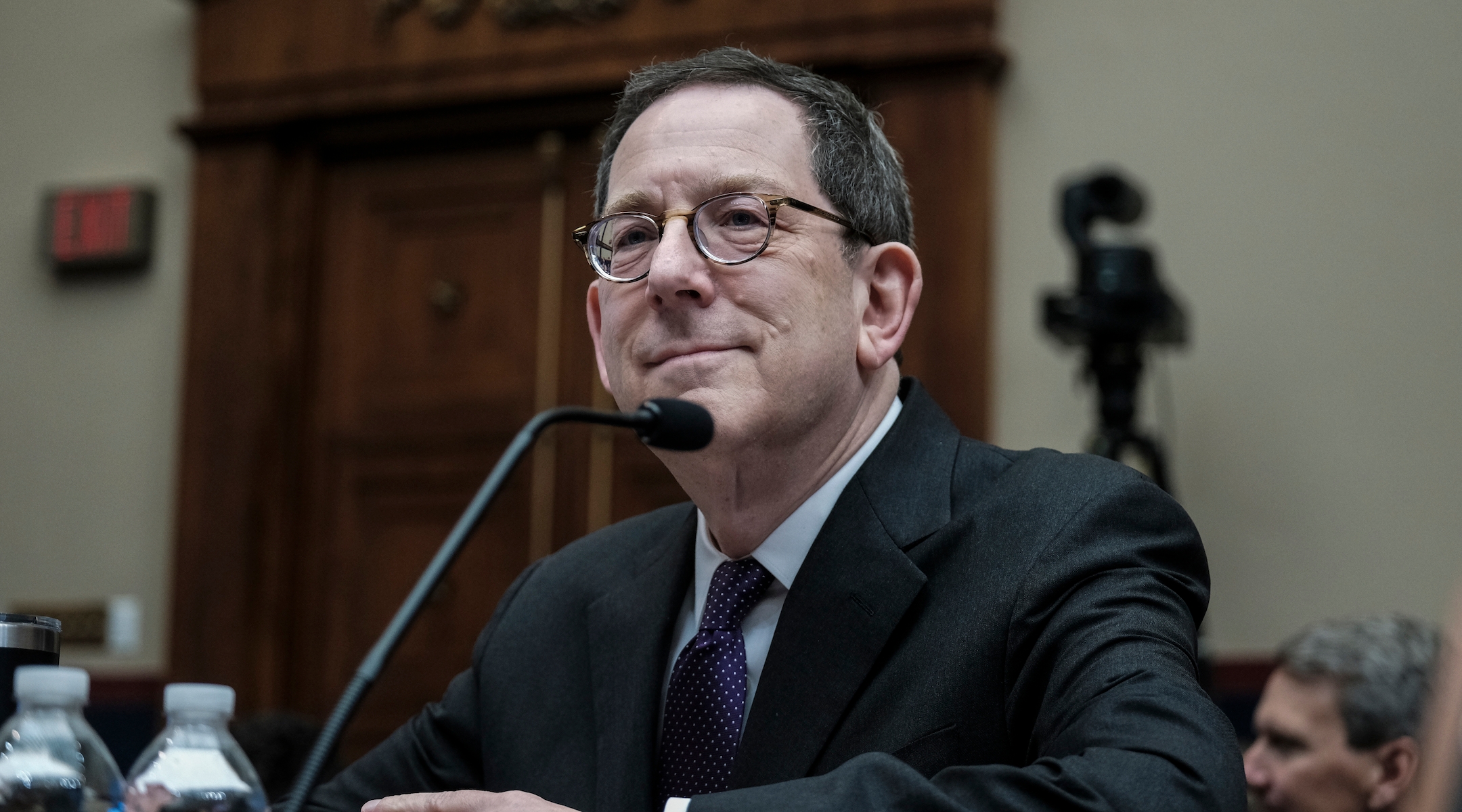
Michael Schill, President of Northwestern University, testifies at a hearing called “Calling for Accountability: Stopping Antisemitic College Chaos” before the House Committee on Education and the Workforce on Capitol Hill on May 23, 2024 in Washington, DC. University leaders are being asked to testify by House Republicans about how colleges have responded to pro-Palestinian protests and allegations of antisemitism on their campuses. (Michael A. McCoy/Getty Images)
Of course, many Jews in academia know that merely being Jewish cannot protect oneself from charges of enabling antisemitism. It didn’t save Northwestern University president Michael Schill, who — like Roth — is a free-speech scholar who tried to deal with his school’s encampments through negotiation instead of by force.
In so doing, Schill was hauled before Congress and lost the confidence of many of his Jewish faculty, staff and alums. The heads of the Anti-Defamation League and Jewish Federations of North America, both Northwestern alums, publicly aligned against him. Last month, Schill announced he was stepping down.
Roth doesn’t know Schill personally, but said he thought it was “just terrible” he had resigned. “I found it very sad that the board didn’t come to his defense in a way that allowed him to continue,” Roth said.
He acknowledges he’s in a better position to speak out than the heads of other universities, where hospitals and major research centers are more reliant on federal funding, and where instances of antisemitism had been more prevalent pre-Trump.
Schools like Columbia have made significant concessions to Trump, including on antisemitism issues, in exchange for having their funding restored. Harvard, after initially putting up resistance to Trump’s demands, has now reportedly entered a negotiation phase; the University of California system has also been targeted for a $1 billion payout to the government. Last week, the Trump administration unveiled what it said was a new “compact” that schools would be required to sign to secure their federal funding; the demands include one to protect conservative viewpoints on campus.
Is Roth worried that Trump could turn on Wesleyan next?
“Didn’t I say I was Jewish?” he responded, laughing. “Am I worried? Of course I’m worried. I’m a worrier… I would hate to put Wesleyan at risk.” But, he said, that wouldn’t stop him. “I have three grandchildren. I want them to grow up in a country where they don’t have to be brave to speak up.”
Now, as the two-year anniversary of Oct. 7 nears, Roth’s name is also on some things other Jewish leaders wouldn’t touch.
He spoke to JTA while on the road to a literary festival in Lenox, Massachusetts, co-sponsored by the left-wing magazine Jewish Currents, which has emerged as one of the loudest voices in Judaism to oppose both Israel and communal American Jewish support for it. He would be appearing onstage with the journalist M. Gessen, who has compared Israel’s actions in Gaza to Nazi Germany.
Roth told JTA he hadn’t known that Jewish Currents was a co-sponsor when he agreed to take part in the festival. But, he added, it wouldn’t have changed anything about his appearance. He’ll talk to anybody Jewish. He’s appeared on their editor Peter Beinart’s podcast, and a while back he submitted a piece to the magazine that was rejected (“I guess it was insufficiently anti-Israel,” he mused) and wound up running in the Forward instead.
He sees his own views on Israel as moderate. While he called for a ceasefire in March 2024, far earlier than many others in the Jewish world, he still refuses to call the Gaza war a genocide and remains adamant he supports “Israel’s right to exist.” He only blames Israel for what he said were the security failures that led to the Oct. 7 attack, which he had condemned immediately as “sickening.”
He takes Israel’s wartime behavior to task for “paving a path for egregious war crimes and a level of brutality and inhumanity that I never would have associated with the country.” Yet he remains “stunned,” even today, by what he called “the lack of basic sympathy, empathy, for the victims of those horrific murders” of Oct. 7.
“I pride myself on being realistic about the persistence of antisemitism,” he said. “Still, the callousness with which some people greeted those horrors was very disturbing.”
Yet when the encampments came for Wesleyan last spring, and some of their participants accused him directly of being complicit in genocide, Roth — unlike nearly every other university president — opted to negotiate with them. He wrote a piece in the New Republic declaring that he would not call the police, even though he knew the protesters to be in violation of some campus policies.
Even in that piece, he offered an ominous prediction: “My fear is that such protests (especially when they turn violent) in the end will help the reactionary forces of populist authoritarianism.”
Roth didn’t like many of the phrases his own campus protesters used, including “From the river to the sea, Palestine will be free.” Yet he forcefully defended their right to say it, angering some Jews on campus as a result.
“I try to have it both ways,” he said — weighing his principled views on both Israel and protest. This can sometimes lead to very intricate needle-threading. He recalled how, when an address he gave to prospective students was disrupted by pro-Palestinian protesters unfolding a banner, he let them continue and even acknowledged the banner before pressing ahead.
Fox does take issue with some of Roth’s stances, including his opposition to institutional neutrality.
“I think he fundamentally misunderstands what institutional neutrality is,” Fox said. “We don’t need to hear your views on Ukraine. We don’t need to hear your views on Israel.” Having the school president call for a ceasefire, he thought, is “alienating both sides of campus.”
More significantly for his job, Roth has long opposed the movement to boycott and divest from Israel. This has angered activists at Wesleyan, who, like those at other schools, have made divestment a central demand.
Last spring, in order to peacefully break up his school’s encampment movement, Roth had promised protest leaders they could make a case to the board for divestment that fall. When the board opted not to divest, a small number of protesters became angry and attempted to take over a university building.
“They were not very civil to my staff members,” Roth recalled, describing the protesters as basically daring him to take action.
That time, he did call the cops.
—
The post Fearless or foolish? Michael Roth, Wesleyan’s Jewish president, stands apart in opposing Trump’s campus policies appeared first on Jewish Telegraphic Agency.
Uncategorized
Clavicular cuts a path across Tel Aviv, dividing pro-Israel influencers over his record of antisemitism
(JTA) — TEL AVIV — When Israeli influencer Aaron Morali realized that the celebrity drawing a crowd at the Loullie beach club on Saturday night was Braden Peters — better known as Clavicular — he alerted staff.
He knew that in addition to being a prominent “looksmaxxing” influencer, Peters had appeared alongside the white supremacist Nick Fuentes singing Ye’s “Heil Hitler” and otherwise consorted with antisemites.
“We thought maybe he was a big influencer supporting Israel,” Morali told the Jewish Telegraphic Agency. “But we very quickly understood that he wasn’t.”
Peters was soon asked to leave the club. But elsewhere along the beach in Tel Aviv, Clavicular has gotten a warm reception. Even though he is closely associated with an online ecosystem steeped in antisemitism, a number of pro-Israel and Jewish influencers have enthusiastically filmed content with him in Israel, and crowds of young Israelis have gathered around him as he livestreams from beaches and nightclubs.
The welcome has bewildered many of Peters’ own followers. His livestreams from Israel have been filled with comments accusing him of selling out, urging him to “kiss the wall” — a reference to the Western Wall that has become a taunt in some far-right online circles — and mocking him for embracing Israel.
In addition to becoming well known for his efforts to optimize his physical appearance, Peters drew attention in January when he was part of a group at Miami’s Vendôme nightclub — including Fuentes and the manosphere influencers Sneako and Andrew Tate — singing along to ‘Heil Hitler,’ the Ye song that samples a speech by Adolf Hitler.
Amid a backlash, Peters doubled down. “I am not sorry. I don’t apologize for what I did,” he said at the time. “I would do it again today.”
Now, Clavicular’s visit to Tel Aviv has raised questions about why he was admitted to Israel given the country’s recent record of denying entry to right- and left-wing figures with records of antisemitic and anti-Israel activity. The Ministry for Diaspora Affairs and Combating Antisemitism declined to comment about Clavicular’s entry into Israel.
It has also exposed a divide in the pro-Israel influencer community. Some influencers have sought to partner with Clavicular to film content, attempting to springboard into his vast audience and taking pride in presence at a time when Israel is widely seen as a pariah. Others have decried his presence, his content objectifying Israeli women and the readiness of fellow Jews to overlook his antisemitic activity.
Orthodox Jewish influencer Golda Daphna posted a series of Instagram videos criticizing Peters during his visit. In one video, she played a recording in which Peters, after being shown a photo of an Israeli woman, says, “Does she want to have sex? Just tell the girls I’m looking to have sex in a bathroom.” In another post, Daphna criticized fellow pro-Israel influencers who collaborated with him, writing, “Whoever gives this behavior a platform, in my opinion, has ended their career.”
Eden Sisson, another influencer involved in hasbara, or public diplomacy on Israel’s behalf, similarly urged Israeli women not to appear in Peters’ videos. “Don’t give him the attention he’s looking for. If he approaches you with a camera, think twice before participating,” she wrote. Referring to his past use of Nazi slogans and symbols, she added, “Someone who has chosen to use Nazi slogans and symbols in the past does not deserve your trust.”
The influencer Hallel Abramowitz-Silverman, writing in the Jerusalem Post, denounced what she said was “a growing culture within parts of Israel’s advocacy and creator community that mistakes influence for integrity.” She added, “Somewhere along the way, we started believing that if someone has enough followers, we should be grateful they’re willing to talk to us at all — even if they have spent years platforming hatred, extremism, or misogyny.”
Peters could not be reached for comment via multiple channels and multiple attempts by JTA. He told The Free Press that he had come to Israel because it was “unexplored territory” for major influencers, few of whom have broadcast from the country, which he said was “viral.”
Among those willing to engage with Peters was Rabbi Yossi Farro, who has built a large social media following by wrapping tefillin on celebrities and what he calls “powerful Jews.”
Farro met Peters for lunch at the Royal Beach Hotel in Tel Aviv and later posted a video presenting him with a necklace combining the OpenAI logo and a Star of David, joking that it amounted to “ChatGPT mogging David,” using internet slang meaning to outshine or dominate someone. Farro later wrote that Peters was “loving Israel and Israel is loving him.”
Farro did not respond to multiple requests for comment.
Meanwhile Shira Braun, an influencer whose bio says she is “representing Jewish & Israeli women,” appeared in videos with Clavicular in which she was presented as his girlfriend. She said she had received death threats as a result.
Their collaborations with Peters drew swift criticism from other pro-Israel creators, who argued that collaborating with someone associated with antisemitism risked legitimizing him while exposing Israelis to manipulation.
“If he approaches you with a camera, think twice before participating,” Channel 12 personality Hagar Amgar warned on Instagram. “A few seconds of footage can be edited, taken out of context, and shared with millions of people.”
Some prominent advocates went further. Yoseph Haddad, the Arab Israeli activist and influencer, called for Peters to be deported.
Peters also briefly crossed paths with Topaz Luk, a longtime adviser to Prime Minister Benjamin Netanyahu, at the Tel Aviv nightclub Shlavata. Peters has said he hopes to film a “collab” with Netanyahu himself, whom he calls “The Big Yahu.”
Luk described the encounter as coincidental in an interview with the Israeli outlet Walla. He said Peters “asked to express regret over his antisemitic statement,” and said the influencer told him he was in Israel to show the truth about the country and planned to meet Holocaust survivors and issue a public apology. Luk was skeptical: “We’ll wait and see,” he told the outlet.
Peters’ connection to online antisemites continued during his Israel visit. He shared a post by Fuentes during his trip. And his stream chat has been filled with antisemitic and anti-Israel comments, with viewers deriding him as a sellout, hurling slurs and mocking the trip; his former friend, the streamer Sneako, who has espoused Islamist views, publicly lamented the visit, while an AI-generated image of Peters kissing the Western Wall circulated on X.
Peters has also commented repeatedly on stream about Israeli women, calling them “Stacys,” looksmaxxing slang for attractive women.
In response to backlash from his fans over the visit to Israel, Peters told The Free Press that he is “not a political guy” and that the trip was not about wading into the Israeli-Palestinian debate.
Peters’ presence in Israel has puzzled many of his critics.
The Ministry of Diaspora Affairs and Combating Antisemitism has recently urged the Population and Immigration Authority, which has the power to permit or deny entry to Israel, to bar prominent figures on both the right and left who have drawn allegations antisemitism and anti-Israel activity.
In May, Israel denied entry to the streamer Tyler Oliveira, who had made the Hasidic community in Kiryas Joel, New York, and the Orthodox community of Lakewood, New Jersey, the targets of his content. He was deported back to the United States after landing at Ben Gurion Airport, and Diaspora Minister Amichai Chikli confirmed the decision on X, resurfacing a month-old post in which Oliveira had asked whether Israel would let him into the country and replying with one word: ‘No.’”
Peters has a lengthy record of run-ins with the law in the United States, one standard by which those who seek to visit Israel are sometimes denied. He was charged with unlawfully discharging a firearm in Florida after appearing to shoot a dead alligator in the Everglades on a livestream, resolving the case in May through a plea deal that carried six months of probation and 20 hours of community service.
He was arrested earlier this year in Arizona on suspicion of drug possession and using a fake ID. Maricopa County prosecutors subsequently dropped the charges, citing no reasonable likelihood of conviction. He is also being sued in civil court by an influencer who alleges he sexually assaulted her when she was 16. His lawyer has denied the claims, calling them unproven.
Morali, who rose to fame as a cast member on “Love Island Israel,” has joined the growing chorus asking why Peters was allowed to enter Israel in the first place. “Obviously we welcome everybody to Israel, but whoever is posting content against us or doing something controversial, that’s a bit more tricky,” he told JTA.
Morali said he was at the club for a night out with friends when he spotted Peters standing outside. The video he filmed of Peters standing outside the nightclub, which he captioned, “We don’t need any antisemites here. Am Israel Chai,” quickly went viral.
According to Morali, after Peters entered the beach club with his security detail and began approaching patrons and trying to film content, security began to take notice. Loullie did not respond to a JTA request for comment but confirmed the account to Israeli media.
“We decided to tell the right people about it so something could be done, because we didn’t feel comfortable having someone with his camera in everyone’s face, filming something that could potentially harm our country,” Morali said. “They removed him right away. And I must say, I’m proud of them for doing that.”
This article originally appeared on JTA.org.
The post Clavicular cuts a path across Tel Aviv, dividing pro-Israel influencers over his record of antisemitism appeared first on The Forward.
Uncategorized
How Shabbat bound Lindsey Graham to Joe Lieberman
Lindsey Graham did not always know what time Shabbat started, but he always knew when it ended. That was the joke the South Carolina Republican made while remembering his close friend, the late Sen. Joe Lieberman, at a memorial service in Washington in 2024.
In his remarks, Graham said that while traveling around the world with his Senate colleague, Lieberman, an observant Jew and author of a book about Shabbat, always knew exactly when sundown arrived on Friday, no matter where they were. After years of traveling together, Graham joked, he learned to recognize when Shabbat ended on Saturday “so we didn’t have to do this anymore.”
This past Saturday evening, almost exactly as Shabbat came to a close, Graham died after suffering an apparent heart attack at his Capitol Hill townhouse. Emergency dispatch audio indicates first responders were called to his home at around 8:30 p.m. after a report of chest pains.
The two politicians from different sides of the aisle first became close when Graham joined the Senate in 2003, joining an already close friendship between Lieberman and Sen. John McCain, who died in 2018. Despite disagreeing on many domestic issues, Graham and Lieberman bonded over shared views about American leadership abroad, traveling together to the world’s most dangerous conflict zones in the years after the Sept. 11 attacks. The three senators, who became known as the “Three Amigos,” also made repeated trips to Israel.
At Lieberman’s memorial, Graham recalled one of their more memorable trips together, accompanying McCain during his 2008 presidential campaign to visit the Western Wall in Jerusalem. Graham said he was pinned against the ancient stones by photographers scrambling for the perfect shot and injured his knee. “They crushed me against the wall, and I began to wail,” Graham joked, referencing the site’s English name, the Wailing Wall. Lieberman, he recalled, helped pull him back to his feet.
Months later, during a meeting with the Dalai Lama in Colorado, Lieberman brought the Tibetan spiritual leader over to Graham and asked if he could heal his injured knee. The Dalai Lama placed a hand on it and asked if it felt any better. “No,” Graham replied.
“I didn’t think so,” the Dalai Lama quipped.
A strong ally of Israel
Israel occupied a central place in Graham’s political career. He was one of Congress’ strongest supporters of the U.S.-Israel alliance, pushed for a tough approach toward Iran and backed efforts to expand peace between Israel and its Arab neighbors. Axios reported Sunday that Graham spent his final weeks working on a renewed push aimed at normalizing relations between Saudi Arabia and Israel.
In a Sunday appearance on Fox News, Israeli Prime Minister Benjamin Netanyahu revealed that he and Graham disagreed over Israel’s recent proposal to phase out U.S. military assistance in the coming years, amid growing criticism of aid to Israel from both parties. Graham “went ballistic,” Netanyahu said. “He said, ‘No way. You can’t do that.’ He was so concerned with our security, which he believed was your security, that he actually fought the prime minister of Israel on keeping America’s aid – or actually increasing it.”
As news of Graham’s death spread Saturday night, Jewish organizations and leaders mourned his passing and reflected on the legacy he leaves as one of the Senate’s strongest advocates for Israel and Jewish causes.
In his farewell to Lieberman two years ago, Graham concluded: “One of the best things that ever happened to Lindsey Graham was to meet Joe Lieberman. So until we meet again, my amigo, God bless.”
For those who watched their friendship over the years, it is hard not to imagine that somewhere beyond this world, McCain, Lieberman and Graham have found each other once again.
The post How Shabbat bound Lindsey Graham to Joe Lieberman appeared first on The Forward.
Uncategorized
I was there when the lights went out and New York was plunged into darkness
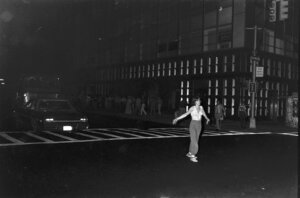
I’m the lifelong resident of a vast and complicated metropolis that smugly prides itself on never stopping. Subways, buses and cabs running day and night, bodegas and diners open 24/7, hundreds of thousands of people at work or out partying somewhere, bike couriers and truck drivers making deliveries — all in a town with a million moving parts, where the show always goes on — until, suddenly, it doesn’t.
I was reminded of that one evening not long ago in a drab Chinese restaurant uptown on Broadway, clutching a pair of wooden chopsticks poised to shovel another mound of chicken and walnuts into my mouth.
Music was playing softly over the house PA system. The melody suddenly sounded strangely familiar, but oddly out of place in those surroundings. I froze mid-bite, trying to place what I was hearing. Then it hit me. I glanced at my dinner companion Ann Aptaker, author of the Cantor Gold noir crime novels.
“Wow,” I said. “Do you hear that?”
She paused, tilted her head slightly, then raised an eyebrow.
“Yes,” she said. “It’s Threepenny Opera!”
Sure enough, the song drifting through the room was Kurt Weill and Bertolt Brecht’s wickedly jaunty tango, “Ballad of Immoral Earnings.” Even stranger, it was a track from my favorite production of the show: the Lincoln Center revival from decades ago, starring the late, great Raul Julia as Mack the Knife and Ellen Greene as his favorite prostitute, Jenny Diver.
“Of all things! What a weird song to play while people are eating,” I mused.
“I don’t think I’ve ever heard it in a restaurant before,” she agreed. “And certainly not a Chinese place.”
“They must have good taste in musicals.”
Shrugging, we resumed picking away at our dinner. A minute later another song from the same show began to play. We gaped at each other.
“They’re playing the whole album!” I sputtered. “What are the odds?”
Ann frowned and paused. then suddenly whirled to reach into the pocket of her denim jacket hanging behind her chair. She pulled out her phone, and the music instantly grew louder. We both laughed. She must have leaned back against her jacket and set off her music app. Whew — mystery solved!
But hearing those distinctive strains of Weill’s score transported me back to one of the hottest summers New York City had ever endured.

It was 1977, the year I attended an outdoor performance of Threepenny Opera at the Delacorte Theater in Central Park. My mother and a roommate from Pratt had joined me that night.
The Delacorte sits beneath the stone towers of Belvedere Castle, lit by floodlamps like a fairytale illustration, open to the sky and the sounds of the city beyond the trees. On a good night it can feel magical. On this particularly sweltering night, the air hung over us in the audience like a damp blanket as Philip Bosco, who had replaced Raul Julia for this summer staging, swaggered across the stage as Mack the Knife, and Ellen Greene reprised her role as Jenny.
And then — just as she was belting out her furious solo number, Pirate Jenny — all the lights shut off. Greene’s mic abruptly went dead, and the band lurched sourly out of tune before grinding to a halt.
We were plunged into pitch darkness. For a moment, there was silence.
Then the crowd began to buzz nervously. Was this part of the show? I’d seen the play several times before, and knew that it most definitely was not.
A few awkward minutes later, some of the cast reappeared wielding flashlights. While the tech crew worked on the electricity, the band filled the darkness with some lively jazz. Rubber-limbed dancer Tony Azito pranced around jovially in the flickering beams, easing the mood for a spell. But that age-old theater adage, the show must go on, was about to bite the dust.
The house manager finally stepped up on stage to make an announcement: “Ladies and gentlemen, we just learned that there’s been a massive power failure at Con Edison. It’s not just us; the whole city is dark!”
We didn’t know it yet, but this was the Big Blackout of July 13, 1977, and there we were, thousands of us stranded smack in the middle of Central Park. There wasn’t even much of a moon out that night, so it was really, really dark.
“Well, this is some pickle,” Mom said.
We wondered how the hell we were going to get out of there.

I vividly recalled the last big blackout in New York City, the one in 1965. I was just a young kid back then and safely at home, so it had actually been fun. While my mother lit a few Sabbath candles, my little sister and I roamed from room to room pretending we were in a haunted house. Meanwhile, our poor Dad had to trudge back to Brooklyn from midtown Manhattan — a five-hour hike in hot leather shoes.
But this time felt very different. I was far from the safety of home, trapped in the middle of what might as well have been a forest at night. Central Park is beautiful when you can see it. In pitch darkness it’s downright hazardous.
“Guess we’ll all just have to sleep in the park tonight,” I cracked. Neither Mom nor my Pratt roomie were laughing.
Thankfully, a phalanx of city cops eventually arrived to help guide us out. Audience members, cast and crew all joined hands as we carefully made our way along the park’s winding paths, stepping over roots and curbs, catching one another when someone stumbled. Our only illumination came from a few scattered police car headlights.
A walk that normally takes ten minutes took forever, but eventually we emerged onto Central Park West.
The scene was eerie. Streetlamps were dark. Traffic lights were out. Cars sat frozen in the intersections. Not a single apartment window was lit. For a city that never sleeps, it felt as if someone had suddenly flipped off the master switch.
Then I spotted something: “Look, the buses are still running!”
A city bus was rumbling slowly toward us, brightly lit inside. With the subways dead, getting back to my dorm in Brooklyn would have been impossible, so Mom’s place on the Upper East Side looked like the safest destination. She had temporarily split with my Dad and was living there with a roommate at the time.
The three of us squeezed aboard along with what felt like half the audience, and somehow made it across town to First Avenue. As we approached my mother’s high-rise, a dreadful thought suddenly hit me.
“Mom, what floor are you on again?”
“Twenty-five,” she replied grimly.
Of course both elevators were dead. We trudged up 25 flights of stairs in complete darkness, arriving exhausted and panting. My mother fumbled with her key, finally opening the door to reveal Sylvia, her gravel-voiced, seen-it-all Long Island roommate, standing there with her ever-present cigarette tip glowing in the dark.
“Come on in, darlings,” she rasped dryly. “Join the party.”
Sylvia had lit a few candles around the apartment, the only light we’d see that night.
Outside, the city was far from peaceful. While we tried to sleep on sofa cushions on the floor, one of the worst nights of unrest in New York history was unfolding in the streets below. Store windows were smashed. Shops were looted. Garbage cans were set on fire.
Lying there in the dim glow of flickering candlelight, hearing distant sirens punctuated by the sudden crash of breaking glass somewhere in the darkness below, I felt a growing sense of dread. An evening that had begun with music and theater had improbably ended with Manhattan plunged into darkness, its fragile machinery suddenly exposed.
By morning the city looked as though it had survived a world war.
This resilient burg has been battered and bruised over the years, enduring terrorist attacks, blackouts, blizzards, hurricanes, floods, garbage strikes, transit strikes, and the occasional collapse of its aging infrastructure. Yet somehow it manages to reset and lurch forward each time, improvising solutions the way Tony Azito danced in the dark that night at the Delacorte.
The post I was there when the lights went out and New York was plunged into darkness appeared first on The Forward.
