


Features
Israel’s Arab Population Finds Itself in Dire Straits
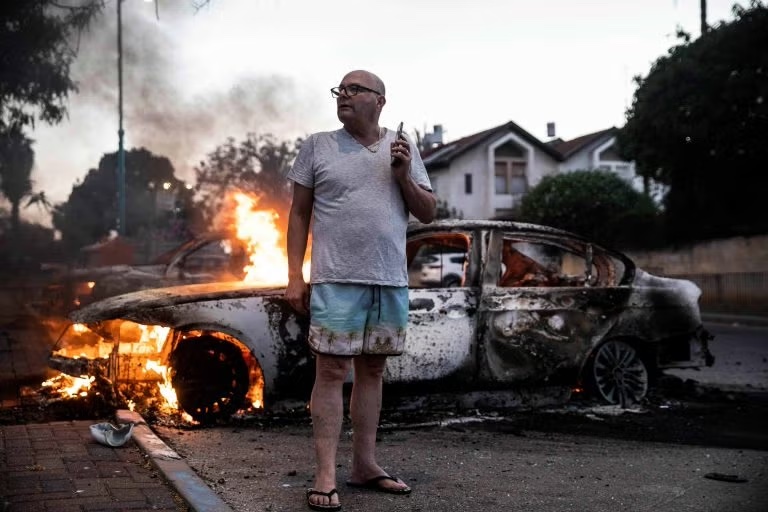
By HENRY SREBRNIK There has been an epidemic of criminal violence and state neglect in the Arab community of Israel. At least 56 Arab citizens have died since the beginning of this year. Many blame the government for neglecting its Arab population and the police for failing to curb the violence. Arabs make up about a fifth of Israel’s population of 10 million people. But criminal killings within the community have accounted for the vast majority of Israeli homicides in recent years.
Last year, in fact, stands as the deadliest on record for Israel’s Arab community. According to a year-end report by the Center for the Advancement of Security in Arab Society (Ayalef), 252 Arab citizens were murdered in 2025, an increase of roughly 10 percent over the 230 victims recorded in 2024. The report, “Another Year of Eroding Governance and Escalating Crime and Violence in Arab Society: Trends and Data for 2025,” published in December, noted that the toll on women is particularly severe, with 23 Arab women killed, the highest number recorded to date.
Violence has expanded beyond internal criminal disputes, increasingly affecting public spaces and targeting authorities, relatives of assassination targets, and uninvolved bystanders. In mixed Arab-Jewish cities such as Acre, Jaffa, Lod, and Ramla, violence has acquired a political dimension, further eroding the fragile social fabric Israel has worked to sustain.
In the Negev, crime families operate large-scale weapons-smuggling networks, using inexpensive drones to move increasingly advanced arms, including rifles, medium machine guns, and even grenades, from across the borders in Egypt and Jordan. These weapons fuel not only local criminal feuds but also end up with terrorists in the West Bank and even Jerusalem.
Getting weapons across the border used to be dangerous and complex but is now relatively easy. Drones originally used to smuggle drugs over the borders with Egypt and Jordan have evolved into a cheap and effective tool for trafficking weapons in large quantities. The region has been turning into a major infiltration route and has intensified over the past two years, as security attention shifted toward Gaza and the West Bank.
The Negev is not merely a local challenge; it serves as a gateway for crime and terrorism across Israel, including in cities. The weapons flow into mixed Jewish-Arab cities and from there penetrate the West Bank, fueling both organized crime and terrorist activity and blurring the line between them.
The smuggling of weapons into Israel is no longer a marginal criminal phenomenon but an ongoing strategic threat that traces a clear trail: from porous borders with Egypt and Jordan, through drones and increasingly sophisticated smuggling methods, into the heart of criminal networks inside Israel, and in a growing number of cases into lethal terrorist operations. A deal that begins as a profit-driven criminal transaction often ends in a terrorist attack. Israeli police warn that a population flooded with illegal weapons will act unlawfully, the only question being against whom.
The scale of the threat is vast. According to law enforcement estimates, up to 160,000 weapons are smuggled into Israel each year, about 14,000 a month. Some sources estimate that about 100,000 illegal weapons are circulating in the Negev alone.
Israeli cities are feeling this. Acre, with a population of about 50,000, more than 15,000 of them Arab, has seen a rise in violent incidents, including gunfire directed at schools, car bombings, and nationalist attacks. In August 2025, a 16-year-old boy was shot on his way to school, triggering violent protests against the police.
Home to roughly 35,000 Arab residents and 20,000 Jewish residents, Jaffa has seen rising tensions and repeated incidents of violence between Arabs and Jews. In the most recent case, on January 1, 2026, Rabbi Netanel Abitan was attacked while walking along a street, and beaten.
In Lod, a city of roughly 75,000 residents, about half of them Arab, twelve murders were recorded in 2025, a historic high. The city has become a focal point for feuds between crime families. In June 2025, a multi-victim shooting on a central street left two young men dead and five others wounded, including a 12-year-old passerby. Yet the killing of the head of a crime family in 2024 remains unsolved to this day; witnesses present at the scene refused to testify.
The violence also spilled over to Jewish residents: Jewish bystanders were struck by gunfire, state officials were targeted, and cars were bombed near synagogues. Hundreds of Jewish families have left the city amid what the mayor has described as an “atmosphere of war.”
Phenomena that were once largely confined to the Arab sector and Arab towns are spilling into mixed cities and even into predominantly Jewish cities. When violence in mixed cities threatens to undermine overall stability, it becomes a national problem. In Lod and Jaffa, extortion of Jewish-owned businesses by Arab crime families has increased by 25 per cent, according to police data.
Ramla recorded 15 murders in 2025, underscoring the persistence of lethal violence in the city. Many victims have been caught up in cycles of revenge between clans, often beginning with disputes over “honour” and ending in gunfire. Arab residents describe the city as “cursed,” while Jewish residents speak openly about being afraid to leave their homes
Reluctance to report crimes to the authorities is a central factor exacerbating the problem. Fear of retaliation by families or criminal organizations deters victims and their relatives from coming forward, contributing to a clearance rate of less than 15 per cent of all murders. The Ayalef report notes that approximately 70 per cent of witnesses refused to cooperate with police investigations, citing doubts about the state’s ability to provide protection.
Violence in Arab society is not just an Arab sector problem; it poses a direct and serious threat to Israel’s national security. The impact is twofold: on the one hand, a rise in crime that affects the entire population; on the other, the spillover of weapons and criminal activity into terrorism, threatening both internal and regional stability. This phenomenon reached a peak in 2025, with implications that could lead to a third intifada triggered by either a nationalist or criminal incident.
The report suggests that along the Egyptian and Jordanian borders, Israel should adopt a technological and security-focused response: reinforcing border fences with sensors and cameras, conducting aerial patrols to counter drones, and expanding enforcement activity.
This should be accompanied by a reassessment of the rules of engagement along the border area, enabling effective interdiction of smuggling and legal protocols that allow for the arrest and imprisonment of offenders. The report concludes by emphasizing that rising violence in cities, compounded by weapons smuggling in the Negev, is eroding Israel’s internal stability.
Henry Srebrnik is a professor of political science at the University of Prince Edward Island.










Features
What Constitutes Genocide, and is Israel Guilty?
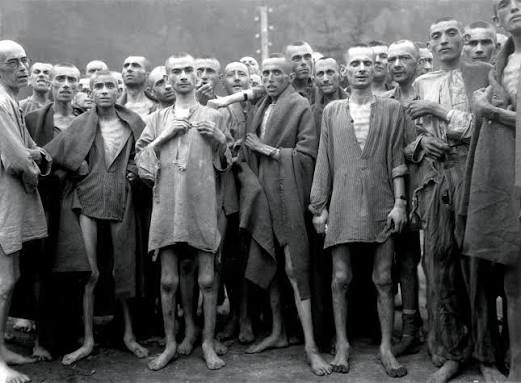
By HENRY SREBRNIK Genocide is a grave and exceptional violation of international law, defined and prohibited by the Genocide Convention of 1948. But maybe Raphael Lemkin did us no favour in coining the word during the Holocaust. It is now used by antisemites against Israel.
Raphael Lemkin was a Polish-Jewish jurist who escaped from Europe when the Nazis occupied Poland. He moved to Washington, DC, in the summer of 1942, and went on to document Nazi atrocities in his 1944 book, Axis Rule in Occupied Europe. In this text, he introduced the word “genocide,” the destruction of a nation or of an ethnic group. This new word is made from the ancient Greek word genos (race, ethnicity or tribe) and the Latin cide (killing).
But it’s not that cut and dried. Even before the antisemites accused Israel of genocide in Gaza, as a way of ridding themselves of any residual guilt about the destruction of European Jewry, the word had become little more than a term used by states and “human rights” groups who for one reason or another want to punish their adversaries.
Most of the time they really are talking about “ethnic cleansing,” pogroms, massacres and war crimes. By such criteria, every participant in World War II committed “genocide.” The mass killings of civilians in Hiroshima and Dresden in 1945 would today qualify. But these were acts against even far worse perpetrators of what we now call genocide, designed to speedily end the war.
What about the American war in Vietnam, and of course the almost numberless conflicts across Africa? The wars that dismembered Yugoslavia involved terrible massacres, particularly in Bosnia-Herzegovina and Kosovo, but did they really meet the criterion for genocide? The numbers killed needn’t be huge. About 8,000 Bosniak Muslims were murdered in Srebrenica by Bosnian Serb militias in 1995 during the Bosnian war. In the Western Hemisphere it would — and lately does — refer to the cultural and also physical extinction of pre-contact peoples from the Arctic down to Patagonia.
Are ideological attempts to kill groups of identifiable people within a state — the Holodomor in Ukraine, but also elsewhere in Stalin’s USSR — genocide? What about the Khmer Rouge in Cambodia? Should we call this an “auto-genocide,” since it was perpetrated by the nation’s own mad Maoist regime? Was China’s Cultural Revolution a genocide? Millions probably died. Rwanda is an interesting case — obviously a mass murder by one class-cum-ethnic group against another, a giant pogrom involving intertwined peoples, but where the victims have now turned the tables.
Actually, there have been very few ideologically intentional attempts to destroy a powerless and helpless people, in whole or in part. Only a few qualify by that definition, the Holocaust being an obvious one, as well as the Turkish mass murders of Armenians in World War I. The allegations that Israel committed this crime do not meet the established definition and standards of genocide, are unsupported by established facts, nor do they stand up to common sense scrutiny.
A finding of genocide requires evidence of acts that are intended to destroy a national, ethnic, racial, or religious group, in whole or in part. Israel has neither intended to, nor destroyed, Palestinians as a group in Gaza. Israel’s accusers allege genocide mostly because of the supposed number of civilians killed in Gaza. Such claims are rife with flaws. Genocide is not a quantitative crime; there is no specific number of civilian casualties that constitutes genocide.
Israel set a high bar for how to conduct urban warfare against an enemy who will stop at nothing, including the death of its own civilians. What kind of genocide is it when the population of Gaza is larger today than it was three years ago? And how could it be that Israel is trying to kill innocents when the ratio of civilian-to-combatant casualties is lower than that of other urban wars fought in even less-difficult conditions?
Dave Rich, an Associate Research Fellow at the Pears Institute for the Study of Anti-Semitism, writes extensively about the intersection of anti-Israel activism, far-left politics, and modern antisemitism. He observes that people respond to the genocide charge through facts and data: Israel’s supporters take the charge of genocide on its face, as an evidence-based allegation of a crime, and try to construct the case for the defence. But there is no defence, because the charge is not made on that basis, or for that purpose, he states.
The term “genocide,” he notes in “From Be’eri to Bondi: Global Antisemitism After October 7, published in Fathom, October 2026, has shed its legal meaning and become a political label, whose antithesis is “resistance.” These two terms represent two states of being: in a colonial setting, either you are engaging in genocide or you are resisting it. There is no middle ground. “Israel is condemned as genocidal, not by observation, but through logical deduction: Israel is colonial, therefore by definition it is genocidal. It cannot be otherwise. And Gaza represents resistance against the entire Western colonial and capitalist power structure.”
Maia Zelkha, editor-in-chief of Yad Mizrah, a Sephardi and Mizrahi cultural magazine, also contends that the left employs the word “genocide” as an ideological weapon. “Before Israel had even launched its ground invasion of Gaza, and before there was any evidentiary record of Israel’s military campaign,” she writes, in her article “Genocide and Its Jurors,” in Quillette, Sept. 24, 2026, many leftist groups “were already describing Israel’s response as genocide.”
On Oct. 8, just a day after Hamas’s massacre and kidnappings, thousands of demonstrators gathered in New York’s Times Square in an “All Out for Palestine” rally to support “Palestinian resistance.” Within days, other organizations were issuing statements describing Israel’s unfolding military response as genocide, situated within a pre-existing theory of Israel as a colonial project that had produced genocidal dehumanisation. Prominent academics, human-rights organisations, activists, journalists, and public intellectuals described Israel’s conduct as genocidal.
Although the conviction that Israel is committing genocide against the Palestinians is not new, it has garnered ever more strength since the beginning of this war. In March 2024, the UN special rapporteur on the Palestinian territories, Francesca Albanese, published a report alleging that the Israeli war in Gaza constituted a genocide. In December of the same year, both Amnesty International and Human Rights Watch did the same. Then in July 2025 came both Physicians for Human Rights and B’Tselem, followed almost immediately by the International Association of Genocide Scholars. A resolution from the latter organization requires a two-thirds vote of its members, academics in the field of genocide studies, to pass. One would be hard-pressed to find a more reputable source for the libel.
On Sept. 16, 2025, a UN Commission of Inquiry concluded that Israel was committing genocide in Gaza; other prominent left-wing organisations and scholars have reached the same conclusion. And finally, on Oct. 9, the Norwegian Nobel Committee announced that it awarded the Nobel Peace Prize for 2026 to South African judge Navanethem “Navi” Pillay, who led the 2025 UN commission that found Israel guilty of genocide against the Palestinians while completely ignoring many of the world’s worst human rights abusers, including, of course, Hamas. Pillay’s commission found that Hamas and other Palestinian armed groups committed war crimes. Yet it accused Israel of genocide. This is a staggering moral inversion. And now the award of the Nobel; this appears to be the greatest possible legitimization of the now-established consensus about Israel’s war in Gaza. The icing on the cake!
But remember this: When a jihadist terrorist organization like Hamas applauds a Nobel Peace Prize, the moral judgment of the Nobel Peace Prize Committee should rightly be called into question.
Henry Srebrnik is a professor emeritus of political science at the University of Prince Edward Island.
Features
Launch Black Friday Promo Spots Fast with an AI Video Generator

Black Friday campaigns often require rapid decision-making, consistent messaging, and promotional materials on multiple digital channels. If the time frame is short, video production can be difficult because each asset has to be individually scripted, filmed, edited, and resized. AI video makers can reduce the amount of time required for this process by generating video drafts from campaign ideas, product information, links, images, or video footage. Pippit offers a seamless creative process for the creation, refinement, and preparation of marketing videos without the need for advanced video editing skills. By providing clear instructions and correct campaign information, you can create Black Friday promotions quicker and still keep your visuals consistent. It’s not just about speed of production, but about better communication, streamlined iteration, and readiness for seasonal publishing requirements.
Why Black Friday Promo Videos Need a Faster Production Workflow

Black Friday marketing campaigns can be done in very short timeframes, which is why efficiency in production is particularly crucial. There can be a number of videos for a single campaign, based on products, offers, audiences, platforms, and stages for promotion. Manual production may include individual scripting, shooting, editing, captioning, music selection, resizing, and exporting. Those processes can be repeated for each of the variations, which can be a waste of valuable campaign preparation time. Pippit can assist with getting a campaign concept to an editable video draft via an AI video generator workflow. Creative inputs can be text, links, files, images, videos, or other media. Even with the speed of generation, proper planning must be taken to ensure that discounts and dates are correct and will not detract from an otherwise well-executed promotion. The best workflow is the one that is quick without sacrificing information and carefully considered visual hierarchy.
Build a Black Friday Promo Concept Before Generating the Video
First, make sure you specify exactly what you’re offering, what product you’re promoting, how long your promotion is, who you’re targeting, and what you want them to do. Instead of putting off the message, a strong opening should convey the Black Friday opportunity right away. Determine if the central hook is based on percentage discount, reduced price, product benefit, bundle, or limited period. Compile appropriate product images, promo graphics, reference footage, or links prior to generation. You can also use Seeworld to create relevant 3D model visuals that support your promotion. Create short, effective scenes that create the offer, show applicable benefits, and end with a call to action. Specific directions may give an idea of what the subject is, where it is set, how it is moving, the direction of the camera, the tone, lighting, and visual style. Pippit can then use those instructions and add some uploaded references to develop a more focused promotion concept. Ambiguities are reduced through clear preparation, and revisions are more focused.
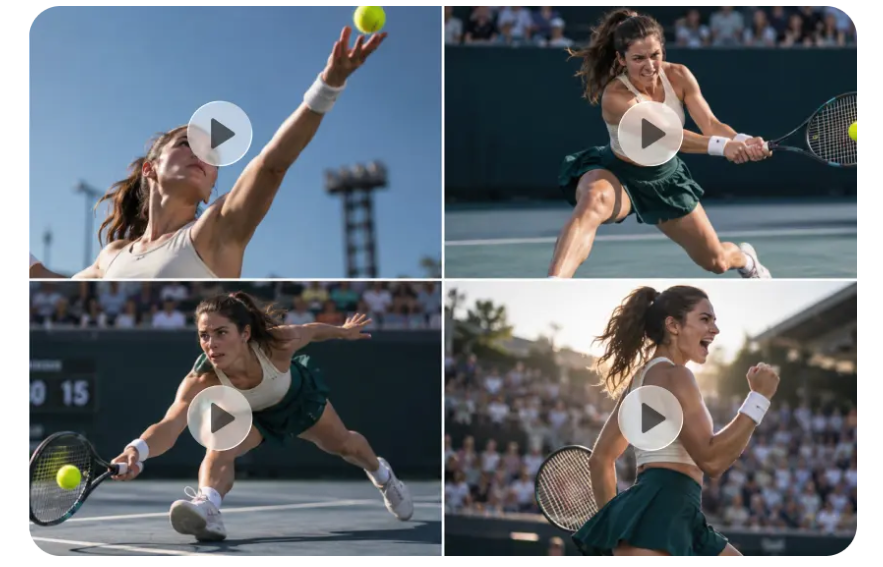
Steps to Launch Black Friday Promo Spots Fast with an AI Video Generator
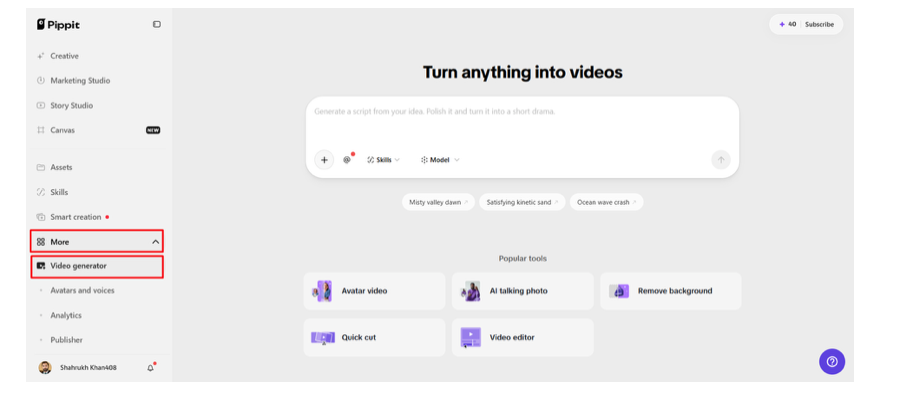
Step 1: Set Up Your Black Friday Workspace
• Sign in to Pippit using Google or social media before creating your Black Friday campaign.
• Open the “Video generator” from the left menu under the “More” tab to begin.
Step 2: Build Your Black Friday Promo
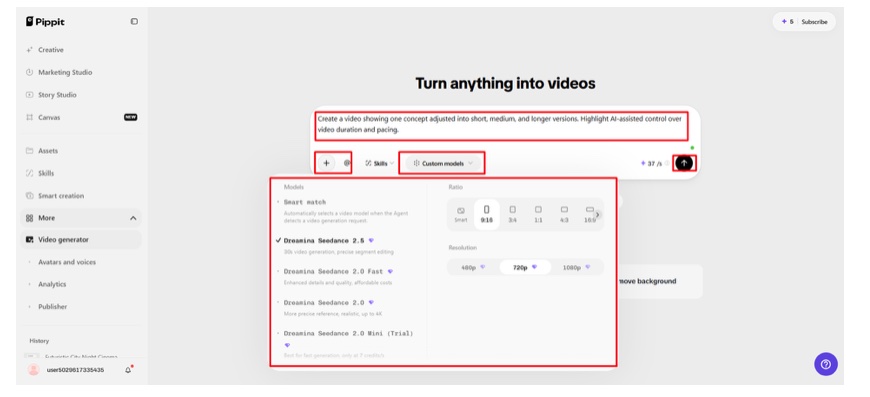
• Select Dreamina Seedance 2.5, Dreamina Seedance 2.0, or Dreamina Seedance 2.0 Fast.
• Choose Dreamina Seedance 2.0 Mini, Dreamina Seedance 1.0, or “Auto Route”for value.
• Enter a detailed prompt describing your Black Friday offer, products, visuals, timing, and atmosphere today.
• Click “+” to upload reference images or videos from your device, phone, Dropbox, or a link.
• Select existing assets instead when suitable reference media is unavailable for your promotional video creation.
• Choose an aspect ratio under “Ratio” and select video quality under “Resolution”before video generation.
• Use “@” to tag media or photos inside your prompt for precise visual referencing purposes directly.
• Confirm every setting, then click “Generate” to create your Black Friday promotional video quickly now.
Step 3: Polish and Publish Your Offer
• Preview the generated video and adjust details
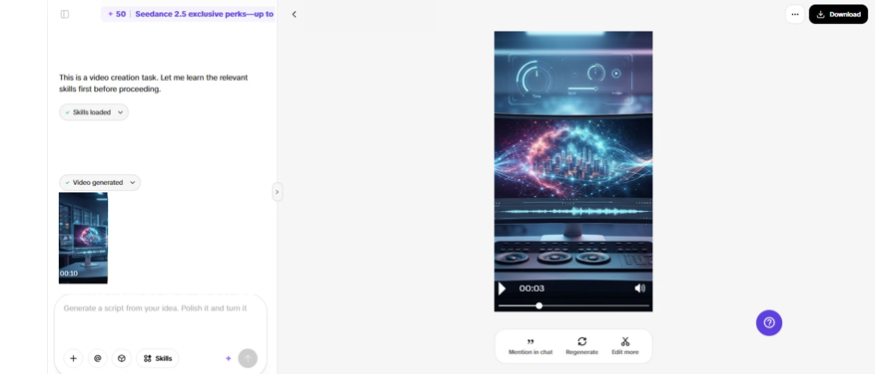
• Click “Regenerate” when results need further changes.
• Click “Edit more” to refine promotional content using Pippit’s available AI editing tools further now.
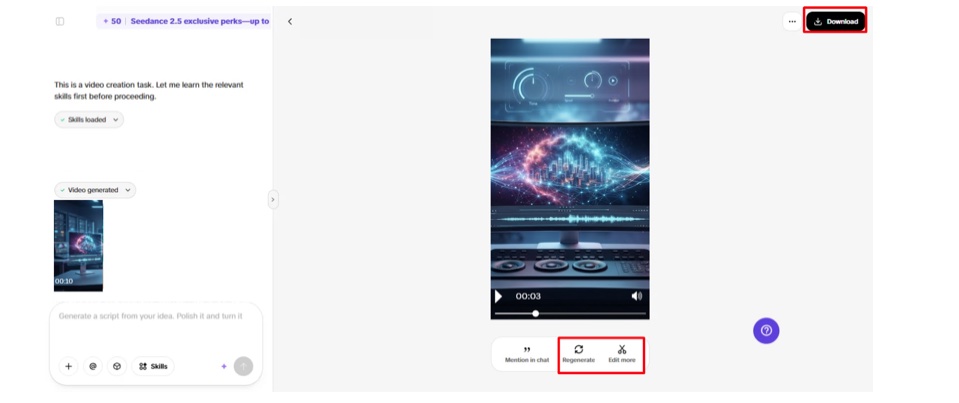
• Manually edit captions, add text, and adjust size, color, alignment, filters, and effects for polish.
• Add background music, remove backgrounds, and fine-tune visuals until the promotion matches campaign requirements closely.
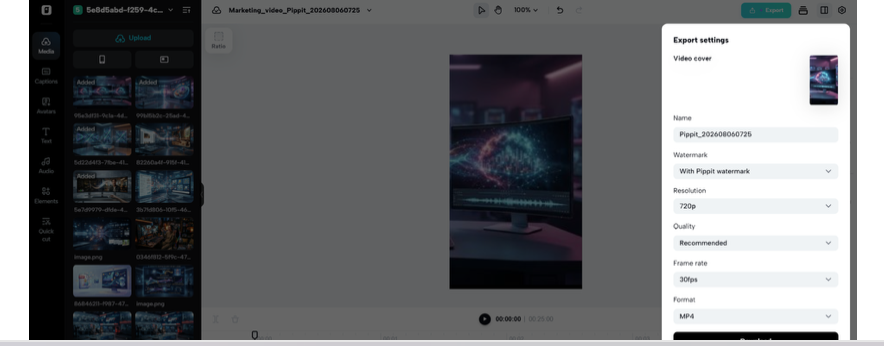
• Click “Download” to export the completed Black Friday video directly to your local device now.
• Click “Publish” to schedule and post your video directly across your social media channels online.
Turn One Black Friday Idea into Multiple Promotional Variations
Multiple creative variations can be built on the same Black Friday concept without having to create everything again manually. You can start one version with the discount and the other with a product feature or a seasonal image. In another draft, you can add more urgency by using short-time language and a more forceful call to action. Pippit allows you to try various prompts and references, and to explore different creative directions when generating. Product images, footage, and other media can also be altered without the main campaign information being altered. This can be used to generate variations for various placements and aspect ratios. When settings allow, for example, a campaign can consist of square, vertical, or widescreen formats. Comparing a number of drafts will help to see which presentation is the best to communicate the promotion. Ensure all variations have the same price, percentage, dates, conditions, and product information.
Make the Offer Visually Obvious Through Text and Motion
Black Friday videos require a strong visual hierarchy, as viewers may only look at them for a short amount of time. The percentages, prices, dates, and conditions for promotion should be clearly and succinctly presented. Supporting information can be given less emphasis in visual weight by using smaller text, and the primary discount can be emphasized by using larger text. Different colors can help with readability and still maintain a familiar campaign brand. Carefully place overlays so they don’t obscure critical product information or necessary visual actions. Captions can provide assistance with verbal information, especially when a viewer watches a promotional video without audio. Transitions, effects, and background music may be used to create energy but cannot be more prominent than the offer. Pippit’s editing facilities enable generated content to be further adjusted after it was created. Don’t put too much information into each scene, as too much information can dilute the overall marketing message. Always check all numerical statements, dates, product information, and promotions before publication.
Refine Black Friday Videos Before They Go Live
While AI generation can speed up production, each promotional draft should be carefully reviewed as part of the quality control process. Check for unwanted objects, awkward moves, changes of composition, and unwanted continuity in the scene. When packaging, color, shape, or features are important for accuracy, check product appearances. Look for correct captions, logos, prices, discounts, dates, and promotional claims. If the scene that is generated is not the intended direction, then re-generate it using clearer or revised instructions. Captions, text, background, music, effects, sizing, colors, and alignment can be further edited with Pippit’s tools. Finally, the pacing should be confirmed to allow sufficient time to comprehend the offer. Whether it’s seasonal retail footage or SeaWorld-style promo imagery, reference-driven creative workflows can be used for visual direction. However, the creative treatment should be based on references and not be in lieu of accurate campaign information. Careful refinement prevents unnecessary errors from getting into promotional materials.
Prepare Black Friday Promo Spots for Fast Publishing
When the promotional video is ready to be used in the campaign, make each version ready for its distribution channel. Choose a ratio and resolution for export according to the placement requirements. Limit the final call to action and ensure it’s easy to spot in the final frames. Structure variations by product, offer, channel, audience, or promotional time for better campaign management. Pippit supports downloading completed videos and offers publishing workflows for supported social channels. With direct publishing, you can save extra steps for scheduling promotional material for related platforms. Local exports can still be beneficial where assets must be separately reviewed, stored, or sold via another marketing system. Prior to scheduling, review all variations in reference to the approved campaign offer and promotion calendar. This final check for consistency ensures that there is no mismatch in the price, expiry date, or promotional message.
Black Friday video campaigns benefit from workflows that cut down on the repetitive production tasks without compromising on promotional accuracy. Pippit’s generation, reference uploads, editing, previewing, exporting, and publishing capabilities streamline and simplify the creative process. Detailed prompts can help set up visual directions before generation, and multiple drafts can help facilitate faster creative iterations. Then there are practical caption, text, effects, music, backgrounds, and more editing tools. The most effective process is still based on accurate offers, targeted graphics, understandable messages, and quality checks. Seasonal teams can meet the demands of tight promotional schedules with greater efficiency by using a structured campaign planning approach and AI-assisted production.
Features
THE RED INHERITANCE – Part 3:
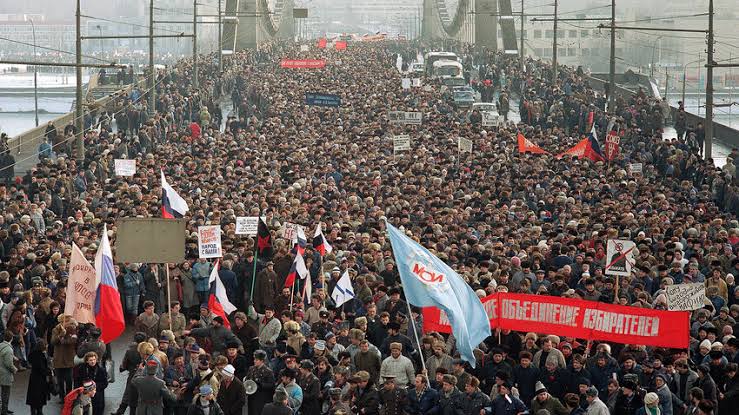
The Circle Interprets Itself – Understanding, Reckoning, and the Collapse of Old Certainties
(Ed. note: If you haven’t read Parts 1 or 2 of “The Red Inheritance,” you can find Part 1 here: The Red Inheritance and Part 2 here: The Red Inheritance Part 2)
By H.C. Piloski
Foreword
Part Three is about understanding.
Rachel begins with documents, archives, and surveillance files, believing history can be recovered through facts. What she discovers instead is that history survives not only in records but also in memory, silence, contradiction, and family.
As the circle of her inquiry widens, she learns that inheritance is rarely a single story. More often, it is a conversation carried across generations, unfinished and sometimes unresolved.
Rachel had intended to read only a few pages before bed.
Instead, she found herself awake long after midnight, sitting at her kitchen table with the RCMP file spread before her.
A date caught her attention.
December 26, 1991.
The day the Soviet Union officially ceased to exist.
She imagined her grandfather reading the news.
For David, the collapse was not simply political. It was personal. An entire worldview had fractured before his eyes.
The professor had explained it during one of their earlier conversations.
“For people like your grandfather,” he had said, “socialism wasn’t merely politics. It was a moral framework. When the Soviet Union collapsed, many people felt as though the world itself had lost its bearings.”
Rachel understood that better now.
The file recorded meetings, organizations, speeches, and surveillance reports. It documented where David went and whom he spoke to.
It documented what he did.
It revealed almost nothing about who he was.
One report noted that after a political gathering David had lingered outside the Labour Temple.
The officer’s assessment was brief:
Subject appears contemplative.
Rachel laughed despite herself.
Contemplative.
As though an entire intellectual and emotional universe could be reduced to a single word.
Yet perhaps it was not entirely wrong.
The deeper she read, the more complicated her grandfather became.
He was neither hero nor villain. Not a symbol. Not a stereotype.
He was a man trying to understand history while living through it.
Rachel opened her notebook.
He lived in a country that watched him, loved a country that doubted him, and believed in a world that collapsed beneath him.
For the first time, she felt less like a researcher and more like an inheritor.
The next morning she called the professor.
“You’ve reached the collapse,” he said.
“It feels like an earthquake.”
“It was.”
They spoke about the aftermath of 1991.
Old friendships strained.
Organizations fractured.
Arguments that had once seemed theoretical became deeply personal.
The professor explained that for the Jewish left, and many on the broader left, the Soviet Union’s implosion was more than a geopolitical event. It was a profound ideological shock.
“And my grandfather?”
“He was right in the middle of it.”
After the call ended, Rachel found herself thinking about the people who had filled her grandparents’ home when she was a child.
The endless conversations.
The arguments.
The laughter.
The crowded rooms full of people whose names she barely remembered.
Most of them were gone now.
What she was uncovering was larger than a single life.
She was recovering fragments of an entire vanished community.
The surprise arrived in the file almost by accident.
Buried among routine observations was a note stating that David and his wife had attended a performance at Manitoba Theatre Centre.
The entry was insignificant as intelligence.
For Rachel, it opened an entirely different door.
Politics had dominated every family story about David.
His meetings.
His causes.
His convictions.
But what about her grandmother?
Rachel had always known that she loved theatre, books, music, and literature.
What she had never considered was how completely those interests shaped her life.
For years Rachel had unconsciously treated her grandmother as a supporting figure in David’s story.
Now she began seeing her differently.
As a person.
As someone with her own passions, friendships, and intellectual world.
The deeper Rachel looked, the more similarities emerged between them.
Both believed ideas mattered.
Both loved books.
Both loved theatre.
The difference lay only in where they searched for meaning.
David sought it in politics and public life.
Her grandmother often found it in art, culture, and relationships.
Rachel wrote:
She walked beside his convictions, but she carried a world of her own.
This time she left the sentence untouched.
A few days later Olga came to visit.
Instead of speaking about David, she spoke about her own family.
Her grandparents had survived the Holodomor.
They carried memories of hunger, fear, and state violence.
“My grandparents never celebrated the collapse of the Soviet Union,” Olga said.
Rachel looked surprised.
“They didn’t?”
“No.”
“What did they do?”
Olga smiled sadly.
“They stared.”
Rachel thought immediately of David.
“Like my grandfather.”
“Yes,” Olga said. “But from the other side.”
The words settled heavily between them.
For years Rachel had viewed history through the lens of her own family.
Now she understood something new.
Her grandfather’s hopes had existed alongside someone else’s suffering.
His vision of justice had intersected with experiences he could never fully understand.
Neither reality cancelled the other.
History was not a single inheritance.
It was a collision of inheritances.
Before leaving, Olga reached across the table.
“You aren’t responsible for your grandfather’s beliefs.”
Rachel nodded.
“But you are responsible for understanding them.”
After Olga left, Rachel wrote down those words.
They remained with her for days.
The professor helped her understand another contradiction.
David had been a passionate supporter of Israel’s existence.
At the same time, he had consistently defended Palestinian rights.
“Both?” Rachel asked.
“Both.”
The professor smiled.
“Your grandfather spent much of his life living with contradictions.”
To many people such positions appeared incompatible.
To David they represented a single principle.
Justice could not be divided.
Rachel left the meeting with another realization.
David had spent much of his life refusing easy answers.
Perhaps that was part of what she had inherited.
As she prepared to leave, the professor stopped her.
“This isn’t really about your grandfather anymore.”
Rachel looked up.
“It’s about what his children inherited.”
After a moment he added:
“And what you inherited.”
Rachel did not expect Daniel to become part of the story.
Her younger brother rarely discussed family history.
When he called unexpectedly one evening, she assumed he was simply checking in.
Instead, he surprised her.
“Mom says you’re digging into Grandpa’s past.”
Rachel laughed.
“Word travels fast.”
“It always does.”
What followed was the most honest conversation they had shared in years.
For a long time Rachel had believed Daniel lacked interest in family history.
Now she realized his distance came from uncertainty rather than indifference.
“I remember Grandpa differently,” he told her.
“How?”
“He laughed.”
The answer caught her off guard.
Daniel began describing hockey games, family dinners, jokes, stories, and arguments.
Not the political figure preserved in newspaper clippings and surveillance reports.
A grandfather.
A human being.
“He loved asking questions,” Daniel said.
“And he loved telling stories.”
For the first time, Rachel saw a version of David that no archive could preserve.
Before ending the call, Daniel added something else.
“Grandpa wasn’t nearly as certain as everyone thinks.”
Rachel remained silent.
“He believed things strongly,” Daniel continued. “But he never stopped questioning them.”
The observation changed everything.
The file preserved David’s convictions.
His family preserved his doubts.
Neither version was complete by itself.
Before hanging up, Daniel made a promise.
“When you’re ready, I’ll tell you everything I remember.”
Rachel thanked him.
For the first time, she no longer felt alone in the search.
The following weekend Rachel drove to her parents’ house.
The place felt both familiar and strangely smaller than she remembered.
Photographs lined shelves.
Books crowded every room.
Pieces of family history sat quietly in plain sight.
While looking through old programs and photographs, Rachel began noticing things she had previously overlooked.
Her grandparents had attended theatre performances together.
Commented on books together.
Shared interests she had unconsciously assigned to only one of them.
Their lives overlapped far more than family mythology suggested.
Then her father mentioned something almost casually.
“There might still be some of your grandparents’ papers downstairs.”
A few minutes later Rachel stood in the basement.
The box sat on a shelf.
Its label contained a single word:
DAVID
She lifted the lid.
Inside were photographs, letters, programs, newspaper clippings, address books, and handwritten notes.
Nothing dramatic.
Nothing obviously historical.
Simply the fragments of an ordinary life.
Exactly the sort of material institutional history often overlooked.
Her father watched quietly as she examined the contents.
“Did you know all this was here?”
“Mostly.”
“Why didn’t you tell anyone?”
He thought for a moment.
Then answered honestly.
“I never thought anyone would ask.”
The response hurt because it was true.
For years nobody had.
Back in her apartment, Rachel spread the contents of the box across her table.
One item stood out immediately.
A sealed envelope.
The handwriting was unmistakably David’s.
The envelope was addressed to Sarah.
Her aunt.
The daughter who had drifted away from the family.
Carefully Rachel opened it.
Inside she found an unsent letter.
At first it read like ordinary correspondence.
Then gradually it became more personal.
More vulnerable.
More uncertain.
One passage stopped her completely.
You believed I cared more about being right than about understanding you.
Perhaps there were times when that was true.
If so, I regret them.
Rachel read the lines again.
This was not the David preserved in family legend.
Nor the David described in surveillance files.
This was a father struggling to understand his own mistakes.
Further down she found another passage.
History can become a dangerous thing inside a family.
People begin arguing with symbols instead of people.
Before long, nobody remembers how to listen.
Rachel lowered the page.
The words felt painfully honest.
Not political.
Human.
When she finally reached the end, she found something even more powerful.
The final paragraph was unfinished.
It ended with a single incomplete sentence.
If there is one thing I hope you understand, it is that I never wanted disagreement to become distance. A family should be large enough to contain different truths. If I failed you, it was not because I loved my ideas more than my daughter. It was because…
Nothing followed.
No explanation.
No signature.
Only blank space.
Rachel stared at the unfinished sentence for a long time.
At first she felt disappointed.
Then she realized its incompleteness carried its own truth.
Life rarely supplied neat endings.
Letters remained unsent.
Conversations stopped.
Questions survived.
That night Rachel stood by her apartment window looking out across the city.
She thought about the RCMP file.
The professor.
Olga.
Daniel.
Her grandmother.
The box.
The letter.
Government archives had preserved David the activist.
Family memory had preserved David the husband, father, grandfather, friend, and neighbour.
Neither archive was complete.
Together they came closer to truth.
Rachel opened her notebook one final time.
She wrote:
Every archive contains missing pages. Every family does too.
Then she closed the notebook.
For months she had searched for her grandfather.
Now she understood something new.
The story no longer belonged solely to David.
It belonged to the people who inherited him.
Her father.
Daniel.
Sarah.
And perhaps herself.
The next answers would not be found in government files.
They would be found inside the family.
Rachel switched off the light.
The letter remained on the table.
Waiting.
So did the rest of the story.
To Be Concluded in Part Four: The Red Inheritance
About the Author
H.C. Piloski lives among unfinished sentences.
