


Uncategorized
Overwhelmed by the NYC mayor’s race between Zohran Mamdani and Andrew Cuomo? Start here
Just now tuning in to the New York City mayoral election or feeling utterly overwhelmed by it? As early voting is underway, and Tuesday’s election nears, here’s a look at what each mayoral candidate could mean for Jews.
– Zohran Mamdani –
Democratic nominee
Start here: Mamdani, a 34-year-old self-described democratic socialist, won the Democratic mayoral primary in a major upset in June. Mamdani has served as a State Assemblyman representing Queens since 2021. If elected, he would be the city’s first Muslim mayor.
His pitch to voters: Mamdani has focused on affordability. His signature campaign promises include making buses “fast and free,” freezing the rent for tenants in rent-stabilized apartments, and creating city-owned grocery stores.
Plans to combat antisemitism: Mamdani has committed to increase funding for hate crime prevention by 800%. He also supports the “Hidden Voices” curriculum, which teaches students about Jewish Americans in U.S. history, as a way to combat antisemitism in schools. The curriculum defines Zionism as “The right to Jewish national self-determination in their ancestral homeland,” which seems to be at odds with Mamdani’s own position that Israel has a right to exist as a democratic state, but not a Jewish one.
Positions on Israel and Gaza: Mamdani got his start in political organizing as co-founder of a Students for Justice in Palestine chapter at Bowdoin College, which he graduated from in 2014. He has called the Palestinian cause “central to my identity.”
In 2020, Mamdani said he joined the Democratic Socialists of America because of their stance on Israel and said mayoral candidates should pledge to boycott Israel. He later downplayed those remarks, but has also called for a permanent end to New York City’s investments in Israel bonds.
Days after Hamas attacked Israel on Oct. 7, 2023, Mamdani said, and has repeated, that Israel committed genocide in Gaza.
Mamdani has declined to recognize Israel specifically as a Jewish state and said he would refuse to visit the country as mayor. He has also pledged to arrest Israeli Prime Minister Benjamin Netanyahu if he comes to New York, honoring an arrest warrant issued by the International Criminal Court. The U.S. is not a party to the ICC, making it highly unlikely Mamdani would be able to carry out the arrest.
In June, Mamdani drew fire for his initial refusal to condemn the phrase “globalize the intifada,” though he later said he would discourage its use.
Policies affecting Hasidic communities: Mamdani has said he would work to protect Hasidic yeshivas that face scrutiny for failing to meet state education standards.
Bagel order: “As someone who grew up in Morningside Heights, I have to go back to Absolute Bagels. Poppy seed bagel, scallion cream cheese. Some pulp Tropicana on the side. And this is going to lose me some votes, but to be honest with you: toasted.”
What else you need to know:
- Mamdani has clashed with the Anti-Defamation League, saying the ADL does not speak for New York Jews’ concerns.
- Mamdani has many Jewish advisors and was endorsed by Jewish city comptroller Brad Lander in the primary.
- Rabbis across the country have weighed in on Mamdani’s candidacy. A group of 650 rabbis and cantors signed a letter opposing Mamdani and the “political normalization” of anti-Zionism. A second rabbinic letter offered support for Mamdani, and there are others circulating as well.
- Ruth Messinger, the first Jewish woman to win a New York City mayoral primary, endorsed Mamdani.
- Mamdani has pledged to keep Jewish police commissioner Jessica Tisch, who is currently serving in Mayor Eric Adam’s administration.
– Andrew Cuomo –
Independent
Start here: Cuomo, the 67-year-old former governor of New York, is running as an independent in the general election after losing the Democratic primary to Mamdani. Cuomo resigned as governor in 2021 following allegations of sexual harassment. Cuomo denied the allegations, and all criminal charges related to the matter have been dropped or dismissed.
His pitch to voters: Cuomo has cast himself as a pragmatic moderate with the governing experience to get policy passed. He has also argued Mamdani poses a threat to New York’s Jewish community.
Plans to combat antisemitism: Cuomo has committed to adopting the International Holocaust Remembrance Association (IHRA) definition of antisemitism, which labels many forms of anti-Zionism as antisemitic. He also plans to “provide a strong response to antisemitic incidents in schools, including curriculum reforms.”
Positions on Israel and Gaza: Cuomo visited Israel three times as governor. In 2016, he signed an executive order barring government business with any company that boycotts Israel.
Cuomo has defended Israeli Prime Minister Benjamin Netanyahu against the International Criminal Court’s claims of war crimes. Later, he distanced himself from Netanyahu, saying, “I never stood with Bibi” and calling for the “horrific” Gaza war to end.
In September, Cuomo told the Forward he wanted three things: “We want killing to stop, because it’s a matter of humanity. We want the hostages returned, and Hamas eliminated. If you don’t eliminate Hamas, you accomplish nothing. This will happen again and again.”
Policies affecting Hasidic communities: Cuomo apologized to New York’s Orthodox Jews for his handling of the COVID-19 pandemic as governor, when he imposed health restrictions that also limited religious gatherings.
“I recognize that some of those decisions caused pain in the Jewish community because we did not always fully consider the sensitivities and traditions that are so deeply important,” Cuomo said.
Bagel order: “Bacon, cheese and egg on an English muffin, and then I try to take off the bacon, but I don’t really take off the bacon. The bagel I try to stay away from, to keep my girlish figure.”
What else you need to know:
- Cuomo has been endorsed by several Orthodox Jewish leaders.
- Cuomo has referred to himself as a “Shabbos goy” and said Mamdani won’t be able to “stand up to Donald Trump, who’d knock him right on his tuches.”
- Cuomo has also pledged to keep Jewish police commissioner Jessica Tisch.
– Curtis Sliwa –
Republican nominee
Start here: Sliwa, 71, is a former radio talk show host and founder of the Guardian Angels, a nonprofit citizen patrol group that deploys volunteers across the city to deter crime. Sliwa is the Republican nominee after running unopposed in the primary. He is not a supporter of President Donald Trump and said he did not vote for him in 2016 or 2020.
His pitch to voters: Sliwa has a “law and order” platform and argues he is the best candidate on public safety. He has proposed hiring 7,000 new police officers.
Plans to combat antisemitism: Sliwa has said that “Jews must protect themselves,” telling the Jewish Telegraphic Agency, “If you depend strictly on Gentiles, history is replete with instances where you’re going to be horribly disappointed.“ He said groups like Shmira or Shomrim, Jewish civilian watch groups that operate mostly in neighborhoods with large Orthodox Jewish populations, should secure Jewish safety.
In July, Sliwa apologized for past remarks about the Jewish community, including a claim that Hasidic Jews are “making babies like there’s no tomorrow” to collect government benefits.
“I’ve said a lot of things I shouldn’t have,” Sliwa told the Forward. “What I’ve learned in life is the art of apology. You have to understand the hurt that you cause people, and you have to apologize and mean it.”
Positions on Israel and Gaza: Sliwa has visited Israel three times and has criticized Mamdani as having “no love in his heart for the State of Israel and for Israelis.” He also rebuked Mamdani for his initial refusal to condemn the phrase “globalize the intifada.” Sliwa has acknowledged that “there are many Jews who are opposed to the killing of what’s gone over in Gaza,” but said “I disagree with them.”
Policies affecting Hasidic communities: Sliwa said the Bill de Blasio administration didn’t do enough to enforce state guidelines requiring private school education to be “substantially equivalent” to instruction at public schools.
“If parochial schools and religious schools that are not ultra-Orthodox or Hasidic have to follow those rules, then everybody does,” Sliwa told the Forward. We can’t start making exceptions.”
Bagel order: “I get me and my wife’s breakfast while she feeds our five rescue cats. For me it’s two toasted plain bagels. The schmear 🥯 is butter. My wife has an everything bagel toasted. The schmear is cream cheese. Two cups of coffee and we are good to go. I go to Giacomo on the UWS [Upper West Side]. A mom and pop shop with classical music playing and the customers standing on line waiting are a good political focus group for me. 👍”
What else you need to know:
- During the 1991 Crown Heights riots, Sliwa patrolled the streets with the Guardian Angels to protect the Jewish community.
- Sliwa has two Jewish sons who are being raised as Jews by their mother, Melinda Katz. She and Sliwa are no longer a couple.
- Sliwa was the sour garlic pickle-eating champion of the world for four years in a row.
- In 2002, Sliwa placed second in a matzah ball eating contest, only to be disqualified after he was caught squishing the matzah balls to get the liquid out.
The post Overwhelmed by the NYC mayor’s race between Zohran Mamdani and Andrew Cuomo? Start here appeared first on The Forward.
Uncategorized
Cantorial music movingly sung by women, at this event in Indiana
אויף איין טאָג איז דאָס שטעטל בלומינגטאָן — אַן אוניווערסיטעט־שטאָט אין ווײַטער אינדיאַנע — געוואָרן אַ צענטער פֿון נײַער און טראַדיציאָנעלער ייִדישער מוזיק.
דעם 11טן אָקטאָבער איז פֿאָרגעקומען אַ גאַנצע ריי פּראָגראַמען געווידמעט דער מיזרח־אייראָפּעיִשער ייִדישער קולטור. די פּראָגראַם, „זכּרון פֿאַרוואַנדלט“ (Memory Transformed), האָט אַרײַנגענומען אַן אַקאַדעמישן סימפּאָזיום, אַ קונסט־אויסשטעלונג און אַ קאָנצערט פֿון הײַנטצײַטיקער ייִדישער מוזיק. ס׳איז געקומען אַ גרויסער עולם: סײַ סטודענטן און פּראָפֿעסאָרן פֿון אוניווערסיטעט, סײַ ייִדן און נישט־ייִדן פֿון דער געגנט.
די רײַכע פּראָגראַם איז פֿאָרגעקומען אין בלומינגטאָן, דער עיקר, אַ דאַנק ירמיהו לאָקוווּד, דעם באַקאַנטן מוזיקער, היסטאָריקער און מוזיקאָלאָג, וואָס איז אויך אַ גאַסט־פּראָפֿעסאָר פֿון ייִדישע לימודים אין אינדיאַנער אוניווערסיטעט. לאָקוווּד האָט זיך באַטייליקט סײַ אינעם סימפּאָזיום סײַ אין דעם קאָנצערט. ער איז אויפֿגעטראָטן מיט זײַן קאַפּעליע, The Sway Machinery, מיט וועמען ער שפּילט שוין די לעצטע צוואָנציק יאָר.
כאָטש לאָקוווּדס אייגענע מוזיק איז מאָדערן, פֿאָרשט ער דווקא אַ מער טראַדיציאָנעלן ייִדישן זשאַנער: דאָס חזנות. בעת אַ שמועס מיט מיר האָט ער געזאָגט, אַז ער האַלט דאָס חזנות פֿאַרן עיקר און נשמה פֿון דער ייִדישער מוזיק. זײַן ערשט בוך, „גאָלדענע עפּאָכעס“ (2024) באַהאַנדלט די הײַנטיקע חסידישע זינגער, וואָס באַנײַען דעם סטיל חזנות פֿון אַלטע צײַטן. איצט אַרבעט ער אויף אַ צווייט בוך, וואָס זאָל דערציילן די געשיכטע פֿון חזנות ביזן הײַנטיקן טאָג.
לאָקוווּד פֿאָרשט ספּעציעל די אַלטע פּלאַטעס פֿון אָנהייב 20סטן יאָרהונדערט. חזנות איז אַ מאָל געווען געוואַלדיק פּאָפּולער, ווײַל דער פֿאָנאָגראַף האָט אַרײַנגעברענגט די הייליקע מוזיק אַפֿילו אין וועלטלעכע ייִדישע היימען.
אויפֿן סימפּאָזיום האָט אויך גערעדט אַן אַנדער מומחה פֿון חזנות, ד״ר יהודית בערקסאָן, אַ פֿאָרשערין און פּראָפֿעסיאָנעלע חזנטע אין לאָס־אַנדזשעלעס. זי האָט גערעדט וועגן דעם אימפּראָוויזירטן אַספּעקט פֿון חזנות, וואָס איז אַ מאָל געווען גאָר וויכטיק. הײַנט זינגען חזנים געוויינטלעך לויט די נאָטן, ווײַל זיי זענען גוט טרענירט אין דער קלאַסישער מערבֿדיקער מוזיק־טראַדיציע. אָבער דאָס אַמאָליקע חזנות איז געווען אַ געמיש פֿון מערבֿדיק און מיזרחדיק, מיט אַ סך אימפּראָוויזאַציע — אַ ביסל ווי דזשעז־מוזיק. דער חזן האָט קיין מאָל נישט געזונגען דאָס זעלבע שטיקל אויף פּונקט דעם זעלביקן אופֿן. יעדע זאַך איז געווען אָריגינעל.
בערקסאָן האָט אויך גערעדט וועגן די פּריוואַטע, קאָנטראַבאַנדישע רעקאָרדירונגען, וואָס געוויסע ליבהאָבערס פֿון חזנות פֿלעגן מאַכן בסוד. זיי האָבן אַרײַנגעשמוגלט אַ רעקאָרדיר־אַפּאַראַט אין אַ תּלית־בײַטל אָדער אונטערן מאַנטל און רעקאָרדירט דעם חזן, אַפֿילו ווען מע טאָר נישט, שבת אָדער יום־טובֿ. די אָ ייִדן זענען געווען גרייט צו ריזיקירן מיט דער אייגענער נשמה, אַבי צו פֿאַרמאָגן דאָס געזאַנג פֿון זייער באַליבטן חזן. אויף אַזעלכע רעקאָרדירונגען הערט מען אָפֿט אַ סך אימפּראָוויזאַציעס.
אויפֿן סימפּאָזיום האָט אויך גערעדט דער היגער ייִדיש־פּראָפֿעסאָר, דובֿ־בער קערלער. ער האָט דערציילט וועגן ייִדישע לידער, וואָס דער עולם האַלט זיי אָפֿט פֿאַר אַלטע פֿאָלקסלידער, כאָטש אין דער אמתן זענען די מחברים גוט באַקאַנט. למשל, „דער רבי אלימלך“ האָט געשריבן און קאָמפּאָנירט דער פּאָעט משה נאַדיר (יצחק רײַז), וואָס האָט געוווינט אין ניו־יאָרק. אַ סך פֿון די פּאָפּולערסטע לידער אונדזערע שטאַמען באמת פֿון אַמעריקע, נישט פֿון מיזרח־אייראָפּע.
לאָקוווּדס מוזיק מיט זײַן קאַפּעליע איז אַ יחיד־במינו, אַ געמיש פֿון עטלעכע מוזיקאַלישע זשאַנערס און סטילן: חזנות, ראָק, פֿאָנק, בלוז. באמת זענען זיי אַ מאָדערנע „אינדי“־ראָק־קאַפּעליע, וואָס זינגט תּפֿילות אויף לשון־קודש. עס איז טשיקאַווע צו הערן פֿאַרכאַפּנדיקע לידער מיט אַזאַ ריטעם און קלאַנג, אַז עס ווילט זיך טאַנצן, און זען, אַז די ווערטער האָבן אָנגעשריבן רבנים מיט הונדערטער יאָרן צוריק. אויפֿן קאָנצערט, למשל, האָבן זיי געשפּילט „אָדם יסודו“, אַ טייל פֿונעם פּיוט „ונתנה תּוקף“, וואָס ייִדן זאָגן ראָש־השנה. דאָס שטאַמט לויט דער מסורה פֿון הרבֿ אַמנון פֿון מײַנץ אין 11טן י״ה.
נאָך דעם איז אויפֿגעטראָטן אַ צווייטע גרופּע: „די אומשטאַרביקע חזנטעס“, וואָס באַשטייט פֿון עטלעכע פֿון די בעסטע חזנטעס פֿון אונדזער דור: יהודית בערקסאָן אַליין, רחל וועסטאָן, שאַהאַנאַ מעקיני־באַלדאָן און ריקי רויז. זיי האָבן געזונגען קלאַסישע תּפֿילות פֿונעם אַלטן רעפּערטואַר פֿון די גרויסע חזנים און חזנטעס פֿון אַ מאָל: „אַחינו“, „רצה במנוחתינו“, און „שׂים שלום“. די ווירטואָזקייט פֿון די חזנטעס האָט געמאַכט אַ געוואַלדיקן רושם אויף מיר און איך בין זיכער אויך אויף די אַנדערע.
איין ליד איו געווען טיילווײַז אויף ייִדיש: „איך בענק אַהיים“, געזונגען פֿון רחל וועסטאָן, וואָס איז באַקאַנט פֿון אַן אַלטער רעקאָרדירונג פֿון דער משפּחה מאַלאַווסקי, מיט דער באַקאַנטער חזנטע גאָלדי מאַלאַווסקי. הערנדיק דאָס ליד האָט דער עולם מסתּמא דערפֿילט, ווי איך אַליין, אַ בענקשאַפֿט נאָך דער אַלטער היים אין מיזרח־אייראָפּע, און נאָך דער אַמאָליקער ניו־יאָרק, וווּ חזנות און ייִדיש האָבן געלעבט אויף אַ ברייטן פֿאַרנעם.
The post Cantorial music movingly sung by women, at this event in Indiana appeared first on The Forward.
Uncategorized
Why this Zionist Israeli is running with an Islamist party
(JTA) — KIBBUTZ EIN HAHORESH, Israel – He’s been called a “terror supporter” and a “traitor,” and even accused of devious steps to enable Islamists to “infiltrate” Israel’s next government. But Yoav Segalovitz, the Jewish parliamentarian who recently broke strict taboos by teaming up with an Arab Islamist party, is unperturbed.
“There are always crazy people, and it doesn’t matter what they say on television; I think when you’ve chosen your path, you just have to ignore it all,” he said in a recent interview with the Jewish Telegraphic Agency.
It has been just over a month since Segalovitz, 67, a veteran member of Israel’s parliament, the Knesset, made his unprecedented decision to leave the centrist Yesh Atid party for Ra’am, an Arab-Israeli party with roots in the Muslim Brotherhood, in the hopes of bridging the gap between Jews and Arabs in Israel.
“Are all the old patterns going to change in the coming month? Absolutely not,” Segalovitz, a former deputy minister for public security and a former police investigator, said. “But I’m thinking long term, not just about these particular elections. From my perspective, this is a long-term story. It’s not about the here and now.”
At a recent campaign event in the well-worn communal dining room of Kibbutz Ein Hahoresh, an agricultural community in the Emek Hefer region of central Israel, Segalovitz explained to a group of around 80 Jewish voters why he made the radical decision as a self-declared Zionist to team up with an Islamist party.
“I wanted to have an impact,” he said, describing how he knew it would somehow be related to the Arab community in Israel that makes up around 21% of the total population.
“I knew I wanted to break down the paradigms that exist; I wanted to cross the bridge; the only question was how I could do this,” Segalovitz said, speaking to the small crowd of kibbutz members and residents of the surrounding communities.
Microphone in hand, the neatly dressed former police officer described how, when tensions were high and societal divisions deeper than ever during the final days of the previous Knesset, he asked himself how he could make a meaningful difference in Israeli society.
Segalovitz said that at first he considered creating a brand new joint Israeli-Arab party. But he quickly realized that he could make greater change by joining forces with Ra’am, an Arab party whose leader, Mansour Abbas, is already known for his own paradigm-breaking political moves.
Abbas, a deeply religious conservative Muslim who, in his own words, identifies as a Palestinian citizen of Israel, was the first Arab party leader to join an Israeli government, breaking deep-rooted taboos in his own community. In 2021, his bold move to join former prime ministers Naftali Bennett and Yair Lapid in a ruling coalition helped to briefly oust Prime Minister Benjamin Netanyahu from power.
While the move signaled an unprecedented shift in Israeli politics, it was also fraught with tension and ultimately proved to be deeply unpopular with much of the Israeli public and some in the Arab community. Ultimately, Ra’am’s inclusion in the Bennett-Lapid government was one of the factors that led to its rapid downfall.
If including an Arab party in the government was controversial before Hamas’ attacks on Oct. 7, 2023, today it is close to unthinkable. In the run-up to the Oct. 27 election, most predominantly Jewish parties have avoided saying publicly that they would consider including Ra’am, or any other Arab party, in a future coalition. And, beyond Ra’am, the other Arab party – the Joint List – remains emphatically against any such alliance.
But recent polls suggest that bringing Arab parties into a governing alliance could be the only way to secure the parliamentary majority needed to form a new government. With Segalovitz now running on Ra’am’s list, such a prospect may be slightly more realistic.
However, the challenges of reaching such an arrangement were evident at the recent Kibbutz Ein Hahoresh meeting.
An aging audience of casually dressed kibbutzniks sauntered into the sparse hall curious to hear Segalovitz’s story. They gave him a warm and polite reception, and grilled him with questions after listening to him speak. But most said they were not swayed to vote for him.
“He’s very brave for doing what he did,” said Elie Aloni, 80, a resident of nearby Beit Herut. But she continued to say that she would not vote for Ra’am because she’s already committed to the left-wing Democrats Party.
Aloni said her party’s leader, Yair Golan, had already stated that he wanted to see Ra’am join the government, and she hoped that would happen. She was also hopeful that having an Israeli Jew on Ra’am’s list would make it easier for the party to be included in the next coalition.
But she acknowledged that, after Oct. 7, including Arab parties in a government could prove difficult.
“I’m a peace activist, but even I have become disillusioned,” she said. “After Oct. 7, it has become more difficult to trust the Arabs. But they are not going to disappear, and neither are we.”
Segalovitz knows that his support is unlikely to come from Jewish voters. Instead, he has been focusing on reaching the Arab community and encouraging them to exercise their democratic rights.
Since joining Ra’am in early September, he has traveled around the country to address Arabic-speaking audiences – Muslims, Christians and Druze – about why he joined the party and what he hopes to achieve. The meetings are conducted in Hebrew because, as he admits, he does not speak a word of Arabic.
Segalovitz told JTA that despite the cold reception, including some outright attacks, from Israeli Jews, the Arab community has overwhelmingly embraced him – even though there is some skepticism.
Michael Milshtein, head of the Palestinian Studies Forum at the Moshe Dayan Center at Tel Aviv University, who has researched political trends in Israel’s Arab community for years, called Segalovitz’s decision to join Ra’am “pioneering.”
However, he noted that the Jewish MK has also faced attacks from within the Arab community from those who struggle to accept an openly Zionist Israeli joining their political ranks.
Although there are some Jewish Israeli members of Arab parties, namely the communist-leaning Hadash, they often identify as anti-Zionist. Segalovitz’s arrangement with Abbas is slightly different. He has not formally joined the Islamist party but rather forged an agreement whereby he will retain the freedom to vote independently on issues including religion and state, national security and LGBTQ rights.
“His move is revolutionary; he is not a post-Zionist or an anti-Zionist like some Jewish members of Hadash,” Milshtein said. “He [Segalovitz] is creating connections with a traditional religious party and it’s just bizarre.”
Segalovitz’s presence in Ra’am, which emerged from the southern branch of the Islamic Movement in Israel, historically linked to the Muslim Brotherhood, has also prompted questions across the Arab world about how Abbas can continue to be associated with the movement that also includes more extreme groups such as Hamas, Milshtein said.
But Milshtein said the two men were “pioneering” in much the same way.
“It’s kind of a mirror: Mansour breaks all kinds of taboos, and so does Segalovitz,” he said, adding that many Jews respected Segalovitz, and even supported his decision, “even if they won’t end up voting for him.”
Ra’am’s changes started in the 1990s when Israel’s Islamic Movement split into two, enabling the southern branch, the political home of Ra’am, to seek political engagement with state institutions as a way to make changes within the community. Abbas’s ascent to the leadership brought Ra’am’s current goals into even sharper focus.
Abbas, 52, a dentist by training, succeeded in breaking the party’s organizational ties with the religious leadership, allowing it to work even more harmoniously with institutions in Israel and focus on improving life for the country’s Arab citizens.
At this point in Ra’am’s history, Segalovitz’s arrival could be a significant political asset. The party’s focus is on improving life for Israel’s Arab community, and Segalovitz brings experience tackling violent and organized crime, one of the sector’s most pressing concerns.
As head of the Israel Police’s Investigations Unit from 2009 to 2013, and as deputy public security minister from 2021 to 2022, Segalovitz focused on violent crime. As deputy minister, he headed a government program aimed at addressing violent crime, successfully reducing homicides in the Arab sector by some 16%, the lowest level since 2014.
After Netanyahu’s return to office in 2022, Segalovitz’s program was scrapped. Since then, the murder rate has soared, with organized crime reaching beyond the Arab community. According to statistics compiled by the Abraham Initiatives, the number of murders in the Arab sector more than doubled between 2022 and 2025, rising from 116 to 252.
“Today, Israel has similar crime rates to those in South American countries,” said Segalovitz, referring to the organized crime that has been surging in the Arab community. He pointed the finger at Netanyahu and his government for failing to address deeper social and economic problems in Arab society.
Segalovitz is also a firm believer in some type of national community service for the Arab sector, akin to the mandatory military service most Jewish Israelis must undertake.
“Arabs make up 21% of Israel’s population,” Segalovitz said. “They are involved in every area of daily life in Israel, in medicine, economics, education and more. We live together with one another, and we need to decide how to manage a future partnership.”
“Our future does not allow us not to work in partnership with each other,” he said. “We have partnerships in all areas of life, except in politics.”
While running with Ra’am is his way of trying to change that, Segalovitz is under no illusion that his efforts will translate into votes. Instead, he sees his candidacy as a small first step toward a longer-term shift in Israeli politics.
This article originally appeared on JTA.org.
The post Why this Zionist Israeli is running with an Islamist party appeared first on The Forward.
Uncategorized
From Holocaust survivor to Nazi hunter to Entebbe hero
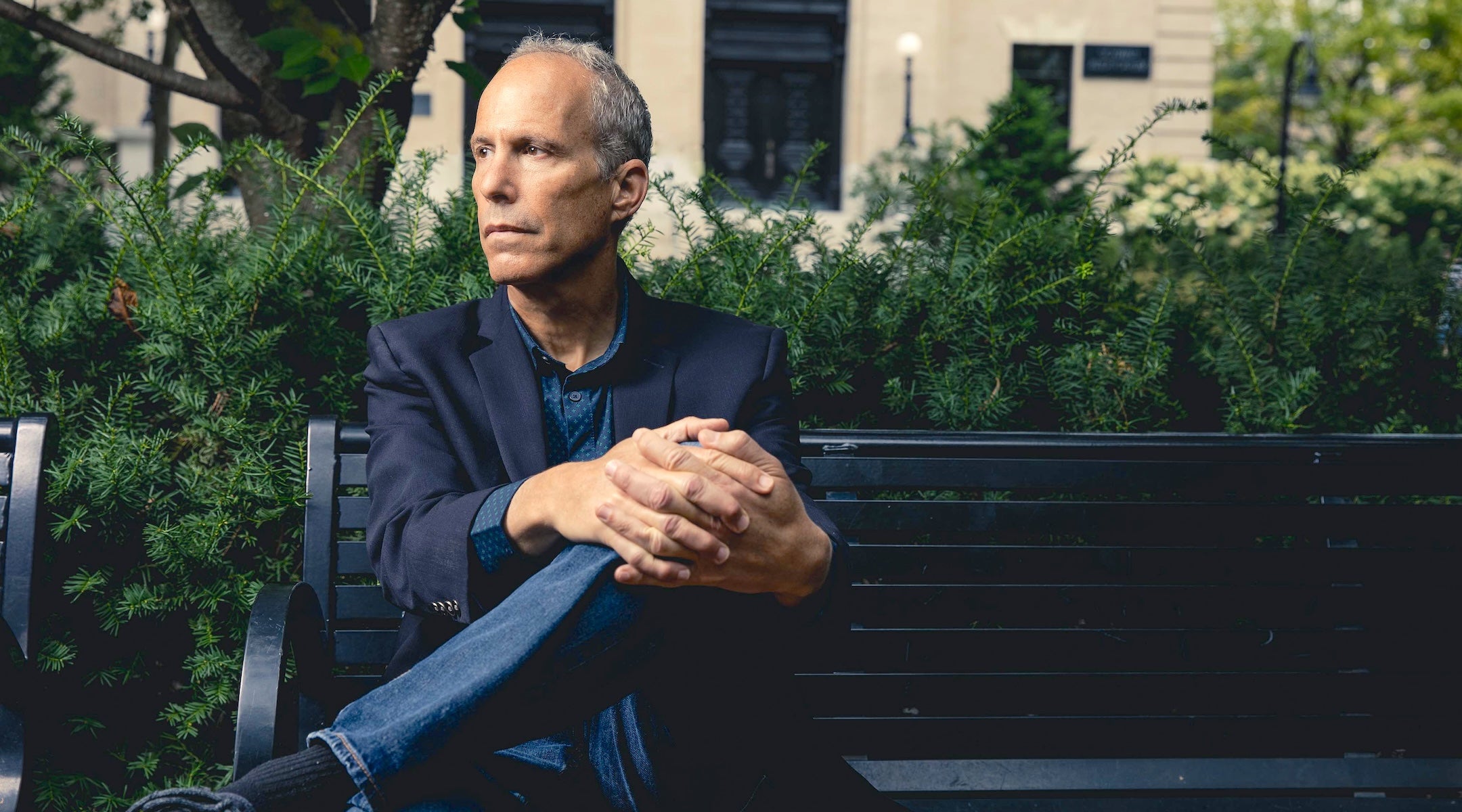
(JTA) — When Boaz Dvir flew from the United States to Israel in late September to screen his new film, “To Kill a Nazi,” he didn’t expect its story to become newly relevant. But just as Dvir arrived, the thwarting of an apparent hijacking of a flydubai flight bound for Israel offered an uncanny echo of the history his film recounts.
The film tells the largely overlooked story of Michel Cojot, a French Jewish Holocaust survivor and Nazi hunter who helped fellow hostages during the Entebbe hostage crisis and later provided intelligence that aided the Israeli rescue mission. For Dvir, the timing was striking.
“As I’m driving around, what do I hear?” he told the Jewish Telegraphic Agency. “Somebody tried to hijack a plane from Dubai to Israel and do a 9/11 type of terrorist attack? And the passengers saved the day? Ordinary guys?
“And of course, people brought it up everywhere I went, because the parallels are uncanny.”
Michel Goldberg was born in Paris in 1938. After the Nazis invaded, his father Joseph Goldberg was captured and sent to Auschwitz, where he was killed. According to his 1982 memoir “Namesake,” Michel was raised in France’s so-called “free zone,” which the Nazis would also occupy starting in 1942, and took his last name from his stepfather after his mother remarried.
Growing up to become a successful banker, Michel teamed with the famed Nazi-hunting couple Beate and Serge Klarsfeld and in 1975, while working in South America, embarked on a plot to find and kill Klaus Barbie, the Gestapo commander who had signed the arrest papers for Cojot’s father, and who was at that point hiding out in Bolivia.

Posing as a journalist, an armed Cojot met the “Butcher of Lyon,” but given the opportunity, Cojot failed to pull the trigger. In his memoir he writes that Barbie instead deserved to live in constant fear of reprisal, and that murder was a “Nazi” solution.
The year after his mission to Bolivia, Cojot and his son were on the fateful Air France flight that, bound from Tel Aviv to France, was hijacked by Palestinian terrorists and West German far-left radicals, with 102 Israelis on board. It led to the standoff at Entebbe International Airport in Uganda and the heroic rescue by Israeli commandos.
During the seven-day crisis, Cojot acted as a translator and go-between among the hijackers and passengers. When the Ugandan dictator Idi Amin spoke to the hostages, Cojot translated his English into French. He was even credited with persuading the lead hijacker, Wilfried Böse, to release the non-Israeli hostages. After his release, Cojot provided information to Mossad, including the layout of where the hostages were being held, which greatly assisted the Operation Thunderbolt rescue mission.
Cojot went on to write a book about Barbie’s crimes, and then testified in Barbie’s war crimes trial in the late 1980s. Barbie was sentenced to life in prison; he died of cancer in 1991. Cojot himself passed away in 1999. While the story of Entebbe is very well-known, Cojot’s role in it has often been left out of such tellings. None of the feature films about the rescue, most recently 2018’s “7 Days in Entebbe,” include him as a major character.
Divir hopes to give the forgotten hero the recognition he deserves. The grandson of Holocaust survivors who was born in Petah Tikva a few weeks after the Six-Day War in 1967, the filmmaker remembers the weeklong Entebbe crisis. He was nine years old then.
“I was like most Israeli kids at the time, outside most of the day and playing,” Dvir said. “But my brother and I, who was a year younger, decided that in solidarity with the hostages, we’re gonna ground ourselves, and so we did for that whole week.”
At the end of the week, he remembers his father waking him up and telling him, “The IDF did it.”
“We knew immediately what he meant, and of course we were thrilled for everybody, the released hostages, the military, but we’re also happy to be able to go outside again,” said Dvir.
While histories of the Entebbe affair omitted the actions of Michel Cojot, another Frenchman, pilot Michel Bacos, has often been recognized as a hero of the affair for having refused to be freed in the first release of the hostages. Most obituaries of Bacos, who died in 2019 at age 95, included this.
In fact, Dvir originally planned to make a documentary about Bacos. However, his research, including an interview with Bacos himself, led Dvir, a journalist and journalism professor at Penn State, to doubt Bacos’ version of the events.
But those former hostages kept mentioning another Michel, a genuine hero. “The story that I knew so well, Operation Thunderbolt, that I grew up with, now suddenly took on a whole new meaning,” Dvir said.

The film includes interviews with all four of Cojot’s children, including his son Olivier, who was with him in Entebbe, along with hostages and experts; Cojot himself appears in archival footage.
Dvir also composed the film’s music, which Penn State musicians perform on the soundtrack.
Dvir worked on the project for nearly a decade, even presenting it publicly as a work in progress as early as 2018.
“This project took a lot longer than most of my projects,” the director said.
A familiar voice narrates the film: Jason Alexander, the Jewish actor best known for “Seinfeld.” Dvir’s manager and business partner is a friend of Alexander’s, who agreed to narrate after viewing a rough cut.
“To Kill a Nazi” premiered at the Dances With Films festival in June. It has also screened at the Nashville Jewish Film Festival and the Croatian International Film Festival, and premiered in New York City on Oct. 16 at Regal Battery Park as part of the Chelsea Film Festival.
It’s also set to play the Austin Film Festival at the Boulder Jewish Film Festival, and the Silicon Valley Jewish Film Festival on Oct. 29; at the Galaxy Theatre in Austin, Texas on Oct. 31; and at the Harrisburg Jewish Film Festival on Nov. 12. Dvir hopes it will be picked up by a streaming service.
Some Jewish and Israeli filmmakers, especially since Oct. 7, have complained that they’ve had difficulty getting their films into festivals.
Dvir said that while “To Kill a Nazi” is “doing very, very well” and has been accepted to film festivals both Jewish and non-Jewish, “it’s been a little more of an effort than I’m used to putting in.”
“I don’t have any proof for it, but my sense is that there are some film festivals to which we submitted that may not have even really watched it or given it a fair shot,” said Dvir, who denounced the apparent boycotts of other films and artists. “At the end of the day, it really doesn’t matter. Because we can only do so many film festivals anyway. I’m very happy with what we got.”
This article originally appeared on JTA.org.
The post From Holocaust survivor to Nazi hunter to Entebbe hero appeared first on The Forward.
