


Uncategorized
Indiana University removed its Jewish studies director. His replacement has ignited a firestorm over Israel.
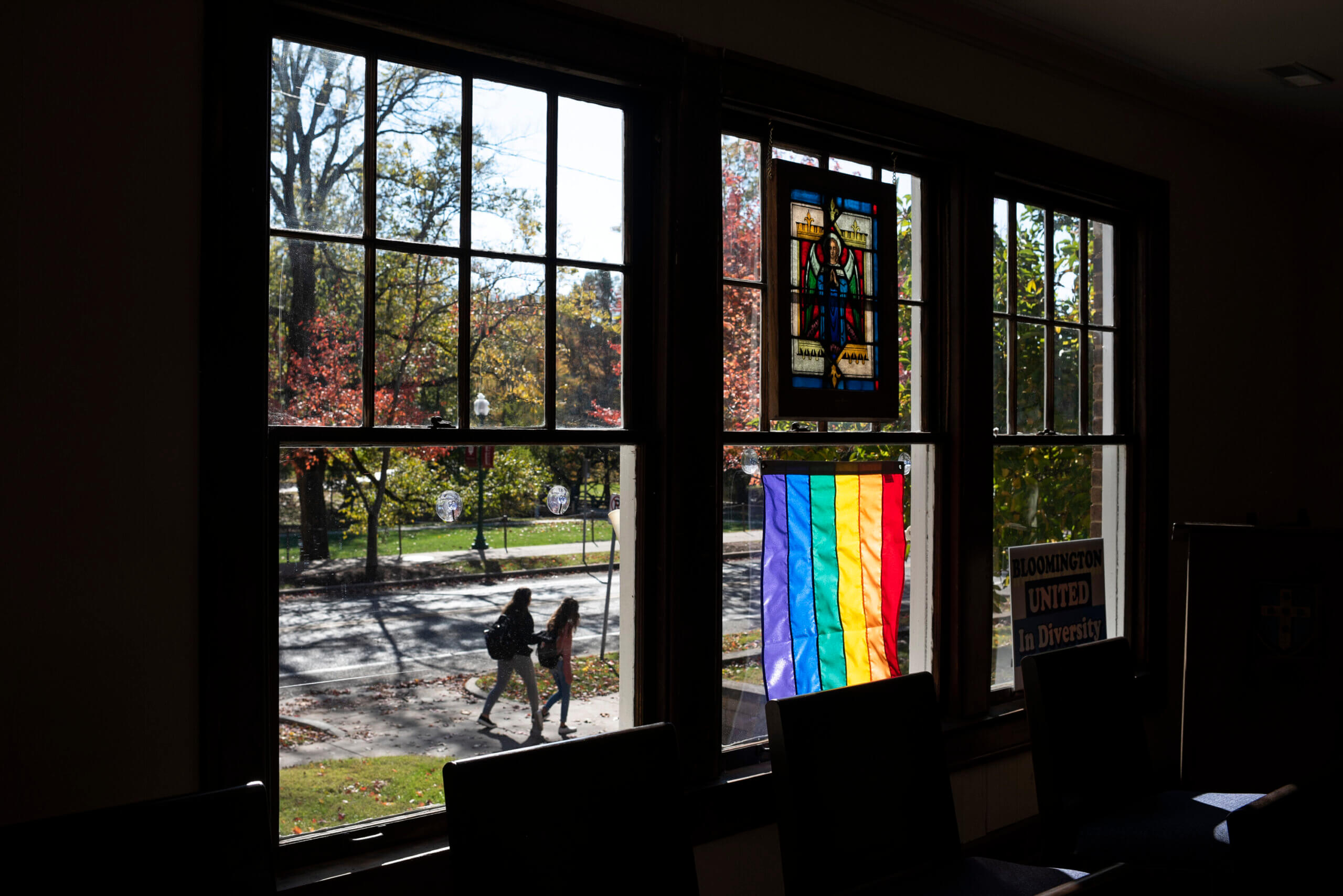
You won’t find professor Mark Roseman on the frontlines of any campus protests or posting his unfiltered political thoughts on social media. His current project, a four-volume history of the Holocaust published by Cambridge University, is unlikely to generate controversy.
Which is why many of his colleagues were baffled when Indiana University’s chancellor broke precedent this summer to remove Roseman as director of the school’s prestigious Jewish studies program and replace him with a junior colleague known as one of Israel’s fiercest defenders on campus.
“If I could have designed a person to be in charge of Jewish studies in a moment like this — it’s fraught, Jews are divided on Israel and antisemitism, everyone has a lot of deeply held feelings — I could barely imagine a better person than Mark,” said Sarah Imhoff, chair of Indiana’s religious studies department.
Roseman’s removal has taken on special significance at a time when universities are under intense pressure to appease both conservative politicians worried about liberal bias and Jewish groups enraged over mounting hostility toward Israel on campus with academics who study Jews and Judaism often caught in the crosshairs.
“Jewish studies is at the precipice of a cliff in America,” said Shaul Magid, a professor of Jewish studies at Harvard. “It’s being hijacked by a particular political agenda and somebody has to get ahold of the wheel.”
Indiana replaced Roseman with Günther Jikeli, associate director of the school’s small but influential Institute for the Study of Contemporary Antisemitism, and a voice in the growing field of antisemitism studies. That new field has become a magnet for donors concerned that existing Jewish and Israel studies programs have not done enough to counter campus antisemitism.
New York University announced a “seven-figure donation” to create a center to study and combat antisemitism shortly after the Oct. 7 terrorist attacks two years ago, and other schools including the University of Michigan and Brandeis University have since launched similar programs.
“The goal is to keep institutions and departments like his free of harmful ideology.”
Allon FriedmanPresident of the Jewish American Affairs Committee of Indiana
At Indiana, both supporters and detractors of Jikeli, a German academic whose work has focused on Muslim antisemitism in Europe, believe he is acting as an enforcer of what should legitimately be considered as “Jewish studies.”
After becoming interim director of the Jewish studies program in August, he stripped travel funding from an anti-Zionist graduate student in the program and barred her from using a Zoom avatar that said “Free Palestine,” prompting outcry from some student leaders. That concern only intensified after Jikeli, who is not Jewish, declined to say whether he would allow the department to support any research that was critical of Zionism.
“It’s not a question of academic freedom,” Jikeli told student leaders in a meeting with the humanities dean, according to an audio recording obtained by the Forward. “The question is about what is Jewish studies sponsoring?”
The university itself has remained silent on both Roseman’s removal and Jikeli’s installation as departmental head, and did not respond to multiple questions about why the change was made or to requests for interviews with the officials responsible.
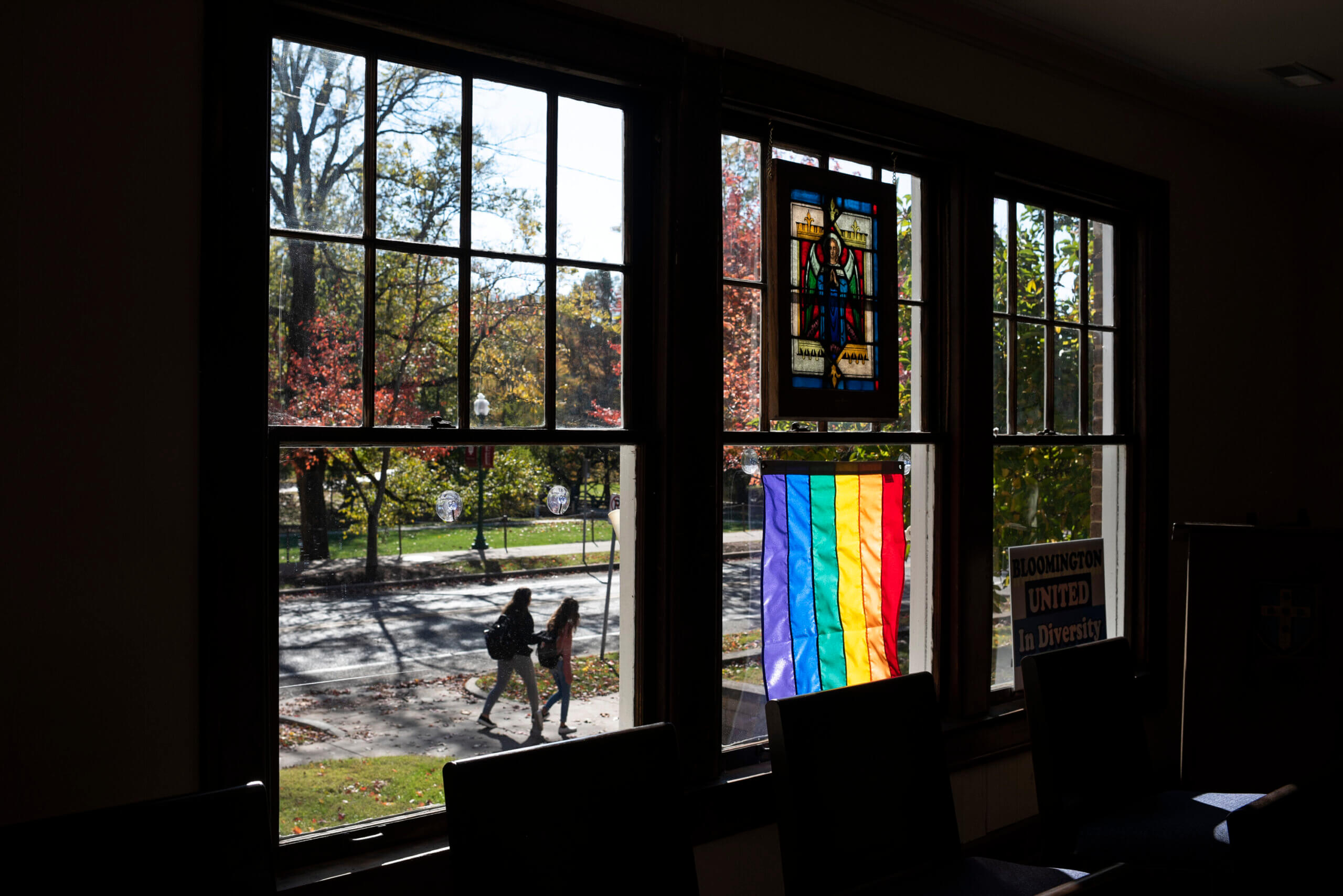
Faculty input is usually weighted heavily when selecting department chairs and program directors. Rick Van Kooten, the humanities dean, acknowledged during a faculty meeting that Imhoff, the chair of the religious studies department, had received more nominations to replace Roseman than Jikeli. Imhoff said Van Kooten claimed that she could not serve as interim director because she was already chair of the religious studies department. Van Kooten did not respond to a request for comment but Imhoff said this is not a university policy.
(Jewish studies is a “program” at IU, meaning its faculty report to home departments like religious studies or English.)
The leadership transition rankled many faculty members, who speculated that it had been sparked by donors who believed that the program was too tolerant of research hostile toward Israel, or was the result of pressure from political leaders — both federal and state — to address campus antisemitism related to protests against Israel.
If outside pressure did cause Jikeli’s installation, that isn’t necessarily a bad thing, argued Allon Friedman, a professor of medicine at Indiana University’s Indianapolis campus and the leader of a Jewish advocacy group in the state.
“The goal is to keep institutions and departments like his free of harmful ideology,” Friedman said, speaking in his capacity as president of the Jewish American Affairs Committee of Indiana. “He’s trying to make his department serious again.”
The contested rise of antisemitism studies
Jikeli’s emergence from the small field of antisemitism studies to lead one of the country’s most prominent Jewish studies programs tracks a larger trend in higher education. In the aftermath of the Second Intifada, amid concerns over the climate around Israel on college campuses, Jewish donors turned from a focus on Jewish studies — which has historically had an extremely broad mandate — to create the discipline of Israel studies. But funding for that field has been imperiled by the gap between what many of these philanthropists hoped to create — faculty who could serve as a bulwark against anti-Zionism — and the critical analysis of the Israeli-Palestinian conflict that they often delivered.
Centers devoted to antisemitism studies, a relatively new discipline often focused on contemporary issues related to anti-Zionism, began to fill that gap with a more concrete mandate to thwart Israel’s critics, who many Jews, though certainly not all, believe are fostering an antisemitic environment on campus and beyond.
Alvin Rosenfeld (no relation), who founded the Jewish studies program at Indiana in 1972, helped pioneer this new response to Israel’s critics. He created the Institute for the Study of Contemporary Antisemitism in 2009 with a focus on radical Islam and left-wing hostility toward Israel; Jikeli came to the school in 2019 to serve as associate director of the institute.
“The hostility that calls itself anti-Zionism is not a dispassionate affair at all, and since Oct. 7 it has become really very fiercely, fiercely antisemitic,” Rosenfeld said in an interview. “We’re doing our best to root out its manifestations.”
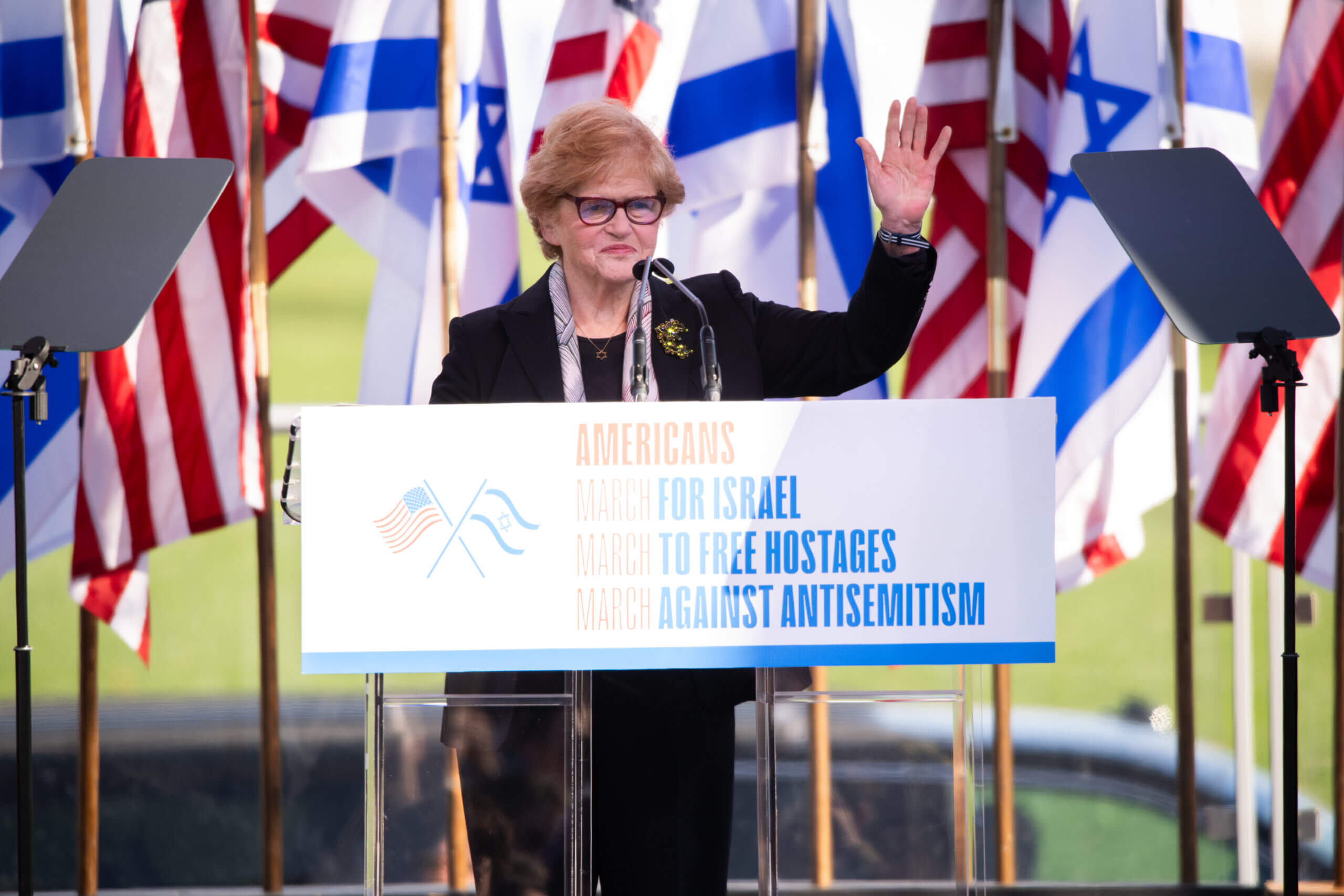
Other schools have adopted similar approaches since Oct. 7, some of which appear more focused on advocacy than traditional academic study. At Emory University, Deborah Lipstadt, the Holocaust scholar and former State Department antisemitism envoy, is preparing to launch an institute that she said “will be focused on policy.” It will continue her efforts to promote the International Holocaust Remembrance Alliance’s definition of antisemitism, which classifies most anti-Zionism as a form of discrimination.
At the University of Washington, a new “faculty initiative” called Bridges for Change is meant to fight antisemitism. It is being run by Janet Baseman, a public health professor at the school who previously chaired its antisemitism task force. The only Jewish studies professor on that committee had stepped down before it issued its final report out of frustration that its conclusions seemed preordained.
Brandeis University, which was the first college to arrest student protesters following Oct. 7 after its then-president labeled them Hamas supporters, launched a President’s Initiative on Antisemitism, while New York University and the University of Michigan have both created more traditional academic centers to study antisemitism.
Rosenfeld has been a fundraising powerhouse at Indiana, first for the Jewish studies program and then for his antisemitism institute. Some faculty members said they believed that donors including Betsy Borns, whose father endowed the Borns Jewish Studies Program at IU, had expressed displeasure with research in the program that was critical of Israel in the months before Roseman was replaced. Borns did not respond to a request for comment.
Roseman, who ran the Jewish studies program at Indiana for eight of the last 12 years before he was forced to step down, said he could not discuss specific conversations with donors but had observed that overall pressure on what professors researched and taught had increased.
“Donors are becoming more demanding of advocacy,” he said. “There used to be a kind of trust in academic freedom and the integrity of academic work, and that’s disappearing.”
Should Jewish studies defend Jews?
After Jikeli’s early actions as interim director — removing Sabina Ali, the graduate student, from a Zoom meeting and revoking her grant funding — sparked questions from faculty and student leaders, two of Jikeli’s European colleagues responded by sending letters of support to Indiana’s administration arguing that anti-Zionist research had no place in Jewish studies.
Olaf Glöckner, a professor at the University of Potsdam, argued that Jewish studies was not “a neutral platform for any and all political positions about Jews.”
Lars Rensmann, who teaches at the University of Passau, wrote that the paper Ali had received the grant to present, which referred to Israel as a “settler-colonial nation-state,” was itself antisemitic because it denied “the citizenship rights of Israeli Jews by defaming them, without any historical foundation, as ‘settler colonialists.’”
“No university can be obliged to fund such propaganda,” wrote Rensmann.
“There are Jews and Jews.”
Alvin RosenfeldDirector of the Institute for the Study of Contemporary Antisemitism at Indiana University
Notably, even Jikeli’s strongest defenders at Indiana have shied away from making similar arguments. Rosenfeld signed a petition defending Jikeli’s leadership as interim director. But he rejected the notion that anti-Zionist scholarship, which has a long tradition among Jewish thinkers, was inherently outside the bounds of Jewish studies.
“Anything and everything that touches on the Jewish experience in a serious way is deserving of study,” Rosenfeld said in an interview. “There’s nothing that is off bounds, nothing that we shouldn’t study.” Instead, he argued, the quality of Ali’s research was flawed and therefore undeserving of funding.
Rosenfeld wasn’t concerned that Jikeli, Glöcker and Rensmann — none of whom are Jewish — were seeking to limit what Ali should be allowed to research. Though Ali’s family is both Jewish and Muslim, and she identifies as part of both communities, Rosenfeld doesn’t believe that gives her any more authority than Jikeli to ascertain what belongs in a Jewish studies department.
“I don’t know what ‘identifies as Jewish,’ means,” said Rosenfeld. “You’re a Jew, we’re Jews — we share even the same last name — but there are Jews and Jews.”
On one side of this dividing line are Jews like Rosenfeld himself, he explained, who are, like him, “absolutely convinced” that there was no “Jewish future worthy of the name without the State of Israel.”
And on the other side, Rosenfeld said, are the sizable share of Jews that had supported New York City Mayor-elect Zohran Mamdani and all that he seemed to represent — anti-Zionism, or at a minimum the belief that nonsectarian concerns should be prioritized over Jewish solidarity.
Questions over who counts as Jewish
As the government has sought to crack down on antisemitism since Oct. 7, the question of which Jews represent the community — and which deserve protection — has intensified. Well before the tempest began within Jewish studies, this was a live debate at Indiana University, which has the sixth-highest number of undergraduate Jewish students in the country.
Doug Carter, superintendent of the state police, said his officers broke up a tent encampment on campus last year because of speech that was “encouraging the death of the Jewish people globally.”
He dismissed a public radio reporter who told him that Jewish students had been active in the protests, including holding a Passover Seder at the encampment, and that they had not heard antisemitic comments. “That’s not correct,” Carter said. “Go on to the next question because I saw it with my own two eyes.”
And after a student accused him of bias against Israel, Ben Robinson, a history professor who is Jewish, became one of the first faculty members disciplined under a new Indiana law that mandates “intellectual diversity” at state universities. Robinson said the university has opened a new investigation into him based on allegations that he engaged in antisemitism during a lecture about genocide claims against Israel.
“If you’re an anti-Zionist Jew,” Robinson said, “you’re not sufficiently Jewish for the people who are making these decisions.”
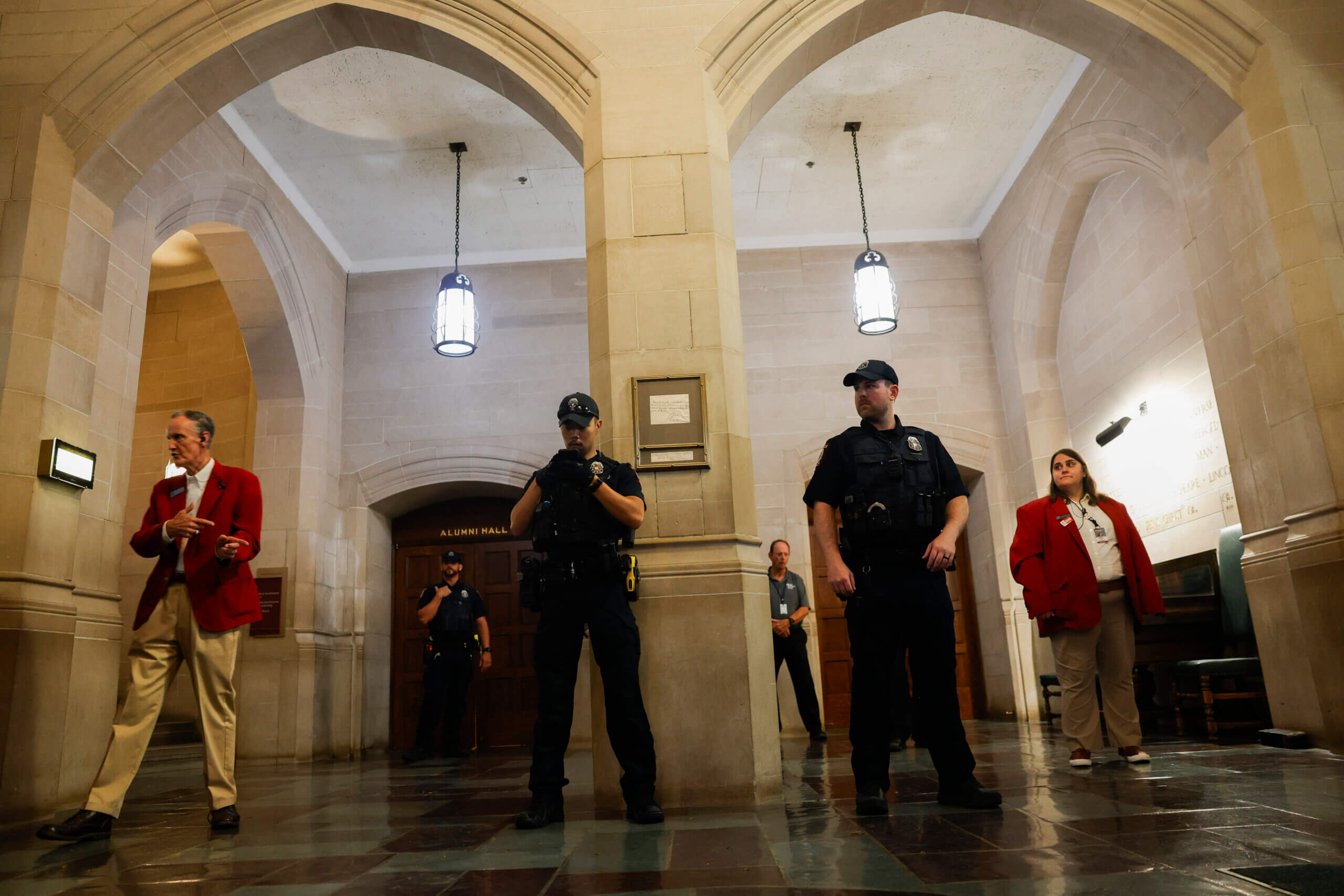
None of the 20 people I spoke with for this story understood why Roseman had been removed as director, and I did not hear any criticism of his leadership. But these disciplinary incidents and crackdowns had created a simmering tension by the time Roseman said Jikeli called him to announce that he’d lost the confidence of Indiana’s top leadership and that Jikeli himself had been offered Roseman’s job.
Jikeli said in an email that did not say he would be replacing Roseman. “To be absolutely clear: there was no pre-arrangement, and I was appointed following faculty consultation,” he said.
In addition to his scholarship on antisemitism, Jikeli has made a name as a prominent academic defender of Israel and its supporters on campus. He organized a “Rally Against Hamas Propaganda” at IU last year during the pro-Palestinian encampment, and in an interview a few weeks before he took over the Jewish studies program Jikeli lamented that, “Jewish students are often outnumbered and lack the institutional or financial backing their adversaries enjoy.”
(While Jewish services like Hillel and pro-Israel advocacy organizations have significantly more funding than pro-Palestinian groups, some of Israel’s supporters believe that universities themselves are systematically biased against Jews, and that Iran or Qatar are secretly funding campus demonstrations agaisnt Israel.)
“Many administrators are reluctant to confront faculty or radical groups for fear of backlash,” Jikeli said in the interview. The solution could come “in the form of public scrutiny, funding consequences, or legal obligations.”
Jikeli’s power to address campus antisemitism along these lines is limited as interim director of the Jewish studies program, but he was quick to assert it.
A Zoom expulsion and a grant revoked
Sabina Ali, a fifth-year doctoral student doing a minor in Jewish studies, said in an interview with the Forward that she first crossed paths with Jikeli while participating in the encampment. Ali said she was standing in a protective circle around a group of Muslim students while they prayed when Jikeli approached the group and started photographing them.
“I just asked him, ‘What are you doing?’ and he just started rambling about how Islam is such a sexist religion and why are these men praying without women,” Ali recalled.
Jikeli said in an interview that he often passed the encampment on his way home but did not recall the incident Ali described. “I recall that there were some prayers,” he said. “I don’t think I said that Islam is a sexist religion.”
In a follow-up email, he said: “I did not, and would not, describe Islam as a sexist religion. Islamism, as an ideological movement advocating the application of sharia law, does contain misogynistic elements — but that is a distinct discussion.”
Jikeli first raised concerns last fall that Ali’s profile picture on Zoom — the image that is displayed when a user turns off their camera — was creating a hostile learning environment. The image is a mashup of three distinct items: the Palestinian flag, a drawing of a woman wearing a keffiyeh around her head and the words “free Palestine.”

Roseman, who was director at the time, said he brought Jikeli’s complaint to the university’s student conduct office, which determined it qualified as free speech. “I was simply following guidance from the college,” Roseman said. “Whether some people didn’t like it or not, I didn’t feel like I had much choice.”
Jikeli disagreed. When Ali showed up virtually to a hybrid September workshop this fall to celebrate the release of a new book by Imhoff, the religious studies chair, Jikeli announced to the room that her profile image was creating an unsafe environment.
“A Jewish studies graduate student sitting next to me pointed out that Jikeli might be the only one who was bothered,” Constance Furey, a religious studies professor, wrote in an email to university administrators. “Without further comment or explanation, JIkeli then announced that he had removed the student.”
Twenty of the 24 people present for the workshop then left and reconvened in a new room, where Ali was allowed to participate. But Jikeli defended himself to everyone in the program later that day in an email describing the avatar as “an image of a Palestinian terrorist.”
“Political slogans or provocative images of any kind have no place in our academic settings,” Jikeli wrote.
He followed up directly with Ali, proposing that they meet with a mediator to “clear the air.” She instead asked for a public apology and Jikeli’s resignation as interim director.
A few days later, Jikeli wrote to Ali again, this time to say that he was unilaterally rejecting a travel grant approved by the Jewish studies funding committee for her to present at a national religious studies conference.
Jikeli’s email to Ali did not provide a reason for the unusual move but he told the Forward that it “did not meet our academic standards and falls outside the scope of Jewish Studies.” Those who rushed to his defense focused on the subject of Ali’s research: “Weaponizing Indigeneity: Zionist Public Discourses on Possessing Palestine.”
Blending politics and scholarship
Though Jikeli said in an email that he does not engage in advocacy, he blended political stances with his academic work before becoming interim program director, writing op-eds and giving interviews about opposition to Israel on college campuses.
Bryce Greene, a PhD student at Indiana who was a leader of the protests against the war in Gaza, tried to sign up last year for an undergraduate course Jikeli taught on Israel and social media. But, he said, the professor suggested that the two instead meet for weekly independent study sessions.
Jikeli proposed that Greene would receive credit for the meetings, but they disagreed on how much the independent study would be worth and eventually decided to proceed on an informal basis.
Greene described cordial meetings where they would debate the Israeli-Palestinian conflict and send each other readings. But the relationship eventually broke down when Greene accused Jikeli of “Holocaust denial” for rejecting the claim that Israel was committing genocide in Gaza.
Still, Greene was taken aback a few months later when a friend sent him a flyer for a lecture Jikeli was delivering to the Virginia Psychoanalytic Society called “In the Mind of a Pro-Hamas Student,” which the description said was based on “a semester-long dialogue with a pro-Hamas campus activist.”
“It was pretty obvious that he was trying to talk about me,” Greene said. After complaining to the chairs of Jewish studies and German studies, where Jikeli is based, Greene said he believed the talk switched to focus on public social media posts from other college students.
Jikeli told Greene in an email following the event that it was based on discussions with “some other people” during the encampments and shared his presentation slides from the event with the Forward. They do not focus on individual students.
What many people don’t understand is that the use of #Hamas slogans, such as #FromTheRiverToTheSea, #Palestine will be free” is an endorsement of the ongoing #terrorism against all #Israelis and #Jews – as demonstrated by the horrific #massacre of #civilians on #10/7.
— Gunther Jikeli (@GJikeli) October 27, 2023
Jikeli’s willingness to mix his political beliefs about Israel and antisemitism with his academic responsibilities came up again during an October meeting with Rick Van Kooten, the humanities dean, and a group of Jewish studies graduate students concerned about Jikeli’s actions as interim director.
As part of his defense for removing Ali from the Zoom meeting, Jikeli told the group that he had printed out a copy of her Zoom avatar and used it for an assignment in one of his undergraduate courses. He had asked students to respond to a series of questions about the image, including: “Imagine this image displayed constantly on Zoom during hybrid workshops with students and professors. How would its persistent presence affect your focus, comfort, and sense of belonging in that educational space?”
The responses demonstrated that “students feel very uncomfortable in that scenario,” Jikeli said during the meeting, and so he was justified in banning such imagery. He said in an emailed statement that “this was a pedagogical exercise about classroom environment” and “not a personal attack on any individual student.”
When Van Kooten said that he was required to uphold an Indiana state law that mandated freedom of expression for college students, Jikeli warned that individuals he had spoken with around the country might file a federal civil rights complaint against the university if Ali was allowed to display the image.
“I want you to hear this now,” Jikeli told Van Kooten, according to an audio recording of the meeting. “People will consider it a Title VI violation if this is going on — I will not tolerate this.”
Lamentations over a divided program
Van Kooten ultimately ruled that if Jikeli wanted to create a policy about Zoom images for the program he should get it approved by the faculty, and that he would need to provide a specific justification for revoking grants that had been approved by the funding committee.
(Ali’s travel to the religious conference is now being paid for with other university grants.)
But despite the modest stabilizing effect of Van Kooten’s intervention, Daniel Reischer, a leader of the Jewish Studies Graduate Student Association, said that the rapid series of controversies had taken a toll on the program. Some students who had been considering studying at Indiana are reconsidering, he said. After Jikeli declined to say whether he would allow funding for any scholarship that was critical of Zionism, graduate students from around the country are wondering whether their research will be welcome at the annual Jewish studies conference that the association sponsors.
“There’s just a lot of uncertainty and a lot of fear,” Reischer said in an interview.
Jikeli said in an email that he was “firmly committed to free, open, and respectful dialogue.”
“Criticism — including of Zionism — is part of legitimate academic inquiry,” Jikeli wrote. “Defamation and unsubstantiated claims are not.”
“We could have embraced a program that says, ‘You can do your best scholarship here no matter what your politics are’ — but we haven’t been able to do that.”
Sarah ImhoffChair of the Religious Studies Department at Indiana University
Not everyone is critical of Jikeli’s leadership. Joanna Martin, another officer of the graduate student group, said she’s had positive interactions with Jikeli and that he supported bringing a prominent scholar of Nigerian Jewry — the subject of Martin’s doctoral thesis — to campus after becoming program director.
“He’s definitely making some waves,” Martin said. “But I don’t think he’s going to start overruling anything and everything.”
Another graduate student, who did not want to be named mounting a more forceful defense of Jikeli, said that the Jewish studies program has been divided over Israel for years, and many people were determined to oppose Jikeli’s leadership before he had done anything as interim director.
“Gunther came in believing that people were already against him,” the student said, noting that several members of the program had boycotted his welcome dinner.
Jikeli, who told me the school had asked him not to discuss his leadership of the program, has seemed ready to consolidate power and aggressively defend his leadership. In addition to the letters from Nelson, the former AAUP president, and his European colleagues, Jikeli shared a petition with the Forward signed by several dozen Jewish studies professors from the U.S., Europe and Israel defending how he handled the situation with Ali.
Imhoff, the religious studies chair, said that shortly after becoming interim director Jikeli removed her without explanation from serving on the Jewish studies program’s graduate affairs committee and from another committee helping to revise the undergraduate curriculum.
“We did not need to do this to ourselves,” Imhoff said. “We could have embraced a program that says, ‘You can do your best scholarship here no matter what your politics are’ — but we haven’t been able to do that.”
Jikeli said he had not removed Imhoff from any committees but rather that committee membership expires at the end semester.
Rosenfeld, the program’s 87-year-old founder, seemed conflicted when we spoke. He had helped build Indiana into a powerhouse of Jewish studies, helping to launch the careers of scholars across the political spectrum.
He rejected the claim by Friedman, the medical school professor and Jewish activist, that the Jewish studies program had fallen into crisis under previous leadership. He also doesn’t believe that Jikeli was brought in to serve as the “hatchet man” for school officials interested in more overt support for Israel.
But he also understands that the program he created as a junior professor 53 years ago is under duress.
“I would like to see us recover from the bad spell that we’re in right now and reassert ourselves as a leading Jewish studies program with a lot of integrity,” Rosenfeld said.
Jikeli’s term as interim head of Jewish studies is expected to last about a year, at which point the administration will either make him the program’s permanent leader or name a new director.
But regardless of what happens in Bloomington, the growing divide between funders and Jewish scholars — and between scholars and some of their students — is intersecting with unprecedented political pressure on universities in a manner that seems certain to permanently transform the academy.
The post Indiana University removed its Jewish studies director. His replacement has ignited a firestorm over Israel. appeared first on The Forward.
Uncategorized
J Street goes on the offensive against AIPAC-backed candidates
(JTA) — J Street, the liberal Jewish Middle East advocacy group, announced that it will spend $3 million to defeat a handful of Republican candidates backed by AIPAC, joining the plethora of progressive groups targeting the American Israel Public Affairs Committee this election year.
Such an attack campaign is an unusual initiative for J Street, which typically endorses candidates but does not target opponents on the basis of an AIPAC endorsement. Until now, according to J Street President Jeremy Ben-Ami, the likelier scenario for his organization was finding its endorsed candidates on the defensive against AIPAC’s spending.
“It’s a new era for us,” Ben-Ami said in an interview. In 2022, J Street targeted an AIPAC backed candidate — but only after AIPAC barraged the J Street endorsed candidate with negative spending.
In a statement, J Street said that this will be the group’s largest super PAC investment in its history, referring to political action committees that can raise unlimited funds but are forbidden from coordinating with campaigns.
The $3 million will be spent on ads targeting Republican Rep. Mike Collins, who is running for U.S. Senate in Georgia against Democratic Sen. Jon Ossoff, who is Jewish, and a handful of incumbents: Ohio Rep. Max Miller, who is running for reelection amid allegations of domestic abuse, which he denies; Wisconsin Rep. Derrick Van Orden; Pennsylvania Rep. Ryan Mackenzie; and Iowa Rep. Mariannette Miller-Meeks.
Ben-Ami said J Street targeted those particular candidates in part because they each face competitive races as the Democrats look to take control of the House and Senate and they have ideological distance from J Street. Many of them were also connected to the movement to deny and overturn the 2020 election results, Ben-Ami said.
J Street’s campaign comes as AIPAC’s brand has become increasingly toxic among voters, and as a growing number of Democratic politicians cross its red line of supporting conditions on U.S. military aid to Israel. J Street’s position, meanwhile, has recently drifted toward supporting a phasing-out of military aid to Israel in 2028.
AIPAC blasted the campaign in a post on X. “Is this from J Street or Justice Democrats?” AIPAC wrote, referring to the progressive organization that has increasingly aligned with pro-Palestinian advocacy.
“A dark money super PAC spending millions to defeat pro-Israel candidates and lie about AIPAC,” the group wrote. “Not a word about helping elect pro-Israel candidates further exposes the difference between J Street and actual pro-Israel organizations.”
AIPAC has been a heavy spender since it launched its super PAC, United Democracy Project, ahead of the 2022 midterms, and is the top outside spender in this election cycle, according to Open Secrets. A number of anti-AIPAC, pro-Palestinian groups have emerged over the past year to counter the pro-Israel lobbying group’s spending.
Unlike those groups, J Street and AIPAC have some overlap in which candidates they back: Both groups endorsed moderate, pro-Israel Democrats such as Reps. Hakeem Jeffries and Dan Goldman. J Street’s super PAC has also previously targeted individual candidates for their AIPAC endorsement, such as Rep. Haley Stevens in 2022, citing AIPAC’s donations from right-wing megadonors.
An AIPAC spokesperson wrote that it is “disappointing, but not surprising, that J Street continues to amplify lies about our community.”
“AIPAC members are focused on helping elect Democrats and Republicans who will strengthen the U.S.-Israel partnership, while J Street is focused on turning support for the Jewish state into a partisan political football,” said AIPAC’s spokesperson.
Ben-Ami said this year’s campaign is not about “the relationship between us and AIPAC,” but is rather about emboldening candidates who may otherwise worry that they will be up against AIPAC’s war chest.
“We are very conscious that there are many candidates who are afraid of what AIPAC might be able to do politically, and therefore adopt positions and say things about policy because they are afraid, and their fear and intimidation is holding them back,” Ben-Ami said.
Now, he said, J Street is putting “the shoe on the other foot.”
“If you are going to oppose American democracy and provide carte blanche to this Israeli government, then you need to be afraid,” he said.
This article originally appeared on JTA.org.
The post J Street goes on the offensive against AIPAC-backed candidates appeared first on The Forward.
Uncategorized
Germany’s far-right AfD, riding state win, targets more gains in elections from east to west
(JTA) — Germany’s far-right, riding high after winning an eastern state, seeks to capitalize on its momentum in a series of upcoming elections — starting with municipal voting this weekend, followed by two closely watched state contests.
The first test for the Alternative for Germany (AfD) party comes Sunday in municipal elections in the western state of Lower Saxony. A week later, the AfD has its sights on state elections in the capital, Berlin, and the Baltic coast state of Mecklenburg-Western Pomerania.
The AfD beat out other parties in Saxony-Anhalt on Sept. 6 with 43.8% of the vote and 39 of 83 state parliament seats, falling just short of a majority and marking Germany’s greatest far-right victory in a state election since World War II.
“From previous elections, we know that the AfD is currently able to mobilize almost totally its own constituency and potential voters, while its democratic competitors have much more problems,” said Gideon Botsch, the head of the Emil Julius Gumbel Research Unit on Antisemitism and Right-Wing Extremism at Potsdam University.
While polls do not predict the next state election results will match the historic win in Saxony-Anhalt, the AfD currently leads other parties in Mecklenburg-Western Pomerania with about 35% of the vote. And in Berlin, long a stronghold of Germany’s political left, the AfD is jockeying with the center-right Christian Democratic Union (CDU) and the left-wing Linke for first place, with all three polling around 20%.
The AfD, a nationalist, anti-immigrant party whose leaders have proposed rejecting Germany’s “guilt complex” over the Holocaust, has regularly topped nationwide opinion polls for the past year. In surveys asking Germans which party they would choose if federal elections were held “this Sunday,” the AfD often receives the highest results, Botsch told the Jewish Telegraphic Agency.
The AfD has built a dedicated and growing base, said Botsch. Its popularity signals frustration with the mainstream parties in power, particularly the CDU, Chancellor Friedrich Merz’s party, amid a sluggish economy. The AfD is especially popular in eastern Germany, where voters are poorer and hit hard by high energy prices exacerbated by the wars in Iran and Ukraine.
The AfD is likely to perform more weakly in the west, where Lower Saxony will hold a municipal election on Sunday. The party has stronger influence in the east, and Germany’s municipal elections tend to hinge more on well-known figures from established parties, said Roger Stöcker, a political scientist at Otto von Guericke University in Magdeburg. Still, even if the AfD doesn’t transform governments, Stöcker said that making inroads to further entrench itself in Lower Saxony would be “a strategically significant success.”
“It’s conceivable that the AfD wins a town hall or a county administration here and there or strengthens its presence in local councils, expanding its local base,” said Stöcker.
The three upcoming elections are being closely watched for signs of the AfD’s wider-scale momentum, said Daniel Schuster, who heads the Simon Wiesenthal Center’s European office.
“Taken together, these elections can help show whether Saxony-Anhalt was an exceptionally strong eastern result or part of a broader national expansion of the AfD’s electoral base,” said Schuster.
Remko Leemhuis, the director of the American Jewish Committee Berlin Lawrence and Lee Ramer Institute for German-Jewish Relations, added that residents will feel the effects of the AfD’s success even if it falls short of its victory in Saxony-Anhalt. A “very strong AfD result,” short of managing to enter government coalitions, would still “raise serious concerns” for Jewish residents about the party’s influence, said Leemhuis.
Residents in Saxony-Anhalt are waiting to see the ramifications of the AfD’s election victory. Without an outright majority, the party needs partners to join a coalition. Its nationalist agenda in the region includes teaching children less about Hitler, banning Pride flags in public buildings and requiring artists and cultural organizations to sign a declaration that they will not “disparage Germany and its culture” if they seek state funding.
State governments also control domestic policing and parts of the judiciary. The AfD could use its power in these areas to “put pressure on minorities it dislikes,” including immigrants, Muslims and Jews who are identified with Holocaust remembrance, said Stöcker. At the same time, the AfD could direct policing and intelligence away from right-wing extremism in Saxony-Anhalt, which recorded the second-highest number of right-wing extremist crimes per capita of Germany’s 16 states last year, Leemhuis said.
The AfD’s victory in Saxony-Anhalt marked a “watershed moment” in German politics, according to Roland Abold, the managing director of Infratest Dimap, a German election research institute. Abold said that the result heaped pressure on Merz and the federal government, as “calls for a change in political direction and a reassessment of cooperation with the AfD are likely to intensify.”
The CDU for now is standing behind Merz, the most unpopular chancellor in modern German history after 16 months in power. But if the CDU faces further heavy defeats in the upcoming elections, questions about Merz as the party’s leader could escalate, said Stöcker.
The AfD already has its eyes on his job. Alice Weidel, the national AfD’s co-chair, announced on Monday that she wants the party to win “at least 40% of the vote” in Germany’s next federal election in 2029.
Ulrich Siegmund, the AfD candidate in Saxony-Anhalt who hopes to become the state premier, said in the same press conference that his goal was “very clear.”
“As perhaps the next Minister-President of Saxony-Anhalt, I need a Federal Chancellor Alice Weidel here in Berlin, so that we can write here history side by side,” said Siegmund.
This article originally appeared on JTA.org.
The post Germany’s far-right AfD, riding state win, targets more gains in elections from east to west appeared first on The Forward.
Uncategorized
I was born after 9/11. I still carry the memories of that day.

Earlier this week, I was talking with my mother over the phone about her experience on 9/11. She walked me through the familiar parts — how she was in our Upper West Side apartment when she learned about the attacks from a relative, how she went to the garage to get the car so they could drive to a friend’s house upstate once she realized the attacks were acts of terror. There were still hijacked planes in the air, and she worried New York City might be targeted again. Then, she said, “This part is going to make me cry.”
I hadn’t remembered what came next, but suddenly it came back to me. “Oh no, me too,” I said.
While she waited for my father to come back uptown from his office in the Financial District, she stopped inside a fire station across from the garage. Inside was a lone firefighter, who’d stayed behind to man the station while the rest of his company was inside the towers. He was watching the news on television, and my mom stood next to him, watching too, when the towers fell.
“We just lost so many men,” he said.
I wasn’t there when it happened; I wasn’t even alive. But I’d heard this story before, I’d walked dozens of times past that same fire station, which now has a plaque commemorating the seven firefighters who died on 9/11. Hearing the story again on the phone, I found myself walking down the streets of Washington D.C., bawling.
I’m 23, born a year-and-a-half after 9/11. Most Americans my age learned about the attacks in school, as history. I’m part of the 16% who learned through family or friends.
The discovery happened by accident, when I was in kindergarten. My mom and I were in a children’s store on the Upper West Side, when we started flipping through a picture book about the history of New York City. Most of the book was unremarkable, but the end was unexpected: a scene of the smoldering twin towers.
I forget what exactly happened next, but here’s what I do remember: My mom was upset that the shop hadn’t provided a warning about the book’s end, and I was confused about why she was upset. I was five, too young to understand the image and never one to let a question go unanswered; I must have pestered her until she offered up an explanation.

She hadn’t been prepared to tell me about terrorism. She’d been evading the topic for some time, telling half-truths to avoid it. When I’d ask her why we had to take our shoes off in line at the airport, she’d just say it was to make sure no one had anything dangerous, leaving out the part about how a man had tried to get on a flight with bombs hidden in his shoes.
“9/11 is a huge thing for a parent to have to tell a kid about,” my mom told me this week. “You were a happy kid, and I didn’t want you to get scared or traumatized.”
The events, and impacts, of that day slowly unfolded for me as the years passed. I learned that my father had watched from Battery Park as the South Tower fell; he ran westward as plumes of smoke billowed toward him. I learned that my parents had friends who’d died in the towers, one of whom was the father of a boy I grew up with. I remember going to the 9/11 Memorial and Museum when it opened in 2014, feeling sick as I watched footage of people jumping out of the towers.
The New York Times recently interviewed dozens of Gen Z Americans about 9/11. I was struck by how disconnected many felt from the event. “It’s hard to feel sad about something that you don’t remember,” said Annika Heegaard, a 25-year-old now living in New York.
But for me, 9/11 doesn’t feel quite so far away. By now I’ve lived through other mass casualty events, like the Parkland shooting and the Oct. 7 Hamas attacks. But 9/11 is the only tragedy that my family members had such a direct connection to. “It was devastating,” my mom said.
I think the reason I can remember the exact moment I found out about 9/11 is because it changed my view of the world. I remember being almost unable to comprehend that anyone would do what the hijackers did. I wasn’t, as my mom feared, traumatized by learning about the attacks; I didn’t fear for my safety each day. But the knowledge was in some ways a loss of innocence — a discovery that people could do awful things and that the world wasn’t as safe a place as I had assumed.
The post I was born after 9/11. I still carry the memories of that day. appeared first on The Forward.
