


Features
Bias in America’s Colleges Produced Modern Anti-Zionism
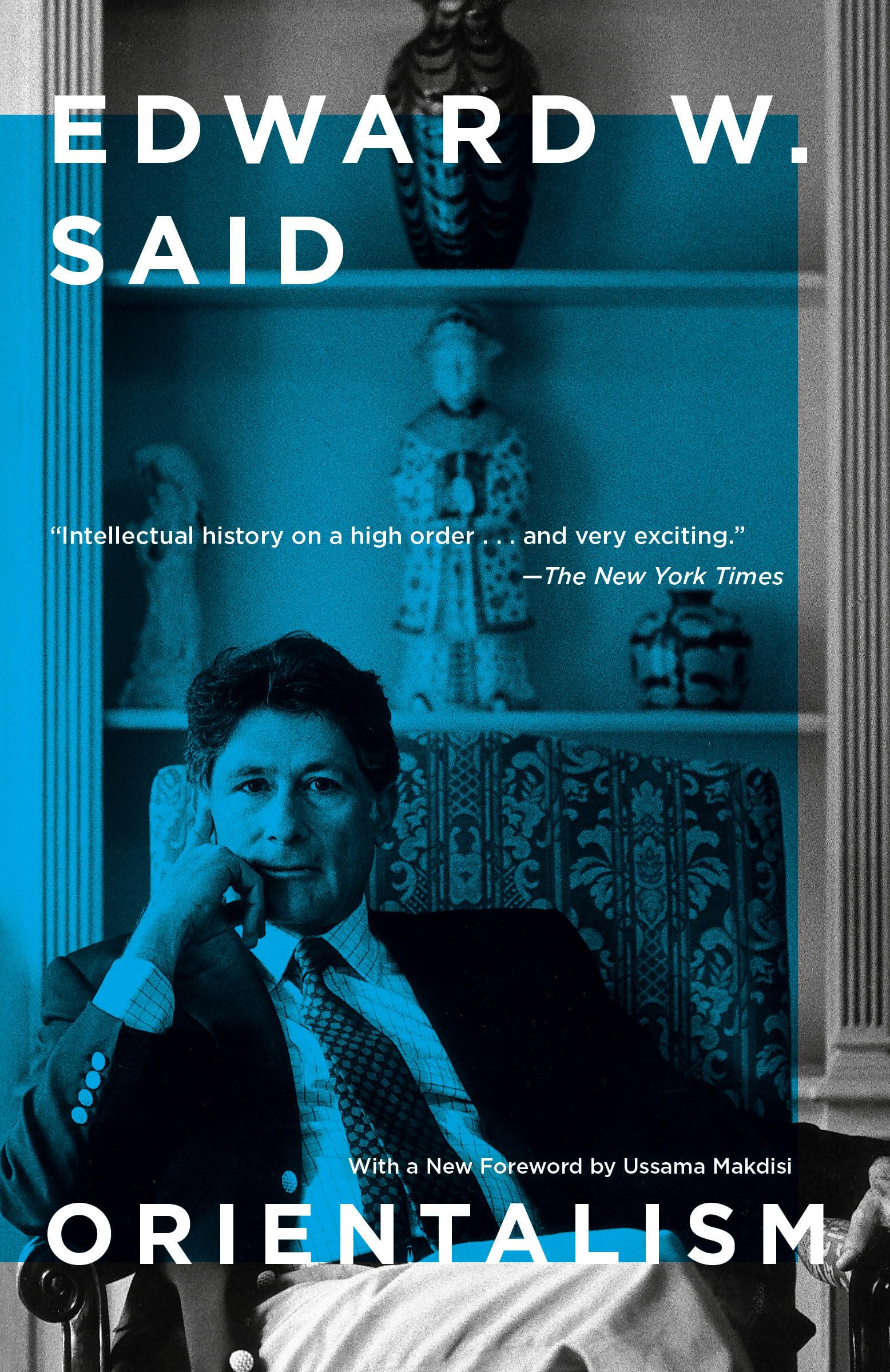
By HENRY SREBRNIK Jon A. Shields, Yuval Avnur, and Stephanie Muravchik, professors at the Claremont Colleges in California, have just completed a study, “Closed Classrooms? An Analysis of College Syllabi on Contentious Issues,” published July 10, 2025, that draws on a database of millions of college syllabi to explore how professors teach three of the most contentious topics: racial bias in the criminal justice system, the Israel-Palestine conflict, and the ethics of abortion.
They used a unique database of college syllabi collected by the “Open Syllabus Project” (OSP). The OSP has amassed millions of syllabi from around the world primarily by scraping them from university websites. They date as far back as 2008, though a majority are from the last ten years. Most of the data comes from universities in the United States, Britain, Canada, and Australia.
“Since all these issues sharply divide scholars, we wanted to know whether students were expected to read a wide or narrow range of perspectives on them. We wondered how well professors are introducing students to the moral and political controversies that divide intellectuals and roil our democracy. Not well, as it turns out.”
In the summary of their findings, “Professors Need to Diversify What They Teach,” they report that they found a total lack of ideological diversity. “Across each issue we found that the academic norm is to shield students from some of our most important disagreements.”
Teaching of Israel and Palestine is, perhaps no surprise, totally lopsided, and we’ve seen the consequences since October 7, 2023. Staunchly anti-Zionist texts — those that question the moral legitimacy of the Israeli state — are commonly assigned. Rashid Khalidi, the retired professor of Modern Arab Studies at Columbia, is the most popular author on this topic in the database. A Palestinian American and adviser to the Palestine Liberation Organization delegation in the 1990s, Khalidi places the blame on Israel for failing to resolve the conflict and sees the country’s existence as a consequence of settler-colonialism.
The problem is not the teaching of Khalidi itself, as some on the American right might insist. To the contrary, it is important for students to encounter voices like Khalidi’s. The problem is who he is usually taught with. Generally, Khalidi is taught with other critics of Israel, such as Charles D. Smith, Ilan Pappé, and James Gelvin.
Not only is Khalidi’s work rarely assigned alongside prominent critics, those critics seem to hardly get taught at all. They include Israel: A Concise History of a Nation Reborn by Daniel Gordis, a professor at Shalem College in Israel. Gordis’s book appears only 22 times in the syllabus database. Another example is the work of Efraim Karsh, a prominent historian. His widely cited classic, Fabricating Israeli History, appears just 24 times.
For most students, though, any exposure to the conflict begins and ends with Edward Said’s Orientalism, first published in 1978. Said is the intellectual godfather of so many of today’s scholars of the Middle East, thanks in no small part to this classic book. Said was a Palestinian-American academic, literary critic, and political activist from a prominent Christian family. Educated at Princeton and Harvard Universities, two of America’s most distinguished centres of higher learning, he taught at Columbia University, another Ivy League institution, until his death in 2003.
Said was no crude antisemite. His writings were aimed at academics and intellectuals and he has, in my opinion, done more damage to the Jewish people than anyone else after 1945. Said claimed to be the first scholar to “culturally and politically” identify “wholeheartedly with the Arabs.” But he was also a political activist for the Palestinian movement opposing the existence of Israel.
Said warned PLO leader Yasir Arafat that if the conflict remained local, they’d lose. Join “the universal political struggle against colonialism and imperialism,” with the Palestinians as freedom fighters paralleling “Vietnam, Algeria, Cuba, and black Africa,” he advised.
(In this he was not the first, though. Fayez Sayegh, a Syrian intellectual who departed for the United States and completed his Ph.D. at Georgetown University in 1949, preceded him. Also an academic, his 1965 monograph Zionist Colonialism in Palestine stands as the first intellectual articulation of Zionism as a settler colonial enterprise, arguing that the analytical frameworks applied to Vietnam and Algeria apply equally to Palestine. The treatise situated Zionism within European colonialism while presenting it as uniquely pernicious.)
Israel’s post–Six-Day War territorial expansion helped Said frame Israel as “an occupying power” in a 1979 manifesto titled The Question of Palestine. Alleging racial discrimination as the key motive was a means of transforming the “Zionist settler in Palestine” into an analogue of “white settlers in Africa.” That charge gained traction in a post-Sixties universe of civil rights, anti-imperialism, anti-colonialism, and Western self-abnegation. The work sought to turn the tables on the prevailing American understanding of Israel: It is not, in fact, an outpost of liberal democracy or refuge from antisemitism, but an instrument of white supremacy.
Orientalism popularized a framework through which today’s advocates on behalf of Palestinians understand their struggle against the state of Israel and the West generally. Said casts the Western world as the villains of history and peoples of the East as its noble victims.
The essence of the book, Said concluded, is the “ineradicable distinction between Western superiority and Oriental inferiority.” It falsely affirms “an absolute and systematic difference between the West, which is rational, developed, humane, superior, and the Orient, which is aberrant, undeveloped, inferior.”
So it was impossible to take Zionism seriously as one among the myriad nationalist movements that emerged in the nineteenth century, much less to see Israel itself as a land of refugees or the ancestral homeland of Jews. And, indeed, Said’s Orientalism singles out Israel for special rebuke, suggesting that the state could be justified only if one accepted the xenophobic ideology at the core of Western civilization. Israel’s defenders, particularly those who lament the lack of democracy in the Middle East and fault Arabs for their militancy, represent the “culmination of Orientalism.”
Said is widely acknowledged as the godfather of the emerging field of postcolonial studies, and his views have profoundly shaped the study of the Middle East. Said also inspired – and in some cases directly mentored – a generation of anti-Zionist U.S. scholars whose dominance in the academic study of the area is unquestionable today.
The political left that emerged trained itself to read every conflict as the aftershock of colonialism. The ideological narrative of oppression and resistance allowed even the jihadist to become a post-colonial rebel.
It’s hard to overstate the academic influence of Orientalism. The authors note that “As of this writing, it has been cited nearly 90 thousand times. It is also the 16th most assigned text in the OSP database, appearing in nearly 16 thousand courses.” Orientalism is among the most popular books assigned in the United States, showing up in nearly 4,000 courses in the syllabus database. Said’s work appears in 6,732 courses in U.S. colleges and universities.
But although it was a major source of controversy, both then and now, it is rarely assigned with any of the critics Said sparred with, like Bernard Lewis, Ian Buruma, or Samuel Huntington. Instead, it’s most often taught with books by fellow luminaries of the postmodern left, such as Frantz Fanon and Judith Butler.
All these ideas are now embedded into diversity, equity, and inclusion identity politics, and “humanitarian” outrage over supposed Israeli “settler-colonialism,” “genocide,” and “apartheid.”
The ground for the massive pro-Hamas college and university encampments, and attacks on Jewish students, was prepared decades ago. The long march of progressives through American institutions over the past decades has taken its toll on society.
Henry Srebrnik is a professor of political science at the University of Prince Edward Island.



Features
How Casino Games Travel From One Generation to the Next
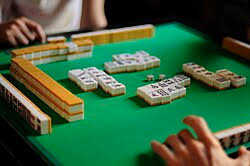
On a weekday afternoon in a community centre, the loudest table in the room is usually the Mah Jongg game, with the scoring done in pencil and the snacks taken very seriously. Every spring the National Mah Jongg League sends out a new card of hands, and for the first few weeks afterwards the games run slowly while everyone learns them.
When the Museum of Jewish Heritage in New York staged Project Mah Jongg in 2010, in a show that later travelled to other museums, it treated the game as social history, following it from the 1920s through suburban living rooms and Catskills bungalow colonies. The exhibition’s argument was that a game hands down the room it was played in and the people around the table along with its rules, and those are the parts most likely to change when a game moves onto a screen.
Games with a season
Many of the games people remember best were tied to an occasion. Card tables came out at the cottage in July and went back into the closet after Labour Day. A euchre night, especially in southwestern Ontario, belonged to a hall or a legion branch. Canasta, which arrived from South America after the war and was a full-blown craze by the early 1950s, usually meant four friends on a Tuesday.
Mah Jongg keeps its own calendar. The League was founded in New York in 1937, and its annual card resets the game each year, so players across the continent learn the same new hands at the same time. That stops a game passed from one circle of friends to the next from splitting into a hundred local versions.
One card, one wheel
A game handed on by word of mouth tends to pick up house rules and personal habits as it moves between generations. Sit down at a Mah Jongg table or a physical casino wheel, and much of the game is governed by unwritten etiquette – verbal call bets handed down by older players, informal table compromises, and generational betting habits. Software replaces that social latitude with strict standardization. In a game of online roulette, for instance, the wheel geometry, bet timing, and paytables are hardcoded into the code, leaving no room for the local habits or informal dealer calls that shaped physical play for generations. What the software can’t pass along is the room. Live versions of the game, streamed from a studio with a person spinning the wheel and calling the number, bring back a voice and a face. The regulars are harder to stream. A studio table has players but no Thursday night, and none of them knows whose turn it is to bring the coffee.
At a card night, somebody always announced the last round, and the evening ended when the host started folding up the tables and people went looking for their coats. A screen doesn’t do that, so adults who play online for entertainment are better off settling a spending limit and a stopping time before they begin.
What outlasts the game
The summer resorts ran to a calendar as well, and Grossinger’s, which closed in 1986, is the one people still name first. The Forward’s piece on how Jews learned to be American at Grossinger’s, which this paper reprinted, reviews We Met at Grossinger’s, a documentary about the resort’s dining, dancing and shows and the thousands of couples who met there. The review doesn’t mention a single card game, and it doesn’t need to. What people remember about those summers is who they sat with. Ask someone who played in a regular game for years about a particular hand and they’ll usually draw a blank. They’ll know exactly who always turned up late with the rugelach, though, and whose kitchen the game moved to after the old community hall closed. Those are the details the next set of players inherits.
The League’s card is a large part of what keeps Mah Jongg going. It gives every table something new to argue over each year (plenty of groups order their cards together so nobody starts behind), and when next spring’s card arrives, the arguing at community centres in Winnipeg will start well before anyone has learned the new hands.
Features
There’s nothing Jewish about this classic American comedy — except just about everything
September 22, 2026
This story was originally published in the Forward. Click here to get the Forward’s free email newsletters delivered to your inbox.
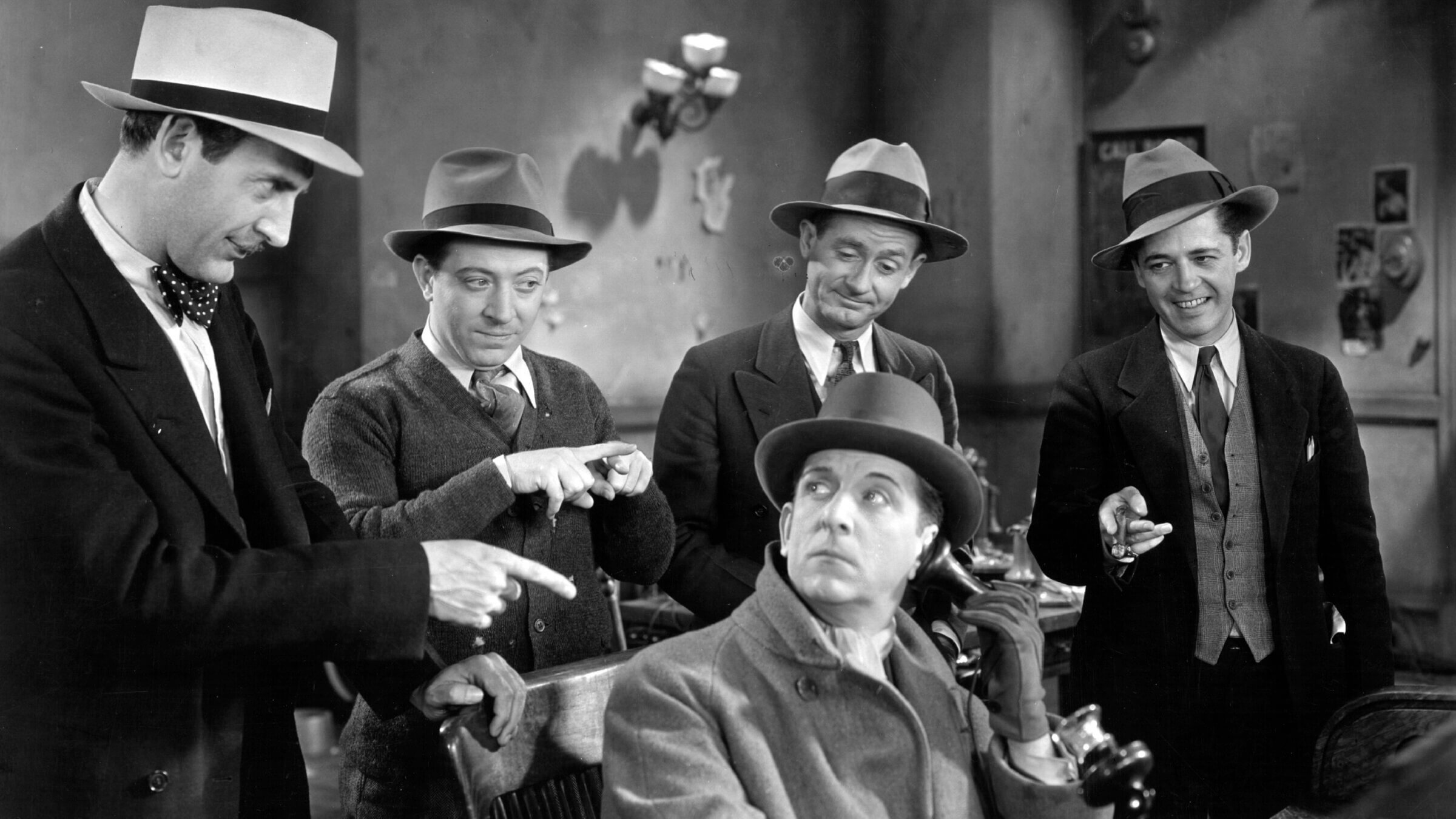
Ben Hecht and Charles MacArthur’s 1928 Chicago newsroom comedy The Front Page was so famous that when Harry J. Romanoff died in 1970, his New York Times obit referenced it. And in a 1986 review of a revival with John Lithgow as the conniving editor Walter Burns and Richard Thomas as the ruthless reporter Hildy Johnson, Frank Rich asked: “is there anyone who hasn’t seen The Front Page?”
Staged by George S. Kaufman and produced by Jed Harris, the original ran at the Times Square Theater for 276 performances. It has had many lives, including Howard Hawks’ fantastic 1940 screwball comedy, His Girl Friday. Hawks brilliantly turned the bromance into a he-she love story, casting Cary Grant as Walter Burns and Rosalind Russell as Hildy. He also softened the script so that it passed The Hays Office — the film censorship bureau named for ex-Postmaster General Will H. Hays.
The play’s many admirers include Walter Kerr, another New York Times critic, who, writing about a 1969 revival, memorably described it as ” like a watch that laughed.” David Mamet praised Hecht and MacArthur’s satire in several places, once calling it “arguably the best American play.” Tennessee Williams wrote that it “uncorseted the American theater,” and Kenneth Tynan and Tom Stoppard loved it.
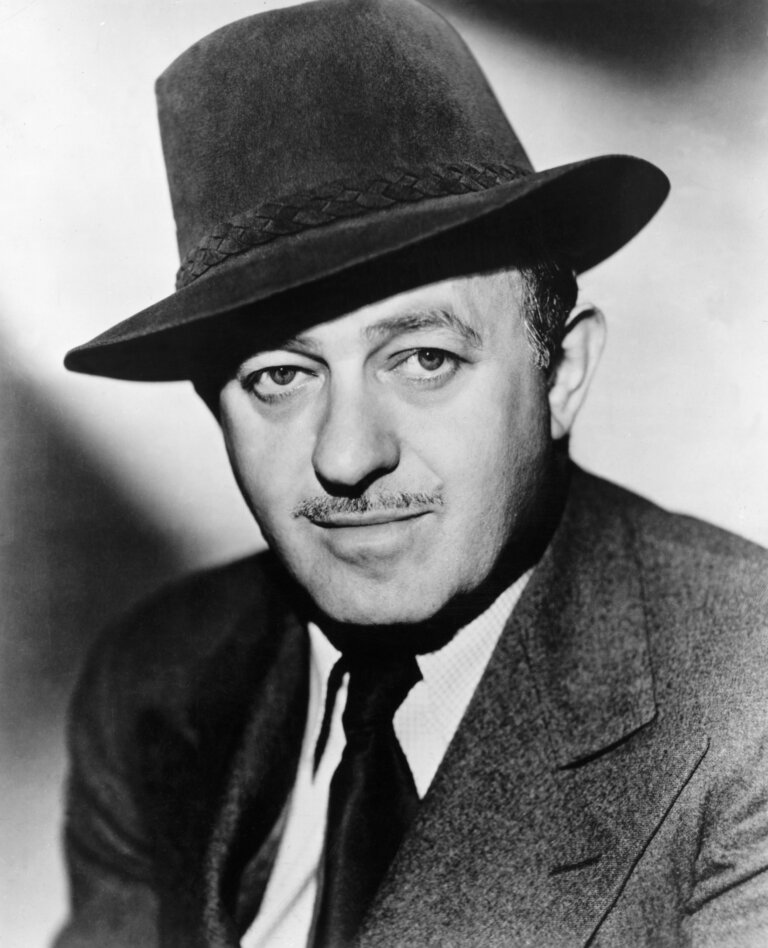
Hecht, who, according to researcher Jesse Tisch in an essay on Medium, did the majority of the writing, died in 1964 and our century seems more ambivalent about the play. Some critics loved the 2016 Broadway version, which Jesse Green, then of New York Magazine, said had been pieced together from several scripts. That production’s all-star cast, including Nathan Lane as Walter Burns and John Lithgow as Hildy did not prevent the late Terry Teachout from calling it “toothless.”
Part of the play’s slide may be related to the demise of legacy journalism. Chicago is down to two newspapers from the seven of the era of The Front Page. And part may be style. The long, crowded scenes lack the propulsive energy of a lot of streaming-influenced drama and the characters lack the tormented interiority many theater audiences have come to expect.
Now, the first major production in ten years — by the playwright Jeffrey Hatcher, best known for Compleat Female Stage Beauty, which became a film starring Billy Crudup, and for a 2022 stage adaptation of Dial M For Murder — has opened Northlight Theatre’s inaugural season at their $33 million building in Evanston.
Set in a crummy press room in the Criminal Justice Building in Chicago, The Front Page was the first Broadway show about zany, wisecracking journos and the corrupt politicians they took down. About to quit the paper, get married and move to Buffalo, Hildy Johnson stumbles onto death row inmate Earl Williams’ jailbreak. Walter Burns wrangles Hildy into covering one last scoop.
The play uses many sources, some of which contradict each other. In Chicago, Hecht had both devoured and befriended the Jewish comics of the day. He loved clowns, including The Marx Brothers. The Cocoanuts, the 1924 Marx Brothers’ Broadway madcap vehicle that George S. Kaufman wrote and directed and Irving Berlin wrote music for anticipates certain elements of The Front Page. Set in a resort hotel instead of a newsroom, its crime and con-filled ambiance and fast-talking shyster characters seem like a prequel to Hecht’s drama.
But The Front Page also came out of the imagination of a first-generation American Jew who came of age in the 1910s. Born in 1893 in New York, Hecht moved west with his Russian immigrant parents, settling at age ten in Racine, Wisconsin. He arrived in Chicago when he was 16, became a journalist and hung out with figures in that city’s Literary Renaissance, most of whom were not Jewish.
Hecht had an enduring but tormented friendship with the writer Max Bodenheim, who was raised Jewish. It began with the men collaborating on plays and starting a modernist magazine, The Chicago Literary Times, and descended into each satirizing the other in novels. Even worse, Bodenheim seemed to become Hecht’s evil twin. Like Hecht, Bodenheim was a provocateur. Like Hecht, he moved to New York. But where Hecht flourished, Bodenheim crashed into poverty. Hecht helped him financially. But he couldn’t save him. In 1954, Bodenheim and his third wife were brutally murdered in their apartment.
If Bodenheim was a daredevil, Hecht was a fabricator. He embellished his nonfiction, including chunks of his 1921 and 1922 column for The Chicago Daily News, “1,001 Nights in Chicago.” Hecht’s Chicago peers mostly tolerated his provocations and fabulations. But as he grew famous, they became less tolerant. Writing in 1973, after Hecht’s death, Norman Mailer wrote that he was “never a writer to tell the truth when a concoction could put life in his prose.”
And yet to say that The Front Page is just an embellishment seems wrong. It is based in real life. Jazz Age Chicago had plenty of newspapermen, (some Jewish) who regularly impersonated people with accents, tall tales and disguises to get stories. The city was full of Jewish criminals too, like Ike Bloom, who ran Midnight Frolics Cafe, a nightclub Hecht frequented. But the central characters Hecht and MacArthur used as models for The Front Page were not Jewish. Walter Burns is based on Walter Howell, a famously Machiavellian editor. The death row murderer Earl Williams is based on Tommy O’Connor, a convicted murderer who was never captured after he escaped the county jail in 1921.
Though Hecht didn’t write The Front Page until he left Chicago for New York in 1924, he continued to identify with the city — or at least his version of the city. In Hollywood where he won his first Academy Award for the silent gangster film, Underworld, he wrote dozens of movies including Notorious, Scarface, Twentieth Century, Design for Living and Wuthering Heights and ghostwrote Gone With The Wind, Stage Coach and A Star is Born. “He invented 80% of what is used in Hollywood movies today,” Jean-Luc Godard said in 1968.
Hecht liked to say that “he became a Jew at 39” in the late ’30s, when he took up anti-Hitler activism. He wrote polemics entreating Americans to pay attention to Hitler and pageants, such as one staged in Madison Square Garden, encouraging the country to attack Germany. As the scholar Liesl Olsen has written, he was “a heroic truth-teller who demanded that his country act decisively during modern history’s blackest hour.”
But recent biographers have complicated the idea of Hecht’s Jewishness as a midlife discovery. In the words of one, Adina Hoffman, he was “divided,” the man who grew up hearing Yiddish. And he was, like a lot of Jews of his generation, not observant, instead using journalism and the performing arts to express his Jewishness. In his Chicago days, literature and theater were his response to literary friends (and enemies) characterizing his Jewishness in one way or another. Carl Sandburg affectionately referred to him as the “Jewish Huck Finn.” Ezra Pound (less affectionately) called him “Rabbi Ben Hechtenberg.”
Hecht had to protect himself, either by acting tough, or by submerging himself in characters and fantasies. So he turned to theater. In Chicago, he wrote plays with Sherwood Anderson and then with the founder of The Goodman Theatre, Kenneth Sawyer Goodman. In New York, he briefly hung out with the Algonquin Table set, many of whom dabbled in theater. But it was not a mutual admiration society. Dorothy Parker complained about his “smiling and swaggering savageries” and Alexander Woolcott wrote, “Hecht’s favorite character in literature is the disconcerting little boy who, when the King paraded in the imaginary robe, cried out: ‘But he hasn’t got anything on!’” Even the actor George Jessel, meeting Hecht during a rehearsal of The Front Page, described him as a yokel “wearing a loud red tie and a shirt that might have been used as a stage curtain for a troupe of very gay midgets.”
In The Front Page, Hecht and MacArthur wrote a play that, with its profanity and cynicism towards politicians and journalists, initially attracted the attention of the police, who sent stenographers to note the supposedly pornographic dialogue. But nothing much came of the outrage except that the play became a hit. Nearly 100 years later, the classic vehicle seems, at first glance anyway, more charming than shocking.
The new production is directed by Northlight Artistic Director BJ Jones, who was an unofficial associate at Skokie’s now-defunct National Jewish Theater in the 1980s and 1990s.
Jones sees The Front Page’s legacy in 20th century Jewish writers, especially ones with a Chicago connection — David Mamet’s scurrilous language, Larry Gelbart’s rat a tat dialogue in M*A*S*H.
Reading The Front Page now you also might get the sense of a Jewish play manqué: its outsider characters, its energy, its cynicism. Jeffrey Hatcher, who adapted it, says. “It’s Jewish in the same way as you could say about Irving Berlin, ‘there’s nothing Jewish about him except for everything he says.’ You feel it in the razzamatazz of the talk.”
Here are the first lines of the original 1928 script, in which the guys are playing poker:
The Card Players: crack it for a dime….by me…I stay…me too….I’m behind again…I was even a couple of minutes ago… papers…three…two…three to the dealer.
The scene is urban melting pot! Jazz! Vaudeville! As Hatcher puts it: “The play is chock full of Irishmen, Wasps, Presbyterians. But Jews are not there except in the style and verve of the language.” For his part, he names Officer Jacobi, who in the original is “voice from jail yard.” And he adds Abramovitz, an offstage journo.
Hatcher also wisely kept the gender-flipped casting from Howard Hawks’ His Girl Friday, in which star reporter, Hildy Johnson, was played by Rosalind Russell. He whittles down the play from three acts to two and the cast from 23 to 13. And he cleaned up some of the slurs. Like Hildy calling Jacobi “pickle nose” and the word “sissy.”
He did, however, keep “Polack Mike.” “We don’t want to blunt the knife so that it’s a butter knife,” he said.
Still, there is something constricted in The Front Page. The long scenes are sometimes funny, but also cruel, this world where nepotism and corruption rule, violence is king, and an editor and a politician manipulate everyone. If Hecht’s divided Jewishness led to his outsider take on Chicago journalism, his world can also seem hollow.
In the famous last scene, Walter lets Hildy go off to get married and even gives the happy couple his watch. The minute they leave, he calls his henchman to get the police to arrest them. And then he delivers the fabulous last line as if he himself even believes it: “The son of a bitch stole my watch!”
In 1928 the phrase “son of a bitch” shocked audiences. Now it seems quaint. But the vignette made me consider how the play takes people’s selfishness and cruelty for granted. Those in charge are so glib about the lives of others, including those they supposedly love. It barely seems like a comedy anymore; it’s too real.
*
Rachel Shteir, a 2025-6 Guggenheim Fellow, is working on a book about why theater matters. Read full bio →
This story was originally published on the Forward.
Features
In memory of Joan Druxman

By BERNIE BELLAN In May 2023 I wrote a story about Joan Druxman, whom I had just met in person when she was a guest speaker at the Remis Luncheon series that month.
Sadly, Joan passed away on September 5, after a brief illness. My original story received over 4,000 views, so I thought it worth repeating here, to honour the memory of a vivacious and fascinating woman. Here is that story again:
The February 21, 2001 issue of The Jewish Post & News had an article titled “It’s a Comedy Night!”
That article went on to describe an upcoming event in which State of Israel Bonds would be honouring Rabbi Alan Green. Among the comedians to be appearing at the event was to be “Joan Druxman-Jones.”
Now, 22 years later, State of Israel Bonds doesn’t have an office in Winnipeg, Rabbi Green doesn’t live here any more (although he will be returning this weekend as the Shaarey Zedek’s Rabbi in Residence during Shavuot) and, as for Joan Druxman-Jones, well, she is back in Winnipeg – after having left in 1990 – and after having had a tumultuous series of career changes throughout her life –and, after having dropped the Jones in her name and gone back to Joan Druxman.
Joan Druxman was the guest speaker at this year’s kickoff Remis Forum luncheon on Thursday, May 11, at the Gwen Secter Centre.
I had never met Joan prior to that Thursday, although advertisements for her well-known women’s clothing store, “Joan’s Boutique”, were a regular feature in our paper for years. Once she took the podium at the Gwen Secter Centre it was easy to see how Joan had been a successful model for years. She still maintains a shapely figure and, even at 83, Joan is quite an attractive woman. (Is it okay to say that, I wonder? Who knows what’s permissible nowadays to write about a woman – or a man, for that matter, when it comes to physical appearance?)
But, more than anything, what struck me in listening to Joan tell her life story was her ease in speaking, her quick wit, and her self-effacing sense of humour.
As Simone Cohen Scott noted in an email sent out to Remis Forum attendees (and, by the way, anyone can attend a Remis luncheon. Just let the Gwen Secter Centre know you’re coming by the Tuesday of that week’s luncheon. Call 204-339-1701.), I took “voluminous notes” while Joan spoke.
So, here’s my account of the story Joan told: Born in Winnipeg, Joan (whose maiden name was Zelcovich, she said), grew up in Estevan, Saskatchewan, and moved back with her family to Winnipeg when she was 15.
Joan explained why her father decided to move to Winnipeg. He had owned a successful hotel in Estevan, but many of the patrons of that hotel were rough-hewn oil workers from the area around Estevan. “My father wasn’t about to let those oil workers anywhere near his two teenage daughters,” Joan said. (She had a younger sister at the time they moved here.)
But, the summer before the Zelcoviches moved to Winnipeg, they spent part of that summer at Clear Lake.
There were a lot of Jewish girls at Clear Lake, Joan noted, but they snubbed here because of the way she dressed. “They thought I was a hick,” she said.
That fall though, when Joan began attending Kelvin High School, and she was introduced by the teacher to the other students, the other girls couldn’t wait to be her friend, Joan said. This time she was dressed to the nines, she noted – something that has been very important to her ever since, she also observed.
As she noted toward the end of her talk, “I firmly dress the way you want to be treated.”
But from where did get Joan derive her impeccable fashion sense?
“My mother subscribed to the New York Times Magazine. It was the Vogue of the day,” she said.
Sure enough, when she was only 16, Joan got her first job working at the Mirror Room in the Hudson Bay store while she was attending high school.
After attending Kelvin for a couple of years Joan decided to attend the University of Manitoba. (In those days, she explained, you could take Grade 11 at the university.)
As things turned out, however, and as Joan observed, university was not for her.
“I hated it like you can’t imagine,” she said. “When I got 17 in Biology I knew university was not for me.”
So, Joan decided to enroll in the Angus School of Commerce (which was owned by Janice Filmon’s father at the time) where she obtained her diploma in typing and shorthand. “I was a wiz on the Dictaphone,” she noted.
But, she had to find a job after graduating. “I saw an ad for a company called Gunn Garment, which was owned by Harry Silverberg and Dave Kaufman, and which was managed by Max Duboff.”
“I became Max’s secretary and house model,” Joan said. “That’s how I became a model.”
It was during her time at Gunn Garment that Joan was introduced to the man who was to become her husband, Winnipeg Blue Bomber George Druxman.
“Marilyn Trepel called me up and told me someone had seen me at a wedding. Would I like to meet him? He’s one of the Blue Bombers,” Marilyn said to Joan.
As a Bomber wife, Joan was asked to appear on a local television show along with other Bomber wives where they would each be asked to cook a favourite dish.
“I made blintzes,” Joan noted.
As luck would have it, “two guys from Manitoba Sugar saw me and asked me to do a regular cooking show on TV.”
It was while appearing on her own cooking show that an editor of the Winnipeg Tribune asked Joan whether she would like to become food editor of that paper, and shortly thereafter, the fashion editor as well.
The next step in Joan’s career came when she was asked whether she would like to become the fashion coordinator for the Hudson’s Bay Company in Winnipeg, Saskatoon, and Regina, also the manager of the Fashion Room in the Bay.
But, as Joan recalled, “at the time the Bay fashions were all centrally coordinated. I hated them all. I decided to go out on my own.”
Thus began the longest segment of Joan’s varied career: as owner of Joan’s Boutique.
It was no simple matter, however, for a woman to strike out on her own in a business at that time, which was in 1976
Having been divorced from George Druxman (who died in 1999), Joan was mother of three boys at the time: Trevor, Greg, and Adam. Two of the boys were married by then.)
“I wanted to set up in an old house,” she recalled.
“I went to see a bank manager who said to me: ‘I’ll have you know fashion retailing is the riskiest business there is.”
Not one to be discouraged, however, a former classmate of Joan’s from Kelvin, Brian Aronovitch, told her there was a house at 34 Carlton owned by lawyer Ken Houston – who wanted to rent out part of the house.
At the same time Joan was introduced to another bank manager who was supportive of her dream of opening her own boutique.
“I opened Joan’s in 1977,” she observed. “Business just took off. It was bursting at the seams.”
Ever on the eye for another opportunity, it was while out for a walk in the neighbourhood of the Carlton store that Joan said she saw a rooming house for sale at 22 Edmonton.
“It was a tax sale,” Joan noted. And so, in 1979, Joan Druxman opened Joan’s Boutique at her new location on Edmonton, where she was to remain for the next 13 years.
“I gutted it and had clothing and accessories on the first and second floors,” she said, “with a hairdresser on the third floor.”
Ever restless, however, Joan decided to move to Vancouver in 1990.
“I saw things there that weren’t happening in Winnipeg,” she observed, including a very large Japanese population.
Joan opened her first store in Vancouver at the corner of 12th and Granville, but soon she came across a better opportunity at Berard and Granville. She approached a former friend from Winnipeg, Karen Simkin, who had also moved to Vancouver and who had opened a little gift shop.
“I invited Karen to move to that new location with me,” Joan said.
Karen’s husband, Garry Simkin, was fully supportive, and so the two women opened a store that was a combination clothing and gift ware store.
As mentioned though, Joan had taken note of how many Japanese tourists there were in Vancouver. Accordingly, as she explained, “I went to Simon Fraser University and learned how to read and write Japanese” so that she would better ingratiate herself with Japanese customers.
Things were going along well until their landlord told Joan and Karen that he was going to be raising the rent to $250,000 a year. (And remember, this was the 1990s. One can well imagine how exorbitant that amount would have been back then.)
So – another career switch for Joan was in the offing: “I decided I’d like to be an actress,” she observed. At the same time she started doing stand-up comedy (as noted at the beginning of this article.)
Ever eager for new challenges, however, Joan decided to apply for a green card and move to Los Angeles –where she began studying acting while working for Nordstrom’s.
“I also got my California real estate license,” she added.
But this was all before Obamacare, Joan noted. “Medical insurance was costing me $1500 a month.”
Joan decided to move back to Winnipeg where, once again, she opened “a little store.”
In 2020, however, with the onset of the Covid pandemic, Joan found she “couldn’t get stuff from Europe” and, as a result, she had to close her store.
“So, I walked into the cosmetics department of the Bay (Polo Park store) and said, ‘I want to see the Chanel manager.’ “
As luck would have it, that manager happened to need someone at the Chanel perfume counter and Joan was hired on the spot.
Which brings us full circle to where Joan started when she only 16 – working again at the Bay.
“Here I am at the Bay working five days a week – and loving it,” she said. “Without a bank manager, without a landlord, and without the tax man.”
But, as Joan observed, she still dresses to the nines – even though now she takes the bus to work. (It stops right in front of her apartment and drops her off right at work, so why not?)
As she noted though, you can imagine the looks she gets from other passengers who see an immaculately dressed woman getting on their bus every day.
One time, Joan said, her regular bus driver asked her: “Are you a celebrity?”
Joan told him she wasn’t, but one day that bus driver happened to be shopping at the Bay with his wife when he spotted Joan at the Chanel counter and said to his wife: “I know her. She rides my bus.”
That’s Joan Druxman for you – more twists and turns than a Gerry Posner story. Some day she ought to write a book. Hey, there’s an idea for her next career move!
Post script: We were informed that the day after Joan Druxman spoke at the Gwen Secter Centre she was involved in a terrible accident when she was coming out of work at the Bay.. It seems that Joan was caught in the midst of a situation where some young boys had been fleeing the store after having stolen some jeans. One of them ran into Joan, knocking her to the ground – which broke her hip. At last report she had undergone hip replacement surgery and had been released from the hospital.
