


Uncategorized
For fleeing Jews, Venezuela was a golden land — now in exile, they watch their homeland’s unrest with trepidation
After their overcrowded motorboat ran aground and took on water, the 15 migrants swam up to a Tampa beach. The men they paid back in Havana had promised they’d be in Miami within five hours; instead they were at sea for five days, running out of food and water.
Two of the migrants had to be carried ashore, where they were swiftly detained by the police. Years prior, their entry would have been easy with a pathway to citizenship, but now with an anti-immigrant backlash they were sentenced to a year in jail.
After a week, a sympathetic Cuban-born prison guard smuggled out a letter asking for help. “They hold us,” it read, “as if we were criminals, murderers, in stifling dark rooms. We are given only black coffee in the morning and fed once a day, and very limited at that.”
The letter writer worried that he and his fellow refugees might spend months in the dark cell without air or light. But what he feared most was being deported.
Amazingly, the letter got them out.
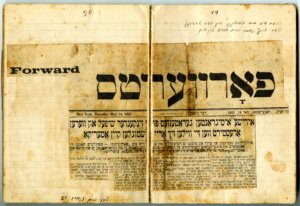
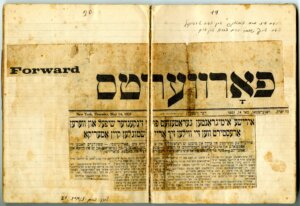
The letter’s author was Mordechai Freilich, a 26-year-old Polish Jew who had run into trouble as a socialist organizer in a shoe factory in Cuba then ruled by General Gerardo Machado. Written in Yiddish, the letter was mailed to Freilich’s uncle in New York who was instructed to share it with this newspaper, the Forward, which published it on May 14, 1931 under the headline: “Jewish immigrants rescued from sinking boat and arrested when they try to smuggle themselves into America.”
Mordechai, known as Máximo, had written articles for the Forward before he’d left Poland two years earlier. At the time, it was the most widely read ethnic publication in the United States. The newspaper’s general manager, the influential New York politician Baruch Charney Vladeck, persuaded the future governor of New York Herbert H. Lehman to intervene. Freilich and the others were released on condition they find a country to accept them within two weeks.
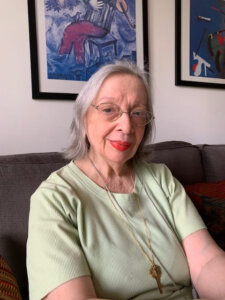
“The United States was the goldene medine; it was the salvation, but it was closed,” Máximo’s daughter Alicia Freilich told me by phone from her home in Delray Beach, Florida, “Venezuela became our goldene medine.”
Alicia was born in Caracas in 1939, and for the past 57 years, she has been a columnist for El Nacional, the leading Venezuelan newspaper, which itself has become an exile. In 2018, the government seized its headquarters. Today, the web-only publication is blocked by the nation’s internet providers, limiting its readership to the Venezuelan diaspora and those within the country determined enough to digitally bypass the censorship.
In 2012, Freilich suspected her phone was tapped by the government and fled to Florida. If it wasn’t for her advanced age, she’s sure she would have been jailed for her criticism of then-President Hugo Chavez.
“I became an immigrant at the age of 73,” Alicia told me in Spanish the week after President Nicolás Maduro and his wife were arrested by American forces. “I never thought I’d leave.”
Since 2012, a quarter of Venezuela’s population, nearly 8 million people, have left, fleeing food insecurity, political oppression and spiraling gang violence. Though Venezuela was once home to a community of 25,000 Jews, its Jewish population has fallen to 5,000. Alicia Freilich remembers full synagogues, and generous charities that allowed for even the poor to attend Jewish day schools and take advantage of the busy community center, and Jewish retirement home. Now the first thing visitors to the website of the nation’s leading Sephardic organization see is detailed information on how to apply for Spanish citizenship,
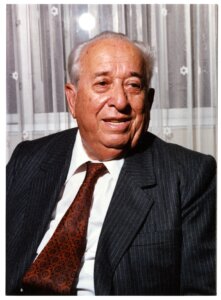
While there was a small Sephardic Jewish community in Venezuela in the 19th century, the country’s Sephardic families came mainly from Morocco during the country’s post-war oil boom. Most Venezuelan Jews, however, are Ashkenazi, the children or grandchildren of Eastern European Jews who left Europe before the Holocaust, like Alicia’s parents Máximo and Rifka, or survivors who came after the war, like Alicia’s ex-husband Jaime Segal.
In 1938, Máximo made a return trip back to Poland. “I begged them [my extended family] to leave, that there was going to be a war,” Máximo told Alicia in an interview published in her 1976 book Interviewees in the Flesh, “but they laughed at me.” After the war, his in-laws, Alicia’s aunt and uncle Gutka and Abraham, who survived Auschwitz, joined the family in Caracas.
Officially, Venezuela had restrictive immigrant policies, but made exceptions. In 1939, the government of Eleazar López Contreras gave refuge to 250 German Jews onboard the Caribia and Köningstein ships which had been denied entry at all other ports. Máximo Freilich was one of the representatives of the Jewish community who welcomed the new arrivals at the port in La Guaira.
“Venezuelans are magnificent, generous,” Alicia told me, “like my father used to say, ‘the people are so generous that even a beggar would offer some of his coffee.’”
Máximo, like most Jewish immigrants at the time, was a “claper,” the Yiddish term for an itinerant salesmen. After years of “claping” on doors, peddling rags, he graduated to a Caracas storefront. Among Jews, the self-educated Máximo was a respected figure, a contributor to Yiddish newspapers like the Forward, a settler of disputes, a man consulted over beet soup and gefilte fish. But he never mastered Spanish, and to Venezuelans he remained a “musiu,” slang for a foreigner.
In 1987, Alicia wrote her first novel, Cláper, adapting Máximo’s Yiddish diary from his early years in America, which she intertwines with her own story. Máximo’s journey is from his shtetl, fictionalized as “Lendov,” Alicia’s is from her sheltered Jewish day school childhood into the wider Venezuelan society, attending college and starting her career. She mixes in literary circles, rubs shoulders with leading intellectuals and leftwing dissidents, yet she’s never fully at ease, discovering she is not so different from the “Polish peasant” parents she wished to escape.
“Half a century ago, a bunch of musiús began arriving. They knocked on doors in order to sell rags. They knocked: clap, clap, clap,” she writes reflecting on her success in journalism. “So daughter of a cláper, I too am a caller. When I knock and knock from the pressroom, what I wish to sell for free is what we might call ethical anxiety.”
Alicia’s part of the narrative comes in the form of a monologue to her psychoanalyst, like in Philip Roth’s novel Portnoy’s Complaint, which she references in her book. But Caracas is not Newark. Beyond the middle class of the cities is vast poverty. Venezuelan Jews helped build the democracy that emerged in 1958 after the Pérez Jiménez dictatorship, and for four decades Venezuela was considered one of Latin America’s most stable and affluent countries. But oil wealth bred corruption, inequality fueled unrest and by the 1990s the system was fracturing.
In 1999, the socialist Hugo Chavez, who had led a failed coup attempt seven years earlier, was elected president. Initially popular for promising to redistribute oil wealth to the poor, Chavez chipped away at democratic norms leading many professionals to exit the country in the early 2000s.
“They never directly target the [Jewish] community,” said Alicia, but Chavista anti-Israel rhetoric created a hostile atmosphere. In 2009, armed men overran the nation’s largest synagogue Tiféret Israel in Caracas, desecrated the sanctuary, stole objects and spray painted antisemitic and anti-zionist messages demanding the government expel Jews. That’s when she first thought about leaving.
Soon, she said, her younger sister Miriam Freilich, a culture writer for El Nacional and host of a radio program, decided it was impossible to be an independent female journalist in Caracas. She moved to Colombia before joining her daughter in Israel, and passed away in Spain last year. Alicia’s two sons had left years earlier. They did post-graduate studies abroad in the 1990s and decided not to return.
Ernesto Segal is a physician in Florida and Ariel Segal, who has lived in both the U.S. and Israel, is a communications professor in Lima. “’I prefer Venezuela as a people, as a climate, as the landscape,’ Ariel, 61, told me over Zoom from Lima. “I haven’t returned because of the Chavismo.”
“‘We lived in paradise, but we didn’t realize it,’ Ariel said. He particularly remembers Club Hebraica, the Jewish community center in Caracas, not just a sports center but a hub for youth groups, singles mixers, and holiday celebrations. It’s where he went to school. “After Chavez, we realized, ’wow, that was wonderful. We had freedom. We could change the president every five years. Politicians never threatened each other.’”
For years after he’d left, Ariel returned for weeks at a time each year to lecture at Venezuelan universities on authoritarianism and the Middle East. Then, in 2016, he was accused by name on a government television program of being an agent of the Mossad. He hasn’t been back since.
It was after Chavez’s death in 2013 that most Venezuelans migrants left. With a fall in oil prices and Nicolas Maduro in power came inflation, shortages and increased corruption. Increases in U.S. sanctions further strained the economy making it difficult for the average person to access food and medicine. Early waves of middle-class immigrants left the country on planes with visas. Jewish Venezuelans headed to Florida, Spain, Panama, and Israel.
More recent migrants are poorer without passports or visas. Many fled initially to countries within the region with over 2 million residing in Colombia, but others were forced to head north to the United States. Their treacherous and unauthorized immigration was not so different from Máximo’s journey in 1931.
At the end of his first term, President Trump deferred deportation for Venezuelans. More recently, he has turned hostile claiming “hundreds of thousands” of Venezuelan migrants are members of what he calls “savage” and “bloodthirsty gangs” like the Tren de Aragua, which he says President Maduro sent to “terrorize Americans.” Last year, he stripped the protective immigration status of more than half of the nation’s 1.2 million Venezuelan immigrants, targeting them for deportation. Now, his administration has suggested that with Maduro in prison, Venezuelans can return home.
“They took the clown out of the circus, but they left the rest of the troupe,” Alicia told me. Maduro’s arrest has been celebrated by Venezuelan exiles, but she doesn’t feel it’s enough. The current acting president Delcy Rodriguez and her brother, Jorge, the National Assembly president, long allies of Maduro, are extremely dangerous, she says.
She’s hopeful that slowly things will improve, but she says that Trump’s unpredictable personality and disregard for the rule of law worry her, as both a Venezuelan and as a Jew living in the United States. While he has been friendly to Jews, she says she fears he could easily turn on them, and, she added, his focus with Venezuela is oil, not human rights. “They are not acting with solid democratic principles in the country,” she said, “but the United States [democracy] itself is also at risk.”
Even if Venezuela gets on the path to democracy, it will take time. Alicia doesn’t believe exiles will return home anytime soon. She herself doesn’t seem to be going anywhere. At 86, her energy goes into her weekly column for El Nacional. On the 80th anniversary of the liberation of Auschwitz, she wrote about her survivor aunt and uncle. Mostly, though, she focuses on current Venezuelan politics.
Her father had written from Caracas for Yiddish speakers thousands of miles away. Now, Alicia speaks to a Venezuelan diaspora.
In a recent column, she stressed the only people with the legitimate authority to run Venezuela and restore freedom to the masses are those who were fairly elected in 2024 “There is no other correct way to rescue the imperfect and perfectible democracy,” she concluded.
Florida, Alicia Freilich told me, is not her home; her community, her focus, her heart remain in Caracas. It reminds me of something she quoted her father as saying: “I stayed back in Lendov, just my feet left.”
The post For fleeing Jews, Venezuela was a golden land — now in exile, they watch their homeland’s unrest with trepidation appeared first on The Forward.
Uncategorized
Evan Gershkovich’s prison memoir begins with a Soviet Jewish exodus
A few days after Russian security agents arrested Wall Street Journal reporter Evan Gershkovich on a trip in March 2023, his lawyers showed him a slip of paper with messages from home. He was being held alone, in what Russian prisons call “quarantine:” two weeks without a cellmate before joining the general population. His eyes went straight to the note from his mother.
Soon he would start getting kosher food, Ella Milman wrote, and then added: “If you come home with sidelocks, I’ll understand.”
It was a joke, and a very Jewish one. Gershkovich grew up in a secular family of Soviet émigrés, where being Jewish had more to do with family history and dark humor than with religious practice. His mother was ribbing him that a few weeks of kosher prison food might send him home looking like a yeshiva boy.
Sitting across from the investigator building his espionage case, Gershkovich grinned. His mother, he realized, still had her sense of humor, and that was exactly what he needed.
The kosher food wasn’t a joke. That night, with Passover days away, a local rabbi sent him stacks of matzo.
The scene appears in This Cursed Beautiful Land: A Russian-American Story, Gershkovich’s memoir of his arrest, his 16 months behind bars and his release in the most elaborate U.S.-Russia prisoner swap since the Cold War. The book was published Tuesday.
Most of the coverage is about the prison. But Jewish history runs through the book from its first pages. Gershkovich’s great-grandfather was arrested during Stalin’s purges and vanished. His mother was laughed out of a journalism school application once the clerk saw her passport. And when he moved to Moscow as a young reporter, a Russian coworker needled him with an old stereotype about Jews and money.
The family that left
Gershkovich was born in New Jersey in 1991, two months before the Soviet Union fell apart. His parents had come over in 1979. Thousands of Soviet Jews were leaving at the time, helped by a U.S. law that linked trade with Moscow to whether its citizens were allowed to emigrate.
His mother flew out of Leningrad with her mother and ended up in Detroit. His father’s family came from Odessa and settled in Brighton Beach, the Brooklyn neighborhood people call Little Odessa. In those years, his father later joked, Soviet Jews who ran into each other on the street skipped the hellos and just asked where the other was going.
For his father’s side, the decision was easy. Gershkovich’s great-grandfather was arrested in 1937, at the height of Stalin’s purges, and never seen again. His grandfather Mark spent years moving from city to city, afraid of being targeted next, and later dreaded the day his own son would be drafted into the Soviet army.
A Jew on paper
Gershkovich’s mother, Ella, was born in 1957, a few years after the “doctors’ plot,” a Stalin-era campaign that accused Jewish physicians of conspiring to kill Soviet leaders. One of the doctors caught up in it had been a neighbor in her family’s communal apartment.
Her father had wanted to name her Etya, after his late sister. Worried that an obviously Jewish name would draw attention, her mother pushed for Ella instead. It didn’t matter. The family name Milman gave her away, and Soviet passports listed each citizen’s ethnicity. Hers said “Jew.”
Ella dreamed of becoming a writer. When she applied to the journalism department at Leningrad State University, the woman taking her application glanced at her passport and laughed. She studied shipbuilding instead, listened to the Rolling Stones, and heard rumors that the Kremlin planned to deport Jews to Birobidzhan, a remote Soviet region near the Chinese border that had apparently been set up as a Jewish homeland.
When she finally emigrated to America at 22, she sewed a pair of gold earrings from her late father into her skirt’s waistband to get them past customs. Once the plane took off, she couldn’t stop laughing and crying.
A generation later, her son became the journalist she wasn’t allowed to be, and then a prisoner of the state that had turned her away.
Ella and her husand settled in Princeton, New Jersey, where Gershkovich and his sister spent Saturday mornings with a Russian tutor, and holidays meant trips to the Russian groceries and Uzbek grills of Brighton Beach. Gershkovich came to think of himself as Jewish-Russian-American. Russia’s war in Ukraine later forced him to ask why that label had never included Ukraine, given that his father’s family came from Odessa.
The empty chair
In 2017, Gershkovich moved to Moscow to report for The Moscow Times. On one of his first days, he asked a colleague when staff got paid. She laughed and told him his Odessan roots were showing, a jab about Jews and money that served as his introduction to Russian workplace culture.
On a later trip to Odessa, he visited a Jewish museum that displayed a 1953 Soviet propaganda article from the doctors’ plot era. It claimed that the Joint, the New York-based Jewish relief organization, was a front for American intelligence. Gershkovich recalls thinking that Moscow was getting paranoid again, while hoping things hadn’t gotten that bad. A few years later, Russia accused him of spying for the United States.
Gershkovich’s arrest came a week before Passover. That spring, many American Jews left an empty seat for him at their Seders, and activists later sent him letters for Rosh Hashanah. Both gestures deliberately echoed the movement to free Soviet Jewry, the same campaign that had helped free his parents. Natan Sharansky, the most famous Soviet Jewish dissident, who was himself released in a 1986 prisoner swap, advocated publicly for his release.
In July 2024, two weeks after a Russian court sentenced Gershkovich to 16 years in a maximum-security prison, he was freed in a prisoner exchange in Ankara, Turkey. Jewish groups celebrated, and the Orthodox Union posted the traditional blessing thanking God for freeing captives.
His great-grandfather was taken in 1937 and never came home. Eighty-seven years later, his great-grandson did.
The post Evan Gershkovich’s prison memoir begins with a Soviet Jewish exodus appeared first on The Forward.
Uncategorized
More Michigan Jews sign a petition pressuring El-Sayed on Israel. Will it matter?
(JTA) — ANN ARBOR – The activists on the Zoom supporting Abdul El-Sayed knew they faced an uphill climb when it came to persuading their fellow Jewish Democrats to overcome their concerns about the Michigan Senate candidate and vote for their party’s nominee despite his strong disapproval of Israel.
Two progressive Jews, former Biden administration appointee Sam Bagenstos and Detroit Jews for Justice co-founder Hayley Sakwa, made the Jewish case for the candidate to a sometimes skeptical, sometimes combative crowd of around 30 people on Sunday night.
Sakwa and Bagenstos urged voters to prioritize the chance to put a check on the larger Trump agenda – including heavy immigration crackdowns and the rightward tilt of the federal judiciary – given that the Michigan seat could help determine who controls the legislative chamber.
But their appeal wasn’t enough for several of the people on the call, who less than two days later would sign on to the “Nonnegotiables” petition. Spearheaded by a group of Michigan Jewish clergy, the open letter calls for El-Sayed to moderate his views on Israel and affirm more vocal support for Jews in politics as a condition for earning their votes.
The 17 new names to the petition, shared with the Jewish Telegraphic Agency ahead of their release on Tuesday morning, include state Rep. Noah Arbit, the founder of the Michigan Jewish Democratic Caucus.
Arbit recently gave a speech denouncing antisemitism on the floor of the Michigan House and has been critical of El-Sayed publicly: After progressive Jews recently hosted the candidate for a Rosh Hashanah dinner at their house, the representative accused them of “tokenism.” (Arbit declined to comment to the Jewish Telegraphic Agency.)
Other new names on the list include an elected University of Michigan regent and prominent local attorney, as well as several board members of the Jewish Democratic caucus, which itself is not endorsing a candidate in the race.
Concerns raised on the Sunday night Zoom call included El-Sayed’s opposition to Iron Dome funding for Israel and his earlier campaigning with anti-Israel streamer Hasan Piker, whom he has since distanced himself from. Some said they were worried he could open a door to a more hostile Democratic Party for Jews.
“With Abdul it sort of feels like letting a fox into the henhouse,” one said.
“I refuse to be anyone’s dhimmi,” another wrote in the chat, referring to a term for non-Muslims living under Islamic rule.
Yet any pressure Jewish Democratic critics of El-Sayed hope to place on the candidate are partly balanced out by the work of those such as Sakwa, who along with other Jewish liberals has to date secured 900 signatures pledging to vote for El-Sayed. A competing letter of Jewish voters pledging to back his Republican challenger, former U.S. Rep. Mike Rogers, has picked up 524.
At the same time, the broader Democratic Party has ramped up its efforts to get elected officials in line behind the nominee. The El-Sayed campaign has yet to respond publicly to the “Nonnegotiables,” and with little more than a month to go before Election Day, it might not need to.
Former Vice President Kamala Harris campaigned with El-Sayed last week in Detroit, and the liberal-leaning editorial board of the Detroit Free Press, the state’s largest daily newspaper, endorsed the former county health director over the weekend.
The Free Press wrote that its own endorsement was against an “extremist” — referring to Rogers and President Donald Trump — in language that one bloc of Jewish voters also used to refer to their own decision to vote for Rogers over El-Sayed.
In addition, Michigan Attorney General Dana Nessel, who is Jewish and has fiercely criticized El-Sayed for his past comments about Jews and Israel, endorsed and appeared with the candidate on a local liberal podcast hosted by a Jewish woman to project unity.
“There is no choice,” Nessel said.
But the conversation demonstrated that tensions still remain even with many Jewish Democrats who have thrown in their lot with El-Sayed.
“Is there space for a Jewish Zionist like myself?” she asked him. “Is there space for us in the big tent of the Democratic Party?”
“I believe in a big tent,” he answered. “I am committed to having a tent where we march in lock step on the 95% of issues that we agree on.”
But the attorney general, who cited the risk of antisemitic threats as the reason she skipped the party convention earlier this year, wasn’t done.
“The question many of us have is: Are you seeking our votes?” Nessel asked El-Sayed. “Do they matter to you?”
“Yes,” the candidate responded. “If you trust that I’ll lead well for the community, even if there’s an issue on which we deeply disagree, then I hope I can earn your vote.” Later, El-Sayed said, “I look forward to working” on the Jewish American Security Act, a bipartisan bill to institute new Jewish security measures, including in synagogues and on college campuses.
“We’ve had an uptick in antisemitism, and it is critical to protect Jewish Americans,” El-Sayed said.
As with Nessel, El-Sayed’s candidacy is pushing other Jewish Democrats to perform a difficult two-step: pushing for the party platform and against Trump, without getting too close to the candidate himself.
The Jewish Democratic Council of America, whose CEO, Halie Soifer, is a Michigan native, is also not endorsing in the race. Yet Soifer told JTA, “Jewish voters will support Democrats in large numbers in the midterms, including in Michigan.” She predicted that Rogers wouldn’t earn more than one-quarter of the Jewish vote.
“Jewish voters recognize that a vote for any Republican in 2026 is a vote for Donald Trump,” Soifer told JTA over text. “We know Jewish voters are a critical component of a winning Democratic coalition.”
Decky Alexander, who chairs the Michigan Jewish Democratic Caucus, pointed to consistently high Democratic voting records for Jews in arguing that Jews still matter to the party’s coalition. She also favorably noted the Democratic National Committee’s recent announcement that it would establish a “Jewish American Council,” to convene in 2027.
“We can’t be distilled down to one vote or one idea,” Alexander told JTA.
One part of the state’s Jewish Democratic bloc unlikely to support El-Sayed: members of Temple Israel, the country’s largest Reform congregation. Speaking to the national publication The Free Press last week, several members, including a preschool teacher who was in the building when it was attacked in March, said El-Sayed’s apology for his earlier remarks about the temple was insufficient and that they couldn’t bring themselves to vote for him.
“No thinking Jew could vote for Abdul El-Sayed,” a former temple president told The Free Press.
None of the synagogue’s clergy signed the “Nonnegotiables” letter, or any other Jewish letter circulating about El-Sayed. But one of the temple’s rabbis told congregants in a Kol Nidre sermon that they had a say in drafting it, stating, “Our full participation in American political life is also non-negotiable.”
“No one should have to pass a test about Israel to be welcomed into a coalition on a campus or in a political party,” Rabbi Josh Bennett told his congregation, which had convened in the Temple Israel building for the High Holidays for the first time since the March attack. Rabbi Jen Lader, also of Temple Israel, recently testified before Congress to advocate for the Jewish American Security Act.
As Rogers has looked to win over dissatisfied Jews to his campaign, he has also moved toward El-Sayed on at least one issue tangentially related to Israel: opposition to the war in Iran. Initially a supporter of the war, Rogers in recent days has said he thinks it should “end quickly.”
El-Sayed, meanwhile, has raised eyebrows of his own in recent days. He dithered on denouncing the Iranian regime when urged to by an Iranian Christian college student, and appeared at a Dearborn fundraiser with Osama Siblani, a local Arab-American activist and newspaper publisher who once stated at a rally, “We are not going to be intimidated by staying silent when they say Hamas is a terrorist organization.”
The “Nonnegotiables” petition was launched earlier this month by a group of more than a dozen Michigan Jewish clergy after a series of apologies by El-Sayed to Jewish audiences for past comments he had made about the Temple Israel attack. The candidate needs to do more to earn the community’s confidence, the campaign’s organizers have told JTA.
“A large number of Jews haven’t decided how they will vote,” David Kramer, the caucus’s vice chair and one of the new signers, told JTA about the letter’s potential influence. “I speak to these people every day. Regardless of how they vote, Michigan Jews want and deserve to feel safe and have a seat at the table.”
As the Zoom call wrapped, some of the assembled Jews said they would vote for El-Sayed, even if reluctantly. Alexander of the state’s Jewish Democratic Caucus, who signed the letter supporting him, told the crowd the candidate has nothing to hide, even if they don’t like what he says.
“He’s basically stated what he believes,” she said. “And you have to decide if that’s the word for you.”
This article originally appeared on JTA.org.
The post More Michigan Jews sign a petition pressuring El-Sayed on Israel. Will it matter? appeared first on The Forward.
Uncategorized
Irish national soccer team won’t shake hands with Israel after win
(JTA) — It only took 25 minutes of play for the Irish national soccer team to build a 3-0 lead over Israel in the countries’ UEFA Nations League B match on Sunday. But there were decades of bad blood that preceded Ireland’s shutout victory in a game dominated more by the geopolitics of the Gaza war than about sports. One soccer writer described it as “arguably one of the most contentious football matches of this century.”
At the match, held in a mostly empty stadium in the neutral site of Debrecen, Hungary, the Irish players wore black armbands and bowed their heads in protest during the Israeli national anthem. There were no pre- or postgame handshakes, and one Irish player declined to participate altogether, citing his “personal belief that the killing of innocent people is wrong.”
Ireland’s soccer federation did not reserve tickets for its fans, and the country’s public broadcaster scaled back its coverage of the game. The teams are set to meet again on Oct. 4 in Serbia, this time with Ireland as the “home” team.
Ireland and Israel have a long history of icy relations. Ireland became the first member of the European Union to call for an independent Palestinian country in 1980, and was among the first of the Western European countries to recognize an official Palestinian state in 2024. Israel closed its embassy in Dublin in response. Irish Prime Minister Micheál Martin has rejected claims that his country’s sharp criticism of Israel bleeds into antisemitism.
In the months leading up to Sunday’s match, Ireland’s football governing body faced intense pressure to boycott the match. At a meeting in July, the Football Association of Ireland voted 75-32, with three abstentions, in favor of proceeding with the match, “while acknowledging the strength of feeling regarding support for Palestine.” The motion also noted that a boycott would come with UEFA sanctions, both financial and competitive: In League B matches, mid-tier nations seek to advance to the top division and boost their chances of qualifying for the quadrennial World Cup tournament. The Irish team itself also held a last-minute vote over whether to participate.
Earlier this month, more than 160 Irish athletes and sports figures signed an open letter calling on the national team to pull out of the match. The signatories included former Irish national team head coach Brian Kerr — who had led Ireland to a 2-2 draw against Israel in a 2005 match in Dublin that also took place amid protests.
Former Irish national team star Kevin Kilbane also authored a column in The Irish Times, writing, “Ireland should not play Israel. Not in Dublin, not in Hungary, not in Serbia. Not when Israel is committing genocide.” Israel denies the charge of genocide.
There were also a number of public barbs exchanged between leaders of the two countries and their football associations.
At a press conference last week, Irish coach Heimir Hallgrímsson replied to questions about the match by saying, “We are not playing with genocide, we are playing against genocide. We are playing against Israel; we are not playing with Israel.”
Israel’s football association responded to that comment with a post on X, writing, “We have contributed to the world and humanity in countless fields, earning an impressive number of Nobel Prizes along the way. Unfortunately, we have not yet found a cure for stupidity, ignorance and hypocrisy displayed by the @IrelandFootball team coach. We’re not playing with ignorance, hypocrisy and stupidity. We’re playing against the coach who embodies them.”
That drew a rebuke from Martin, who told reporters, “They are unacceptable remarks and should be withdrawn.”
And on Sunday, the morning of the match, Israeli Foreign Minister Gideon Sa’ar posted a lengthy tweet referencing the 1939 Irish squad that gave a Nazi salute before a game against the German national team.
“Almost 90 years have passed. Ireland’s unique talent for finding itself on the wrong side of history remains intact,” Sa’ar wrote. “Back then, they gave the Nazi salute. This time, they stand on the side of Palestinian terrorism. Above the black armbands the Irish players will wear tonight flies the black flag of jihadism.”
After the match, Israeli captain Manor Solomon said the Irish players who bowed their heads during the Israeli anthem “don’t interest me.”
“We have a country 10 times better than theirs, stronger, an amazing country with amazing people,” said Solomon, who plays in the English Championship league. “We are proud to wear the team shirt and to be Israelis. We are proud of our state and of our soldiers. [The Irish] can play all their tricks. We are Israelis and love the country. And that will always be the case.”
The post Irish national soccer team won’t shake hands with Israel after win appeared first on The Forward.
