


Uncategorized
Does Jewish law say it’s OK to lie to the high-roller who wants to manage your rock ‘n’ roll band?

The year is 1986.
Last night, as I left for our gig at the Ritz, Migdalia — a stunning Puerto Rican hooker — was back on my stoop, proffering her nasty wares and services. Coming home later that night with an onion bagel and a half-gallon of milk, I see her again, this time with beard stubble pushing up through her makeup. She shoots me a forlorn look and continues pissing, upright, in the tiny foyer of my Hell’s Kitchen apartment.
“Hey,” I say. “Wouldn’t it be better for everyone to pee outside the entryway?”
Once inside, moonlight is glinting off what appear to be diamonds — dozens of them. On closer inspection, I see they’re just bits of glass. Some asshole shot out my back window again.
In the morning, out on 47th Street, a car honks and I head downstairs. It’s a gold stretch limousine. My roadie — and soon-to-be manager — Wess is sitting in back in torn Levi’s, his pasty knees poking through the holes. Today we’re heading to Caesars Atlantic City to meet Jimmy Valenti. Jimmy got my new record from his nephew Bobby, a DJ at a club in Bergen County, and now he wants to help. They say he’s got connections.
The limo driver starts the car and turns around in his seat. “You guys need anyting, jus’ ask. We got shrimp cocktails and plenty o’ booze in the fridge.”
“Thanks,” I say.
“Jimmy’s crazy excited to see the bot’ a youse. He wants ya to know you’ll be flyin’ back to the city in his private chopper.”

We arrive at Caesars and two bellmen with little white towels draped over their forearms greet us at the door. Each towel is embroidered with my last name in gold. I quickly notice Himelman has been misspelled — one m where there should be two. Wess and I trade what-the-hell looks as we ride the elevator to the penthouse.
“Enjoy your stay,” one of the bellmen says, leading us into a room big enough for a grade-school soccer game.
In the center of the penthouse is a kidney-shaped swimming pool overlooking the Atlantic Ocean. Draped over a chaise longue are a swimsuit and two enormous towels, both embroidered with my last name — again, spelled incorrectly.
The ornate double doors swing open. In walks Jimmy Valenti, a large, gregarious man with dyed black hair and a Buddhist mala bead bracelet around his left wrist.
“Sit down, boys. Relax,” he says. “I’ll have Scotty send up lunch. You like chops?”
He leads us to chairs near the pool. “Pete, ya know the difference between a stallion and a gelding?”
Before I can answer — and of course I have no idea — Jimmy says, “A gelding is a horse with its balls clipped off.”
He pauses, letting the thought hang there.
“Without capital, that’s exactly what you are — a ball-less perdente. Good news is, I’m here to give you some. What do you need? 500K? A million?”
“Actually,” I say, “I hadn’t really given it much thought.”
The doors open again and two long tables are wheeled in. On the first is a platter of lobster tails on ice alongside a trough of French-fried onion rings. On the other, a crystal bowl of jumbo prawns, three massive Caesar salads, and a tray with enough porterhouse steaks to feed a dozen men.
Jimmy spears a slab of meat with the tip of his steak knife and waves it in my face. “Mangiare!”
“Jimmy,” I struggle to say through bites of the tenderest steak I’ve ever eaten, “I already got a guy helpin’ us out. He’s kind of our manager. Kind of.”
“Oh yeah?” Jimmy says. “What’s he puttin’ in, cash-wise?”
“Well, considering his time and everything, probably around $1,500.”
With a mouthful of bloody meat, Jimmy laughs. In fact, he laughs so hard and for so long I think he’s going to choke to death. He finally catches his breath.
“I see you in a rock video with some big-titted broad, walkin’ hand-in-hand near that giant globe they got down at Epcot Center. Romantic as hell. You ever been there? We shoot a real classy video for your song, “Only You Can Walk Away” for around 100, 150 grand. Then we pull some strings and get MTV to play the shit out of it.”
He leans in. “Whaddya say, Pete? You a stallion or a gelding?”
Jimmy pulls out three cigars. “Cubans,” he says, and from under the table produces a gold bucket of matchbooks, each bearing a close-but-no-cigar version (Samson Laraunce) of my band’s name, Sussman Lawrence, embossed in gold letters.
He cuts the tip of a cigar with the steak knife and asks, “Pete, I gotta know. You a horse with balls or no balls? Which is it?”
He looks out at the dark waves.
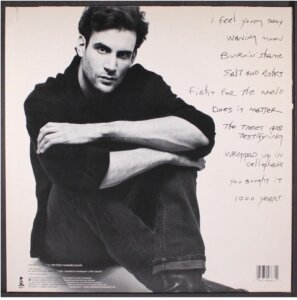
As I struggle to come up with the right answer, I can’t help imagining some unfortunate future in which I’m forced, at the barrel of a gun, to sing at Jimmy’s cousin’s wedding, his uncle’s birthday, his nephew’s christening, and his great-aunt’s wake.
Clearly, I am the gelding.
“It sounds amazing,” I say. “I’ll just need a day or two to think it over.”
Jimmy reaches for the phone. “Scotty, can we fly these boys back to the city in the bird, or is the weather too rough?”
A couple days later, back in Hell’s Kitchen, I compose this simpering, utterly gelding-esque letter:
Dear Mr. Valenti,
Thank you for your graciousness and generosity. This past month I’ve been offered a position as a broker with Merrill Lynch, and today, regrettably, I’ve decided to join the firm.
Should I ever decide to pursue a career in music again, please know you’ll be the first person I call.
Today, decades later, I search for a justification for my lie. Since nothing else seems to apply, I turn to Halacha, Jewish law, and settle on this: pikuach nefesh — the saving of a life — overrides nearly every commandment. Given the circumstances, a credible argument can be made that my life would have been at risk if I failed to perform or show up when asked; therefore, lying was permitted.
That said, I should also mention that the man did not have the best personal hygiene. I’m not certain that alone rises to the level of pikuach nefesh, but it didn’t help.
As for the “bird,” Jimmy was right. The weather was too rough. Scotty had the limo we came down in “all refreshed ‘n’ replenished.” The same driver took us all the way back to Hell’s Kitchen. Migdalia was there, sitting on the front stoop. I stopped into a bodega and picked up a tuna sandwich for the both of us.
The post Does Jewish law say it’s OK to lie to the high-roller who wants to manage your rock ‘n’ roll band? appeared first on The Forward.
Uncategorized
Israel’s upcoming election could damage the country irreversibly
We live in an age of political hyperbole, when it can seem as if every election is described as the most important ever and each defeat as an existential catastrophe, and after years of hearing these warnings it is understandable that voters have become numb to them.
Thomas Friedman recently issued such a pronouncement in The New York Times, placing the coming American midterms and Israeli general election alongside each other, arguing that in both the future of democracy itself is on the ballot. But while the comparison captures the stakes, it also understates an important distinction between the two countries.
Countries are generally more resilient than their politicians, and even terrible administrations eventually end. With that in mind, I believe the United States – a globally impactful behemoth – can survive the madness Donald Trump is imposing on the Western alliance and on the norms and sanity of American political life, however long-lasting the damage may be.
But Israel faces a different order of danger. Another victory by Benjamin Netanyahu would, in the view of many people, carry the country past a point at which a subsequent election can realistically restore the developed Western democracy Israelis and the world have known. There are geopolitical and demographic issues that mean time is running out to undo the grievous damage caused by his rightist-religious coalition.
Another four years of Netanyahu could change the country’s democratic institutions, population, economy and international position so profoundly that the conditions for reversing course will substantially disappear. The choice concerns which population, which institutions and which conception of the state will define Israel for the generation ahead.
The danger lies in how these trends reinforce one another: institutional erosion enables political entrenchment, demographic change makes it more durable, emigration weakens its opponents, and international isolation compounds the damage.
For people who care about Israel, the stakes could hardly be higher.
The ‘Putinization’ of Israel
Almost immediately after Netanyahu returned to power at the end of 2022, his rightist-religious coalition embarked on the “Putinization” of Israel: a systematic effort to weaken the independent institutions capable of restraining elected power. They hoped to transform Israel’s system of liberal democracy into something closer to an elected autocracy. “Liberal”has nothing to do with leftism, as it does in America, and everything to do with the concept of checks and balances.
The original attempted judicial overhaul would have given politicians almost total control over judicial appointments and allowed a simple parliamentary majority to override Supreme Court decisions – an extraordinary concentration of power in a country with no written constitution, no second legislative chamber, no federal system and few institutional checks on the government except for the courts.
Hundreds of thousands ofIsraelis understood the implications, and throughout 2023 filled the streets week after week. Reservists threatened to stop volunteering for duty, technology leaders warned of economic consequences and the country descended into the deepest internal crisis in its history. Then came Oct. 7, shattering the country and redirecting virtually all national attention toward war, hostages and survival.
But the interruption increasingly looks like a postponement. The legislative blitz of recent months has revived the same project through measures targeting the attorney general, government legal advisers, judicial authority, independent regulators – and blocking a real investigation of Oct. 7.
This time Netanyahu’s aim is not to fool the other side (which is no longer possible) but to fire up his base. So he is campaigning on his true program – completing the judicial overhaul, exempting the Haredim from the draft and entrenching their privileges, and effectively creating a situation that would enable him to force an end to his corruption trials. A victory would not only be interpreted as a mandate for this madness – it would be an endorsement of it.
The Haredi draft exemption is especially important because it shows how institutional, political and demographic change reinforce one another. Throughout the war, Netanyahu’s government repeatedly sought to codify broad draft exemptions for the Haredi population even as Israel fought a prolonged, multi-front war and the military was howling about an acute shortage of soldiers. But Haredi parties are indispensable to Netanyahu’s coalition, and their political leverage will grow with their population. The exemption bill is now lined up.
The consequences extend far beyond the moral obscenity of unequal military service. This rapidly growing population – a sixth of the population today and perhaps a third in 20 years – receives extensive state support while participating at comparatively low rates in the workforce, and frequently educates its boys without the mathematics, English and science required by a sophisticated modern economy and society. It creates a demographic and fiscal structure that cannot sustain itself.
Israel’s predicament becomes particularly dangerous because the people most capable of carrying the burden of funding and defending the country for a while longer are also the people most capable of leaving.
The demographic dilemma
Almost 300,000 Israelis have left the country during the Netanyahu years, and many more are essentially waiting for the election. They overwhelmingly belong to the perhaps one million people who drive the tech and innovation and security sectors, medicine, academia, entrepreneurship, business and the arts. Their skills generate a disproportionate share of the investment, tax revenue, innovation and international connections that sustain Israel as a first-world economy capable of financing one of the world’s most sophisticated militaries.
They are mostly secular, or moderately observant, and they would have an increasingly difficult time living under right-wing rule, given how the right has changed. The Israeli right that created Netanyahu was substantially secular, nationalist and security-minded, while the emerging version is increasingly religious, ethnonationalist and hostile to the liberal restraints that once commanded broad support in Israel.
Demography accelerates that transformation. Haredi Israelis have vastly more children on average than secular Israelis, while religious Zionists (who are not Haredi) also maintain larger families. Religiosity has consequently become one of the strongest predictors of political allegiance among Israeli Jews: Haredim overwhelmingly support Haredi parties, non-Haredi religious voters (known as the “national religious”) overwhelmingly support the right, and secular Israelis lean heavily toward the parties opposing Netanyahu.
Elections in such a reality therefore increasingly resemble a census between populations with incompatible ideas about the basic organization of the country, from military service and education to civil marriage, public transportation on Shabbat, women’s equality, the authority of religious law and the character of constitutional democracy.
Netanyahu himself may ultimately prove a transitional figure in this transformation. He remains personally secular, cosmopolitan and Western, a product of the classic Israeli center-right, while the notorious firebrand National Security Minister Itamar Ben-Gvir more closely resembles the constituency the right is becoming: religious, ethnonationalist, impatient with liberal constraints and comfortable making Jewish supremacy throughout the land an organizing political principle – essentially, the idea that Arabs need not have equal rights.
For Israelis with foreign passports, global careers, transferable skills and children who can study abroad, emigration is a practical option. Even the departure of a fraction of this group could create a vicious cycle: a shrinking productive population faces higher taxes and greater military burdens while losing political influence, encouraging still more to leave.
Four years can therefore change the electorate twice: through demographic growth among the religious right and through selective emigration among the secular, liberal and highly productive population most alienated by the direction of the state.
The international implications
The same feedback loop operates internationally. Israel’s prosperity and military strength depend on integration with the Western economic and diplomatic system, and especially on the extraordinary strategic protection provided by the United States. Washington’s diplomatic umbrella, particularly at the United Nations Security Council, has long helped protect Israel from forms of international isolation capable of producing serious economic consequences.
A more religious, nationalist and institutionally illiberal Israel permanently ruling millions of Palestinians will become progressively harder for Western governments to defend. A future American administration willing to withdraw that protection could expose Israel to sanctions, boycotts and other forms of economic pressure precisely when demographic change and the departure of productive Israelis have weakened its capacity to absorb them.
The danger therefore lies in the convergence of these trends: weakened institutions make sectarian policies easier to entrench; those policies strengthen the religious coalition; demographic change makes that coalition more durable; emigration weakens its opponents; economic deterioration encourages further emigration; and international isolation magnifies every domestic weakness.
Israel’s secular and moderately traditional population still constitutes a majority and remains overwhelmingly central to the country’s economic, technological, scientific, military and cultural life, which means the political future remains open today even as the demographic trajectory increasingly favors the religious right.That window can close.
I predict the opposition will win, and will take steps to reverse the damage of the judicial overhaul and integrate the Haredim properly. But much could go wrong – in the vote itself and in the comportment of the divided opposition in victory.
If Netanyahu wins
An outright Netanyahu victory could be an extinction event. It would provide four uninterrupted years for institutional devastation, Haredi entrenchment, demographic sorting, brain drain and international estrangement until elections themselves become increasingly incapable of producing fundamental change.
Israel would continue to exist, sure – with considerable military power and technological sophistication for some time, while the country that emerged would bear progressively less resemblance to the liberal, globally integrated, Western-oriented society that generated its extraordinary success. But the writing will be on the wall, and the effects would snowball.
The question facing Israelis in October therefore reaches beyond Netanyahu and his corruption scandals, the Oct. 7 breakdown and the Gaza war, judicial appointments or any individual controversy, because the choice concerns which population, which institutions and which conception of the state will define Israel for the generation ahead.
My brilliant longtime friend Larry Derner recently wrote,: “When I think of Netanyahu winning the October 27 election, I think of my two 30-ish sons and the older one’s wife, and how their future in Israel will be ruined. I say that because they are Israeli patriots. … I don’t think it’s possible to remain patriotic about your country once it gets taken over permanently by a force of evil, which is what my sons, daughter-in-law and masses of other Israeli patriots see in Netanyahu, Ben-Gvir … the settler pogromists and their kind. And if they win this election, these people and others like them will indeed run the country permanently.”
He’s dead right. Countries survive bad elections because another election provides another chance, while Israel is approaching an election in which the most consequential result of another Netanyahu victory is permanence for something catastrophic.
An Israel that is shorn of its productive center and run by fanatically religious and nationalistic politicians – lording over millions of stateless Arabs, and quite probably under international sanctions – will be gradually impoverished. It will project a vulnerability greater than it did on the eve of Oct. 7, and eventually invite a far greater attack. In such a scenario, I doubt Israel will reach its hundredth birthday in 2048. This – even more than its vilification by many progressives and denigration by antisemitic far-right agitators – would be the ultimate tragedy of Zionism.
The post Israel’s upcoming election could damage the country irreversibly appeared first on The Forward.
Uncategorized
How wrong I was about the young Ukrainian with the Chabad yarmulke
מײַן מאַמע, עליה השלום, פֿלעגט מיר זאָגן, אַז בעסער איז טראַכטן גוטס וועגן אַ שלעכטן מענטשן, איידער שלעכטס — וועגן אַ גוטן.
ניט איין מאָל אין פֿאַרלויף פֿון מײַן לעבן האָב איך זיך אָנגעמאַכט צרות און צומאָל זיך צעקלאַפּט ביז בלוט מײַן אייגענעם פּרצוף, זיך באַמיִענדיק פֿאָלגן די דאָזיקע עצה. עס זײַנען געווען פֿאַלן, ווען איך בין אָפּגעטראָטן פֿון דעם דאָזיקן פּרינציפּ, און איך באַדויער דאָס טאַקע.
הײַנט אַרבעט איך ווי אַ פֿאָרשטייער פֿון דער ייִדישער אַגענץ אין מאָלדאָווע מיט ייִדישע — און צומאָל מיט ניט־ייִדישע — פּליטים פֿון אוקראַיִנע. מײַן אויפֿגאַבע איז פֿאַרשנעלערן דעם פּראָצעס פֿון זייער אַרויספֿאָרן קיין ישׂראל. הונדערטער פּנימער, הונדערטער גורלות. כּמעט אויסשליסלעך — פֿרויען מיט קינדער און זקנים. ניט זעלטן זקנים, וועלכע האָבן איבערגעלעבט אַלס קינדער די צווייטע וועלט־מלחמה. צו מאָל — קינדער, וועלכע שרעקן זיך פֿון דעם, וואָס איך רעד אויף רוסיש מיט אַ מאָסקווער אויסשפּראַך. אַזוי רעדן דאָך רוסישע מערדער.
דאָס גאַנצע באַזיניקטע לעבן מײַנס בין איך געווען אַ ייִדישער נאַציאָנאַליסט און איך בלײַב אַזאַ ביז איצט. איך בין ניט קיין „רוסישער“ ייִד, הגם איך בין געבוירן געוואָרן אין מאָסקווע און רעד רוסיש, ווי אַ מאָסקווער גוי. איך בין ניט קיין „אוקראַיִנישער“ ייִד, הגם מײַן מאַמע איז געבוירן געוואָרן אין פּיריאַטין אין דער פּאָלטאַווער געגנט, און איך רעד גאַנץ נישקשה אוקראַיִניש.
איך בין אַ ייִדישער ייִד. מײַן היימלאַנד אינעם סאַמע טיפֿסטן זין פֿונעם וואָרט „היים“ איז ישׂראל, און קיין שום בירגערשאַפֿט, חוץ דער ישׂראלדיקער, האָב איך ניט און דאַרף איך ניט. אָבער דאָ און איצט זע איך אַן אַבסאָלוט בייז און אַן אַבסאָלוט גוטס, וועלכע מעקן אָפּ גרענעצן פֿון נאַציאָנאַליטעטן און צווינגען זיך צו דערמאָנען, אַז מיר אַלע זײַנען בני־אָדם, אַז מיר זײַנען געבוירן געוואָרן מענטשן און מוזן שטרעבן צו בלײַבן מענטשן. טאַקע יענץ, וואָס אויף ייִדיש רופֿט מען „אַ מענטש“.
זיך אומקערנדיק צום אָנהייב, צו מײַן מאַמעס עצה — שלאָג איך זיך על־חטא: נעכטן אין איינעם פֿון די פּונקטן אין אוקראַיִנע, וווּ עס זײַנען צײַטווײַליק אײַנגעאָרדנט די ייִדישע פּליטים, האָב איך זיך פֿאַרנומען מיט מײַן אַרבעט. צו מיר איז געווען אַ גאַנץ גרויסע ריי. צווישן די, וואָס האָבן געוואַרט אין דער ריי, האָט זיך געוואָרפֿן אין די אויגן אַ יוגנטלעכער מיט אַ חב״דישער יאַרמלקע. „מסתּמא אַ דעזערטיר, וואָס אַנטלויפֿט פֿון מאָביליזאַציע אין דער אוקראַיִנישער אַרמיי,“ האָב איך אַ טראַכט געטאָן און דערפֿילט אַן אַנטיפּאַטיע צו אים.
ניט לאַנג צוריק האָב איך באַזוכט מערבֿ־אוקראַיִנע און געטראָפֿן דאָרט עטלעכע מאַנצבילן — אוקראַיִנישע בירגער, בתוכם ייִדן, וועלכע האָבן זיך באַמיט אויסמײַדן מאָביליזאַציע אין דער אוקראַיִנישער אַרמיי, געגנבֿעט די גרענעץ צווישן אוקראַיִנע און מאָלדאָווע. איך האָב געמיינט, אַז דער דאָזיקער יונגער חב״דניק איז איינער פֿון יענע, וואָס האָבן באַוויזן זיך אַרויסצושמוגלען.
אָבער איך האָב אַ טעות געהאַט. ס׳האָט זיך אַרויסגעוויזן, אַז ער איז בכלל אַ רוסלענדישער בירגער פֿון איינער פֿון די צוויי הויפּטשטעט. צופֿעליק איז ער געווען צוליב זײַנע חב״דישע ענינים אין אוקראַיִנע, אין קיִעוו, ווען עס האָט זיך אָנגעהויבן די מלחמה. דער בחור איז געבליבן אַלס וואָלונטיר אין דער אָרטיקער ייִדישער קהילה. במשך פֿון אַ חודש האָט ער געהאָלפֿן אַרויספֿירן ייִדישע פּליטים פֿון דער שטאָט דער באַשאָסענער מיט ראַקעטן, אין בײַשטעט פֿון וועלכער ס׳איז שוין אַרײַן דאָס רוסישע מיליטער. בלויז איצט, ווען די באַוואָפֿנטע כּוחות פֿון אוקראַיִנע הייבן אָן איבערצוגיין אין דער קיִעווער געגנט צו אַ קאָנטער־אָנגריף, איז ער אַוועקגעפֿאָרן פֿון אוקראַיִנע קיין מאָלדאָווע כּדי עולה זײַן קיין ישׂראל.
הײַנט וועט דער דאָזיקר יונגער חב״דניק מיט גאָטס הילף זײַן אין ישׂראל.
זײַ מיר מוחל, בחור אין דער חב״דישער יאַרמלקע. איך זאָג צו צו האַלטן זיך אין דער צוקונפֿט שטרענגער בײַ דער עצה פֿון מײַן מאַמען: בעסער איז טראַכטן גוטס וועגן אַ שלעכטן מענטשן, איידער שלעכטס — וועגן אַ גוטן.
The post How wrong I was about the young Ukrainian with the Chabad yarmulke appeared first on The Forward.
Uncategorized
Teenager eulogizes slain father who saved his life in West Bank terror attack just before Yom Kippur
(JTA) — Standing at his father’s grave after Yom Kippur 16-year-old Yoav Shukron thanked him for the warning that saved his life a day earlier, when a Palestinian gunman opened fire on the two of them at a West Bank spring.
“Dad, I want to say thank you for 16 years together. Thank you for giving me life,” Yoav said on Monday night as his father, Netanel Shukron, 48, was laid to rest in the West Bank settlement of Alei Zahav.
“Thank you for shouting out to me during the attack, when the terrorist came in. I don’t remember what you said to me, and I ran,” he added, in remarks carried by Channel 12 news.
Yoav had accompanied his father to the Ein Riya spring near the settlement of Neve Tzuf on Sunday to immerse ahead of Yom Kippur when the attack took place.
Yoav escaped unharmed. Shukron, a father of six, was critically wounded and later pronounced dead at Beilinson Hospital in Petah Tikva.
Hundreds of relatives, friends and residents attended the funeral, held after the Yom Kippur fast ended.
“Nati was the most involved father in the world,” his wife, Merav Shukron, said.
Reflecting on their 18-year marriage, she said, “We came from different families, but that didn’t stop us from being soulmates. Nati, our family is perfect, everything was perfect.”
The couple had six children, ages 4 to 16. Shukron worked as an information systems analyst at Hachshara Insurance Company, while Merav Shukron is a lecturer at Ariel University.
Merav said the family had been due to travel abroad the following week and that her husband had carefully planned the trip around spending time together, including packing a sukkah and food for the holiday.
According to the Israeli military’s preliminary investigation, the Palestinian attacker drove to the spring and opened fire. An Israeli military tracker who was nearby in an armored vehicle returned fire and wounded the gunman, preventing him from continuing the attack.
The attacker fled and was located several hours later receiving treatment at a hospital near Ramallah, where soldiers from the elite Duvdevan unit arrested him.
Israeli security officials identified the suspected attacker as Qadri Samara, a resident of the Palestinian town of Biddu who is affiliated with the Hamas terror group and was previously known to Israeli security forces, according to Channel 13. Investigators said he had visited the spring the previous day and determined that large numbers of people would be there to immerse in its waters ahead of Yom Kippur, a practice observed by some Jews before the fast.
In the aftermath of the attack, Israeli troops carried out a large operation in Biddu, mapping Samara’s home ahead of its possible demolition, searching about 100 locations and questioning about 90 suspects. The military also reinforced its forces across the West Bank, including by deploying the elite Egoz unit to the area.
About an hour after the shooting, soldiers thwarted a separate attempted car-ramming attack at the Ganim military post in the northern West Bank. One attacker was killed and a second was arrested, Channel 13 reported, adding that no soldiers were wounded.
Prime Minister Benjamin Netanyahu said in a post on X, “No terrorist is immune, neither are those who assist them; we will settle scores with all of them – in Gaza, in Lebanon, and in Judea and Samaria,” using the biblical term for the West Bank.
President Isaac Herzog noted that the attack came “on the eve of Yom Kippur, as the people of Israel gather for the holy day.”
“Terror will not break us or shake our spirit,” he said. “We will stand against it together, united, determined and full of faith.”
Shukron’s killing has also become the first case in which Israeli officials are considering applying a death penalty law approved by the Knesset in March, according to the KAN public broadcaster.
The law, long championed by National Security Minister Itamar Ben-Gvir and his far-right Otzma Yehudit party, makes death the default sentence for non-Israelis convicted in Israeli military courts of carrying out deadly nationalist attacks, while allowing judges to impose life imprisonment in “special circumstances.” It passed the Knesset 62-48 and immediately drew a High Court challenge.
Ben-Gvir raised the possibility of applying the law to Samara during a security meeting before Yom Kippur, arguing that the case was the first to meet the law’s criteria. Netanyahu did not rule out the proposal and asked IDF representatives for their position on applying the law, which they said they saw no impediment to doing, according to KAN, though the report noted that the military advocate general was not present at the meeting. The issue is expected to be discussed again in a smaller cabinet forum with the IDF’s legal chief present, the report said.
This article originally appeared on JTA.org.
The post Teenager eulogizes slain father who saved his life in West Bank terror attack just before Yom Kippur appeared first on The Forward.
