


Uncategorized
An audiobook narrator told Zionists to kill themselves. A popular romance novelist hired him anyway.
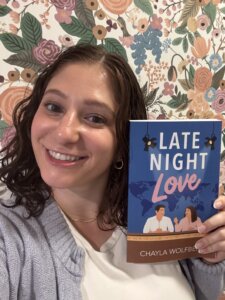
A bestselling romance novelist is facing backlash from her Jewish readers after hiring an audiobook narrator who previously posted on social media telling Zionists to kill themselves.
Abby Jimenez’s novel The Night We Met, set to be published next month, features voice actor Zachary Webber as the narrator of the audiobook.
“If you’re a Zionist and you exist, you should not do that anymore,” Webber posted on his Instagram story in September 2024. “No one likes you and you suck, and go f—cking kill yourself.”
Webber later apologized on Instagram, writing that his comment was “a poorly-worded joke aimed at a violent settler-colonialist enterprise. I regret any language that suggested otherwise. Fortunately, my anti-Zionist Jewish friends understood it was a joke, and moved on with their beautiful lives.” He did not respond to the Forward’s request for comment.
Webber, who has a low, gravelly voice and sums up his job as “I READ SEX,” has narrated more than 250 steamy audiobooks, including eight of Jimenez’s. But amid backlash over Webber’s social media comments, Jimenez originally said she would go in a different direction for the audio narration of The Night We Met, a novel about forbidden love between two best friends.
But earlier this month, Jimenez changed her mind.
“I know I mentioned that I was going with a male voice actor that I’ve never used before, but I’m going to be really honest with you — the fit wasn’t right,” Jimenez posted in her private readers Facebook group. “We did a day of recording and he just wasn’t Chris. All I could think the whole time was how perfectly Zachary would have captured the tone and personality of this character and at the end of recording Day One, I made the choice to change narrators.”
Several readers commented in the Facebook group expressing concern about Webber. But those comments were removed, with Jimenez citing group rules against “political or negative conversations.” She added that she did not “want to be forced to leave to protect my mental health. I cannot go to a comment section to see vitriol, even if it’s vitriol I happen to agree with.”
Neither Jimenez’s literary agent nor Hachette Book Group, the publisher of The Night We Met, responded to the Forward’s request for comment.
The backlash among Jimenez’s readers represents the latest flare-up over Israel in progressive-coded subcultures, from knitting circles to vegan cooking. The romance publishing world, consistently the top-grossing genre in adult fiction, has not been immune: Other recent flashpoints have included boycotts of authors labeled “Zionist” and the decision by SteamyLitCon, a romance book convention, to remove Israeli-born author Michelle Mars from its lineup last year over social media posts organizers said were “anti-Palestinian.”
“It just made me really sad about the state of the industry,” said Chayla Wolfberg, a Jewish author and former fan of Jimenez’s books. “There’s a lot of obviously very complicated things when it comes to engaging with criticism of Israel. And what [Webber] was doing wasn’t that.”
Happily ever after?
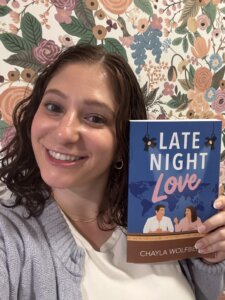
Romance publishing has spent the past few decades broadening its vision of who gets a love story — elevating LGBTQ+ narratives, highlighting authors and characters of color, and celebrating diverse body types. But some Jewish writers and readers say they have been excluded from that push.
The lack of Jewish representation in romance was part of what inspired 27-year-old Wolfberg to self-publish Late Night Love, a Saturday Night Live-inspired enemies-to-lovers rom-com featuring a Jewish protagonist. Too often, Wolfberg said, Jewish characters only appear in stories defined by trauma and suffering.
Romance, by contrast, is governed by two nonnegotiable rules: The story must center on a developing romantic relationship, and the conclusion must be emotionally satisfying — the genre’s trademark “happily ever after” (HEA), or at least “happy for now” (HFN). When it comes to Jewish storytelling, Wolfberg said, that structure can feel subversive.
But Wolfberg didn’t feel accepted by the broader romance book community. When she promoted her work online, viewers commented that she was a Zionist and thus shouldn’t support her book.
“It is a radical thing, especially if you are from a historically oppressed or a minority community, to be writing a story that has a happy ending and isn’t just about suffering,” Wolfberg said. “But I think that is where anti-Zionism unfortunately creeps in, in the way that it has become part of the lexicon for people who are anti-oppression.”
Wolfberg has instead found support mostly among other Jewish authors. She said her next book will feature a character who has family in Israel — even though she’s aware that aspect could make it a tough sell.
Meanwhile, popular romance authors whose books have nothing to do with Judaism or Israel have also been targeted.
In a 2015 interview with the Jewish Chronicle, Sarah J. Maas, author of the massively popular A Court of Thorns and Roses series, mentioned going on a Birthright trip to Israel. Maas said she “left Israel overflowing with pride,” and described the country as “a magical, welcoming place.” Nearly a decade later, those comments landed her on the X account Zionists in Publishing, which points out Zionist authors to boycott.
Rebecca Yarros, author of the bestselling romantasy series Empyrean, appeared on a similar account that exposes Zionist authors. Her offense? Posting on Oct. 15, 2023, that “children are not collateral damage” and that she was “horrified by the despicable attack on Israel” and “terrified for the children and Palestinian innocents in Gaza.”
The extent to which those blacklists actually impact sales is unclear; both Yarros and Maas have sold millions of copies.
But it’s still a dynamic Jewish romance enthusiasts would prefer to avoid. In response, they’ve carved out their own spaces: Author Jean Meltzer, who writes Jewish rom-coms such as The Matzah Ball and Kissing Kosher, runs a Facebook group called “Jewish Women Talk About Romance Books,” which has 3,300 members. There, women discuss books they read as part of the The Jewish Joy Book Club, which has one rule: “We read books where nobody dies at the end.”
The need for a Jewish space in the romance genre was also evident to Gillian Geller, a 35-year–old in Toronto, Canada, who used to run a book blog focused on all kinds of novels, with a focus on romance. But after Oct. 7, she shifted to spotlighting Jewish books.
For her, Jimenez’s decision to rehire Webber is another example of how Jewish authors and readers have been excluded from a genre that is otherwise increasingly sensitive to inclusion.
“I felt like if I wasn’t stepping up to help promote these books,” she said, “then nobody else would.”
The post An audiobook narrator told Zionists to kill themselves. A popular romance novelist hired him anyway. appeared first on The Forward.
Uncategorized
Even Adam and Eve weren’t satisfied
האָסטו אַמאָל געטראַכט: „ווען איך וואָלט נאָר געהאַט דאָס אָדער יענץ, אָדער ווען מײַן מצבֿ וואָלט נאָר געווען אַנדערש, וואָלט איך געווען גליקלעך…“?
עס איז זייער אַנטמוטיקנדיק צו גלייבן אַז עס פֿעלט אונדז דאָס וואָס מיר דאַרפֿן כּדי צו דערגרייכן אונדזערע צילן און צו זײַן גליקלעך. און נאָך מער: ווען מען קומט צו אַזאַ מסקנה, פֿילט מען זיך ווי אַ קרבן פֿון די אומשטענדן, אוממעכטיק צו בײַטן די מציאות צום גוטן.
אָבער איז עס טאַקע אַזוי?
אין טיפֿן איז דאָס אַ פֿאַלשער חשבון. פֿרייד איז ניט אָפּהענגיק פֿון דעם וואָס מיר האָבן אָדער האָבן ניט, נאָר פֿון דעם ווי מיר קוקן אויף וואָס מיר האָבן און אויף וואָס עס פֿעלט אונדז.
אין דער וואָכעדיקער סדרה, בראשית, לייענען מיר וועגן בריאת־העולם און איר שפּיץ — די באַשאַפֿונג פֿון אָדם און חוה.
וואָס קען זײַן אַ בעסערער בײַשפּיל, אַז גליק איז ניט אָפּהענגיק פֿון אויסערלעכע אומשטענדן, ווי אָדם און חוה אין גן־עדן?
האָט זיי עפּעס געפֿעלט? ניין.
און דאָך האָבן זיי אַליין באַוויזן צו פֿאַרפּלאָנטערן דעם מצבֿ.
עס איז געווען בלויז איין בוים, פֿון וועמענס פֿרוכטן ג־ט האָט זיי פֿאַרווערט צו עסן, און זיי האָבן זיך ניט געקענט אײַנהאַלטן פֿון עסן דווקא פֿון יענעם בוים!
און נאָך מער: לויט דעם תּנא רבי מאיר איז דער בוים געווען אַ ווײַנשטאָק. זיי האָבן זיך געדאַרפֿט אָפּהאַלטן פֿון זײַנע פֿרוכטן בלויז עטלעכע שעה, ביז שבת וואָלט זיך אָנגעהויבן; דאַן וואָלטן זיי געקענט מאַכן קידוש אויפֿן ווײַן און אַזוי אײַנפֿירן אַן אייביקן שבת.
פֿאַר וואָס האָבן זיי ניט געקענט זיך אײַנהאַלטן?
עס איז אַ טייל פֿון אונדזער נאַטור צו וועלן דווקא דאָס וואָס מיר קענען ניט האָבן, און ניט אָפּצושאַצן ווי געהעריג דאָס וואָס מיר האָבן יאָ.
עס קלינגט כּמעט אומגלייבלעך — כאָטש דאָס געשעט צו אָפֿט — אָבער ווען ג־ט קומט צו אָדם און פֿאָדערט בײַ אים אַן ענטפֿער פֿאַר וואָס ער האָט געגעסן פֿון בוים, באַשולדיקט ער „די פֿרוי וואָס דו האָסט מיר געגעבן צו זײַן מיט מיר“, ווײַל זי האָט אים געגעבן צו עסן פֿון בוים.
וואָס פֿאַר אַן אומדאַנקבאַרקייט!
ג־ט האָט אים געגעבן אַ פֿרוי, ווײַל ער האָט געזען ווי שטאַרק אָדם לײַדט פֿון זײַן איינזאַמקייט. און אַנשטאָט אָפּצושאַצן דעם אוצר וואָס ער האָט באַקומען, קריטיקירט ער זי און באַשולדיקט זי.
אין אַ בריוו צו איינעם וואָס פֿלעגט זיך אָפֿט באַקלאָגן וועגן זײַן לעבן, שרײַבט דער ליובאַוויטשער רבי — זכותו יגן עלינו:
„אין דער וועלט אין וועלכער מיר לעבן, געפֿינט זיך אין אַלע זאַכן אַ געמיש פֿון גוטס און שלעכטס. דער מענטש דאַרף אויסקלײַבן אויף וועלכן פֿון די צוויי צדדים ער וויל לייגן דעם טראָפּ, אויף וועלכן ער וויל טראַכטן, און וועלכן ער וויל נאָכגיין…
„ווי באַלערנדיק איז דאָס וואָס אונדזערע חכמים זאָגן וועגן דעם וואָס אָדם איז געווען אַן אומדאַנקבאַרער: נאָך איידער ער איז פֿאַרטריבן געוואָרן פֿון גן־עדן — ווען ער האָט זיך נאָך געפֿונען אין אַ ממשותדיקן גן־עדן — האָט ער זיך שוין באַקלאָגט וועגן זײַן מצבֿ.
„פֿון דער אַנדערער זײַט זענען געווען ייִדן, מענער און פֿרויען, וואָס האָבן געדאַנקט און געבענטשט דעם באַשעפֿער, און געזאָגט די ברכות השחר יעדן אינדערפֿרי, בשעת זיי האָבן געלעבט אונטער די שרעקלעכסטע באַדינגונגען אין די דײַטשישע קאָנצענטראַציע־לאַגערן.
„אין דער ווירקלעכקייט וועט דער מצבֿ פֿון יעדן מענטש זיך געפֿינען ערגעץ צווישן די צוויי עקסטרעמען.
„מײַן כּוונה איז ניט אײַך צו מוסרן, נאָר אונטערצושטרײַכן אַ מציאות: וואָס פֿאַר אַ לעבן מיר לעבן — אַ לעבן פֿול מיט צופֿרידנקייט און באַדײַט, אָדער פֿאַרקערט — איז אין אַ גרויסער מאָס אָפּהענגיק פֿון אונדזער ווילנסקראַפֿט, וואָס באַשטימט צי מיר וועלן לייגן דעם טראָפּ אויף דעם פּאָזיטיוון אָדער אויף דעם נעגאַטיוון.“
מיר זײַנען מסוגל זיך צו באַקלאָגן אויף די באַדינגונגען אין גן־עדן און צו פֿילן הכּרת־הטובֿ, דאַנקשאַפֿט, אַפֿילו אין די אוממענטשלעכסטע באַדינגונגען פֿון אַ קאָנצענטראַציע־לאַגער.
איינער פֿון די פּערזענלעכע געהילפֿן בײַם רבין, הרבֿ בערל ע״ה יוניק, האָט דערציילט, אַז דער רבי האָט אים אַמאָל פּריוואַט געזאָגט:
„איך האָב געאַרבעט אויף זיך צו זען שטענדיק די זאַכן אין אַ פּאָזיטיוון ליכט; ווען ניט, וואָלט איך ניט געקענט איבערלעבן.“
ווען מען ווייסט וויפֿל פּערזענלעכע ליידן פֿון פֿאַרשידענע מינים דער רבי האָט אַליין דורכגעמאַכט, אין צוגאָב צו דעם ווייטיק פֿון די המונים מענטשן וואָס האָבן מיט אים געטיילט זייערע פּערזענלעכע צרות, קען מען פֿאַרשטיין, אַז אַזאַ בליק אויפֿן לעבן איז גאָר ניט קיין קליינע דערגרייכונג.
דערפֿאַר איז די „ווערקצײַג“ פֿון דער וואָך צו טראַכטן וועגן די פֿאָלגנדיקע פֿראַגעס:
זענען די אומשטענדן פֿון דײַן לעבן גוט אָדער שלעכט אומאָפּהענגיק פֿון דעם ווי דו קוקסט אויף זיי — אָדער ווערן זיי פֿאַר דיר גוט אָדער שלעכט דווקא צוליב דעם ווי דו קוקסט אויף זיי?
ס׳איז דאָ אַ וואָרט וואָס מען האָט געהערט אין נאָמען פֿון דעם דריטן חב״ד רבי, דעם צמח צדק זצ״ל: „אַזוי ווי מען שטעלט זיך אַוועק שבת בראשית, אַזוי גייט אַוועק אויף דעם גאַנצן יאָר“. דריק איך אויס די האָפֿענונג אַז מיר זאָלן אין דעם אַלע מצליח זײַן און האָבן אַ גוט געבענטשט יאָר.
The post Even Adam and Eve weren’t satisfied appeared first on The Forward.
Uncategorized
ADL makes a play for the arts with new reports suggesting anti-Jewish bias in culture spaces
(JTA) — The Anti-Defamation League is alleging “systemic exclusion of Jewish and Israeli artists” in a trio of reports released Thursday focusing on the publishing, museums and entertainment spaces.
The reports, which the ADL calls its “State of the Arts” initiative, were shared with the Jewish Telegraphic Agency in advance of their publication and come as Jews have expressed alarm about their treatment in a post-Oct. 7 cultural landscape. They include:
- Grades for 40 museums on Jewish and Israeli representation that the ADL says “reveal a pattern of erasure by omission,” including comparatively few recognitions of Jewish American Heritage Month.
- A “trend report” based on interviews with more than 30 Jewish authors and publishing professionals alleging boycotts and exclusions from the publishing industry based on their identities.
- A survey of 65 incidents of “Jewish, Israeli and openly Zionist artists fac[ing] growing scrutiny, protest, disruption and cancellation” from performance venues or pressure from pro-Palestinian groups since the Oct. 7, 2023, Hamas attacks in Israel.
- ADL-approved guidelines for how venues should host and engage with Jewish artists.
The reports will be accompanied by a launch event Thursday evening at the Jewish Museum in New York, to be attended by ADL CEO Jonathan Greenblatt as well as Jewish entertainers including actor Selma Blair and author and influencer Alyssa Rosenheck.
“We started to hear from patrons of the arts and artists and other people connected to museums that there was a real problem,” Shira Goodman, the ADL’s vice president of public affairs and special initiatives, told JTA in an interview about the genesis of the project.
As a result, the ADL started tracking Jewish and Israeli artists who had been targeted by protests. The group also heard from Jewish authors about the publishing industry, leading to an expansion of the project. Goodman said the team was motivated by the chance to leverage “boards of trustees and boards of directors, and donors, who might be able to have influence.”
“By shining a light on some of this, we might be able to have an effect and an impact,” she said.
The project follows the ADL’s campus antisemitism report cards, which launched in 2024 and assign letter grades to dozens of universities based on how well the group feels they have combated anti-Jewish sentiments. Criticized by many in higher education, and by some major Jewish groups including Hillel International, the report cards have nonetheless prompted several campuses to change or update their policies around Jewish issues.
That success led to the formation of a new ADL unit focused on ratings and assessments. Now, the watchdog’s attention is turning to the art world — at a moment when many eyes are trained on Jews and Israelis in those spaces.
Over the summer, a report from the literary free-speech group PEN America reached similar conclusions to the ADL on the exclusion felt by some Jewish and Israeli authors. The report led to deep internal divisions within PEN and the resignation of its president, who argued that the organization was not standing up for the free-speech rights of boycotters. New Jewish publishing initiatives aim to counteract what they say is the exclusion of Jewish voices in mainstream publishing.
Since Oct. 7, several pro-Israel Jewish artists, ranging from Jerry Seinfeld and Mayim Bialik to Matisyahu, have seen their events targeted by pro-Palestinian protesters. The ADL’s report catalogs all these incidents and more, including demonstrations staged by neo-Nazis against Jewish-themed theatrical shows, which the ADL’s staff said they see as equivalent to pro-Palestinian protests.
“They’re equally disruptive and exclusionary of Jewish voices,” Luda Isakharov, associate director of the ADL’s Ratings and Assessments Institute, told JTA. “We treat them the same in our grading.”
In recent weeks, two Israel-related arts controversies have further complicated the picture of how Jews in the cultural landscape orient themselves around the issue. Jewish mogul Robert Kraft pressured Ed Sheeran to drop Macklemore from his tour over the latter’s onstage rhetoric about Israel. And the Israeli documentary “NAZA” is being targeted by right-wing Israelis over the film’s detailing of the conduct of war in Gaza.
ADL researchers had no involvement in PEN’s publishing report, Goodman said; their own report argues that PEN didn’t go far enough. And while Greenblatt himself posted approvingly of Kraft’s role in the Macklemore dust-up, Goodman said the ADL has not yet thought through how it would record incidents like the Kraft controversy or the “NAZA” disputes, in which Jews or Israelis are the ones leading the protesting.
“We’re encouraging people to let speech go forward, to let concerts go forward,” she said. “Typically we have not been supportive of boycotts.” The report’s incident catalog, the ADL said, instead focuses on Jewish or Israeli artists targeted on the basis of their identities.
Goodman added, “We do speak out because we want celebrities to know how painful their language is, and the examples that they can set and what the impacts are.”
Both the Kraft and “NAZA” incidents occurred after the ADL had finalized its report. An earlier example of attempted cancellation directed at the “NAZA” filmmakers, when the mayor of Miami Beach briefly threatened to evict a theater showing the directors’ previous movie in 2025, failed to make the ADL’s catalog, although the directors are Jewish and Israeli.
One conclusion to draw from entertainment spaces’ relationship to Jews and Israelis, the ADL told JTA, is that many often cite heightened security concerns as a reason not to engage with the topic.
The museum report, similar to the campus report cards, assigns ratings to each of the 40 surveyed institutions, including major museums such as the Museum of Modern Art and the Guggenheim. Grades range from “Gold Standard,” which the ADL assigned only to the Berkeley Art Museum, to “Critically Deficient,” which it gave to 12 museums, including the Whitney and the Los Angeles County Museum of Art.
The criteria include the number of Jewish and Israeli artists in each museum’s collection and whether or not they are presented with “Jewish framing.” Among those approvingly cited as representative of Jewish or Israeli art are left-wing Jewish artists such as Nan Goldin, as well as Arab-Israelis whose “art was very critical of Israel,” according to Isakharov. Goldin’s name does not appear in the early copy of the report shared by JTA, though other Israel-critical Jewish artists do.
The ADL also recorded whether a museum had been the site of a pro-Palestinian protest, and whether it had a process in place for identifying art that had been stolen by the Nazis from Jewish families.
Museum ratings also factor in an institution’s policies around anti-discrimination for Jews and Jewish programming — including for Jewish American Heritage Month, which ADL researchers said only one of the surveyed museums currently observes. Meanwhile, according to the ADL, 60% of the same museums observe other ethnic heritage months.
Some museums have already reached out to the ADL to say they would be sharing more of their policies related to anti-Jewish discrimination, Isakharov said.
Meanwhile, the ADL’s publishing report, similar to PEN’s, relies largely on anecdotal evidence about Jewish authors and subjects reportedly being passed over by agents, publishers or literary venues after Oct. 7.
“Much of what’s going on is happening below the surface,” Isakharov told JTA. “It’s oftentimes a last-minute drop, a gut feeling that authors have, and that makes it so hard to prove.”
One of the authors the ADL plans to spotlight prominently is Rosenheck, a photographer, influencer and author of the memoir “White. Blond. Jew.” She will be speaking at the ADL’s launch event Thursday. Rosenheck has a previous relationship with the ADL, having appeared at its “Never Is Now” summit last year, and has also spoken at the Republican Jewish Coalition.
Rosenheck’s book launch event in Nashville was cancelled by an independent bookseller earlier this year citing security concerns, an incident condemned by the local federation.
“This is what literary antisemitism looks like,” Rosenheck is quoted as saying in the ADL report, referring to her experience with the bookstore as well as negative posts about her book online.
Some Jewish scholars of publishing trends are critical of reports that suggest Jewish authors and subjects are facing discrimination. Such conclusions, they say, fail to make the case that Jews have been treated unfairly outside of industry norms.
Wellesley College professor Josh Lambert and Emory University professor Dan Sinykin, in a joint report also published Thursday, accuse the ADL’s study of being promoted by “political motivations.”
“The ADL’s report features quotes by a handful of right-wing activists (without acknowledging them as such), conflates Jews and Zionists, and opposes boycotts — all familiar strategies to suppress leftist Jewish and pro-Palestinian expression,” Lambert and Sinykin write in the left-wing magazine Jewish Currents.
The two present their own data suggesting that Jewish- and Israeli-themed fiction, after declining in 2024, actually entered an upswing in 2025. They also challenge some of the claims made by the PEN report’s key interview subjects, including the number of Jewish books one Jewish agent claimed to have signed since Oct. 7. Their story has prompted a correction on the PEN report.
This article originally appeared on JTA.org.
The post ADL makes a play for the arts with new reports suggesting anti-Jewish bias in culture spaces appeared first on The Forward.
Uncategorized
Netanyahu pledges new security measures in wake of FlyDubai attack
(JTA) — President Donald Trump spoke to Israeli Prime Minister Benjamin Netanyahu “at length” about the flydubai attack on Wednesday, while the United Arab Emirates said it was opening an investigation into the incident.
The UAE noted in a statement that the investigation included looking at “any and all possible connection to terrorist intent” after one pilot attacked another on a flight from Dubai to Tel Aviv and appeared to try to down the plane.
Netanyahu also spoke to UAE leaders about the event, acknowledging as of Wednesday night that it couldn’t be ruled out that the attacker was acting out of mental illness rather than political motivations.
He told CBS News that the co-pilot allegedly behind the attack is being interrogated in Saudi Arabia, where the plane eventually landed. “He will be investigated, interrogated, we’ll join the investigation and find out.”
While Netanyahu pointed to Israel having received signs that Iran, particularly through its proxies, was looking to attack Israelis abroad, he told CBS that “It’s too early to say there was Iranian collusion here.”
He noted that Israel is “concerned” about the safety of other flights to Israel and that flydubai flights were suspended for the next few days. At the same time Israel is trying to put in place additional security checks and close the loopholes that had led to this incident. He pointed out that most screening protocols have until now been aimed at passengers rather than pilots.
“We’re going to have Israeli planes fly to Dubai and bring the thousands and thousands of Israelis” back home, he said.
He also referred to reports of terror attacks being planned by Iran before the Oct. 27 national elections, necessitating extra vigilance on the part of the government.
Both Trump and Netauand praised the heroism of Israel passenger Yaniv Hayun, who first entered the cockpit and saved the plane from near-certain disaster.
Trump told the media that Netanyahu had told him “an incredible story” about what happened, though he noted he hadn’t himself verified the details.
“An Israeli plumber, never flew a plane, was rarely in planes, very rarely flew,” Trump said referring to Hayun, “having never flown a plane, he took the stick, lifted the stick and leveled out the plane before it crashed.”
Trump noted that Hayun attributed his knowledge of what to do to being a regular watcher of the TV show “Air Disasters.”
“He happened to be a Jewish plumber,” Trump noted, apparently making the comment to a staffer nearby who is Jewish himself and whom Trump called “very proud” of the passenger.
Netanyahu himself told Fox News that Hayun’s “act of unbelievable courage” saved the plane from disaster.
“It’s incredible heroism. I don’t know how he did it.”
He continued, “He managed to enter the cockpit, he saw the attacker trying to jam the instruments. He grabbed him from behind, pulled the stick back,” and then two other people on the plane headed off the attacker while reserve pilots on the plane took over.
This article originally appeared on JTA.org.
The post Netanyahu pledges new security measures in wake of FlyDubai attack appeared first on The Forward.
