



Uncategorized
French far-right leader accused of antisemitism, defended by Israeli minister
(JTA) — A French far-right leader is battling antisemitism allegations days after his party made historic gains in the country’s Senate elections — and an Israeli cabinet minister has come to his defense.
Jordan Bardella, the president of France’s nationalist, anti-immigration National Rally, came under fire this week for accusations that he made antisemitic remarks in private messages.
The controversy arose after the National Rally, whose leaders have sought to distance the party from the antisemitic roots of its founders, jumped to at least 14 seats in the French Senate elections on Sunday. The results meant the party and its allies surpassed the 10-seat threshold to form a parliamentary group in the upper house for the first time.
The Senate will remain controlled by a traditional conservative and center-right alliance, though that bloc lost several seats. The National Rally’s progress will give it more funding and better representation in leadership roles and committees.
Mediapart, a left-leaning French investigative outlet, reported on Monday that Bardella years ago allegedly sent antisemitic statements, including messages that said “all the banks are owned by Jews” and “the Jew must dominated (sic) other peoples, crush them and rob them, a Zionist is necessarily and profoundly Jewish.”
The messages were allegedly sent between 2013 and 2015, during Bardella’s early years in the party, then called the National Front. He joined the party in 2012 at age 16.
Israeli Diaspora Affairs Minister Amichai Chikli, who invited Bardella to a Jerusalem conference on antisemitism in 2025, defended him against the allegations. He told the Jewish Telegraphic Agency that he knows Bardella personally and that they are in regular contact.
Even if the quotes attributed to Bardella were authenticated, Chikli said, “a man is not sealed at 17. What matters is the 15 years that followed, and the man he became.”
Chikli referenced Bardella’s visit to the sites where Hamas killed Israelis on Oct. 7, 2023. He said that Bardella spoke in Jerusalem “against antisemitism and against anti-Zionism” and opposed President Emmanuel Macron’s decision to recognize a Palestinian state.
“No one will convince me that Jordan Bardella hates the Jewish people or the Jewish state,” said Chikli. “Just as no one will convince me that Emmanuel Macron respects them.”
Mediapart, which has a history of exposing political scandals, said it independently authenticated Bardella’s alleged conversations and drew them from a larger base of evidence corroborated by witness accounts. JTA has not independently verified the messages.
Bardella said on X that the alleged conversations were “blatant falsehoods” designed to undermine the National Rally ahead of France’s presidential election in April 2027. Marine Le Pen, the National Rally’s presidential candidate, is polling in first place as Macron prepares to step down because of term limits.
Mediapart, which has a history of exposing political scandals, said it independently authenticated Bardella’s alleged conversations and drew them from a larger base of evidence corroborated by witness accounts. The Jewish Telegraphic Agency has not independently verified the messages.
Bardella said on X that the alleged conversations were “blatant falsehoods” designed to undermine the National Rally ahead of France’s presidential election in April 2027. Marine Le Pen, the National Rally’s presidential candidate, is polling in first place as Emmanuel Macron prepares to step down because of term limits. Le Pen and Bardella have led the National Rally as a duo, and Bardella was set to be the party’s candidate until a July court ruling, which upheld criminal financial charges against Le Pen while also lifting a ban on her seeking public office. She has said she would name Bardella prime minister if she wins.
Bardella also said at a parliamentary meeting on Tuesday that he plans to take legal action against Mediapart, including possible complaints for forgery and forged documents, and accused the outlet of waging “total war” against his party. Le Pen, sitting next to Bardella, said that she had “absolute confidence” in him.
Israel’s Chikli said on social media that he and Bardella had common enemies. “Like the leftists in Israel, the leftists in France are experts at character assassination,” he said in his post, sharing a photo of himself shaking hands with Bardella at the Nova massacre site.
Chikli has cultivated ties between the Israeli government and European far-right parties, including others that have been criticized for histories of antisemitic and neo-Nazi figures in their ranks, such as Vox in Spain and the Sweden Democrats in Sweden.
Bardella, the National Rally and Chikli did not immediately respond to JTA requests for comment.
Chikli and Bardella both also accused Mediapart of a left-wing agenda. They each noted that the outlet’s co-founder, Edy Plenel, expressed sympathy in 1972 for the Palestinian militant group Black September, which killed 11 Israelis in a terrorist attack at the Munich Olympic Games that year. Plenel later disavowed those comments, which he said he made when he was 20.
Michel Wieviorka, a Jewish French sociologist who researches racism and extremism, told JTA that the antisemitism allegations strike at the heart of the National Rally’s aim to prove their “respectability.”
Le Pen has sought for over a decade to detoxify the party’s image. In 2015, she expelled from the party her father Jean-Marie Le Pen, a co-founder of the National Rally in 1972 who was repeatedly convicted of hate speech and Holocaust denial. Another founder and early leader of the party was Pierre Bousquet, who formerly served in the Nazi Waffen-SS.
Today, support for Israel has become key to the National Rally’s avowed renunciation of its antisemitic past.
“The strategy of [Bardella’s] party is to appear as the best friend of Jews, and Israel,” said Wieviorka.
Bardella invoked his visit to Israel in his denial of the alleged antisemitic messages.
“Since I began my political engagement, I have never had any ambiguity on the subject of the fight against antisemitism, to the point of being received, in 2025, by the Israeli government,” he said on X.
Meanwhile, French Foreign Minister Jean-Noël Barrot said on X that the accusations against Bardella revealed “the true face of the far right.”
“To all those with short memories: antisemitism is not a slip-up for the [National Rally], it is the history of this party,” said Barrot.
The post French far-right leader accused of antisemitism, defended by Israeli minister appeared first on The Forward.
Uncategorized
Rock legend Steven Van Zandt’s new gig: Holocaust education
(JTA) — Steven Van Zandt is worried about the Jews.
“There is that pre-Holocaust vibe,” the Rock and Roll Hall of Famer told the Jewish Telegraphic Agency recently about what he sees on social media, where he is a prolific user. “They spread lies around year after year after year, and if you say something often enough, people start to believe it.
“And that’s what happened that led to the Holocaust in the first place, and that’s what’s going on now.”
For a man equally beloved for his longtime work with Bruce Springsteen in the E Street Band and his role as Silvio on HBO’s “The Sopranos,” such a detour might seem unusual. But Van Zandt is looking to make his own mark in the world of Holocaust education, via his education initiative TeachRock, which since 2013 has provided K-12 lesson plans on a range of subjects built around popular music.
Titled “Jewish Heritage and the Holocaust: Exploring an Enduring Culture Through Music,” the initiative’s four-day lesson plan, launched this week, includes the onset of antisemitism in prewar Europe, survivor testimony and Jewish values. Anchoring the lessons are rock songs from the likes of KISS, the half-Jewish glam metal band, beloved Jewish folk singer Leonard Cohen and contemporary New York pop band Lawrence, which is fronted by two Jewish siblings.
It’s a departure from the somber tone of most Holocaust education programs, a space that the Jewish community has heavily invested in despite mounting questions about the effectiveness of such lessons in curbing antisemitism. Other contemporary Holocaust learning initiatives have employed video games, artificial intelligence and similarly novel approaches as educators struggle to adapt to a near future without living survivors to share their testimonies.
For Van Zandt, the lessons aren’t just teaching about the Holocaust, but also about highlighting positive Jewish influence in the world of popular culture. He rattled off a list of Jewish artists he admires, including Bob Dylan and the pop songwriting team Lieber and Stoller.
“I have a lot of gratitude for what they have contributed to my life, just in terms of enjoyment,” he said. “Show business doesn’t exist without the Jewish contributions.”
The guitarist founded TeachRock in 2013 alongside other big names from the world of music and the arts, including Springsteen, U2 frontman Bono, Jackson Browne and the director Martin Scorsese. On Thursday, the organization piloted its new Holocaust education lesson plan to 50 high school students at the Florida Holocaust Museum in St. Petersburg, timed to the state’s Holocaust Education Week. Florida’s Holocaust education task force is promoting the material to districts across the state.
“We always want to be educating in a way that feels like you’re not being taught. And I think this captures that,” Michael Igel, a contributing author on the TeachRock lesson plan who also chairs the statewide task force, told JTA.
For Igel, a descendant of survivors, the project fits neatly into his own efforts to bring Holocaust education into unconventional spaces. He’s planning future courses that incorporate food and theater.
“It’s still standards-based Holocaust education. But it’s being delivered to students in these different portals,” he said.
It was through Igel’s promotion of such nontraditional methods that he was approached by a member of TeachRock’s leadership council a year ago. TeachRock had recently been looking to offer lessons on Jewish heritage, and saw an opportunity to broach the subject of the Holocaust through Igel.
A huge E Street Band fan, Igel laughed as he recalled how the council member asked him if he had ever heard of Van Zandt.
The first of the curriculum’s four days opens with students listening to “Rock and Roll All Nite,” the 1975 hit by rock band KISS, before segueing into Jewish life in prewar Europe and the rise of antisemitism.
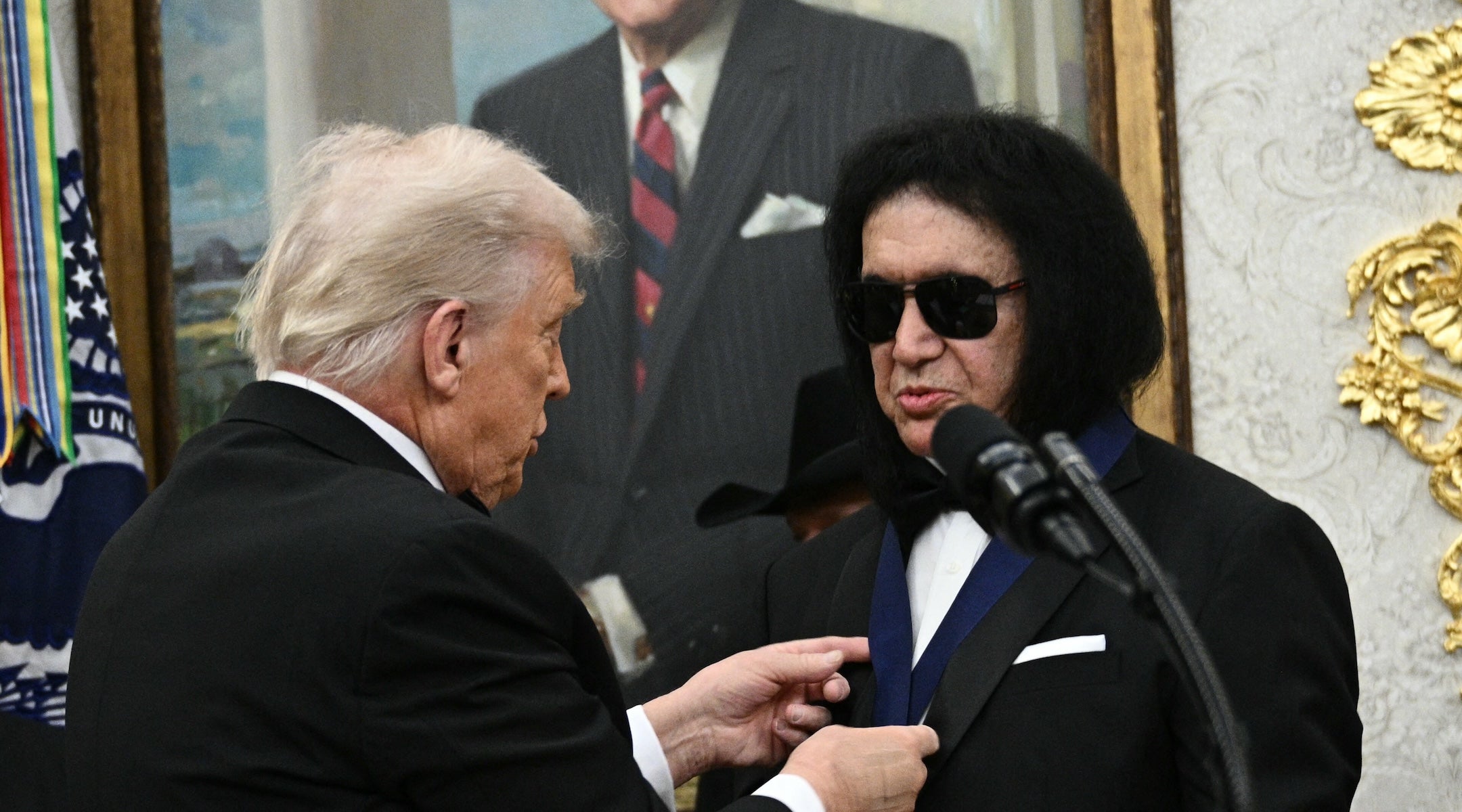
Igel noted the unique nature of the lesson. “When Gene Simmons with his tongue out is the first thing you see, you’re wondering, ‘What the heck happened to Holocaust education?’” he said.

Gradually the link becomes clear: The lesson explains that KISS frontman Gene Simmons is the son of a Holocaust survivor. Much of the curriculum is built around similar ideas of Jewish survival and resilience, as students are asked to contemplate how Simmons’ family background may have informed his outré stage persona. (Co-founder Paul Stanley is also Jewish.)
Such concepts, he said, help expand the idea of a Holocaust lesson beyond Jews as “victims in a snapshot of time.” In teacher training sessions, educators have responded well to the musical framing and excitedly discussed which songs they would want to pass down to future generations — a positive sign for Igel, who hopes to convince teachers to use the curriculum even outside of the state-mandated Holocaust Education Week lessons.
While Van Zandt, who is not Jewish, doesn’t craft the curriculum himself, he is friends with Simmons and the two have spoken before about wanting to use music to teach Jewish history. Max Weinberg, the E Street Band’s longtime drummer, is also Jewish.
The initiative comes at a moment when the world of popular music, like many other cultural sectors, has become engulfed in controversy over Israel. A recent dustup involved Ed Sheeran and Macklemore, in which Jewish venue owner Robert Kraft pressured Sheeran to drop the rapper from his tour over his onstage pro-Palestinian activism. That prompted many artists to support Macklemore, including Jewish actor Ilana Glazer, who spoke at one of his “Free Palestine” tour stops. Several leading musicians, including Lorde, Paramore and Björk, have also signed pledges to boycott Israel over its conduct in Gaza, while others including Pink and Boy George have taken opposite tracks.
All of this discourages Van Zandt, who famously led an international artist boycott of the South African resort venue Sun City in 1985 to protest Apartheid. The artists now backing the Boycott, Divestment Sanctions movement targeting Israel have cited the Sun City protests as a direct inspiration. (Sun City itself was founded by Sol Kerzner, the son of Jewish Russian immigrants.)
But Van Zandt says the two causes are different.
“Yes, I am known as the boycott king of the world,” he said. “It’s not the same situation. Trying to deny weapons for Israel to defend itself is obscene. It’s ridiculous. It’s terrible.”
He has feuded with Roger Waters, the Pink Floyd co-founder and outspoken pro-Palestinian activist, over BDS.
“I wrote him a very nice, detailed letter saying that it was misconceived, it’s a mistake, it’s not going to accomplish anything,” Van Zandt recalled. “I was very nice to him. Very diplomatic, very respectful. And then he starts just calling me names in the press.” (Waters has directed expletives at Van Zandt and other contemporaries who disagree with him about Israel in interviews.)
Igel, too, is thinking about how TeachRock’s lessons can address contemporary discourse over Israel, a subject that many Holocaust educators often are reluctant to bring up in the classroom even when students press the topic. His curriculum defines what a genocide is — “for a generation that needs to know what that word means, and what it doesn’t mean,” he said.
Following this week’s pilot program, both Igel and Van Zandt hope states beyond Florida will take an interest in their lessons. The rock star has ambitious goals for the initiative: to try to change the national conversation around Jews and Israel that has filled his social media feeds, which he describes as “lies on top of lies.”
“Eventually there’s got to be a national public conversation about this, which is not taking place,” he said. “So eventually it’s going to have to be. At that point, all bets are off.”
This article originally appeared on JTA.org.
The post Rock legend Steven Van Zandt’s new gig: Holocaust education appeared first on The Forward.
Uncategorized
Were Leopold and Loeb inspired by Nietzsche, or Jewish self-loathing?
Any production of Patrick Hamilton’s popular thriller Rope, like any game of Clue, can be reduced to props, setting and culprits.
The central prop is a large chest, containing a freshly-murdered body. The setting can vary: Mayfair in Hamilton’s 1929 original, Manhattan in Alfred Hitchcock’s 1948 screen adaptation starring Jimmy Stewart. The names of the players are sometimes different, but there are always two students in their finely-appointed apartment with the titular murder weapon.
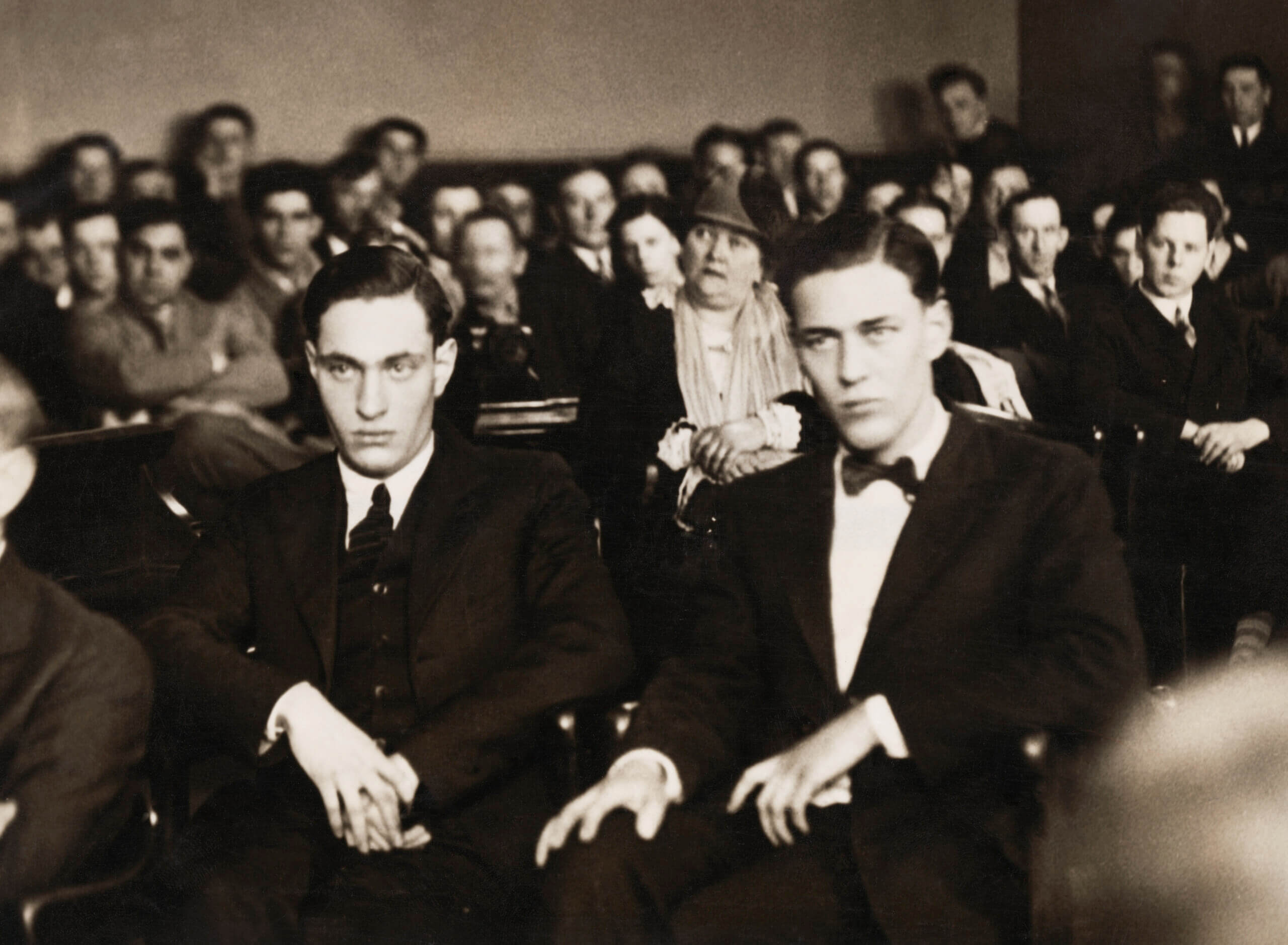
Gordon Greenberg’s new adaptation, now playing off-Broadway at the New Group’s space at St. Clement’s, presents a novel clue as to what prompted the crime: a Christmas tree upstage right. In his take on this “well-made play,” which Greenberg believes has its deficiencies, the central characters, inspired by University of Chicago students Nathan Leopold and Richard Loeb, are once again Jewish, but doing their best to conceal that fact.
Hamilton, who wrote his play shortly after Leopold and Loeb’s conviction, was struck by the men’s alleged lack of motive, beyond a desire to pull off the perfect crime based on their nihilistic misreading of Friedrich Nietzsche’s philosophy. Greenberg doesn’t buy that the killing was dispassionate, and believes a crisis of identity was at play.
“What drew me to it was thinking about what the factors might have been that went into this murder that I personally find hard to believe was just theoretical,” said Greenberg, a director and playwright, who recently revived Joseph Stein and Stephen Schwartz’s The Baker’s Wife off-Broadway. “I don’t think anyone does anything for purely theoretical reasons. We can extrapolate them later, but in the moment we are going on gut impulses and human needs and sexuality and jealousy and all of these fiery emotional poles that make us human.”
Greenberg, who is gay and Jewish, had long been fascinated by the Leopold and Loeb case, wondering what led two well-bred, cerebral Jews to commit a supposedly “motiveless” murder. (In the real crime, notably fictionalized in Meyer Levin’s Compulsion, Nathan Leopold and Richard Loeb killed a 14-year-old boy, Robert Franks; in Rope, they kill a wealthy classmate.)

Hamilton’s play, which Greenberg found to be “antiseptic,” de-Judaized and stripped of queerness, is not concerned with the “why” of the killing.
His murderers, Brandon, described as “tall, finely and athletically built, and blonde” and Granillo, “a Spaniard” with the “shrug of the shoulders characteristic of his race,” are in it for the thrill. They convene a dinner party and serve the meal on the chest containing their victim, certain they won’t be caught.
In Greenberg’s version, set in 1957 Manhattan, Brandon is Garret Stern (Cameron Monahan), a working-class striver who declaims, in a break of the fourth wall, that he “wants to be mistaken for the son of assimilated German Jews, not the shtetl Jews with bent vowels and calloused hands from whom he actually descends.” (As part of the ruse, he’s abandoned his given name of Gary.)
Granillo is now Nate Singer (Corey Fogelmanis), the Yekke scion of a garment district macher who, to his upwardly-mobile mother’s delight, “can almost pass for gentile.” Both are students at Princeton and plan to drop the body back in Jersey after their macabre dinner party.

Like the real Leopold and Loeb, they are also involved sexually and sadomasochistically. Greenberg says he was partially inspired by Tom Kalin’s 1992 film Swoon, which revisited the killers through a queer lens.
Nate’s instilled self-hatred likely feeds into his desire to be dominated by Garret, whose rough upbringing as a Jew in postwar Skokie taught him the utility of violence. (His school principal praised him for breaking a boy’s nose, saying “your people aren’t exactly known for defending themselves.”)
Greenberg, who said that, as an actor he played “every Herb Gardner and Neil Simon play around,” chose to move the action up to the era Lavender Scare and a resurgence of casual, clubby antisemitism following the “chemotherapy of World War II” that briefly put it into remission.
Nate and Garret’s guests, for their post-Christmas shindig, whose centerpiece is a chest containing a corpse, include a polished, pedigreed classmate; a droll Sarah Lawrence student; their closeted professor, who will catch them in the lie; and a Mayflower-descendant judge who happens to be the father of Ronald Kentley, the deceased.
Driving the boys’ motive and cue for passion is Nate’s tormented attraction to Ronald, who he fears might out him and land him on McCarthy’s list. Garret is jealous, but sees an opportunity: In bumping Ronald off, he hopes to take his place as the judge’s surrogate son, gaining entry to the patrician world to which he aspires.
But their guests’ routine macroaggressions show the futility of trying to overcome their backgrounds. The Christmas tree is fooling no one. Greenberg is similarly unconvinced that Leopold and Loeb’s murder was merely a Nietzschean performance, undertaken to prove that morality need not apply to superior intellects.
“No one really knows what was going through their mind, and no one ever will,” Greenberg said of Leopold and Loeb’s crime. “But taking one of these fascinating true crime stories and positing what the humanity is behind it, what’s all the flesh on the bone, is to me the fascination and the fun exercise.”
The post Were Leopold and Loeb inspired by Nietzsche, or Jewish self-loathing? appeared first on The Forward.
Uncategorized
Documentary reveals composer Dmitri Shostakovich’s empathy for the Jews
אין רוסלאַנד איז לעצטנס אַרויס אַ דאָקומענטאַר רעזשיסירט פֿון גריגאָרי אילוגדין, מיטן נאָמען „DSCH: סימפֿאָניע נומער 13‟, וועגן דעם וועלט־באַרימטן קאָמפּאָזיטאָר דמיטרי שאָסטאַקאָוויטש און די ייִדן. כאָטש ער איז נישט געווען קיין ייִד, האָט ער געשאַפֿן מוזיק פֿאַר ייִדישע לידער און געווידמעט זײַן 13טער סימפֿאָניע דעם חורבן פֿון די ייִדן.
מיט דער אַברעוויאַטור DSCH, וואָס פֿיגורירט אינעם טיטל פֿונעם דאָקומענטאַר, פֿלעגט שאָסטאַקאָוויטש אונטערשרײַבן זײַנע נאָטן. מיינען מיינט עס D. Schostakowitsch. דאָס ווייסן, מסתּמא, אַלע מוזיקער, וועלכע שפּילן זײַנע ווערק. ווייניקער איז אָבער באַקאַנט דעם קאָמפּאָזיטאָרס שײַכות נישט בלויז צו ייִדישע טעמעס אין אַלגעמיין, נאָר דווקא צו ייִדיש. געוויינטלעך זינגט מען אויס זײַנע ייִדישע לידער בלויז אין דער רוסישער איבערזעצונג; אויף דער וועבזײַט „ייִדיש־קולטור‟ קענט איר זיי אויסהערן אויף ייִדיש.
אין פּעטערבורג איז די פּרעמיערע פֿונעם פֿילם פֿאָרגעקומען אינעם קינאָ־טעאַטער „אַווראָראַ‟, וווּ שאָסטאַקאָוויטש האָט אין די 1920ער יאָרן אָנגעהויבן זײַן מוזיקאַלישע קאַריערע ווי אַ יונגער פּיאַניסט, וועלכער האָט אַקאָמפּאָנירט שטומע פֿילמען. דער אַלטער קינאָ־טעאַטער, געעפֿנט אין 1913, האָט דעמאָלט געהייסן „פּיקאַדילי‟.
אין 1961 האָט דער רוסישער דיכטער יעווגעני יעווטושענקאָ אָנגעשריבן זײַן קורצע פּאָעמע „באַבי־יאַר‟ וועגן דעם טרויעריק־באַקאַנטן אָרט אין קיִעוו, וווּ די נאַציס האָבן אומגעבראַכט איבער 100 טויזנט מענטשן, אַרײַנגערעכנט צום ווייניקסטן 33,771 ייִדן. די פּאָעמע הייבט זיך אָן מיט די ווערטער „אויף באַבי־יאָר זײַנען קיין דענקמעלער נישטאָ‟. דאָ ציטיר איך יוסף רובינשטיינס ייִדישע איבערזעצונג, וועלכע איז דערשינען דעם 8טן אָקטאָבער, 1961, אינעם פֿאָרווערטס.
שאָסטאַקאָוויטש, דעמאָלט שוין וועלט־באַרימט, האָט באַשלאָסן צו שאַפֿן אַ סימפֿאָניע מיט אַ באַס־זינגער, אַ באַסן־כאָר און אַן אָרקעסטער, וווּ עס ווערט אויסגעזונגען די דאָזיקע פּאָעמע, און האָט עס פֿאַרענדיקט אין 1962. יעווטושענקאָ האָט ספּעציעל פֿאַר דער סימפֿאָניע אָנגעשריבן נאָך אַ ליד מיטן נאָמען „פּחדים‟. אין דעצעמבער 1962 האָט מען צום ערשטן מאָל אויסגעשפּילט שאָסטאַקאָוויטשעס 13טע סימפֿאָניע אין מאָסקווע, און אין מאַרץ 1963 אין מינסק.
דער פֿילם דערציילט, פֿאַר וואָס שאָסטאַקאָוויטש האָט זיך בײַם אָנהייב אָנגעטראָפֿן אויף גרויסע שוועריקייטן מיט אָט דעם ווערק. לויט דער סאָוועטישער שיטה איז געווען פּאָליטיש אומקאָרעקט צו דערמאָנען די טראַגעדיע פֿון באַבי־יאַר אין שײַכות באַזונדערס צו ייִדן, ווײַל דאָרטן זענען דערמאָרדעט געוואָרן – און, קוואַנטיטאַוו גערעכנט, מער ווי ייִדן – אויך סאָוועטישע געפֿאַנגענע און אַנדערע מענטשן. דערצו, האָט מען פֿאַרשוויגן די ראָלע פֿון די אוקראַיִנישע קאָלאַבאָראַנטן אין דער מאַסן־שחיטה.
די טעמע פֿונעם ייִדן־חורבן האָט מען בכלל אויסגעמיטן, ווײַל מצד דעם אָפֿיציעלן קוקווינקל זענען ייִדן געווען אַ רעלאַטיוו קליינער טייל צווישן די 26 מיליאָן אומגעקומענע סאָוועטישע בירגער. קיין דענקמעלער זענען אין באַבי־יאַר טאַקע נישט געווען ביז 1976, ווען מע האָט אויפֿגעשטעלט אַ מאָנומענט לזכּרון די דערמאָרדעטע „בירגער פֿון דער שטאָט קיִעוו און קריגס־געפֿאַנגענע‟. ערשט אין 1991 האָט זיך דאָרט באַוויזן אַ באַזונדערער ייִדישער דענקמאָל, און נאָך שפּעטער, אין 2016, אַ ציגײַנערישער.
אינעם דאָקומענטאַר ווערט דערמאָנט שאָסטאַקאָוויטשעס שײַכות צו דער ייִדישער שפּראַך. אין 1948, ווען אין סטאַלינס צײַטן האָבן אַ סך ייִדן געליטן פֿון רדיפֿות כּלומרשט צוליב זייער נאַציאָנאַליזם, האָט שאָסטאַקאָוויטש געשאַפֿן זײַן לידער־ציקל (אָפּוס נומער 79) „פֿון דער ייִדישער פֿאָלקס־פּאָעזיע‟, באַגרינדעט אויף יחזקאל דאָברושינס און אַבֿרהם יודיצקיס זאַמלונג „ייִדישע פֿאָלקס־לידער‟ (פֿאַרעפֿנטלעכט אינעם יאָר 1940 אין מאָסקווע).
איר קאָנט זיך באַקענען פּרטימדיק מיטן דאָזיקן ציקל פֿון שאָסטאַקאָוויטשן אויף ייִדיש און ענגליש אויף דער וועבזײַט „ייִדיש־קולטור‟, וועלכע האָט, ווי פֿריִער געזאָגט, אַ געוויסע שײַכות צום נײַעם דאָקומענטאַר. דער גרינדער פֿון דער דאָזיקער וועבזײַט, ד״ר מאַרק זילבערקוויט, איז אויך דער פּראָדוסער פֿונעם פֿילם. אילוגדין, דער רעזשיסאָר, האָט מיך פּערזענלעך פֿאַרבעטן אויף דער פּעטערבורגער פּרעמיערע פֿונעם נײַעם דאָקומענטאַר ווי אַ ייִדיש־שפּראַכיקן זשורנאַליסט. ער האָט מיר איבערגעגעבן, אַז ייִדיש שפּילט פֿאַר אים אויך אַ גרויסע ראָלע און ער האָפֿט ווײַטער צו פּאָפּולאַריזירן ר די שפּראַך.
וואָס שייך דער קאָמפּליצירטער באַציִונג פֿונעם ראַטן־פֿאַרבאַנד צו ייִדישע טעמעס איז כּדאַי צוצוגעבן, אַז אין 1961, דאָס זעלבע יאָר וואָס יעווטושענקאָ האָט אָנגעשריבן „באַבי־יאַר‟, האָט זיך אין מאָסקווע געעפֿנט דער ייִדישער ליטעראַרישער זשורנאַל „סאָוועטיש היימלאַנד‟. דאָרט און אין דער סאָוועטיש־ייִדישער ליטעראַטור בכלל האָט מען יאָ באַהאַנדלט דעם ייִדן־חורבן.
איין וויכטיקע זאַך ווערט נישט דערמאָנט אינעם פֿילם: ווען שאָסטאַקאָוויטש האָט געשריבן זײַן 13טע סימפֿאָניע, מיט וועלכע ייִדישע שרײַבער און דיכטער האָט ער זיך געחבֿרט? דער ענטפֿער וואָלט טאַקע געווען גוט צו וויסן.
The post Documentary reveals composer Dmitri Shostakovich’s empathy for the Jews appeared first on The Forward.
